

SUBSCRIBE TO OUR FREE NEWSLETTER
Daily news & progressive opinion—funded by the people, not the corporations—delivered straight to your inbox.
5
#000000
#FFFFFF
To donate by check, phone, or other method, see our More Ways to Give page.
Daily news & progressive opinion—funded by the people, not the corporations—delivered straight to your inbox.
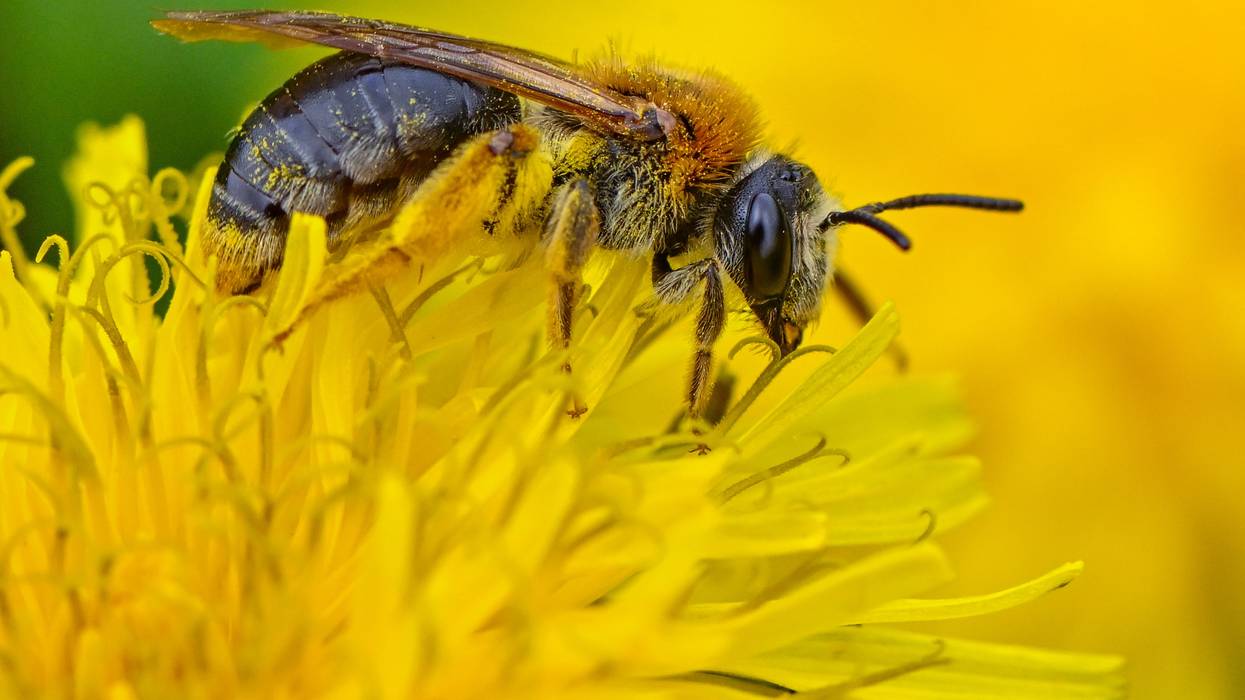
"Under the incoming Trump administration, the Environmental Protection Agency will likely do even less to mitigate the damage of pesticides, putting even more onus on companies to address the escalating risks," said one climate advocate.
A report released Tuesday from the environmental group Friends of the Earth finds that the U.S. food retail sector's use of pesticides on just four crops—almonds, apples, soy, and corn—could result in over $200 billion worth of financial, climate, and biodiversity risks for the industry between 2024 and 2050. Pollinators, including bees, form a crucial link between pesticide use and these risks.
The report was released in tandem with the group's annual retailer scorecard, which ranks the largest U.S. grocery stores on the "steps they are taking to address the use of toxic pesticides in their supply chains and to support the expansion of organic agriculture and other ecological solutions."
While it highlights some industry leadership on this issue, the authors of the scorecard say that, on the whole, retailer action to curb the impact of pesticides falls short. The following retailers received an "F" grade from Friends of the Earth: Wakefern, Publix, Dollar General, 7-Eleven Inc., Hy-Vee, Walgreens, H-E-B, BJ's, Amazon, and Wegmans.
Although its owner, Amazon, received an F grade, the grocery store Whole Foods was the only retailer that was given an A grade.
A handful of the companies, including Whole Foods, have made time bound pledges to address pesticide use by requiring fresh produce suppliers to adopt ecological farming methods and to confirm their practices through third-party verifications. Eight companies have created policies that encourage suppliers to reduce the use of "pesticides of concern—including neonicotinoids, organophosphates, and glyphosate—and to shift to least-toxic approaches," according to the scorecard.
Friends of the Earth's report on risks associated with pesticide use explains why scrutiny around retailers' use of pesticides is warranted, and why retailers themselves ought to be motivated to reduce these risks.
For one thing, "under the incoming Trump administration, the Environmental Protection Agency will likely do even less to mitigate the damage of pesticides, putting even more onus on companies to address the escalating risks," according to Kendra Klein, deputy director of science at Friends of the Earth.
"Food retailers must urgently reduce their use of pesticides and advance organic and other ecologically regenerative approaches. They have the opportunity to lead in the fight against biodiversity collapse and climate change, helping to ensure Americans have continued access to healthy food," she said in a statement.
An estimated one-third of world crops rely on pollination, and a little less than three-fourths of fruit and vegetable crops require pollination from insects and other creatures, according to the report. Pollinators are often studied as an indicator for biodiversity risk and general environmental health—and experts cite pesticides as among the reasons that pollinators are in decline. Research also shows that pesticides poise a threat to healthy soil ecosystems.
According to the report, an estimated one-third of world crops rely on pollination, and a little less than three-fourths of fruit and vegetable crops require pollination from insects and other creatures. Pollinators are often studied as an indicator for biodiversity risk and general environmental health—and experts cite pesticides as among the reasons that pollinators are in decline, per the report. Research also shows that pesticides poise a threat to healthy soil ecosystems, the report states.
The report states that 89% of the almond crop area, 72% of apples, 100% of corn, and 40% of soy receives more than one "lethal dose" of an insecticide that is considered toxic to bees. This "quantification of the risk of pesticides to pollinators" for the four crops "provides the values to conduct the financial analysis in this study."
The document details how the food retail industry's use of pesticides creates direct costs for the industry—for example, the money spent purchasing and applying the pesticides, the CO2 emissions associated with using or producing pesticides, and the impact on crop yields, as well as indirect costs.
When it comes to climate damage costs, the report estimates that U.S. food retailer sales for products that include soy, corn, apples, and almonds will suffer $4.5 billion over the period of 2024-50. Biodiversity risk stemming from using pollinator-harming pesticides on those four crops is valued much higher, at $34.3 billion, over the same time period.
If neonics are so dangerous, what is the Environmental Protection Agency doing about it? Not very much, as it turns out
I was reading about bumble bees recently—specifically, their looming demise, thanks to human greed and ignorance—and started thinking about the Tree of the Knowledge of Good and Evil. We should have eaten from it!
Well, we did, but then apparently upchucked everything we learned and, in the process, fooled ourselves into thinking that technology has allowed us to recreate the Garden of Eden from which we’d been banned. You might call it the Garden of Capitalism, in which humans can take what they want without consequences, forever and ever and ever. This seems to be the myth at the core of dominant global culture.
But of course there are consequences, which we officially refuse to let ourselves see. For instance, Amy van Saun, an attorney for the nonprofit Center for Food Safety, writing about the shocking disappearance of bees and other pollinators of much of the food we eat (fruit, vegetables, nuts), notes that one of the primary causes is the ever-increasing use of pesticides, in particular, something called neonicotinoids (or “neonics”), which wreak their own special hell on the planet’s ecosystems.
Like cluster bombs, land mines, Agent Orange, depleted uranium, “they persist in the environment,” almost as though—forgive the analogy—commercial farming is like an ongoing war on nature.
Neonicotinoids “are the most widely used insecticides in the world,” she writes. “Unlike traditional pesticides, which are typically applied to plant surfaces, neonics... are absorbed and transported through all parts of the plant tissue.
“ ...Modeled after nicotine, neonicotinoids interfere with insects’ nervous systems, causing tremors, paralysis, and eventually, death. Neonicotinoids are so toxic that one corn seed treated with them contains enough insecticide to kill over 80,000 honey bees.”
And, like cluster bombs, land mines, Agent Orange, depleted uranium, “they persist in the environment,” almost as though—forgive the analogy—commercial farming is like an ongoing war on nature.
If neonics are so dangerous, what is the Environmental Protection Agency doing about it? Not very much, as it turns out, despite scientific evidence of their danger, which is why Center for Food Safety, along with the Pesticide Action Network North America, are suing the agency. As van Saun writes, “almost half of all U.S. farmland is planted with pesticide-coated seeds,” but the agency refuses to regulate them.
The result, according to a U.N. report, is that cropland is approximately 50 times more toxic than it was a quarter of a century ago, at the beginning of the 21st century, and the world is currently experiencing an “insect apocalypse.”
And indeed, it begins to appear that the EPA has a mission that transcends “environmental protection.” It may well be that this agency—part of a governmental culture that supports and benefits from wealth and war—has a mission that is more about official denial of the dangers of planetary exploitation. The EPA’s refusal to acknowledge the damage caused by neonics is just a small part of it.
“Critics accuse the EPA of being inappropriately cozy with the pesticide industry, and biasing its decisions to favor companies selling pesticides,” the Guardian writes. “Several EPA scientists came forward last year, publicly alleging that EPA management routinely pressures EPA scientists to tamper with risk assessments of chemicals in ways that downplayed the harm the chemicals could pose...
“The scientists complained, among other things, that key managers move back and forth between industry jobs and positions at the EPA.”
This is when I started hearing an alarm go off in my head: Cultural malfunction alert! Cultural malfunction alert! This is what things look like when exploitation prevails: when grabbing all the goodies you can is at the cultural core, rather than something a bit more complex, such as understanding—and revering—the eco-reality (also known as nature) in which we live.
And beyond that, can we not create a culture that faces the paradoxes of life with a certain level of openness and a continued interest in learning? Life is not something to be reduced to simplistic opposites: win vs. lose, good vs. evil. There is darkness within all of us, but we can’t let it determine our fate or shape our understanding of the world. Yet I fear this is the nature of “modern,” as opposed to Indigenous, culture. Humanity, over the past few millennia, has moved its sense of reverence away from Mother Earth and essentially to Father Sky, rather than continuing to revere both. As a result, Mother Earth is ours to do with as we choose.
This is what things look like when exploitation prevails...
The opposite viewpoint—apparently the indigenous viewpoint, which European land-grabbers called “savage”—isn’t quite so simple. The natural world, while rife with struggle, can’t be reduced to “survival of the fittest.” Rather, it exists in a state of complex cooperation among all concerned—plants, animals—and evolves via the interdependence of all life.
As Rupert Ross wrote in his remarkable book about Indigenous culture, Returning to the Teachings: “The Lakotah had no language for insulting other orders of existence: pest... waste... weed.”
Back to pesticides then. Back to weed killers. Back to climate change and the apparent inability of the polluters who purport to be in charge of Planet Earth to address it adequately: Superficial change won’t do it. The change has to be cultural. It has to be spiritual.
Believe me, if we fail to change who we are and the bees—the pollinators—disappear, we’ll all feel the sting.
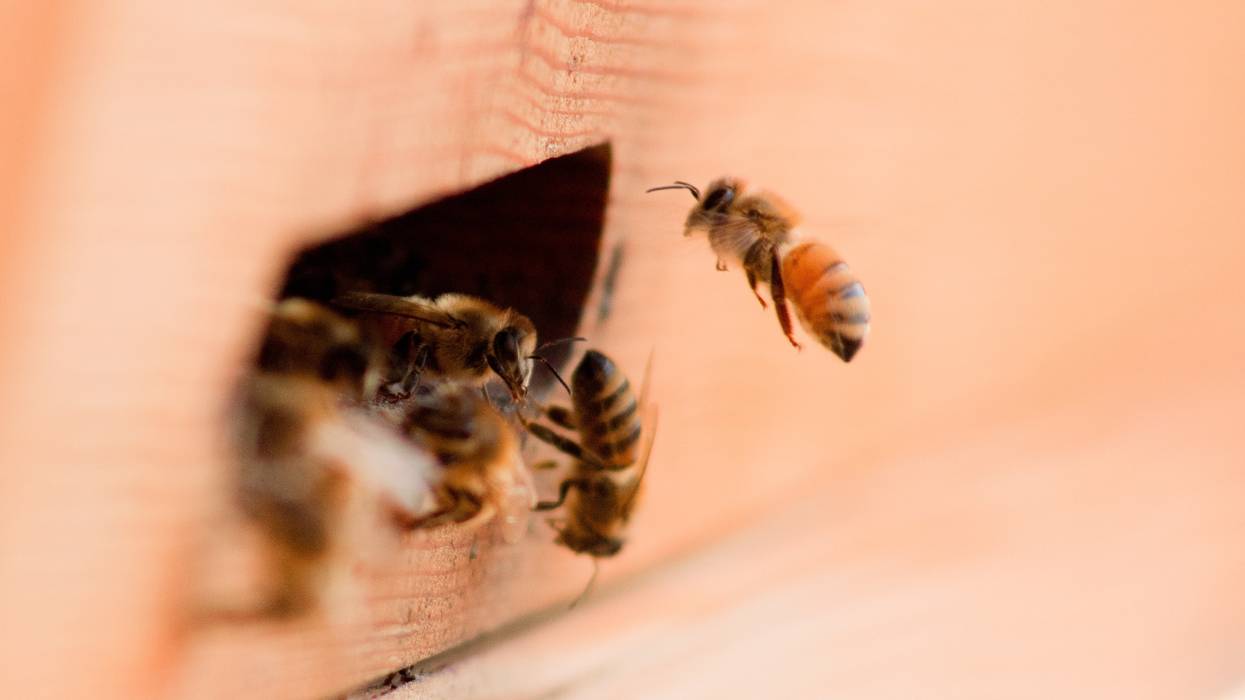
We all eat, and we all rely on honeybees and other pollinators to create and sustain our food supply. This is a battle humanity cannot afford to lose.
One of every three bites of food we eat comes from a crop pollinated by bees. This bee-powered nourishment includes apples, blueberries, tomatoes, bananas, avocados, cashews, and almonds–a harvest of more than 130 fruits, vegetables, and nuts. Yet, all this is imperiled by a severe decline of bees and other pollinators worldwide.
A shocking new study just found that mass pollinator loss has already caused half a million early human deaths a year by drastically reducing the global supply of fruits, vegetables, and nuts. Between April 2018 to April 2019, the managed bee population in the U.S. decreased by a stunning 40.7%, which experts call "unsustainable."
Why is there such a crisis with these vital spark plugs of our food and fiber? An overwhelming number of scientific studies link these bee declines to pesticides, demonstrating the far-reaching impacts toxic chemical pesticides have on our environment. These bee-harmful pesticides have many long-term detrimental effects and pose an increased risk to fragile ecosystems.
While there are many tactics being used to stop toxic pesticides and protect pollinators and other species, courts are one of the best–and sometimes only–hope for creating meaningful change on the ground.
The pesticides most directly linked to pollinator declines are a group of systemic insecticides called neonicotinoids. These "neonics," as they're often called, are the most widely used insecticides in the world. Unlike traditional pesticides, which are typically applied to plant surfaces, neonics are systemic—meaning they are absorbed and transported through all parts of the plant tissue.
Honey bees and other pollinators are exposed to these toxic chemicals through pollen, nectar, dust, dew droplets on plant leaves, and in the soil where many native bee species nest. Modeled after nicotine, neonicotinoids interfere with insects' nervous systems, causing tremors, paralysis, and eventually, death. Neonicotinoids are so toxic that one corn seed treated with them contains enough insecticide to kill over 80,000 honey bees.
Neonicotinoids are especially dangerous because they persist in the environment and can accumulate quickly–causing contamination of surface water, groundwater, and soil, endangering species that inhabit these ecosystems. This contamination has created widespread harm to aquatic invertebrates, such as mollusks and crustaceans, both vital to aquatic habitats; and evidence shows neonics have potential long-term impacts on waterfowl, rangeland birds, and other wild animals.
Imagine a world with no apples, melons, squash, broccoli or almonds. Three quarters of the crops we consume rely on pollinators, and if we're going to save them from extinction, scientists agree–we must ban the pesticides largely responsible for their demise.
Unfortunately, the U.S. Environmental Protection Agency (EPA)–which was created to protect our health and the environment from chemicals such as pesticides–continues to approve and register pesticides that are known to harm and kill pollinators such as bees and butterflies.
Last June, a federal court ruled that EPA's reapproval of glyphosate, the main ingredient in Roundup, was unlawful for all uses. It even rebuked the agency for ignoring real-world evidence of cancer risks from glyphosate, and for failing to consider impacts to endangered species. While the court ordered EPA to redo its human health and ecological risk assessments by October 2022, the agency blew its deadline and now says it won't complete this vital review until 2026. Meanwhile, pollinators will continue to suffer harm from this toxic pesticide, one of the most widely sprayed in the U.S. and the world.
Equally disturbing is the ongoing proliferation of unregulated pesticide-coated seeds, which are quietly decimating our bees, birds, and butterflies. Just one GMO corn seed coated with neonicotinoid pesticides contains enough pesticide to kill over 80,000 bees or one songbird. Pesticide giants like Monsanto have been selling these deadly seeds with no safety testing or regulation for decades. Now, almost half of all U.S. farmland is planted with pesticide-coated seeds. And despite a Center for Food Safety petition to EPA and our subsequent lawsuit against EPA for denying that petition, the agency refuses to regulate these seeds. Without regulation under national pesticide laws, there is no balancing of the vast harms they cause against their minimal or nonexistent benefit, and for those that may be allowed, there are no instructions to the farmers planting them about how to mitigate impacts or safely dispose of unused seed. With the vast majority of neonic use going to seed coatings, it is illogical and unlawful for EPA not to uphold its duty to protect our environment and people from this unnecessary pesticide use.
To save these essential pollinators, habitats, and biodiversity, we must continue to take these corporations–and the government agencies created to regulate them–to court.
The list of EPA failures goes on. Use of a little known super-pesticide made from one of the same ingredients as Agent Orange is skyrocketing across the United States. Now sold under the name Enlist, it threatens hundreds of endangered species and is linked to Parkinson's disease, non-Hodgkin's lymphoma, and other reproductive problems in humans. The pesticide industry's excuse for this revival of an old and dangerous pesticide is the widespread resistance of weeds to the pesticide Roundup. This resistance stems from Monsanto's push to convert all commodity crops (like corn, soy, and canola) to genetically engineered, glyphosate-resistant varieties — encouraging the indiscriminate spraying of glyphosate upon them. Natural evolution of weeds means development of a resistance to glyphosate, and the chemical companies are now trotting out older, deadlier chemicals to deal with the problem of their own creation. Despite these deadly risks, in 2022 EPA reapproved Enlist for seven more years.
While there are many tactics being used to stop toxic pesticides and protect pollinators and other species, courts are one of the best–and sometimes only–hope for creating meaningful change on the ground. Often, the only way to halt corporations from using toxic chemicals, and usurping democracy and regulatory integrity, is through litigation.
To save these essential pollinators, habitats, and biodiversity, we must continue to take these corporations–and the government agencies created to regulate them–to court. We all eat, and we all rely on honeybees and other pollinators to create and sustain our food supply. It is a moral and ecological imperative that we do everything possible to sustain them.
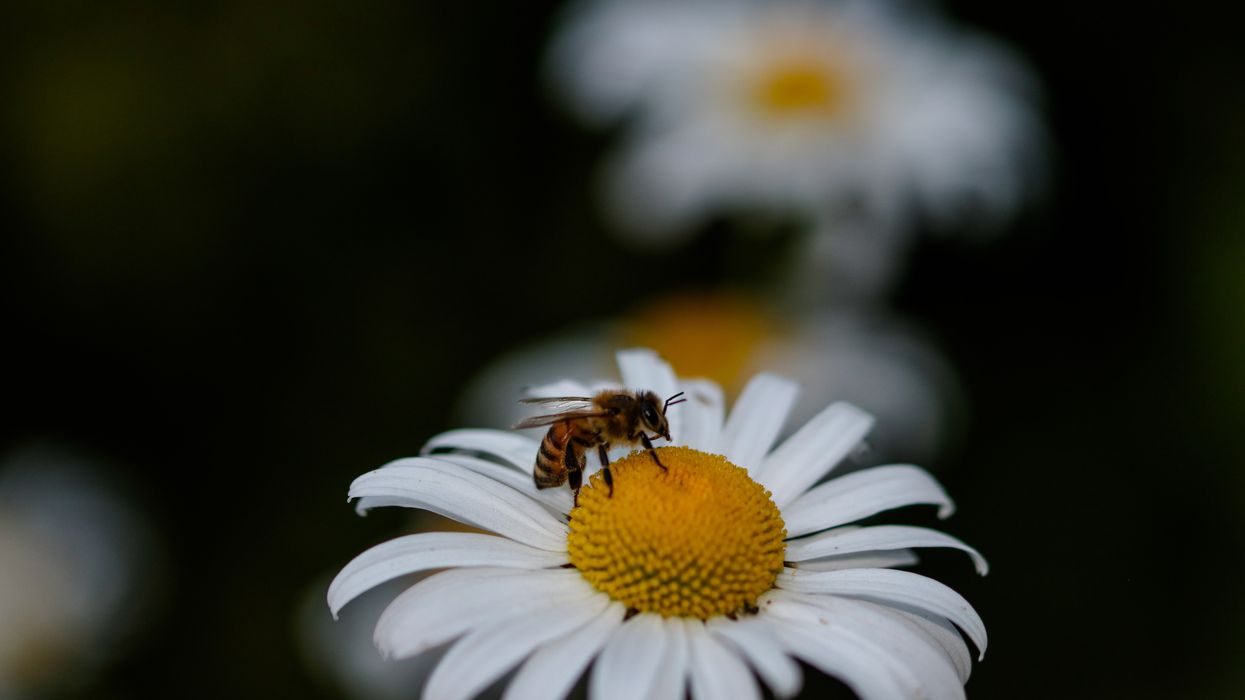
The Birds and Bees Protection Act would eliminate 80 to 90% of the neonics used in New York each year by banning applications that are either easily replaceable or do not give an economic boost to farmers.
New York state on Friday became the first state in the nation to pass legislation restricting neonicotinoid pesticides (neonics) that are toxic to bees and other pollinators and wildlife.
The Birds and Bees Protection Act would eliminate 80 to 90% of the neonics used in New York each year by banning applications that are either easily replaceable or do not give an economic boost to farmers.
"Every year for the past decade, New York beekeepers have lost more than 40% of their bee colonies—largely due to neonic pesticides," bill sponsor State Senator Brad Hoylman-Sigal said in a statement. "Today, in this landmark victory for our pollinators, economy, and farming industry, New York is working to reverse that trend."
The bill passed the New York State Senate on Wednesday and the New York State Assembly on Friday and now goes to Gov. Kathy Hochul for signature. It bans the use of neonics to coat corn, soybean, and wheat seeds as well as for lawns and gardens.
"Pollinators are vital members of healthy ecosystems and our food supply chain," New York Assemblymember Deborah J. Glick said in a statement. "Protecting them by limiting toxins that pose adverse effects and health risks is an important step forward in our work to stop poisoning the environment and create a healthier New York."
Neonics are a class of pesticides that work by attacking the nervous systems of insect pests, as the Natural Resources Defense Council (NRDC) explains. A lethal dose will cause paralysis and death, while non-lethal effects include memory, immune, navigation, and fertility problems.
They are one of the deadliest pesticides out there, yet they are also the leading insecticide used in the U.S. This is a problem because about 95% of neonics used to coat seeds don't enter the plant at all, but instead spread into the environment via the soil, where they do not break down easily.
The concern is that neonics don't just harm target species but also beneficial insects like bees and butterflies.
"It's critical that we passed this bill to protect the health of humans and other living beings on our planet."
"They also harm the development of birds and mammals; and studies have linked ingredients of neoicotinoid insecticides with adverse human health outcomes as well," New York state Sen. Pete Harckham, another bill supporter, said in a statement. "It's critical that we passed this bill to protect the health of humans and other living beings on our planet."
The legislation was based in part on a Cornell University study that found that most neonic use in New York did not actually provide an economic benefit or could easily be swapped out for a safer alternative. It also comes about a month after an Environmental Protection Agency (EPA) assessment found that three common neonic chemicals threaten 11% of the species on the U.S. endangered species list.
"The Birds and the Bees Protection Act is the first-in-the-nation to limit neonic coated seeds, which contaminate our soil, our waterways, and our bodies," Dan Raichel, the acting director of NRDC's Pollinator Initiative, said in a statement. "We've long known neonics kill bees, but we now see links between neonics and mass losses of birds, the collapse of fisheries, developmental risks in people, and vast water contamination in New York."
The U.S. has long lagged behind similar countries in regulating neonics. The EU has banned their outdoor use, and Canada has largely stopped using them to coat seeds.
The new legislation was passed a little more than a week after the Center for Food Safety and the Pesticide Action Network North America (PANNA) sued the EPA over its failure to regulate the toxic chemicals.
"For too long, EPA has allowed pesticide-coated seeds to jeopardize threatened and endangered species across the country."
"For too long, EPA has allowed pesticide-coated seeds to jeopardize threatened and endangered species across the country," PANNA senior scientist and plaintiff Margaret Reeves said in a statement at the time. "EPA must close the regulatory loophole for toxic pesticide-coated seeds to prevent further harm to wildlife, ecosystems, and people."
While environmental groups continue to push for national regulations, they celebrated change in New York.
"Today is a great day for pollinators, clean water, and healthier communities," Caitlin Ferrante, the conservation program manager of the Sierra Club Atlantic Chapter, said in a statement.

"For too long, EPA has allowed pesticide-coated seeds to jeopardize threatened and endangered species across the country," said one advocate.
Two public health groups filed a lawsuit against the U.S. Environmental Protection Agency on Thursday, demanding that the agency close a regulatory loophole that has allowed insecticide-coated seeds to proliferate across 150 million acres of cropland in the United States.
The Center for Food Safety (CFS) and the Pesticide Action Network North America (PANNA) are co-plaintiffs in the lawsuit filed in the U.S. District Court in the Northern District of California, which pertains to seeds coated in neonicotinoids, often called neonics.
The EPA has long failed to regulate neonics, denying a rulemaking petition filed by CFS in 2017 which asked them to close the loophole which allows neonic-coated seeds to be used to grow corn, soy, and other crops across the country.
The agency only regulates pesticides that are directly sprayed on crops, allowing companies to continue using the coatings.
The EPA ignored CFS's petition until 2021, when the group sued to force a response, only to have the petition denied. PANNA joined CFS in the new lawsuit on Thursday, arguing that the denial was unlawful.
"Despite knowing the ongoing grave harms caused by coated seeds, EPA has still unlawfully refused to close the loophole allowing them to escape any regulation," said Amy van Saun, senior attorney at Center for Food Safety. "That decision is as unlawful as it is irresponsible. EPA is supposed to protect these species and habitats, not enable their peril, and we are asking the court to tell the agency to do its job."
Toxic neonicotinoids can cause paralysis and death in crucial pollinators including bees and butterflies.
"Ingesting one of these seeds can cause serious harm or death to a songbird," said CFS on social media.
"For too long, EPA has allowed pesticide-coated seeds to jeopardize threatened and endangered species across the country," said Margaret Reeves, senior scientist at PANNA. "EPA must close the regulatory loophole for toxic pesticide-coated seeds to prevent further harm to wildlife, ecosystems, and people."
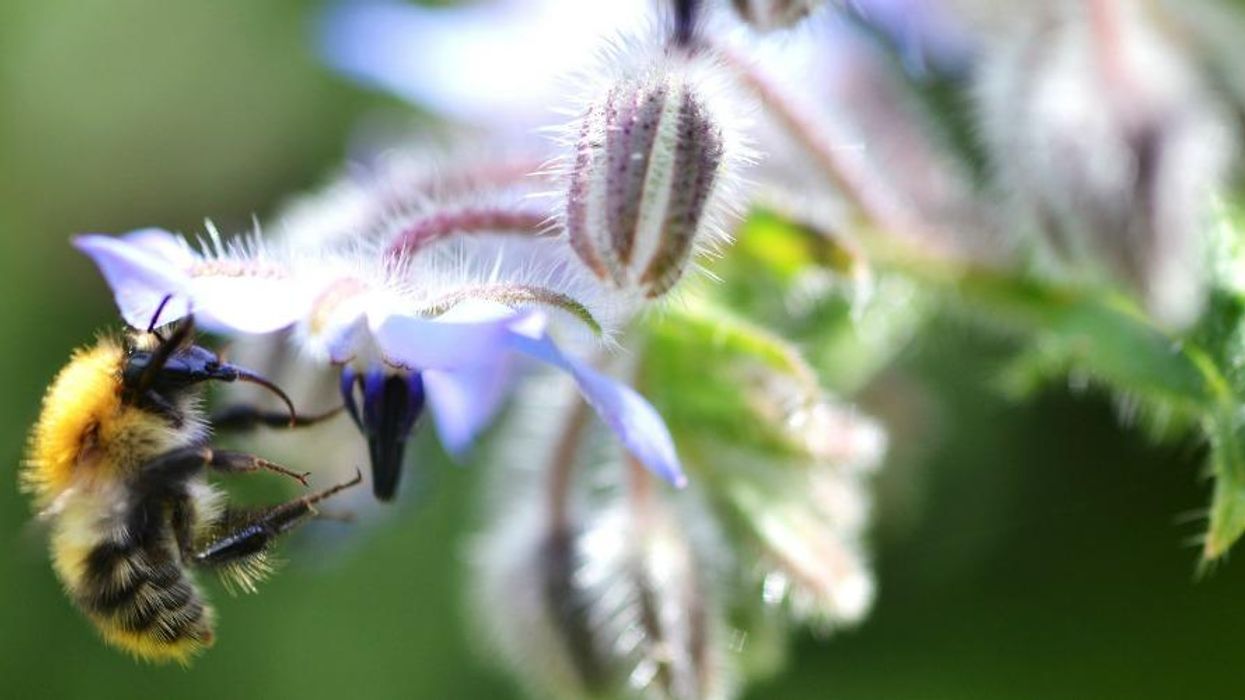
"There's now no question that neonicotinoids play an outsized role in our heartbreaking extinction crisis," said one advocate. The EPA must "ban these pesticides so future generations don't live in a world without bees and butterflies and the plants that depend on them."
A newly published assessment from the U.S. Environmental Protection Agency warns that three of the most commonly used neonicotinoid insecticides threaten the continued existence of more than 200 endangered plant and animal species.
"The EPA's analysis shows we've got a five-alarm fire on our hands, and there's now no question that neonicotinoids play an outsized role in our heartbreaking extinction crisis," Lori Ann Burd, environmental health director at the Center for Biological Diversity (CBD), said Friday in a statement.
"The EPA has to use the authority it has to take fast action to ban these pesticides," said Burd, "so future generations don't live in a world without bees and butterflies and the plants that depend on them."
The agency's new analysis found that clothianidin, imidacloprid, and thiamethoxam likely jeopardize the continued existence of 166, 199, and 204 plants and animals protected under the Endangered Species Act (ESA), respectively. This includes 25 distinct insects, more than 160 plants reliant on insect pollination, and dozens of fish, birds, and invertebrates.
"The Biden administration will have the stain of extinction on its hands if it doesn't muster the courage to stand up to Big Ag and ban these chemicals."
Species being put at risk of extinction include the whooping crane, Indiana bat, Plymouth redbelly turtle, yellow larkspur, Attwater's greater prairie-chicken, rusty patched bumblebee, Karner blue butterfly, American burying beetle, Western prairie fringed orchid, vernal pool fairy shrimp, and the spring pygmy sunfish.
"The EPA confirmed what we have been warning about for years—these neonicotinoid insecticides pose an existential threat to many endangered species and seriously undermine biodiversity," Sylvia Wu, senior attorney at the Center for Food Safety (CFS), said in a statement. "Unfortunately, this dire news is what we have told EPA all along. EPA should be ashamed that it still has yet to ban these life-threatening pesticides."
The EPA is well aware of the risks associated with the three neonicotinoids in question. One year ago, the agency released biological evaluations showing that the vast majority of endangered species are likely harmed by clothianidin (1,225 species, or 67% of the ESA list), imidacloprid (1,445, 79%), and thiamethoxam (1,396, 77%). Its new analysis focuses on which imperiled species and critical habitats are likely to be driven extinct by the trio of insecticides.
As CBD pointed out: "For decades the EPA has refused to comply with its Endangered Species Act obligations to assess pesticides' harms to protected species. The agency was finally forced to do the biological evaluations by legal agreements with the Center for Food Safety and the Natural Resources Defense Council. After losing many lawsuits on this matter, the EPA has committed to work toward complying with the act."
"Given the Fish and Wildlife Service's refusal to lift a finger to protect endangered species from pesticides, we commend the EPA for completing this analysis and revealing the disturbing reality of the massive threat these pesticides pose," said Burd. "The Biden administration will have the stain of extinction on its hands if it doesn't muster the courage to stand up to Big Ag and ban these chemicals."
CFS science director Bill Freese said that "while we welcome EPA's overdue action on this issue, we are closely examining the agency's analysis to determine whether still more species are jeopardized by these incredibly potent and ubiquitous insecticides."
As CFS explained:
Chemically similar to nicotine, neonicotinoids kill insects by disrupting their nervous systems. Just billionths of a gram can kill or impair honeybees. Introduced in the 1990s, neonicotinoids have rapidly become the most widely used insecticides in the world. Neonics can be sprayed or applied to soil, but by far the biggest use is application to seeds. The neonic seed coating is absorbed by the growing seedling and makes the entire plant toxic. CFS has a separate case challenging EPA's regulation of these seed coatings.
Bees and other pollinators are harmed by exposure to neonic-contaminated nectar and pollen, with studies demonstrating disruptions in flight ability, impaired growth and reproduction as well as weakened immunity. Neonic-contaminated seed dust generated during planting operations causes huge bee kills, while pollinators also die from direct exposure to spray.
Neonics are also persistent (break down slowly), and run off into waterways, threatening aquatic organisms. EPA has determined that neonics likely harm all 38 threatened and endangered amphibian species in the U.S., among hundreds of other organisms. Birds are also at risk, and can die from eating just one to several treated seeds.
Neonicotinoids have long been prohibited in the European Union, but as recently as a few months ago, a loophole enabled governments to grant emergency derogations temporarily permitting the use of seeds coated with these and other banned insecticides. In January, the E.U.'s highest court closed the loophole for neonicotinoid-treated seeds—a decision the post-Brexit United Kingdom refused to emulate.
In the U.S., neonicotinoids continue to be used on hundreds of millions of acres of agricultural land, contributing to an estimated 89% decline in the American bumblebee population over the past 20 years.
According to Freese, "EPA has thus far given a free pass to neonicotinoids coated on corn and other crop seeds—which represent by far their largest use—that make seedlings toxic to pollinators and other beneficial insects."
"Our expert wildlife agencies—the U.S. Fish and Wildlife Service and the National Marine Fisheries Service—have the final say on this matter," Freese added, "and may well find that neonicotinoids put even more species at risk of extinction."
A 2019 scientific review of the catastrophic global decline of insects made clear that a "serious reduction in pesticide usage" is essential to prevent the extinction of up to 41% of the world's insects in the coming decades.

"The real 'emergency' here is our declining biodiversity," said one campaigner. "It's time farmers got support for alternatives, not a green light for using toxic chemicals."
Biodiversity defenders have sounded the alarm about the United Kingdom government's Monday decision to provide another so-called "emergency" exception for the use of an outlawed neonicotinoid pesticide lethal to bees.
"Bad news again for bees as the U.K. government allows banned neonicotinoids in our fields against the advice of its own experts," Friends of the Earth campaigner Sandra Bell tweeted. "The real 'emergency' here is our declining biodiversity—it's time farmers got support for alternatives, not a green light for using toxic chemicals."
Despite U.K. guidance affirming that emergency applications should not be granted more than once, the Department for Environment, Food, and Rural Affairs (DEFRA) announced for the third straight year that it will permit the use of sugar beet seeds coated with thiamethoxam under certain conditions in England.
"If the government is serious about halting biodiversity loss by 2030, they must support farmers to explore long-term, agroecological solutions that don't threaten our endangered bee population."
Against the recommendation of an independent panel of pesticide experts, the agency approved the use of thiamethoxam just four days after the European Union's highest court ruled that providing emergency derogations for prohibited neonicotinoid-treated seeds is inconsistent with the bloc's laws. The U.K. withdrew from the E.U. in 2020.
DEFRA's emergency authorization for thiamethoxam-coated sugar beet seeds also comes one month after the U.K. government advocated for a stronger global pesticide reduction target at the United Nations COP15 biodiversity summit.
Calling the authorization "yet another shameful episode in a long list of failures to protect the U.K. environment," the British chapter of the Pesticide Action Network (PAN) said that "putting bees and other insects at risk shows just how seriously this government takes the biodiversity crisis."
"It's incredibly brazen to allow a banned bee-harming pesticide back into U.K. fields mere weeks after the government talked up the need for global ambition on reducing pesticides at the U.N. biodiversity talks in Montreal," Bell said in a statement issued by the Pesticide Collaboration, a progressive coalition of 83 health and environmental organizations, trade unions, farmer and consumer groups, and academics.
"This is the third consecutive year that the government has gone directly against the advice of its own scientific advisers with potentially devastating consequences for bees and other vital pollinators," said Bell. "The health of us all and the planet depends on their survival. The government must fulfill its duty to protect wildlife and keep pesticides off our crops for good—that means supporting farmers to find nature-friendly ways to control pests."
University of Sussex biology professor Dave Goulson has estimated that a single teaspoon of thiamethoxam—one of three neonicotinoids produced by Bayer, the German biotech corporation that merged with agrochemical giant Monsanto in 2018—is toxic enough to wipe out 1.25 billion bees.
A Greenpeace U.K. petition imploring Thérèse Coffey, a Conservative Party lawmaker serving as secretary of state for environment, food, and rural affairs, to "enforce a total ban on bee-killing pesticides" has garnered nearly one million signatures.
Describing DEFRA's move as "a huge disappointment," the Stand By Bees campaign on Tuesday urged supporters to "continue pushing" and "write to your local MP."
In 2013, the European Commission banned the use of thiamethoxam and two other hazardous neonicotinoids produced by Monsanto—clothianidin and imidacloprid—on bee-attractive crops including maize, rapeseed, and some cereals. This was followed by a prohibition on all outdoor uses in 2018, which the European Court of Justice upheld in 2021, rejecting an appeal by Bayer.
The Pesticide Collaboration warned Monday that DEFRA's latest authorization for thiamethoxam-coated sugar beet seeds "raises wider concerns over whether the government will maintain existing restrictions on neonicotinoids and other harmful pesticides, or whether they may be overturned as part of a forthcoming bonfire of regulations that protect nature, wildlife, and communities."
At issue is the Retained E.U. Law Bill, which threatens to rescind E.U.-era environmental standards and other measures enacted prior to Brexit.
"It is inexcusable to see England falling so far behind the E.U. on regulations in place to prevent such a detrimental impact on biodiversity," Soil Association, a U.K.-based research and advocacy group, tweeted Tuesday. "It's not credible to claim an exemption is 'temporary' or 'emergency' when it is used year after year. How many more years will it happen?"
According to Amy Heley of the Pesticide Collaboration: "In previous years, DEFRA insisted that the sugar industry must make progress in finding alternatives, but we are yet to see any outcomes of this. The Pesticide Collaboration is deeply concerned that this emergency derogation is simply another example of the government failing to follow through on their own pledges to improve the environment and protect human health."
As Joan Edwards, director of policy & public affairs at the Wildlife Trusts, noted Monday: "Just last month, the Secretary of State Thérèse Coffey committed the U.K. to halving the environmental impact of damaging pesticides by 2030. However, today she has incompatibly authorized the use of a banned neonicotinoid, one of the world's most environmentally damaging pesticides."
“Only a few days ago, the E.U.'s highest court ruled that E.U. countries should no longer be allowed temporary exemptions for banned, bee-toxic neonicotinoid pesticides," said Edwards. "Yet this government deems it acceptable to allow the use of a toxic pesticide that is extremely harmful to bees and other insects, at a time when populations of our precious pollinators are already in freefall. This is unacceptable."
The Soil Association, meanwhile, argued that "if the government is serious about halting biodiversity loss by 2030, they must support farmers to explore long-term, agroecological solutions that don't threaten our endangered bee population."
"Neonicotinoids simply have no place in a sustainable farming system," the group added.

"Derogations with neonicotinoid-treated seeds are now definitely banned," said one advocate. "This ruling is relieving and shows the environment counts more than profits from some sugar and pesticide companies!"
The European Union's highest court ruled Thursday that member states must stop authorizing the use of bee-killing neonicotinoid pesticides.
Neonicotinoids are prohibited under E.U. law, but a loophole has enabled governments to grant emergency derogations temporarily permitting the use of seeds coated with these and other banned toxic insecticides.
Thursday's preliminary ruling by the European Court of Justice immediately halted derogations for neonicotinoids, which accounted for nearly half of the 236 exceptions that E.U. countries provided from 2019 to 2022. Bartosz Brzeziński, a food and agriculture reporter at Politico Europe, called the decision a "potentially fatal blow" to the highly hazardous class of pesticides.
Campaigners applauded the ruling, issued in response to a complaint filed by Pesticide Action Network (PAN) Europe, Nature & Progrès Belgium, and a Belgian beekeeper.
"This verdict is a reminder that administrations and politicians are bound to the law, not to the interests of the pesticide industry, or industrial agricultural lobbies."
"PAN Europe has been fighting this maladministration for many years," Hans Muilerman, a chemical officer for the group, said in a statement. "This landmark ruling of the E.U. court puts an end to 10 years of abuse by member states, with the blessing of the European Commission. Thanks to our action, the E.U. environment will become a safer place."
The plaintiffs originally asked the Belgian Administrative Court to intervene in 2019 after Belgium, at the behest of the sugar lobby, approved emergency use derogations for neonicotinoid-coated sugar beet seeds.
"This success will have an E.U.-wide effect, to protect bees and insects across the E.U., as well as citizens' health," said Marc Fichers, secretary-general of Nature & Progrès Belgium. "Derogations with neonicotinoid-treated seeds are now definitely banned. This ruling is relieving and shows the environment counts more than profits from some sugar and pesticide companies!"
The European Environmental Bureau, a continent-wide network of green groups, also welcomed the ruling, describing it as "good news for bees" while demanding further action "to protect biodiversity, human health, and food security."
In 2013, the European Commission banned the use of imidacloprid, clothianidin, and thiamethoxam—three neonicotinoids lethal to pollinators—on bee-attractive crops including maize, rapeseed, and some cereals. This was followed by a prohibition on all outdoor uses in 2018.
The Court of Justice upheld the ban in 2021, rejecting an appeal by Bayer, the German pharmaceutical and biotech company that merged with agrochemical giant Monsanto more than four years ago and produces imidacloprid, clothianidin, and thiamethoxam.
As Euractiv reported Thursday:
The latest ruling concerns six authorizations issued by the Belgian state for the use of these plant protection products on the basis of 'emergency situations'—where danger or threat to plant production or ecosystems cannot be contained by other reasonable means.
For this reason, the court concluded that "as regards seeds treated with plant protection products containing substances expressly prohibited, […] the [E.U.] legislature did not intend to allow member states to derogate from such an express prohibition."
The ruling added that member states have an obligation "to take all necessary measures to promote low pesticide input pest control, giving priority to non-chemical methods wherever possible."
Reflecting on the case, PAN Europe executive director Martin Dermine said that "it was very shocking to observe that the European Commission kept protecting the abuses of the system by member states."
"The commission supported the provision of derogations for supposedly E.U.-banned pesticides that are highly toxic to human health and the environment," said Dermine. "It was evident that the commission stood on the side of agribusiness, rather than with citizens' health and the environment. The European Commission's lawyers even told the judges that member states only give a derogation when no alternative exists, which is opposite to the reality!"
"Today is a great day for European pollinators and for our environment," Dermine declared. "The E.U. pesticide law gives priority to citizens' health and the environment but its implementation at E.U. and national levels is poor. This verdict is a reminder that administrations and politicians are bound to the law, not to the interests of the pesticide industry, or industrial agricultural lobbies."
PAN Europe attorney Antoine Bailleux added that "the Court of Justice has made it clear that substances prohibited at the E.U. level for health or environmental reasons cannot be introduced through the back door at the member state level, which had become common practice."
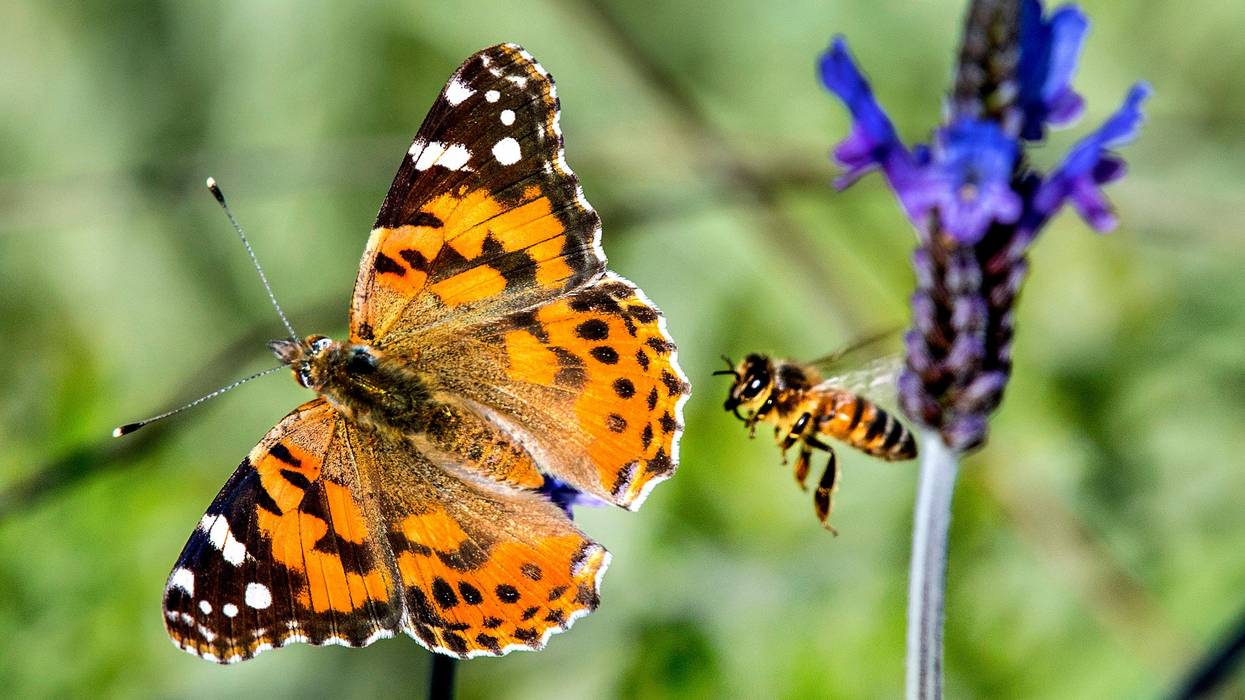
Environmental and food safety advocates highlighted Thursday the decline in iconic pollinators following new analyses released by the U.S. Environmental Protection Agency showing three widely used neonicotinoid insecticides are "likely to adversely affect" the majority of the endangered plants and animals the agency assessed.
"These extremely toxic pesticides are causing drastic ecological harm, both the collapse of bee populations as well as putting literally hundreds of endangered species at extinction risk across the country."
"Now the EPA can't ignore the fact that these popular insecticides are wiping out our country's most endangered plants and animals," Lori Ann Burd, environmental health director at the Center for Biological Diversity, said in a statement.
"Neonicotinoids are used so widely, and in such large quantities," she said, "that even the EPA's industry-friendly pesticide office had to conclude that few endangered species can escape their toxic effects."
Burd's comments came in response to draft biological evaluations for three neonicotinoids, or "neonics," which are: clothianidin, imidacloprid and thiamethoxam. The evaluations, which now face a 60-day public comment period, were required by settlements the agency reached earlier this year with NRDC and the Center for Food Safety (CFS).
Neonics have come under the repeated scrutiny of environmental watchdogs and scientists, with previous studies linking their use to harm to insects, including bees and butterflies, as well as birds and freshwater marine species.
In its Thursday statement, the Center for Biologicical Diversity summarized the EPA's damning findings on the neonics' adverse impacts to threatened species and their habitats :
Nearly 80% of all endangered species--1,445 different kinds of plants and animals--are likely to be "adversely affected" by imidacloprid, and the pesticide will adversely modify the designated critical habitats of 658 species. For thiamethoxam, 1,396 (77% of all) endangered species are likely to be adversely affected, and the pesticide will adversely modify the designated critical habitats of 644 species. About two thirds of all endangered species, 1,225, are likely to be adversely affected by clothianidin, and the pesticide will adversely modify the designated critical habitats of 644 species.
CFS also noted the "remarkable levels of harm" the evaluations found with regards to the neonics.
According to George Kimbrell, legal director of the group, the analyses "confirm what scientists have told EPA and industry for over a decade: These extremely toxic pesticides are causing drastic ecological harm, both the collapse of bee populations as well as putting literally hundreds of endangered species at extinction risk across the country."
In light of that confirmation, Kimbrell urged the Biden administration "to complete its process with all due speed in order to start protecting these iconic species."
Burd, in her comments, stressed that there's simply no reason for the EPA to further drag its feet on taking neonics off the shelves.
"The EPA doesn't need any more proof. It should ban neonicotinoids right now," she said, pointing to "a heartbreaking extinction crisis" in which neonics "are playing an outsized role."
"Pollinator populations are declining nationwide," Burd said, citing as evidence the decline in the American bumblebee. "Once the most common bumblebee in the country, [it] has declined by an estimated 89% in just the past 20 years. There are more Starbucks stores than monarch butterflies in California."
"What will it take," she asked, "for the EPA to act on this information and ban these deadly chemicals?"
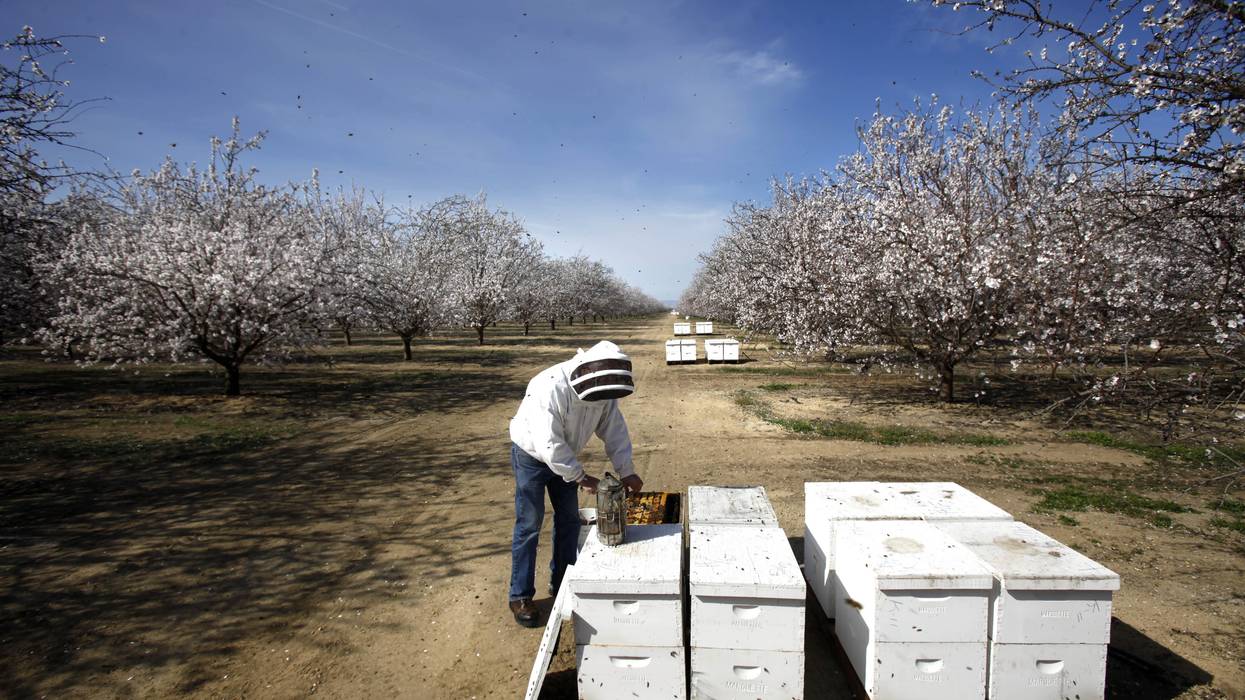
Beekeepers this year in the United States reported the second highest annual loss of managed honey bee colonies since records began in 2006, according to results of a nationwide survey released Wednesday.
The non-profit Bee Informed Partnership (BIP) said in its preliminary analysis that beekeepers--ranging from small backyard keepers to commercial operations--lost 45.5% of their colonies between April 2020 and April 2021. The results are based on a survey of over 3,300 U.S. beekeepers managing a combined 192,384 colonies.
"The worrisome part is we see no progression towards a reduction of losses."
"This year's survey results show that colony losses are still high," said Nathalie Steinhauer, BIP's science coordinator and a post-doctoral researcher in the University of Maryland Department of Entomology, in a statement.
The annual loss is 6.1 percentage points higher than the average loss rate of 39.4% over the last 10 years, the researchers said.
"Though we see fluctuations from year to year," said Steinhauer, "the worrisome part is we see no progression towards a reduction of losses."
During winter beekeepers reported losses of 32.2%--9.6 percentage points higher than last year and 3.9 points higher than the 15-year average. Summer losses came in at 31.1%. While that figure is 0.9 percentage points lower than last year, it's 8.6 points higher than the survey average.
The beekeepers attributed the losses this year to a number of factors, with the parasitic Varroa destructor mite being cited most frequently for winter losses and queen issues most frequent for summer losses. Other causes of colony loss beekeepers cited included starvation, weather, and pesticides.
Continued losses are bad news for food security, as agricultural crops like blueberries and almonds rely on the bees for pollination.
"Beekeepers of all types consistently lose a high number of colonies each year, which puts a heavy burden on many of them to recoup those losses in time for major pollination events like California almonds," said survey co-author Geoffrey Williams, an assistant professor of entomology at Auburn University.
"Colony losses remain elevated," he said, "and this year's annual and summer loss rates are among the highest recorded."
For Jason Davidson, senior food and agriculture campaigner with Friends of the Earth, the survey results were a damning indictment of the U.S. Environmental Protection Agency's (EPA) failure to act on what conservation advocates call an "insect apocalypse" that was furthered by the Trump administration's pro-pesticide industry decisions.
"These bee losses highlight the disturbing lack of progress from the EPA in the fight to protect pollinators from toxic pesticides," said Davidson, urging the EPA not to "sit on the sidelines while beekeepers experience horrific losses year after year."
"It will take meaningful policy protection and rapid market change to reverse these unsustainable declines in honey bees and to protect the future of our food supply," he added.
BIP's findings were delivered during National Pollinator Week and as Rep. Earl Blumenauer (D-Ore.) reintroduced (pdf) the Saving America's Pollinators Act.
Pollinators, Blumenauer said Wednesday, are "critically important to the food we eat and the environment that sustains us. Unfortunately, our pollinators weren't immune from [former President Donald] Trump's war on science and the environment. In fact, they were a target, as the previous administration actually fought to allow more bee-killing pesticides back on the market."
"Now, it's up to us to work overtime to protect them, which is why I've reintroduced the Saving America's Pollinators Act," he said.
According to Emily Knobbe, policy manager at the Center for Food Safety, which endorsed the legislation, "National Pollinator Week is the perfect time for Rep. Blumenauer to reintroduce his progressive pollinator protection bill--and a perfect time to ask legislators to support this continued dedication to pollinators."
She said the latest version of the bill rightly responds to the decline in pollinator health, pointing to the 80% decline in 20 years of the Eastern Monarch butterfly populations as one example. She also pointed to a group of pesticides called neonicotinoids, or neonics, as key to pollinator recovery, given their links to pollinator harm.
"Rep. Blumenauer's bill would require not a suspension, but a ban on all neonicotinoid pesticides," wrote Knobbe. "This change to the proposed legislation reflects that the time for requesting incremental action from the EPA has passed."
"Pollinators need swift action in order to survive--banning neonicotinoids would provide a lifeline for these essential species," she said.