

SUBSCRIBE TO OUR FREE NEWSLETTER
Daily news & progressive opinion—funded by the people, not the corporations—delivered straight to your inbox.
5
#000000
#FFFFFF
To donate by check, phone, or other method, see our More Ways to Give page.
Daily news & progressive opinion—funded by the people, not the corporations—delivered straight to your inbox.
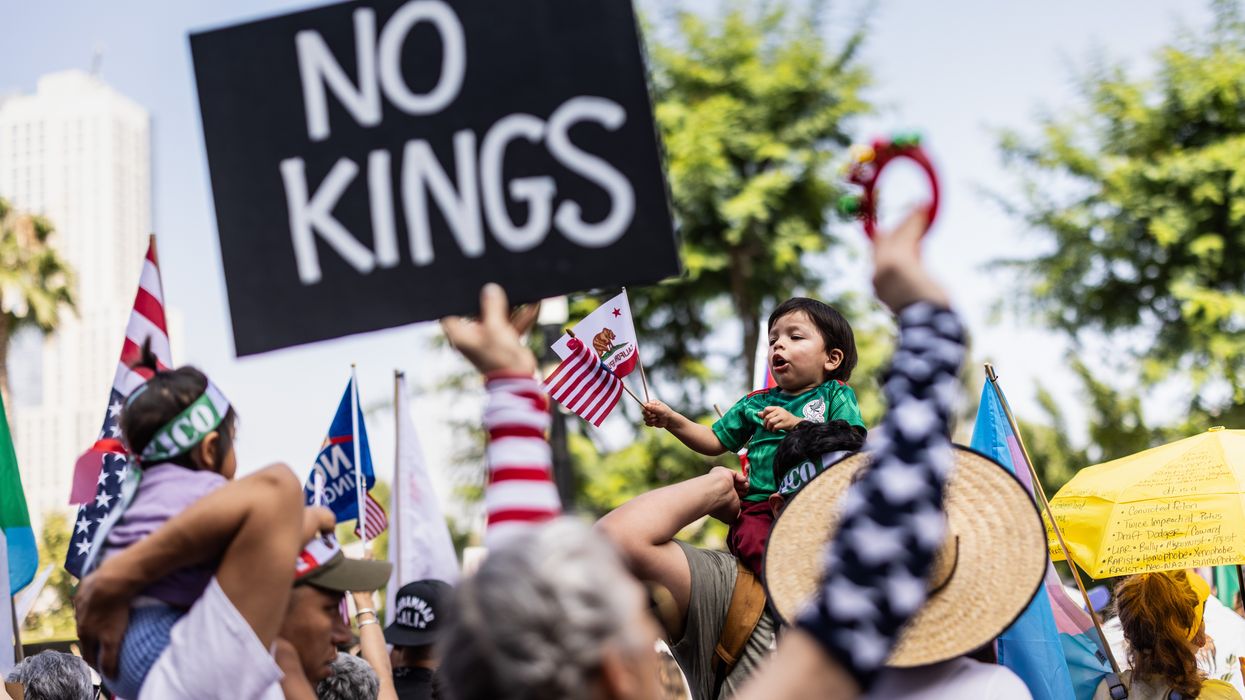
"The American people are fed up with Trump's pathetic attempt at wearing the crown," said one event organizer.
The coalition of progressive organizations that helped organize the nationwide "No Kings" protests this summer are ramping up for a potentially even bigger event in the fall.
The organizations pushed out new publicity on Monday about the "No Kings 2" demonstrations scheduled to take place across the country on October 18. The planned demonstrations come as the Trump administration is accelerating its plans to send the National Guard into US cities and continues to send masked Immigration and Customs Enforcement (ICE) agents into immigrant communities.
Sponsors of the No Kings 2 events include ACLU, American Federation of Teachers, Common Defense, 50501, Human Rights Campaign, Indivisible, League of Conservation Voters, MoveOn, National Nurses United, Public Citizen, SEIU, and United We Dream Action.
In an interview with Rolling Stone, Indivisible co-founder Ezra Levin said that he expected this fall's No Kings sequel to be even bigger than the first one, which drew an estimated 5 million people into the streets across more than 2,000 events. Levin also outlined the importance of hitting a critical threshold for anti-Trump demonstrations.
"Experts in authoritarianism tell us, based on research, that you need 3.5% of the population engaged, in a sustained way, to successfully push back against an authoritarian regime," he said. "In the American context, that's about 11 or 12 million people. For No Kings 1, we got about halfway there. And we have funneled a lot of those people into our trainings around strategic noncooperation. But we need to come together again."
Jacob Thomas, a United States Armed Forces veteran and communications director for "No Kings 2" sponsor Common Defense, said in a statement that a common theme that has united the organizations is the fight against US President Donald Trump's authoritarian ambitions.
"We must all do our part to fight back against his authoritarianism and military occupation of cities," he said. "We cannot allow a wannabe dictator to destroy our democracy, gut veteran healthcare, keep people from accessing the ballot box, and tank our economy. We must all join together in solidarity to fight back and secure our freedoms."
Human Rights Campaign president Kelley Robinson said the protests were necessary because Trump's actions were direct attacks on the American dream of "freedom afforded to all people."
"Since taking office, he has tried to erode our freedoms and amass power for himself, censoring history, undermining our voting rights, defying the rule of law, and stripping people of basic rights simply because of who they are or who they love," she said. "But this country does not and will never have a king. The power of the people is and will continue to be greater than the man obsessed with keeping power for himself."
Lisa Gilbert, co-president of Public Citizen, ticked off a list of grievances against the president to argue that mass protests against him are needed now more than ever.
"In less than 10 months of his presidency, Trump has ticked off every box of a king's playbook," she said. "He has plastered his face on banners across DC, weaponized National Guard troops against our communities, disappeared people or thrown them out of the country without due process, attempted to sabotage elections and erode our democracy, and trivialized the power of Congress and the courts. He has violated the Constitution over and over again. The American people are fed up with Trump's pathetic attempt at wearing the crown."
The first set of "No Kings" protests came on Trump's 79th birthday, on the same day he put on a massive military parade that cost $30 million to produce.
"This is going to be the oiliest administration since George W. Bush," lamented one environmental campaigner.
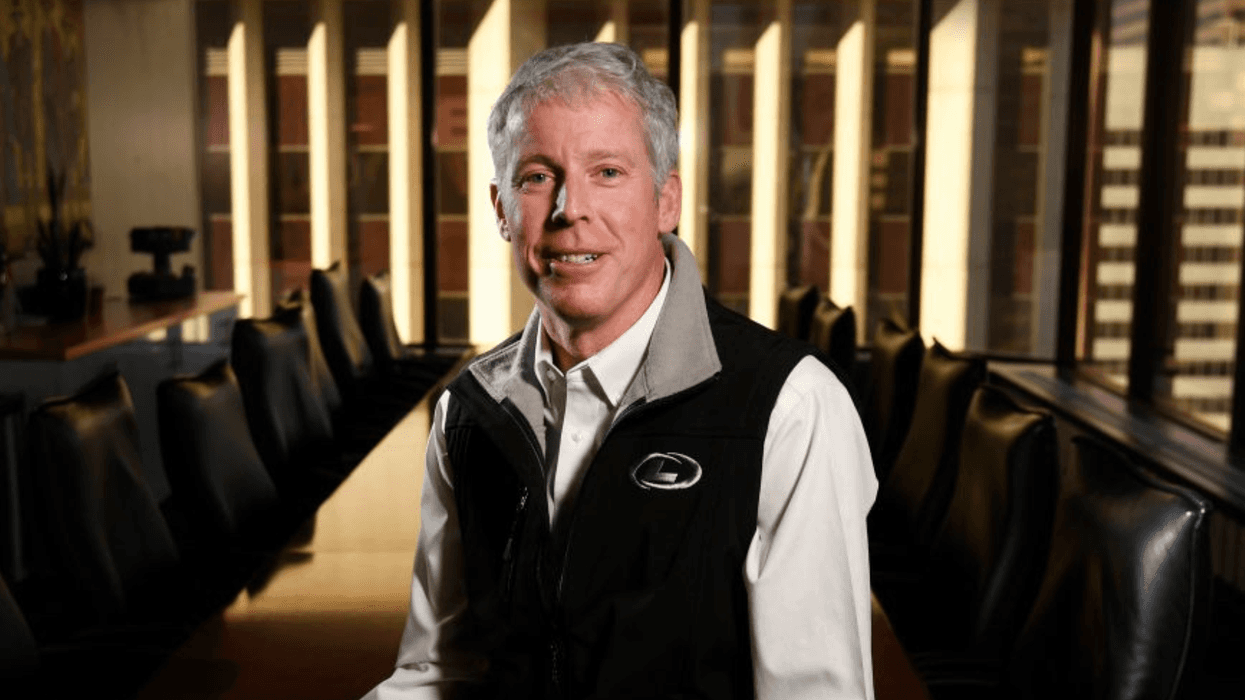
In a move that alarmed green groups, Republican President-elect Donald Trump on Saturday tapped Chris Wright—the CEO of a fracking company who denies the climate emergency—as his energy secretary.
Wright, who leads the Denver-based oil services company Liberty Energy, is a Republican donor whose nomination to head the Department of Energy is backed by powerful fossil fuel boosters including oil and gas tycoon and Trump adviser Harold Hamm.
"Chris has been a leading technologist and entrepreneur in Energy. He has worked in Nuclear, Solar, Geothermal, and Oil and Gas," Trump said in a statement announcing his choice. "Most significantly, Chris was one of the pioneers who helped launch the American Shale Revolution that fueled American Energy Independence, and transformed the Global Energy Markets and Geopolitics."
"Not surprising but still appalling that Trump's pick for Energy Secretary is a Big Oil CEO."
Trump—who has promised to increase fossil fuel production beyond the record-setting levels of the Biden administration—also said Wright would serve on a new Council of National Energy led by Doug Burgum, his pick to run the Interior Department.
In a post on X, the social media platform formerly known as Twitter, Wright said that he is "honored and grateful for the opportunity" to be nominated by Trump.
"My dedication to bettering human lives remains steadfast, with a focus on making American energy more affordable, reliable, and secure," he added. "Energy is the lifeblood that makes everything in life possible. Energy matters. I am looking forward to getting to work."
Wright calls himself "a lifelong environmentalist" and said last year that "climate change is a real problem." However, he also said in 2023 that "there is no such thing as clean energy or dirty energy" and that "there is no climate crisis and we're not in the midst of an energy transition either."
While fossil fuel proponents cheered Wright's nomination, climate and environmental defenders voiced alarm over the pick.
"Not surprising but still appalling that Trump's pick for Energy Secretary is a Big Oil CEO," League of Conservation Voters senior vice president for government affairs Tiernan Sittenfeld wrote on X.
Natural Resources Defense Council senior vice president for climate and energy Jackie Wong blasted Wright as "a champion of fossil fuels" whose nomination was "a disastrous mistake."
"The Energy Department should be doing all it can to develop and expand the energy sources of the 21st century, not trying to promote the dirty fuels of the last century," Wong said in a statement reported by The Associated Press. "Given the devastating impacts of climate-fueled disasters, DOE's core mission of researching and promoting cleaner energy solutions is more important now than ever."
Patrick Donnelly, Great Basin director at the Center for Biological Diversity, lamented that "this is going to be the oiliest administration since George W. Bush."
"Harris grasps the urgency and scale of the challenge," an expert said. "She'll advance the climate progress we've made at home and internationally."
Four environmental groups on Monday evening endorsed the presidential run of U.S. vice president and presumptive Democratic nominee Kamala Harris, whom many campaigners view as slightly stronger on climate issues than President Joe Biden.
The League of Conservation Voters Action Fund, the Natural Resources Defense Council (NRDC) Action Fund, the Sierra Club, and Clean Energy for America Action issued a statement of support for Harris and pledged to mobilize millions of their supporters behind her.
“Kamala Harris is a courageous advocate for the people and the planet," said Ben Jealous, Sierra Club's executive director.
"She has worked for decades to combat the climate crisis and protect our health and future," he added.
Manish Bapna, president of NRDC Action Fund, agreed that the vice president was well-equipped to step into the top role and deal with the climate crisis.
"Harris grasps the urgency and scale of the challenge," Bapna said. "She'll advance the climate progress we've made at home and internationally. She'll raise climate ambition to make sure we confront the climate crisis in a way that makes the country more inclusive, more economically competitive, and more energy secure."
The Sierra Club is proud to endorse @KamalaHarris for President. The Biden-Harris administration has made historic strides in environmental and climate action. We must continue this progress with Harris at the helm. Our future depends on it!https://t.co/DDCiUBcK2F pic.twitter.com/Hdkl5mQ1U5
— Sierra Club (@SierraClub) July 22, 2024
The joint statement followed a wave of endorsements from leading Democrats in the day and a half after Biden dropped out of the race and backed Harris. Evergreen Action, a climate advocacy group, also endorsed Harris.
The Sunrise Movement thanked Biden for stepping aside, after pushing him to do so. The group hasn't endorsed Harris but has, on social media, touted Harris' earlier climate proposals and initiatives, encouraging her to be as bold as she was on the issue in 2019 while running for president. That year, as a senator from California, she co-sponsored a Green New Deal bill pushed by Sen. Ed Markey (D-Mass.) and Rep. Alexandria Ocasio-Cortez (D-N.Y.), saying that climate change posed an "existential threat to our nation."
As a presidential candidate, Harris ran to the left of Biden on climate issues, calling for $10 trillion in climate investment, a carbon tax, and a ban on fracking and on new oil leases on federal lands. She even said that she would support eliminating the Senate filibuster rule in order to pass a Green New Deal.
And during a 2019 town hall on climate, Harris identified an underlying climate problem more squarely than many corporate Democrats are willing to do.
"On this issue, guys, as far as I'm concerned, it's not a question of debating the science," Harris said at the time. "It's a question of taking on powerful interests, taking on the polluters, understanding that they have a profit motive to pollute."
Yet that Harris candidacy, wedged awkwardly between corporate Democrats such as Biden and progressives such as Sen. Bernie Sanders (I-Vt.), flopped and she dropped out of the race in December 2019.
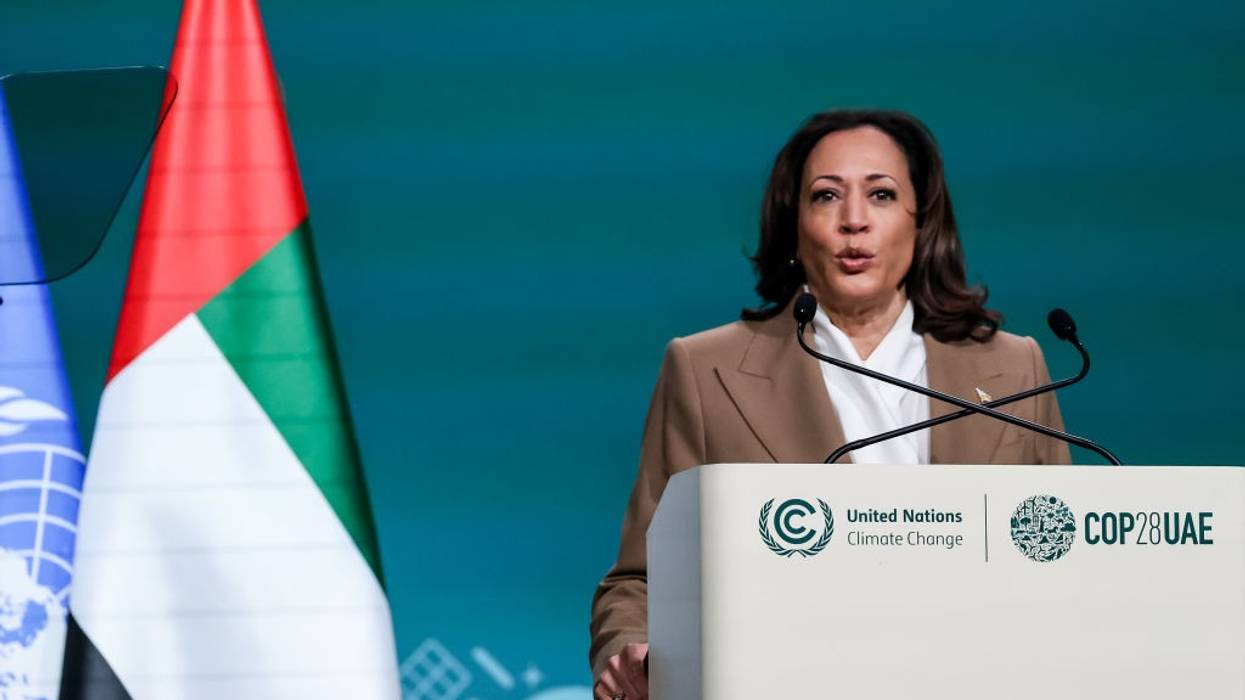
As vice president, Harris cast the tie-breaking vote for the Inflation Reduction Act, which Biden, in his momentous letter on Sunday, called "the most significant climate legislation in the history of the world." She also represented the U.S. at the COP28 climate change summit in Dubai last year, speaking in strong terms about the need for action.
"The urgency of this moment is clear," she said in Dubai. "The clock is no longer just ticking, it is banging. And we must make up for lost time."
"Around the world, there are those who seek to slow or stop our progress, leaders who deny climate science, delay climate action, and spread misinformation," she added. "In the face of their resistance and in the context of this moment, we must do more."
Longtime Harris observers in California commend her environmental record there. As district attorney of San Francisco, she established one of the nation's first environmental justice departments. She later pushed environmental measures as state attorney general and U.S. senator representing California: electrifying school buses, replacing lead water pipes, and strengthening vehicle emissions standards, for example.
As attorney general, she sued oil companies including Chevron, BP, and ConocoPhillips over pollution issues and took legal action against the Obama administration over fracking. Later, in the town hall event, she she said was proud to be a "fighter" who "took on the Big Oil companies—great, powerful interests."
Bloomberg reported Sunday that Harris is "seen as [a] tougher oil industry opponent than Biden."
Though Harris no longer calls for a Green New Deal and has moderated her rhetoric as part of the Biden administration, she still offers a stark contrast to Republican nominee Donald Trump, whose administration rolled back over 100 climate policies from 2017 to 2021. The new Republican platform doesn't mention climate change and vows to "drill, baby, drill"—in all caps.

Big Oil CEOs are expected to host Trump as they seek to "pad their already enormous profits at the expense of our climate," one expert said.
Presumptive Republican nominee Donald Trump will reportedly attend a fundraising luncheon organized by leading oil and gas executives in Houston on Wednesday, following a controversial offer he made to the industry to roll back environmental regulations in return for $1 billion in campaign donations—with two companies associated with both events.
At his Mar-a-Lago Club last month, Trump told a group of roughly two dozen oil and gas executives that $1 billion would be a "deal" for them, given how much money they would make in reduced taxes and regulations if he is elected, The Washington Post first reported.
Top executives at Continental Resources and Occidental Petroleum, two of the companies with representatives reportedly present when the offer was made, are among the organizers of Wednesday's luncheon, according to The New York Times. Harold Hamm, the executive chairman and founder of Continental Resources and one of the luncheon's organizers, has been a longtime supporter of Trump; he spoke at the 2016 Republican convention.
Trump's campaign has raised about $7.3 million from the oil and gas industry in the 2024 election cycle, most of it since January, while President Joe Biden has taken in just $186,000, according to OpenSecrets data reported by the Times. These figures don't include money given to super PACs.
The industry has grown less supportive of Biden since his administration paused liquefied natural gas (LNG) export permits to certain countries in January, a move that was hailed by environmental campaigners.
"This LNG pause is a huge deal for climate and environmental justice," Tiernan Sittenfeld, the senior vice president of government affairs for the League of Conservation Voters (LCV), told the Times this week.
" Big Oil gave $6.4 million to Trump's 2024 campaign in just the first three months of 2024 alone," LCV said on social media Monday. "Make no mistake: Trump and his Big Oil friends are an existential threat to our communities, planet, and future."
The pause could affect the monumental profits of the oil and gas industry. Following the fracking boom of the last two decades, the U.S. has become the world's leading exporter of LNG. Qatar, the second-largest exporter, announced plans to increase production following the U.S. pause.
During the Trump presidency, LNG exports boomed and the tax cuts that he signed disproportionately benefited the industry. Trump presumably sought to capitalize on this history in making the quid pro quo offer, which Gov. Gavin Newsom (D-Calif.) characterized as a case of "open corruption."
The quid pro quo offer was underreported by cable news, according to an analysis by Media Matters for America, but has been the subject of a congressional probe. Jamie Raskin (D-Md.), ranking member of the U.S. House Committee on Oversight and Accountability, sent letters to eight oil and gas firms reportedly present for the Mar-a-Lago offer and the American Petroleum Institute, a lobby group, requesting information about their financial arrangements with Trump. He expressed concern that they may have "accepted or facilitated Mr. Trump's explicit corrupt bargain."
Trump made the Quid Pro Quo $1 billion deal with Big Oil execs at a recent fundraiser in Mar-a-Lago. And Democrat Rep. Jamie Raskin @RepRaskin & other Dems are now opening an investigation via @AliciaMenendez @MSNBC #JamieRaskin #TrumpQuidProQuo #TrumpBigOilDeal #MarALago https://t.co/N1HfmZNnic pic.twitter.com/VjqYFuEVmM
— LLeigh_Laura 🌀 🌊 (@LeighNYC_Laura) May 16, 2024
The oil and gas industry stands to make $110 billion from tax breaks alone if Trump is elected, according to an analysis by Friends of the Earth Action released last week.
While Trump's quid pro quo offer was direct and nakedly transactional in a way that may be new, his party has long-standing oil industry ties.
"Maybe some of these Big Oil CEOs preferred a different candidate in the primary, but it was clear that they were always going to support the Republican nominee," LCV's Sittenfield said. "They are all about continuing to pad their already enormous profits at the expense of our climate."

One campaigner called out legislators for "acting quickly to protect a few big polluting industries while continuing to disregard the health, energy, and environment needs of entire families and neighborhoods."
Nine Democrats joined with all present Republicans in the U.S. House of Representatives on Thursday to pass a bill intended to reverse President Joe Biden's recent halt on approvals for all liquefied natural gas exports to non-fair trade agreement countries.
Democratic Reps. Yadira Caraveo (Colo.), Jim Costa (Calif.), Henry Cuellar (Texas), Jared Golden (Maine), Vincente Gonzalez (Texas), Rick Larsen (Wash.), Mary Peltola (Alaska), Marie Gluesenkamp Perez (Wash.), and Marc Veasey (Texas) helped the House GOP pass the Unlocking Our Domestic LNG Potential Act in a 224-200 vote.
Federal law requires the U.S. Department of Energy to authorize LNG exports to countries with which the United States does not have a free trade agreement. H.R. 7176, sponsored by GOP Rep. August Pfluger (Texas), would eliminate that requirement and give the Federal Energy Regulatory Commission (FERC) authority over LNG import and export decisions.
"Gas exports fuel the climate emergency, sacrifice Gulf communities and wildlife, and increase energy costs at home."
While Republican legislators and industry representatives celebrated the vote, H.R. 7176 isn't expected to be taken up in the Democrat-controlled Senate—and even then, it could be vetoed by the president, who made clear in a Tuesday statement that he strongly opposes the legislation.
Frontline and climate advocates who had welcomed the pause announcement last month still sounded the alarm about the bill's passage—an example of what could happen if Republicans gain more seats in Congress and control of the White House in November, when Biden is expected to face former GOP President Donald Trump.
"This vote shows House Republicans are as willing as ever to sacrifice our future in favor of the fossil fuel industry's bare greed," said Camden Weber, a policy specialist at the Center for Biological Diversity. "Gas exports fuel the climate emergency, sacrifice Gulf communities and wildlife, and increase energy costs at home. We should continue to pause LNG exports, and the Biden administration should use this time to develop a robust public interest test for all dangerous fossil fuel projects."
Elida Castillo, program director of Chispa Texas, part of the League of Conservation Voters, declared that "H.R. 7176 is terrible for many local communities already impacted by out-of-control LNG expansion all along our Texas Gulf coastline."
"Today's House vote represents some elected officials acting quickly to protect a few big polluting industries while continuing to disregard the health, energy, and environment needs of entire families and neighborhoods, often their own constituents," Castillo argued. "The impact of LNG facilities on local communities should be taken seriously, and our federal government has a responsibility to examine the impacts of LNG expansion on our environment and communities.
"Instead, this bill makes it irresponsibly easy for LNG exporters to build, extract, pollute, and then export," she stressed. "The Biden administration's pause on new LNG facilities should continue."
In addition to calling out those who voted for H.R. 7176, campaigners are applauding the Democrats who opposed it, with Fossil Free Media's Jamie Henn saying that "this is the type of fearless leadership we need!"
The House vote came as FERC greenlighted construction of the Saguaro Connector Pipeline, which would transport gas from Texas' Permian Basin to a planned LNG export facility on Mexico's coast.
"The commission's decision ignores the harm record methane gas exports have on raising Americans' energy bills and exacerbating climate change, all to prioritize feeding more gas to China," said Tyson Slocum, director of Public Citizen's Energy Program.
"The Saguaro export pipeline's only purpose is to bypass the log-jammed Panama Canal to send U.S. produced gas to planned LNG export terminals on Mexico's Pacific Coast," he added. "Public Citizen, as a legal intervenor in the FERC proceeding, will ask for rehearing of today's flawed FERC order."

"We cannot allow policy that harms regular people, threatens our rights, hurts the environment, and does any number of other terrible things to ride along with the appropriations package," said Public Citizen's Lisa Gilbert.
A coalition of advocacy groups on Monday sounded the alarm on the more than 200 so-called "poison pill" riders attached by Republican U.S. lawmakers to House spending bills in recent weeks in a bid to block funding for a dizzying range of progressive policies and programs.
According to the Clean Budget Coalition—which is made up of nearly 260 advocacy groups—"at least 104 poison pill policy riders were added to appropriations bills drafted in the U.S. House over the past week."
"Prior to the July 4th recess, it took two months for House Republican appropriators to add more than 100 new poison pills to draft spending bills marked up in committee," the coalition noted. "In the past week alone, the previous total has doubled to more than 217."
"Most of these measures are special favors for big corporations and ideological extremists that have nothing to do with funding our government and could not become law on their own merits," the groups added. "Some of them attack women's health, some fuel political corruption, some harm our environment, and much more."
Some of the riders tracked by the Clean Budget Coalition include measures to block proposed transportation safety rules and prohibit funding for the World Health Organization, climate mitigation, gender equality programs, and criticial race theory education. Other riders target gas stove bans, funding for high-speed rail, pesticide warning labeling, wildlife protection, reproductive healthcare, and diversity, equity, and inclusion programs.
"The sheer volume of dangerous riders being included in these draft bills is an overreach and an emergency," Lisa Gilbert, executive vice president of the consumer advocacy group Public Citizen and co-chair of the Clean Budget Coalition, said in a statement.
"We cannot allow policy that harms regular people, threatens our rights, hurts the environment, and does any number of other terrible things to ride along with the appropriations package," Gilbert added. "We must put out this five-alarm fire by rejecting the inclusion of poison pills."
"The sheer volume of dangerous riders being included in these draft bills is an overreach and an emergency."
To that end, the Clean Budget Coalition is calling on lawmakers to "pass clean spending bills" by removing all poison pill riders and opposing passage of "any legislation that includes these unpopular and controversial special favors for big corporations and ideological extremists."
David Shadburn, senior government affairs advocate at the League of Conservation Voters—a Clean Budget Coalition member—said earlier this month that "House Republicans continue using the same tired playbook: They're hijacking must-pass bills with harmful poison pill riders that neither the public nor Congress support but benefit their polluter donors."
"Just as Republican leaders held the full faith and credit of the United States hostage to make it easier to pollute, now they are proposing riders to greenlight pipelines, block clean air and water regulations, stall clean energy deployment, and prohibit the federal government from addressing long-standing inequities," Shadburn added. "These must-pass spending bills are already loaded down with harmful poison pill riders that need to be removed—the last thing Congress should do is add more."
Campaigning in Appalachia on Monday, Hillary Clinton claimed she "misspoke" when previously declaring her opposition to coal, telling voters that as president, she would work to ensure that the dirtiest of the fossil fuels will "continue to be sold and continue to be mined."
Arriving in Williamson, West Virginia—the heart of coal country—the Democratic frontrunner was greeted by a wall of protesters angry over remarks she made in March foretelling the end of the coal industry.
During the March 13 town hall event, Clinton said that her energy policy would "bring economic opportunity—using clean, renewable energy as the key—into coal country. Because we're going to put many coal companies and miners out of business."
And earlier, at a November press conference announcing her League of Conservation Voters endorsement, the presidential hopeful declared, "We have to move away from coal. Everybody understands that. There's no doubt about it."
While environmentalists celebrated those comments, they aroused the ire of people dependent on coal jobs, such as Bo Copley, a former coal company employee who was one of the West Virginia residents who met with Clinton on Monday.
During their discussion, Copley referenced those previous remarks, asking: "I just want you to know--how can you say you're going to put a lot of coal miners out of jobs and then come in here and tell us you're going to be our friend?" He added that the protesters outside "don't see you as a friend."
Clinton apologized for the "misstatement" and said she was "sad and sorry" that people had "misused her comments."
"I don't know how to explain it other than what I said was totally out of context for what I meant because I have been talking about helping coal country for a very long time," Clinton said. "It was a misstatement because I was saying that the way things are going now, they will continue to lose jobs. It didn't mean that we were going to do it. What I said is that is going to happen unless we take action to help and prevent it."
In fact, the coal industry has seen a sharp decline in recent years, most recently evidenced by Peabody Coal's bankruptcy last month.
Earlier on Monday, Clinton expanded on what sort of "action" she would take during a conversation about "economic barriers and jobs " in Ashland, Kentucky.
"We've got to do a lot more on carbon capture and sequestration," she told voters, "and try to see how we can get coal to be a fuel that can continue to be sold and continue to be mined."
Carbon capture and sequestration (CCS), or "clean coal," has long been touted as a greener method of burning fossil fuels and is a pillar of Clinton's energy agenda.
But such techno-fixes to our climate crisis have been dubbed a "marketing myth" as scientists and environmentalists widely agree that the only way to combat our rising carbon emissions is to keep coal and other fossil fuels "in the ground."
Throughout the campaign, Clinton's climate record has received a great deal of scrutiny as she has been accused of shifting her stance on issues like fracking and accepting donations from fossil fuel industry representatives.
Clinton is currently holding a two-day "Breaking Down Barriers" driving tour of the region ahead of the May 10th West Virginia primary. On Tuesday, voters in Indiana will cast their ballots in what is expected to be a close Democratic race.