SUBSCRIBE TO OUR FREE NEWSLETTER
Daily news & progressive opinion—funded by the people, not the corporations—delivered straight to your inbox.
5
#000000
#FFFFFF
To donate by check, phone, or other method, see our More Ways to Give page.


Daily news & progressive opinion—funded by the people, not the corporations—delivered straight to your inbox.
"My arrest has focused international attention on Japan's continuing illegal whaling operations and their intent to go back to the Southern Ocean," said Watson. "So, in fact, these five months have been an extension of the campaign."
The prominent anti-whaling activist Paul Watson was released Tuesday from prison in Greenland after Danish officials rejected a request by Japan to extradite him.
Watson was arrested in Greenland, an autonomous territory of Denmark, in July due to a warrant issued by Japan in 2012, which alleged that Watson had interfered with a Japanese whaling vessel and caused injury to a crew member in 2010, according to The New York Times. He could have faced up to 15 years in jail if convicted.
"I am certainly relieved as this means I get to see my two little boys. That's really been my only concern this entire time. I understand the risks of what we do and sometimes you get arrested—although I am proud of the fact that I have never been convicted of a crime," Watson told the Guardian. Watson's two sons are aged three and eight.
To the outlet AFP, he said: "My arrest has focused international attention on Japan's continuing illegal whaling operations and their intent to go back to the Southern Ocean... So, in fact, these five months have been an extension of the campaign."
Watson, a Canadian American who co-founded Greenpeace and founded Sea Shepherd—a group that uses direct action to protect marine wildlife and oceans—was traveling in July with 25 volunteers on a mission to the North Pacific for the Captain Paul Watson Foundation (CPWF), which he started after leaving Sea Shepherd in 2022. When the vessel arrived in Nuuk, Greenland to refuel, Danish police arrested him.
The CPWF denounced the surprise arrest, which came as Watson planned to intercept a new Japanese factory whaling ship.
Watson was also featured in the Animal Planet television show Whale Wars that ran from 2008 until 2015, in which he led efforts to disrupt Japanese whaling on the high seas.
Japan has a long, complicated history with whaling. Whale meat was seen as an important protein for the country after World War II. Japan joined the International Whaling Commission, an international body that placed a moratorium on commercial whaling in the 1980s, in 1951. In 2019, Japan left the body and began catching whales commercially the same year, according to the International Whaling Commission.
In 2014, the International Court of Justice ruled against Japan in a case involving charges that Japan was using a scientific research program as a front for a commercial whaling venture in the Antarctic.
After denying for several days reports that they were planning to leave the International Whaling Commission (IWC), Japanese officials said Wednesday that the country would withdraw from the 89-member panel in order to defy its ban on commercial whaling.
The move will eliminate the country's long-held "pretense" of hunting whales only for research purposes, said the conservation group Sea Shepherd, as Japan officially declares itself a "pirate whaling nation."
"This means that Japan is now openly declaring their illegal whaling activities," Paul Watson, founder of the group, told the New York Times.
"It's clear that the government is trying to sneak in this announcement at the end of year away from the spotlight of international media, but the world sees this for what it is. The declaration today is out of step with the international community." --Sam Annesley, Greenpeace Japan
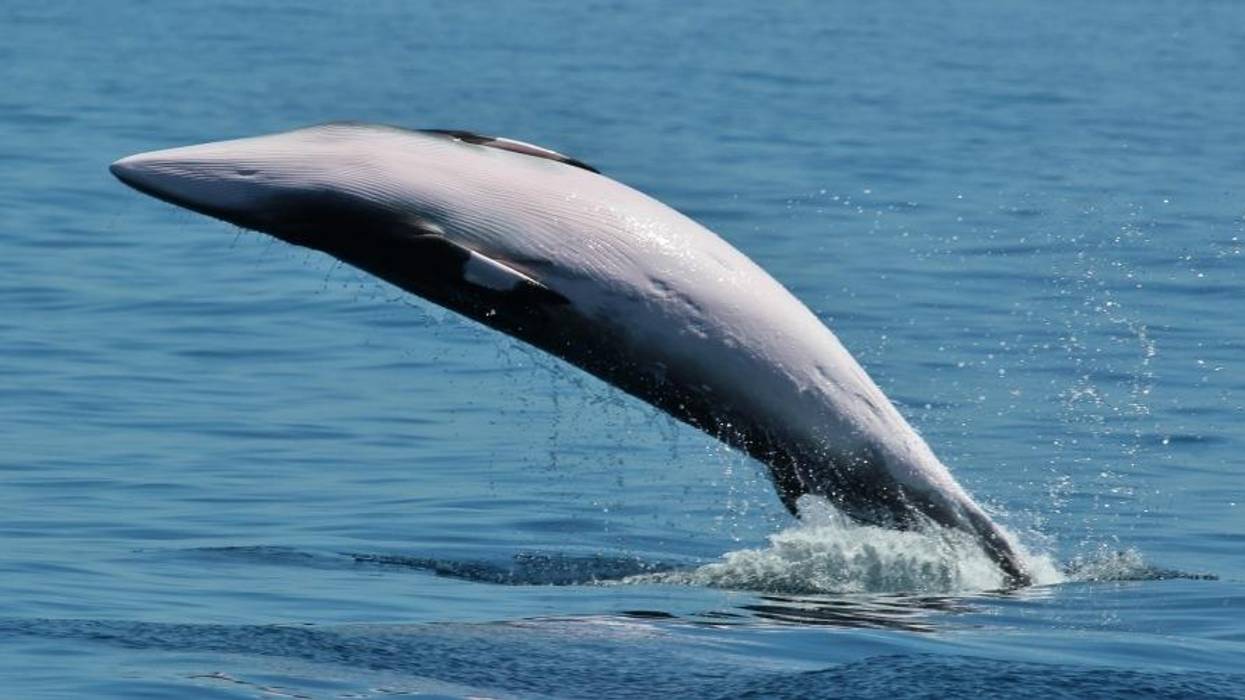
Since the IWC introduced its ban on commercial whaling in 1986, Japan has used regular so-called "research whaling" trips off the coasts of Antarctica as a loophole to continue its whale-hunting. The country has killed an average of 333 minke whales on its expeditions, including more than 120 pregnant female whales last year.
Instead of traveling to the Southern Ocean every year, Japanese whalers will now resume hunting in Japan's territories and exclusive economic zone beginning in July 2019, selling whale meat on the open market.
Greenpeace Japan noted that the country's timing of the announcement would not stop green groups from condemning its plan to openly slaughter whales for profit.
"It's clear that the government is trying to sneak in this announcement at the end of year away from the spotlight of international media, but the world sees this for what it is," said Sam Annesley, the group's executive director. "The declaration today is out of step with the international community, let alone the protection needed to safeguard the future of our oceans and these majestic creatures."
Following Iceland and Norway, which have also defied the IWC's ban on commercial whaling, Japan's withdrawal from the international body will mark the end of its participation in the global effort to save the world's whales from human activity.
"The Commission is the pre-eminent global body responsible for the conservation and management of whales and leads international efforts to tackle the growing range of threats to whales globally, including by-catch, ship strikes, entanglement, noise, and whaling," said Australia's environment minister, Melissa Price, in a statement. "Their decision to withdraw is regrettable and Australia urges Japan to return to the Convention and Commission as a matter of priority."
As Common Dreams reported last week, Japan first denied rumors of its plans to leave the IWC. Chief cabinet secretary Yoshihide Suga admitted in a statement that the government is putting its own " life and culture of using whales" ahead of conservation efforts.
"In its long history, Japan has used whales not only as a source of protein but also for a variety of other purposes," Suga said.
In fact, demand for whale meat in Japan has plummeted in recent years, with the industry depending on government subsidies to survive.
Commercial whaling represents the exact opposite direction Japan should be headed in regarding marine activity, Greenpeace Japan said.
"The world's oceans face multiple threats such as acidification and plastic pollution, in addition to overfishing," Annesley said. "As a country surrounded by oceans where people's lives have been heavily reliant on marine resources, it is essential for Japan to work towards healthy oceans. Japan's government has so far failed to resolve these problems.
"As the chair of the G20 in 2019, the Japanese government needs to recommit to the IWC and prioritize new measures for marine conservation," he concluded.
Sea Shepherd has accomplished something absolutely remarkable over the last 12 years.
In 2005 we set out to tackle the world's largest and most destructive whaling fleet. We were told it was impossible by some governments and a few NGO's.
Hardly anyone even knew about Japan's illegal slaughter in the Southern Ocean. It was out of sight and out of mind. They were targeting 1,035 whales a year including a yearly quota of 50 endangered Humpbacks and 50 endangered Fin whales.
We had few resources but we took our one battered and slow vessel, the Farley Mowat and we chased the whalers across the Southern Ocean, catching them only for a few hours at a time until they sped away from us.
In 2006 we were able to purchase the Steve Irwin and the tables began to turn as each year we became stronger and more effective. We brought in the Bob Barker, the Sam Simon, the Brigitte Bardot and the Ocean Warrior.
Sea Shepherd was relentless in reducing the yearly quotas significantly and in 2012/2013 the Japanese whalers went home with only about 10% of their intended kills. We did this at the same time the U.S. Federal Court put significant legal obstacles in our path.
The results speak for themselves. Over 6,000 whales saved. Not a single endangered Humpback killed and only 10 endangered Fin whales killed in a decade where 500 were slated to die. In addition, the Japanese whalers lost tens of millions of dollars.
We exposed Japan's illegal activities to the world with our TV show Whale Wars and our documentation.
We helped to push Australia into taking Japan to the International Court of Justice where their operations were ruled to be unlawful. Japan was ordered by the ICJ to cease and desist.
They did so for a year and then returned with a new program (also illegal) that reduced their bogus self-allocated kill quota to 333 each year. This means that since 2015 another 1400 whales were spared the lethal harpoons. This means that 702 whales will continue to be saved every year.
Unfortunately, in an effort to prevent Sea Shepherd interventions, they doubled their killing grounds which means that they have more time and more area to kill their lowered quota.
Despite that, Sea Shepherd sent the Steve Irwin and the Ocean Warrior in pursuit of the whalers in 2016/2017 and although it took them longer and cost them much more, the Japanese whalers managed to get their quota.
What we discovered is that Japan is now employing military surveillance to watch Sea Shepherd ship movements in real time by satellite and if they know where our ships are at any given moment, they can easily avoid us. During Operation Nemesis, the Sea Shepherd ships did get close and our helicopter even managed to get evidence of their illegal whaling operations but we could not physically close the gap. We cannot compete with their military grade technology.
This year Japan escalated their resistance with the passing of new anti-terrorism laws, some of which are specifically designed to condemn Sea Shepherd tactics. For the first time ever, they have stated they may send their military to defend their illegal whaling activities.
The Japanese whalers not only have all the resources and subsidies their government can provide, they also have the powerful political backing of a major economic super-power. Sea Shepherd however is limited in resources and we have hostile governments against us in Australia, New Zealand and the United States.
The decision we have had to face is: do we spend our limited resources on another campaign to the Southern Ocean that will have little chance of a successful intervention OR do we regroup with different strategies and tactics? If something is not working the only recourse is to look for a better plan, because when a plan no longer works, the only alternative is an improved course of action.
We need to formulate this new plan and we will.
We will not be sending ships to the Southern Ocean this year, but are not abandoning the Southern Ocean Whale Sanctuary. We need to cultivate the resources, the tactics and the ability to significantly shut down the illegal whaling operations of the Japanese whaling fleet. In the meantime, it's time for the Australian government to live up to their promises. Sea Shepherd has been down in the Southern Ocean doing what the Australian government has the responsibility to do but have refused to do, and that is upholding international and Australian conservation law. Instead of supporting Sea Shepherd the Australian government has been supporting the Japanese whalers by harassing Sea Shepherd and obstructing Sea Shepherd's ability to raise funds by denying our charitable status.
What Sea Shepherd has accomplished over the last 12 years demonstrates what people of passion can accomplish with few resources despite heavy multi-government opposition.
The Japanese whalers have been exposed, humiliated and most importantly have been denied thousands of lives that we have spared from their deadly harpoons. Thousands of whales are now swimming and reproducing, that would now be dead if not for our interventions,
And perhaps more significantly than anything else, there are now voices in the Japanese government opposing the continuation of whaling. Our efforts have been like acupuncture needles stuck into Japanese society, probing and provoking responses. We have exposed the incredible waste of money, the corruption and the shame this dirty business has brought to all the Japanese people. Our efforts have been so significant that one Japanese official said that Japan has two enemies - China and Sea Shepherd!
Sea Shepherd's continuing efforts to go after and shut down whalers will continue, and not only against Japanese whaling, but also against Norwegian, Danish, and Icelandic whaling. This is what we have been doing for forty years. We will never quit until the abomination of whaling is abolished forever by anyone, anywhere, for any reason.
Sea Shepherd is doing incredible things on the Ocean with limited resources, in addition to tackling illegal whaling activities. The endangered Vaquita would now be extinct if not for our intervention. We shut down the entire Southern Ocean pirate toothfish fleet. We have intercepted and stopped poachers off West Africa, in the marine reserves of the Galapagos, Sicily and Panama. We have removed hundreds of tons of ghost nets and plastics from the sea, and most importantly we have shown the world what a few passionate and courageous people can do.
Our objective is to continue to serve and protect all life in the Ocean from illegal and greedy exploitation by destructive humans.
Sea Shepherd is guided by this one reality: If the Ocean dies, we die!

The international marine wildlife conservation organization Sea Shepherd is engaged in "epic" pursuit of an alleged poaching vessel in the Southern Ocean, about 2,300 nautical miles from South Africa, or about 80 nautical miles outside of Australian Antarctic waters.
The dramatic chase, which has gone on for 22 days, is thought to be the world's longest sea chase of an illegal fishing vessel.
On December 17, the Sea Shepherd Conservation Society ship Bob Barker intercepted a known poaching vessel, the Nigerian-flagged Thunder, a trawler on the Commission for the Conservation of Antarctic Marine Living Resources's black list of illegal operators. The Thunder is known to utilize gillnets in its poaching operations--a method of fishing outlawed by CCAMLR due to the risks it poses to marine mammals, sea turtles, and other oceanic species.
The Telegraph reports that "[t]he poachers, who are on an Interpol wanted list for illegal fishing, were on the hunt for the endangered Patagonian toothfish, whose buttery fillets are sold in high-end restaurants as Chilean Sea Bass."
Once the ship was within radio distance, Bob Barker captain Peter Hammarstedt ordered the Thunder to Fremantle, Australia, to report to Australian law enforcement authorities.
"I have notified the Captain of the Thunder and his crew that they have been placed under citizen's arrest; that they must cease their illegal fishing activities immediately and report to the Australian authorities," he said at the time. "Should they ignore this order, I have notified the Thunder that Sea Shepherd has no choice but to directly intervene in order to obstruct their continued illegal activities."
And intervene it did. The trawler failed to heed Hammarstedt's order and instead attempted to evade its pursuers by sailing through waters dotted with ice floes and beset by heavy storms.
Bob Barker claims to be currently on the stern of the alleged poachers, some 1,000 nautical miles southeast of South Africa.
"Certainly we are prepared to chase these poachers to the ends of the Earth and back if we have to," Hammarstedt told Agence France-Presse.
Meanwhile, Sea Shepherd's sister ship, the Sam Simon, has begun a recovery operation to remove the Thunder's illegal gillnet from the Antarctic waters. In late December, it retrieved what it described as a "monster" gillnet more than 30 miles long.
"This monster net has entangled and suffocated marine life, killing them in the most undignified way imaginable," said Sam Simon captain Sid Chakravarty. "My decks look like a battlefield with many of the recovered creatures in advanced stages of decomposition. The large number of dead animals that we have documented is proof of the wide-spread destruction that the Thunder has wreaked over its decade-long onslaught on the Southern Ocean."
For the crew, there was a silver lining to the nefarious episode: In the course of their pursuit, Sea Shepherd conservationists encountered a pod of 'Ecotype D' orcas, a rare species of killer whale characterized by large bulbous foreheads and tiny post-ocular eye markings. There have been just 13 sightings of this type of orca, ever.
"The crew watched in awe as the 13 killer whales, including a small juvenile and a large male, used the six-meter swell to surf across the bow," reported Erwin Vermeulen, chief engineer on the Bob Barker. "For almost an hour the surf-show continued and was accompanied by bow riding, tail-slaps and breaches."
Watch never-before-seen footage of the orca pod below:
Crew of the Bob Barker encounter rare "Ecotype D" OrcasNEVER BEFORE SEEN FOOTAGE: On December 26, 2014, while in pursuit of the poaching vessel Thunder, the crew of Sea ...

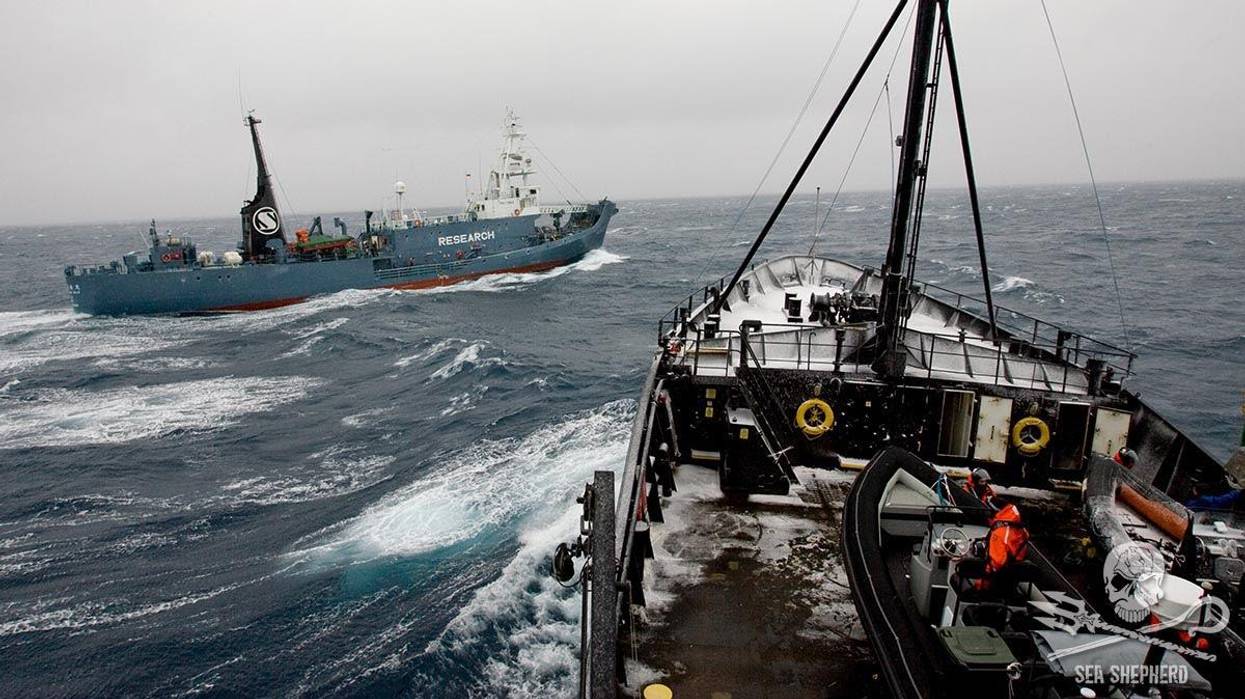
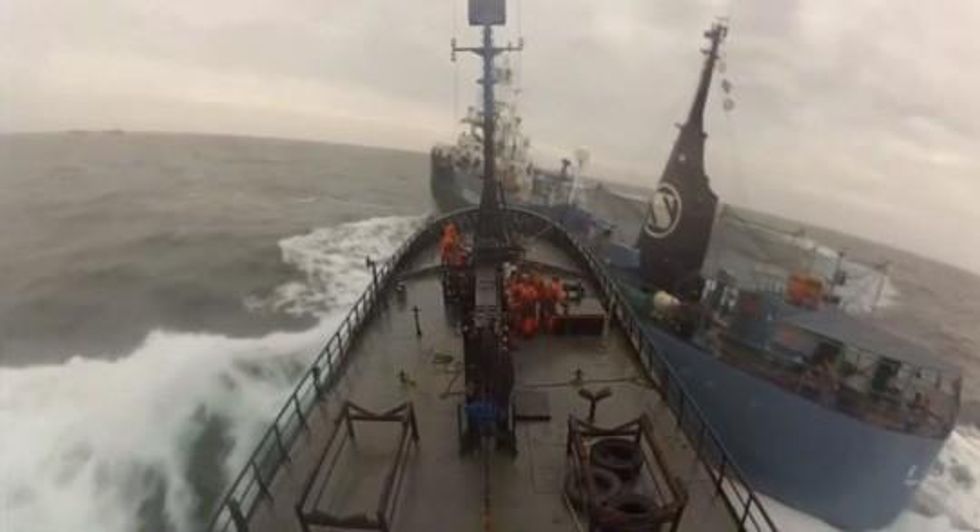
Activists with the ocean conservationist group Sea Shepherd say their ship was attacked by Japanese whaling ships on the high seas in the Southern Ocean on Sunday, claiming the whalers deliberately collided with their ship amidst other attempts to damage the vessel.
The latest confrontation with Japanese whalers comes as Sea Shepherd continues its fight to protect endangered whales from what they call on an ongoing "slaughter of wildlife in the world's oceans." The group often uses their ships to blockade vessels they consider to be illegally poaching whales in internationally protected waters.
The International Whaling Commission considers the Southern Ocean a sanctuary for the large mammals.
"The Sea Shepherd ships Steve Irwin and Bob Barker were both unprovokedly [sic] attacked by three harpoon ships belonging to the Japanese whale poaching fleet," Captain of the Bob Barker Peter Hammarstedt told Australia's ABC.
"These harpoon ships came in heavy and hard. They hit my bow with about 300 meters of steel cable with the express intent of causing damage to my rudder and propellers," Hammarstedt continued. "Thankfully because of a lot of evasive maneuvering I was able to avoid being entangled, but on one occasion one of the harpoon ships came so close that they ended up colliding with my vessel."
The group said their boat suffered damages during the attack, but no one was injured.
The Japanese government claimed that the collision was the fault of Sea Shepherd, and the Australian government announced Sunday that it will launch an investigation into the incident.
Watch footage of the collision released by Sea Shepherd:
Boat collision footage: Sea Shepherd ship rammed by Japanese whaling vesselSubscribe to ITN News: https://bit.ly/1bmWO8h Sea Shepherd Australia has released footage of one of its vessels being rammed by ...
Anti-whaling activists the Sea Shepherd published video evidence Sunday of Japanese whalers slaughtering protected whale species in marine preservation in the Southern Ocean.
The conservation group obtained footage of three dead minke whales, a protected species, on the deck of the Nisshin Maru, and a fourth whale, also believed to be a minke, being butchered on the ship, the Sydney Morning Herald reports. Crew members are seen mopping up large pools of blood on the deck.
After documenting the slaughter, the three-vessel Sea Shepherd fleet--which includes the Steve Irwin, the Bob Barker and the Sam Simon--drove the five Japanese whaling ships from the New Zealand maritime sanctuary in the first encounter of the current whaling season.
The Guardian reports:
The whaling boats were operating within the whale sanctuary in New Zealand's territorial waters, located in the Ross Sea in Antarctica, according to Sea Shepherd.
Conservationists argue that Australia should enforce its own Antarctic territory by cracking down on whaling, which has been deemed unlawful by the federal court. However, only four nations - which do not include Japan - recognise Australia's claim to Antarctic land and sea territory.
Though condemning the actions of the Japanese whalers, neighboring governments have thus far done little to deter the practice.
According to the Sea Shepherd crew, "There was no sign of either the HMNZS Otago, which patrols New Zealand's southern waters during the whaling season or an Australian government aircraft, which was proposed by the country's environment minister, Greg Hunt, instead of the customs vessel he promised before the election."
"The Australian government have effectively said to its fleet, 'Don't intervene on this crime.' That's the problem here," said Bob Brown, Sea Shepherd Australia chairman. "They're Australian whales, effectively, and they've been slaughtered illegally."
"The pictures speak for themselves. It's a bloody outrage," he added.
Though agreeing on the Japanese operation is "pointless and offensive," New Zealand foreign affairs minister Murray McCully added that the area of the slaughter constituted "international waters and not within New Zealand's maritime jurisdiction."
Following a season of intense confrontation during which the whalers reportedly rammed into Sea Shepherd vessels and fired both water cannons and stun grenades, this initial episode ended without violent confrontation.
"We are keeping on their tail and they aren't whaling at the moment so we're happy about that, at least," Jeff Hansen, the managing director of Sea Shepherd Australia, told Guardian Australia. "There is no need for confrontation; the number one priority is the protection of whales."
Below is the video evidence obtained by the Sea Shepherd crew. The footage contains both graphic and disturbing images.
Exposed: Japan kills whales inside sanctuary - Sea Shepherd videoEnvironmental campaign group Sea Shepherd says it has video of the Japanese fleet killing protected whales inside an ...
The fight to protect endangered whales in the Antarctic reached a boiling point over the weekend when Japanese whalers bombarded high-seas activists from the group Sea Shepherd as they tried to thwart the fleet from hauling in a dead whale.
"We blocked it for nine attempts, but then their harpoon ship attempted to try and come across and hit us, so we ducked away, and that's when they were able to make the transfer of that whale," Sea Shepherd Australia's Jeff Hansen said.
The whalers are illegally operating in Australian waters, so the group urged Australian authorities to intervene—but to no avail.
"The Japanese whalers are slaughtering protected, threatened, and endangered species of whales within this sanctuary in violation of a global moratorium on commercial whaling," founder and president of Sea Shepherd Paul Watson writes at the Guardian today. "They are also in contempt of an Australian federal court ruling from 2008 that specifically forbade them from killing whales in the waters of the Australian Antarctic territory."
"Is this Australian territory or not? If it is, then come down and exert some kind of authority," Hansen said.
Since the confrontation, Sea Shepherd boats have successfully blockaded further catches and resumed their showdown with the Japanese whaling fleet. The group also maintains that the whaling fleet has spilled oil into the pristine waters.
Watson adds:
Three days ago the Japanese harpoon vessel Yushin Maru #2 killed a minke whale within the Australian Antarctic Territory, only 50 miles from the Australian Davis Research base on the Antarctic coast.
This is the first time since 2009 that they have killed a whale in front of us and they did so deliberately to test our resolve. [...]
The Sea Shepherd crews are committed to blocking the illegal whaling operations, and it appears the whalers are under orders to kill as many whales as possible. This is gearing up for a major showdown, and the challenge for the Sea Shepherd volunteers is to save as many whales as possible while ensuring that no one is injured by an increasingly hostile and aggressive crew of whalers, made all the more dangerous by the extreme remoteness and intense weather and sea conditions.
The group, who have now campaigned against Japanese whalers in the Antarctic for nine years, originally set out this year with Operation Zero Tolerance to "send the whalers home without them killing a single whale." They will now forge on to prevent as many whale deaths as possible--hoping to drive the industry into financial collapse.
After discovering a support ship for a Japanese whaling fleet in pursuit of environmental activists in Australian waters this week, the Australian government filed an official protest with Tokyo demanding the fleet leave its territorial waters in the Southern Ocean.
After tailing the Sea Shepherd's Bob Barker vessel earlier this week, the Japanese Shonan Maru No 2 entered the country's exclusive economic zone despite warnings "on a number of occasions that vessels associated with its whaling program are not welcome in Australia's Exclusive Economic Zone or Territorial Sea," Australia environment minister Tony Burke said in a statement issued Thursday.
Bob Brown, former Australian Green party leader, who assumed leadership of the Sea Shepherd's anti-whaling campaign from founder Paul Watson earlier this month, told ABC News that "Tokyo has ignored the call from the federal government for this part of the whaling fleet not to enter the zone."
Whalers claim the Shonan Maru No 2 provides "security" to the rest of the fleet each winter as it sails to the Southern Ocean for what it calls "scientific research"--despite a 25-year-old ban on commercial whaling. But each year the fleet hopes to kill 935 minke whales and 50 fin whales.
However, run-ins with the Sea Shepherd vessels during the past two years have kept catches lower than expected, according to The Guardian.
Brown told ABC:
[The Shonan Maru No 2] is accompanying the whaling ships into the killing fields offAntarctica.
When the Sea Shepherd ship Bob Barker made contact with the factory ship, this ship tailed Bob Barker and has been doing so for a couple of days.
The Bob Barker has lost the [factory ship] Nisshin Maru but that was after it was hunted out of the whaling area and this Customs vessel, this government vessel, has kept with the Bob Barker through to Macquarie Island and into Australia's economic zone waters.
Channel News Asia reports that the Sea Shepherd's ship left Australia on Wednesday and located and was tailing the harpoon ship Yushin Maru No. 3.
"This vessel has armed personnel aboard," Brown said. "It is an affront to Australia that it is entering our territorial waters surrounding the World Heritage-listed Macquarie Island, which is part of Tasmania."
Japan Today reports that in December, the Australian government said it had lodged a legal challenge to Japanese whaling at the International Court of Justice in The Hague and expects it to be heard this year.
Paul Watson, founder of the marine conservation organization Sea Shepherd, stepped down today as Captain of the Steve Irwin and group director after nine years of fighting to stop the Japanese whaling industry in the Southern Ocean.
As the Sea Shepherd fleet prepares to blockade Japanese whaling vessels in the Antarctic, Watson plans to remain on board to document the voyage but has handed over the reins of the group for this year's campaign to former Australian Green Party founder Bob Brown.
Sea Shepherd Australia director Jeff Hansen said the change in leadership had to do with Watson's recent legal problems.
Watson, who recently returned to the Sea Shepherd fleet, had spent the past several months evading Interpol. He fled from Germany earlier this year after being arrested at the request of the Costa Rican government, which is pursuing him on a warrant that claims he endangered a fishing vessel crew in 2002.
Watson maintains that the charges against him are politically motivated and can be traced to the Japanese government, which wants to remove him from the world's oceans.
"We obviously always want to stay within the law in everything that we do, and in order for us to stay within the law Sea Shepherd Australia is taking over the leadership of this campaign, the management of this campaign and Paul will step down from the board in Australia and in America," Hansen told Agence-France Presse.
"I am honored to serve the great whales of the Southern Ocean and Sea Shepherd in this way," said Brown. "My admiration for Paul Watson is inversely proportional to the Japanese government's anger at Sea Shepherd's success at preventing the slaughter of almost 4,000 whales in recent years," he added.
When the sea conservation activist group Sea Shepherd added a new vessel to their anti-whaling fleet this week, they did so to the ire of both the Japanese government and the Japanese whaling industry. Though the Japanese government owned the ship and were overseeing its sale, they did not realize the buyer was the whaling industry's number one sea-faring nemesis, nor did they know the sale would put the number of ships in the Sea Shepherd anti-whaling fleet up to the same number of Japanese whaling ships heading for the Antarctic.
"The $2 million dollar vessel, which previously belonged to the country's meteorological agency, was bought from unsuspecting Japanese authorities by a US company, re-registered in the Pacific island of Tuvalu as the New Atlantis, and delivered to Australia by a Japanese crew," the Guardian reports today.
Locky Maclean, captain of the new ship, the SSS Sam Simon, stated Monday: "After months of secrecy, it is such a great feeling to finally be able to fly the Sea Shepherd flag from the main mast, and yes, Sea Shepherd now owns a real Japanese research ship!"
Sea Shepherd founder Paul Watson who has been on the run from Interpol since spring for what he maintains are politically motivated charges originating from the Japanese government, has recently returned to his fleet and has thus far managed to elude authorities.
He stated Tuesday that the group now has "four ships, one helicopter, drones and more than 120 volunteer crew from around the world ready to defend majestic whales from the illegal operations of the Japanese whaling fleet."
"We're confident we can seriously impact their whale quota. This year all four of their harpoon ships are going to be tied up by our four ships, and the goal is that no harpooning can be done," MacLean added.
Sea Shepherd's Operation Zero Tolerance will seek out the Japanese whaling fleet once again and attempt to "chase it out of the Antarctic Treaty Zone without a single whale killed."
The group has had varying degrees of success in diverting industrial whaling in the Southern Ocean since 2005, and managed to send the Japanese whaling fleet home early last year with only one-fifth of its desired catch.