SUBSCRIBE TO OUR FREE NEWSLETTER
Daily news & progressive opinion—funded by the people, not the corporations—delivered straight to your inbox.
5
#000000
#FFFFFF
To donate by check, phone, or other method, see our More Ways to Give page.


Daily news & progressive opinion—funded by the people, not the corporations—delivered straight to your inbox.
"Communities have spoken loud and clear that it is unacceptable to use the Hudson River as a dumping ground," said one campaigner.
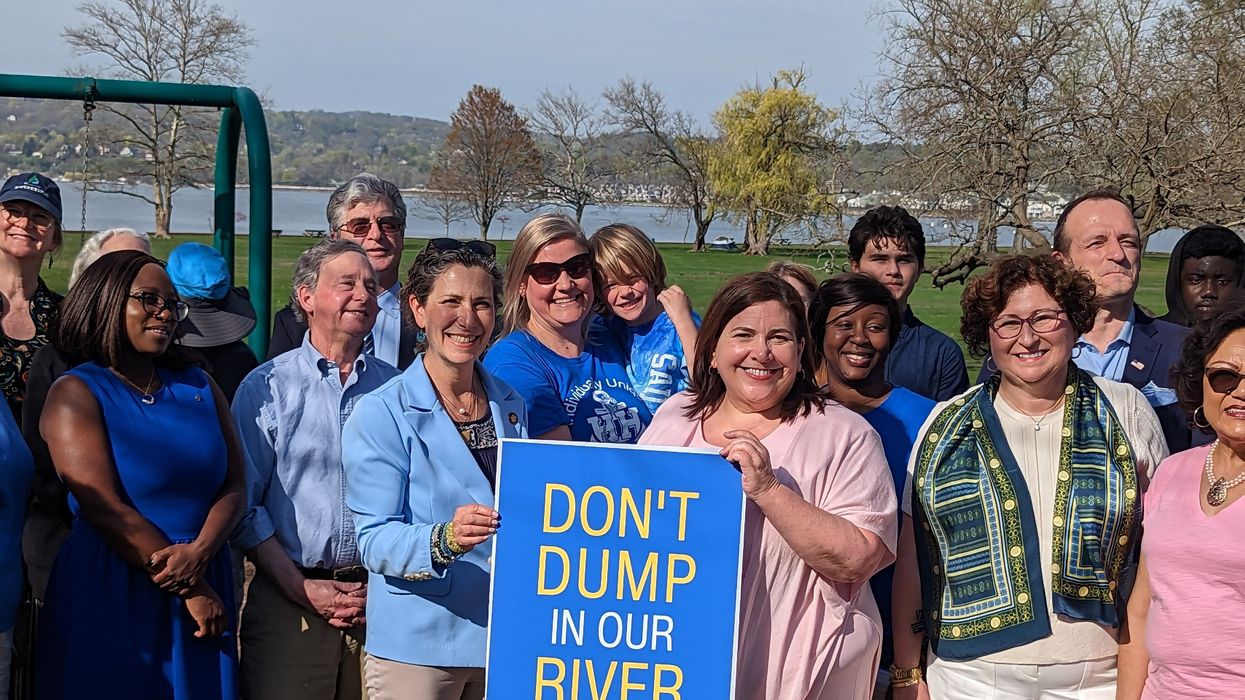
Public health advocates in New York celebrated what one organizer called "the power of our communities over corporations" after Gov. Kathy Hochul signed legislation passed two months ago into law, barring companies from dumping nuclear wastewater into the Hudson River.
The Democratic governor's decision to sign the Save the Hudson Bill (A.7208/S.6893) came weeks before Holtec International was planning to begin discharging 45,000 gallons of wastewater from pools that were used to cool spent nuclear reactor fuel at the former Indian Point nuclear power plant.
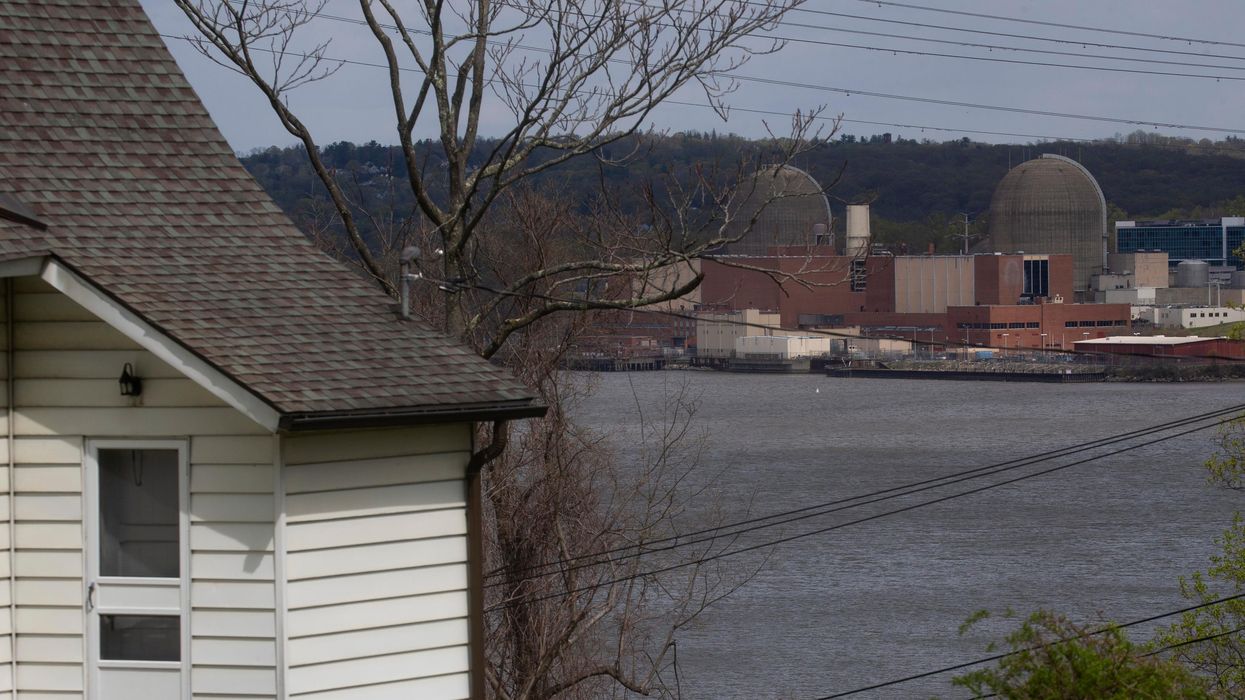
The company ultimately planned to dump one million gallons of the wastewater into the Hudson, which at least 100,000 people use for their drinking water. The water could contain the isotope tritium, which has been linked to cancers, miscarriages, and genetic defects.
Organizers at Riverkeeper, Food & Water Watch (FWW), the Indian Point Safe Energy Coalition (IPSEC), and other groups have led hundreds of thousands of New Yorkers in speaking out against the plan—which was originally supposed to move forward in May but was delayed following public outcry.
"Gov. Hochul is sending a strong signal to corporate polluters—industrial waste has no place in our water," said Alex Beauchamp, Northeast regional director of FWW. "The Save the Hudson bill will ensure that the Hudson River is no longer treated as a toxic dumping ground, prioritizing public health and the environment over corporate expediency. Holtec's plan to dump radioactive water in the Hudson River was dangerous from the start, and New Yorkers from all over the state quickly organized robust opposition."
More than 400,000 people, 35 localities, and 138 civil society groups have petitioned Hochul to sign the bill in recent months, with advocates saying Holtec should be directed to store the wastewater in tanks at the site of Indian Point—which was shut down in 2021 after decades of local activism—until a safe method of disposal can be determined.
"This is a victory for the Hudson River and all its advocates!" said Marilyn Elie of IPSEC. "We are all better off because of this bill becoming law. Now on to see what Holtec's response will be and how they will store the tritiated water."
State Sen. Pete Harckham (D-40), who sponsored the bill, called the signing of the bill "one of the great environmental victories in state history."
"The overwhelming opposition from the public against Holtec's profit-driven discharges has resonated across New York," said Riverkeeper president Tracy Brown, "as communities have spoken loud and clear that it is unacceptable to use the Hudson River as a dumping ground for radioactive waste."
"We have spent decades cleaning up the Hudson, and now the river is, once again, a major economic driver for the region and the state as a whole," said one state lawmaker. "Let's keep protecting the Hudson!"
State and local lawmakers rallied with public health advocates in White Plains, New York on Tuesday to demand that Gov. Kathy Hochul end her silence on legislation that was passed in June to prohibit the dumping of radioactive waste into the Hudson River.
The rally was held ahead of a "listening tour" the Democratic governor is beginning regarding environmental legislation, and weeks before energy technology firm Holtec International is scheduled to begin discharging 45,000 gallons of wastewater from pools that were used to cool spent nuclear reactor fuel at the former Indian Point nuclear power plant.
The company ultimately plans to dump one million gallons of the wastewater into the Hudson, which at least 100,000 people rely on for their drinking water.
The New York Legislature passed a bill (A.7208/S.6893) in June to prohibit such discharges, but Hochul has yet to sign it.
"Gov. Hochul is running out of time to save the Hudson," said Emily Skydel, Hudson Valley organizer for Food & Water Watch. "With less than a month until Holtec's planned toxic dump, Gov. Hochul must waste no more time protecting our river. Gov. Hochul must sign the 'Save the Hudson' bill now—before it's too late."
The discharge was originally slated to begin in May, but Holtec paused the plan after outcry from U.S. Sens. Chuck Schumer (D-N.Y.) and Kirsten Gillibrand (D-N.Y.) as well as state Sen. Pete Harckham (D-40) and state Assemblymember Dana Levenberg (D-95).
The lawmakers spoke out as groups including Riverkeeper and Physicians for Social Responsibility warned that the wastewater could be contaminated with the isotope tritium, which is linked to cancer, miscarriages, and genetic defects.
"We have spent decades cleaning up the Hudson, and now the river is, once again, a major economic driver for the region and the state as a whole," said Harckham on Tuesday. "Let's keep protecting the Hudson! I urge Gov. Hochul to sign our 'Save the Hudson' legislation, and truly thank all of the environmental advocates and supporters who are helping to stop radioactive wastewater from being dumped into this magnificent river, one of our country's natural treasures."
Assemblymembers representing Westchester County wrote to Hochul last week, urging her to sign the bill. More than 400,000 people, 35 localities, and 138 civil society groups have also called on her to take action to stop the discharge.
"Residents and advocates here have spoken loudly and we have a responsibility to listen to their concerns," said Erika Pierce, a Westchester County legislator. "The radioactive wastewater needs to be tested thoroughly before it is released into the Hudson River, and we need those results back so that they can be evaluated before this process can move forward. We don't get a redo on this."
Assemblymember Chris Burdick (D-93) called Holtec's plan "unconscionable."
"Such an action would be detrimental to our health, our water quality, and our environment," he said. "We simply cannot allow this dangerous dumping to occur."
"Holtec's ploy is ludicrously dangerous—and it's on Gov. Hochul to stop the dump," said one campaigner.
Ahead of a public hearing scheduled for Tuesday evening regarding Holtec International's plan to discharge 1 million gallons of wastewater from the former Indian Point Energy Center in Buchanan, New York, more than 100 organizations wrote to Gov. Kathy Hochul this week demanding she take action to stop the plan for good.
Led by the Stop Holtec Coalition, 138 groups including Food & Water Watch, Hudson Riverkeeper, and Beyond Nuclear called on the Democratic governor to support the passage of state Senate Bill 5181 and Assembly Bill 5338, both of which would prohibit the dumping of "any radiological agent into the waters of the state."
Food & Water Watch New York tweeted last week that it is "time for Gov. Hochul to choose a side" regarding radioactive waste dumping.
"We are deeply concerned about the impacts on the health and safety of local residents, the river's ecosystem, and local economies," wrote the groups. "The Hudson Valley region is densely populated and also serves as a recreational area for millions from New York City and across the state. We call on you to use your authority as governor to ensure the necessary state and federal agencies take action to halt the dumping of toxic waste into our waterways including the Hudson River."
The letter was sent less than two weeks after Holtec announced it would delay its plan to begin the discharge, which had previously been set to begin in May with the dumping of 45,000 gallons of wastewater from pools that were used to cool spent nuclear reactor fuel rods before Indian Point was shuttered in 2021 after decades of local activism.
The company initiated a "voluntary pause" on the plan this month to give it time to better explain the discharge process to local community members—about 100,000 of whom use the Hudson as a primary drinking water source.
With groups including Physicians for Social Responsibility (PSR) warning in recent months that the treated wastewater could contain the isotope tritium—which can cause cancer, miscarriage, and other adverse health effects—many local leaders and residents say they don't need Holtec to further explain the plan to know that they oppose it.
"To best ensure public health and safety, Holtec should be required use the precautionary principle and keep radioactive fuel pool water contained on site—and not release it out into the environment, where it can bioaccumulate in the aquatic ecosystem and put swimmers and paddlers and others at risk of exposure," said Manna Jo Greene, environmental action director for Hudson River Sloop Clearwater. "When passed, Gov. Holchul should urgently sign the [S.B. 5181] and the Indian Point Decommissioning Oversight Board should do everything in its power to ensure the best possible alternative is implemented."
Advocates have said Holtec should keep the wastewater in tanks at the site of the decommissioned plant until a safe disposal method can be found.
The signatories of the letter sent to Hochul noted that 21 municipalities have recently passed resolutions officially opposing the discharge plan, and nearly half a million people have signed a petition to stop Holtec.
"Holtec's ploy is ludicrously dangerous—and it's on Gov. Hochul to stop the dump," said Wenonah Hauter, executive director of Food & Water Watch. "Years after activists successfully halted the nuclear threat in the Hudson Valley, we are called to arms yet again to defend precious water resources from industry's expediency. Gov. Hochul must listen to the people, and do everything in her power to keep radioactive waste out of our water."
"My constituents are already overburdened with the negative environmental externalities left behind by industrial infrastructure, and we should not be treated like pawns in this process," said one local lawmaker about Holtec International's now-paused plan.
Clean water and public health advocates in New York's Hudson Valley applauded Thursday as the energy technology company Holtec International announced it will not move ahead with plans to dump wastewater next month from the former Indian Point Nuclear Power Plant, following intense pressure from local communities and state lawmakers.
The company had initially planned to complete its first discharge of wastewater from pools that were used to cool spent nuclear reactor fuel rods late this summer, but recently announced that in May it would discharge 45,000 gallons of the water into the Hudson River, which at least 100,000 people rely on for their drinking water.
The company ultimately plans to release one million gallons of wastewater into the river.
Holtec International said it was taking a "voluntary pause" in the plan to better explain the process of decommissioning the plant, which was shut down in 2021, to the local community and elected officials.
Local clean water group Riverkeeper expressed appreciation that Holtec "heard the concerns of public" and said advocates will continue pushing for an alternative to releasing the wastewater into the Hudson.
Riverkeeper and Physicians for Social Responsibility (PSR) are among the groups that have raised concerns about the presence in the wastewater of the isotope tritium, which can be carcinogenic and is harmful to pregnant women and developing fetuses. Advocates have called on Holtec to store the water in tanks on the Indian Point site until a safe alternative disposal method can be found.
"There has been no prior disclosure of what pollutants or radioactive contaminants are in the wastewater or any public education on the environmental safety and public health risks associated with any potential discharges from the site," said local public health experts in a statement in January as PSR held the first of several public forums about the risks associated with Holtec's discharge plan.
The proposal has sparked outcry from local, state, and federal officials in New York in recent weeks. In March, state Sen. Pete Harckham (D-40) proposed legislation to ban any release of radioactive waste into the Hudson.
"I welcome Holtec postponing the planned release of radioactive wastewater into the Hudson River," said Harckham on Thursday.
State Assemblymember Dana Levenberg (D-95) expressed relief that Holtec's plan has been postponed for the time being and said she is as "committed as ever to ensuring that the needs of my constituents are respected throughout this process."
"My constituents are already overburdened with the negative environmental externalities left behind by industrial infrastructure, and we should not be treated like pawns in this process," said Levenberg earlier this month. "What we need is a partner who will work with us to facilitate a safe and just decommissioning of this plant, in a way that respects the surrounding communities. The people of my district have made it clear that this conversation should not be one-sided; Holtec should not be the only participant driving the schedule. What is efficient for Holtec may not be what is in the best interest of our communities and our natural resources."
U.S. Senate Majority Leader Chuck Schumer (D-N.Y.), who joined Sen. Kirsten Gillibrand (D-N.Y.) in writing to the Nuclear Regulatory Commission about Holtec's plan on April 6, said he was "relieved that Holtec has heeded our call and will put a stop to its hastily hatched plan to dump radioactive wastewater into the Hudson."
The state's Indian Point Decommissioning Oversight Board is scheduled to hold an online meeting regarding the wastewater on April 25, where community members and officials will be able to comment on the issue.
"Doctors know that there is no such thing as a safe dose of radiation, and that harmful impacts are cumulative," said the president of Physicians for Social Responsibility.
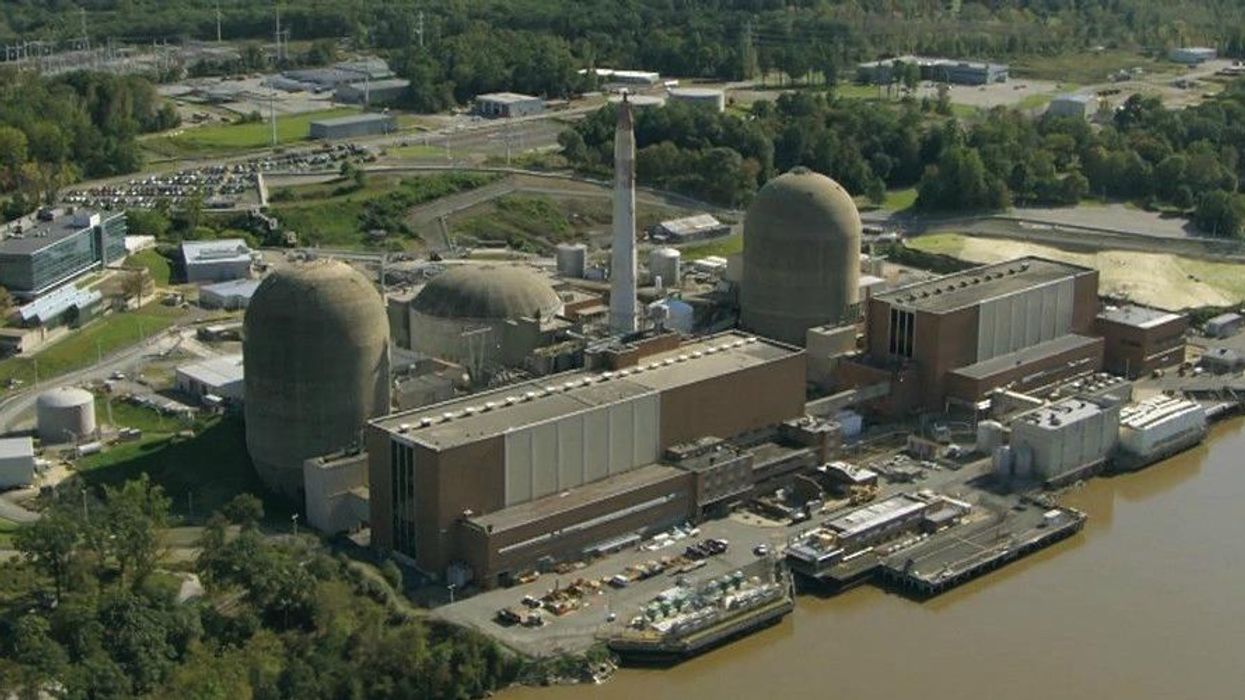
Two years after the closing of Indian Point Energy Center, a nuclear power plant in Buchanan, New York, public health experts and campaigners are warning that an energy technology company's plan to discharge one million gallons of wastewater from the plant's fuel-cooling pools into the Hudson River could harm at least 100,000 people who rely on the river for their drinking water.
Physicians for Social Responsibility (PSR) is among the groups sounding the alarm about radioactive contaminants, including the radioactive isotope tritium, which could be present in the treated water that Holtec International plans to release into the Hudson.
Spent fuel pools at the plant, which was decommissioned after decades of advocacy by anti-nuclear campaigners, have cooled radioactive fuel for more than 45 years, and health experts from PSR and other groups warned on Thursday at the first of several public forums that Holtec has not been transparent about the risks associated with the wastewater discharge plan.
"There has been no prior disclosure of what pollutants or radioactive contaminants are in the wastewater or any public education on the environmental safety and public health risks associated with any potential discharges from the site," said the groups in a statement.
The Hudson River is the primary drinking water source for seven cities and towns including Poughkeepsie, Rhinebeck, and Hyde Park, as well as the backup water source for other communities along the river.
"Since the Hudson is a tidal river, radioactive wastewater can affect communities all the way up to Poughkeepsie and down to Manhattan, Staten Island, and New Jersey," said Nancy S. Vann, president of the Safe Energy Rights Group, last year.
Dr. Helen Caldicott, president of PSR, was among the experts who spoke at the forum on Thursday and warned that tritium poses risks for adults, children, and developing fetuses.
"It's highly carcinogenic, of course, it enters the fetus," she said at the meeting. "There's no way to remove tritium from the water."
Tritium has also been the subject of concern in Japan as officials prepare to release wastewater from the decommissioned Fukushima Daiichi nuclear power plant into the Pacific Ocean, with fishing communities and South Korean officials warning of potential harm to marine life.
Holtec International that told local outlet News 12 that during the 12-15 year process of decommissioning the plant, the discharge of the wastewater will be regulated by the U.S. Environmental Protection Agency and the U.S. Nuclear Regulatory Commission and will result in the presence of substances that "are typically indistinguishable from the natural radioactivity present in the environment."
Caldicott dismissed the company's claims.
"Physicists talk convincingly about 'permissible doses' of radiation," she said in a statement. "They consistently ignore internal emitters—radioactive elements from nuclear power plants that are ingested or inhaled into the body, giving very high doses to small volumes of cells. They focus instead on external radiation from sources outside the body."
"Doctors know that there is no such thing as a safe dose of radiation, and that harmful impacts are cumulative," Caldicott added. "Children are ten to twenty times more vulnerable to the deleterious effects of radiation than adults and little girls twice that of boys."
Also speaking at the forum on Thursday was Diane Turco, director of the grassroots group Cape Downwinders in Cape Cod, Massachusetts, where Holtec is also planning to discharge wastewater from Pilgrim Nuclear Power Station, another decommissioned facility.
"From California to Massachusetts to New York to Michigan to New Mexico, Indigenous and civil society groups are connecting in our efforts," said Turco. "Holtec has no right to dump radioactive wastewater into our waterways or radioactive waste into our communities."
The experts also raised concerns about the demolition activities taking place at Indian Point without efforts to mitigate the spread of radioactive dust and other airborne contaminants, even as Buchanan-Verplanck Elementary School stands less than 4,000 feet from the site and lacks air, water, and soil monitoring.
"Although a school air monitoring study has been under consideration, a Request for Proposal for an air monitoring program was only recently issued," said the experts. "Still, hundreds of students were allowed to return to the school this past September. Parents still lack critical information regarding emergency planning and preparedness, monitoring, and protections."
They noted that in 2019, a middle school in Piketon, Ohio was forced to close due to radioactive contamination from demolition projects at a nuclear enrichment facility less than two miles away.
"Independent expert analysis regarding potential health and environmental impacts from these exposures is imperative," said the experts.
Another public forum will be held at nearby Cortlandt Town Hall on February 3, according to News 12.
The New York State Public Service Commission--in the face of strong opposition--this week approved a $7.6 billion bail-out of aging nuclear power plants in upstate New York which their owners have said are uneconomic to run without government support.
New York Governor Andrew Cuomo--who appoints the members of the PSC--has called for the continued operation of the nuclear plants in order to, he says, save jobs at them. The bail-out would be part of a "Clean Energy Standard" advanced by Cuomo. Under it, 50 percent of electricity used in New York by 2030 would come from "clean and renewable energy sources" with nuclear power considered clean and renewable.
"Nuclear energy is neither clean nor renewable," testified Pauline Salotti, vice chair of the Green Party of Suffolk County, Long Island at a recent hearing on the plan.
"Without these subsidies, nuclear plants cannot compete with renewable energy and will close. But under the guise of 'clean energy,' the nuclear industry is about to get its hands on our money in order to save its own profits, at the expense of public health and safety," declared a statement by Jessica Azulay, program director of Alliance for a Green Economy, based in upstate Syracuse with a chapter in New York City. Moreover, she emphasized, "Every dollar spent on nuclear subsidies is a dollar out of the pocket of New York's electricity consumers residents, businesses and municipalities" that should "instead" go towards backing "energy efficiency, renewable energy and a transition to a clean energy economy."
The "Clean Energy Standard" earmarks twice as much money for the nuclear power subsidy than it does for renewable energy sources such as solar and wind.
Its claim is that nuclear power is comparable because nuclear plants don't emit carbon or greenhouse gasses the key nuclear industry argument for nuclear plants nationally and worldwide these days because of climate change. What the industry does not mention, however, is that the "nuclear cycle" or "nuclear chain" of the full nuclear system is a major contributor to carbon emissions. Numerous statements sent to the New York PSC on the plan pointed to this.
"Nuclear is NOT emission-free!" Manna Jo Greene, environmental director of the Hudson River Sloop Clearwater, wrote the PSC. The claim of nuclear power having 'zero-emission attributes' ignores emissions generated in mining, milling, enriching, transporting and storing nuclear fuel." Further, "New York no longer needs nuclear power in its energy portfolio, now or in the future. Ten years ago the transition to a renewable energy economy was still a future possibility. Today it is well underway."
"Nuclear power is not carbon-free," wrote Michel Lee, head of the Council on Intelligent Energy & Conservation Policy based in Scarsdale. "If one stage," reactors operation itself, "produces minimal carbon...every other stage produces prodigious amounts." Thus the nuclear "industry is a big climate change polluter...Nuclear power is actually a chain of highly energy-intensive industrial processes which combined consume large amounts of fossil fuels and generate potent warming gasses. These include: uranium mining, milling enrichment, fuel fabrication, transport" and her list went on. "The State of New York and its energy officials have a genuine opportunity to alter the course of history. You have the chance to help direct America and the world towards a more secure and prosperous future...With vision and resolve, our state can be at the vanguard of a new global energy era."
In opposing the New York nuclear subsidy, Dr. Mark Z. Jacobson, professor of civil and environmental engineering and director of the Atmosphere/Energy Program at Stanford University, wrote in an op-ed in the Albany Times Union, the newspaper in the state's capitol, that he was "shocked" by the PSC's "proposal that the lion's share of the Clean Energy Standard funding would be a nuclear bail-out." He said "allowing the upstate nuclear plants to close now and replace them with equal energy output" from offshore wind and solar power "would be cheaper and would create more jobs." The closure of the upstate plants "would jeopardize fewer than 2,000 jobs" while a "peer-reviewed study" he has done "about converting New York State to 100 percent clean, renewable energy--which is entirely possible now would create a net of approximately 82,000 good, long-term jobs."
The upstate nuclear power plants to be bailed out under the plan would be FitzPatrick, Nine Mile Point 1 and 2, and Ginna. The money would come over a 12-year period through a surcharge on electric bills paid by residential and industrial customers in New York State.
Reported Tim Knauss of the Post-Standard of Syracuse: "Industry watchers say New York would be the first state to establish nuclear subsidies based on environmental attributes, a benefit typically reserved for renewable energy sources such as wind and solar. The 'zero emission credits' would be paid to nuclear plants based on a calculation of the economic value of avoiding greenhouse gas emissions that contribute to climate change." Cuomo "directed the PSC to create subsides for upstate reactors," he wrote.
Reuters has reported that the nuclear "industry hopes that if New York succeeds, it could pressure other states to adopt similar subsidies" for nuclear plants. The headline of the Reuters story: "New York could show the way to rescue U.S. nuclear plants."
The two Indian Point nuclear power plants 26 miles north of New York City are not now included in the plan but it "leaves the door open to subsidies" for them, says Azulay of Alliance for a Green Economy. This would mean "the costs [of the bail-out] will rise to over $10 billion."
Cuomo has called for a shutdown of the Indian Point plants in the densely populated southern portion of the state, although boosting the continued operation of the nuclear plants in less populated upstate. "Nuclear has a role," he declared at a press conference last month. "Unless we're willing to go back to candles, which would be uncomfortable and inconvenient, we need energy generation."
Still, the consequences of a Fukushima or Chernobyl-level accidents at the upstate plants could have major impacts. In a 1982 report, "CRAC-2," done at Sandia National Laboratories for the U.S. Nuclear Regulatory Commission, the consequences of a meltdown with breach of containment at every nuclear power plant in the United States were estimated. These included those in upstate New York. The analysis projected "early fatalities," "early injuries," "cancer deaths" and "scaled costs" covering "lost wages, relocation expenses, decontamination costs, lost property, and interdiction costs for property and farmland" (in 1980 dollars). The projections for the upstate plants: for FitzPatrick (located in Scriba): 1,000 "early fatalities," 16,000 "early injuries," 17,000 "cancer deaths" and $103 billion in "scaled costs." For Nine Mile Point 1 (also in Scriba) the figures were:1,400; 26,000, 20,000 and $66 billion. For Nine Mile Point 2: 1,400, 26,000, 20,000 and $134 billion. For Ginna (in Ontario, N.Y): 2,000, 28,000, 14,000 and $63 billion.