SUBSCRIBE TO OUR FREE NEWSLETTER
Daily news & progressive opinion—funded by the people, not the corporations—delivered straight to your inbox.
5
#000000
#FFFFFF
To donate by check, phone, or other method, see our More Ways to Give page.
Daily news & progressive opinion—funded by the people, not the corporations—delivered straight to your inbox.
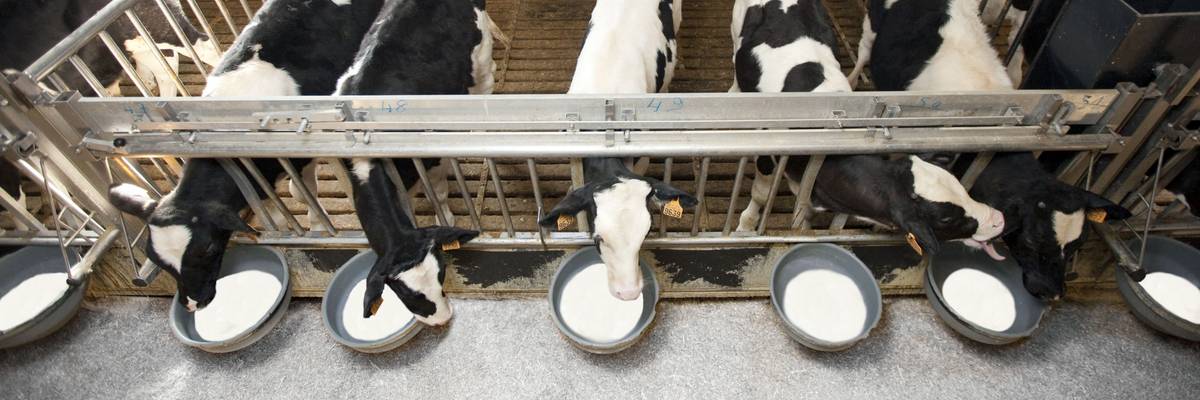
Calves drinking milk in a factory farm.
Federal agencies are protecting abusive industries while monitoring decent members of the public, hoping that we turn a blind eye to their assault on democracy and civil liberties.
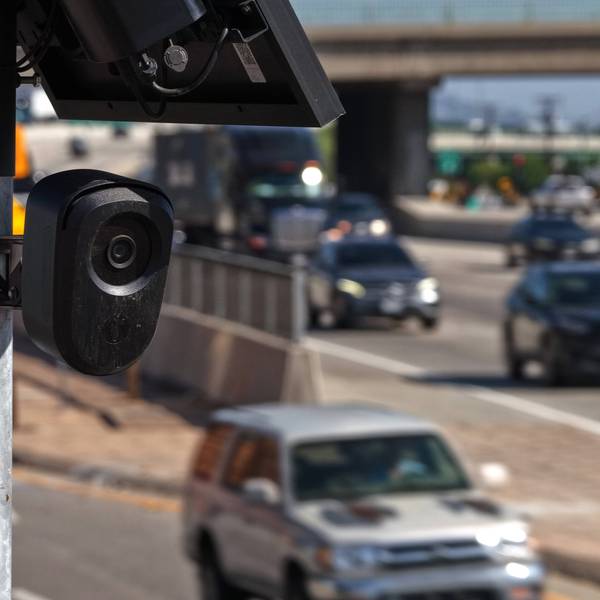
The US government is rapidly installing Flock cameras and expanding the use of drones to follow the movements of ordinary people. A recent YouGov survey reveals that more Americans oppose such surveillance than support it, and yet, the government continues to track its citizens—while simultaneously bowing to Big Ag’s demands to ban drone footage and undercover investigations on factory farms.
Federal agencies are protecting abusive industries while monitoring decent members of the public, hoping that we turn a blind eye to their assault on democracy and civil liberties.
We have a right to personal privacy and to information that directly impacts our daily lives, including the truth about the food on our tables. In addition to animal agriculture’s irresponsible use of antibiotics, which contributes to the development of more virulent strains of pathogens, diet-related diseases cost our nation hundreds of billions of dollars every year. We could alleviate immense suffering by holding agribusiness accountable for the harm it causes and making needed reforms.
Instead of surveilling the everyday lives of Americans, our government should focus its cameras on industries that cause harm.
Americans are told that Flock cameras can be used to apprehend animal abusers, yet the industries responsible for the suffering of billions of animals are granted immunity. The majority of Americans are opposed to many of the cruel and painful practices routinely inflicted upon animals in our food system, and yet these practices are allowed to continue behind the closed doors of factory farms. We are told that constant monitoring is necessary for “public safety,” and yet the companies responsible for environmental destruction, worker exploitation, and threats to public health remain shielded from scrutiny. These double standards undermine transparency and erode trust, and it’s especially concerning when powerful individuals and institutions whose conduct is an affront to societal values are allowed to weaponize surveillance against their critics.
Flock cameras and emerging technologies could be used to manipulate narratives, confuse citizens, and silence critics, but factory farm operatives have been doing this for decades. It’s revealing to consider how much time and effort they’ve invested in concealing their misdeeds. They’ve passed “Ag-Gag” laws to criminalize whistleblowing and investigations that have exposed their cruelty. They’ve sued individuals, including Oprah Winfrey, for expressing concerns about irresponsible agricultural practices. And, they’ve labeled well-meaning animal rights and environmental advocates as “terrorists,” including in federal legislation entitled “The Animal Enterprise Terrorism Act.”
Powerful interests wield immense influence in the government and through technology and media platforms. These can be used to distract our attention and also to manipulate public opinion. They make it difficult to obtain factual information, and actively work to marginalize, scapegoat, and punish those who ask questions. This is not how civil society should work. Democratic institutions are supposed to value transparency and accountability and uphold basic standards that prevent abuses of power.
As digital tools become more central in daily life, we’re seeing shifts in how people connect, with stories shared through our phones increasingly shaping our beliefs and behavior. The recent interest in ever-increasing protein consumption, coupled with negative impressions people have of “fake” meat, is not a coincidence. The truth is that real meat comes from real animals who experience real suffering in intolerable conditions that are kept hidden from us.
Instead of surveilling the everyday lives of Americans, our government should focus its cameras on industries that cause harm, so at the very least, we can make informed decisions.
Dear Common Dreams reader, It’s been nearly 30 years since I co-founded Common Dreams with my late wife, Lina Newhouser. We had the radical notion that journalism should serve the public good, not corporate profits. It was clear to us from the outset what it would take to build such a project. No paid advertisements. No corporate sponsors. No millionaire publisher telling us what to think or do. Many people said we wouldn't last a year, but we proved those doubters wrong. Together with a tremendous team of journalists and dedicated staff, we built an independent media outlet free from the constraints of profits and corporate control. Our mission has always been simple: To inform. To inspire. To ignite change for the common good. Building Common Dreams was not easy. Our survival was never guaranteed. When you take on the most powerful forces—Wall Street greed, fossil fuel industry destruction, Big Tech lobbyists, and uber-rich oligarchs who have spent billions upon billions rigging the economy and democracy in their favor—the only bulwark you have is supporters who believe in your work. But here’s the urgent message from me today. It's never been this bad out there. And it's never been this hard to keep us going. At the very moment Common Dreams is most needed, the threats we face are intensifying. We need your support now more than ever. We don't accept corporate advertising and never will. We don't have a paywall because we don't think people should be blocked from critical news based on their ability to pay. Everything we do is funded by the donations of readers like you. When everyone does the little they can afford, we are strong. But if that support retreats or dries up, so do we. Will you donate now to make sure Common Dreams not only survives but thrives? —Craig Brown, Co-founder |
The US government is rapidly installing Flock cameras and expanding the use of drones to follow the movements of ordinary people. A recent YouGov survey reveals that more Americans oppose such surveillance than support it, and yet, the government continues to track its citizens—while simultaneously bowing to Big Ag’s demands to ban drone footage and undercover investigations on factory farms.
Federal agencies are protecting abusive industries while monitoring decent members of the public, hoping that we turn a blind eye to their assault on democracy and civil liberties.
We have a right to personal privacy and to information that directly impacts our daily lives, including the truth about the food on our tables. In addition to animal agriculture’s irresponsible use of antibiotics, which contributes to the development of more virulent strains of pathogens, diet-related diseases cost our nation hundreds of billions of dollars every year. We could alleviate immense suffering by holding agribusiness accountable for the harm it causes and making needed reforms.
Instead of surveilling the everyday lives of Americans, our government should focus its cameras on industries that cause harm.
Americans are told that Flock cameras can be used to apprehend animal abusers, yet the industries responsible for the suffering of billions of animals are granted immunity. The majority of Americans are opposed to many of the cruel and painful practices routinely inflicted upon animals in our food system, and yet these practices are allowed to continue behind the closed doors of factory farms. We are told that constant monitoring is necessary for “public safety,” and yet the companies responsible for environmental destruction, worker exploitation, and threats to public health remain shielded from scrutiny. These double standards undermine transparency and erode trust, and it’s especially concerning when powerful individuals and institutions whose conduct is an affront to societal values are allowed to weaponize surveillance against their critics.
Flock cameras and emerging technologies could be used to manipulate narratives, confuse citizens, and silence critics, but factory farm operatives have been doing this for decades. It’s revealing to consider how much time and effort they’ve invested in concealing their misdeeds. They’ve passed “Ag-Gag” laws to criminalize whistleblowing and investigations that have exposed their cruelty. They’ve sued individuals, including Oprah Winfrey, for expressing concerns about irresponsible agricultural practices. And, they’ve labeled well-meaning animal rights and environmental advocates as “terrorists,” including in federal legislation entitled “The Animal Enterprise Terrorism Act.”
Powerful interests wield immense influence in the government and through technology and media platforms. These can be used to distract our attention and also to manipulate public opinion. They make it difficult to obtain factual information, and actively work to marginalize, scapegoat, and punish those who ask questions. This is not how civil society should work. Democratic institutions are supposed to value transparency and accountability and uphold basic standards that prevent abuses of power.
As digital tools become more central in daily life, we’re seeing shifts in how people connect, with stories shared through our phones increasingly shaping our beliefs and behavior. The recent interest in ever-increasing protein consumption, coupled with negative impressions people have of “fake” meat, is not a coincidence. The truth is that real meat comes from real animals who experience real suffering in intolerable conditions that are kept hidden from us.
Instead of surveilling the everyday lives of Americans, our government should focus its cameras on industries that cause harm, so at the very least, we can make informed decisions.
The US government is rapidly installing Flock cameras and expanding the use of drones to follow the movements of ordinary people. A recent YouGov survey reveals that more Americans oppose such surveillance than support it, and yet, the government continues to track its citizens—while simultaneously bowing to Big Ag’s demands to ban drone footage and undercover investigations on factory farms.
Federal agencies are protecting abusive industries while monitoring decent members of the public, hoping that we turn a blind eye to their assault on democracy and civil liberties.
We have a right to personal privacy and to information that directly impacts our daily lives, including the truth about the food on our tables. In addition to animal agriculture’s irresponsible use of antibiotics, which contributes to the development of more virulent strains of pathogens, diet-related diseases cost our nation hundreds of billions of dollars every year. We could alleviate immense suffering by holding agribusiness accountable for the harm it causes and making needed reforms.
Instead of surveilling the everyday lives of Americans, our government should focus its cameras on industries that cause harm.
Americans are told that Flock cameras can be used to apprehend animal abusers, yet the industries responsible for the suffering of billions of animals are granted immunity. The majority of Americans are opposed to many of the cruel and painful practices routinely inflicted upon animals in our food system, and yet these practices are allowed to continue behind the closed doors of factory farms. We are told that constant monitoring is necessary for “public safety,” and yet the companies responsible for environmental destruction, worker exploitation, and threats to public health remain shielded from scrutiny. These double standards undermine transparency and erode trust, and it’s especially concerning when powerful individuals and institutions whose conduct is an affront to societal values are allowed to weaponize surveillance against their critics.
Flock cameras and emerging technologies could be used to manipulate narratives, confuse citizens, and silence critics, but factory farm operatives have been doing this for decades. It’s revealing to consider how much time and effort they’ve invested in concealing their misdeeds. They’ve passed “Ag-Gag” laws to criminalize whistleblowing and investigations that have exposed their cruelty. They’ve sued individuals, including Oprah Winfrey, for expressing concerns about irresponsible agricultural practices. And, they’ve labeled well-meaning animal rights and environmental advocates as “terrorists,” including in federal legislation entitled “The Animal Enterprise Terrorism Act.”
Powerful interests wield immense influence in the government and through technology and media platforms. These can be used to distract our attention and also to manipulate public opinion. They make it difficult to obtain factual information, and actively work to marginalize, scapegoat, and punish those who ask questions. This is not how civil society should work. Democratic institutions are supposed to value transparency and accountability and uphold basic standards that prevent abuses of power.
As digital tools become more central in daily life, we’re seeing shifts in how people connect, with stories shared through our phones increasingly shaping our beliefs and behavior. The recent interest in ever-increasing protein consumption, coupled with negative impressions people have of “fake” meat, is not a coincidence. The truth is that real meat comes from real animals who experience real suffering in intolerable conditions that are kept hidden from us.
Instead of surveilling the everyday lives of Americans, our government should focus its cameras on industries that cause harm, so at the very least, we can make informed decisions.