

SUBSCRIBE TO OUR FREE NEWSLETTER
Daily news & progressive opinion—funded by the people, not the corporations—delivered straight to your inbox.
5
#000000
#FFFFFF
To donate by check, phone, or other method, see our More Ways to Give page.
Daily news & progressive opinion—funded by the people, not the corporations—delivered straight to your inbox.
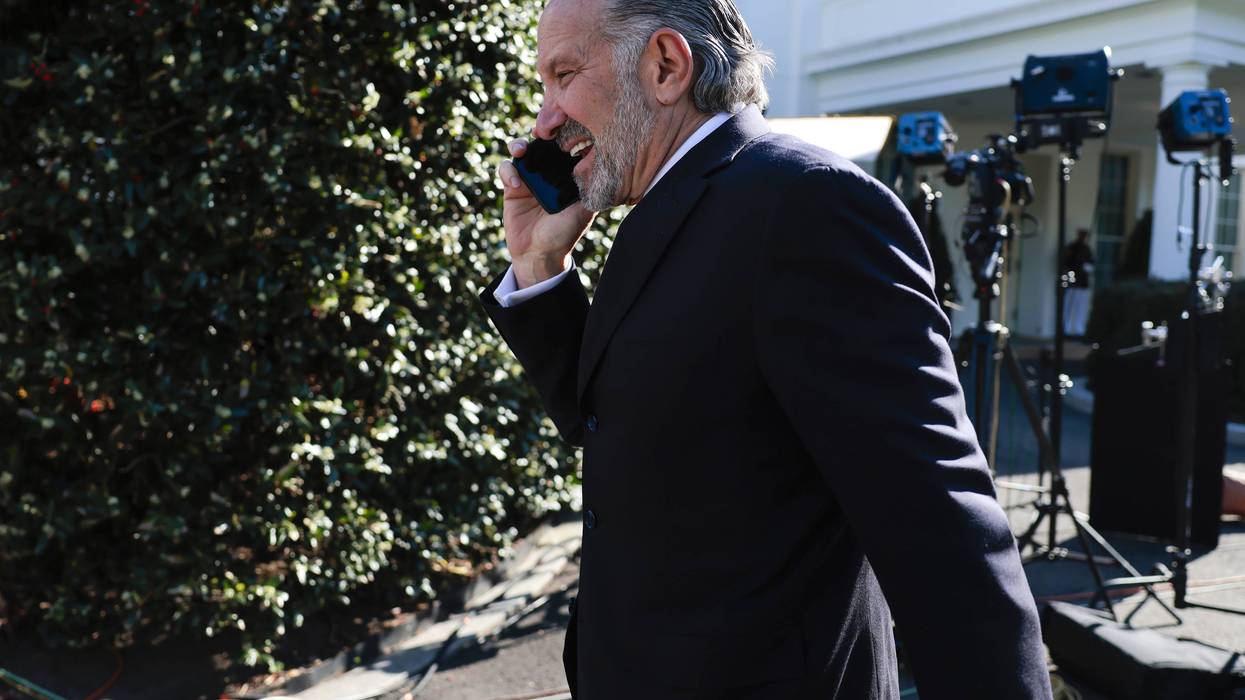
"These seeming conflicts raise serious questions about whether these federal employees are beholden to the American people or to the interests of private for-profit corporations," said one of the authors.
More than 1-in-4 senior appointees in President Donald Trump’s Department of Commerce have significant “conflicts of interest,” according to a report published on Wednesday, pointing to the same sort of corporate capture that is rampant across the administration.
The watchdog group Public Citizen reviewed financial disclosure forms for 112 senior officials in the department, which is dedicated to overseeing industry and economic growth. It found that at least 30 of them have substantial ties to the very industries that the department is tasked with regulating.
It’s a pattern seen across the Trump administration, where fossil fuel lobbyists and insiders dominate the Energy and Interior departments, as well as the Environmental Protection Agency.
But as the new report, written by journalist Zach Everson and researcher Douglas S. Pasternak, explains, the Commerce Department is “unique in its active engagement in the economy to benefit particular companies, including those for whom its current officials once worked.”
“The conflicts of interest identified in this report put Americans at risk,” said Pasternak, the research director for Public Citizen’s Trump Accountability Project.
The entanglements start at the top, with the billionaire Commerce Secretary Howard Lutnick, who has ties to more than 800 different businesses from his decades as the CEO of the Wall Street financial services firm Cantor Fitzgerald, with interests spanning finance, real estate, crypto, AI, tech, satellites, energy, and gaming—many of which could be affected by Commerce policy.
While Lutnick promised to sell his business interests within 90 days of being confirmed at the department, he missed that deadline by more than four months. And instead of putting his financial stake into a blind trust, he sold his interest in the fund to trusts benefiting his four children.
As Commerce Secretary, Lutnick has engaged in actions that the report says "have a clear conflict with his family’s financial interests and appear to violate ethical norms for government employees."
In particular, it highlights his role in pushing for the dramatic expansion of artificial intelligence data centers across the US, and pressured other governments, including that of the United Arab Emirates, to invest in them.
At the same time, his former company, Newmark, where his son now sits on the board of directors, has facilitated more than $25 billion in AI-data center deals.
Similarly, Commerce invested over $1.6 billion in the mineral company USA Rare Earth Inc. while Cantor was leading the company's private fundraising.
Lutnick has also been at the center of the Trump administration's efforts to promote cryptocurrency and develop regulatory policy around it. This could impact the blockchain platform Tether, which hosts the world's largest stablecoin, for which Cantor acts as the primary custodian for more than $180 billion worth of reserves.
Beyond Lutnick, the department is crawling with ex-industry employees, lobbyists, and corporate lawyers now embedded in the regulation of their former clients.
Joyce Meyer, formerly a top lobbyist for the life insurance industry, now serves as undersecretary for economic affairs, where she oversees the Bureau of Economic Analysis and the US Census Bureau, which produce economic reports that shape federal tax, interest, and spending policy.
The current undersecretary for industry and security, Jeffrey Kessler—who oversees export controls on technology, software, commodities, and other equipment—previously worked as an attorney for the law firm WilmerHale, where he represented dozens of clients across industries he now regulates, including Boeing, Meta, and Eli Lilly.
One of the people in charge of regulating the sale of defense technology abroad, Joe Bartlett, who serves as deputy undersecretary at the Bureau of Industry and Security, came from one of the US military’s biggest drone makers, Skydio, which is subject to BIS export controls.
The report also identifies multiple other employees who have worked for weather data companies that have pushed to privatize forecasts now provided for free by the National Oceanic and Atmospheric Administration.
"It is unclear if these officials are serving the American public as their positions require or attempting to enrich their former employers or potential future employers, and ultimately themselves," Pasternak said. "These seeming conflicts raise serious questions about whether these federal employees are beholden to the American people or to the interests of private for-profit corporations.”
Everson added that the department "is meant to work in the interest of the people, not in the interest of a few select billionaires.”
He said, "Political appointees within the Trump administration need to be subject to standards of ethical and financial conduct which prevent them from using their positions of power to skim off the top.”
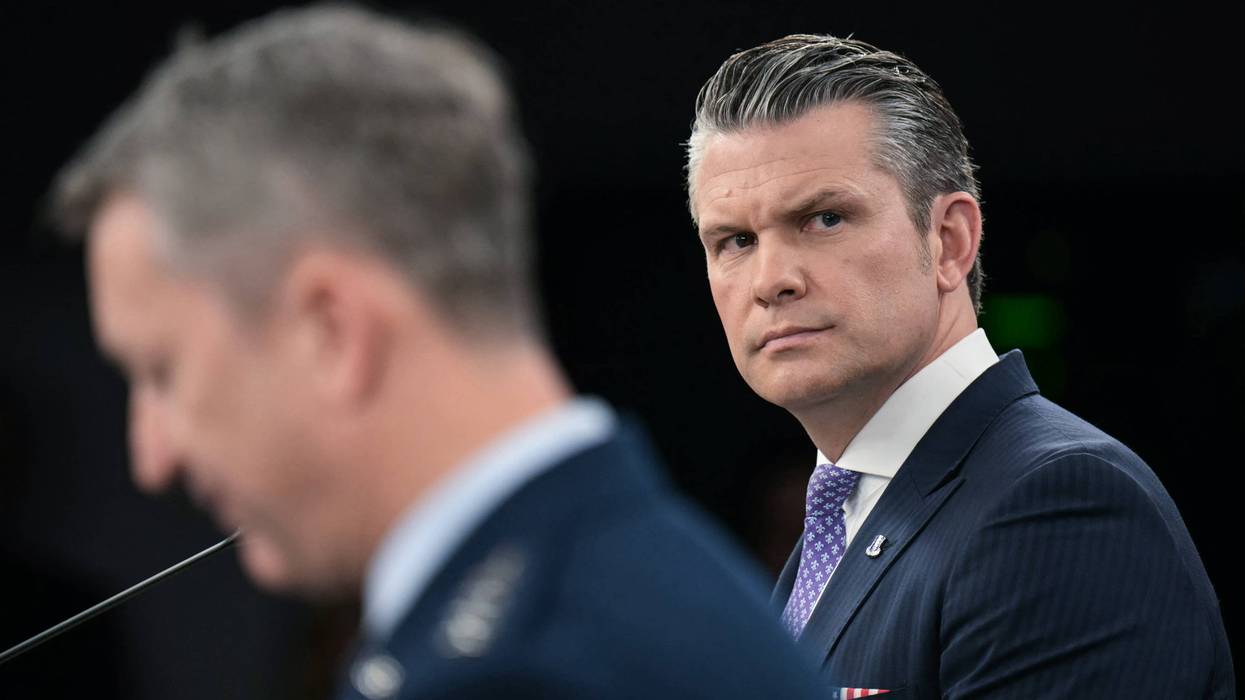
Democratic lawmakers said if reports of Hegseth attempting to buy defense stock weeks before the war are true, it "would be a profound conflict of interest" and a "betrayal of the nation paying the price for this war."
Senate Democrats are pushing for an investigation into US Defense Secretary Pete Hegseth following a report that he attempted to make a “big investment” in weapons stock just weeks before President Donald Trump launched an aggressive war against Iran.
Three Democrats on the Senate Armed Services Committee—Sens. Elizabeth Warren (D-Mass.), Tammy Duckworth (D-Ill.), and Richard Blumenthal (D-Conn.) were joined by Sens. Gary Peters (D-Mich.) and Jeff Merkley to send Hegseth a letter on Wednesday.
They told the secretary that his reported attempt to broker the deal "would be a profound conflict of interest and a potential violation of your federal ethics agreement—and betrayal of the nation paying the price for this war and the troops you are sending into harm’s way."
The Financial Times reported earlier this week that Hegseth's "broker at Morgan Stanley contacted BlackRock in February about making a multimillion-dollar investment in the asset manager’s Defense Industrials Active ETF... shortly before the US launched military action against Tehran.”
However, the purchase was reportedly never made because the massive bundle of stocks was not available to Morgan Stanley clients at the time.
A Pentagon spokesperson has also denied the story, calling it "entirely false and fabricated" and claiming that neither Hegseth nor any of his representatives ever approached BlackRock.
But, as the lawmakers noted, FT reported that the inquiry was significant enough for BlackRock to flag it internally.
Hegseth and other Pentagon officials confirmed by the Senate are prohibited by law from owning or purchasing publicly traded stock in the 10 companies that have received the largest Defense Department contracts over the past five years.
But the fund held stocks in several of these companies, including Lockheed Martin, Northrop Grumman, General Dynamics, Huntington Ingalls, Boeing, RTX Corporation, and L3Harris Technologies.
Reports of the proposed deal by Hegseth's broker come as the Trump administration has faced other accusations of trading on insider information about the president’s next moves to win big on prediction market services. Platforms like Polymarket have seen bettors take home monster winnings by placing wagers predicting major military actions in Venezuela and Iran just hours before Trump launched them.
The lawmakers noted that while the war is costing American taxpayers more than $1 billion per day and has saddled Americans with soaring gas prices, it has proven highly lucrative for major defense contractors, whose stocks jumped significantly in the days after the war was launched, even as the rest of the market took a tumble.
The Trump administration is currently demanding another $200 billion to prosecute the war on top of a $1.5 trillion budget request to fund the Defense Department, which the lawmakers said would likely result in these companies’ profits and stock prices continuing to climb.
The US-Israeli war against Iran, launched on February 28, has been condemned as illegal by many international law experts and human rights groups, who have accused the US of violating the UN Charter and committing war crimes.
According to a report on Wednesday from the Human Rights Activists News Agency (HRANA), a US-based human rights monitor for Iran, more than 1,600 civilians have been killed since the war began, including 244 children. At least 13 US troops have also been killed since the conflict broke out.
The lawmakers told Hegseth regarding his reported investment attempt: “If this report is accurate, it would appear to represent an appalling effort to profit off of your knowledge of the president’s plans for war.”
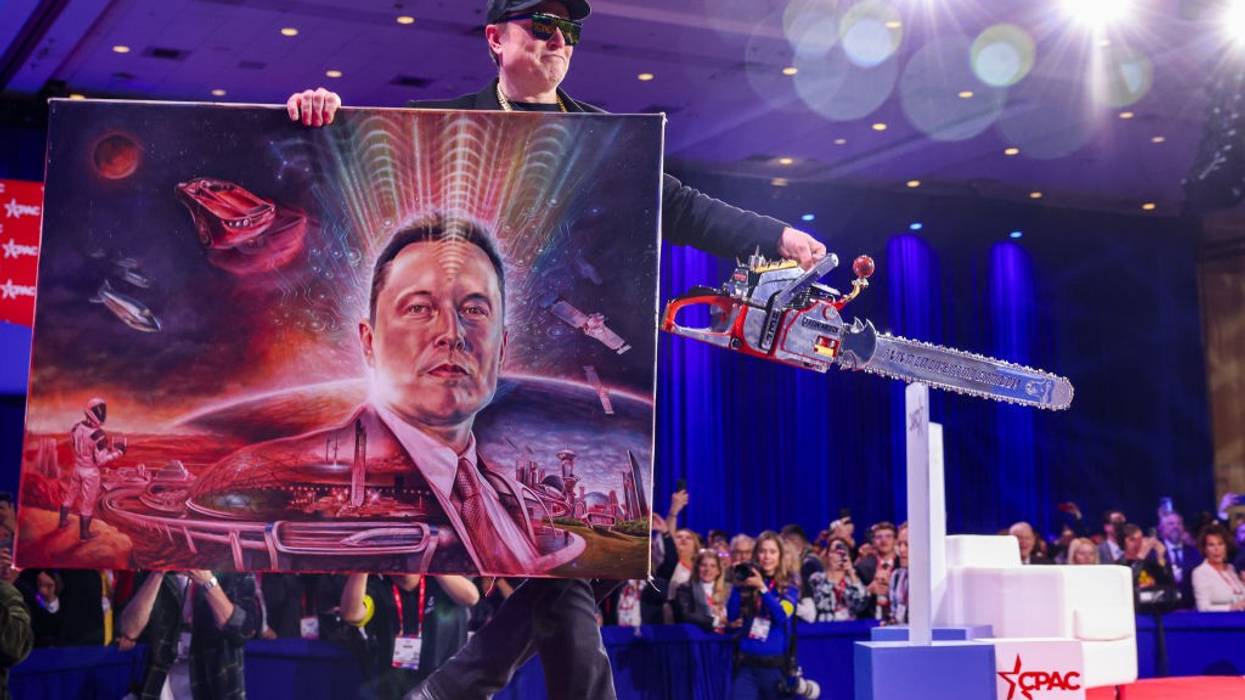
"The wealthiest man in the world is working to dismantle the very same federal departments and agencies tasked with overseeing and placing checks on his businesses," says Public Citizen in a new analysis.
Elon Musk, the world's richest person and de facto head of the Trump administration's so-called Department of Government Efficiency, "has had a direct business interest in over 70% of the agencies and departments targeted by DOGE since its inception," according to an analysis published Thursday by a leading U.S. consumer advocacy group.
The Public Citizen report, titled Duplicitous Oligarchy Grifting Endlessly, "maps out the entities DOGE has targeted and identifies which ones carry a known conflict of interest for Elon Musk's business entanglements" as the executive office leads the Trump administration's purge of federal agencies.
"The wealthiest man in the world is working to dismantle the very same federal departments and agencies tasked with overseeing and placing checks on his businesses," the report states. "He also now is adjacent to and could potentially access sensitive and potentially proprietary information from his biggest competitors in the various industries that have made him wealthy. He also has personal business interests that could shape what his DOGE project considers ripe for cuts."
Elon Musk's DOGE has spent the last several months dismantling the departments & agencies that regulate HIS businesses. Our report found that Musk has a direct business interest in over 70% of the agencies & departments DOGE targeted. The conflicts of interest are endless.
— Public Citizen (@publiccitizen.bsky.social) May 8, 2025 at 11:46 AM
Elizabeth Beavers, director of Public Citizen's Congress Watch, said in a statement that "it should alarm every American that the wealthiest man in the world has spent the last several months dismantling the same departments and agencies tasked with regulating his businesses."
"Musk's role as the most powerful person in government makes it highly unlikely that any regulator will crack down on his corporations and surely will make agency leaders look more favorably at Musk companies as potential government contractors," Beavers added.
The report considers Musk—who has signaled he will leave DOGE—to have a conflict of interest with a federal agency when one of his companies has received contracts or grants from the department, has an interest in its proprietary data, and is subject to its regulation or enforcement regime.
Public Citizen's analysis highlights interests with federal agencies including:
Musk—whose companies have tens of billions of dollars worth of government contracts—also has conflicts of interest with the departments of Defense, Agriculture, and Energy. SpaceX, for example, holds Pentagon contracts worth around $8 billion, including nearly $6 billion for the National Security Space Launch Phase 3 Lane 2 program.
Critics have laughed off the White House's assertion that Musk would self-police his conflicts of interest by recusing himself when DOGE and his business interests overlap.
"The report's findings make clear that this approach is deeply and incurably flawed—and that urgent action by Congress is required to safeguard the government from Musk's self-dealing and grift," Public Citizen said.
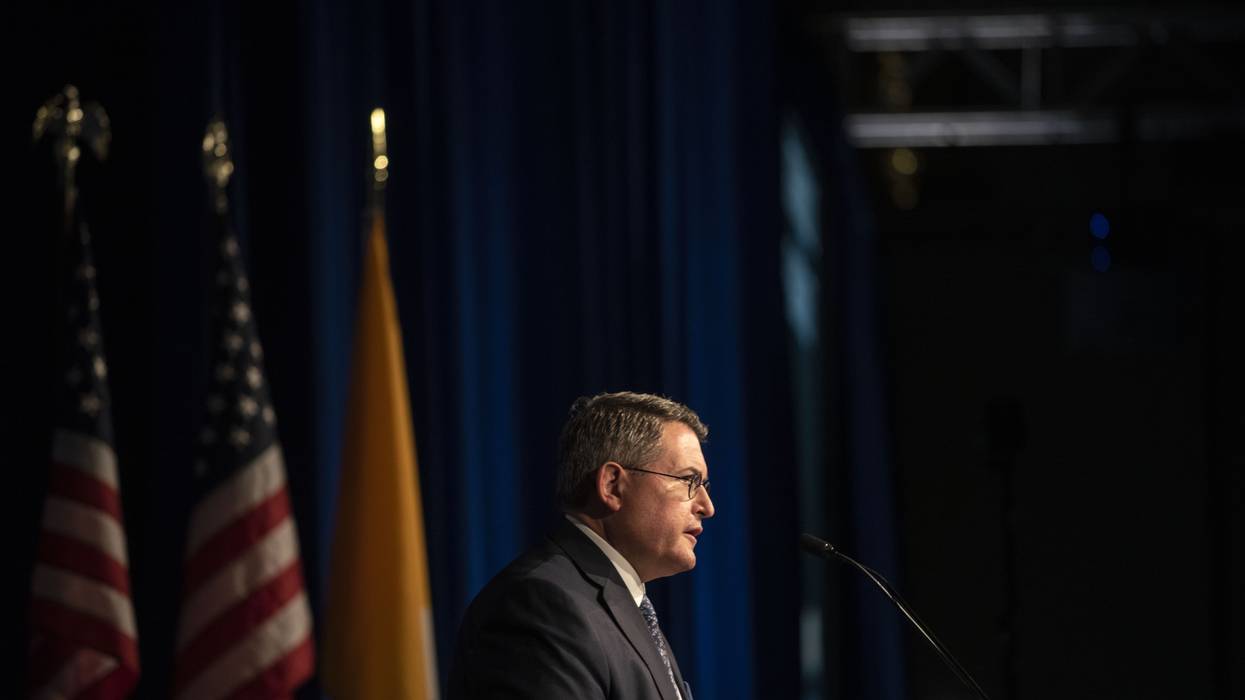
"Americans deserve a legal system that isn't influenced by billionaires and special interest backers pushing an agenda at the expense of working families," said a watchdog group leader.
Ahead of U.S. Supreme Court arguments next week, a watchdog group asserted Wednesday that right-wing Justices Samuel Alito and Clarence Thomas must recuse themselves from a case "whose outcome could have sweeping consequences," citing "significant conflicts of interest" due to their relationships with "conservative kingpin Leonard Leo."
In Federal Communications Commission v. Consumers' Research, a right-wing group is challenging the constitutionality of the FCC's Universal Service Fund program.
Vox's Ian Millhiser reported Wednesday that "if the Supreme Court accepts an argument raised by a federal appeals court, which struck down the federal program, it would bring about one of the biggest judicial power grabs in American history, and hobble the government's ability to do, well, pretty much anything."
In the new report about Alito and Thomas, the watchdog Accountable.US issued a similar warning about the case's potential impacts: "Effectively defunct for almost a century, the nondelegation doctrine prohibits Congress from passing off its legislative power to federal agencies... Reviving the doctrine would cripple agencies' ability to govern consumer safeguards, social security, Medicare, and more during a time when the Trump administration has begun to slash federal agencies."
"Now before the high court, the case presents an obvious conflict of interest for many of the justices who are personally tied to (and in some cases, friends of) the conservative activist Leonard Leo, who is closely connected to Consumers' Research," the analysis explains, pointing to reporting that Leo is the group's "main backer."
While "all six conservatives now sitting on the Supreme Court can credit Leo with helping to shepherd their confirmations," the watchdog's report states, the right-wing legal activist is "close personal friends" with Alito and Thomas.
According to the report:
"Americans deserve a legal system that isn't influenced by billionaires and special interest backers pushing an agenda at the expense of working families. Justices Thomas and Alito's cozy ties to Leonard Leo and thereby Consumers' Research fly straight in the face of that, and present a clear conflict of interest impeding their ability to rule impartially on the case," said Accountable.US president Caroline Ciccone in a statement.
"Public trust in the Supreme Court is already at an all-time low because of misguided conduct by justices–this case threatens to degrade it further," Ciccone continued. "The Supreme Court simply cannot be trusted to defend the Constitution if it doesn't adopt an obligatory, enforceable code of conduct that cleans up the impropriety that's existed on the court for years. Thomas and Alito must recuse themselves and restore a semblance of integrity to the highest court."
In addition to releasing the report, Accountable.US and two other groups, Take Back the Court and United for Democracy, argued for Alito and Thomas' recusal in a letter to Chief Justice John Roberts—who on Tuesday publicly condemned right-wing attacks on the federal judiciary.
"The Supreme Court has been engulfed by corruption scandals, many of which centering around the right-wing justices' overly friendly relationships with powerful billionaires and special interests," United for Democracy senior adviser Meagan Hatcher-Mays said Wednesday. "At the same time that Justices Thomas and Alito were accepting lavish gifts and trips from billionaires, they were hearing cases with those same billionaires' legal interests at stake."
"It's impossible for the American public to trust in Supreme Court rulings when this kind of glad-handing is taking place," she added. "The appearance of impropriety is clear in FCC v. Consumers' Research given Leonard Leo's long-time friendship with Justices Thomas and Alito and his financial entanglements with Consumers’ Research. Justices Thomas and Alito must recuse themselves immediately."
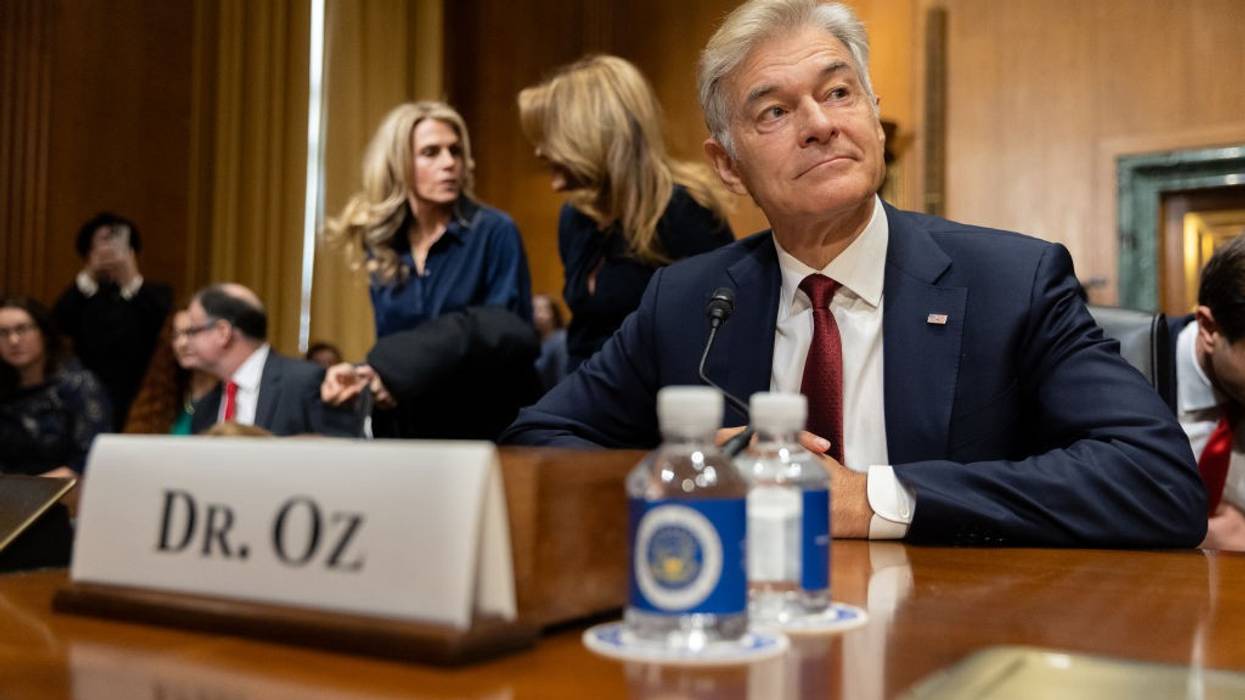
"Between his massive conflicts of interest across the healthcare sector and his endorsement of further privatizing Medicare, Oz would be a threat to the health of tens of millions of Americans," said one opponent.
Progressive watchdog organizations responded to the U.S. Senate Finance Committee's Friday hearing for Dr. Mehmet Oz by again sounding the alarm about the heart surgeon and former television host nominated to lead a key federal healthcare agency.
Since President Donald Trumpannounced Oz as his nominee for administrator of the Centers for Medicare and Medicaid Services (CMS) last November, opponents have spotlighted the doctor's promotion of unproven products, investments in companies with interests in the federal agency, and support for expanding Medicare Advantage during an unsuccessful U.S. Senate run in 2022.
"Dr. Oz's career promoting dubious medical treatments and pseudoscience often for personal financial gain should immediately disqualify him from serving in any public health capacity, let alone in a top administration health post," Accountable.US executive director Tony Carrk said in a Friday statement.
"Dr. Oz's nomination is part of President Trump's grand plan to enrich his corporate donors and wealthy friends while the rest of us get higher costs, less coverage, and weakened protections."
In December, Carrk's group found that based on disclosures from Oz's 2022 run against U.S. Sen. John Fetterman (D-Pa.), the Republican doctor reported "up to $56 million in investments in three companies" with direct CMS interests—including Sharecare, which became the "exclusive in-home care supplemental benefit program" for 1.5 million Medicare Advantage enrollees.
A spokesperson said at the time that Oz has since divested from Sharecare. However, critics have still expressed concern about how the nominee's confirmation could boost Republican efforts to expand Medicare Advantage—health insurance plans for seniors administered by private companies rather than the government.
"As a self-interested advocate of privatizing Medicare at a higher cost and more denials of care for seniors, Dr. Oz is surely eager to enact the Trump-Republican budget plan to gut Medicare and Medicaid and jeopardize health coverage for millions of Americans—all to pay for more tax breaks for billionaires and price gouging corporations," said Carrk. "Dr. Oz's nomination is part of President Trump's grand plan to enrich his corporate donors and wealthy friends while the rest of us get higher costs, less coverage, and weakened protections—especially those with preexisting conditions."
As he faces Senate confirmation, remember that Dr. Oz: -Pushed Medicare privatization plans on his show -Owns ~$600k in stock in private insurers -Has ties to pyramid scheme companies that promote fake medical cures His main qualification to oversee CMS is loyalty to Trump.
— Robert Reich ( @rbreich.bsky.social) March 14, 2025 at 1:41 PM
Robert Weissman, co-president of the consumer advocacy group Public Citizen, has been similarly critical of Oz, and remained so after senators questioned him on Friday, saying in a statement that "Mehmet Oz showed he is profoundly unqualified to lead any part of our healthcare system, let alone an agency as important as CMS."
"Between his massive conflicts of interest across the healthcare sector and his endorsement of further privatizing Medicare, Oz would be a threat to the health of tens of millions of Americans," Weissman warned. "Privatized Medicare Advantage plans deliver inferior care and cost taxpayers nearly $100 billion annually in excess costs."
"It is time for President Trump to put down the remote, stop finding nominees on television, and instead nominate people with actual experience and a belief in the importance of protecting crucial health programs like Medicare and Medicaid," he argued, taking aim at not only the president but also his billionaire adviser Elon Musk, head of the so-called Department of Government Efficiency(DOGE) and, Robert F. Kennedy Jr., the conspiracy theorist now running the Department of Health and Human Services.
Weissman declared that "Trump, Musk, and RFK Jr. fail to put the American people first as they seek to gut agencies and make dangerous cuts to health programs to fund tax cuts for billionaires. Oz indicated he would not oppose such cuts, bringing more destruction to lifesaving programs. Oz has no place in government and should be roundly rejected by every senator."
During a Friday exchange with Sen. Ron Wyden (D-Ore.), the committee's ranking member, Oz refused to decisively commit to opposing cuts to Medicaid. As the Alliance for Retired Americans highlighted, Oz kept that up when given opportunities to revise his answer by Sens. Ben Ray Luján (D-N.M.) and Michael Bennet (D-Colo.).
Other moments from the hearing that garnered attention included Oz's exchange with Sen. Catherine Cortez Masto (D-Nev.) about Affordable Care Act tax credits and Sen. Maggie Hassan (D-N.H.) calling out the doctor for his unwillingness "to take accountability for" his "promotion of unproven snake oil remedies" to millions of TV viewers.

For oligarchs, the rise of digital finance provides large moneymaking opportunities. But for the rest of us, it increases the risk of another financial crisis.
As of Friday, the Trumps’ cryptocurrency meme coins—the $TRUMP and $MELANIA cryptocurrency coins—had a combined market value of about $6 billion.
Days before taking the oath of office, now-U.S. President Donald Trump announced on his social media platform the creation of the $TRUMP coin, featuring Trump’s image from the July assassination attempt, and said: “Join the Trump Community. This is History in the Making!”
The $MELANIA coin soon followed.
Any wealthy person, corporation, or foreign leader wishing to curry favor with Trump now has a particularly easy means—just buy $TRUMP and $MELANIA cryptocurrency tokens.
Despite no details about the coin’s value, use, or risks, Trump supporters. gamblers, and those wishing to suck up to Trump bought it—sending the coin’s price into the stratosphere. On paper, the Trump family is now several billion dollars richer.
Trump once denounced crypto, but as the crypto industry poured tens of millions of dollars into 2024 campaigns, he changed his mind. Not only did he see the political power of the crypto industry; he saw an opportunity to make a pile of money.
He then promised to make the United States the “crypto capital of the planet.”
In September, the Trump family started World Liberty Financial, which they marketed as a platform to facilitate borrowing and lending in digital currencies. (Trump receives a cut of the sales of WLFI, the cryptocurrency associated with the platform.)
Now that he’s taken office, Trump plans to make billions off his presidency by implementing policies that favor crypto.
Cryptocurrencies serve no useful purpose other than the purchase of other crypto assets, money laundering, extortion, and scams. As economist Paul Krugman has said, their market value rests on nothing but “technobabble and libertarian derp.”
They also use huge amounts of energy.
And if they infiltrate Wall Street, they could destabilize the entire financial system.
The crypto industry has a dubious reputation. Sam Bankman-Fried, founder of FTX, one of the world’s biggest crypto exchanges, was last year sentenced to 25 years in prison for fraud. Changpeng Zhao, founder of a rival exchange, has spent four months locked up for money-laundering.
But the richest people in America with huge power—the oligarchy, including Trump—support cryptocurrencies. Not only can they make a fortune, but crypto advances their long-term aim of shifting financial controls out of a democratically elected system of government and into their own hands.
Now that he’s president, Trump is actively promoting crypto—reversing former President Joe Biden’s attempts to prevent the crypto industry from infiltrating Wall Street.
Biden’s tight rules made it prohibitively expensive for banks to hold digital assets on behalf of clients, and stopped them from developing their own crypto products, such as stablecoins (tokens pegged to the dollar or other assets).
The Federal Deposit Insurance Corporation (FDIC), a watchdog, stopped dozens of such projects on the basis that it did not know how digital assets ought to be treated in regulatory filings.
With Trump, though, banks and the crypto industry are now pushing in the same direction, and face little resistance. New and enormously profitable forms of risk-taking are emerging—for a small group of people able to take such risks and able (like the Trump family) to profit of their own crypto products.
Trump is putting crypto-friendly people into place at key federal agencies, boosting its prospects. In December, he picked Washington lawyer Paul Atkins, a known crypto booster, to chair the Securities and Exchange Commission, America’s main financial regulator.
Last week, the Securities and Exchange Commission altered its guidance so that financial institutions no longer have to account, on their own balance-sheets, for crypto assets held on behalf of customers. The SEC rolled back accounting guidance that had deterred banks from getting involved with crypto.
Trump has tapped the venture investor and digital currency enthusiast David Sacks to oversee administration policies on crypto (and artificial intelligence).
Then, this past Thursday, Trump issued an executive order committing the Trump administration to “protecting and promoting” the crypto industry:
The digital asset industry plays a crucial role in innovation and economic development in the United States, as well as our nation’s international leadership. It is therefore the policy of my administration to support the responsible growth and use of digital assets.
The order gives his administration authority to establish a national cryptocurrency stockpile—a stash of digital coins that the crypto industry has spent months lobbying the new administration for because it further legitimizes crypto and adds to the demand for it.
Trump’s order also prohibits the creation of a “central bank digital currency,” overseen by the government. And the order promises “fair and open access to banking services” for crypto (responding to complaints from crypto companies that banks have denied them accounts).
In effect, Trump is writing the rules for a business venture from which he and his family are personally profiting. It could earn them hundreds of billions of dollars.
If you’re outraged by this, fine. You’re probably outraged by a large number of things Trump has done since January 20.
The real significance of such blatant profiteering off the highest office in the land is what it reveals—not just about Trump but about the entire oligarchic enterprise he fronts for. It is likely to contribute to a vast wave of public alarm and disgust.
Just as Elon Musk is demonstrating how huge wealth can create enormous personal political power, Trump is demonstrating how enormous personal political power can create huge wealth.
Musk sank a quartet of a billion dollars into electing Trump, and was rewarded with a key spot as director of the so-called department of government efficiency, or DOGE (Dogecoin, itself a cypto token, has benefited from Musk’s vocal support)—creating vast conflicts of interest over crypto and Musk’s myriad businesses (X, SpaceX, and Tesla, which are regulated by federal agencies and also major government contractors).
As crypto and banking begin to merge, bank deposits will become more vulnerable to movements in the crypto market, and banks more vulnerable to runs.
This dynamic—great power creating huge wealth, and huge wealth creating great power—is central to the oligarchic takeover of America. And both are premised on the corruption of democracy.
Any wealthy person, corporation, or foreign leader wishing to curry favor with Trump now has a particularly easy means—just buy $TRUMP and $MELANIA cryptocurrency tokens.
The corruption will grow worse because neither Trump nor Musk has any sense of limits. Nor do any of the oligarchs surrounding them, such as David Sacks, who Trump picked to oversee his administration’s policies on crypto and artificial intelligence.
Like Musk, Sachs serves as a "special government employee,” which does not require Senate confirmation or full financial disclosure, and allows Sacks to maintain his business interests while influencing policy. Expect more conflicts of interest.
As crypto and banking begin to merge, bank deposits will become more vulnerable to movements in the crypto market, and banks more vulnerable to runs. That’s what happened at Silvergate and Signature, two crypto-focused banks which collapsed in 2023. Both were broken by a tumble in cryptocurrency prices that began in late 2021 and then reverberations from FTX’s collapse.
The biggest beneficiaries of all this are the highest rollers—the oligarchs who have been pushing crypto for years. And now Trump is in on it and stands to personally gain billions, as will those seeking to curry his favor by buying his coin.
The American public doesn’t abide flagrant self-dealing. We don’t want public officials personally profiting by decisions that are supposed to be made in the public’s interest.
You may be thinking: “But Trump has been profiteering for years off his presidency, as have members of his family. And they’ve gotten away with it.”
True, but what’s happening now is much bigger and far more visible. It involves an entire industry (crypto), and conspicuous members of the American oligarchy who are investing in it, including the president and officials around him.
And it’s inherently risky. For oligarchs, the rise of digital finance provides large moneymaking opportunities. But for the rest of us, it increases the risk of another financial crisis.
Unbound greed combined with unconstrained power is an explosive combination. When the blowup comes, it will take Trump, Musk, and the oligarchy with it.

"When not presumably working on President-elect Trump's kids-in-cages policy 2.0, does Mr. Homan intend to exploit his new title to steer more lucrative federal contracts to his homeland security clients for his own personal gain?"
A watchdog group that has sounded the alarm about various picks for U.S. President-elect Donald Trump's next administration released a Monday report focused on the consulting and nonprofit work of incoming immigration official Tom Homan.
Homan, who was acting director of U.S. Immigration and Customs Enforcement (ICE) during Trump's first term, is set to serve as "border czar," a post that does not require Senate confirmation.
The new analysis by Accountable.US details how Homan's role as border czar could present serious conflicts of interest with his private consulting firm.
"Homan founded Homeland Strategic Consulting LLC," the report explains, "a private consulting firm which touts Trump's endorsement, claims to have secured 'tens of millions of dollars of federal contracts' for clients, and has taken over $83,000 from Jim Lamon, a failed U.S. Senate candidate who was indicted alongside Trump lawyers Rudy Giuliani and John Eastman in Arizona's fake electors case."
"Homan will soon join a growing club of top Trump administration aides with glaring conflicts of interest that create perfect conditions for corruption and insider special treatment at the expense of everyone else."
The watchdog found that the firm's website said last month: "Homeland Strategic Consulting has been extremely successful in assisting small and large companies in business development with both federal and state governments. We provide around-the-clock guidance and subject-matter expertise to help your company discover opportunities, pursue acquisitions, win those opportunities, and assist in the execution of those contracts."
When Commons Dreams tried to access the firm's website on Monday afternoon, it featured a gray page with a message that it "is currently undergoing scheduled maintenance to bring you a faster, more secure, and improved browsing experience."
The report notes that "Homan is also a strategic adviser for the Government Technology & Services Coalition (GTSC), a homeland security industry group of 'midsized company CEOs,'" and on the editorial board of its publication, Homeland Security Today.
Accountable.US further highlighted that "Homan is president and CEO of Border911, a far-right 501(c)(3) nonprofit that claims to fight a 'historic illegal alien crisis' and that the U.S. is under 'attack from the inside.'"
"In possible violation of its tax-exempt status, Border911 was promoting Homan's appearances at Republican political events as of December 2024," the document details. "This includes a state party convention that sold tickets to a VIP reception featuring Homan and a Women's International Republican Club gala in New York City."
"Additionally, Border911 held a sold-out fundraiser in April 2024 at Trump's Mar-a-Lago estate, with Trump confirmed to appear at the event and a $100,000 'presidential' sponsorship tier," the report adds.
The watchdog also pointed out Homan's contributions to Project 2025, a Heritage Foundation-led initiative that includes a sweeping right-wing policy playbook for the next Republican president. Although Trump tried to distance himself from the project during the campaign, he is now expected to pursue many of its proposals.
Donald Trump’s “border czar” Thomas Homan helped rip 5,500+ kids from their parents. Now he’s set to rake in cash for his firm off federal contracts—no Senate confirmation needed. Corruption and cruelty are back in style with Trump 2.0. accountable.us/more-conflic...
[image or embed]
— Accountable.US (@accountable-us.bsky.social) December 30, 2024 at 1:09 PM
Homan has long faced intense criticism for his role in the "zero tolerance" policy of the first Trump administration, which forcibly separated thousands of children from their parents at the U.S.-Mexico border. Human rights groups revealed earlier this month that an estimated 1,360 children have yet to be reunited with their families.
This cycle, Trump campaigned on promises of mass deportations and ending birthright citizenship, despite the 14th Amendment to the U.S. Constitution. Announcing the border czar role last month, the president-elect said that "there is nobody better at policing and controlling our Borders" and "Homan will be in charge of all Deportation of Illegal Aliens back to their Country of Origin."
Last week, Homan previewed plans to detain migrant families with children in tents and suggested that Trump should revive mass worksite immigration raids and the "Remain in Mexico" policy that stopped asylum-seekers from entering the United States.
"When not presumably working on President-elect Trump's kids-in-cages policy 2.0, does Mr. Homan intend to exploit his new title to steer more lucrative federal contracts to his homeland security clients for his own personal gain?" Accountable.US executive director Tony Carrk asked in a Monday statement.
"Both Homan's business and nonprofit group have thoroughly milked his connections to the Trump brand before, why would he stop now?" Carrk continued. "Homan will soon join a growing club of top Trump administration aides with glaring conflicts of interest that create perfect conditions for corruption and insider special treatment at the expense of everyone else."
Rolling Stone first reported on the watchdog's Monday publication. Homan told the magazine that "as the incoming border czar I have recused myself from any involvement, discussion, input, or decision of any future government contracts that may be awarded by the government. Therefore, there is no conflict of interest."
Although Homan did not respond to Rolling Stone's question about whether he would name his clients, he said, "I will be filing all appropriate documents as required by ethics rules including financial disclosures."
Homan isn't the only immigration hard-liner planning to join the next Trump administration. The others include family separation architect Stephen Miller, the incoming homeland security adviser and deputy chief of staff for policy; dog-killing Republican South Dakota Gov. Kristi Noem, the nominee for homeland security secretary; and Caleb Vitello, the next acting ICE director.
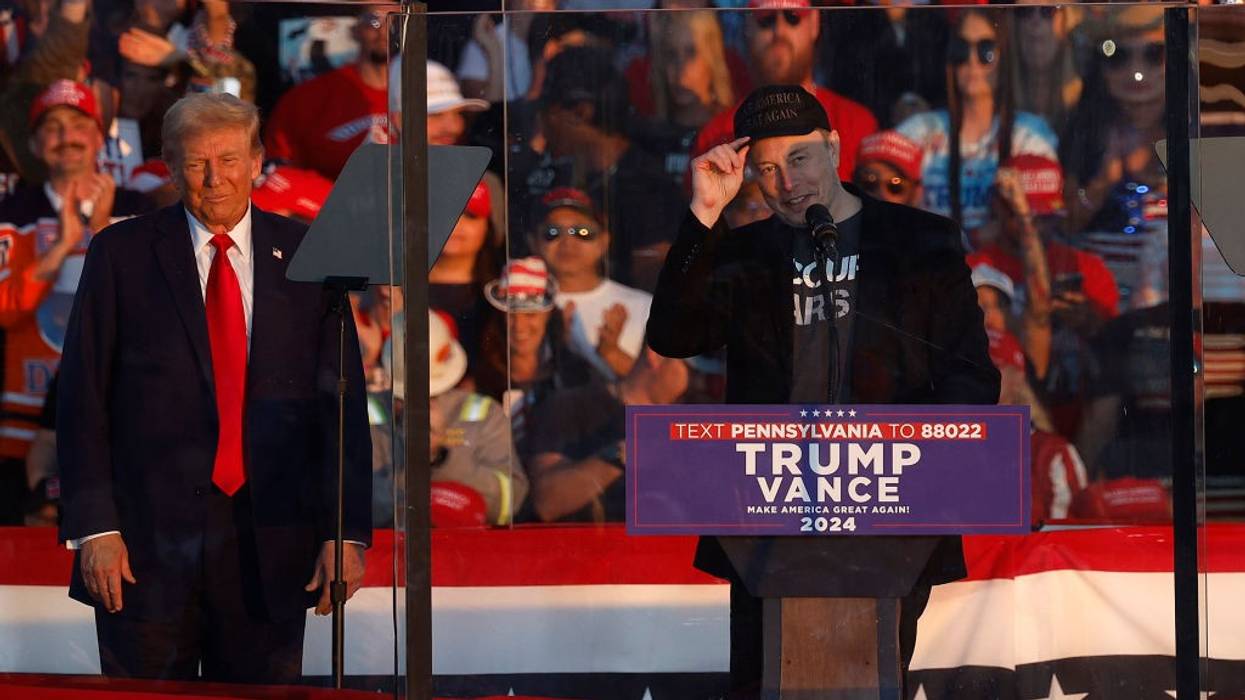
"The man who once said he was going to drain the swamp is instead flooding it."
As U.S. President-elect Donald Trump continues to select Cabinet picks for his second administration—and at least one is facing headwinds to confirmation despite a Republican-controlled Senate—the nonprofit consumer advocacy group Public Citizen Tuesday unveiled a new resource to keep tabs on potential conflicts of interest among Trump's appointees.
"Like the first Trump administration, this administration appears ready to staff critical government posts with as many corporate lackeys and self-enriching grifters as they can hire," said Lisa Gilbert, co-president of Public Citizen.
The group's other co-president, Robert Weissman, said that " Donald Trump may have run for office pretending he was going to advocate for regular people, but his appointments show in reality he’s planning to govern, again, on behalf of the corporate class."
"The man who once said he was going to drain the swamp is instead flooding it," Weissman added.
Trump has already chosen many of the individuals he would like to serve in his Cabinet and other senior positions. On Tuesday he picked Mehmet Oz, the celebrity physician and TV personality known as Dr. Oz, to helm the Centers for Medicare and Medicaid Services.
Other high profile picks include nominating Robert F. Kennedy Jr.—a once prominent environmental lawyer who has spread false claims about vaccines—to head the Department of Health and Human Services, and selecting prominent Trump donor and the world's richest man Elon Musk to oversee a yet-to-be-created government agency devoted to slashing government spending and federal regulation. Musk will oversee that agency, the so-called Department of Government Efficiency, with biotech billionaire Vivek Ramaswamy.
Public Citizen's tracker so far details information for nine appointees, a list that "includes both Cabinet-level positions and other political appointments, many of which do not require Senate confirmation," according to a statement from the group. The tracker will be updated regularly and includes where the individual worked previously and former clients and/or business interests.
Sean Duffy, Trump's pick for transportation secretary, previously worked for the lobbying firm BGR Group, according to the tracker, where he lobbied on behalf coalition that included multiple airlines.
The group also details the past work of Susie Wiles, Trump's selection for chief of staff. Wiles has been a registered lobbyist on behalf of dozens of clients, including a tobacco company "that sought to block federal health restrictions on its candy-flavored cigars" and on behalf of a mining company "that wants to eliminate federal opposition to its plan to dig a massive mine in a pristine watershed," according to additional information on Wiles provided by Public Citizen that is linked in the tracker.
"As chief of staff, she'll be in a position to influence permits, approvals, and contracts that her former lobbying clients paid her to lobby for," according to the tracker.
The tracker notes that Musk's former clients and business interests include "himself" and the companies he owns, several of which are currently under federal probe. According to a longer briefing on Musk by Public Citizen, at least three of the entrepreneur's companies are currently under scrutiny for alleged misconduct by at least nine federal agencies. According to a pre-election breakdown by The New York Times, Musk's companies were "promised $3 billion across nearly 100 different contracts last year with 17 federal agencies." Both the probes and the contracts underscore Musk's exposure to a federal government that he is slated to play a key role in.
Musk has framed his quest to curb government regulation as existential. "Unless Trump wins and we get rid of the mountain of smothering regulations (that have nothing to do with safety!), humanity will never reach Mars," he wrote on X in early October.
After Trump's victory earlier this month, legendary consumer advocate Ralph Nader, who founded Public Citizen but hasn't been formally involved with the group for decades, warned of Musk's influence.
"Get ready this January for chaos, revenge, greed, rampant abuses of power, and the unbridled control of corrupt plutocrats and oligarchs," Nader wrote. "With Elon Musk in the lead."

"Should the flagrant disregard of ethics rules return, the political opposition must use all tools at their disposal to advance ethics reforms and neutralize as much harm as possible."
A leading U.S. watchdog group on Thursday published what it called "a blueprint for strengthening the federal government's ethics programs across the executive, legislative, and judicial branches" amid Democrats' inadequate reforms and the prospect of more "outright scandals and blatant corruption" under a possible second administration of former Republican President Donald Trump.
The Revolving Door Project publication—titled Rebuilding Public Trust: Six Principles to Guide Reform—notes that "Americans' trust in government is near historic lows, a trend that both preceded and continued after the blatant corruption of the Trump administration."
"Democratic administrations, too, made limited progress in curtailing the more routine forms of corruption that combine with dramatic scandals to undercut public trust," the report continues, adding that President Joe Biden's 2021 executive order on ethics "was only a modest step up on what has been standard, failing to take the large strides necessary to close the revolving door between private and public sectors, mandate divestitures, or require compliance with stringent transparency measures."
"The next administration will be a crucial test of ethical management of the federal government."
"Congressional Democrats' reform proposals have also stopped short of addressing mundane corruption, even as many Democrats have been implicated in congressional trading scandals and leaders like Nancy Pelosi have expressed disdain for commonsense measures like banning congressional stock trading," the paper asserts, referring to the House speaker emeritus from California.
"The Supreme Court and federal judiciary have been swamped by ethics scandals, with investigative reporting exposing judges' and justices' failures to disclose lavish trips from wealthy backers and failures to recuse in cases involving their financial interests—yet some mainstream judicial ethics proposals stop short of even holding the judiciary to the same ethics standards as Congress," the report adds.
The publication enumerates "six principles that should guide ethics reform efforts":
"By slowing the turn of the revolving door and banning all political appointees, federal judges, Supreme Court justices, and members of Congress from owning individual stocks, the next administration and Congress could make huge strides in rebuilding Americans' trust that the government works in the public interest, not corporate interests," Revolving Door Project research director and report co-author Andrea Beaty said in a statement Thursday. "And our recommendations to promote transparency and strong enforcement would work to cement such advances."
Trump—whose first term was marred by thousands of conflicts of interest and many other alleged and proven improprieties—is already one of the most conflicted presidents in U.S. history, given his business connections with foreign governments and holdings in industries governed by federal regulators.
Earlier this month, Democrats on the House Oversight and Accountability Committee published a report detailing how, while in office, the former president used his Trump International Hotel in Washington, D.C. to enrich himself with hundreds of illegal or questionable payments from federal and state officials, job-seekers, and presidential pardon recipients.
"With Trump unabashedly previewing a return to blatant corruption and Americans in a period of near-historically low trust in government, the next administration will be a crucial test of ethical management of the federal government," Revolving Door Project executive director Jeff Hauser said in a statement.
"Unless the next administration prioritizes robust ethics reforms, trust in government institutions will erode further," he added. "And should the flagrant disregard of ethics rules return, the political opposition must use all tools at their disposal to advance ethics reforms and neutralize as much harm as possible."
Matthew Pulver, writing at Salon.com, describes Jeb Bush's dangerous belief in privatization and free markets in education.
Matthew Pulver, writing at Salon.com, describes Jeb Bush's dangerous belief in privatization and free markets in education.
It is not so much a belief as an ideology, one impervious to evidence. Many studies show that privately managed charters do not get higher test scores than public schools that do not register with Jeb. The number of charters that open with grand promises and soon lose their doors with big debts does not affect his belief system. He is a zealot for school choice, period.
Not even the failure of the charter school he founded in Liberty City, a poor black neighborhood, dampens his passion for charters and vouchers.
Writes Pulver:
There's nothing else as large in all of society. Not the military--nothing--is bigger.
That's how Randy Best, Jeb Bush's business partner, sees public education, as an untapped market where untold billions are to be made when kids and their families become educational customers. Touting his impressive assault on public education while Florida governor in yesterday's announcement of his 2016 candidacy, Bush may become the loudest proponent yet of turning public education into a for-profit enterprise.
Before getting into Bush's record and financial interests in for-profit education, a full understanding of the dystopian horrors of for-profit, privatized education is necessary. Bush offers it with a handful of Milton Friedman-esque catchwords and focus-grouped slogans, and it may be that the proposals sound innocuous and vaguely innovative until the slightest scrutiny is applied to the ideas -- at which point, it's difficult to imagine much worse than public education turned into a for-profit market. Because the most basic and collectively understood truisms about markets, when applied to children, take on a horrifying character."
It should be noted that Bush's partner, Randy Best, was one of the biggest beneficiaries of Reading First, the ill-fated program enacted as part of NCLB but eventually discontinued because of sweetheart deals and conflicts of interest. Best, an entrepreneur, not an educator, created a commercial reading company (Voyager Learning), which he later sold for $360 million. Best admits that he can't read, that he is acutely dyslexic. But he knows how to make money.