

5
#000000
#FFFFFF
To donate by check, phone, or other method, see our More Ways to Give page.
Daily news & progressive opinion—funded by the people, not the corporations—delivered straight to your inbox.
"Cowering liberals think this is a manners contest while conservatives are waging an ideological war," said one observer.
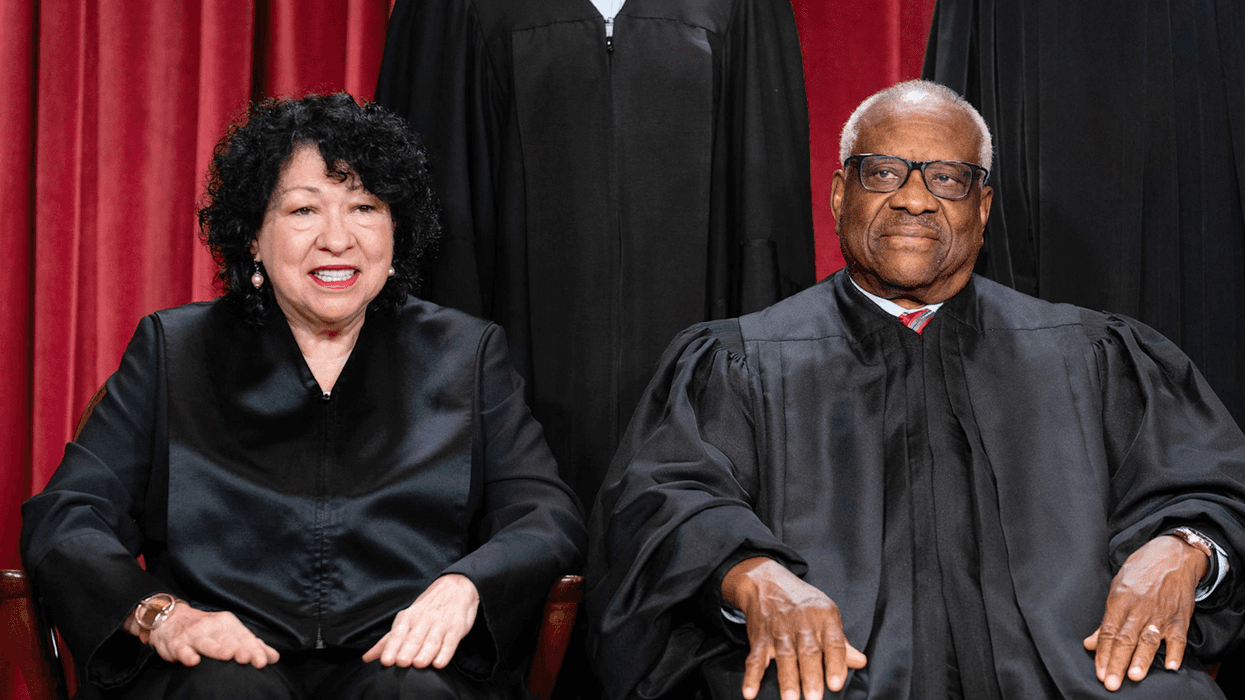
While one liberal US Supreme Court justice apologized Wednesday for mildly condescending remarks about a colleague, one of the high court's most right-wing members compared progressives to the Nazi leader Adolf Hitler—a contrast that one prominent observer called "a perfect commentary on the asymmetry in politics" between liberals and the MAGA right.
Justice Sonia Sotomayor said she apologized for "inappropriate" public comments about Justice Brett Kavanaugh's upbringing during an April 7 speech at the University of Kansas School of Law. Sotomayor, who grew up in financial poverty in the Bronx, referred to Kavanaugh’s concurring opinion in Noem v. Vasquez Perdomo, in which the son of high-powered Washington, DC attorneys brushed off the potentially fatal consequences of immigration enforcement stops.
“This is from a man whose parents were professionals," Sotomayor told the audience, "and probably doesn’t really know any person who works by the hour.”
Meanwhile on Wednesday, Justice Clarence Thomas linked the progressive movement—which Americans have to thank for many of the rights they have today, from the five-day, 40-hour workweek, to food safety and environmental protection, to near-universal civil and voting rights—with some of the 20th century's worst mass murderers.
"Progressivism seeks to replace the basic premises of the Declaration of Independence and hence our form of government," Thomas told attendees of a University of Texas event commemorating the 250th anniversary of the document's signing. "It holds that our rights and our dignities come not from God, but from government."
Thomas called the declaration "one of the greatest anti-slavery documents in the history of the Western civilization," even though its proclamation that "all men are created equal" did not apply to the 20% of the American population who were enslaved Blacks, and a condemnation of slavery was stricken from the draft due to objections from slave owners.
However, Thomas argued that the ideals in the Declaration of Independence have "fallen out of favor" among progressives.
"Progressivism was the first mainstream American political movement, with the possible exception of the pro-slavery reactionaries on the eve of the Civil War, to openly oppose the principles of the declaration" Thomas asserted. "Progressives strove to undo the declaration's commitment to equality and natural rights, both of which they denied were self-evident."
"It requires of the people a subservience and weakness incompatible with a constitution premised on the transcendent origin of our rights," he continued, adding that it "led to the governments that caused the most awful century that the world has ever seen."
"Stalin, Hitler, Mussolini, and Mao all were intertwined with the rise of progressivism, and all were opposed to the natural rights on which our declaration are based," Thomas added, referring to Soviet leader Josef Stalin, the Nazi leader, and Chinese revolutionary Mao Zedong.
Balls and Strikes editor-in-chief Jay Willis responded to Thomas' remarks on Bluesky, writing that it is "genuinely funny that Sonia Sotomayor issued a public apology today for her mild criticism of a conservative colleague on a specific, substantive issue, and then a few hours later Clarence Thomas picked up a mic and was like ALL LIBERALS ARE AMERICA-HATING COWARDS."
"Clarence Thomas is a right-wing freak," Willis added. "This is an indistinguishable from what unironic retvrn guys post on X about, like, women being allowed to have bank accounts. Anyone who tells you he is a profound thinker or a serious jurist or whatever is not to be trusted."
Journalist Mehdi Hasan said on X that "if Dems had a spine, they’d run on impeaching this financially corrupt justice who got away with the allegations of sexual harassment during his hearings."
Many right-wingers, meanwhile, applauded Thomas' remarks, with Sen. Mike Lee (R-Utah)—who helped try to steal the 2020 election for President Donald Trump—posting on X that "progressivism *is* an existential threat to America."
During his speech, Thomas also expressed his admiration for Harlan Crow, the Republican megadonor whose largesse to the justice and his wife Virginia—who was also involved in efforts to subvert the 2020 presidential election—has included undisclosed gifts like luxury vacations and private school tuition for a relative.
He also praised John Yoo, his former clerk and senior Justice Department lawyer who authored the infamous "torture memos" for the George W. Bush administration and publicly argued that the president has the power to order the massacre of an entire village of civilians or the crushing of a child's testicles.
Thomas closed his speech with a call to action.
"Each of you will have opportunities to be courageous every day," he said. "It may mean speaking up in class tomorrow when someone around you expects you to live by lies. It may mean confronting today's fashionable bigotries, such as antisemitism. It may mean standing up for your religion when it is mocked and disparaged by a professor."
"It may mean not budging on your principles when it will entail losing friends or being ostracized," he continued. "It may mean running for your school board when you see that they are teaching your children to hate your values and our country. It may mean turning down a job offer that requires you to make moral or ethical compromises."
This, from a justice on the nation's highest court whose moral and ethical compromises in the form of “the number, value, and extravagance of the gifts" he took from a billionaire linked to a case before that same court has "no comparison in modern American history," according to a Senate report.
It’s frightening but indisputable: The future of American law may rest in his ideological, incompetent hands.
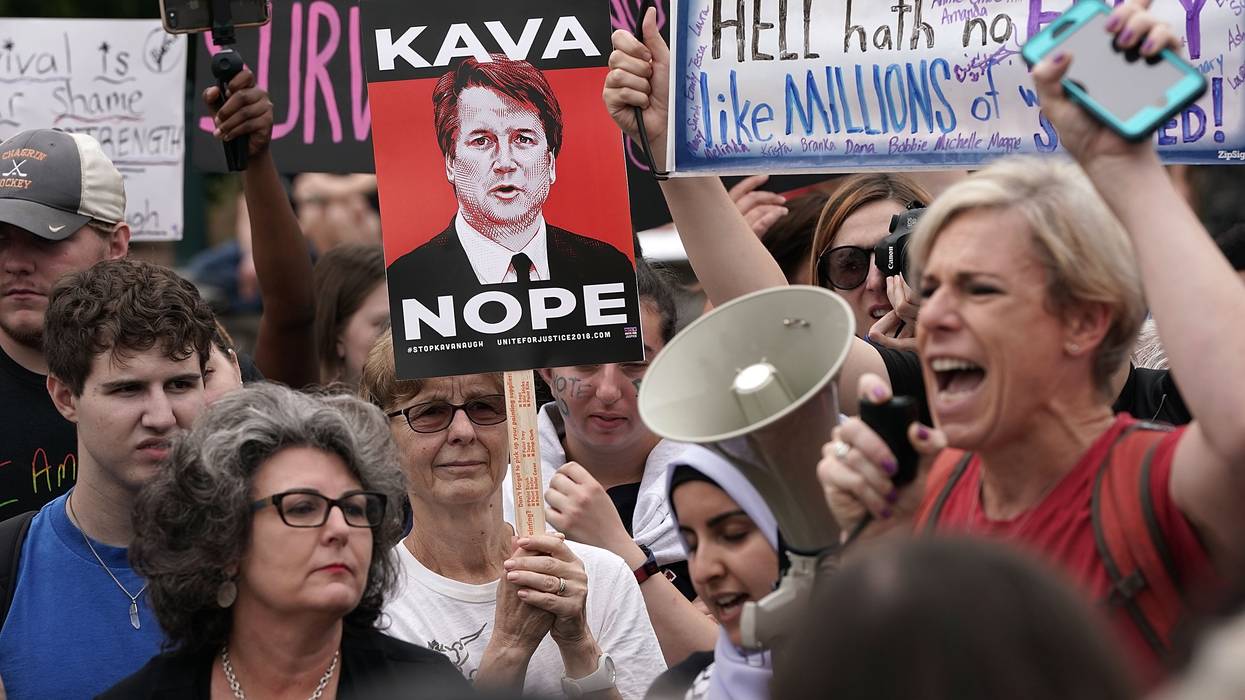
If I asked you to name the most unpopular Supreme Court justice, you might choose the venal Clarence Thomas or the perpetually enraged Samuel Alito. In either event, you’d be wrong. Americans’ least popular member of the high tribunal is Brett “I like beer” Kavanaugh. Poll after poll has shown Kavanaugh taking the honor since his nomination in 2018.
Kavanaugh also holds the honor of being President Donald Trump’s favorite justice, an accolade he earned with his dissenting opinion from the court’s February invalidation of Trump’s worldwide “reciprocal tariffs.” Kavanaugh is now poised to deliberate on pending voting rights cases and a ruling on birthright citizenship under the 14th Amendment. It’s frightening but indisputable: The future of American law may rest in his ideological, incompetent hands.
Kavanaugh’s initial low public standing stemmed from his snarling televised response to the testimony of psychologist Cristine Blasey Ford, who credibly accused him during his confirmation hearing of sexually assaulting her at a boozy high school party. Declaring his innocence and choking back tears, Kavanaugh described the allegations as “a calculated and orchestrated political hit, fueled with apparent pent-up anger about President Trump [and] millions of dollars in money from outside left-wing opposition groups.” Trump quickly came to his embattled nominee’s rescue in a tweet posted hours after the hearing, calling his testimony “powerful, honest, and riveting.”
Long before Senate Republicans approved his nomination by a vote of 50-48, Kavanaugh had built a well-earned reputation as a credentialed and loyal Republican hitman, highlighted by his decision to join Ken Starr’s Office of Independent Counsel in 1997 to assist in the investigations that eventually led to the impeachment of President Bill Clinton.
Since taking his place on the Supreme Court, Kavanaugh has proven a reliable Trump flunky. But unlike Thomas and Alito, he’s also proven to be an intellectual lightweight.
While in Starr’s service, Kavanaugh penned a lurid memorandum that suggested 10 questions for prosecutors to ask Clinton about his relationship with Monica Lewinsky when he testified before a federal grand jury. Among them:
After a brief stint in private practice, Kavanaugh joined the GOP’s legal team in the run-up to the Supreme Court’s infamous Bush v. Gore decision, which handed the presidency to George W. Bush. In 2001, he was rewarded with an associate’s position in the White House counsel’s office, and two years later he was nominated to the US Court of Appeals for the District of Columbia Circuit.
Senate Democrats were alarmed at the thought of an enrobed Kavanaugh, and they managed to put the nominee through two confirmation hearings. “As I look through all of the different issues that you have been involved in as an attorney in public service and the private sector, it seems that you are the Zelig or Forrest Gump of Republican politics,” the normally mild-mannered Sen. Dick Durbin (D-Ill.) remarked in 2004. “You show up at every scene of the crime. You are somehow or another deeply involved, whether it is Elian Gonzalez or the Starr Report, you are there.” In the end, the Democrats failed to stop Kavanaugh’s confirmation in 2006.
During his 12 years on the circuit court, Kavanaugh won praise from right-wing advocacy organizations for a record of overtly pro-business rulings that routinely undercut federal regulations on air quality, consumer protections, and other issues.
Since taking his place on the Supreme Court, Kavanaugh has proven a reliable Trump flunky. But unlike Thomas and Alito, he’s also proven to be an intellectual lightweight, penning few consequential majority opinions of his own and generally following the lead of Chief Justice John Roberts, with whom he voted more than 95% of the time in his first few years on the court.
Recently, however, Kavanaugh has begun to break with Roberts to more closely align with Trump—sometimes to comical effects.
Consider the interim “shadow docket” ruling issued last September, Noem v. Perdomo. The court’s decision lifted a lower-court injunction that had barred Immigration and Customs Enforcement (ICE) agents in Los Angeles from detaining suspected undocumented immigrants based solely on their ethnicity, language, geographic location, and occupations. Like most shadow docket decisions, the Perdomo order was bare-bones, comprising a single paragraph that failed to explain the court’s rationale, but permitted litigation to continue in the lower courts. Kavanaugh, however, took it upon himself to write a 10-page concurrence filled with misstatements of fact and law, in which he argued without evidence that because 10% of people in the Los Angeles region are illegally present, the “totality of circumstances”—including race, location, and language—indicated a high probability that such stops would enable ICE to fulfill its important core mission.
He also added, again without evidence, that any such detentions would be basically benign, reasoning:
The Government sometimes makes brief investigative stops to check the immigration status of those who gather in locations where people are hired for day jobs; who work or appear to work in jobs such as construction, landscaping, agriculture, or car washes that often do not require paperwork and are therefore attractive to illegal immigrants; and who do not speak much if any English. If the officers learn that the individual they stopped is a US citizen or otherwise lawfully in the United States, they promptly let the individual go.
The concurrence was widely panned as authorizing violations of the Fourth Amendment’s requirements of individualized suspicion and probable cause—which soon became known as “Kavanaugh stops.” The criticism became so intense that Kavanaugh was compelled to add a footnote to his concurring opinion in the court’s December shadow docket ruling that struck down the deployment of the National Guard in Chicago (Trump v. Illinois). “The Fourth Amendment requires,” he wrote,
that immigration stops must be based on reasonable suspicion of illegal presence, stops must be brief, arrests must be based on probable cause, and officers must not employ excessive force. Moreover, the officers must not make interior immigration stops or arrests based on race or ethnicity.
The mea culpa did little to restore Kavanaugh’s jurisprudential standing or dignity. In February, his career hit a humiliating low when Chief Justice Roberts publicly rebuked him for essentially cutting and pasting the Trump administration’s arguments for tariffs into his dissenting opinion.
It’s not easy to imagine Kavanaugh sinking much lower than he already has, but one thing remains constant: Trump’s favorite Supreme Court justice has no business casting votes on the most powerful judicial body in the world.
The shadow-docket ruling means ICE will be free to ramp up its roving masked raids in Los Angeles and other cities like Chicago, Baltimore, and Washington, DC. There are no longer any safe zones.
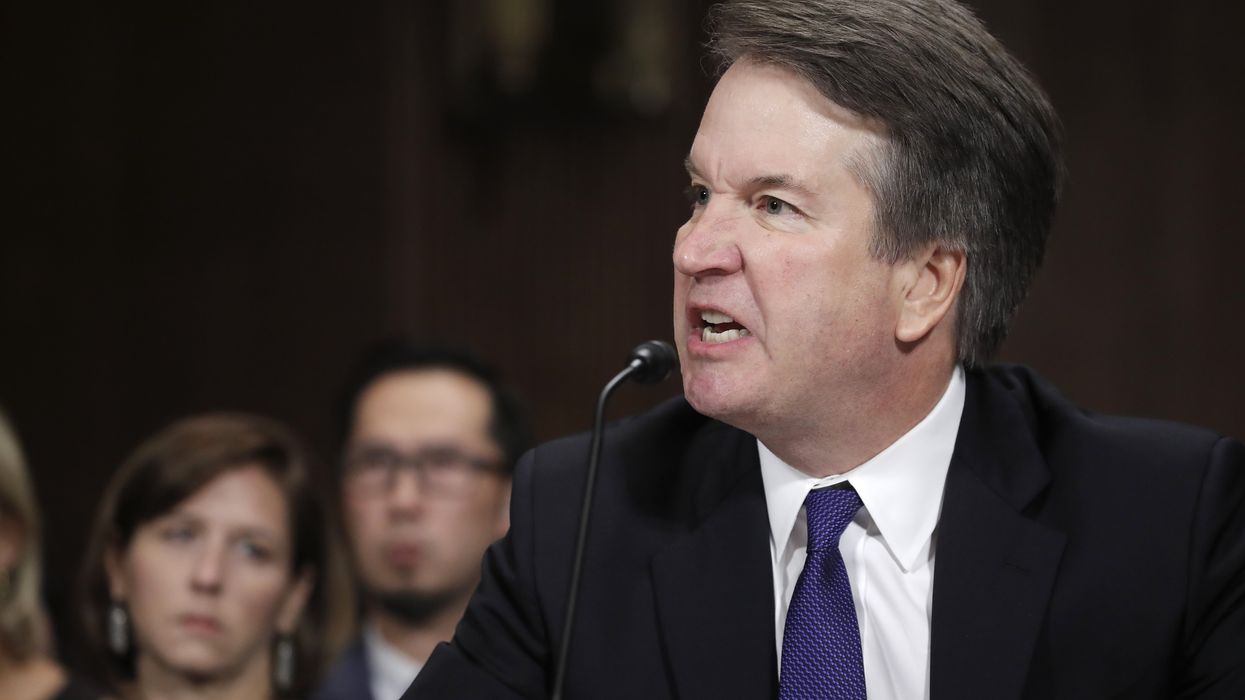
In what may be its most reactionary ruling since Plessy v. Ferguson, the Supreme Court decided on September 8 to allow the Trump administration and Immigration and Customs Enforcement to resume overt racial profiling in immigration raids in Los Angeles. The raids, which began in June under the title of Operation At Large, have resulted in some 5,000 arrests.
The order was handed down in the case of Noem v. Perdomo on the court’s emergency, or “shadow,” docket, which consists of cases decided on an expedited basis—without comprehensive briefing and without oral arguments—outside of the normal “merits docket.” The order lifts a lower-court injunction that had barred the administration from detaining suspected undocumented immigrants based solely on their ethnicity, language, geographic location, and occupations.
Like most shadow docket rulings, the Perdomo order is bare-bones, comprising a single paragraph that fails to explain the court’s rationale for its decision. Nonetheless, it sends a clear message: If you are Latino, you’d better start carrying your identification papers with you—and they had better be in order. Otherwise, you will be subject to detention, and you might just find yourself on a deportation flight to El Salvador, South Sudan, or Uganda.
The Perdomo litigation originated with a lawsuit filed on behalf of a group of immigration advocacy organizations and five individuals, including two US citizens who contend they were detained by ICE during Operation At Large in violation of their Fourth Amendment rights to be free from unreasonable searches and seizures. On July 11, Los Angeles District Court Judge Maame E. Frimpong issued a temporary restraining order against the administration, finding that a “mountain of evidence” supported the plaintiffs’ claims that “roving patrols” of masked federal agents were conducting indiscriminate and sometimes violent dragnet-style immigration raids of workplaces and communities.
The court’s quick overturning of Frimpong’s TRO comes as no surprise. Although the court has a long history of entertaining emergency appeals that bypass the normal appeals process—such as last-minute requests for stays of execution in death penalty cases—no president has relied on the shadow docket more than Donald Trump. According to Georgetown University law professor and shadow docket scholar Steve Vladeck, the first Trump administration sought emergency relief 41 times. By comparison, the George W. Bush and Obama administrations filed a combined total of eight emergency relief requests over a 16-year period while the Biden administration filed 19 applications across four years.
During its recently completed 2024-25 term, the court’s shadow docket exploded to more than 100 cases, fueled by the second Trump administration’s authoritarian power grab. In addition to Perdomo, the court has issued pro-Trump shadow docket orders permitting noncitizens to be deported to third-party countries with histories of egregious human rights violations; barring transgender people from serving in the military; withholding $65 million in teacher training grants to states that include diversity, equity, and inclusion initiatives in their operations and curriculums; and endorsing the Department of Government Efficiency’s access to Social Security Administration records, to cite just a few instances.
And while shadow docket decisions are technically “interim” in nature—operating to remand cases to the lower courts for additional proceedings and leaving space for a possible return to the Supreme Court—they have enduring practical consequences. Unless and until the Supreme Court takes up the Perdomo case again, for example, ICE will be free to ramp up its roving masked raids in Los Angeles and other cities like Chicago, Baltimore, and Washington, DC. There are no longer any safe zones.
Of the high court’s six Republican ideologues, only Brett Kavanaugh explained his reasoning in Perdomo. In a poorly crafted opinion filled with misstatements of fact and law, Kavanaugh cited provisions in the Immigration and Nationality Act and a 1975 Supreme Court case (United States v. Brignoni-Ponce) that authorize immigration agents to briefly detain and question individuals if they have a “reasonable suspicion” (less than probable cause but more than a hunch) that the person being questioned is an alien illegally in the country. From there, however, Kavanaugh dropped the proverbial ball by remarking, without any citations to the trial court’s evidentiary record:
The Government estimates that at least 15 million people are in the United States illegally. Many millions illegally entered (or illegally overstayed) just in the last few years.
Illegal immigration is especially pronounced in the Los Angeles area, among other locales in the United States. About 10% of the people in the Los Angeles region are illegally in the United States—meaning about 2 million illegal immigrants out of a total population of 20 million.
Not surprisingly given those extraordinary numbers, US immigration officers have prioritized immigration enforcement in the Los Angeles area. The Government sometimes makes brief investigative stops to check the immigration status of those who gather in locations where people are hired for day jobs; who work or appear to work in jobs such as construction, landscaping, agriculture, or car washes that often do not require paperwork and are therefore attractive to illegal immigrants; and who do not speak much if any English. If the officers learn that the individual they stopped is a US citizen or otherwise lawfully in the United States, they promptly let the individual go. If the individual is illegally in the United States, the officers may arrest the individual and initiate the process for removal.
Given what he took for granted as the outsized illegal alien population in greater Los Angeles, Kavanaugh reasoned that it is “common sense” (his words, trust me) for ICE agents to detain any Latinos who fit the government’s criteria of suspicion based on their race, language, or employment in low wage jobs.
In a blistering 21-page dissent, Justice Sonia Sotomayor, joined by fellow Democrats Elena Kaga and Ketanji Brown Jackson, took Kavanaugh to school, instructing the former Yale frat boy that the reasonable suspicion standard requires:
“… an individualized suspicion that a particular citizen was engaged in a particular crime” beyond just a “demographic profile...”
The Fourth Amendment thus prohibits exactly what the Government is attempting to do here: seize individuals based solely on a set of facts that ‘describe[s] a very large category of presumably innocent’ people… As the District Court correctly held, the four factors [the administration relies on]—apparent race or ethnicity, speaking Spanish or English with an accent, location, and type of work—are no more indicative of illegal presence in the country than of legal presence.
Sotomayor also educated Kavanaugh on the harsh on-the-ground realities of Operation At Large, noting several examples from the trial court record of violence and intimidation. In the LA suburb of Glendale, for instance:
…nearly a dozen masked agents with guns “jumped out of… cars” at a Home Depot, and began “chasing and tackl[ing] Latino day laborers without “identify[ing] themselves as ICE or police, ask[ing] questions, or say[ing] anything else… In downtown Los Angeles, agents “jumped out of a van, rushed up to [a tamale vendor], surrounded him, and handled him violently,” all “[w]ithout asking… any questions.
In still another Home Depot encounter drawn from the evidentiary record, masked agents wearing bulletproof vests got out of a car and tear-gassed a crowd that had gathered to witness a raid. Far from being polite and respectful, Sotomayor continued, Operation At Large has sparked “panic and fear” across Los Angeles and its surrounding areas. “Countless people in the Los Angeles area,” she observed, “have been grabbed, thrown to the ground, and handcuffed simply because of their looks, their accents, and the fact they make a living by doing manual labor.”
The Fourth Amendment, she reminded her Republican colleagues, “protects every individual’s constitutional right to be free from arbitrary interference by law officers.” Sadly, she concluded, after the Perdomo ruling, “that may no longer be true for those who happen to look a certain way, speak a certain way, and appear to work a certain type of legitimate job that pays very little.”
As a Supreme Court justice constrained by the need for collegiality on the bench, Sotomayor stopped short of denouncing Kavanaugh and the court’s Republicans as enablers of racism. There is no reason for the rest of us to feel so reserved.