SUBSCRIBE TO OUR FREE NEWSLETTER
Daily news & progressive opinion—funded by the people, not the corporations—delivered straight to your inbox.
5
#000000
#FFFFFF
To donate by check, phone, or other method, see our More Ways to Give page.
Daily news & progressive opinion—funded by the people, not the corporations—delivered straight to your inbox.
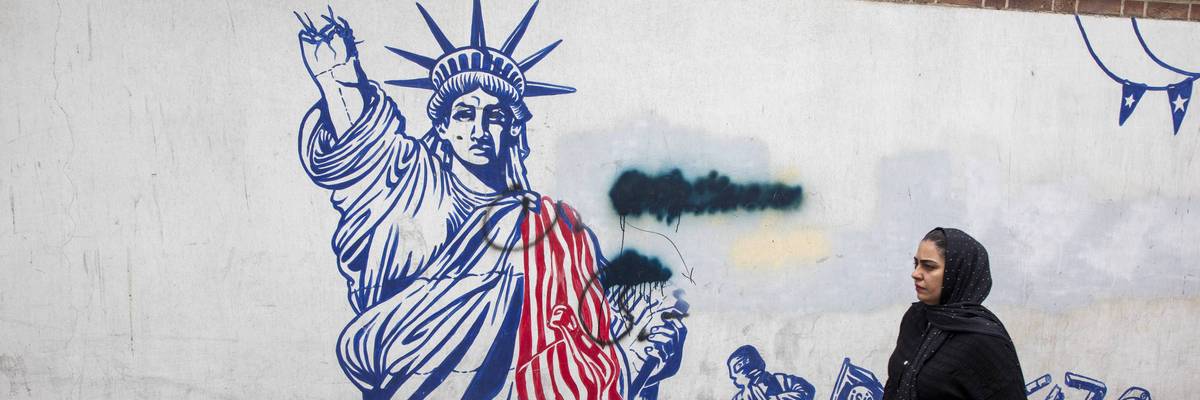
A woman passes in front of an anti-American mural on April 12, 2026 in Tehran, Iran.
Upon the dismal record of the 21st century’s first four administrations, President Donald Trump, since reentering the White House in 2025, has pounded the final nail in the coffin of trust for American leadership.
While the US has a long history of signing treaties, making commitments, and then walking away from them (ask Native American tribes about this), this century’s record of American policy in the Middle East is something quite extraordinary. Dramatic policy shifts, broken treaties, promises made and forgotten, foolish wars fought without attention paid to the mess left for others, and the shattering of international law and conventions—all of these have done substantial damage to the region and to the trust that others have in the US.
It’s convenient for Republicans and Democrats to point the finger at the “other side” for America’s loss of standing and support in the world. In reality, there’s plenty of blame to be shared by all of this century’s administrations. President George W. Bush started the disastrous wars and occupations of Afghanistan and Iraq, but Presidents Barack Obama and Joseph Biden ended both badly, compounding the damage that had been done. And while Bush may have flaunted international law and conventions with the use of torture, rendition, and extrajudicial targeted killings, Obama further undermined the US’ commitment to the rule of law by refusing to call for accountability for these crimes.
Biden waxed eloquent in his defense of what he called the “international rules-based order.” But he undercut himself when it became clear that his commitment was selective since it only applied to Russia’s invasion of Ukraine and not to Israel’s genocidal policies in Palestine.
And speaking of Palestine, during the first quarter of this century, no administration has taken the firm measures needed to curb Israeli behaviors in the occupied Palestinian territories or in Lebanon and now Syria. The impact has been clear: Israel acts with impunity, Palestinians have lost hope, and the people of the region have lost even a shred of belief that the US can play a constructive role in peacemaking.
If the US is to even have a place in this new order, we will need more than a just a new president with promises of change.
Upon this dismal record of this century’s first four administrations, President Donald Trump, since reentering the White House in 2025, has pounded the final nail in the coffin of trust for American leadership in the Middle East.
While on one occasion Biden went to the United Nations Security Council and secured passage of a ceasefire for Gaza—telling the council that Israel approved it, knowing full well that Israel had not agreed to its terms—Trump has taken this practice of dissembling even further. With great fanfare he assembled leaders to an event celebrating his 20-point peace plan to end the Gaza conflict. The problem, of course, was that none of the combatant parties—neither Hamas nor especially Israel—had agreed to its terms. And Trump’s boastful handling of his war with Iran has reached new levels of absurdity. On at least 42 occasions he has announced that the war was over, he had won, or that Iran was begging to negotiate on his terms, only to pivot a day or two later threatening, in violent or vulgar language, to obliterate Iran if they didn’t, as he put it, “wave the white flag” of surrender.
Added to this mess are the thousands of Lebanese who’ve been killed and the scores of villages laid waste by Israel since the Trump-backed ceasefire, the displacement and frightening violence that Israeli settlers and soldiers are wreaking in the West Bank, the continuing genocide unfolding in Gaza, and the insecurity in the Arab Gulf States housing US bases which are being recklessly attacked by Iranian missiles and drones. It is no wonder that Arabs have lost faith not only in the US’ commitment to regional peace and security, but also to the trustworthiness of the US as an ally.
A problem so big can’t be fixed by one US election. After decades of a dizzying roller coaster ride of wars based on lies, violations of international laws and conventions, promises made and then broken, and now an administration that acts impulsively and makes contradictory pronouncements as if words have no meaning—trust has been lost.
After the disasters resulting from the Bush administration’s Iraq war; its anti-Arab, anti-Muslim domestic policies; and its ill-conceived “democracy agenda,” President Obama traveled to Cairo to deliver a speech designed to open a new chapter in US relations with the region. After seven years without decisive follow-through on the promises he’d made in his Cairo address, Obama gave a long interview to The Atlantic magazine in which he blamed the Arabs for not doing enough. When I spoke with him about the speech and that interview, he told me that the expectations of the Arabs had been too high. I responded that he was the one who set the high expectations and made the promises that he would “change Washington, change America, and change the world.” “Don’t blame them,” I said, “for believing you.”
What’s evident now is that the Arab world isn’t believing US promises or even our words. They are beginning to find their way in a post-US world order by creating new alliances, finding new partners, and putting their own interests first. If the US is to even have a place in this new order, we will need more than a just a new president with promises of change. What will be required is a thoughtful examination of our decades of shortcomings and betrayals leading to new policies toward justice for Palestinians and regional partnerships and security. But acknowledging the problems is only the first step. A demonstrated and sustained commitment to implement a changed approach to the multiple crises we have helped to create or exacerbate across the region must follow. Since it took us a generation to dig deep holes for ourselves in the Arab World, getting out won’t be quick or easy. Restoring trust will take time and hard work.
Dear Common Dreams reader, It’s been nearly 30 years since I co-founded Common Dreams with my late wife, Lina Newhouser. We had the radical notion that journalism should serve the public good, not corporate profits. It was clear to us from the outset what it would take to build such a project. No paid advertisements. No corporate sponsors. No millionaire publisher telling us what to think or do. Many people said we wouldn't last a year, but we proved those doubters wrong. Together with a tremendous team of journalists and dedicated staff, we built an independent media outlet free from the constraints of profits and corporate control. Our mission has always been simple: To inform. To inspire. To ignite change for the common good. Building Common Dreams was not easy. Our survival was never guaranteed. When you take on the most powerful forces—Wall Street greed, fossil fuel industry destruction, Big Tech lobbyists, and uber-rich oligarchs who have spent billions upon billions rigging the economy and democracy in their favor—the only bulwark you have is supporters who believe in your work. But here’s the urgent message from me today. It's never been this bad out there. And it's never been this hard to keep us going. At the very moment Common Dreams is most needed, the threats we face are intensifying. We need your support now more than ever. We don't accept corporate advertising and never will. We don't have a paywall because we don't think people should be blocked from critical news based on their ability to pay. Everything we do is funded by the donations of readers like you. When everyone does the little they can afford, we are strong. But if that support retreats or dries up, so do we. Will you donate now to make sure Common Dreams not only survives but thrives? —Craig Brown, Co-founder |
While the US has a long history of signing treaties, making commitments, and then walking away from them (ask Native American tribes about this), this century’s record of American policy in the Middle East is something quite extraordinary. Dramatic policy shifts, broken treaties, promises made and forgotten, foolish wars fought without attention paid to the mess left for others, and the shattering of international law and conventions—all of these have done substantial damage to the region and to the trust that others have in the US.
It’s convenient for Republicans and Democrats to point the finger at the “other side” for America’s loss of standing and support in the world. In reality, there’s plenty of blame to be shared by all of this century’s administrations. President George W. Bush started the disastrous wars and occupations of Afghanistan and Iraq, but Presidents Barack Obama and Joseph Biden ended both badly, compounding the damage that had been done. And while Bush may have flaunted international law and conventions with the use of torture, rendition, and extrajudicial targeted killings, Obama further undermined the US’ commitment to the rule of law by refusing to call for accountability for these crimes.
Biden waxed eloquent in his defense of what he called the “international rules-based order.” But he undercut himself when it became clear that his commitment was selective since it only applied to Russia’s invasion of Ukraine and not to Israel’s genocidal policies in Palestine.
And speaking of Palestine, during the first quarter of this century, no administration has taken the firm measures needed to curb Israeli behaviors in the occupied Palestinian territories or in Lebanon and now Syria. The impact has been clear: Israel acts with impunity, Palestinians have lost hope, and the people of the region have lost even a shred of belief that the US can play a constructive role in peacemaking.
If the US is to even have a place in this new order, we will need more than a just a new president with promises of change.
Upon this dismal record of this century’s first four administrations, President Donald Trump, since reentering the White House in 2025, has pounded the final nail in the coffin of trust for American leadership in the Middle East.
While on one occasion Biden went to the United Nations Security Council and secured passage of a ceasefire for Gaza—telling the council that Israel approved it, knowing full well that Israel had not agreed to its terms—Trump has taken this practice of dissembling even further. With great fanfare he assembled leaders to an event celebrating his 20-point peace plan to end the Gaza conflict. The problem, of course, was that none of the combatant parties—neither Hamas nor especially Israel—had agreed to its terms. And Trump’s boastful handling of his war with Iran has reached new levels of absurdity. On at least 42 occasions he has announced that the war was over, he had won, or that Iran was begging to negotiate on his terms, only to pivot a day or two later threatening, in violent or vulgar language, to obliterate Iran if they didn’t, as he put it, “wave the white flag” of surrender.
Added to this mess are the thousands of Lebanese who’ve been killed and the scores of villages laid waste by Israel since the Trump-backed ceasefire, the displacement and frightening violence that Israeli settlers and soldiers are wreaking in the West Bank, the continuing genocide unfolding in Gaza, and the insecurity in the Arab Gulf States housing US bases which are being recklessly attacked by Iranian missiles and drones. It is no wonder that Arabs have lost faith not only in the US’ commitment to regional peace and security, but also to the trustworthiness of the US as an ally.
A problem so big can’t be fixed by one US election. After decades of a dizzying roller coaster ride of wars based on lies, violations of international laws and conventions, promises made and then broken, and now an administration that acts impulsively and makes contradictory pronouncements as if words have no meaning—trust has been lost.
After the disasters resulting from the Bush administration’s Iraq war; its anti-Arab, anti-Muslim domestic policies; and its ill-conceived “democracy agenda,” President Obama traveled to Cairo to deliver a speech designed to open a new chapter in US relations with the region. After seven years without decisive follow-through on the promises he’d made in his Cairo address, Obama gave a long interview to The Atlantic magazine in which he blamed the Arabs for not doing enough. When I spoke with him about the speech and that interview, he told me that the expectations of the Arabs had been too high. I responded that he was the one who set the high expectations and made the promises that he would “change Washington, change America, and change the world.” “Don’t blame them,” I said, “for believing you.”
What’s evident now is that the Arab world isn’t believing US promises or even our words. They are beginning to find their way in a post-US world order by creating new alliances, finding new partners, and putting their own interests first. If the US is to even have a place in this new order, we will need more than a just a new president with promises of change. What will be required is a thoughtful examination of our decades of shortcomings and betrayals leading to new policies toward justice for Palestinians and regional partnerships and security. But acknowledging the problems is only the first step. A demonstrated and sustained commitment to implement a changed approach to the multiple crises we have helped to create or exacerbate across the region must follow. Since it took us a generation to dig deep holes for ourselves in the Arab World, getting out won’t be quick or easy. Restoring trust will take time and hard work.
While the US has a long history of signing treaties, making commitments, and then walking away from them (ask Native American tribes about this), this century’s record of American policy in the Middle East is something quite extraordinary. Dramatic policy shifts, broken treaties, promises made and forgotten, foolish wars fought without attention paid to the mess left for others, and the shattering of international law and conventions—all of these have done substantial damage to the region and to the trust that others have in the US.
It’s convenient for Republicans and Democrats to point the finger at the “other side” for America’s loss of standing and support in the world. In reality, there’s plenty of blame to be shared by all of this century’s administrations. President George W. Bush started the disastrous wars and occupations of Afghanistan and Iraq, but Presidents Barack Obama and Joseph Biden ended both badly, compounding the damage that had been done. And while Bush may have flaunted international law and conventions with the use of torture, rendition, and extrajudicial targeted killings, Obama further undermined the US’ commitment to the rule of law by refusing to call for accountability for these crimes.
Biden waxed eloquent in his defense of what he called the “international rules-based order.” But he undercut himself when it became clear that his commitment was selective since it only applied to Russia’s invasion of Ukraine and not to Israel’s genocidal policies in Palestine.
And speaking of Palestine, during the first quarter of this century, no administration has taken the firm measures needed to curb Israeli behaviors in the occupied Palestinian territories or in Lebanon and now Syria. The impact has been clear: Israel acts with impunity, Palestinians have lost hope, and the people of the region have lost even a shred of belief that the US can play a constructive role in peacemaking.
If the US is to even have a place in this new order, we will need more than a just a new president with promises of change.
Upon this dismal record of this century’s first four administrations, President Donald Trump, since reentering the White House in 2025, has pounded the final nail in the coffin of trust for American leadership in the Middle East.
While on one occasion Biden went to the United Nations Security Council and secured passage of a ceasefire for Gaza—telling the council that Israel approved it, knowing full well that Israel had not agreed to its terms—Trump has taken this practice of dissembling even further. With great fanfare he assembled leaders to an event celebrating his 20-point peace plan to end the Gaza conflict. The problem, of course, was that none of the combatant parties—neither Hamas nor especially Israel—had agreed to its terms. And Trump’s boastful handling of his war with Iran has reached new levels of absurdity. On at least 42 occasions he has announced that the war was over, he had won, or that Iran was begging to negotiate on his terms, only to pivot a day or two later threatening, in violent or vulgar language, to obliterate Iran if they didn’t, as he put it, “wave the white flag” of surrender.
Added to this mess are the thousands of Lebanese who’ve been killed and the scores of villages laid waste by Israel since the Trump-backed ceasefire, the displacement and frightening violence that Israeli settlers and soldiers are wreaking in the West Bank, the continuing genocide unfolding in Gaza, and the insecurity in the Arab Gulf States housing US bases which are being recklessly attacked by Iranian missiles and drones. It is no wonder that Arabs have lost faith not only in the US’ commitment to regional peace and security, but also to the trustworthiness of the US as an ally.
A problem so big can’t be fixed by one US election. After decades of a dizzying roller coaster ride of wars based on lies, violations of international laws and conventions, promises made and then broken, and now an administration that acts impulsively and makes contradictory pronouncements as if words have no meaning—trust has been lost.
After the disasters resulting from the Bush administration’s Iraq war; its anti-Arab, anti-Muslim domestic policies; and its ill-conceived “democracy agenda,” President Obama traveled to Cairo to deliver a speech designed to open a new chapter in US relations with the region. After seven years without decisive follow-through on the promises he’d made in his Cairo address, Obama gave a long interview to The Atlantic magazine in which he blamed the Arabs for not doing enough. When I spoke with him about the speech and that interview, he told me that the expectations of the Arabs had been too high. I responded that he was the one who set the high expectations and made the promises that he would “change Washington, change America, and change the world.” “Don’t blame them,” I said, “for believing you.”
What’s evident now is that the Arab world isn’t believing US promises or even our words. They are beginning to find their way in a post-US world order by creating new alliances, finding new partners, and putting their own interests first. If the US is to even have a place in this new order, we will need more than a just a new president with promises of change. What will be required is a thoughtful examination of our decades of shortcomings and betrayals leading to new policies toward justice for Palestinians and regional partnerships and security. But acknowledging the problems is only the first step. A demonstrated and sustained commitment to implement a changed approach to the multiple crises we have helped to create or exacerbate across the region must follow. Since it took us a generation to dig deep holes for ourselves in the Arab World, getting out won’t be quick or easy. Restoring trust will take time and hard work.