SUBSCRIBE TO OUR FREE NEWSLETTER
Daily news & progressive opinion—funded by the people, not the corporations—delivered straight to your inbox.
5
#000000
#FFFFFF
To donate by check, phone, or other method, see our More Ways to Give page.
Daily news & progressive opinion—funded by the people, not the corporations—delivered straight to your inbox.
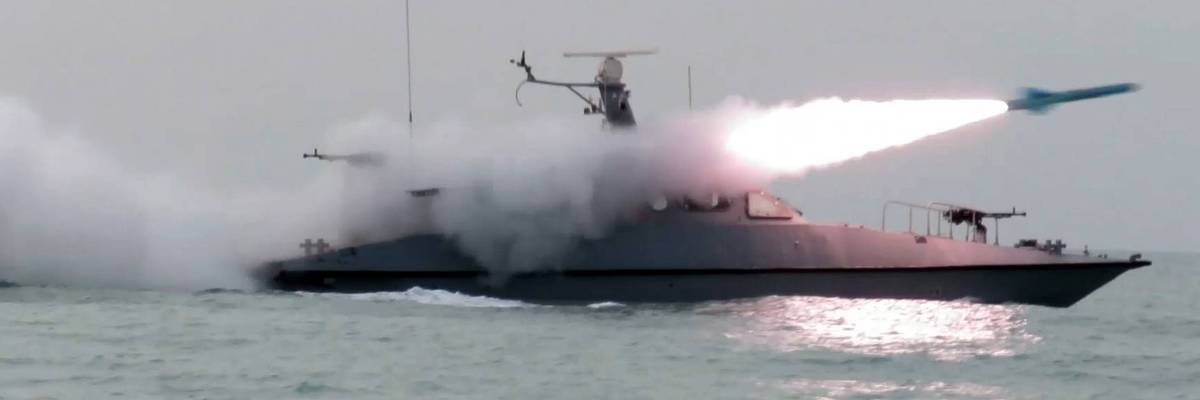
Iranian military personnel take part in an exercise titled "Smart Control of the Strait of Hormuz," launched by the Naval Forces of the Islamic Revolutionary Guard Corps, which is being carried out in the Persian Gulf and the Strait of Hormuz on February 16, 2026.
I was born on July 20, 1944, in the midst of World War II. My father had just returned from Burma where he had been operations officer for the 1st Air Commandos in the China-India-Burma Theater. I, of course, remember nothing about that war—except that my father (on extremely rare occasions) would barely mention what he had gone through but would sometimes take me to World War II movies like The Caine Mutiny and Merrill’s Marauders at local movie theaters.
In a country that has never stopped fighting wars, however, that’s certainly the last one that any American could truly be proud of, the global defeat of Nazi Germany and Imperial Japan.
In fact, we’re talking about a country that, between 2001 and 2024, spent an estimated $21 trillion on its military, which, it turns out, was equal to the military spending of the next 18—yes, 18!—countries combined (if you can even believe it). And in those years, of course, like the 55 preceding ones, the United States managed to never—no, never —actually win a significant war (or, in truth, even come close). In short, President Donald Trump’s present disastrous war with Iran is anything but out of the ordinary when it comes to American military power destroying all too much, but sooner or later finding itself in a remarkably dead-end situation (with an emphasis on dead, of course).
Just imagine for a moment that you had been asked in 2001 to invest $21 trillion taxpayer dollars in a military that would fight wars across the planet without a success in sight after World War II (other than perhaps the invasion of the helpless Caribbean Island of Grenada in 1983). It doesn’t matter whether you’re talking about the Korean War of 1950, the nightmarish Vietnam War that engulfed the 1960s and early 1970s, the Afghan and Iraq wars of this country’s calamitous War on Terror early in this century, or more recently Donald Trump’s wars, which have proven to be one disaster after another, from Somalia to Iran at this very moment.
At the very least, the Iranians should consider renaming the Strait of Hormuz, the Crooked of Donald Trump.
And that should be considered strange indeed. I doubt there’s another example in history of a great imperial power that, for a significant part of its rise (and potential fall) simply couldn’t win a war.
It certainly gives that old song “War (What Is It Good For?)” with the response “absolutely nothing” new meaning. Of course, if you happen to be Donald Trump and you’re the president who simply can’t win a war (which certainly leaves you in good company among American presidents of the last 80 years or so), then the least you can do, when it comes to Iran, is declare that the Strait of Hormuz, through which about 20% of global oil and even more natural gas used to pass and which was closed down by the Iranians in response to his warring acts (distinctly harming the global economy), is now actually US property, or, to be specific, a potential “territory of the United States.” (Phew, that was exhausting!)
And hard as it might be to believe, he really did say that recently. How logical, right? After all, it’s only perhaps 6,500 miles or so from Washington, DC. So, what could possibly make more sense?
Of course, I’m sure you won’t be surprised to learn that Iran’s Deputy Foreign Minister Kazem Gharibabadi responded that, whatever Trump might think, the Strait “cannot be seized with a tweet, nor with an aircraft carrier, nor by issuing an order, nor through an election speech.” He added, “This strait will only be opened and closed under Iran’s command, and as long as you do not accept the reality of defeat and stop indulging in delusions, Iran will continue to enforce the blockade.”
Defeat Donald Trump? In what world could that possibly happen? How delusional could the Iranians be about our distinctly delusional president?
Oh, but in case you think that’s just so much enemy blather, the fact is that, in the ongoing war with Iran, the US has already lost about one-quarter of its crucial Reaper Drones, valued at $30 to $50 million each (or more than $1.3 billion worth of them), mainly around—yes, of course!—the Strait of Hormuz. And many of them have been taken down by Iranian drones valued at $20,000 to $50,000 each.
And while losing so many of its drones, the Trump administration has also been losing other things as well, including its previous insistence that a complete Iranian surrender was the order of the day. No longer, it seems. Now, all that it appears Donald Trump wants (whatever he’s said) is the reopening of the Strait of Hormuz and the free flow of oil and natural gas globally. In other words, what he now yearns for is essentially a return to the very situation that existed six months ago just before he launched his disastrous war.
Or as Vice President JD Vance put it recently, all the Trump administration now wants is to ensure “that the Gulf countries continue to send oil and gas to the world economy so that we have energy price stability,” and, of course, to ensure as well that the Iranians won’t ever have a nuclear weapon. No matter that, as far as anyone knows, they are not faintly close to having, no less possibly even trying to develop such a weapon.
On the other hand, the Iranians are now threatening to continue the state of war with the US until the end of Trump’s second term in office in 2028 (and his approval ratings are, of course, already plunging to new lows). As a senior adviser to the commander of Iran’s Revolutionary Guard put it: “One way is to prolong this war until we get to the next term of the presidency and cause attrition, so that if anyone else wants to attack Iran, they will know there is a cost... We have to attain deterrence so that the enemy never dares to attack us, so we can live with security.”
And let’s not forget that, lest you think Donald Trump has learned anything from all of this, he has only recently been threatening to “bomb the shit out of” long-time American ally Oman, if it “gets in the way” of his Iranian plans—and what, I ask you, could possibly go wrong with that? (I can’t even imagine.)
Of course, we’re talking about the rule (or do I mean reign—or perhaps I actually mean rain, or even thunderstorms or tornados?) of Donald Trump, a president for whom, according to a recent poll, only 29% of potential voters in the coming midterm elections approve of how he’s handling the situation with Iran.
And yet, sad to say, what’s new? Not much, it seems. After all, Trump, who may indeed be unique in so many ways, is proving anything but unique as president of the greatest power on planet Earth (in certain ways, perhaps the greatest in history) when it comes to making war all too miserably, even disastrously. In fact, give him a certain amount of credit. After all, despite what anyone, including him, might have learned from American history since 1945, he decided to go to war with Iran anyway in 2026. It evidently mattered not at all to him that the most obvious and self-evident fact about American war making since 1945 is that defeat (or minimally nothing faintly approaching victory) would essentially be guaranteed. And yet, he still managed to launch another disastrous all-American war on this distinctly embattled planet of ours.
At the very least, the Iranians should consider renaming the Strait of Hormuz, the Crooked of Donald Trump, and let me just hope that I’ll never have to take one of my grandchildren to a movie about his disastrous war.
Dear Common Dreams reader, It’s been nearly 30 years since I co-founded Common Dreams with my late wife, Lina Newhouser. We had the radical notion that journalism should serve the public good, not corporate profits. It was clear to us from the outset what it would take to build such a project. No paid advertisements. No corporate sponsors. No millionaire publisher telling us what to think or do. Many people said we wouldn't last a year, but we proved those doubters wrong. Together with a tremendous team of journalists and dedicated staff, we built an independent media outlet free from the constraints of profits and corporate control. Our mission has always been simple: To inform. To inspire. To ignite change for the common good. Building Common Dreams was not easy. Our survival was never guaranteed. When you take on the most powerful forces—Wall Street greed, fossil fuel industry destruction, Big Tech lobbyists, and uber-rich oligarchs who have spent billions upon billions rigging the economy and democracy in their favor—the only bulwark you have is supporters who believe in your work. But here’s the urgent message from me today. It's never been this bad out there. And it's never been this hard to keep us going. At the very moment Common Dreams is most needed, the threats we face are intensifying. We need your support now more than ever. We don't accept corporate advertising and never will. We don't have a paywall because we don't think people should be blocked from critical news based on their ability to pay. Everything we do is funded by the donations of readers like you. When everyone does the little they can afford, we are strong. But if that support retreats or dries up, so do we. Will you donate now to make sure Common Dreams not only survives but thrives? —Craig Brown, Co-founder |
The above piece, published here with permission, first appeared at Tom Engelhardt's substack page, where you can find more of his writing.
Engelhardt, was editor-in-chief of TomDispatch.com for over 24 years, is the author of numerous books, including: "A Nation Unmade by War" (2018, Dispatch Books), "Shadow Government: Surveillance, Secret Wars, and a Global Security State in a Single-Superpower World" (2014, with an introduction by Glenn Greenwald), "Terminator Planet: The First History of Drone Warfare, 2001-2050"(co-authored with Nick Turse), "The United States of Fear" (2011), "The American Way of War: How Bush's Wars Became Obama's" (2010), and "The End of Victory Culture: a History of the Cold War and Beyond" (2007).
I was born on July 20, 1944, in the midst of World War II. My father had just returned from Burma where he had been operations officer for the 1st Air Commandos in the China-India-Burma Theater. I, of course, remember nothing about that war—except that my father (on extremely rare occasions) would barely mention what he had gone through but would sometimes take me to World War II movies like The Caine Mutiny and Merrill’s Marauders at local movie theaters.
In a country that has never stopped fighting wars, however, that’s certainly the last one that any American could truly be proud of, the global defeat of Nazi Germany and Imperial Japan.
In fact, we’re talking about a country that, between 2001 and 2024, spent an estimated $21 trillion on its military, which, it turns out, was equal to the military spending of the next 18—yes, 18!—countries combined (if you can even believe it). And in those years, of course, like the 55 preceding ones, the United States managed to never—no, never —actually win a significant war (or, in truth, even come close). In short, President Donald Trump’s present disastrous war with Iran is anything but out of the ordinary when it comes to American military power destroying all too much, but sooner or later finding itself in a remarkably dead-end situation (with an emphasis on dead, of course).
Just imagine for a moment that you had been asked in 2001 to invest $21 trillion taxpayer dollars in a military that would fight wars across the planet without a success in sight after World War II (other than perhaps the invasion of the helpless Caribbean Island of Grenada in 1983). It doesn’t matter whether you’re talking about the Korean War of 1950, the nightmarish Vietnam War that engulfed the 1960s and early 1970s, the Afghan and Iraq wars of this country’s calamitous War on Terror early in this century, or more recently Donald Trump’s wars, which have proven to be one disaster after another, from Somalia to Iran at this very moment.
At the very least, the Iranians should consider renaming the Strait of Hormuz, the Crooked of Donald Trump.
And that should be considered strange indeed. I doubt there’s another example in history of a great imperial power that, for a significant part of its rise (and potential fall) simply couldn’t win a war.
It certainly gives that old song “War (What Is It Good For?)” with the response “absolutely nothing” new meaning. Of course, if you happen to be Donald Trump and you’re the president who simply can’t win a war (which certainly leaves you in good company among American presidents of the last 80 years or so), then the least you can do, when it comes to Iran, is declare that the Strait of Hormuz, through which about 20% of global oil and even more natural gas used to pass and which was closed down by the Iranians in response to his warring acts (distinctly harming the global economy), is now actually US property, or, to be specific, a potential “territory of the United States.” (Phew, that was exhausting!)
And hard as it might be to believe, he really did say that recently. How logical, right? After all, it’s only perhaps 6,500 miles or so from Washington, DC. So, what could possibly make more sense?
Of course, I’m sure you won’t be surprised to learn that Iran’s Deputy Foreign Minister Kazem Gharibabadi responded that, whatever Trump might think, the Strait “cannot be seized with a tweet, nor with an aircraft carrier, nor by issuing an order, nor through an election speech.” He added, “This strait will only be opened and closed under Iran’s command, and as long as you do not accept the reality of defeat and stop indulging in delusions, Iran will continue to enforce the blockade.”
Defeat Donald Trump? In what world could that possibly happen? How delusional could the Iranians be about our distinctly delusional president?
Oh, but in case you think that’s just so much enemy blather, the fact is that, in the ongoing war with Iran, the US has already lost about one-quarter of its crucial Reaper Drones, valued at $30 to $50 million each (or more than $1.3 billion worth of them), mainly around—yes, of course!—the Strait of Hormuz. And many of them have been taken down by Iranian drones valued at $20,000 to $50,000 each.
And while losing so many of its drones, the Trump administration has also been losing other things as well, including its previous insistence that a complete Iranian surrender was the order of the day. No longer, it seems. Now, all that it appears Donald Trump wants (whatever he’s said) is the reopening of the Strait of Hormuz and the free flow of oil and natural gas globally. In other words, what he now yearns for is essentially a return to the very situation that existed six months ago just before he launched his disastrous war.
Or as Vice President JD Vance put it recently, all the Trump administration now wants is to ensure “that the Gulf countries continue to send oil and gas to the world economy so that we have energy price stability,” and, of course, to ensure as well that the Iranians won’t ever have a nuclear weapon. No matter that, as far as anyone knows, they are not faintly close to having, no less possibly even trying to develop such a weapon.
On the other hand, the Iranians are now threatening to continue the state of war with the US until the end of Trump’s second term in office in 2028 (and his approval ratings are, of course, already plunging to new lows). As a senior adviser to the commander of Iran’s Revolutionary Guard put it: “One way is to prolong this war until we get to the next term of the presidency and cause attrition, so that if anyone else wants to attack Iran, they will know there is a cost... We have to attain deterrence so that the enemy never dares to attack us, so we can live with security.”
And let’s not forget that, lest you think Donald Trump has learned anything from all of this, he has only recently been threatening to “bomb the shit out of” long-time American ally Oman, if it “gets in the way” of his Iranian plans—and what, I ask you, could possibly go wrong with that? (I can’t even imagine.)
Of course, we’re talking about the rule (or do I mean reign—or perhaps I actually mean rain, or even thunderstorms or tornados?) of Donald Trump, a president for whom, according to a recent poll, only 29% of potential voters in the coming midterm elections approve of how he’s handling the situation with Iran.
And yet, sad to say, what’s new? Not much, it seems. After all, Trump, who may indeed be unique in so many ways, is proving anything but unique as president of the greatest power on planet Earth (in certain ways, perhaps the greatest in history) when it comes to making war all too miserably, even disastrously. In fact, give him a certain amount of credit. After all, despite what anyone, including him, might have learned from American history since 1945, he decided to go to war with Iran anyway in 2026. It evidently mattered not at all to him that the most obvious and self-evident fact about American war making since 1945 is that defeat (or minimally nothing faintly approaching victory) would essentially be guaranteed. And yet, he still managed to launch another disastrous all-American war on this distinctly embattled planet of ours.
At the very least, the Iranians should consider renaming the Strait of Hormuz, the Crooked of Donald Trump, and let me just hope that I’ll never have to take one of my grandchildren to a movie about his disastrous war.
The above piece, published here with permission, first appeared at Tom Engelhardt's substack page, where you can find more of his writing.
Engelhardt, was editor-in-chief of TomDispatch.com for over 24 years, is the author of numerous books, including: "A Nation Unmade by War" (2018, Dispatch Books), "Shadow Government: Surveillance, Secret Wars, and a Global Security State in a Single-Superpower World" (2014, with an introduction by Glenn Greenwald), "Terminator Planet: The First History of Drone Warfare, 2001-2050"(co-authored with Nick Turse), "The United States of Fear" (2011), "The American Way of War: How Bush's Wars Became Obama's" (2010), and "The End of Victory Culture: a History of the Cold War and Beyond" (2007).
I was born on July 20, 1944, in the midst of World War II. My father had just returned from Burma where he had been operations officer for the 1st Air Commandos in the China-India-Burma Theater. I, of course, remember nothing about that war—except that my father (on extremely rare occasions) would barely mention what he had gone through but would sometimes take me to World War II movies like The Caine Mutiny and Merrill’s Marauders at local movie theaters.
In a country that has never stopped fighting wars, however, that’s certainly the last one that any American could truly be proud of, the global defeat of Nazi Germany and Imperial Japan.
In fact, we’re talking about a country that, between 2001 and 2024, spent an estimated $21 trillion on its military, which, it turns out, was equal to the military spending of the next 18—yes, 18!—countries combined (if you can even believe it). And in those years, of course, like the 55 preceding ones, the United States managed to never—no, never —actually win a significant war (or, in truth, even come close). In short, President Donald Trump’s present disastrous war with Iran is anything but out of the ordinary when it comes to American military power destroying all too much, but sooner or later finding itself in a remarkably dead-end situation (with an emphasis on dead, of course).
Just imagine for a moment that you had been asked in 2001 to invest $21 trillion taxpayer dollars in a military that would fight wars across the planet without a success in sight after World War II (other than perhaps the invasion of the helpless Caribbean Island of Grenada in 1983). It doesn’t matter whether you’re talking about the Korean War of 1950, the nightmarish Vietnam War that engulfed the 1960s and early 1970s, the Afghan and Iraq wars of this country’s calamitous War on Terror early in this century, or more recently Donald Trump’s wars, which have proven to be one disaster after another, from Somalia to Iran at this very moment.
At the very least, the Iranians should consider renaming the Strait of Hormuz, the Crooked of Donald Trump.
And that should be considered strange indeed. I doubt there’s another example in history of a great imperial power that, for a significant part of its rise (and potential fall) simply couldn’t win a war.
It certainly gives that old song “War (What Is It Good For?)” with the response “absolutely nothing” new meaning. Of course, if you happen to be Donald Trump and you’re the president who simply can’t win a war (which certainly leaves you in good company among American presidents of the last 80 years or so), then the least you can do, when it comes to Iran, is declare that the Strait of Hormuz, through which about 20% of global oil and even more natural gas used to pass and which was closed down by the Iranians in response to his warring acts (distinctly harming the global economy), is now actually US property, or, to be specific, a potential “territory of the United States.” (Phew, that was exhausting!)
And hard as it might be to believe, he really did say that recently. How logical, right? After all, it’s only perhaps 6,500 miles or so from Washington, DC. So, what could possibly make more sense?
Of course, I’m sure you won’t be surprised to learn that Iran’s Deputy Foreign Minister Kazem Gharibabadi responded that, whatever Trump might think, the Strait “cannot be seized with a tweet, nor with an aircraft carrier, nor by issuing an order, nor through an election speech.” He added, “This strait will only be opened and closed under Iran’s command, and as long as you do not accept the reality of defeat and stop indulging in delusions, Iran will continue to enforce the blockade.”
Defeat Donald Trump? In what world could that possibly happen? How delusional could the Iranians be about our distinctly delusional president?
Oh, but in case you think that’s just so much enemy blather, the fact is that, in the ongoing war with Iran, the US has already lost about one-quarter of its crucial Reaper Drones, valued at $30 to $50 million each (or more than $1.3 billion worth of them), mainly around—yes, of course!—the Strait of Hormuz. And many of them have been taken down by Iranian drones valued at $20,000 to $50,000 each.
And while losing so many of its drones, the Trump administration has also been losing other things as well, including its previous insistence that a complete Iranian surrender was the order of the day. No longer, it seems. Now, all that it appears Donald Trump wants (whatever he’s said) is the reopening of the Strait of Hormuz and the free flow of oil and natural gas globally. In other words, what he now yearns for is essentially a return to the very situation that existed six months ago just before he launched his disastrous war.
Or as Vice President JD Vance put it recently, all the Trump administration now wants is to ensure “that the Gulf countries continue to send oil and gas to the world economy so that we have energy price stability,” and, of course, to ensure as well that the Iranians won’t ever have a nuclear weapon. No matter that, as far as anyone knows, they are not faintly close to having, no less possibly even trying to develop such a weapon.
On the other hand, the Iranians are now threatening to continue the state of war with the US until the end of Trump’s second term in office in 2028 (and his approval ratings are, of course, already plunging to new lows). As a senior adviser to the commander of Iran’s Revolutionary Guard put it: “One way is to prolong this war until we get to the next term of the presidency and cause attrition, so that if anyone else wants to attack Iran, they will know there is a cost... We have to attain deterrence so that the enemy never dares to attack us, so we can live with security.”
And let’s not forget that, lest you think Donald Trump has learned anything from all of this, he has only recently been threatening to “bomb the shit out of” long-time American ally Oman, if it “gets in the way” of his Iranian plans—and what, I ask you, could possibly go wrong with that? (I can’t even imagine.)
Of course, we’re talking about the rule (or do I mean reign—or perhaps I actually mean rain, or even thunderstorms or tornados?) of Donald Trump, a president for whom, according to a recent poll, only 29% of potential voters in the coming midterm elections approve of how he’s handling the situation with Iran.
And yet, sad to say, what’s new? Not much, it seems. After all, Trump, who may indeed be unique in so many ways, is proving anything but unique as president of the greatest power on planet Earth (in certain ways, perhaps the greatest in history) when it comes to making war all too miserably, even disastrously. In fact, give him a certain amount of credit. After all, despite what anyone, including him, might have learned from American history since 1945, he decided to go to war with Iran anyway in 2026. It evidently mattered not at all to him that the most obvious and self-evident fact about American war making since 1945 is that defeat (or minimally nothing faintly approaching victory) would essentially be guaranteed. And yet, he still managed to launch another disastrous all-American war on this distinctly embattled planet of ours.
At the very least, the Iranians should consider renaming the Strait of Hormuz, the Crooked of Donald Trump, and let me just hope that I’ll never have to take one of my grandchildren to a movie about his disastrous war.