SUBSCRIBE TO OUR FREE NEWSLETTER
Daily news & progressive opinion—funded by the people, not the corporations—delivered straight to your inbox.
5
#000000
#FFFFFF
To donate by check, phone, or other method, see our More Ways to Give page.
Daily news & progressive opinion—funded by the people, not the corporations—delivered straight to your inbox.
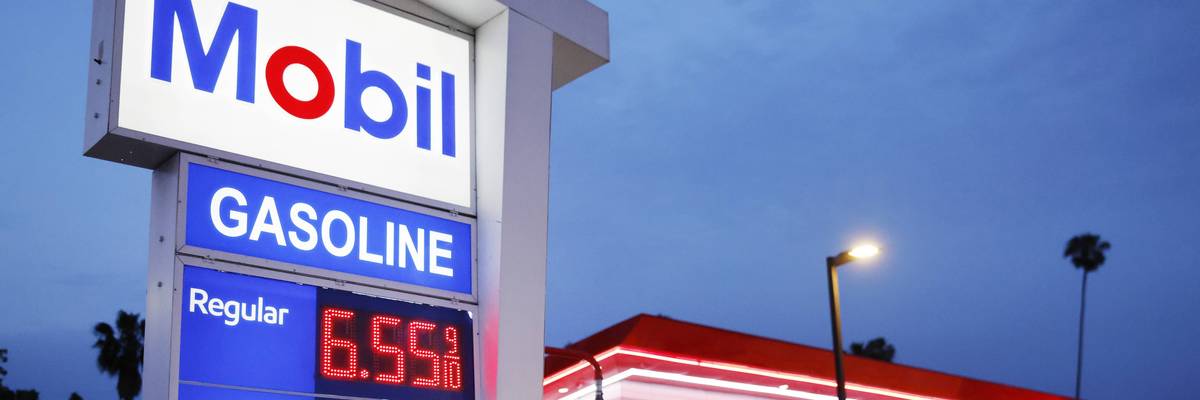
Gas prices are displayed at a Mobil gas station on March 30, 2026 in Pasadena, California.
The war’s biggest losers in the United States were motorists, frequent flyers, farmers, and grocery shoppers. In other words, just about everybody besides oil and defense companies and their shareholders.
Now that the United States and Iran have signed a nonbinding memorandum of understanding ending their war—at least for now—the general public and pundits have been weighing in on who won.
A CBS-YouGov survey released Sunday found that 37% of Americans think the memorandum of understanding (MOU) favors Iran, while 22% believe the United States got the better deal. Nearly half—47%—say both sides broke even.
Newsweek, meanwhile, queried 10 military experts ranging from a former US Navy admiral and a former Pentagon official to five think tank scholars and two professors of international relations. Seven said Iran won the war. Two said “no one.” Only one thought the United States came out on top, but added, “Neither side will gain a complete victory.”
It remains to be seen how things ultimately shake out with the US-Iranian negotiations, but at this point it is clear that two industries won hands down: defense contractors and oil companies. Both profited enormously from the war.
About 20% of the world’s oil and gas is shipped through the Strait of Hormuz, and after Iran shut it down, oil companies roughly doubled the price per barrel.
It’s also clear that the war’s biggest losers in the United States were motorists, frequent flyers, farmers, and grocery shoppers. In other words, just about everybody besides oil and defense companies and their shareholders.
Defense contractors: There are various estimates of how much the conflict has cost the Defense Department thus far. On May 12, the Pentagon comptroller told Congress that the Pentagon had spent $29 billion in operational costs, but he conceded that the estimate did not include the cost to repair US bases in the Middle East that Iran damaged. According to a more recent analysis by the Center for Strategic and International Studies, a Washington, DC-based think tank, the war has cost closer to $40 billion, including the cost of munitions, destroyed equipment, and base damage. Recently the White House asked Congress for $87.6 billion in supplemental spending, mainly to pay for the Iran war.
Munitions have been the Pentagon’s largest expenditure, and defense contractors, notably Raytheon and Lockheed Martin, are cashing in.
In late March, The Washington Post reported that the US Navy launched more than 850 Tomahawk missiles in the first four weeks of the conflict. The Pentagon paid Raytheon (a division of RTX) about $2.2 million for each, or a total of roughly $1.87 billion. In April, the Navy’s fiscal year 2027 budget request asked Congress for $3 billion for 785 additional Tomahawk Land Attack Missiles, a more than 1,200% increase from the 55 TLAMs Congress funded for $258 million in FY 2026.
The Post also reported that US military fired more than 1,000 air-defense interceptors, including Lockheed Martin’s Patriot and Terminal High Altitude Area Defense (THAAD) missiles, in response to Iranian counterattacks across the region. Each THAAD interceptor missile costs about $12.7 million, while each Patriot interceptor costs about $3.7 million.
This week, the Pentagon’s Missile Defense Agency awarded Lockheed Martin a $35.3 billion contract to produce THAAD interceptors through June 2032 and asked the company to triple its production of Patriot interceptors. It also inked a $398.7 million contract with Raytheon for Advanced Medium Range Air-to-Air Missiles.
Oil companies: The war has been a bonanza for oil companies. About 20% of the world’s oil and gas is shipped through the Strait of Hormuz, and after Iran shut it down, oil companies roughly doubled the price per barrel.
ConocoPhillips posted $2.2 billion in profits in the first quarter of 2026, up 84% from the $1.4 billion the previous quarter. BP, meanwhile, reported a $3.8 billion profit for the first quarter compared with a $3.4 billion loss in the fourth quarter of 2025.
ExxonMobil and Chevron had lower profits during the first three months of the year than in the previous quarter, but analysts expect a quick turnaround if higher prices persist. The bets are on ExxonMobil’s second-quarter earnings to more than double last year’s level and for full-year earnings to jump 46%, while Chevron’s full-year profits are predicted to rise by 56%.
Inflation jumped in May for a third consecutive month as the Iran war continued to drive up prices, surpassing 4% for the first time in three years, the Bureau of Labor Statistics reported earlier this month. Higher prices hit everyone, but especially low- and middle-income Americans. The biggest domestic losers include:
Motorists: Moody’s Analytics, a global financial research firm, estimates that the war has thus far cost Americans $132 billion, and a big chunk of that was due to inflated prices at the pump. Gasoline prices, which averaged just under $3 a gallon when the war began in late February, jumped as high as $4.56 a gallon after Iran cut off the Strait of Hormuz, according to AAA. A gallon of regular gasoline averaged $3.999 last Thursday, the first time since late March that prices were that low. This week, the average price per gallon dipped to $3.928, but gas is 25% more expensive than it was last year at this time and motorists are paying about $1 more per gallon for regular than before the war.
In 2025, US motorists consumed about 374.05 million gallons of gasoline daily, according to the Energy Department’s Energy Information Administration. So, at the peak during the war, they paid more than half a billion dollars a day in higher prices. Although prices have dropped since then, that $1 more per gallon for regular motorists are now paying translates into $374 million a day in higher costs.
Likewise, diesel fuel prices increased from $3.76 a gallon just before the war to a peak of $5.69 in early April, according to AAA, raising costs for all goods shipped by train or truck.
Frequent flyers: News of the US-Iran peace deal drove jet fuel spot prices down sharply, from $4.88 a gallon to $2.85. That drop could cut the US airline industry’s annual fuel bill by more than $40 billion, according to the trade publication Oil Price, but “unlike previous oil price downcycles, airlines are unlikely to pass on these cost savings to passengers in the form of lower air fares.” Jet fuel prices jumped three times faster than ticket prices between January and May, Oil Price explained, which cost airlines $100 billion when oil prices spiked during the war, so they likely will apply the windfall to shore up their balance sheets. Lack of competition and tight airport capacity will also be factors.
In other words, airfares are not going to come down to Earth anytime soon. According to Kayak, the average cost of a domestic ticket was $290 in January. That same fare has since climbed to $370.
Farmers: American farmers, still reeling from Donald Trump’s tariffs, have been particularly hurt by the war. Iran’s chokehold on the Strait of Hormuz drove up the price of farm diesel 46% by mid-April, raising expenses at nearly every stage of farm production. And because a significant percentage of nitrogen-based fertilizers urea and ammonia is produced in the Persian Gulf region, the blockade also disrupted the global fertilizer market, boosting fertilizer prices in the United States by as much as 47%. A nationwide survey conducted in early April by the American Farm Bureau found that roughly 70% of farmers reported that they could not afford to buy all the fertilizer they needed for spring planting. Although fertilizer prices are now lower than they were in April, they are still higher than they were a year ago. Urea, for example, is 16% higher, while anhydrous ammonia is 41% higher.
Grocery shoppers: Higher costs for farmers, as well as higher fuel costs for truckers, mean higher prices at the grocery store. The Independent Grocers Alliance, a coalition of 7,500 supermarkets around the world, calculates that for some food products “fuel-related costs can account for roughly 15-30% of the total cost,” which, on a sustained basis, “can result in a 2-4% increase in retail food prices.” Meanwhile, the US Department of Agriculture expects grocery prices to rise 3.2% this year, more than the historical average of 2.6%.
Experts warn that high prices will continue long after the war is finally over.
“Product prices across the United States are projected to keep climbing for the rest of 2026,” Pat Penfield, a professor of supply chain practice at Syracuse University, told The Associated Press.
Mark Zandi, chief economist at Moody’s Analytics, is equally pessimistic. “I think under the most likely scenarios for how things unfold,” he told ABC News, “I’d buckle up.” Inflation worsened by the Iran war will likely linger for the next six to 12 months.
Wasn’t Donald Trump supposed to be the panacea? When he ran for president for a second term, he promised voters he would curb inflation, bring down prices, and end wars, not start them. He has failed on all counts.
Even if the Strait of Hormuz reopens to traffic soon, Zandi said prices will not come down immediately. “It takes time for the higher costs [manufacturers and suppliers] are facing to be incorporated into the prices they charge and actually pass along to their customers, to you and I as consumers,” he said, adding that high energy prices due to the war have cost the typical US household nearly $600 in additional expenditures since the United States and Israel attacked Iran on February 28.
“The cost, particularly for lower-middle-income households, is real money; it matters,” Zandi said. “For many of these households, there’s no easy solution here. There’s no panacea.”
But wasn’t Donald Trump supposed to be the panacea? When he ran for president for a second term, he promised voters he would curb inflation, bring down prices, and end wars, not start them. He has failed on all counts.
Trump likes to think of himself as historically consequential as Napoleon. He even wants to construct an arch modeled after the Arc de Triomphe in Paris. But his “little excursion” in Iran just may prove to be his Waterloo, and Napoleon didn’t build an arch celebrating that.
This article first appeared at the Money Trail blog and is reposted here at Common Dreams with permission.
Dear Common Dreams reader, It’s been nearly 30 years since I co-founded Common Dreams with my late wife, Lina Newhouser. We had the radical notion that journalism should serve the public good, not corporate profits. It was clear to us from the outset what it would take to build such a project. No paid advertisements. No corporate sponsors. No millionaire publisher telling us what to think or do. Many people said we wouldn't last a year, but we proved those doubters wrong. Together with a tremendous team of journalists and dedicated staff, we built an independent media outlet free from the constraints of profits and corporate control. Our mission has always been simple: To inform. To inspire. To ignite change for the common good. Building Common Dreams was not easy. Our survival was never guaranteed. When you take on the most powerful forces—Wall Street greed, fossil fuel industry destruction, Big Tech lobbyists, and uber-rich oligarchs who have spent billions upon billions rigging the economy and democracy in their favor—the only bulwark you have is supporters who believe in your work. But here’s the urgent message from me today. It's never been this bad out there. And it's never been this hard to keep us going. At the very moment Common Dreams is most needed, the threats we face are intensifying. We need your support now more than ever. We don't accept corporate advertising and never will. We don't have a paywall because we don't think people should be blocked from critical news based on their ability to pay. Everything we do is funded by the donations of readers like you. When everyone does the little they can afford, we are strong. But if that support retreats or dries up, so do we. Will you donate now to make sure Common Dreams not only survives but thrives? —Craig Brown, Co-founder |
Now that the United States and Iran have signed a nonbinding memorandum of understanding ending their war—at least for now—the general public and pundits have been weighing in on who won.
A CBS-YouGov survey released Sunday found that 37% of Americans think the memorandum of understanding (MOU) favors Iran, while 22% believe the United States got the better deal. Nearly half—47%—say both sides broke even.
Newsweek, meanwhile, queried 10 military experts ranging from a former US Navy admiral and a former Pentagon official to five think tank scholars and two professors of international relations. Seven said Iran won the war. Two said “no one.” Only one thought the United States came out on top, but added, “Neither side will gain a complete victory.”
It remains to be seen how things ultimately shake out with the US-Iranian negotiations, but at this point it is clear that two industries won hands down: defense contractors and oil companies. Both profited enormously from the war.
About 20% of the world’s oil and gas is shipped through the Strait of Hormuz, and after Iran shut it down, oil companies roughly doubled the price per barrel.
It’s also clear that the war’s biggest losers in the United States were motorists, frequent flyers, farmers, and grocery shoppers. In other words, just about everybody besides oil and defense companies and their shareholders.
Defense contractors: There are various estimates of how much the conflict has cost the Defense Department thus far. On May 12, the Pentagon comptroller told Congress that the Pentagon had spent $29 billion in operational costs, but he conceded that the estimate did not include the cost to repair US bases in the Middle East that Iran damaged. According to a more recent analysis by the Center for Strategic and International Studies, a Washington, DC-based think tank, the war has cost closer to $40 billion, including the cost of munitions, destroyed equipment, and base damage. Recently the White House asked Congress for $87.6 billion in supplemental spending, mainly to pay for the Iran war.
Munitions have been the Pentagon’s largest expenditure, and defense contractors, notably Raytheon and Lockheed Martin, are cashing in.
In late March, The Washington Post reported that the US Navy launched more than 850 Tomahawk missiles in the first four weeks of the conflict. The Pentagon paid Raytheon (a division of RTX) about $2.2 million for each, or a total of roughly $1.87 billion. In April, the Navy’s fiscal year 2027 budget request asked Congress for $3 billion for 785 additional Tomahawk Land Attack Missiles, a more than 1,200% increase from the 55 TLAMs Congress funded for $258 million in FY 2026.
The Post also reported that US military fired more than 1,000 air-defense interceptors, including Lockheed Martin’s Patriot and Terminal High Altitude Area Defense (THAAD) missiles, in response to Iranian counterattacks across the region. Each THAAD interceptor missile costs about $12.7 million, while each Patriot interceptor costs about $3.7 million.
This week, the Pentagon’s Missile Defense Agency awarded Lockheed Martin a $35.3 billion contract to produce THAAD interceptors through June 2032 and asked the company to triple its production of Patriot interceptors. It also inked a $398.7 million contract with Raytheon for Advanced Medium Range Air-to-Air Missiles.
Oil companies: The war has been a bonanza for oil companies. About 20% of the world’s oil and gas is shipped through the Strait of Hormuz, and after Iran shut it down, oil companies roughly doubled the price per barrel.
ConocoPhillips posted $2.2 billion in profits in the first quarter of 2026, up 84% from the $1.4 billion the previous quarter. BP, meanwhile, reported a $3.8 billion profit for the first quarter compared with a $3.4 billion loss in the fourth quarter of 2025.
ExxonMobil and Chevron had lower profits during the first three months of the year than in the previous quarter, but analysts expect a quick turnaround if higher prices persist. The bets are on ExxonMobil’s second-quarter earnings to more than double last year’s level and for full-year earnings to jump 46%, while Chevron’s full-year profits are predicted to rise by 56%.
Inflation jumped in May for a third consecutive month as the Iran war continued to drive up prices, surpassing 4% for the first time in three years, the Bureau of Labor Statistics reported earlier this month. Higher prices hit everyone, but especially low- and middle-income Americans. The biggest domestic losers include:
Motorists: Moody’s Analytics, a global financial research firm, estimates that the war has thus far cost Americans $132 billion, and a big chunk of that was due to inflated prices at the pump. Gasoline prices, which averaged just under $3 a gallon when the war began in late February, jumped as high as $4.56 a gallon after Iran cut off the Strait of Hormuz, according to AAA. A gallon of regular gasoline averaged $3.999 last Thursday, the first time since late March that prices were that low. This week, the average price per gallon dipped to $3.928, but gas is 25% more expensive than it was last year at this time and motorists are paying about $1 more per gallon for regular than before the war.
In 2025, US motorists consumed about 374.05 million gallons of gasoline daily, according to the Energy Department’s Energy Information Administration. So, at the peak during the war, they paid more than half a billion dollars a day in higher prices. Although prices have dropped since then, that $1 more per gallon for regular motorists are now paying translates into $374 million a day in higher costs.
Likewise, diesel fuel prices increased from $3.76 a gallon just before the war to a peak of $5.69 in early April, according to AAA, raising costs for all goods shipped by train or truck.
Frequent flyers: News of the US-Iran peace deal drove jet fuel spot prices down sharply, from $4.88 a gallon to $2.85. That drop could cut the US airline industry’s annual fuel bill by more than $40 billion, according to the trade publication Oil Price, but “unlike previous oil price downcycles, airlines are unlikely to pass on these cost savings to passengers in the form of lower air fares.” Jet fuel prices jumped three times faster than ticket prices between January and May, Oil Price explained, which cost airlines $100 billion when oil prices spiked during the war, so they likely will apply the windfall to shore up their balance sheets. Lack of competition and tight airport capacity will also be factors.
In other words, airfares are not going to come down to Earth anytime soon. According to Kayak, the average cost of a domestic ticket was $290 in January. That same fare has since climbed to $370.
Farmers: American farmers, still reeling from Donald Trump’s tariffs, have been particularly hurt by the war. Iran’s chokehold on the Strait of Hormuz drove up the price of farm diesel 46% by mid-April, raising expenses at nearly every stage of farm production. And because a significant percentage of nitrogen-based fertilizers urea and ammonia is produced in the Persian Gulf region, the blockade also disrupted the global fertilizer market, boosting fertilizer prices in the United States by as much as 47%. A nationwide survey conducted in early April by the American Farm Bureau found that roughly 70% of farmers reported that they could not afford to buy all the fertilizer they needed for spring planting. Although fertilizer prices are now lower than they were in April, they are still higher than they were a year ago. Urea, for example, is 16% higher, while anhydrous ammonia is 41% higher.
Grocery shoppers: Higher costs for farmers, as well as higher fuel costs for truckers, mean higher prices at the grocery store. The Independent Grocers Alliance, a coalition of 7,500 supermarkets around the world, calculates that for some food products “fuel-related costs can account for roughly 15-30% of the total cost,” which, on a sustained basis, “can result in a 2-4% increase in retail food prices.” Meanwhile, the US Department of Agriculture expects grocery prices to rise 3.2% this year, more than the historical average of 2.6%.
Experts warn that high prices will continue long after the war is finally over.
“Product prices across the United States are projected to keep climbing for the rest of 2026,” Pat Penfield, a professor of supply chain practice at Syracuse University, told The Associated Press.
Mark Zandi, chief economist at Moody’s Analytics, is equally pessimistic. “I think under the most likely scenarios for how things unfold,” he told ABC News, “I’d buckle up.” Inflation worsened by the Iran war will likely linger for the next six to 12 months.
Wasn’t Donald Trump supposed to be the panacea? When he ran for president for a second term, he promised voters he would curb inflation, bring down prices, and end wars, not start them. He has failed on all counts.
Even if the Strait of Hormuz reopens to traffic soon, Zandi said prices will not come down immediately. “It takes time for the higher costs [manufacturers and suppliers] are facing to be incorporated into the prices they charge and actually pass along to their customers, to you and I as consumers,” he said, adding that high energy prices due to the war have cost the typical US household nearly $600 in additional expenditures since the United States and Israel attacked Iran on February 28.
“The cost, particularly for lower-middle-income households, is real money; it matters,” Zandi said. “For many of these households, there’s no easy solution here. There’s no panacea.”
But wasn’t Donald Trump supposed to be the panacea? When he ran for president for a second term, he promised voters he would curb inflation, bring down prices, and end wars, not start them. He has failed on all counts.
Trump likes to think of himself as historically consequential as Napoleon. He even wants to construct an arch modeled after the Arc de Triomphe in Paris. But his “little excursion” in Iran just may prove to be his Waterloo, and Napoleon didn’t build an arch celebrating that.
This article first appeared at the Money Trail blog and is reposted here at Common Dreams with permission.
Now that the United States and Iran have signed a nonbinding memorandum of understanding ending their war—at least for now—the general public and pundits have been weighing in on who won.
A CBS-YouGov survey released Sunday found that 37% of Americans think the memorandum of understanding (MOU) favors Iran, while 22% believe the United States got the better deal. Nearly half—47%—say both sides broke even.
Newsweek, meanwhile, queried 10 military experts ranging from a former US Navy admiral and a former Pentagon official to five think tank scholars and two professors of international relations. Seven said Iran won the war. Two said “no one.” Only one thought the United States came out on top, but added, “Neither side will gain a complete victory.”
It remains to be seen how things ultimately shake out with the US-Iranian negotiations, but at this point it is clear that two industries won hands down: defense contractors and oil companies. Both profited enormously from the war.
About 20% of the world’s oil and gas is shipped through the Strait of Hormuz, and after Iran shut it down, oil companies roughly doubled the price per barrel.
It’s also clear that the war’s biggest losers in the United States were motorists, frequent flyers, farmers, and grocery shoppers. In other words, just about everybody besides oil and defense companies and their shareholders.
Defense contractors: There are various estimates of how much the conflict has cost the Defense Department thus far. On May 12, the Pentagon comptroller told Congress that the Pentagon had spent $29 billion in operational costs, but he conceded that the estimate did not include the cost to repair US bases in the Middle East that Iran damaged. According to a more recent analysis by the Center for Strategic and International Studies, a Washington, DC-based think tank, the war has cost closer to $40 billion, including the cost of munitions, destroyed equipment, and base damage. Recently the White House asked Congress for $87.6 billion in supplemental spending, mainly to pay for the Iran war.
Munitions have been the Pentagon’s largest expenditure, and defense contractors, notably Raytheon and Lockheed Martin, are cashing in.
In late March, The Washington Post reported that the US Navy launched more than 850 Tomahawk missiles in the first four weeks of the conflict. The Pentagon paid Raytheon (a division of RTX) about $2.2 million for each, or a total of roughly $1.87 billion. In April, the Navy’s fiscal year 2027 budget request asked Congress for $3 billion for 785 additional Tomahawk Land Attack Missiles, a more than 1,200% increase from the 55 TLAMs Congress funded for $258 million in FY 2026.
The Post also reported that US military fired more than 1,000 air-defense interceptors, including Lockheed Martin’s Patriot and Terminal High Altitude Area Defense (THAAD) missiles, in response to Iranian counterattacks across the region. Each THAAD interceptor missile costs about $12.7 million, while each Patriot interceptor costs about $3.7 million.
This week, the Pentagon’s Missile Defense Agency awarded Lockheed Martin a $35.3 billion contract to produce THAAD interceptors through June 2032 and asked the company to triple its production of Patriot interceptors. It also inked a $398.7 million contract with Raytheon for Advanced Medium Range Air-to-Air Missiles.
Oil companies: The war has been a bonanza for oil companies. About 20% of the world’s oil and gas is shipped through the Strait of Hormuz, and after Iran shut it down, oil companies roughly doubled the price per barrel.
ConocoPhillips posted $2.2 billion in profits in the first quarter of 2026, up 84% from the $1.4 billion the previous quarter. BP, meanwhile, reported a $3.8 billion profit for the first quarter compared with a $3.4 billion loss in the fourth quarter of 2025.
ExxonMobil and Chevron had lower profits during the first three months of the year than in the previous quarter, but analysts expect a quick turnaround if higher prices persist. The bets are on ExxonMobil’s second-quarter earnings to more than double last year’s level and for full-year earnings to jump 46%, while Chevron’s full-year profits are predicted to rise by 56%.
Inflation jumped in May for a third consecutive month as the Iran war continued to drive up prices, surpassing 4% for the first time in three years, the Bureau of Labor Statistics reported earlier this month. Higher prices hit everyone, but especially low- and middle-income Americans. The biggest domestic losers include:
Motorists: Moody’s Analytics, a global financial research firm, estimates that the war has thus far cost Americans $132 billion, and a big chunk of that was due to inflated prices at the pump. Gasoline prices, which averaged just under $3 a gallon when the war began in late February, jumped as high as $4.56 a gallon after Iran cut off the Strait of Hormuz, according to AAA. A gallon of regular gasoline averaged $3.999 last Thursday, the first time since late March that prices were that low. This week, the average price per gallon dipped to $3.928, but gas is 25% more expensive than it was last year at this time and motorists are paying about $1 more per gallon for regular than before the war.
In 2025, US motorists consumed about 374.05 million gallons of gasoline daily, according to the Energy Department’s Energy Information Administration. So, at the peak during the war, they paid more than half a billion dollars a day in higher prices. Although prices have dropped since then, that $1 more per gallon for regular motorists are now paying translates into $374 million a day in higher costs.
Likewise, diesel fuel prices increased from $3.76 a gallon just before the war to a peak of $5.69 in early April, according to AAA, raising costs for all goods shipped by train or truck.
Frequent flyers: News of the US-Iran peace deal drove jet fuel spot prices down sharply, from $4.88 a gallon to $2.85. That drop could cut the US airline industry’s annual fuel bill by more than $40 billion, according to the trade publication Oil Price, but “unlike previous oil price downcycles, airlines are unlikely to pass on these cost savings to passengers in the form of lower air fares.” Jet fuel prices jumped three times faster than ticket prices between January and May, Oil Price explained, which cost airlines $100 billion when oil prices spiked during the war, so they likely will apply the windfall to shore up their balance sheets. Lack of competition and tight airport capacity will also be factors.
In other words, airfares are not going to come down to Earth anytime soon. According to Kayak, the average cost of a domestic ticket was $290 in January. That same fare has since climbed to $370.
Farmers: American farmers, still reeling from Donald Trump’s tariffs, have been particularly hurt by the war. Iran’s chokehold on the Strait of Hormuz drove up the price of farm diesel 46% by mid-April, raising expenses at nearly every stage of farm production. And because a significant percentage of nitrogen-based fertilizers urea and ammonia is produced in the Persian Gulf region, the blockade also disrupted the global fertilizer market, boosting fertilizer prices in the United States by as much as 47%. A nationwide survey conducted in early April by the American Farm Bureau found that roughly 70% of farmers reported that they could not afford to buy all the fertilizer they needed for spring planting. Although fertilizer prices are now lower than they were in April, they are still higher than they were a year ago. Urea, for example, is 16% higher, while anhydrous ammonia is 41% higher.
Grocery shoppers: Higher costs for farmers, as well as higher fuel costs for truckers, mean higher prices at the grocery store. The Independent Grocers Alliance, a coalition of 7,500 supermarkets around the world, calculates that for some food products “fuel-related costs can account for roughly 15-30% of the total cost,” which, on a sustained basis, “can result in a 2-4% increase in retail food prices.” Meanwhile, the US Department of Agriculture expects grocery prices to rise 3.2% this year, more than the historical average of 2.6%.
Experts warn that high prices will continue long after the war is finally over.
“Product prices across the United States are projected to keep climbing for the rest of 2026,” Pat Penfield, a professor of supply chain practice at Syracuse University, told The Associated Press.
Mark Zandi, chief economist at Moody’s Analytics, is equally pessimistic. “I think under the most likely scenarios for how things unfold,” he told ABC News, “I’d buckle up.” Inflation worsened by the Iran war will likely linger for the next six to 12 months.
Wasn’t Donald Trump supposed to be the panacea? When he ran for president for a second term, he promised voters he would curb inflation, bring down prices, and end wars, not start them. He has failed on all counts.
Even if the Strait of Hormuz reopens to traffic soon, Zandi said prices will not come down immediately. “It takes time for the higher costs [manufacturers and suppliers] are facing to be incorporated into the prices they charge and actually pass along to their customers, to you and I as consumers,” he said, adding that high energy prices due to the war have cost the typical US household nearly $600 in additional expenditures since the United States and Israel attacked Iran on February 28.
“The cost, particularly for lower-middle-income households, is real money; it matters,” Zandi said. “For many of these households, there’s no easy solution here. There’s no panacea.”
But wasn’t Donald Trump supposed to be the panacea? When he ran for president for a second term, he promised voters he would curb inflation, bring down prices, and end wars, not start them. He has failed on all counts.
Trump likes to think of himself as historically consequential as Napoleon. He even wants to construct an arch modeled after the Arc de Triomphe in Paris. But his “little excursion” in Iran just may prove to be his Waterloo, and Napoleon didn’t build an arch celebrating that.
This article first appeared at the Money Trail blog and is reposted here at Common Dreams with permission.