
SUBSCRIBE TO OUR FREE NEWSLETTER
Daily news & progressive opinion—funded by the people, not the corporations—delivered straight to your inbox.
5
#000000
#FFFFFF
To donate by check, phone, or other method, see our More Ways to Give page.


Daily news & progressive opinion—funded by the people, not the corporations—delivered straight to your inbox.
It was Trumpian silly to think that mass deportation of immigrants was going to lead to a huge wave of jobs for native born workers.
It probably is not a surprise to most people outside the Trump administration, but it looks like their mass deportation has not done much to help the native-born workforce. The unemployment rate for native-born workers in May was 4.2%. That’s up from 4.1% last May, and 3.8% in May of 2024, when Joe Biden was in the White House, and immigrants were taking all the jobs.
This outcome shouldn’t be a big surprise to people who have given the issue much thought. Most of the jobs that immigrants do are not ones that native-born workers are lining up for. Few people born in this country want to work on farms picking lettuce or tomatoes or in meat-processing plants. It’s the same story with low-paying jobs such as home health care aides or custodians.
It was Trumpian silly to think that mass deportation of immigrants was going to lead to a huge wave of jobs for native born workers. In fact, as much research has shown, immigrant workers tend to act as complements to native-born workers, not substitutes.
This is perhaps most clearly seen in the construction industry, where close to 30% of the workforce are immigrants. The availability of lower-cost immigrant labor allows many projects to go forward that would not otherwise. In this way, it is a net job gainer for native-born workers. This is likely true in many other areas as well.
To be clear, this doesn’t mean that immigrants never lower the wages of native-born workers. There are likely cases where workers on H1-B visas have reduced the wages of workers in some occupations, even if the effect of the program in general may still be positive. I am also confident that if we eased the immigration barriers to foreign-trained doctors, the pay of our doctors would not still be twice as high as in other wealthy countries, thereby lowering healthcare costs.
Also, negative impacts may not be reversible. There is now solid evidence that opening trade to China cost the US millions of manufacturing jobs. That doesn’t mean that putting up tariffs will bring the jobs back. Half a century ago, the meat-packing industry had many good-paying union jobs that were later taken by low-paid immigrants. Chasing away immigrants now will not bring those good-paying jobs back.
Anyhow, the results to date are clear. Trump’s mass deportation has not led to any sort of windfall for native-born workers. As the Trumpers say, “Trump was wrong about everything.”
The rapid return to war over recent days is a stark reminder that, while the US chose how to start this conflict, it has only one vote on how to end it.
Amid a rapid escalation between Israel and Iran, Yemen’s Houthis have rejoined the Iran war, launching a volley of missiles at Israel and pledging to implement a “complete and total ban” of Israeli shipping in the Red Sea. It’s safe to say that the tenuous ceasefire in the Middle East is now unraveling.
President Donald Trump demanded that all parties deescalate, writing on Truth Social Monday morning that “Final negotiations on ‘Peace’ are proceeding” so long as “ignorance or stupidity” don’t get in their way. But the latest developments suggest that the United States has limited control over the path of the conflict, which is now entering its fourth month.
After Iran struck Israel on Sunday in what Tehran described as retaliation for Israeli ceasefire violations in Lebanon, Trump publicly urged Israeli Prime Minister Benjamin Netanyahu to stand by and wait for negotiations to bear fruit. “I call the shots,” Trump told the Financial Times. “Netanyahu doesn’t call the shots.”
Just a few hours later, Israel launched strikes across Iran, hitting what it called “strategic defense systems.” Iranian officials said Israel also hit a petrochemical plant in southwestern Iran.
The rapid return to war is a stark reminder that, while the US chose how to start this conflict, it has only one vote on how to end it. Israel has shown little interest in bringing the war to a close, and many influential pro-Israel voices in the US argue that Trump must “finish the job” and overthrow the Iranian government. And, while Iran has made clear that Lebanon must be part of any ceasefire, Israeli officials remain determined to keep up the fight against Hezbollah, including through large-scale attacks on Beirut.
Trump’s public demands that Israel deescalate suggest that the US is trying to create at least some public separation between its actions and Israel’s. But Iran is weary from years of staccato conflict with Israel and determined to make the most of the leverage it has gained by blockading the Strait of Hormuz.
In practice, this means Tehran is no longer willing to distinguish between US and Israeli attacks. “No one believes the Zionist regime acts without coordination with the United States,” a spokesperson for Iran’s foreign ministry said Monday.
Still, Iran has so far avoided launching new attacks on US assets in the Middle East. This relative restraint may be due to Tehran’s desire to maintain options for future escalation. Another possible explanation is that Iran believes recent reports indicating that Trump has privately said he won’t return to war unless Tehran kills more US soldiers.
The reentry of the Houthis into the war throws an uncertain variable into these calculations. The group earned sympathy throughout the Middle East for its attacks on Israel in retaliation for alleged Israeli war crimes in Gaza. With Israeli forces bogged down on multiple fronts, the Houthis now seemingly see another opportunity to increase their legitimacy and pursue their long-standing goal of confronting Israel.
If the Houthis follow through on their threats to block Israeli shipping, then the Trump administration will face significant pressure to help Israel reopen the key strategic waterway, which is now a crucial pathway for exporting Persian Gulf oil from Arab states because of the Hormuz closure. But even the US military has shown a limited ability to force the Houthis to stand down, despite the best efforts of both the Biden and Trump administrations in recent years.
It will take time to determine the exact impact of the Houthi threats to Israeli shipping. Previous Houthi attempts to partially blockade the Red Sea have already forced many shipping companies to reroute around Africa rather than traveling through the Suez Canal. While the Houthis have generally claimed to target only Israeli ships, the group has used a broad definition to define what counts as Israeli, making it difficult for companies to determine whether they are free to pass.
Meanwhile, Iran is signaling that it wants to stop the latest round of escalation with Israel, saying in a statement Monday that it will stop its attacks so long as Israeli forces halt strikes in Lebanon. The message is clear: if Trump wants a deal with Iran, then he’ll have to restrain Israel first.
The oil embargo has also devastated Cuba's tourism industry, with multiple international hotel chains abandoning the country.
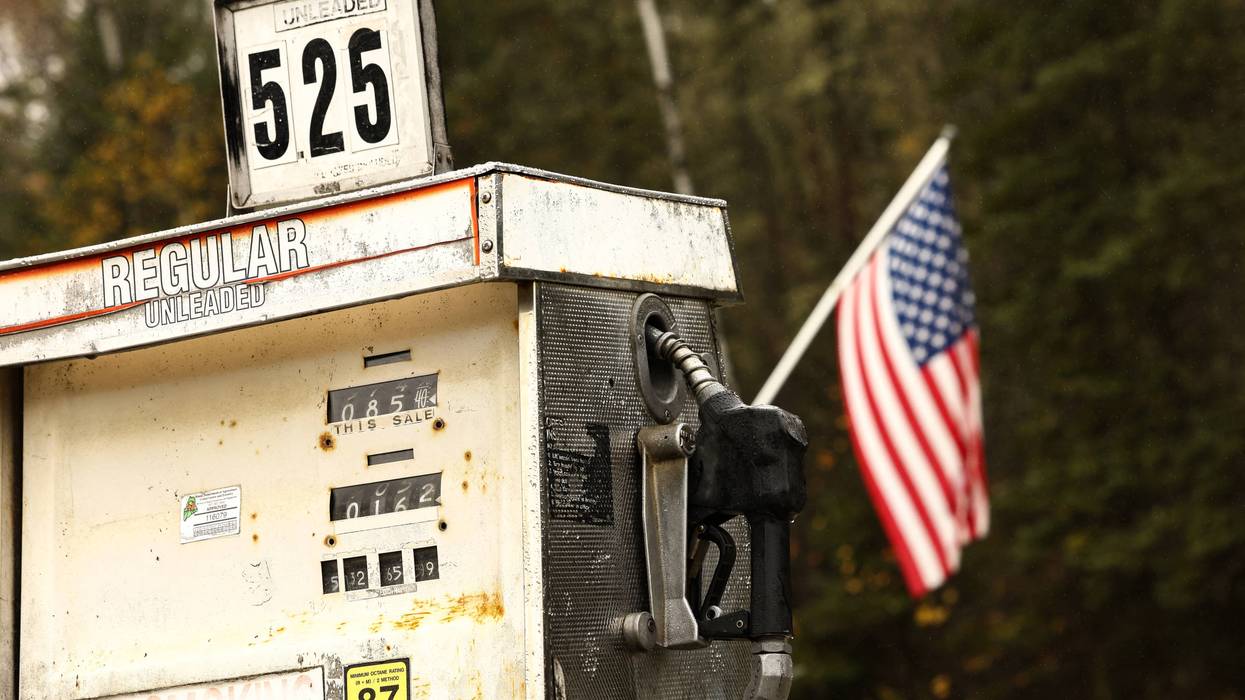
The US military for the last four months has been blockading oil shipments from entering Cuba, and residents living on the island are saying the situation is growing increasingly dire.
In a Monday report from The Guardian, several Cubans described how their lives have been thrown into turmoil by the Trump administration's oil blockade, which began shortly after the US military invaded Venezuela and abducted President Nicolás Maduro earlier this year.
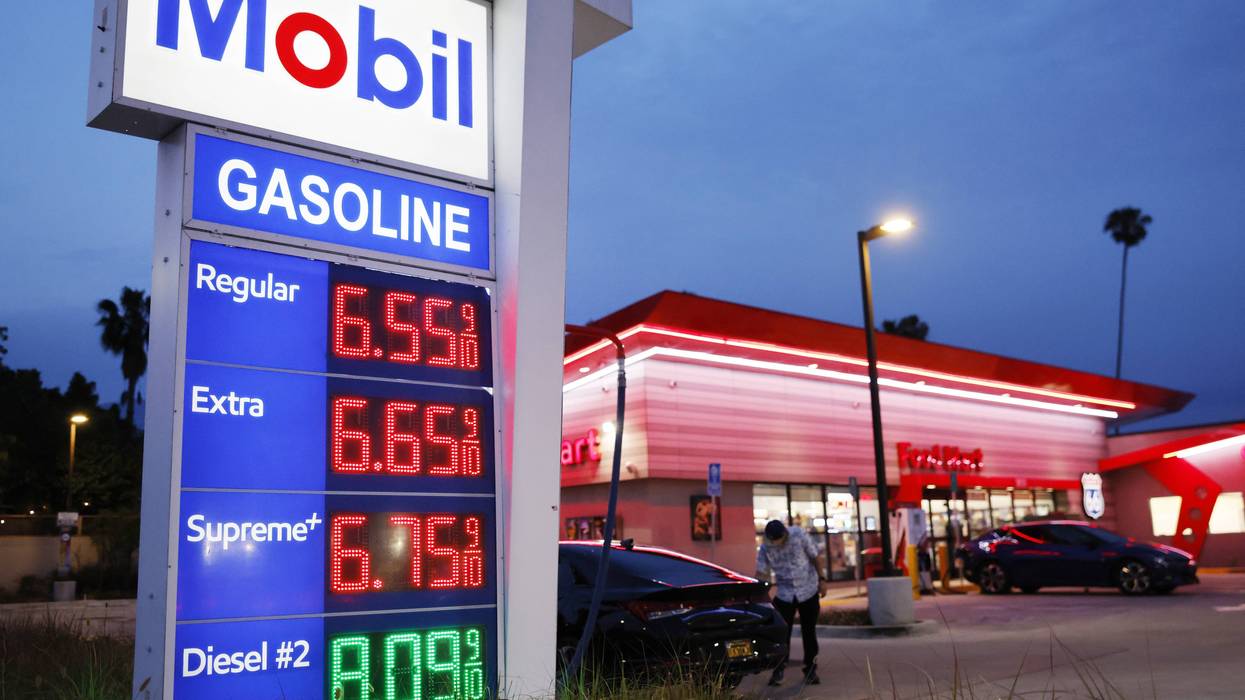
As noted by The Guardian, Cuba's gas stations have now been empty for months because of the blockade, and the state's power company struggles to keep electricity on for even a few hours every day.
One unnamed doctor in Havana who spoke to The Guardian said that "we’ve been four days without light" in his apartment building, and warned that the fuel shortages would cause even more severe crises on the island the longer they persist.
"Without electricity, water is also a problem," the doctor said. "And there are mosquitoes everywhere."
Havana resident Martha Pérez told The Guardian that she has had to buy gas from "an online supermarket," but added that "the price is US$29 a bottle when it used to be just a few cents when I bought it from the state."
As reported by The Associated Press on Monday, Cubans have been buying fuel on the black market at exorbitant prices that most people cannot afford.
Rather than pay such high sums for gas, many Cubans have simply given up driving all together.
Auto body shop owner Diriel Valdez told the AP that his business has been severely hurt by the oil embargo because Cubans aren't bothering to have their cars maintained or repaired amidst the fuel shortages.
“People don’t want to do major repairs anymore,” Valdez said. “A lot of them have their cars parked. They don’t have much hope that they’ll be circulating the way they used to."
Adding to the economic misery, The Wall Street Journal reported on Saturday that many international businesses that have operated in Cuba for years are now pulling out due to the cost of maintaining operations.
The oil embargo has been particularly harsh on Cuba's tourism industry, and the Journal reported that "Spanish hotel giants Iberostar and Meliá have said they are giving up management of at least a dozen Cuban hotels each," while "Royalton Hotels & Resorts, a Canadian operator, ceased operations after grappling with a collapse in tourism."
It is not surprising that Hegseth cannot identify with the men who fought on D-Day.
If you have ever had the opportunity to visit the Normandy American Cemetery in Colleville-sur-Mer, France it is something that stays with you. The rows of white gravestones silhouetted against green grass and blue sky bear silent and eloquent witness to what happened on June 6, 1944. The cemetery contains the graves of 9,389 of Americans, most of whom lost their lives in the D-Day landings and the battles in France in 1944.
From the cemetery, you can see down to Omaha Beach the bloodiest part of the D-Day battlefield. While estimates vary, 2,400 to 3,600 total American casualties (including killed, wounded, and missing) occurred on Omaha Beach on D-Day, June 6, 1944. For me, the most moving part of the Cemetery is the Walls of the Missing where inscribed 1,557 names of the soldiers and sailors who were missing in action and have never had their bodies recovered.
For decades, American politicians have been visiting the Normandy Beaches to pay tribute to all the Americans and Allies (primarily British and Canadian) who fought on June 6, 1944. Particularly well-known is the speech that President Ronald Reagan made in June of 1984:
The men of Normandy had faith that what they were doing was right, faith that they fought for all humanity, faith that a just God would grant them mercy on this beachhead or on the next. It was the deep knowledge—and pray God we have not lost it—that there is a profound, moral difference between the use of force for liberation and the use of force for conquest. You were here to liberate, not to conquer, and so you and those others did not doubt your cause. And you were right not to doubt. You all knew that some things are worth dying for.
For an American politician, remarks at the Normandy beaches ought to be simple and straightforward. All you have to do is pay tribute as best you can to the extraordinary sacrifice made on June 6, 1944. As hard as it is to believe, US Defense Secretary Pete Hegseth failed this simple task. Rather than just pay tribute to the efforts of those who “hit the beach” on June 6, 1944, Hegseth launched into an anti-immigrant and far-right rant. As the New York Times reported:
In his remarks, Mr. Hegseth said that “freedom is not free” and especially praised the role played by American troops, but said that over the past eight or so decades, some European countries had grown “comfortable.” “Today, different European beaches are stormed by different dangerous ideologies,” he said. “Boats and men arrive. When will European capitals do something about that invasion? Or is it too late?”
I am sure it escaped Hegseth the fact that many of the Americans he heralds for their sacrifice were the sons of immigrants to the United States. To compare refugees coming to Europe fleeing war and economic oppression with Nazi tyranny defies belief.
It is not surprising that Hegseth cannot identify with the men who fought on D-Day. They were not the much hyped “war fighters” ignoring politically correct rules of engagement that Hegseth celebrates. Instead, they were ordinary men doing extraordinary things to defeat the most terrible tyranny the world has ever seen. History will remember the deeds of those who defeated Nazi tyranny, while Hegseth's far-right rhetoric will be nothing more than a footnote to a sad chapter in American history.