SUBSCRIBE TO OUR FREE NEWSLETTER
Daily news & progressive opinion—funded by the people, not the corporations—delivered straight to your inbox.
5
#000000
#FFFFFF
To donate by check, phone, or other method, see our More Ways to Give page.
An analysis released Monday estimates that oil and gas price spikes driven by the US-Israeli war on Iran have so far cost consumers and businesses around the world over $100 billion—money that has flowed into the coffers of some of the wealthiest, most powerful fossil fuel companies on the planet.
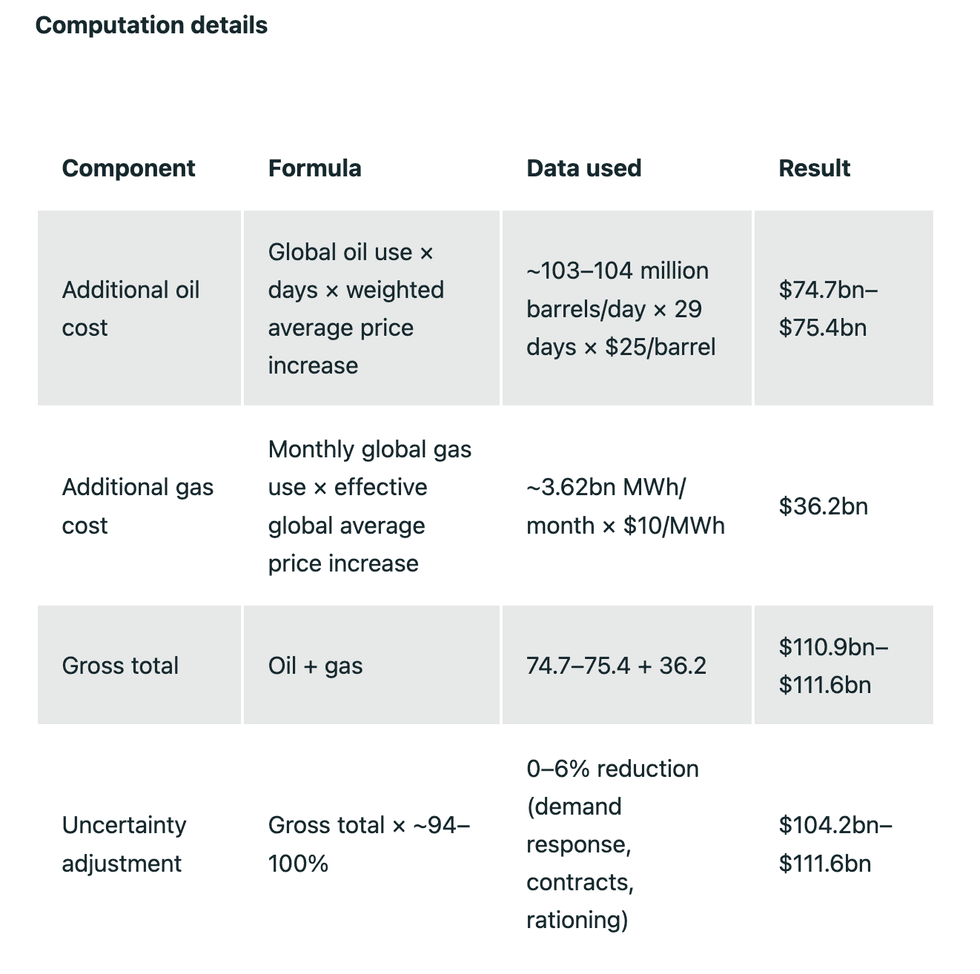
The new analysis by 350.org finds that, just over a month into the war, consumers and businesses have lost between $104.2 billion and $111.6 billion to rising oil and gas prices—an estimate that the environmental group acknowledges is likely conservative, given it doesn't account for "wider knock-on effects, such as rising fertiliser and food costs, declines in economic output and employment, or broader inflation driven by fossil fuel price volatility. "
The more than $100 billion, 350.org said, "has been siphoned from ordinary people to oil and gas companies."
“On top of the incalculable suffering of families and communities torn apart by the war, ordinary people around the world are paying an extraordinary price through fossil fuel-driven energy spikes," said Anne Jellema, 350.org's chief executive. "Over $100 billion has gone straight into the pockets of fossil fuel companies, while families struggle to afford energy and basic necessities."
"The case for windfall taxes," Jellema added, "has never been clearer.”
The analysis was published as global oil prices rose again following a weekend missile attack on Israel by Yemen's Houthis and Trump's threat to "take the oil in Iran," signaling another potential escalation in a war that has already killed thousands, sparked an appalling humanitarian crisis, and destabilized the global economy.
One key beneficiary of the chaos is the fossil fuel industry, which is set to reap billions in windfall profits thanks to rising oil and gas prices. Reuters reported late last week that analysts covering Chevron, Shell, and ExxonMobil have significantly raised earnings estimates for the fossil fuel giants in response to war-fueled price surges.
"US shale producers and other companies without major operations in the Middle East should gain the most, benefiting from higher prices without costs associated with shut-in production, stranded tankers, or expensive repairs to war-hit facilities," Reuters noted. "Still, executives said the big profits will probably not boost their planned capital spending on new production."
Earlier this month, Democratic lawmakers in the US Congress introduced legislation that would impose a windfall profit tax on large American oil companies and return the money to consumers in the form of quarterly rebates. The bill stands no realistic chance of getting through the Republican-controlled Congress, which is awash in Big Oil campaign cash.
“American consumers are once again getting squeezed at the gas pump as President Trump’s war of choice in Iran sends gas prices soaring and money flowing to his Big Oil donors,” said US Sen. Sheldon Whitehouse (D-RI), the bill's lead sponsor in the Senate. “We should send any big windfall for Big Oil back to the hardworking people who paid for it at the gas pump."
An analysis released Monday estimates that oil and gas price spikes driven by the US-Israeli war on Iran have so far cost consumers and businesses around the world over $100 billion—money that has flowed into the coffers of some of the wealthiest, most powerful fossil fuel companies on the planet.
The new analysis by 350.org finds that, just over a month into the war, consumers and businesses have lost between $104.2 billion and $111.6 billion to rising oil and gas prices—an estimate that the environmental group acknowledges is likely conservative, given it doesn't account for "wider knock-on effects, such as rising fertiliser and food costs, declines in economic output and employment, or broader inflation driven by fossil fuel price volatility. "
The more than $100 billion, 350.org said, "has been siphoned from ordinary people to oil and gas companies."
“On top of the incalculable suffering of families and communities torn apart by the war, ordinary people around the world are paying an extraordinary price through fossil fuel-driven energy spikes," said Anne Jellema, 350.org's chief executive. "Over $100 billion has gone straight into the pockets of fossil fuel companies, while families struggle to afford energy and basic necessities."
"The case for windfall taxes," Jellema added, "has never been clearer.”
The analysis was published as global oil prices rose again following a weekend missile attack on Israel by Yemen's Houthis and Trump's threat to "take the oil in Iran," signaling another potential escalation in a war that has already killed thousands, sparked an appalling humanitarian crisis, and destabilized the global economy.
One key beneficiary of the chaos is the fossil fuel industry, which is set to reap billions in windfall profits thanks to rising oil and gas prices. Reuters reported late last week that analysts covering Chevron, Shell, and ExxonMobil have significantly raised earnings estimates for the fossil fuel giants in response to war-fueled price surges.
"US shale producers and other companies without major operations in the Middle East should gain the most, benefiting from higher prices without costs associated with shut-in production, stranded tankers, or expensive repairs to war-hit facilities," Reuters noted. "Still, executives said the big profits will probably not boost their planned capital spending on new production."
Earlier this month, Democratic lawmakers in the US Congress introduced legislation that would impose a windfall profit tax on large American oil companies and return the money to consumers in the form of quarterly rebates. The bill stands no realistic chance of getting through the Republican-controlled Congress, which is awash in Big Oil campaign cash.
“American consumers are once again getting squeezed at the gas pump as President Trump’s war of choice in Iran sends gas prices soaring and money flowing to his Big Oil donors,” said US Sen. Sheldon Whitehouse (D-RI), the bill's lead sponsor in the Senate. “We should send any big windfall for Big Oil back to the hardworking people who paid for it at the gas pump."
An analysis released Monday estimates that oil and gas price spikes driven by the US-Israeli war on Iran have so far cost consumers and businesses around the world over $100 billion—money that has flowed into the coffers of some of the wealthiest, most powerful fossil fuel companies on the planet.
The new analysis by 350.org finds that, just over a month into the war, consumers and businesses have lost between $104.2 billion and $111.6 billion to rising oil and gas prices—an estimate that the environmental group acknowledges is likely conservative, given it doesn't account for "wider knock-on effects, such as rising fertiliser and food costs, declines in economic output and employment, or broader inflation driven by fossil fuel price volatility. "
The more than $100 billion, 350.org said, "has been siphoned from ordinary people to oil and gas companies."
“On top of the incalculable suffering of families and communities torn apart by the war, ordinary people around the world are paying an extraordinary price through fossil fuel-driven energy spikes," said Anne Jellema, 350.org's chief executive. "Over $100 billion has gone straight into the pockets of fossil fuel companies, while families struggle to afford energy and basic necessities."
"The case for windfall taxes," Jellema added, "has never been clearer.”
The analysis was published as global oil prices rose again following a weekend missile attack on Israel by Yemen's Houthis and Trump's threat to "take the oil in Iran," signaling another potential escalation in a war that has already killed thousands, sparked an appalling humanitarian crisis, and destabilized the global economy.
One key beneficiary of the chaos is the fossil fuel industry, which is set to reap billions in windfall profits thanks to rising oil and gas prices. Reuters reported late last week that analysts covering Chevron, Shell, and ExxonMobil have significantly raised earnings estimates for the fossil fuel giants in response to war-fueled price surges.
"US shale producers and other companies without major operations in the Middle East should gain the most, benefiting from higher prices without costs associated with shut-in production, stranded tankers, or expensive repairs to war-hit facilities," Reuters noted. "Still, executives said the big profits will probably not boost their planned capital spending on new production."
Earlier this month, Democratic lawmakers in the US Congress introduced legislation that would impose a windfall profit tax on large American oil companies and return the money to consumers in the form of quarterly rebates. The bill stands no realistic chance of getting through the Republican-controlled Congress, which is awash in Big Oil campaign cash.
“American consumers are once again getting squeezed at the gas pump as President Trump’s war of choice in Iran sends gas prices soaring and money flowing to his Big Oil donors,” said US Sen. Sheldon Whitehouse (D-RI), the bill's lead sponsor in the Senate. “We should send any big windfall for Big Oil back to the hardworking people who paid for it at the gas pump."