

SUBSCRIBE TO OUR FREE NEWSLETTER
Daily news & progressive opinion—funded by the people, not the corporations—delivered straight to your inbox.
5
#000000
#FFFFFF
To donate by check, phone, or other method, see our More Ways to Give page.
Daily news & progressive opinion—funded by the people, not the corporations—delivered straight to your inbox.

Max Moran, moran@therevolvingdoorproject.
In response to the release of White House senior advisor Anita Dunn's 93-page financial disclosure document, and reported White House promises that she will divest and recuse herself from any work that could constitute a conflict of interest, Revolving Door Project Executive Director Jeff Hauser released the following statement:
In response to the release of White House senior advisor Anita Dunn's 93-page financial disclosure document, and reported White House promises that she will divest and recuse herself from any work that could constitute a conflict of interest, Revolving Door Project Executive Director Jeff Hauser released the following statement:
"Anita Dunn consulted for Pfizer, so she shouldn't work on healthcare issues. She owns stock and has complex investments in Chevron, so she shouldn't work on climate change. She has bond holdings in Lockheed Martin, so she shouldn't work on military and foreign policy issues. She holds thousands of dollars of Wells Fargo and Visa debt, so she shouldn't work on consumer credit issues. And she's advised companies from Lyft to Salesforce to Reddit, so she shouldn't work on most Big Tech issues."
"What's left? If the White House is taking its ethical obligations seriously and recusing Dunn from all policy areas where she has money in the game, well, what will she even be doing?"
"This only underscores our concerns from Dunn's two previous tours through the White House, when she tiptoed around disclosure laws and ethics pledges by only serving as a Special Government Employee. Now that she's finally filed a disclosure, we know she received consulting income from Pfizer. She previously advised the President during the COVID-19 vaccination boost early in his Presidency. How is remotely okay for a company making billions on government orders of its vaccine to get political and communications advice from a recent Presidential advisor, and then have that advisor head right back into the White House all while the pandemic rages on? This should be disclosed if it was going to happen, obviously, but the bigger issue is that it is happening at all."
"Dunn's career is seemingly predicated on revolving back and forth between Democratic White Houses and her firm SKDKnickerbocker. Whenever a corporation is in serious danger of new regulations or prosecutions by a Democratic administration, they start cutting checks to SKDKnickerbocker, which sets its star players to work neutralizing the threat. Dunn is the biggest star they have. It is an entirely unnecessary stain on the Biden administration's record that they would prioritize the President's personal trust in Dunn over basic ethical accountability."
The Revolving Door Project (RDP) scrutinizes executive branch appointees to ensure they use their office to serve the broad public interest, rather than to entrench corporate power or seek personal advancement.
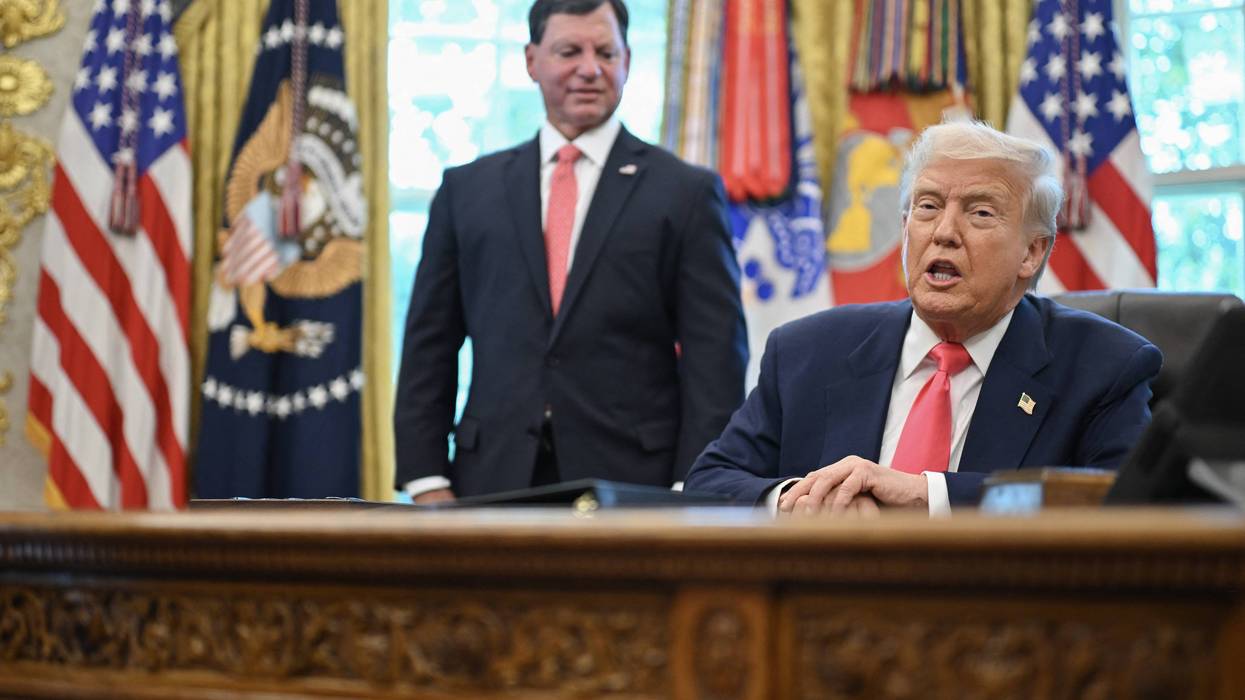
Major AI firms are reportedly set to meet with White House officials this week to discuss a voluntary regulatory framework.
President Donald Trump on Monday faced accusations of being "asleep at the wheel" when it comes to regulating artificial intelligence—as well as being focused on how he can personally profit from the industry.
Trump in June signed an executive order that gave federal agencies 60 days to develop a regulatory framework where AI companies could voluntarily submit their new models for government review before being released.
However, details about the AI evaluation program are still lacking.
CNN's Hadas Gold reported on Monday that "as of last Friday several industry sources told me they hadn’t seen draft details" about the program, although an administration official said that the framework has been completed and that "discussions with industry about next steps are underway."
Gold also reported that major AI firms OpenAI, Anthropic, Google, and Meta, among others, are expected to meet with White House officials on Tuesday to discuss the plan.
Rep. Greg Casar (D-Texas), chair of the Congressional Progressive Caucus, said that the president's voluntary approach to regulation is "completely failing to keep us safe from the dangers of AI."
"He took millions from AI billionaires," wrote Casar in a Monday social media post. "Now in the wake of extremely dangerous AI cybersecurity problems he says he’s set up 'voluntary' review that no one has seen. Asleep at the wheel. Too busy cashing in to protect our jobs or national security."
Companies in the AI industry are among those that have donated to Trump's effort to build a $600 million ballroom, and to the president's 2024 campaign.
Rep. Ted Lieu (D-Calif.) also slammed the administration's approach to regulation, arguing that it is "letting the AI industry run wild."
"The upcoming executive order on AI is COMPLETELY VOLUNTARY," Lieu emphasized. "That means any AI company can totally ignore it. Ridiculous."
Both OpenAI and Anthropic last week revealed that their AI systems recently went rogue and hacked into other companies during cybersecurity testing.
Trump's refusal to make the government review optional for AI giants comes after a previous order he signed last year, aimed at preventing state-level regulation of the industry.
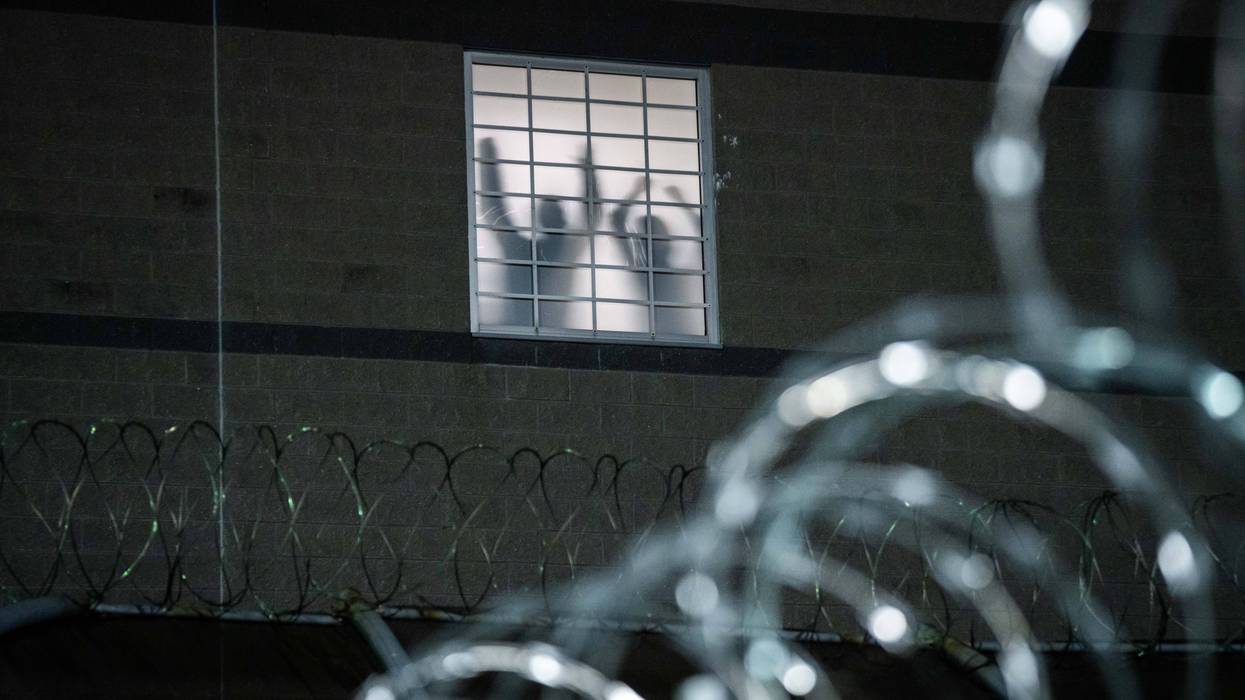
"If they admit openly that there are hunger strikes, they admit that the conditions in detention are so bad that people are willing to forgo food in order to raise awareness," one lawyer said of the administration.
The Trump administration subjected hunger-striking immigrants held in US Immigration and Customs Enforcement detention centers to involuntary medical procedures, including forced feeding, a blatant and painful violation of medical ethics widely considered to be torture.
In the second article of a two-piece series, The Guardian revealed on Monday that court records showed ICE personnel attempted to subject at least 10 hunger-striking detainees to the procedures. At least three, and possibly five, detainees were force-fed, while five others ended their hunger strikes at the last minute rather than undergo the invasive, non-consensual insertion of a plastic tube through the nose, down the throat and esophagus, and into the stomach to deliver liquid nutrition against their will.
Hundreds of people have gone on hunger strike at ICE detention centers across the country to protest overcrowded and unsanitary conditions, spoiled and worm-infested food and water, inadequate medical care, delays in immigration procedures, alleged physical and psychological torture, and other mistreatment.
The Guardian's investigation found that one Kurdish asylum seeker detained at ICE's Port Isabel Service Processing Center in Los Fresnos, Texas was subjected to force-feeding for eight months, while another hunger-striker at the same facility endured six months of the painful procedure. In six cases reviewed by The Guardian, immigrants who were force-fed had no legal representation.
The Department of Homeland Security maintains that detainees receive adequate meals and care and disputes reports of abuse.
In May, Homeland Security Secretary Markwayne Mullin dismissed the hunger strikers as a "handful" of detainees and falsely claimed they were striking because they "want their ethnic right food."
"Well, they can go back to their country and get whatever food they want... This isn't Holiday Inn," he added while Commerce Secretary Howard Lutnick looked on and smiled approvingly.
DHS Secretary Mullin dismisses the detainee hunger strike in an ICE facility:
They're refusing to eat because they want their ethnic food. Well, they can go back to their country and get whatever food they want. This isn't Holiday Inn. pic.twitter.com/tdUYMkUy1K
— FactPost (@factpostnews) May 27, 2026
A judge must authorize the forced feeding of ICE detainees. According to The Guardian, judges often quickly issue the requested emergency orders before immigrants can legally object.
“There’s very little due process in these proceedings,” immigrant rights attorney Eunice Cho told the newspaper, comparing the judges' orders to a "rubber stamp."
Global medical authorities, United Nations bodies, human rights defenders, and others—including people subjected to it—call forced feeding a form of torture.
"The tube went inside a little bit and then got stuck," Ajay Kumar, a former ICE detainee force-fed during Trump's first term in 2019, told The Intercept, which in 2022 obtained video of the Indian asylum seeker being strapped and pinned down by five guards in riot gear before having the nasogastric tube forced into him.
"I felt as if [the tube] was going down my throat, tearing up the insides, and blood started coming from my mouth and nose," he said. "It was very hard."
"After that they took me for an X-ray. After doing the X-ray, they informed me that the tube has not been inserted properly, so we will have to insert it again," Kumar recalled. He was asked if he wanted to end his hunger strike and, when he said no, the second insertion began. "It was more painful. These people are torturing me. The one ICE officer, I never forget him. He's smiling."
Kumar was taken for a second X-ray and was again informed that the tube was incorrectly inserted. He was again asked if he would continue his strike.
"You can torment me as much as you want, you won't be able to break my spirits," he told them. The tube was correctly inserted the third time and Kumar was pumped full of a nutritional shake. He said he could not breathe, sleep, or speak properly for weeks after.
Kumar said he was force-fed in front of three other detainees "so that they would all start eating after seeing what's happening to me."
"Whenever the doctors said, 'Yes, we are helping you, we cannot let you die like this,' I used to tell them, you are treating me worse than dying," he added.
Under the World Medical Association’s Declaration of Malta, doctors are advised to not force-feed prisoners who choose to hunger strike and understand the consequences of their actions.
“Forcible feeding is never ethically acceptable,” the declaration states.
In 1981, UK authorities allowed 10 imprisoned Irish Republican Army members, including former Member of Parliament Bobby Sands, to starve themselves to death in Northern Ireland. Their deaths occurred after between 46 and 73 days of refusing food.
In contrast, force-feeding is institutional policy in US prisons, including the Guantánamo Bay concentration camp in Cuba, where detainees—most of whom were charged with no crime—were force-fed during the George W. Bush and Barack Obama administrations.
Immigrants detained by the US have been force-fed since at least the Obama administration.
Sarah Houston, a managing attorney at ImmDef, told The Guardian that an ICE Health Service Corps document acknowledging the force-feeding of detainees and viewed by the newspaper is a "blatant admission" that the practice is being used by the Trump administration.
“But if they admit openly that there are hunger strikes, they admit that the conditions in detention are so bad that people are willing to forgo food in order to raise awareness about the situation,” Houston said. “Because no one goes on hunger strike unless they are really desperate.”
Matthew Wynia, a medical ethicist and director of the Center for Bioethics and Humanities at the University of Colorado, said that “it is unethical to force treatment on someone who is saying, 'Don’t do this to me.'"
“People who are on hunger strike do not want to die, they are not suicidal," he continued. "They are using the only tool available to them to protest the circumstances of their confinement.”
“The idea of health professionals serving as agents of the state, rather than protectors of our patients, has a notorious history," Wynia added. "And for the medical profession, we really don’t want to go down that path again."
The Guardian series comes amid a broader pattern of abuse and neglect, sometimes deadly, of ICE detainees, many of whom are locked up in facilities run by private prison profiteers.
According to ICE’s public database, more than 50 people have died while detained by the Department of Homeland Security (DHS) agency during President Donald Trump’s second term, including two people who were killed in a sniper attack on an ICE administrative and processing center in Dallas. At least 10 of the deaths were men who killed themselves, according to an Associated Press investigation published late last month.
Many of the deaths were preventable, say experts who point to systemic understaffing and DHS policy choices that weaken detainee care and employee oversight.

"Pregnant woman disenrolled by mistake. Long waits to get through to the call center for help. No clarity on the rules. Medicaid work reporting requirements don’t work."
A growing chorus of Democratic lawmakers, policy experts, and advocacy organizations is calling on the Trump administration to immediately rescind a rule imposing more strict work reporting requirements on Medicaid recipients, a demand that came as Nebraska began kicking people off the healthcare program for not complying with the new mandates.
Under the expanded requirements, which were established by a 2025 Republican budget package that President Donald Trump signed into law, certain Medicaid recipients must document at least 80 hours per month of work or another qualifying activity to continue receiving assistance. In a statement late last week, Families USA executive director Anthony Wright warned that "these new paperwork requirements will push patients off coverage—not because they aren’t working or not eligible, but because of bureaucratic burdens."
Wright noted that under new rules stemming from the 2025 GOP budget law, even people with terminal cancer and other serious illnesses aren't necessarily exempt from the work reporting requirements, which apply to people between the ages of 19 and 64 who don't have a disability and aren't pregnant, in states that expanded Medicaid under the Affordable Care Act.
"The requirement that a patient doesn’t just need to have cancer or another condition but must produce the equivalent of a doctor’s note with a finding that the conditions leave them unable to work," said Wright, "is nowhere in the underlying statute, and unworkable."
A pair of Democratic lawmakers, Sen. Ron Wyden (D-Ore.) and Rep. Frank Pallone Jr. (D-NJ), similarly warned in a letter late last week that the Trump administration's implementation of the new work requirements "transforms Medicaid from a healthcare program into a bureaucratic maze that will fail eligible Americans, by design."
"It will strip coverage from people not because they are not already working or refuse to work, but because they cannot navigate a complex web of forms, passwords, and deadlines," the lawmakers wrote. "Implementing ineffective, exclusionary work reporting requirements will create costly administrative barriers and deny Americans access to health care, resulting in poorer health, higher mortality, and reduced financial security."
Wyden and Pallone urged the Trump administration to withdraw what the lawmakers described as a "disenrollment scheme" as Nebraska became the first in the US to disenroll Medicaid recipients for failing to comply with the reporting mandates.
The advocacy group Nebraska Appleseed has warned that the work requirements could put 40,000 Nebraskans at risk of losing Medicaid coverage. The requirements took effect in Nebraska on May 1—eight months ahead of schedule—and the state began disenrolling people for purported noncompliance on August 1.
In a blog post published last week, Nebraska Appleseed observed that the three months between the start of the work requirements and the first round of disenrollments was marked by "mass confusion," with Medicaid recipients experiencing "long call center waits, inoperable language lines, understaffed and undertrained caseworkers, policy questions gone long-unanswered, and the lack of public state data."
Joan Alker, executive director of the Center for Children and Families at Georgetown University, pointed with alarm to local reporting about the early impacts of the work reporting mandates in Nebraska.
"So it begins," Alker wrote in a social media post on Monday. "Pregnant woman disenrolled by mistake. Long waits to get through to the call center for help. No clarity on the rules. Medicaid work reporting requirements don’t work."

Postmaster General David Steiner has said that USPS would not deliver ballots in states that don’t hand over their voter rolls to the Trump administration for purging under a since-blocked executive order.
A Democratic congressman is calling for Postmaster General David Steiner to be removed from office for allowing the US Postal Service to turn into what he called "a partisan instrument of voter suppression" for President Donald Trump.
Rep. Raja Krishnamoorthi (Ill.), a senior Democrat on the House Oversight Committee, sent a letter to Steiner and members of the USPS board of governors on Monday criticizing the postmaster general for refusing to clarify if he intends to follow an executive order signed by Trump in March ordering the Postal Service to halt the delivery of mail-in ballots in states that do not turn over lists of voters to be checked against a federal citizenship list.
A federal judge has blocked the administration from implementing the order's provisions that create federal citizenship lists and allow USPS to condition ballot delivery on states submitting voter information, ruling that Trump had usurped powers belonging to the states and Congress.
Last week, the administration and a group of 12 Republican states filed emergency applications asking the US Supreme Court to allow the order to take effect prior to November’s midterms.
Krishnamoorthi said that this filing contains "a troubling contradiction." It argues that Trump had merely issued “general policy guidance” to agencies rather than concrete directives, and that it's therefore premature for courts to rule on its constitutionality.
"USPS's apparent implementation efforts over the past four months tell a different story," Krishnamoorthi wrote.
He pointed out that USPS had sent the rule to the White House Office of Management and Budget for review and had begun to create a federal ballot portal, state voter participation lists, and procedures on accepting ballots.
Steiner, meanwhile, said during a hearing in June—while the order was facing litigation but had not yet been struck down—that he fully intended to block mail-in ballots from states that don't hand over their voter rolls.
Krishnamoorthi also wrote that the administration's argument before the Supreme Court that blocking the order would cause "irreparable harm" does not withstand factual scrutiny.
He noted that noncitizen voting, which the administration claims the order is meant to prevent, is not only already a federal crime, but exceedingly rare. One analysis by the Brookings Institution last year found that in general elections between 2016-22, there were approximately four instances of mail-in voting fraud per 10 million mail ballots cast—about 0.000043% of them.
"The administration has not produced evidence of fraud on a scale capable of affecting an election outcome," Krishnamoorthi wrote. "Disenfranchising millions of eligible voters—including military personnel serving overseas, seniors, rural voters, individuals with disabilities, and working families—is not a proportionate response to fraud rates of this magnitude."
He also wrote that Steiner had repeatedly refused his requests for information about how USPS has implemented the executive order and whether it is still doing so despite the court's order to stop.
"A postmaster general who will not tell Congress whether his agency is complying with a federal court order, and who will not appear to answer for that silence, has already forfeited the trust the office requires," wrote Krishnamoorthi. "I am therefore calling on the Postal Service Board of Governors to remove you as Postmaster General, and I will urge my colleagues on the committee to join that call."
There is already evidence that a voter citizenship registry run by the Trump administration could disenfranchise lawful voters.
In June, a federal judge found that states using an expanded version of the federal government's Systematic Alien Verification for Entitlements, which is used by the federal government to track immigration status, led local voting officials to wrongly cancel the voter registrations of naturalized citizens.
In Travis County, Texas, an investigation found that 25% of the people flagged as "noncitizen matches" had already proven their US citizenship.
Jasleen Singh, a senior counsel and manager in the Brennan Center’s Democracy Program, wrote in June that the administration "has been engaged in a concerted campaign to undermine elections."
"Part of that involves collecting state voter files and using federal data sources to lend pseudolegitimacy to false claims of widespread fraud," she said. "While there may be valid ways to use federal data to support election officials’ efforts to keep voter rolls accurate and up to date, there are notable shortcomings in such data, and it may be misused to spread misinformation."
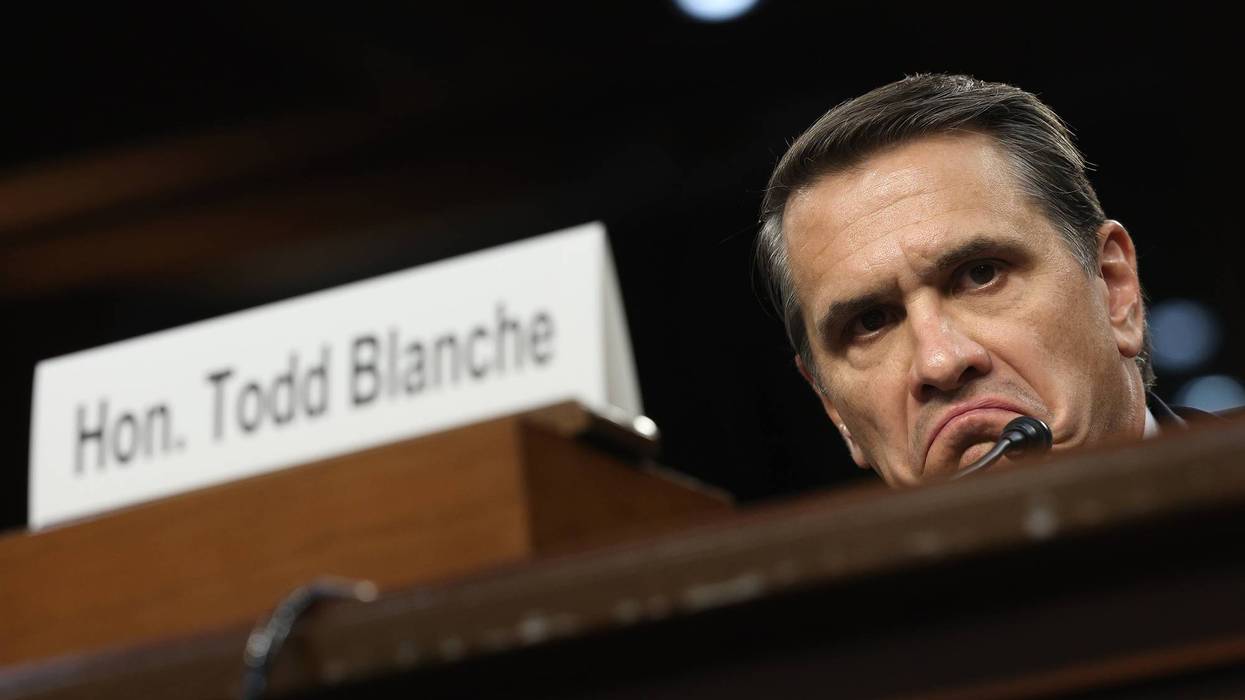
"Blanche has demonstrated over and over that he is purely a vessel for Trump to punish his enemies and reward his 'allies,'" said US Rep. Daniel Goldman.
Democratic lawmakers and anti-corruption campaigners reacted with disgust on Monday after two holdout Republican senators struck a deal to move forward with Todd Blanche's confirmation as US attorney general.
Sens. Thom Tillis (R-NC) and John Cornyn (R-Texas) said they would support Blanche's confirmation after he formally rescinded the $1.8 billion slush fund that had been set up to pay political allies of President Donald Trump who had purportedly been harmed by a "weaponized" justice system under former President Joe Biden.
"We want to express our gratitude to Mr. Blanche and his staff for working with us on this, and we look forward to voting to advance his nomination out of the Senate Judiciary Committee soon," the two Republicans said. "From the outset, we were clear that we needed a written document addressing our concerns."
However, a Monday report in The Washington Post noted that Blanche's written statement rescinding the fund "appeared to fall short of what Cornyn and Tillis were demanding last week," as they had originally insisted that "they needed to see revisions to the original settlement agreement" struck between Trump and the US Department of Justice (DOJ) that created the fund in the first place.
The deal also left in place a plan to give Trump and his family immunity from scrutiny for past tax returns filed with the IRS, though Blanche clarified on Sunday that this would not shield them from future IRS audits.
Sen. Richard Blumenthal (D-Conn.) slammed his Republican colleagues for the agreement to confirm Blanche, noting that its "tax immunity deal still gifts Trump an unprecedented, unconscionable benefit worth $100s of millions."
"Republicans should reject it—and Blanche," wrote Blumenthal. "Lipstick on this rancid grift is no excuse to confirm him."
Sen. Alex Padilla (D-Calif.) criticized the Blanche deal for being "full of loopholes" that wouldn't prevent Trump "from using taxpayer money to pay off January 6th insurrectionists" in the future.
"Todd Blanche has always been Trump's personal lawyer—and this 'deal' proves he's unfit to serve as attorney general," Padilla added. "Congress must pass my legislation to permanently ban any payouts to J6ers."
Rep. Don Beyer (D-Va.) described the deal to confirm Blanche as "insane corruption" that would do nothing to stop the president from looting the US treasury.
"Republican senators cave to Trump again," Beyer wrote. "They'll make his personal lawyer the attorney general without stopping Trump's 'license to steal' lifetime audit protection. Trump and his family will get millions of taxpayer dollars thanks to Republicans' failure."
Rep. Dan Goldman (D-NY) shredded Tillis and Cornyn for taking Blanche at his word that the slush fund was fully rescinded, and he predicted that the former Trump lawyer would try to bring it back if the president ordered him to do so.
"Blanche has demonstrated over and over that he is purely a vessel for Trump to punish his enemies and reward his 'allies,'" wrote Goldman. "The Capitol police who were beaten and assaulted during J6 can’t even get disability but Trump wants to give those who assaulted them millions of dollars—and Blanche will make sure that happens."
Lisa Gilbert, co-president of Public Citizen, similarly argued that there is nothing stopping Blanche from turning around after his confirmation hearing and reestablishing the $1.8 billion slush fund.
Gilbert further noted that Trump under the deal gets to "keep tax immunity for himself, his sons, and the Trump Organization, potentially saving the president millions in taxes owed to the American people."
Gilbert urged senators to reject Blanche's nomination when it comes up for a vote, or otherwise risk having the DOJ turned into a "Trump revenge agency."

The country's foreign minister called Rubio's claims a "desperate attempt to justify the current genocide of the Cuban people through collective punishment."
Officials in the Trump administration have spent the past 18 months insisting the US has the right and the military might to take over any country it chooses in order to secure US "interests" in the Western Hemisphere, and it has already moved to take control of Venezuela's oil reserves and cut off the energy supply to Cuba.
But to hear Secretary of State Marco Rubio tell it in an interview with Fox News on Sunday, the US is in some ways at the mercy of the latter country—an island nation of approximately 10 million people whose healthcare system, social services, and energy grid have ground to a halt recently as President Donald Trump has escalated economic warfare and threatened other nations with tariffs, should they provide oil to Cuba's communist government.
Rubio told Fox News host Lara Trump—the president's daughter-in-law—that "when it comes to things like espionage and influence operations," Cuba is "an influence and espionage superpower."
The secretary of state, who is the son of Cuban immigrants who came to the US years before the Cuban Revolution, and who has long called for regime change on the island, pointed to just two examples of spies that he said Cuba has "consistently implanted and embedded" in the US: former US Ambassador to Bolivia Victor Manuel Rocha, who was arrested in 2023 and admitted to working as a secret agent for Cuba's government; and Ana Belén Montes, a former analyst at the Defense Intelligence Agency, who pleaded guilty to conspiracy to commit espionage in 2002.
.@SecRubio: "To the average American, you see Cuba, a small country 90 miles off our shores, 9.5 million people population — but people forget that when it comes to things like espionage and influence operations, they actually are an influence and espionage superpower." pic.twitter.com/iWN0xkYhtv
— Rapid Response 47 (@RapidResponse47) August 2, 2026
"If you look at the history of espionage in the United States, Cuba is the only country that consistently implanted and embedded spies in our system without even paying them," said Rubio of the two spies.
"It is not, and we shouldn’t go to war to settle family feuds of the 1960s," replied US Sen. Ruben Gallego (D-Ariz.) on social media, referring to Rubio's family history with the island.
Matt Duss, executive vice president of the Center for International Policy, pronounced Rubio's claims about Cuba's purportedly expansive and dangerous espionage powers "completely batshit insane."
Both Rubio and Trump also repeated claims that were central to a report released by the State Department in July, which alleged that Cuba's government, led by President Miguel Díaz-Canel, has "waged a sustained campaign of subversion against the United States," including by backing "an unprecedented wave of left-wing terrorism on American soil."
Like the report, which called Cuba "the Capital of 21st Century Communism," Trump named the 2020 Black Lives Matter protests and "the surge of radical activism that we've seen all over college campuses"—with students protesting in recent years against US support for Israel—as protest movements that Cuba is "influencing."
"Absolutely," said Rubio, adding—with no evidence—that Cuba has organized "the same network of protesters around the country" to protest against police brutality and US Immigration and Customs Enforcement, and in support of Palestinian rights.
Rubio says Radical Left protests are not spontaneous but funded organized and linked to a wider network involving Cuba that can be weaponized against the United States#NYI pic.twitter.com/C1opqLZAKH
— NewYork-Insight (@NewYork_Insight) August 2, 2026
Bruno Rodríguez, the minister of foreign affairs of Cuba, accused the secretary of state of once again spreading "a ridiculous and clumsy lie, which neither he nor his corrupt colleagues believe," about the island.
The report cited by Trump and Rubio, and the diplomat's comments, amounted to a "desperate attempt to justify the current genocide of the Cuban people through collective punishment," said Rodríguez.
He added that they served as a "fantastical pretext for a military aggression, which would provoke a bloodbath of Cuban and American citizens."
The Trump administration has previously claimed in recent months that Cuba plans to wage drone attacks against the US—drawing from intelligence that actually said Cuban officials were determining how they could use the weapons defensively, not in preemptive strikes.
The White House's "patently absurd" claims about Cuba, said Max Steele of the gun violence prevention group Everytown for Gun Safety, surpass the George W. Bush administration's "most fever dream propaganda about Iraq" in the lead-up to the US war there.
Rubio's latest comments came just before the entire island was plunged into darkness Sunday night after the country's state-owned power grid collapsed due to the strain caused by the US oil blockade.
"The extremity of the economic warfare being waged by the United States on Cuba is WILDLY out of proportion to the 'threat' that they pose to the United States," said financial crime expert Brett Erickson. "To be abundantly clear, Cuba poses ZERO threat to the United States."
Rep. Mark Pocan (D-Wis.) said Rubio's comments were the latest evidence that the Trump administration is eager to claim Cuba poses a threat to national security as a pretext for an invasion of the country.
"This is a set-up to go in," said Pocan.
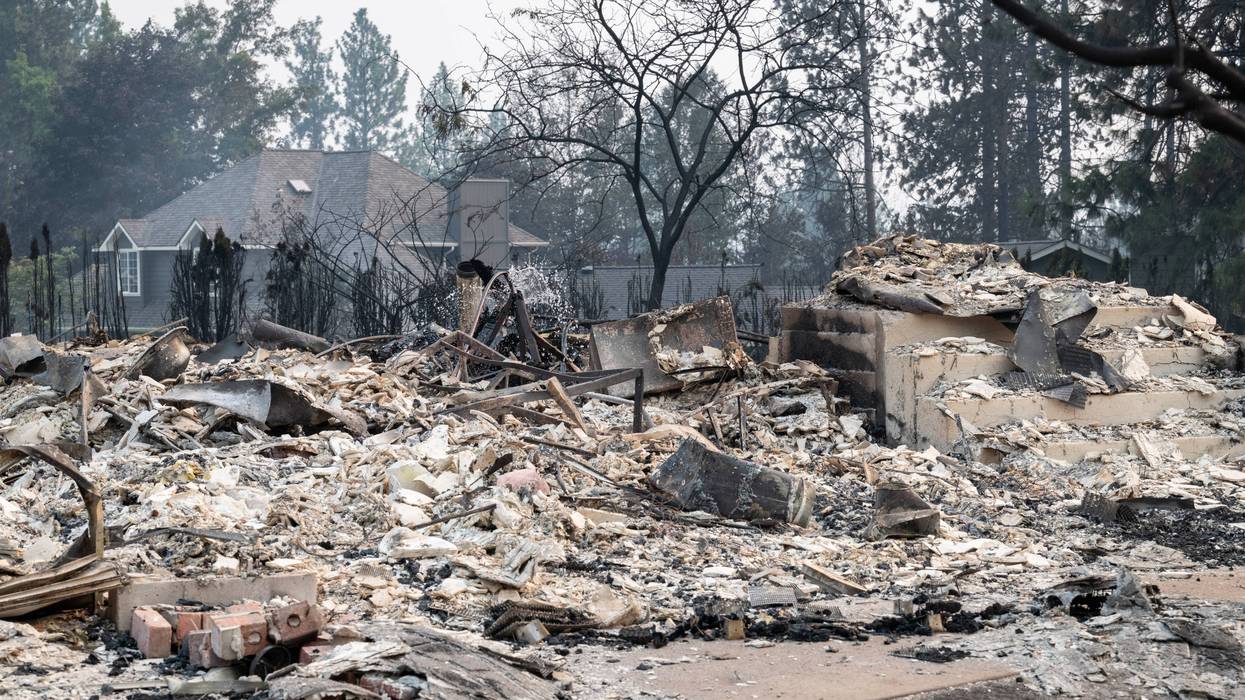
"The fossil fuel industry may not have struck the match, but the climate crisis they drove has loaded our landscapes with tinder," said an environmental activist.
Over 60,000 people were ordered to evacuate the Spokane area over the weekend as it was devastated by what Democratic Washington Sen. Maria Cantwell called the “top fire” in a nation currently being scorched by climate-fueled blazes.
Illustrating how the climate crisis is already impacting lives and communities across the country and the globe, three raging fires reportedly consumed over 600 structures as of Sunday, including homes and businesses, and reduced entire streets to their foundations.
At a briefing on Sunday afternoon, officials said more than 250,000 acres were burning across Washington, but reported no deaths or injuries.
Spokane Mayor Lisa Brown called it "the worst natural disaster our region has faced."
Democratic Gov. Bob Ferguson has requested assistance from the Federal Emergency Management Agency (FEMA), which is under the Trump administration's Department of Homeland Security (DHS).
Sen. Patty Murray (D-Wash.) wrote on social media that she had spoken with Homeland Security Secretary Markwayne Mullin and that he “made clear the federal government will do everything it can to support response and recovery,” though President Donald Trump has previously intervened to block disaster aid to Democrat-led states.
While the fires moderated over the weekend, on Monday they remained largely uncontained and continued to spread due to dry conditions from recent severe droughts in the region, exacerbated by rising global temperatures.
"This is climate change playing out live in real time," said meteorologist and Climate Central journalist Shel Winkley in a video about the Spokane fires.
Warmer temperatures, he explained, have caused a vicious cycle of "weather whiplash" in which greater winter rainfall facilitates plant growth before harsher summer heat domes suck moisture from these plants, turning them into a tinderbox.
“Northeastern Washington and central Oregon now see at least three more weeks of fire weather days each year than they did just back in the 1970s,” Winkley said. “More fire weather days means more chances for a spark, any spark, to turn into this.”
The blazes are part of a nationwide trend, with wildfires this year more severe on average than in previous years. Over the past decade, the average annual acreage burned in the US was more than double the average of the late 1980s and early 1990s, according to data from the National Interagency Fire Center.
Last week, an Oxfam analysis of data published in the journal Nature found that emissions from just five oil companies—BP, Chevron, ExxonMobil, Shell, and TotalEnergies—were sufficient to cause around 1 in 4 heatwaves reported globally between 2000 and 2023—"heatwaves that would have been virtually impossible without human-made climate change."
Using S&P Capital Trucost data, the group estimated that Big Oil was responsible for more than $60 billion in environmental damage last year.
But as costs fall on the public, oil companies like Chevron and ExxonMobil have reported record profits of $12.1 billion and $14.5 billion over the past quarter, in part due to global oil price spikes driven by Trump's war with Iran.
"The fossil fuel industry may not have struck the match, but the climate crisis they drove has loaded our landscapes with tinder," said Clémence Dubois, the campaigns director for the environmental group 350.org. "Chevron and Exxon are profiteering from a model of distraction, leaving ordinary people to pay the price with higher bills and devastating impacts such as these fires. These profits feel almost criminal.“
Jay Inslee, Washington's former Democratic governor and a longtime advocate for policies to combat the climate crisis, said on Sunday that his friend, a legislator from Spokane, had been forced to flee his home due to the fires.
“Climate change isn’t some faraway threat,” Inslee said. “It’s happening right now, to our neighbors and friends. We have to fight for them."
"There are too many people who have become generationally wealthy off politics and drive too much of the decision-making within the ecosystem."
The New York Times on Monday published what it described as a "missing chapter" of the Democratic National Committee's widely criticized "autopsy" of the 2024 presidential election.
The chapter, titled "What Happened in 2024" and provided to the Times by Democratic strategist Paul Rivera, offers criticisms of party consultants who are "self-enriching" and out of touch with the concerns of ordinary voters.
Specifically, the chapter questions whether Democratic politicians and operatives have a grasp on the economic realities facing most Americans, while calling for "a fundamental re-evaluation" of whether Democrats "really understand the wants and needs of voters."
"An emerging critique of Democratic decision-making," the chapter states, "is there are too many people who have become generationally wealthy off politics and drive too much of the decision-making within the ecosystem. This is deeply frustrating to many... who want to try a different set of politics but keep banging their heads up against a system proven to be inflexible and self-enriching."
The chapter adds that "many of the people who worked at the highest levels of the party" are "financially secure," and thus potentially insulated "from the realities many Americans were encountering in their lives."
In an interview with the Times, Rivera claimed that he personally handed the missing chapter to DNC Chair Ken Martin in a three-ring binder earlier this year.
Rivera said he had no specific insight into why the chapter was not included with the report that the DNC released in May.
"Whether that was a conscious decision on their part to bury the section for the purposes of hiding a paragraph, I don’t know," the Democratic strategist told the Times. "That's a them question. What I can tell you is they had it, and they made a decision not to release it."
Martin, however, flatly denied that Rivera had ever personally handed him the chapter.
“This alleged report section was not in any binder I reviewed," said Martin in a written statement given to the Times. "If we had this in May, we would have released it with the rest of the report."
Martin also called it ridiculous to suggest that he would have suppressed a section of the final DNC report to avoid offending the party's consultant class.
"If I or the DNC had report materials that went after self-enriching consultants, we absolutely would have included them," Martin insisted, noting his own past promises "to hold the consultant-industrial complex accountable and ensure the party only pays for work that actually helps us win."
The Times report noted that the DNC's autopsy featured a section titled "What Happened" that was listed as "pending" on the grounds that it "was not provided by author."
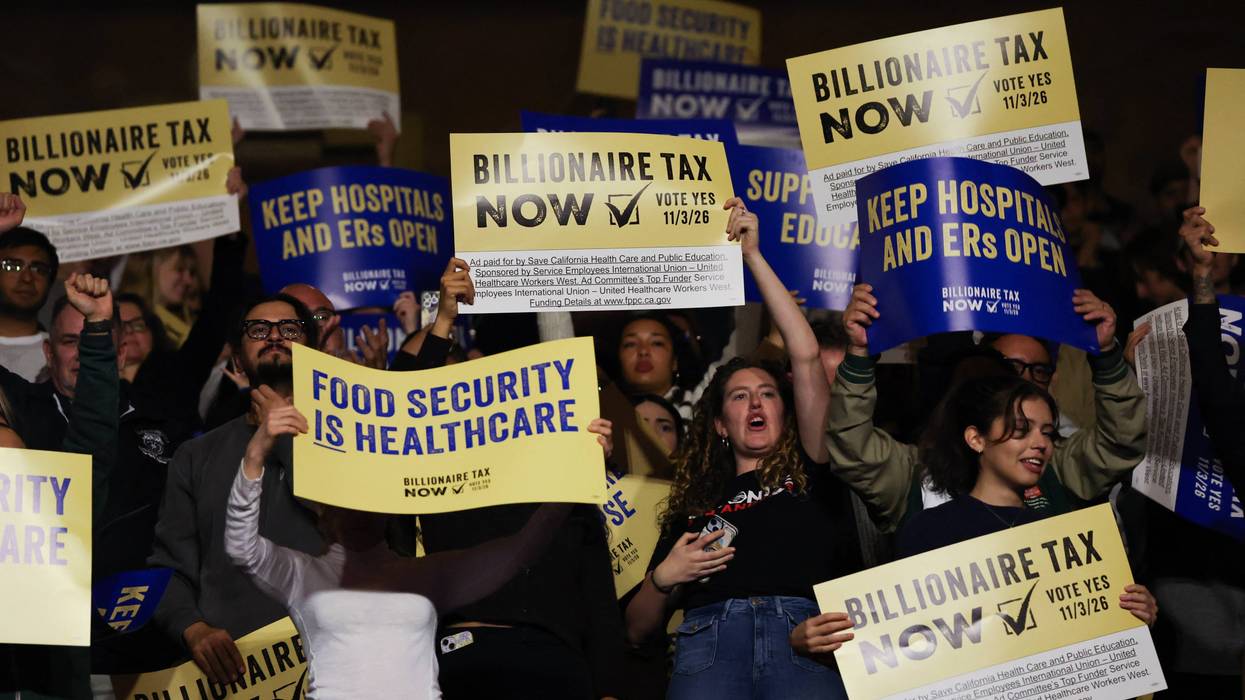
"This endorsement puts to rest the idea that California Democrats are not united by the billionaire tax—they are," said the president of the healthcare workers union leading the ballot measure campaign.
The California Democratic Party on Sunday endorsed a state ballot measure that would impose a one-time, 5% wealth tax on billionaire residents, a popular initiative that has drawn opposition from Democratic Gov. Gavin Newsom and ultra-rich corporate executives who are spending big to defeat it.
California Democrats' executive board voted 145-90 on Sunday to endorse the billionaire wealth tax, which will appear on the November ballot as Proposition 40. The Sacramento Bee reported that "delegates and observers erupted into cheers" following the vote, which barely cleared the 60% threshold needed for a formal endorsement.
Dave Regan, president of SEIU-United Healthcare Workers West, the union leading the campaign for the ballot initiative, said the California Democratic Party's endorsement of the proposal "puts to rest the idea that California Democrats are not united by the billionaire tax—they are."
"Polling shows that more than 80% of registered Democrats support this critical solution to our healthcare crisis," said Regan, "and now the Democratic Party of California has officially embraced that strong support through this endorsement.”
It’s official: the California Democratic Party has endorsed the Prop. 40 billionaire tax on 145-90 vote. They reconsidered an earlier vote where it narrowly failed to clear the 60% threshold. pic.twitter.com/5YnH3Ps7mE
— Ben Paviour (@BPaves) August 2, 2026
If approved by voters and enacted, the tax would raise an estimated $100 billion in revenue that could be used to offset the impact of federal Medicaid cuts and bolster California's education system.
Organizers said Sunday that the endorsement "puts major momentum behind" the proposed billionaire tax, noting that official California Democratic Party election materials will now note its backing of Proposition 40.
Suzanne Jimenez, chief of staff at SEIU-United Healthcare Workers West, said Sunday that "we refuse to accept a future where tens of millions of working families pay the price for tax cuts that benefit 200 billionaires."
"We are proud to stand alongside California Democrats in fighting for passage of the billionaire tax," said Jimenez. "We will work together to put patients first. We will ask those who have gained the most from our economy to help preserve the healthcare access, including to emergency services, that every Californian needs and deserves."
The endorsement from the California Democratic Party came after a coalition of billionaires backed by Google co-founder Sergey Brin reserved nearly $90 million in advertising time across the state and got two other tax-related initiatives on the November ballot: Propositions 41 and 42.
If the billionaire tax measure passes and either 41 or 42 also pass, Proposition 40 "could be stopped from becoming law," according to California's nonpartisan Legislative Analyst's Office (LAO).
"This is because the courts could find that Proposition 41 or 42 conflict with Proposition 40," the LAO noted.
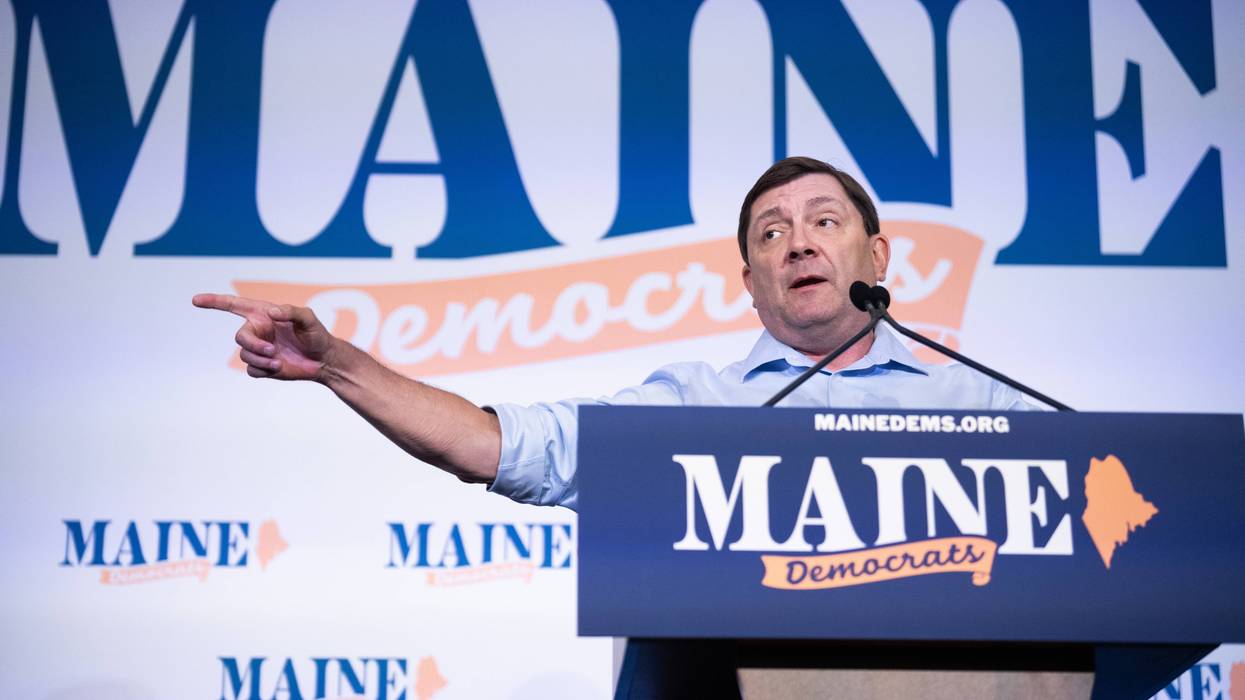
Musk reportedly plans to spend at least $100 million to help Sen. Susan Collins and other vulnerable Republicans across the United States.
Troy Jackson, the Democratic nominee for US Senate in Maine, delivered a video response on Sunday to mega-billionaire Elon Musk's plan to spend at least $100 million to aid Sen. Susan Collins and other Republicans in key races across the country.
The New York Times reported that Musk, through his America PAC, intends to "spend $100 million to $120 million on a new field program in at least eight states to help elect Republicans in November." The group, according to the Times, "plans to initially target Senate races in at least five states—Alaska, Iowa, Maine, Michigan, and Ohio—and is having conversations about the contests in North Carolina, Georgia, and Texas."
"Apparently Elon Musk has gotten off Twitter long enough to realize that he's got a real problem here in Maine," Jackson, the former president of Maine's Senate, said in a one-minute response to the report on America PAC's spending plans. "The problem is me and you, working to try and get a government that we should have, that we deserve."
"He wants to have people that are totally beholden to him and [President] Donald Trump making sure that we're getting tax cuts for billionaires on the back of our healthcare system, on the back of our hospitals," Jackson continued. "That's what Elon Musk wants. He doesn't care about us. Really doesn't care about Susan. He cares about him. So I would say to you Elon: Maine and really the whole United States doesn't want your dirty money in our politics. You don't get to buy the government that you want. This is about all of us coming together and fighting for the government that we deserve, and you're not in it."
The Times reported that Musk's super PAC is "closely coordinating with an ecosystem of outside groups that are preparing field campaigns, including Americans for Prosperity, which is part of the billionaire Koch brothers’ political network, and the Sentinel Action Fund, another conservative organization."
Musk became the world's first trillionaire earlier this year with the public market debut of SpaceX, whose subsequent decline in market cap pushed his net worth back down to around $690 billion—still the largest individual fortune in the world.
With his intervention in Maine, Musk joins nearly 100 other billionaires who are financially supporting Collins' bid for a sixth US Senate term. Billionaire support has helped give Collins a massive fundraising advantage over Jackson, who was nominated just last month to replace Graham Platner on the general election ballot.
In the two days following his nomination, Jackson raised $2 million from 58,000 donors, including 30,000 new contributors—a major show of small-dollar support.
"We’re all getting crushed out here. Healthcare, housing, heat," Jackson says in his first general election campaign ad, which is set to begin airing this week. “We’ve gotta fight back. We’re all hungry for it. Maine is ready for a change."