

SUBSCRIBE TO OUR FREE NEWSLETTER
Daily news & progressive opinion—funded by the people, not the corporations—delivered straight to your inbox.
5
#000000
#FFFFFF
To donate by check, phone, or other method, see our More Ways to Give page.
Daily news & progressive opinion—funded by the people, not the corporations—delivered straight to your inbox.
In response to the release of the text of a "New NAFTA," now called the United States-Mexico-Canada Agreement (USMCA) between the three North American nations, IATP Executive Director Juliette Majot issued the following statement:
"The reworked NAFTA agreement entrenches agribusiness control over supply chains, seeks to streamline approval and trade of controversial agricultural biotechnology products, fails to protect consumers' right to know what's in their food and where it is produced, and worsens the devastating impacts of climate change.
IATP and our allies in farming communities in the United States, Canada and Mexico have demanded a different kind of trade deal for decades. We want trade rules that support strong, sustainable and fair food systems and rural economies.
This reworked agreement achieves none of this.
One of the key sticking points was the U.S. demand that Canada dismantle its successful dairy supply management program. The Canadian government has agreed to end certain restrictions on dairy imports and grant additional market access for U.S. dairy. These concessions will weaken the Canadian system with no clear benefit for U.S. dairy farmers, especially the small, family farms bearing the brunt of the current crisis.
The U.S. dairy crisis stems from massive oversupply produced through mega-sized dairy operations where dairy farmers continue to suffer from prices below the cost of production. In Canada, the supply management system has kept a majority of dairy farms in the hands of family farmers, without reliance on public subsidies. Trade agreements and the U.S. Farm Bill should prioritize local production and rural livelihoods. Weakening Canada's successful supply management program will do nothing to achieve those goals.
Rather than doubling down on policies already proven unsuccessful, the U.S. should be negotiating for Mexico and Canada to stop opposing Country of Origin Labeling (COOL) for meat. COOL would restore consumers' right to know where their food is produced and help U.S. ranchers and food workers bargain for fair prices and wages in a struggling agricultural economy. Instead, new language in the text requires that measures like COOL be the least trade restrictive possible, rather than the most effective to satisfy public interest.
The reworked agreement squandered key opportunities to address agricultural dumping across borders and to reform NAFTA's enforcement system. This enforcement system sustains oil, gas and other industry challenges to governmental environment and climate policies in corporate-friendly forums where they seek billions of dollars in damages for claimed lost profits. While we welcome the phasing out of Canadian firms from this unjust mechanism, it leaves Mexican and U.S. energy and climate policies vulnerable to future legal challenges.
Any agreement will ultimately be judged on whether it contributes to fair and sustainable outcomes for the people of each country.
Up to now, IATP and other trade watchdogs have had to rely on bits and pieces of information about the actual text of NAFTA and the wish lists submitted by hundreds of corporations, which together pointed to a deal based on the rejected Trans-Pacific Partnership. We will examine the newly released text in detail and provide analyses on the ramifications of this deal for emerging food technologies, food labels that truly inform consumers and the rules we need to protect our soil, waterways and public health."
The Institute for Agriculture and Trade Policy works locally and globally at the intersection of policy and practice to ensure fair and sustainable food, farm and trade systems.

“This is the mind of a fascist,” said a former official of the first Trump administration.
As he uses the military to extort Venezuela and threatens to wage war against half a dozen other nations, President Donald Trump stated plainly this week that there are no restraints on his power to use force to dominate and subjugate any country on the planet besides his own will.
Asked by the New York Times whether there were any limits on his ability to use military force in his ambitions toward "American supremacy," and a return to 19th-century imperial conquest, he told the paper, which published excerpts from the interview Thursday: "Yeah, there is one thing. My own morality. My own mind. It’s the only thing that can stop me.”
Trump’s attack on Venezuela and kidnapping of President Nicolás Maduro last weekend, his floating of military force to annex Greenland this week, and his repeated threats to bomb Iran in recent days have all been described as blatant affronts to international law and what remains of the “rules-based” global order.
The president told the Times, “I don’t need international law. I’m not looking to hurt people.” He seemed to backpedal momentarily when pressed about whether his administration needed to follow international law, saying, "I do." But the Times reports that the president "made clear he would be the arbiter when such constraints applied to the United States."
“It depends what your definition of international law is,” Trump said.
If statements by other top officials are any guide, the administration's "definition" of international law is more akin to the law of the jungle than anything to do with treaties or UN Security Council resolutions.
In an interview earlier this week, senior adviser Stephen Miller, reportedly one of the architects of Trump's campaign of extrajudicial boat bombings in the Caribbean, laid out a view of the president's power that amounts to little more than "might makes right."
Speaking of Trump's supposed unquestioned right to use military force against Greenland and Venezuela, Miller told CNN anchor Jake Tapper: “The United States is using its military to secure our interests unapologetically in our hemisphere. We’re a superpower, and under President Trump, we are going to conduct ourselves as a superpower. It is absurd that we would allow a nation in our backyard to become the supplier of resources to our adversaries but not to us.”
Miller added that “the future of the free world depends on America to be able to assert ourselves and our interests without an apology.”
The United Nations Charter expressly forbids "the threat or use of force against the territorial integrity or political independence of any state."
Yet in recent days, Trump has also threatened to carry out strikes against Colombia and Mexico, while his secretary of state, Marco Rubio, suggested a similar operation to the one that deposed Maduro could soon be carried out against Cuba's socialist government, which US presidents have sought to topple for nearly seven decades.
In a Fox News interview on Thursday, Trump stated that the US would "start now hitting land" in Mexico as part of operations against drug cartels. The nation's president, Claudia Sheinbaum—who has overseen a dramatic fall in cartel violence since she took office in 2024—has said that such strikes would violate Mexico's status as an "independent and sovereign country."
To Kenneth Roth, the former executive director of Human Rights Watch, Trump’s assertion of limitless authority sounded like “the dangerous words of a would-be dictator.”
"Trump says he is constrained not by the law but only by his 'own morality,'" Roth said. "Since he values self-aggrandizement above all else, he is describing an unbridled presidency guided only by his ego and whims."
In recent days, the White House has sought to punish those who suggest that members of the US military should not follow illegal orders given by the president.
Earlier this week, Defense Secretary Pete Hegseth announced that he would seek to strip retirement pay from Sen. Mark Kelly (Ariz.), a retired Navy captain who last year spoke in a video reminding active duty soldiers that their foremost duty is to the law rather than the president. Trump has referred to these comments as "seditious behavior" and called for Kelly and other members of Congress who took part in the video to be executed.
The White House has repeatedly asserted that because Trump is the commander-in-chief of the military, any orders he gives are legal by definition.
For Miles Taylor, who served as chief of staff for the Department of Homeland Security during Trump's first term, the president's latest claim to hold unquestioned authority called to mind a warning from Gen. John Kelly, who also served in the first Trump White House as its chief of staff.
In the lead-up to the 2024 election, Kelly told The Atlantic that Trump fits the definition of "a fascist" and that the president would frequently complain that his generals were not more like “German generals,” who he said were “totally loyal” to Hitler.
"John Kelly was right," Turner said on Thursday. "This is the mind of a fascist."
While Trump's comments left her worried about a return to an "age of imperialism," Margaret Satterthwaite, the UN special rapporteur on the independence of judges and lawyers, said that the president's sense of impunity is unsurprising given the recent toothlessness of international law in dealing with the actions of rogue states, specifically Israel's genocide in Gaza.
“International law cannot stop states from doing terrible things if they’re committed to doing them,” Satterthwaite told Al Jazeera. “And I think that the world is aware of all of the atrocities that have happened in Gaza recently, and despite efforts by many states and certainly by the UN to stop those atrocities, they continued. But I think we’re worse off if we don’t insist on the international law that does exist. We’ll simply be going down a much worse kind of slippery slope.”
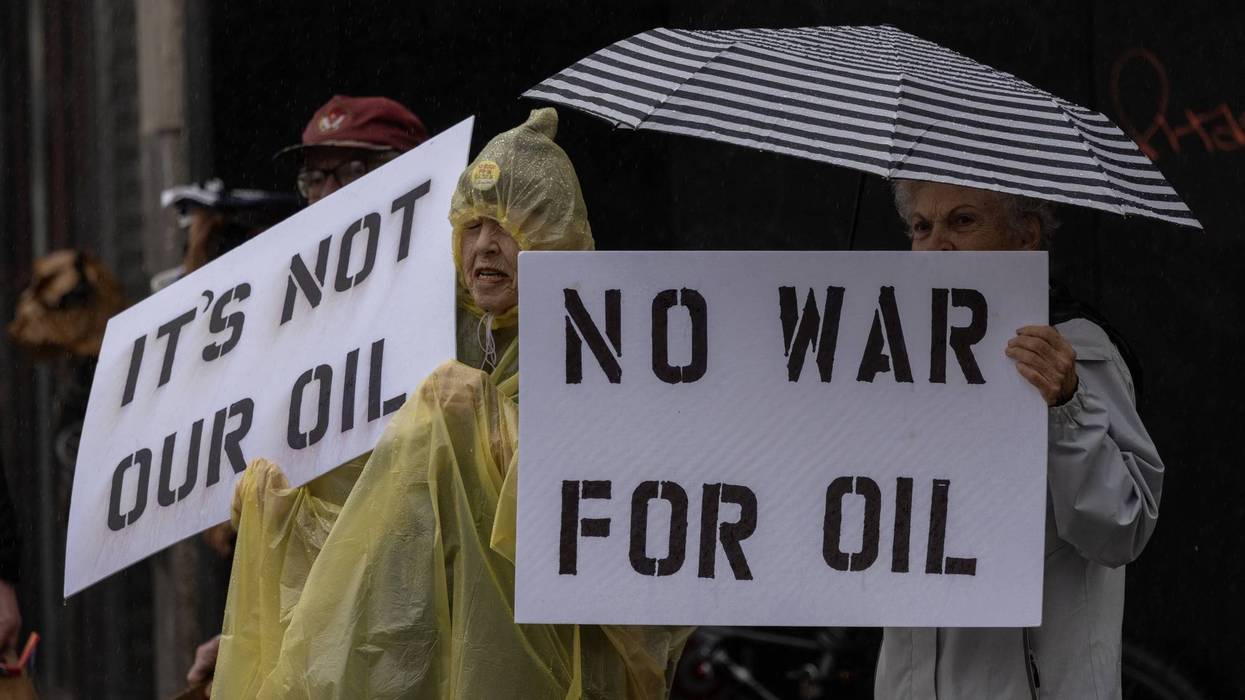
"Today’s meeting is meant to ensure the future of Venezuela is being shaped in a way that maximizes Big Oil profits and Trump’s power."
US President Donald Trump is set to meet at the White House on Friday afternoon with executives from some of the world's largest fossil fuel companies to discuss the future of Venezuela's oil infrastructure, a gathering that critics said throws into stark relief the true aims of the administration's military assault on a sovereign nation and abduction of its president.
The meeting, scheduled for 2 pm ET, will come after Trump declared on social media early Friday that "at least 100 Billion Dollars will be invested by BIG OIL," an industry that donated heavily to the president's 2024 campaign and inaugural fund. Attendees of Friday's White House meeting will reportedly include the CEOs of Chevron, ExxonMobil, ConocoPhillips, Halliburton, and Shell.
Harold Hamm, the founder of Continental Resources and major Trump donor, is also expected to attend. Hamm organized the now-infamous 2024 event where Trump asked oil executives for $1 billion in campaign donations in exchange for industry-friendly policies.
“American fossil fuel companies who’ve bought access to the Trump administration stand to benefit most from Trump’s illegal acts of aggression in Venezuela," Allie Rosenbluth, US program manager at Oil Change International, said in a statement ahead of Friday's gathering.
"Today’s meeting is meant to ensure the future of Venezuela is being shaped in a way that maximizes Big Oil profits and Trump’s power," said Rosenbluth. "Trump’s aggression in Venezuela is leading us to a hotter, more polluted, and more dangerous world—all to enrich himself and his fossil fuel donors. Today’s meeting is proof of that. To protect our communities from climate disasters and more wars for oil, we need to reject extractive energy models and build democratic systems that prioritize community health and safety."
Despite Trump's lofty promises and suggestion of taxpayer reimbursement, major US oil companies have yet to make any concrete investment pledges related to Venezuela's oil infrastructure.
Earlier this week, US Energy Secretary Chris Wright said the Trump administration intends to manage Venezuela oil sales and revenue indefinitely. On Tuesday, Trump proclaimed that he himself would control the proceeds from the sale of Venezuelan oil.
While Venezuela's known oil reserves are the largest in the world, some leading oil executives have "privately expressed reservations about committing the kind of money it would take to meaningfully boost Venezuelan oil production," the New York Times reported Friday.
"Some oil companies have discussed the possibility of seeking some form of financial guarantee from the federal government before agreeing to establish or expand production in Venezuela," the Times added.
"Along with blocking further military action against Venezuela, Congress must act to ensure US taxpayers don’t subsidize Big Oil’s exploitation of Venezuela’s oil resources.”
The watchdog group Public Citizen noted in a report released Thursday that "Big Oil companies have a long history of demanding that taxpayers shoulder their risks, even when they choose to operate in politically volatile jurisdictions."
"They rake in billions in profit exploiting the natural resources from impoverished nations, then demand taxpayer compensation if those nations require them to clean up their pollution or if affected communities convince their governments to halt harmful projects," the group observed. "And so it seems likely that these companies are going to require their investments in Venezuela to have some sort of 'guarantees and conditions'—that’s the exact phrase [US Secretary of State] Marco Rubio used on 'Face the Nation' on Monday."
Robert Weissman, Public Citizen's co-president, said in a statement that "the Trump administration’s shocking actions to use force to exploit Venezuela’s oil resources echo the imperial arrogance of the United States after the invasion of Iraq and a century of military intervention in Central and South America."
"Along with blocking further military action against Venezuela," said Weissman, "Congress must act to ensure US taxpayers don’t subsidize Big Oil’s exploitation of Venezuela’s oil resources.”
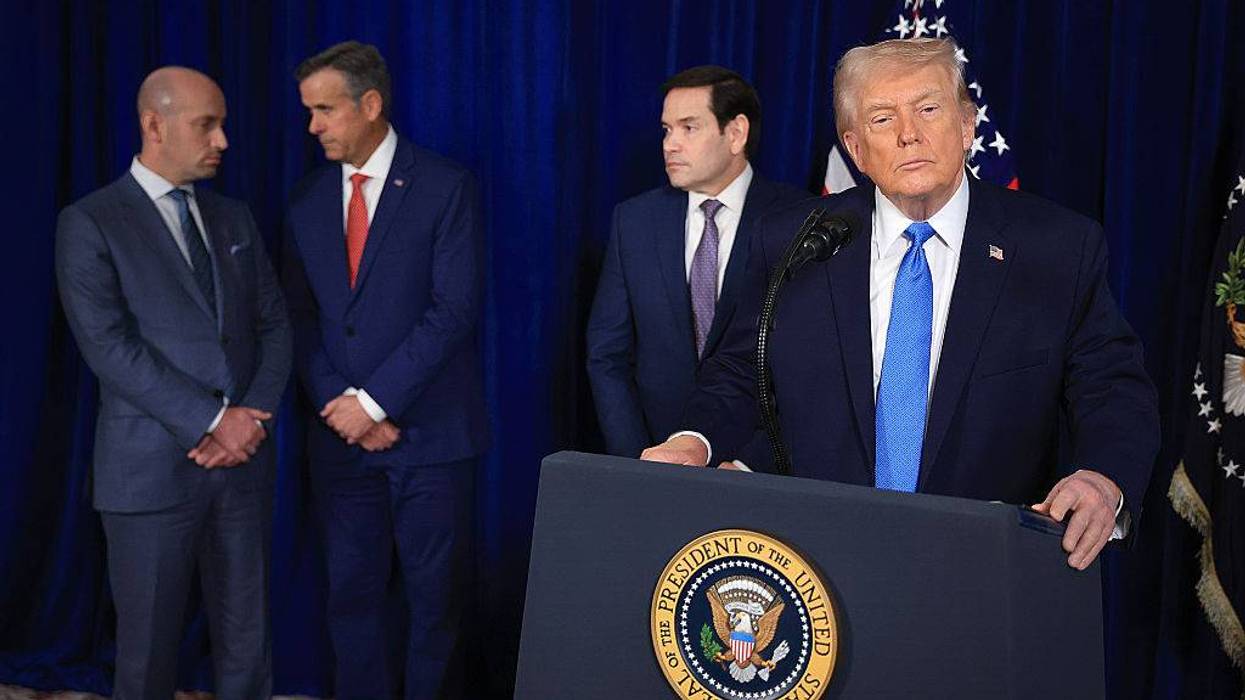
"Complicity, tacit agreement, appeasement, silence: these have a cost."
Amnesty International Secretary General Agnes Callamard expressed agreement Thursday that the US under President Donald Trump is tearing down world order, while also pointing the finger at other major Western powers for being part of the problem.
In a post on X, Callamard reacted to a warning delivered by German President Frank-Walter Steinmeier that the Trump administration was undermining systems developed decades ago with the help of the US to ensure greater international stability.
Callamard agreed with Steinmeier's basic argument, but added that Germany has not been an innocent bystander.
"The US is destroying world order," wrote the Amnesty International chief. "And so did Israel for the last two years. With Germany support."
She then accused Germany and other US allies of ignoring past US violations of international law and only getting upset now that it's come back to bite them.
"German and other European leaders cannot suddenly discover that the rule-based order is on its knee when they have governed over its demise for the last two years," she wrote. "Complicity, tacit agreement, appeasement, silence: these have a cost. A high cost. And you/we will all end up paying for it."
Steinmeier's remarks came in response to increased US aggression against both Latin America, where Trump ordered the invasion of Venezuela and the abduction of President Nicolás Maduro, and Europe, where Trump has once again stated his desire to seize Greenland from Denmark.
"Then there is the breakdown of values by our most important partner, the USA, which helped build this world order," the German president said. "It is about preventing the world from turning into a den of robbers, where the most unscrupulous take whatever they want, where regions or entire countries are treated as the property of a few great powers."
Truly extraordinary language by German President Steinmeier: pic.twitter.com/povGBrPmr9
He says the US's values are "broken", that they're changing the world "into a den of thieves in which the most unscrupulous take what they want," and treat "whole countries" as their "property".…
— Arnaud Bertrand (@RnaudBertrand) January 9, 2026
Top Trump aide Stephen Miller earlier in the week explicitly advocated returning to an era in which great military powers are free to take whatever they want from weaker powers.
"The United States is using its military to secure our interests unapologetically in our hemisphere,” Miller said during an interview with CNN's Jake Tapper. “We’re a superpower and under President Trump we are going to conduct ourselves as a superpower. It is absurd that we would allow a nation in our backyard to become the supplier of resources to our adversaries but not to us.”