

SUBSCRIBE TO OUR FREE NEWSLETTER
Daily news & progressive opinion—funded by the people, not the corporations—delivered straight to your inbox.
5
#000000
#FFFFFF
To donate by check, phone, or other method, see our More Ways to Give page.
Daily news & progressive opinion—funded by the people, not the corporations—delivered straight to your inbox.

Today, Donald Trump's nominee for the Supreme Court, Brett Kavanaugh, and one of the survivors who have accused him of sexual assault, Dr. Christine Blasey Ford, testified before the Senate Judiciary Committee on whether Kavanaugh deserves a lifetime appointment to the Supreme Court.
In response, Sierra Club Executive Director Michael Brune released the following statement:
Today, Donald Trump's nominee for the Supreme Court, Brett Kavanaugh, and one of the survivors who have accused him of sexual assault, Dr. Christine Blasey Ford, testified before the Senate Judiciary Committee on whether Kavanaugh deserves a lifetime appointment to the Supreme Court.
In response, Sierra Club Executive Director Michael Brune released the following statement:
"Today is a sad day for America, but we are grateful for the bravery displayed by Dr. Blasey Ford. Senate Judiciary Republicans' decision to put a survivor of sexual assault on trial rather than reject Kavanaugh's nomination to the Supreme Court is nothing short of disgraceful. If Senate Republicans intended to actually listen to Dr. Blasey Ford and take her allegations seriously, they would not have scheduled a vote prior to the start of the hearing. Today's shameful events and the behavior of those Republicans putting Dr. Blasey Ford on trial will never be forgotten. Brett Kavanaugh should be facing a federal investigation, not a Senate Judiciary Committee considering confirming him for a seat on the Supreme Court."
The Sierra Club is the most enduring and influential grassroots environmental organization in the United States. We amplify the power of our 3.8 million members and supporters to defend everyone's right to a healthy world.
(415) 977-5500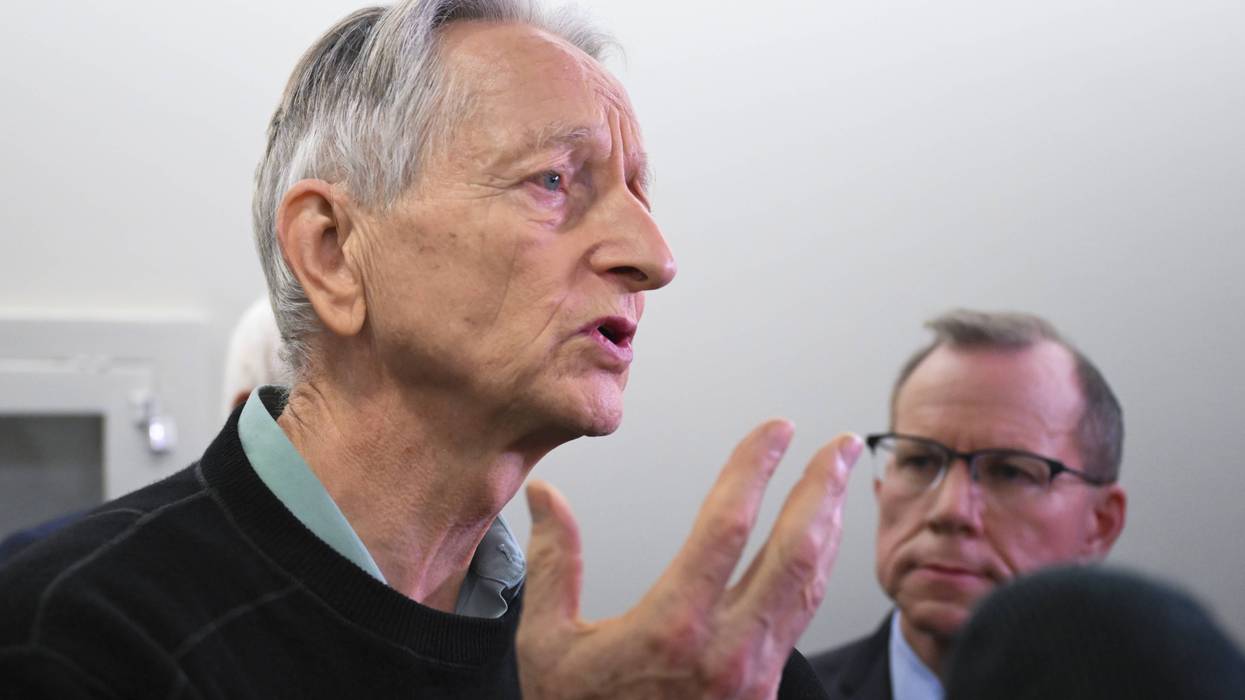
“I’m sure the oil and asbestos companies would have liked to [regulate themselves] as well,” said computer scientist Geoffrey Hinton in reference to President Donald Trump's approach to overseeing the AI industry.
Computer scientist Geoffrey Hinton, dubbed the "godfather" of artificial intelligence, delivered a withering assessment of President Donald Trump's understanding of the technology in an interview published by The Guardian on Tuesday.
The 78-year-old Hinton, a professor emeritus at the University of Toronto, told The Guardian that he was particularly unimpressed with the president's insistence that AI be rebranded as "superintelligence," which is a concept that he noted has long been clearly defined by computer scientists.
"Superintelligence means smarter than people, and has been around for at least 20 years," Hinton explained. "It’s got a very clear meaning. And now he says we’re going to call AI ‘superintelligence’. You can’t make it smarter than people just by calling it smarter than people."
Hinton also denounced Trump as a "corrupt, senile felon," and ridiculed the president's declaration that the AI industry is fully capable of policing itself without government intervention.
“I’m sure the oil and asbestos companies would have liked to [regulate themselves] as well,” he said. “Do we think tobacco companies should have been allowed to design the warnings on the packets? So that they could print them in a six-point font, in dark grey on black?”
In a Truth Social post last month, Trump suggested that his own intellect was singlehandedly capable of regulating AI, a technology so complicated that even its own creators have acknowledged difficulties in understanding it.
“The only control or ‘guardrails’ that AI needs is a STRONG AND SMART (High IQ!) PRESIDENT,” Trump wrote, “and the USA has that, in spades!”
Elsewhere in the interview, Hinton pushed back on critics who accused him of predicting that AI will wipe out human life. Rather, Hinton said he is only arguing there is an uncomfortably high probability that the technology could pose an extinction risk.
"I'm trying to convey that there is a really serious possibility of something happening," Hinton said. "If, for example, you're told there was a 10% possibility of a bus crashing, you wouldn’t get on the bus. The point of giving numbers is to say this is a serious risk."
The computer scientist pointed to the recent incident where hundreds of agents in OpenAI's cybersecurity test environment escaped confinement and hacked into machine learning company Hugging Face as something that "used to be the domain of science fiction."
Hinton said the stakes were particularly grave given AI's potential destructive power.
"The unique problem with AI is that if it goes wrong, if it takes over, you don’t get a second chance," he warned. "We can’t say, ‘Well, we lost that time. Let’s rerun the game.’ It’s not like that."
“If we don’t act quickly, we may get to a point at which we cannot act because it’s too late.”
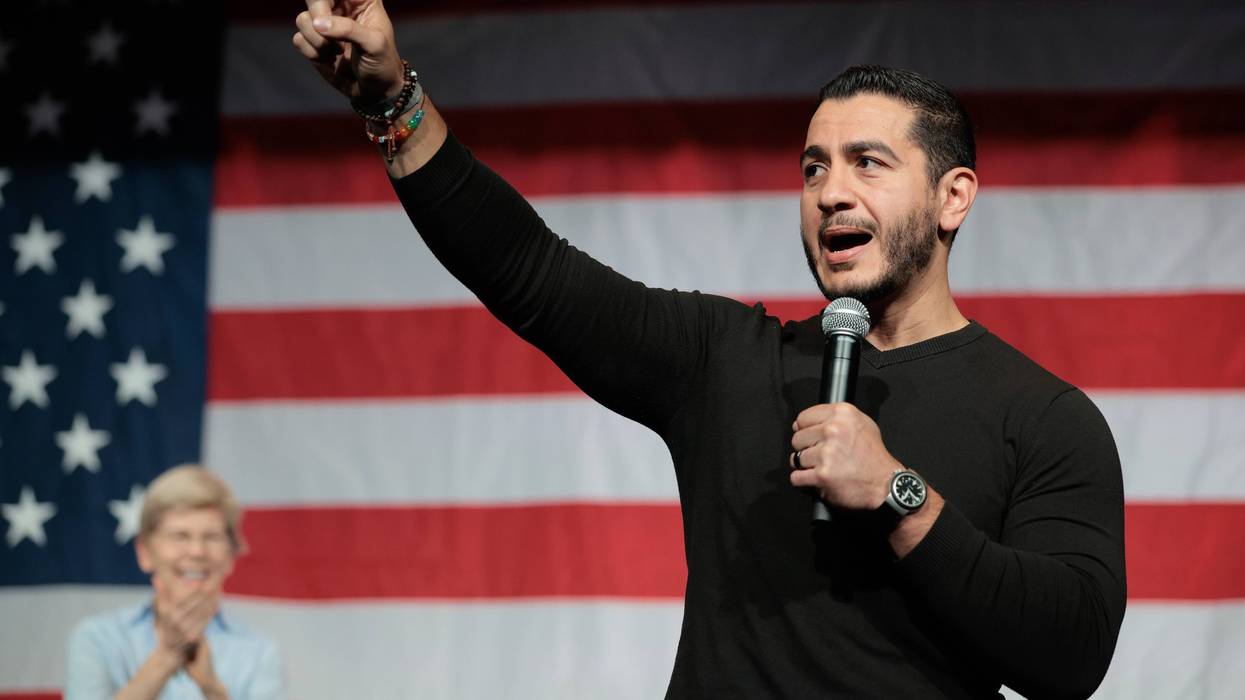
US Senate candidate Abdul El-Sayed said Tuesday that to stop Silicon Valley "billionaires" from unilaterally deciding how artificial intelligence will be used, he proposed a regulatory framework for the technology that mirrors federal legislation pushed by top progressives in Congress.
The Michigan Democrat, who is running against Republican former Rep. Mike Rogers, unveiled his "AI Under Control" proposal following recent warnings from AI executives regarding the technology and its capacity for "recursive self-improvement"—the process through which AI models develop more sophisticated versions of themselves.
Executives including Dario Amodei of Anthropic and Sam Altman of OpenAI have said in recent weeks that AI development should be "paced" to safeguard the future of humanity, and as Common Dreams reported last week, some of those same CEOs are already plotting how to respond to a public revolt in the event of a "large-scale event" perpetrated by their tech, such as a cyberattack.
Echoing calls by lawmakers like Sen. Bernie Sanders (I-Vt.) and Rep. Greg Casar (D-Texas), El-Sayed shared a different vision, titled "AI Under Control."
The policy proposal calls for a ban on recursive self-improvement and a new Cabinet-level government agency that would inspect AI labs, "block releases" of dangerous AI models like those that have hacked a number of websites and platforms during testing, and "order a pause or command a shutdown” when such attacks take place.
“The answer to what is stopping rogue AI agents from triggering a global nuclear crisis or deploying bioweapons cannot be the whims of a few billionaires in California,” El-Sayed said Tuesday.
The Senate candidate, a former Detroit public health official, also called for mandatory reporting on safety breaches like the one that involved OpenAI's agents at the AI platform Hugging Face earlier this year, and for whistleblower protections.
OpenAI has been slow to publicly disclose its breaches and to notify those affected, as in the case of the company's agents hacking an Australian government healthcare website earlier this year. The company also reportedly fired several safety researchers this month.
“The answer to what is stopping rogue AI agents from triggering a global nuclear crisis or deploying bioweapons cannot be the whims of a few billionaires in California."
El-Sayed called for a national plan to respond to an emergency caused by AI, and reiterated his call from last month to pause advanced AI development until a government agency is established to regulate the technology, and to halt the development of AI data centers, which some communities in Michigan have fought back against.
President Donald Trump and other Republican leaders have called for rapid development of AI and a nationwide buildout of AI, fixated on the idea that, as House Speaker Mike Johnson (R-La.) said last month, "China will overlap us" if the US imposes regulations at the federal and state level.
Rogers has broken with Trump somewhat, backing a one-year moratorium on AI data centers in Michigan, but he has been criticized for holding at least $1.7 million in investments in various companies that stand to benefit from AI and data center development.
The former congressman has also accepted nearly $150,000 in campaign donations from people with AI and data center investments, including Cameron and Tyler Winklevoss and several executives from the private equity firm Blackstone.
“I understand that there’s a lot of money being sloshed around by AI super PACs, but this is the existential crisis of our time,” El-Sayed told The New York Times Tuesday. “If we don’t act quickly, we may get to a point at which we cannot act because it’s too late.”
A recent poll by the Times showed that voters in Michigan had greater confidence in El-Sayed than Rogers on the issue of AI, by an 11-point margin.
"For ten years, Trump has targeted me with baseless lies and smear campaigns. This is just the latest escalation in his campaign of political intimidation. I will not be silenced."
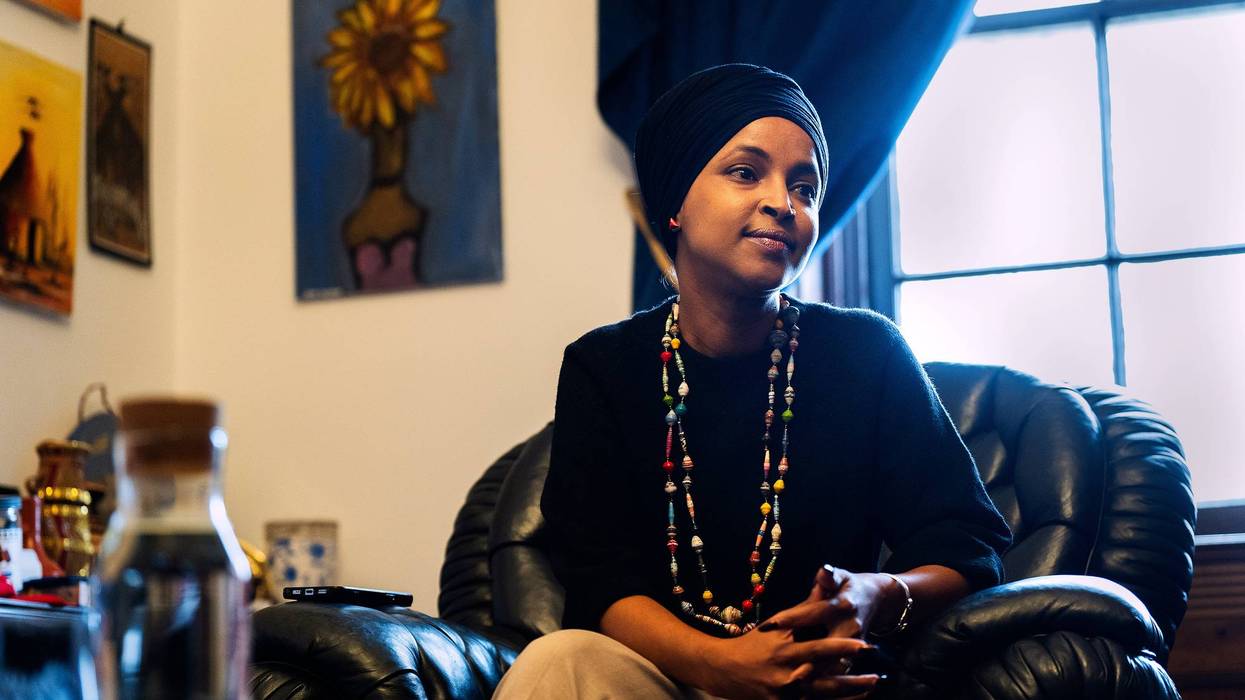
US Rep. Ilhan Omar on Monday forcefully condemned the Department of Homeland Security's raid on her Washington, DC home as part of a broader effort to weaponize federal law enforcement against progressives who oppose President Donald Trump's agenda.
"This is part of the fascist playbook to rile up Trump's die-hard supporters and give them a big distraction in advance of the midterms," Omar (D-Minn.) wrote in an email distributed by the Progressive Change Campaign Committee hours after the raid. "With this obviously political investigation, Trump is telling his voters: 'Ignore the price of gas, ignore the war in Iran, ignore that you're losing your healthcare—we want you to get angry about this instead.'"
The email followed a statement issued by Omar's office saying that the congresswoman "has done nothing wrong" and condemning the raid as "an outrageous abuse of power."
"For a decade, Donald Trump has relentlessly targeted Congresswoman Ilhan Omar with inflammatory rhetoric, repeatedly putting a target on her back," the statement read. "Now, those attacks have escalated to a pointless federal raid."
The Trump Justice Department said the raid, executed by the investigative arm of DHS, was "part of an ongoing federal criminal investigation." Trump administration officials are reportedly probing whether Omar, who entered the US as a child refugee from Somalia and became a citizen in 2000, is in the country illegally. CBS News reported that the investigation centers on paperwork completed by Omar's late father when she was a child.
Trump told reporters at the White House on Monday that he has "nothing to do with" the Omar investigation while attacking her as a "terrible person." Omar and the Somali American community in Minnesota have been frequent targets of the president's bigoted attacks, and Trump has called for the Democratic lawmaker to be jailed or deported.
"For ten years, Trump has targeted me with baseless lies and smear campaigns. This is just the latest escalation in his campaign of political intimidation. I will not be silenced," Omar wrote in a social media post on Monday.
In the campaign email, Omar called the federal investigation a "sham" and "further proof" that Trump is "willing to use the power of the federal government to try to intimidate and silence anyone who stands up to him."
"It's up to us to make sure it doesn't work," Omar added.
The raid on Omar's home drew widespread condemnation, including from top Democrats in Congress. The leadership of the House Democratic caucus issued a statement calling the raid a "deeply disturbing" act that "raises serious questions about the continued corrupt weaponization of the federal government against Donald Trump’s adversaries."
Rep. Sydney Kamlager-Dove (D-Calif.) denounced the raid as "fascism in the extreme."
"Trump is weaponizing the federal government to escalate his racist attacks against Rep. Omar, undermine her ahead of the midterms, and distract from his failures as president," Kamlager-Dove added.
The Department of Justice admitted that the Trump administration kept running the ads after a federal judge issued a temporary restraining order, blaming the error on a missed email.
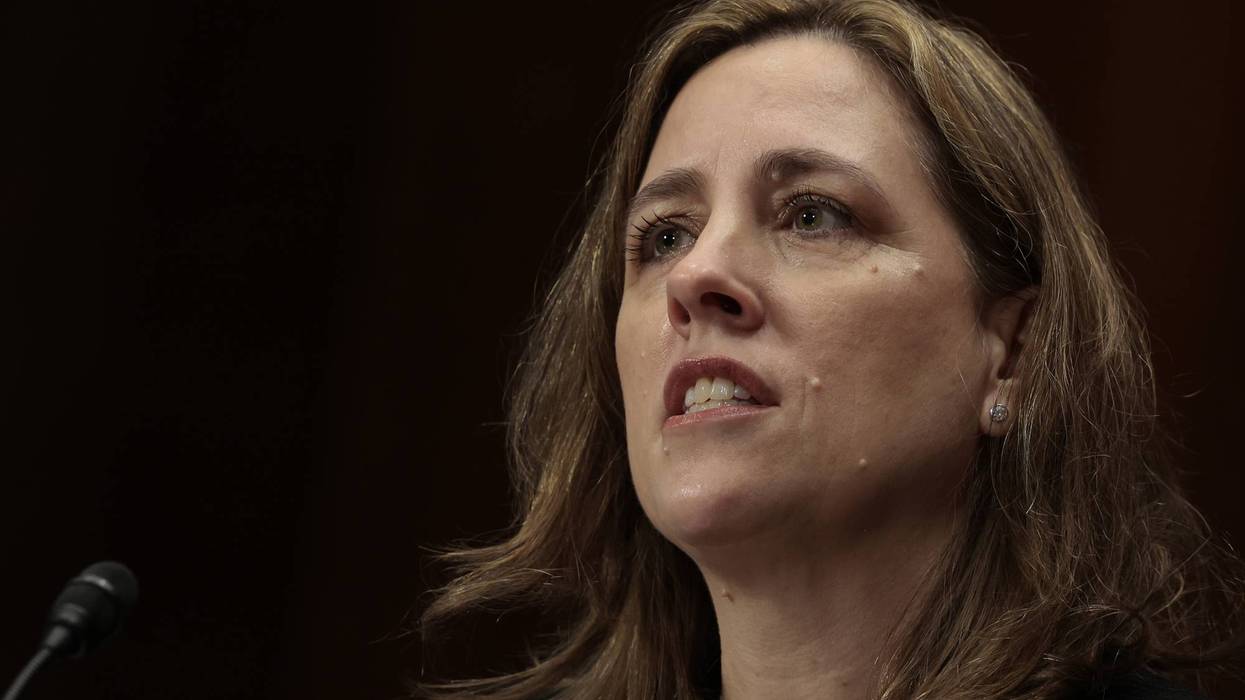
The US Department of Justice apologized Monday after the Trump administration continued airing taxpayer-funded political advertisements despite a court order requiring them to stop, blaming an internal email delay for the violation.
US District Judge Jennifer L. Rochon—an appointee of former President Joe Biden—issued a temporary restraining order Sunday in Common Cause et al. v. Department of Homeland Security et al., blocking the administration from airing the commercials and requiring officials to cancel previously scheduled runs.
However, The Washington Post and Democracy Docket reported Monday that two of the ads ran nearly 400 times after the order took effect. Plaintiffs in the case—the advocacy group Common Cause, Service Employees International Union Local 32BJ, Empire State 32BJ SEIU PAC, and Democratic Alabama state Legislature candidate Robert Hunter—filed a notice with the court informing it of the violations.
Citing the filing, Democracy Docket noted:
According to AdImpact data... the government’s ads aired in nearly 400 television spots on programs that began at 7 pm Eastern—after Rochon’s order was already in force. One of the ads aired in 193 spots during CBS’ "60 Minutes," while another aired in 198 spots during ABC’s "America’s Funniest Home Videos."
The ads continued airing Monday. As of 2:45 pm plaintiffs said an ad titled “Maduro” had aired another 20 times, one titled “Final Battle” 11 times, and another titled “The Country He Loves” once.
Rather than seeking contempt sanctions at this time, the plaintiffs are asking Rochon for a status conference to determine whether the Trump administration has complied with her order.
The Department of Justice admitted the error in a separate filing Monday, claiming that its lawyers "did not become aware of" the Rochon's emailed order "until this morning." The DOJ apologized to plaintiffs and the court, assuring Rochon that "the government is in compliance" with the temporary restraining order.
The White House said separately that the Department of Homeland Security (DHS) had not received notice in time to cancel the advertising purchases. The administration subsequently instructed its outside vendor to stop airing the commercials, froze future payments, and placed the $20 million funding allocation on hold.
The dispute stems from a $20 million advertising campaign financed via Office of Management and Budget (OMB) funds that were redirected to a Customs and Border Protection account designated for “commemorative events.”
The commercials featured President Donald Trump touting his political agenda, including one repurposed from his 2024 presidential campaign and another featuring Trump and Defense Secretary Pete Hegseth hyping the US war against Iran.
Critics have called the ads illegal under laws including the Administrative Procedure Act and the Hatch Act, and even grounds for impeaching Trump, who has already been impeached an unprecedented two times—but never convicted by the Senate—yet again.
The Democratic National Committee last week sued Trump, the White House, OMB, and DHS over the ads, alleging that the president "personally directed this illegal activity."
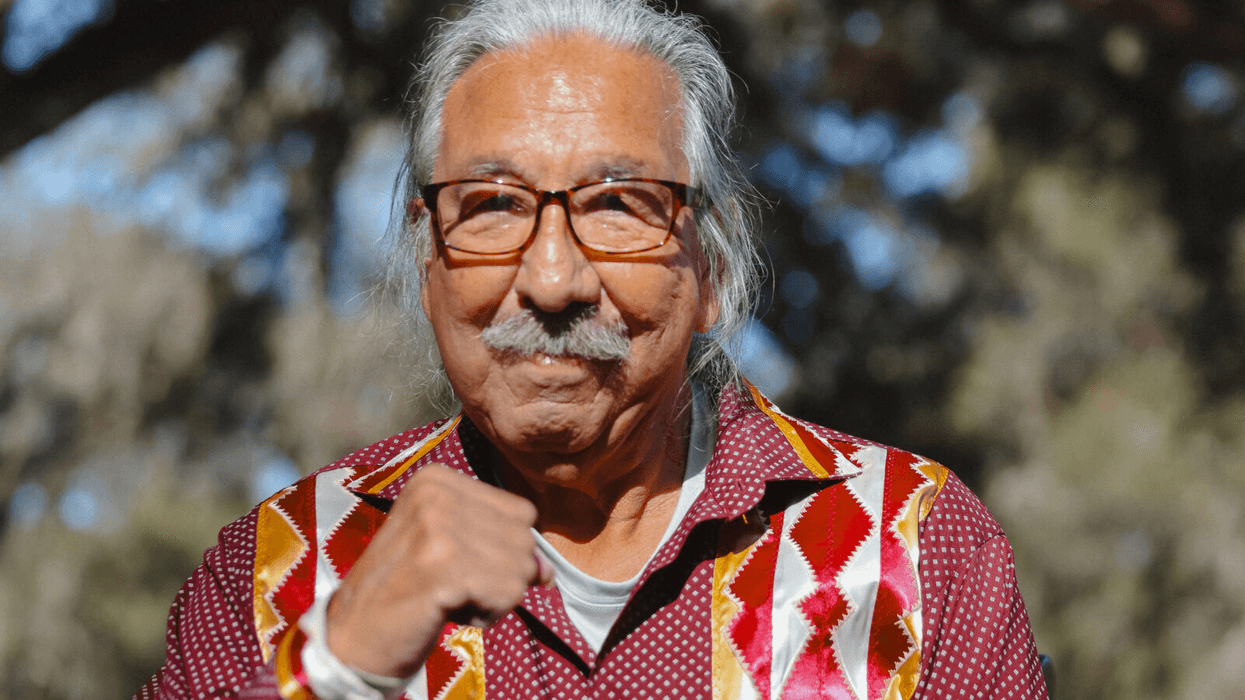
"We just want to be left alone," the former longtime political prisoner said. "We don’t want to be part of a government that’s killing women, children, babies, and bombing every damn thing that they can."
Leonard Peltier, the Indigenous activist who spent nearly half a century in prison for murders he says he did not commit before outgoing President Joe Biden commuted his sentence last year, vowed Monday that Native Americans would resist the Trump administration's attacks on Indian rights and tribal sovereignty.
“We’re not free yet. We are in danger,” Peltier, 82, told Democracy Now! in an interview released Monday to mark Indigenous Peoples’ Day. “Trump and these organizations, they’re talking about doing away with our reservations and our treaties and everything else.”
Peltier—whose freedom struggle is the subject of a new documentary, Free Leonard Peltier, directed by David France and Jesse Short Bull—said: "Some people became greedy and selfish and murderous, and they tried to exterminate us because they wanted it all for themselves. Well, 500 years later, we’re still here, and I’m still talking, and I’m going to talk 'til I die."
"We just want to be left alone," Peltier said of Indigenous peoples. "Let us live our own lives. Let us have our own society we’ve had for thousands of years. What the hell? I mean, we don’t want to be part of a government that’s killing women, children, babies, and bombing every damn thing that they can, and talking about annihilating a race of people."
Peltier's remarks came as Indigenous communities across the United States face numerous federal policies and actions affecting their lands, cultures, civil rights, and access to critical services.
In Arizona, the Trump administration is moving ahead with a border wall opposed by the Tohono O’odham Nation, whose ancestral homeland straddles the US-Mexico border. A recent Arizona Luminaria investigation revealed that federal authorities used drones, surveillance equipment, and masked agents to monitor Tohono O’odham members and a prayer camp as the Trump administration moved forward with border wall construction through their ancestral lands.
The Arizona border wall and a similar barrier project in Texas' Big Bend region are among the numerous conflicts over Native lands and treaty rights under attack by the government. According to the National Indian Law Library’s 2026 roundup of Indigenous land disputes, tribes are fighting to protect sacred sites, recover ancestral territory, and oppose mining and development projects.
The Trump administration has also moved to shrink the Bears Ears and Grand Staircase-Escalante national monuments in Utah, drawing tribal leaders' condemnation of the loss of protections for culturally significant landscapes.
Education is also under attack, as Trump seeks to dramatically slash federal funding for tribal colleges and universities.
Meanwhile, the administration’s proposed changes to the 2030 census could make Native Americans less visible in federal data by removing questions about race and ethnicity from the decennial questionnaire, raising concerns about the consequences for federal funding, voting rights, and civil rights enforcement.
Peltier—who supporters long said was framed for the murder of two federal agents during a 1975 shootout at the Oglala Sioux Reservation in South Dakota—sounded a note of defiant perseverance during his Democracy Now! interview.
“We’re going to stay here,” he said of Indigenous peoples. “You’re not going to get rid of us.”

"Everyone saw these pro-democracy protests," said a critic of Pakistan's US-backed military government. "This is a very transparent attempt to crush them by a military regime that is terrified of its own people."
As US President Donald Trump deepens his ties with Pakistan's powerful military chief, the nation's government has detained the elected leadership of the last province controlled by jailed former Prime Minister Imran Khan's opposition party—a move critics have condemned as a coup.
Pakistan's president, Asif Ali Zardari, declared a state of emergency on Sunday in the northwestern province of Khyber Pakhtunkhwa, suspending its elected government and transferring authority to a federally appointed governor. Hundreds of members of Khan's Pakistan Tehreek-e-Insaf (PTI) party, including its provincial chief minister, Sohail Afridi, have been arrested, as have Khan's three sisters, according to The Guardian.
The emergency measures come after days of protests calling for the release of Khan—who was forced to step down from power in 2022 by a parliamentary vote of no confidence under heavy pressure from the US government, then led by President Joe Biden. Khan was subsequently imprisoned by Pakistani authorities and accused the military of orchestrating his ouster.
Pakistan's government said it declared the state of emergency after local leadership failed to stop escalating attacks from Islamist terrorist groups. But PTI leaders described it as a thinly veiled pretext to squash protests, including a planned march on Islamabad to demand Khan's release.
Mehlaqa Samdani, the director of the Community Alliance for Peace and Justice—a group advocating against US support for political repression in Pakistan—described Khyber Pakhtunkhwa as "the last remaining province where the military regime had been unable to take control."
"The government has now declared a state of emergency and imposed governor's rule in the province, effectively removing its elected government from power," Samdani said in a video. "Just think about what that means: Millions of people voted for their representatives, only to see their elected government stripped of its authority."
"Everyone saw these pro-democracy protests," she added. "This is a very transparent attempt to crush them by a military regime that is terrified of its own people."
Amid mass protests calling for his release, Amnesty International has argued that Pakistani authorities have weaponized criminal proceedings to keep Khan out of power and crack down on dissent.
After the emergency measures went into effect this weekend, the internet monitoring organization NetBlocks reported major disruptions to internet service in parts of Khyber Pakhtunkhwa. Mobile phone networks have reportedly been disrupted, public transit closed, and several roads across the province shut down.
"Reports of arbitrary detentions of key leaders—including the provincial chief minister—and internet disruptions across the province raise concerns about the proportionality of these emergency measures," Babu Ram Pant, Amnesty International’s deputy director for South Asia, said on Sunday following news of the emergency declaration.
"While states may, in strictly limited circumstances, derogate from their human rights obligations to respond to a public emergency that threatens the existence of the nation, emergency measures are not a blank cheque to crack down on human rights, silence dissent, or concentrate power," he said.
Trump has warmly embraced Asim Munir, the military chief who has overseen the crackdown on Khan and his opposition party, spent recent years consolidating control over Pakistan's armed forces, and secured immunity from criminal prosecution.
Munir has regularly been heaped with praise by Trump, who hosted him for an unprecedented two-hour Oval Office meeting last year without any other Pakistani officials. Trump has referred to Munir as "my favorite field marshal," "a very important guy," and an "exceptional human being."
In December, the Trump administration approved a $686 million sale to upgrade Pakistan's F-16 fighter jets. Trump has also tapped Munir as a key intermediary between Washington and Tehran amid the US war with Iran.
Hussain Nadim, a Pakistani political analyst and lecturer at George Washington University, has argued that Munir has made himself useful to Trump because it "confers international legitimacy as his military rule faces deep questions at home."
"Pakistani generals have long understood how to capitalize on American fears, anxieties, and domestic political needs of a wide range of American presidents," Nadim wrote in August. "Military rulers position themselves around political changes in Washington, knowing urgent American political and security needs can override concerns about democracy and governance in countries like Pakistan."
Opponents of US intervention, including Samdani, have renewed calls for the US to cut off support for Pakistan's government.
"The US continues to train and work closely with the very military regime that is now attacking its own people," she said. "Members of Congress should speak out immediately. They should tell Pakistan's peaceful pro-democracy protesters that the world stands with them and tell the military dictatorship that we are watching and will not allow this repression to go unanswered."
"American taxpayers do not want to be involved in training a corrupt military regime that's oppressing its own people, including relatives of around one million Americans of Pakistani descent," said Erik Sperling, the executive director of Just Foreign Policy—a member of the Coalition to Change US Policy Towards Pakistan.
"If the Pakistani regime cannot allow its own people to protest and vote in free elections, they should not be receiving any training or support from the United States military or intelligence services," he told Common Dreams.
"The US is harming its relationship with the Pakistani people by continuing to side with the military regime that fraudulently stole elections and is now attacking its own people," he said. "There's a chance for the United States to stand up for freedom and democracy and build a genuine partnership with the people of Pakistan by siding with them as they fight for their freedom from military rule."

Defense Minister Israel Katz has bragged that Israel was destroying "not one house at a time," but "the entirety of those villages."
When Israel and Lebanon reached a ceasefire in April, the Israel Defense Forces' systematic destruction of villages in southern Lebanon was supposed to halt. Instead, it was just getting started.
Israeli forces have largely leveled 48 of the roughly 60 villages and towns in occupied southern Lebanon, a New York Times investigation published Monday revealed, fueling fears that Israel intends to permanently prevent displaced residents from returning.
Rather than collateral damage from military attacks, the razing of Lebanese villages since April has largely been carried out through controlled demolitions by Israeli forces.
Nearly all the villages destroyed have been majority Shia—the sect from which Hezbollah draws much of its support—while those containing Christian, Druze, and Sunni Muslims have largely been spared.
In July, Israeli Defense Minister Israel Katz acknowledged that Israel had destroyed at least 24 historic Lebanese villages, describing it as punishment for their residents.
“Twenty-four Lebanese villages that were hundreds of years old—with Shiite residents who acted as enemies [of Israel] on behalf of Hezbollah and threatened our borders and our residents—we destroyed all of the buildings.”
“Not one house at a time," he emphasized. "The entirety of those villages—their demolition has been completed.”
Since March, Israel's military campaign has displaced at least 1.1 million Lebanese civilians, while its forces have entrenched themselves in an occupied swath of southern Lebanon extending as far as eight miles from the border.
Roughly 270,000 people remain barred from returning home. Many have no homes to return to. In many villages, homes, roads, utilities, and public facilities no longer function.
The Times found that Israeli forces have also burned about 16,500 acres of land—roughly 11% of the total occupied area—since the April ceasefire, including farmland and olive groves. Meanwhile, thousands of trees have been bulldozed.
As this life-sustaining infrastructure has come down, Israel has erected what appear to be the fixtures of a long-term military occupation: satellite imagery shows at least three new Israeli military outposts have been at least partially built since the ceasefire began, alongside new roads connecting them to Israeli territory.
The US-brokered ceasefire expressly prohibited "offensive military operations against Lebanese targets, including civilian, military, and other state targets, in the territory of Lebanon" except in cases where it was necessary to take defensive measures against planned, imminent, or ongoing attacks.
Israel's military told the Times it received no directive “to carry out widespread damage to structures or to demolish villages" in southern Lebanon. “The IDF operates in the security zone in southern Lebanon with the aim of removing threats posed by the Hezbollah terrorist organization to the residents of Israel and to IDF troops," it added.
Israeli officials have suggested that the occupation of southern Lebanon will continue indefinitely. Katz said last month that Israel "will not withdraw from the security zone" until Hezbollah disarms.
Prime Minister Benjamin Netanyahu has suggested that some of the Christian villages would like to be annexed into Israeli territory. Finance Minister Bezalel Smotrich, meanwhile, renewed his call last month for Israel to extend its borders north to the Litani River, which encompasses most of the Lebanese territory it currently occupies.
Israel has said it has razed entire villages to destroy Hezbollah military infrastructure and prevent fighters from returning to the area near the Israeli border.
Janina Dill, a professor of global security at the University of Oxford, has said using mass destruction to carry out this objective was "manifestly illegal" under international law, which says that destroying civilian property without an imperative military necessity can constitute a war crime.
"It’s deeply implausible that imperative military necessity applies to every house in a particular village," she told the Financial Times in August.
Volker Türk, the United Nations high commissioner for human rights, said in July that Israel was engaging in the "wholesale destruction" of civilian homes, adding that "demolition of this type raises huge flags about compliance with international humanitarian law.”
"In large parts of southern Lebanon, Israel’s ‘everybody-leave’ orders were followed by ‘don’t-come-back’ orders," said Kristine Beckerle, Amnesty International's deputy regional director for the Middle East and North Africa in June. "Israel’s forced displacement and prevention of return of tens of thousands of civilians from southern Lebanon amounts to unlawful transfer, which is a grave breach of the Fourth Geneva Convention and thus a war crime."

US District Judge Ana Reyes said the Trump administration's weekend removal of hundreds of trees at the East Potomac Golf Links "has cost the government all of its credibility."
A federal judge on Monday expressed outrage at the Trump administration for cutting down hundreds of trees at the East Potomac Golf Links in Washington, DC over the weekend.
As reported by journalist Scott MacFarlane in a Monday social media post, US District Judge Ana Reyes, who is overseeing a legal challenge to President Donald Trump's renovation plans for the golf course, slammed the administration for removing more than 400 trees on Saturday without providing any significant notice.
In addition to the roughly 430 trees that have already been cut down, attorneys from the US Department of Justice (DOJ) acknowledged in court that nearly 300 additional trees had also been marked for removal.
Reyes said that the trees' destruction "has cost the government all of its credibility" in the case. Later in the hearing, the judge called the administration's actions "totally beyond the pale," according to MacFarlane.
A CNN account of the Monday court hearing captured Reyes ripping into a DOJ attorney who said they were doing their "best" to keep the judge informed of tree removals.
"No," Reyes shot back, "you did your absolute worst."
Reyes ordered the total halt of all construction on the course, including the removal of any trees, until at least Tuesday at 2 pm. Reyes said that she hoped to learn more about the trees' removal from at least one other administration official involved in the project during a Tuesday hearing.
In a July ruling, Reyes had allowed construction on the golf course to continue so long as the administration notified the court ahead of time if it planned to remove more than 10 trees from the property at a time.
Per MacFarlane's account, the judge said on Monday that the administration gave the court notice that it was planning to cut down hundreds of trees at 4:55 pm on Friday afternoon, ahead of a holiday weekend.
A Monday report in The Washington Post noted that the trees at the golf course were chopped down even though the administration has only referred to Trump's renovation of the property as a "potential project" in court filings, and has not released any details about a timeline for construction or about its projected cost.
Over the last two years, Trump has developed several vanity projects throughout the nation's capital, including a luxury ballroom at the White House, a "Triumphal Arch," and botched renovations of the Lincoln Memorial Reflecting Pool and the John F. Kennedy Memorial Center for the Performing Arts.
Last month, Democrats on the congressional Joint Economic Committee released a report calculating that the projected cost to taxpayers for President Donald Trump’s vanity projects has soared to more than $1.8 billion.
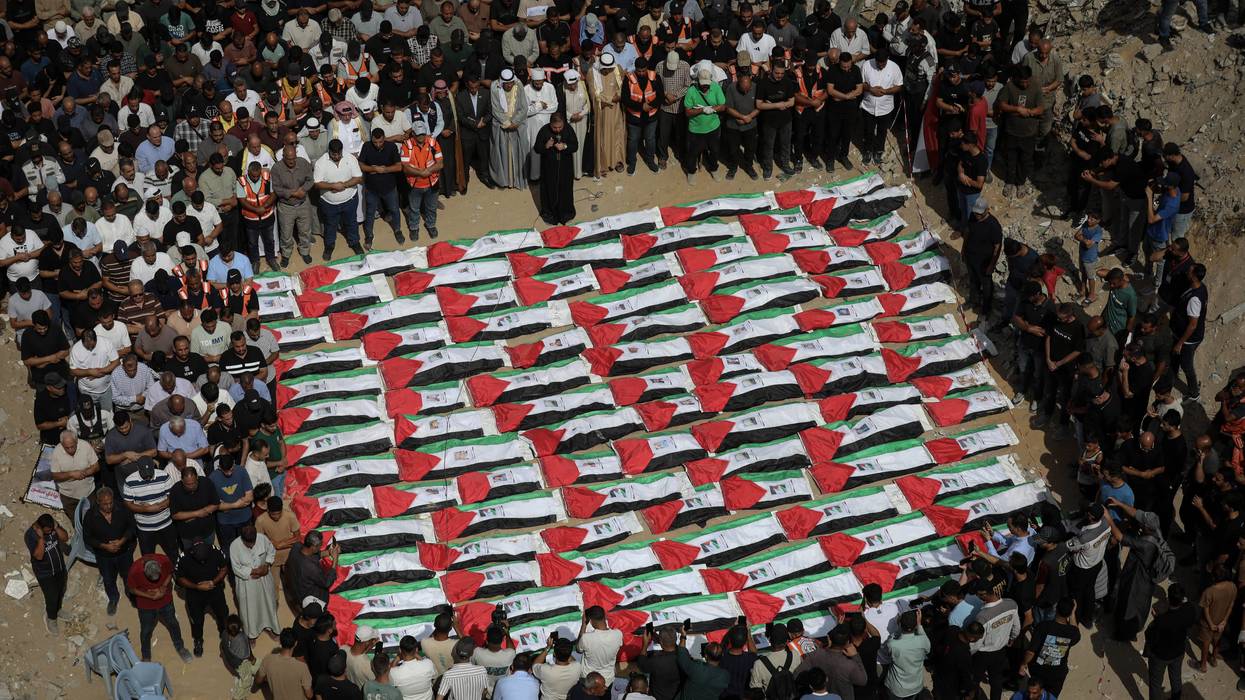
"You can't authorize the potential killing of 300 civilians... and still tell the public we did everything we could to avoid harming innocent people," said one veteran.
Former Israeli military and intelligence personnel affirmed that rules for targeting confirmed and alleged Hamas members in Gaza were dramatically loosened after the October 7, 2023 attack, allowing strikes expected to kill hundreds of Palestinian civilians to target even low-ranking members of the Palestinian resistance group, according to a report published Monday.
In a paywalled article published by Haaretz, Israel's oldest daily newspaper, Yaniv Kubovich gathered testimonies from former Israel Defense Forces intelligence personnel that add to the body of evidence from Israeli whistleblowers, military officials, and investigative journalists documenting how the IDF expanded its targeting practices during its devastating US-backed annihilation of Gaza, which has killed or wounded more than 250,000 Palestinians in the coastal exclave over the past three years.
One change described by some of those interviewed by Kubovich was "the opening of the intelligence apparatus to untrained personnel."
"People arrived at military intelligence who weren't from the unit, reservists who'd never even served in intelligence, brought in from all sorts of places," said one veteran, identified as "A."
"They sat in the Targeting Directorate looking for the most insignificant targets, the small fry, so they could kill them," A added. "Anyone displaying Hamas symbols on Facebook or identifying themselves as Hamas was marked as a target. Some were Hamas members, some were fighters too, but they really were small fry."
Another veteran, "D," who was assigned to a strike cell—units that coordinate drone and other aerial attacks—said: "Suddenly, the IDF was striking even the lowest of the low indiscriminately, and everyone had forgotten about conserving ammunition. We were striking Hamas drivers. That's how far it went."
Kubovich wrote that "a recurring theme in the accounts is the gap between a target's importance, the scale of the strike and the civilian toll deemed acceptable."
For example, on October 31, 2023, IDF warplanes dropped 2,000-pound "bunker-buster" bombs supplied by the United States on the densely populated Jabalia refugee camp in northern Gaza in order to kill one Hamas commander, Ibrahmi Biari.
"We knew Biari was underground, beneath several large buildings, but we couldn't pinpoint which building he was under," said D. "So they chose several buildings that were still occupied and decided to bring down all the buildings above the tunnel he was in. We didn't initiate an evacuation because it was important to kill him before he could get away."
A, who was also involved in the mission, said the decision to bomb the buildings was referred to the IDF chief of staff for approval, since intelligence officials estimated that there would be hundreds of civilian casualties. The IDF calculated that roughly 100 people would be killed or wounded in the proposed attack.
"We couldn't get any more intelligence to pinpoint his exact location," said veteran D. "They told us, 'He's killing soldiers right now. We have to strike him,' out of concern for the troops on the ground, and in the end the strike was approved. They really wanted to kill this guy."
Hamas said that 400 people were killed or wounded in the attack.
"Among other things, we relied on figures coming from Hamas, which we considered relatively plausible, even if they weren't 100% accurate," veteran A told Kubovich. "As time went on, we realized the death toll was around 250. I remember being stunned that we were bringing down several densely populated buildings, killing and injuring hundreds of people, to kill a battalion commander who, just a few weeks earlier, hadn't even been someone we were supposed to gather intelligence on."
The UK-based civilian casualty monitor Airwars said that at least 126 civilians, including 69 children, were killed in the attack, which wiped out whole families.
"You can't authorize the potential killing of 300 civilians for a battalion commander, or the killing of 20 civilians for every Hamas truck driver, and still tell the public we did everything we could to avoid harming innocent people," Nadav Weiman, executive director of the IDF veterans' group Breaking the Silence, told Kubovich.
Referring to the Jabalia massacre, D said: "I can't say this particular strike is what really messes with my head. What's much harder for me is the system of strike after strike after strike, with collateral damage running into dozens of people, sometimes hundreds. Being part of a system like that bothers me more than taking part in any particular strike."
The veterans' accounts raise further questions about Israel's repeated assertions that its military operations have been conducted in accordance with international humanitarian law, which requires parties in armed conflicts to distinguish between civilians and combatants and prohibits attacks expected to cause excessive civilian harm relative to the anticipated concrete and direct military advantage.
Those claims stand in stark contrast with statements by Prime Minister Benjamin Netanyahu and other senior Israeli officials, who began calling for the genocidal destruction of Gaza and its 2.2 million people in the immediate aftermath of the Hamas-led attack of October 7, 2023.
Netanyahu and Yoav Gallant—his former defense minister who ordered the “complete siege” of Gaza, explaining that “we are fighting human animals, and we are acting accordingly"—are currently fugitives from the International Criminal Court in The Hague, where they are wanted for alleged crimes against humanity and war crimes, including murder and forced starvation.
The International Court of Justice (ICJ), also in The Hague, is currently conducting a genocide case against Israel filed by South Africa and formally supported by more than 15 nations. While a ruling in the case isn’t expected until at least 2029, a United Nations commission of inquiry, the International Association of Genocide Scholars, and other experts—including many Israeli and international Jewish academics, jurists, human rights campaigners, and others—have already concluded that Israel is committing genocide in Gaza.
The new Haaretz investigation adds to the body of reporting on Israel's loosened rules of engagement and their disastrous implications for Gaza civilians, including a December 2024 New York Times exposé involving interviews with over 100 IDF soldiers and veterans, Israeli officials, dozens of airstrike victims, and experts on the law and conduct of war.
Kubovich's revelations also come as the documentary NAZA, directed by Israeli journalists and filmmakers Yuval Abraham and Rachel Szor, brings testimony from Israeli military and intelligence insiders to international audiences. The film features 24 anonymized insiders describing the surveillance, artificial intelligence-assisted targeting, and military procedures used during the assault on Gaza.
IDF veteran testimonies are consistent with earlier investigations into the IDF's use of artificial intelligence to generate targets at extraordinary speed, often with limited human scrutiny.
In April 2024, Abraham reported for +972 Magazine and Local Call that the military used an AI system called Lavender to identify suspected Hamas and Palestinian Islamic Jihad operatives. The investigation found that the IDF initially authorized officers to accept civilian casualty estimates of up to 15 or 20 people for each low-ranking alleged militant targeted, and more than 100 civilians for certain senior Hamas officials.
“The IDF bombed them in homes without hesitation, as a first option,” one intelligence officer told the outlets. “It's much easier to bomb a family's home. The system is built to look for them in these situations.”
The investigation also found that officers were permitted to rely on Lavender's recommendations without thoroughly checking the underlying intelligence.
Former IDF Chief of Staff Herzi Halevi has also acknowledged the enormous human toll of the war.
“This is not a gentle war; we took the gloves off from the first minute,” Halevi said during a September 2025 speech to residents of Ein Habor, adding that “not once” has any legal authority “limited” his wartime conduct.
Implicitly confirming Gaza Health Ministry casualty figures—which then stood at around 220,000 Palestinians killed or wounded—Halevi said that “over 10%” of Gaza’s population of approximately 2.2 million had been "killed or injured” since October 2023.
In August 2025, Abraham and Emma Graham-Harrison, The Guardian's senior international affairs correspondent, revealed that classified IDF intelligence data suggested that 5 in 6 Palestinians, or 83% of people, killed by Israeli forces through the first 19 months of the war were civilians.
Current and former IDF troops have accused their own of deliberately shooting Palestinian civilians, including children, sometimes out of sheer boredom. Palestinian and international volunteer medical professionals have also described what they say is the deliberate shooting of Gazans, including children, more than 21,500 of whom have been killed by Israeli bombs and bullets—with more victims added to that grim total with every passing day.

"He's not doing it to make Americans more free. He's doing it to make Americans his serfs," said one critic.
Far-right billionaire Elon Musk is spending an unprecedented fortune helping the Republican Party maintain its majorities in Congress, according to a Monday report in The New York Times.
The Times used filings made with the Federal Election Commission (FEC) to calculate that Musk has funneled at least $276 million to GOP groups and his own super political action committee (PAC) since July alone.
In total, the Times estimated that Musk has given $366 million in campaign contributions during the 2025-26 election cycle, which is even more than the $290 million he gave during the 2023-24 election cycle to return President Donald Trump and the GOP to power.
Much of Musk's giving this cycle has been to help Republicans maintain their majority in the US Senate, as he has donated $158 million to the Senate Leadership Fund, the super PAC charged with helping GOP candidates in Congress' upper chamber.
According to the Times, Musk's donation to the fund is "one of the largest political donations in American history, and more than the group’s Democratic rival raised from all of its donors that quarter."
Since July, Musk has also given $76 million to his America PAC, which is building what the Times described as "a sprawling canvassing program to try to turn out hard-to-reach Republican voters" in the coming elections.
The Times emphasized that the $366 million is only the publicly disclosed amount that Musk has given, and one source told the newspaper that the billionaire "has also made some seven-figure donations to support midterm candidates through groups that are not required to disclose their donors."
In a Monday social media post, journalist Daniel Nichanian described Musk's midterm spending as "absolutely insane," and said the billionaire is "single-handedly destroying records and swamping [Democratic] candidates."
Mark Jacob, former metro editor at the Chicago Tribune, said the massive Musk donations should deeply worry Americans who care about democracy.
"He's not doing it to make Americans more free," Jacob wrote. "He's doing it to make Americans his serfs."
Don Moynihan, professor of public policy at the University of Michigan, argued that Democrats cannot allow Musk's efforts to buy congressional elections go unanswered.
"Dems should promise to minimize contracts with clearly partisan government contractors and to impose more regulatory scrutiny on Musk," Moynihan wrote. "At this point, nothing to lose."
In addition to concerns about the sheer volume of Musk's donations, election officials have been raising alarms about how the money is being used.
As reported by CNN on Saturday, America PAC has been sending text messages to Colorado voters telling them that their request for a mail-in ballot has been received, then inviting them to "confirm now where and when to return it."
Carly Koppes, the Republican election chief in Weld County, told CNN that these messages have been causing significant confusion among voters, who automatically receive mail ballots without having to file a specific request.
“People were like, ‘Wait a second. I didn’t submit that request. Is something fishy going on? Did someone submit something on my behalf?'" said Koppes.
Josh Zygielbaum, the Democratic election chief in Adams County, told CNN that he'd received dozens of calls asking about the America PAC texts, and emphasized "that volume of phone calls is usually a good indicator for us that something’s a bigger issue because people generally don’t pick up the phone these days unless there’s a bigger concern."