

SUBSCRIBE TO OUR FREE NEWSLETTER
Daily news & progressive opinion—funded by the people, not the corporations—delivered straight to your inbox.
5
#000000
#FFFFFF
To donate by check, phone, or other method, see our More Ways to Give page.
Daily news & progressive opinion—funded by the people, not the corporations—delivered straight to your inbox.

Phil LaRue, Earthjustice, (202) 667-4500 x 4317, plarue@earthjustice.org
In anticipation of the start of hearings for Supreme Court nominee Judge Brett Kavanaugh will begin on September 4, 25 of the nation's leading environmental, legal, and advocacy organizations sent a letter to the Senate Judiciary Committee announcing their opposition to Judge Kavanaugh's nomination.
In the letter, the organizations contend that Judge Kavanaugh's "lengthy record on the federal bench exposes him as an activist judge who has used cases to effectively rewrite statutes," often stacking the deck in favor of wealthy and powerful corporate polluter interests against communities impacted by toxic wastes, loose emission standards, dangerous petrochemical facilities, and pipelines. The signing organizations also note the historic lack of transparency in the nominating process, with hundreds of thousands of pages relating to Judge Kavanaugh's service in the Bush White House still inaccessible to Senators and the public.
Click here to read the full text of the environmental community's letter to the Senate Judiciary Committee opposing Judge Kavanaugh or continue reading below:
Alaska Wilderness League * Bold Alliance * Center for Biological Diversity
Clean Water Action * Climate Hawks Vote * Defenders of Wildlife * Earthjustice
Endangered Species Coalition * Environmental Working Group * Friends of the Earth
Green For All * GreenLatinos * Greenpeace USA * Hip Hop Caucus
Hoosier Environmental Council * Indivisible * League of Conservation Voters
National Lawyer Guild Environmental Justice Committee * National Lawyers Guild
Oil Change International * Sierra Club * Southern Utah Wilderness Alliance
The Wilderness Society * Waterkeeper Alliance * WE ACT for Environmental Justice
August 10, 2018
The Honorable Chuck Grassley, Chairman The Honorable Diane Feinstein, Ranking Member
Senate Committee on the Judiciary Senate Committee on the Judiciary
United States Senate United States Senate
Washington, DC 20510 Washington, DC 20510
RE: Environmental Groups Oppose the Supreme Court Nomination of Judge Brett Kavanaugh
Dear Chairman Grassley and Ranking Member Feinstein:
The undersigned environmental groups write today on behalf of our millions of members and supporters to express our strong opposition to the confirmation of D.C. Circuit Judge Brett Kavanaugh to a lifetime seat on the United States Supreme Court. Judge Kavanaugh is an unacceptable choice for the Supreme Court, and we urge the Senate to reject his nomination.
Judge Kavanaugh's lengthy record on the federal bench exposes him as an activist judge who has used cases to effectively rewrite statutes, creating new obstacles for agency regulation and scuttling protective regulatory outcomes. His hundreds of judicial opinions and legal writings reveal a judicial philosophy that is hostile to the power of government (especially agencies like the Environmental Protection Agency), and that values corporate profits over people and the health of the public. Moreover, Judge Kavanaugh's decisions reveal a tendency to limit the public's right to access justice through the courts (such as by adopting obstructive "standing" requirements), while at the same time removing barriers for polluters. As a result, a Supreme Court informed by Judge Kavanaugh's brand of judging would mean that courthouse doors will often be closed to people seeking to protect the air they breathe, the water they drink, and the planet on which they live. At a time when too many communities of color bear a disproportionate impact from toxic wastes, loose emission standards, dangerous petrochemical facilities and pipelines placed in their communities, we need a Supreme Court Justice that will combat environmental racism and fight for environmental justice for all, regardless of race, ethnicity, national origin, citizenship status, or income - not someone who will bar the courthouse doors on them.
The stakes for the current Supreme Court vacancy could not be higher. United States Supreme Court Justices do not simply decide cases; they determine whether and how the law works, and for whom. They define what the law means for generations to come, and the lower federal courts are bound to follow the precedent they set. An appointment of a new Justice affects the very nature of our democracy, fundamentally defining the landscape of American law.
Who serves as a Supreme Court Justice is among the most profoundly important choices we make as a nation, and one of the most solemn duties that our constitution entrusts to the U.S. Senate. In carrying out that duty, is it incumbent on the Senate to carefully, and thoroughly, scrutinize every nominee, to thoughtfully consider every aspect of his or her judicial record and legal philosophy, and to ensure a robust, fully informed, and transparent confirmation process. The integrity of our system of laws depends on vetting that is both open and honest. In this regard, we urge the Senate to demand all pertinent records from Judge Kavanaugh's years as a political lawyer in the George W. Bush White House (as provided under the Presidential Records Act), and fully consider these materials before proceeding with confirmation hearings. In the end, a nominee to the Supreme Court should be rejected unless he or she is willing to uphold the values, protect the rights, and serve in the interests of the American people - not just corporations, the wealthy, and the political elites.
I. Judge Kavanaugh's Environmental Record Results in Dirtier Air and Water
In key cases, Judge Kavanaugh has backed the right of corporations to pollute the air and water over the public's right to breathe clean air, drink clean water, and live in safe communities.
As shown in dissents written by Judge Kavanaugh in White Stallion1] and Mingo Logan,[2] he reads burdensome obligations into the Clean Air Act and the Clean Water Act that the statutes do not include in their text. For example, in White Stallion, he argued that the EPA could not even consider limiting toxic mercury pollution from power plants without first evaluating the cost to the power companies. And in Mingo Logan, he argued that before vetoing a permit that would have allowed coal companies to dump toxic mining wastes into public waterways, EPA should have considered the cost to coal companies. In both of these cases, he invented the requirement to consider costs to industry where Congress did not include that requirement, while at the same time seeking to force the EPA to ignore important real-world benefits - all in order to stack the deck in favor of the outcomes desired by corporate polluters. This tendency to read into a statute the requirement to consider costs to the corporate elites - while ignoring benefits to the environment, and improvements in the health of children, families, and the American public - not only usurps Congressional authority; it puts our health and well-being at risk.
Several of Judge Kavanaugh's decisions would significantly reduce agency power to protect public health, by recrafting statutes to eliminate authority that Congress has given agencies. For example, his narrow interpretation of the Clean Air Act expressed in EME Homer City[3] (an interpretation later overturned by the Supreme Court) would have severely constrained EPA's ability to protect the people in downwind states from pollution emanating from upwind sources. His interpretation in the Mexichem[4] case prevented the EPA from requiring replacement of a harmful chemical substitute for chlorofluorocarbons. His narrow reading of the phrase "air pollutant" in Coalition for Responsible Regulation[5] could undermine the regulation of greenhouse gases under the Clean Air Act.
His judicial writings also reveal his anti-regulatory approach to evaluating whether an agency action is appropriate under the relevant statute. In cases that raise questions about whether an agency has acted within the scope of its regulatory authority, Judge Kavanaugh favors a deeply subjective "common sense" test - where the statute means whatever he thinks makes sense. Rather than requiring an agency to fully divulge and explain its interpretation of a law that Congress has entrusted it with administering, requiring notice and opportunity for public comment on such interpretation, and then giving special consideration to the agency's conclusions, Kavanaugh would have judges simply impose their own, "common sense," ad-hoc "best reading of the statute."[6] When Judge Kavanaugh has utilized this approach, his "best reading" has been in service of his inclinations toward limited federal authority to regulate, not in the best interest of achieving Congress' protective aims under the relevant statutory program. For example, in his dissent in US Telecom Ass'n v FCC, [7] Judge Kavanaugh outlined a novel "major questions" doctrine that he would have used to reject the FCC's rational interpretation of legislative language and thereby undermine its "net neutrality" rules that are intended to protect consumers. As a Supreme Court Justice, we could expect more of the same, and such an ad-hoc approach to statutory interpretation could ultimately increase regulatory uncertainty and create a perverse incentive for agencies to under-regulate in the first instance.
II. Judge Kavanaugh Politicizes Agency Decision-Making Processes
Judge Kavanaugh's record demonstrates a belief that federal agencies should be more inherently political, which would compromise both the integrity and continuity of their decision-making. He has argued that all federal agencies should operate directly under the political thumb of the President, and should function merely as political extensions of executive branch policy-making. He believes that any degree of separation from direct presidential control is unconstitutional.
In Free Enter. Fund,[8] Judge Kavanaugh's dissent argued that the establishment of the Public Company Accounting Oversight Board, an independent agency, violated separation of powers principles because the board's members are insulated from "at will" presidential removal. Application of this legal principle would make all agencies more political, would increase regulatory uncertainty, would undermine policy continuity, and would destabilize decision-making related to important issues of safety, economic stability, consumer protection, public health, and the environment. Part and parcel to this extreme view of separation of powers, Judge Kavanaugh believes that sitting Presidents are all but immune from the legal consequence of their actions while they are in office - effectively rendering them constitutionally above the law.
III. Judge Kavanaugh's Corporate-serving Double Standard Blocks Access to Courts
One of the most troubling judicial philosophies revealed by Judge Kavanaugh's decisions is his limited view of the rights of ordinary people and public interest groups to access our court system, and his contrastingly permissive view of corporations' right to do so. Critical public health and environmental laws would have little power and meaning in practice if the public cannot get into court to enforce them.
For example, in Grocery Mfrs. Ass'n v. EPA[9] Judge Kavanaugh argued in dissent for giving processed-food manufactures standing to challenge EPA's approval of certain ethanol-containing gasoline blends based solely on the mere chance of increased corn prices, even without quantification of the speculative economic injury. Conversely, in Public Citizen, Inc. v. National Highway Traffic Safety Admin,[10] Judge Kavanaugh ruled against the public interest group and its members' right to be in court to challenge the adequacy of vehicle tire-safety standards on behalf of highway drivers. He did so because Public Citizen did not demonstrate "with certainty" that its members would suffer some particularized and currently identifiable harm other than an increased risk from more severe accidents.
Judge Kavanaugh has a troubling pattern of siding with corporations, the wealthy, and the powerful while erecting barriers for those defending the health, safety, and well-being of the American people. It is essential that whoever occupies a seat on the Supreme Court upholds the right of access to the courts for all, and honors the constitutional obligation to provide an impartial check on the power of Congress and the President.
Conclusion
Judge Kavanaugh's approach to the law threatens key elements of environmental and public health protections, and makes it harder for people to hold the government and big corporate polluters accountable. His confirmation to the United States Supreme Court would create a deeply conservative majority that would tip the scales of justice and the law further away from the people's rights and more towards corporate control of our democracy. We strongly oppose Judge Kavanaugh as a nominee and assert that careful scrutiny of his record reveals a predisposition to subordinate the rights of people to the interests of corporate profit making. These qualities in a Supreme Court Justice would threaten the health and well-being of children, families, workers, and communities, and undermine efforts to protect the ecosystems, natural resources, and global climate systems upon which we all rely. Accordingly, we strongly urge you to reject his nomination and vote against his confirmation.
Sincerely,
Alaska Wilderness League |
Bold Alliance |
Center for Biological Diversity |
Clean Water Action |
Climate Hawks Vote |
Defenders of Wildlife |
Earthjustice |
Endangered Species Coalition |
Environmental Working Group |
Friends of the Earth |
Green For All |
GreenLatinos |
Greenpeace USA |
Hip Hop Caucus |
Hoosier Environmental Council |
Indivisible |
League of Conservation Voters |
National Lawyer Guild Environmental Justice Committee |
National Lawyers Guild |
Oil Change International |
Sierra Club |
Southern Utah Wilderness Alliance |
The Wilderness Society |
Waterkeeper Alliance |
WE ACT for Environmental Justice |
Earthjustice is a non-profit public interest law firm dedicated to protecting the magnificent places, natural resources, and wildlife of this earth, and to defending the right of all people to a healthy environment. We bring about far-reaching change by enforcing and strengthening environmental laws on behalf of hundreds of organizations, coalitions and communities.
800-584-6460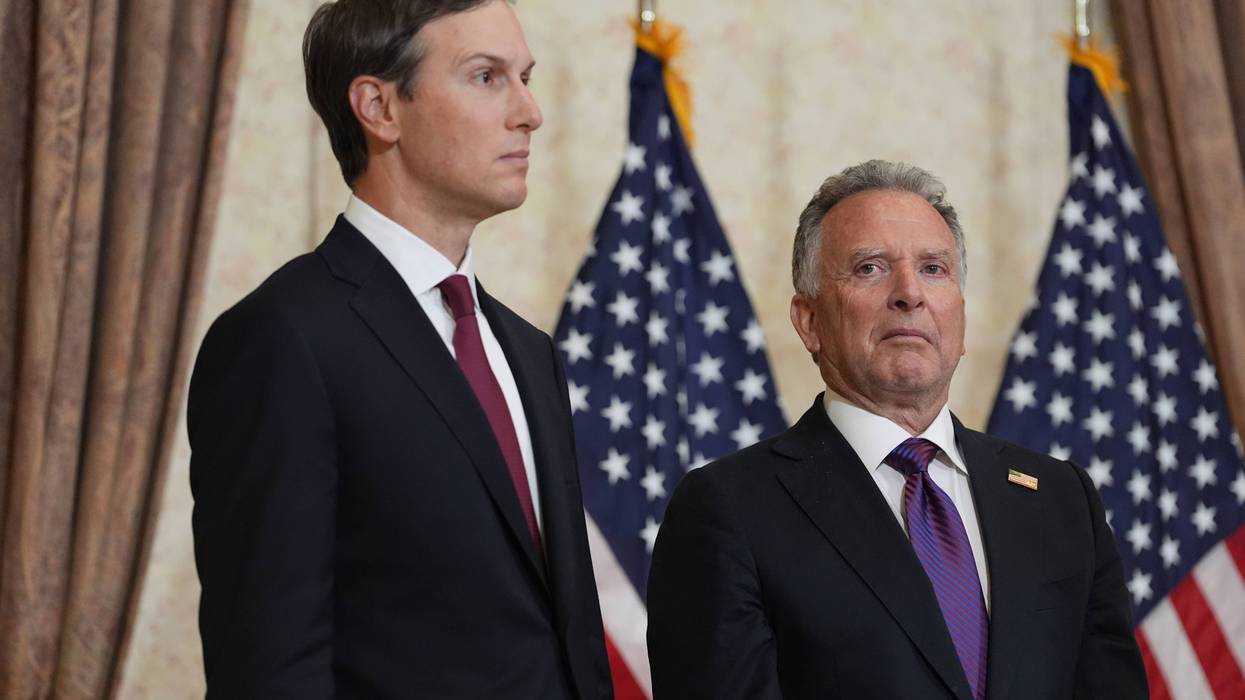
“Our assessment is that Trump effectively lacks both a coherent plan and the capacity to secure even a temporary agreement,” an Iranian official said.
Iran says it has no plans to negotiate with the US after President Donald Trump said Sunday that "the whole country is going to get blown up" if Iran refuses to make a deal.
Trump claimed that Iranian officials were heading to Islamabad for another round of talks Monday with Vice President JD Vance, his son-in-law Jared Kushner, and Middle East envoy Steve Witkoff.
But Iran’s official IRNA news agency later reported that claims Iran was coming to negotiate were “not true" and described the announcement as “a media game and part of the blame game to pressure Iran.”
The Tasnim News Agency, which is linked to Iran’s Islamic Revolutionary Guard Corps, reiterated the government’s previous position that it would not negotiate unless Trump lifts his blockade of Iranian ports, which Tehran considers a violation of the ceasefire between the US and Iran.
After Trump said the blockade would continue, Iran again shut down travel through the Strait of Hormuz on Saturday, following a brief reopening Friday following the announcement of a ceasefire between Lebanon and Israel.
IRNA added that negotiators decided not to return because of "Washington’s excessive demands, unrealistic expectations, constant shifts in stance, repeated contradictions, and the ongoing naval blockade."
An unnamed Iranian official familiar with Tehran's internal deliberations told Drop Site News on Sunday that Tehran is prepared for a long war.
He said negotiators would prefer to make a deal with the US that would give Iran the right to enrich uranium, provide sanctions relief, and establish a long-term non-aggression framework.
But the official said Trump’s erratic behavior and maximalist demands—including that Iran surrender all its enriched uranium—are causing Iranian officials to sour on the idea that he could ever be a trustworthy negotiating partner.
“Our assessment is that Trump effectively lacks both a coherent plan and the capacity to secure even a temporary agreement,” the official said. “His decision-making appears to be grounded in Israeli political and security assessments, conveyed to him on a daily basis.”
Trump has expressed a desire to find an off-ramp from the war, which has caused economic upheaval and further tanked his already grim approval rating.
But he has also stood by Israel as it has repeatedly undermined negotiations by continuing its attacks on Lebanon, including after a 10-day ceasefire that began Friday. Iran has portrayed ending these attacks as key to a durable ceasefire agreement with the US.
The official said that during the previous round of talks in Islamabad, which resulted in a two-week ceasefire earlier this month, Iran "clearly stated" to Vance that "public threats" like the one Trump issued to wipe out all of "Iranian civilization" would not be tolerated again.
Even before Trump made more such threats Sunday morning, Iran had not yet agreed to another round of talks. The official said that Iranian negotiators are still open to further discussions, but added that they "need to be meaningful, and their framework should be defined in advance."
“The Islamabad negotiations provided President Trump with an appropriate opportunity to exit the war,” the official added. “Should [Trump] nevertheless choose to continue the conflict, Iran will, for a prolonged period, suspend diplomatic channels and will seek, within the context of the conflict, to impose significantly greater costs on United States interests.”
Mohammed Sani, a political analyst based in Tehran, told Drop Site News that Iran appears prepared to inflict more pain on the US should Trump choose violence.
"We see that the Americans have been bringing in more troops and equipment to prepare to attack, but the Iranians have also not been resting during these two weeks of ceasefire,” he said. “They have been preparing, repairing the underground missile cities, bringing in new air defenses, missiles, and drones. Iran is at a high standard of readiness right now. If there is another round of negotiations sometime later in the future, after another round of American attacks against Iran fail, the Iranian conditions for peace will be much tougher.”
Trita Parsi, executive vice president of the Quincy Institute for Responsible Statecraft, said Sunday that Trump’s apparent belief that he can use threats of mass violence to bully Iran into a favorable deal is pushing Tehran further from the negotiating table.
"Due to poor discipline, Trump ends up prioritizing the optics of victory over actually getting a deal," Parsi said. "Instead of using deescalatory signals from Iran to get closer to a deal, he declares victory and seeks Iran's humiliation, and by that, he undermines his own diplomacy."
"This is a tragic situation, maybe the worst tragic situation we’ve ever had in Shreveport," said the mayor.
This is a developing story… Please check back for updates…
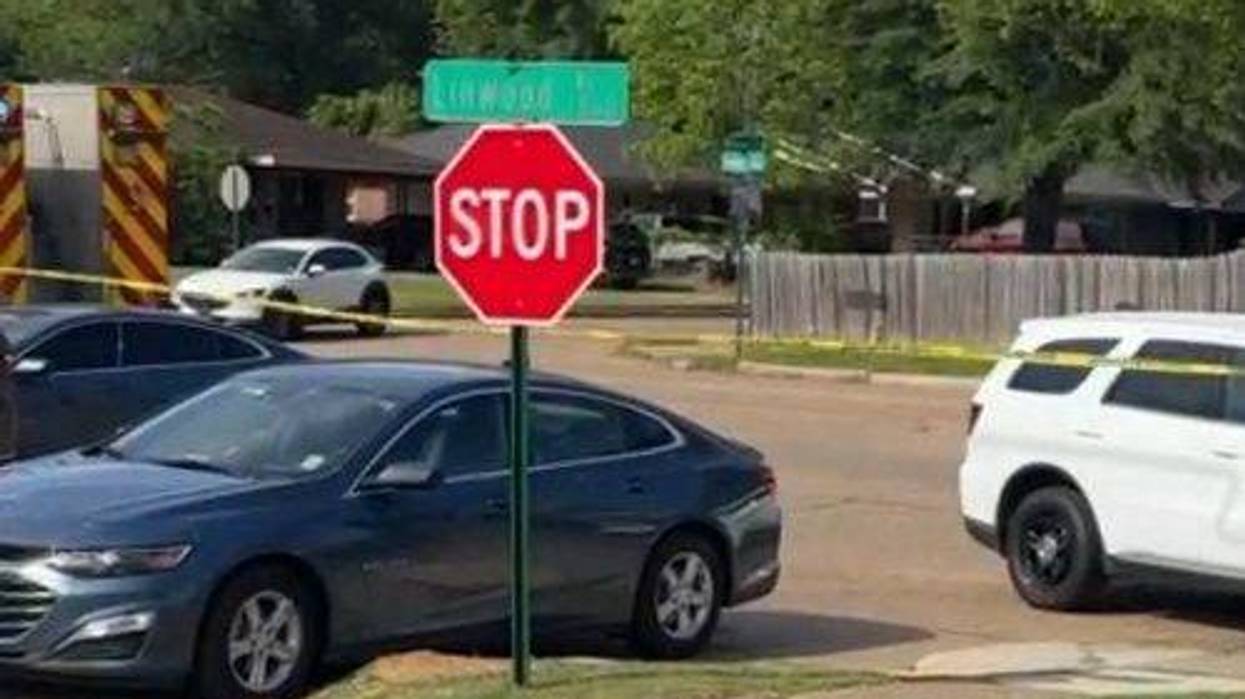
Eight children were killed on Sunday morning in Shreveport, Louisiana, in what authorities described as a domestic disturbance.
Police Chief Wayne Smith reported that the victims were between the ages of 1 and 14 years old. Officials are still gathering information about the spree killing, which they say took place across three different locations. A total of ten people were shot.
"This is an extensive scene, unlike anything most of us have ever seen," Smith said.
Gunshot victims were found at two homes and at the scene of a carjacking. The suspected gunman was shot dead in nearby Bossier City by police during a car chase.
Two adult women were also reportedly shot. One of them has life-threatening injuries after being shot in the head. One of the women is believed to have had a relationship with the suspect, whose name has not yet been released.
Police said some of the children who were killed were also "descendants" of the alleged shooter.
There have been at least 114 mass shootings in the United States in 2026, according to the Gun Violence Archive, a decline from previous years. At least 65 children between ages 0-11 have been killed and 124 injured in gun violence incidents this year.
"This is a tragic situation, maybe the worst tragic situation we’ve ever had in Shreveport," said Mayor Tom Arceneaux. "So, right now we’re going to process the information, and it's in very good hands."

"Whether he means it or not, his saying it is an indelible moral stain on our country," said one law professor.
President Donald Trump on Sunday renewed his threat to carry out a genocidal attack on Iran, pledging to "blow up" the "whole country" of over 90 million people and to demolish critical civilian infrastructure if it does not sign a peace deal by Wednesday.
"If they don't sign the deal, then the whole country is going to get blown up," Trump said, according to Fox News correspondent Trey Yingst, who relayed the comments on air Sunday morning.
Trump also reportedly said that the US was "preparing to hit [Iran] harder than any country has ever been hit before because you cannot let them have a nuclear weapon."
The comments came after Iran once again closed the Strait of Hormuz on Saturday in response to the continued US blockade of Iranian ports, which Iranian officials said violated the terms of the agreement reached between the two countries.
After renewing the blockade, Iranian gunboats fired upon a pair of Indian-flagged ships attempting to travel through the strait Saturday.
In response, Trump issued a furious post on Truth Social Sunday morning, saying that he would send a team of negotiators—Vice President JD Vance, his son-in-law Jared Kushner, and special envoy to the Middle East Steve Witkoff—to Islamabad on Monday for another round of negotiations.
"We’re offering a very fair and reasonable DEAL, and I hope they take it because, if they don’t, the United States is going to knock out every single Power Plant, and every single Bridge, in Iran," Trump wrote. "NO MORE MR. NICE GUY!"
"They’ll come down fast, they’ll come down easy and, if they don’t take the DEAL, it will be my Honor to do what has to be done, which should have been done to Iran, by other Presidents, for the last 47 years," he continued.
It echoed the similarly genocidal threat made by Trump earlier in April that "a whole civilization will die... never to be brought back again,” if Iran did not agree to a deal, which drew worldwide condemnation and sparked efforts by some members of Congress to pursue impeachment or push for Trump's cabinet to remove him via the 25th Amendment.
Trump has appeared eager to end the war with Iran after it caused economic upheaval and pushed his already dire approval rating even lower. But he has also backed Israel when it sought to undermine key points of the agreement, prompting retaliation from Iran.
The ceasefire announced earlier this month between the US and Iran initially included a halt to the hostilities between Israel and Lebanon. But within hours, Israel unleashed its most punishing set of attacks against Lebanon since the war began in March. Trump then backed Israeli Prime Minister Benjamin Netanyahu when he claimed that Lebanon was never part of the deal.
Iran only agreed to open the Strait of Hormuz on Friday after Israel and Lebanon appeared to agree to a 10-day ceasefire. But Israel has already violated that agreement several times, continuing to raze Lebanese villages and fire upon people approaching its newly imposed "yellow line."
In addition to calling for the reopening of the Strait of Hormuz, which was open before he launched the war in late February, Trump has demanded that Iran make a deal to hand over all of its enriched uranium, which he refers to as "nuclear dust."
A spokesperson for Iran's Islamic Revolutionary Guard Corps (IRGC) has said such a proposal would violate Iran's sovereignty: "Iran's uranium is Iran's asset. It is our responsibility, our energy, our sovereign right."
An end to the attacks against Lebanon has been described as another central demand from Iran, although officials said the decision to close the strait again on Saturday was in response to Trump's continued blockade of Iranian ports.
International law strictly prohibits indiscriminate attacks on civilian infrastructure with no military objective, including bridges and power plants that are critical to human life.
Trump’s previous threats to bomb Iran "back to the Stone Ages" suggest that the latest threats are less about accomplishing a specific military objective than about inflicting suffering on Iranian society as leverage.
Last time Trump made such a threat, a coalition of more than 200 groups, including Amnesty International, Human Rights Watch, Refugees International, and Oxfam America, wrote in an urgent letter stating that if carried out, such attacks would constitute "a grave atrocity" and that "a threat to wipe out ‘a whole civilization’ may amount to a threat of genocide."
Human Rights Watch said that, if acted upon, "the statement could be indicative of criminal intent if Trump were ever prosecuted by the International Criminal Court.
The last time Trump threatened to unleash an apocalyptic attack on Iran, the threat preceded a deal that, at least in principle, involved the US agreeing to negotiate based on a set of terms laid out by the Iranians. This led many observers to characterize the threats as bluster meant to save face before capitulation rather than a sincere pledge to annihilate Iran.
However, Adil Haque, a law professor at Rutgers and the executive editor at Just Security, said that, "Whether he means it or not, his saying it is an indelible moral stain on our country."