

SUBSCRIBE TO OUR FREE NEWSLETTER
Daily news & progressive opinion—funded by the people, not the corporations—delivered straight to your inbox.
5
#000000
#FFFFFF
To donate by check, phone, or other method, see our More Ways to Give page.
Daily news & progressive opinion—funded by the people, not the corporations—delivered straight to your inbox.

Jubilee USA is running radio spots focused on Puerto Rico's debt crisis in Florida ahead of the state's March 15th presidential primary. The ads first ran in Texas ahead of the state's "Super Tuesday" primary. The radio placement urges presidential candidates to address the crisis. Florida's primary may play an important role in the US presidential election and is home to more than 1 million Puerto Ricans.
"Puerto Rico's debt crisis is a critical campaign issue," stated Eric LeCompte, executive director of Jubilee USA, a religious development coalition. "The American citizens on the island are being treated like second class citizens and the Puerto Ricans in Florida are voting with the crisis on their minds."
Jubilee USA's radio placements emphasize the humanitarian crisis facing the US territory. Puerto Rico cut health funding by $42 million last year and is now battling the Zika virus spreading on the island. Nearly half the population lives in poverty and the government is cutting social services. Puerto Rico's government has said it cannot make its next debt payment in full.
At a recent Republican debate, Florida Senator Marco Rubio repeated his opposition to granting Puerto Rico access to Chapter 9 bankruptcy protection. While former candidate Jeb Bush supported bankruptcy protection, the other remaining Republican candidates have not spoken in detail about the Puerto Rico crisis. The remaining Democratic candidates support bankruptcy protection. Congress is actively considering bankruptcy tools for Puerto Rico to restructure the $72 billion debt.
"Congress needs to provide Puerto Rico with comprehensive tools to resolve the crisis in a timely way," noted LeCompte. "If Congressional action is not comprehensive, Puerto Rico will still be knocking on the doors of Capitol Hill."
Listen to Jubilee USA's Puerto Rico radio spot
Read a timeline of Puerto Rico's debt crisis
Jubilee USA Network is an interfaith, non-profit alliance of religious, development and advocacy organizations. We are 75 U.S. institutions and more than 750 faith groups working across the United States and around the globe. We address the structural causes of poverty and inequality in our communities and countries around the world.
(202) 783-3566
One human rights expert noted that the president's complaint about the drawn-out talks came "even though he is the one who ripped up an entirely effective deal... and in February ended negotiations to start bombing."
US President Donald Trump bombed Iran for the second consecutive night on Wednesday after complaining on social media that Tehran has taken too long on peace negotiations and vowing to respond to the downing of an American military helicopter.
US Central Command said Tuesday that CENTCOM "forces began launching self-defense strikes against Iran at 5:00 pm ET today at the commander in chief's direction, in response to yesterday's downing of a US Army Apache helicopter. The mission is a proportional response to unjustified Iranian aggression."
Trump took to his Truth Social platform just after 7:00 am ET Wednesday, writing that "Iran's Military is a complete and total mess. Much of it, like their Navy and Air Force, doesn't even exist anymore—They have been completely defeated. Iran is all talk and no action. The Bully of the Middle East is DEAD!!! They've taken too long to negotiate a deal that would have been great for them, now they will have to pay the price!!!"
Ken Roth, a visiting professor at Princeton University and the former longtime executive director of Human Rights Watch, noted that Trump's complaint about the drawn-out talks with Iran came "even though he is the one who ripped up an entirely effective deal... and in February ended negotiations to start bombing."
Trump unilaterally ended the Iran nuclear deal negotiated by the Obama administration, formally called the Joint Comprehensive Plan of Action, during his first term. There has been no agreement in place since.
After Trump's strikes on Tuesday night, Iran fired at Bahrain, Kuwait, and Jordan, which all host US troops. The recent exchanges cast further doubt on the ceasefire deal negotiated in April, after the American president's genocidal threat against Iran.
Later Wednesday, CENTCOM announced that US "forces began launching additional self-defense strikes today at 5:15 pm ET against multiple targets in Iran at the commander in chief's direction. The strikes are in response to Iran’s unwarranted and continued aggression."
Drop Site News reported that "as the strikes were announced, Iranian media reported a series of explosions across Hormozgan province, the southern Iranian province that borders the Strait of Hormuz," a key trade route through which Iran has largely restricted ship traffic since Iran and Israel began bombing the country in late February.
As Drop Site detailed:
Trita Parsi, co-founder and executive vice president of the Quincy Institute for Responsible Statecraft and an expert on US-Iranian relations, said, "It appears the US/Israel-Iran war has started again... or perhaps more accurately, it never really ended."
Fox News' Trey Yingst reported on air late Wednesday that "President Trump told me that Iran called him tonight. Top Iranian officials and President Trump spoke directly, according to the commander in chief tonight, as the president was sitting in the Situation Room, and he told me that the Iranians asked them to stop bombing, and the president said to me, 'The bombing will stop shortly.'"
According to Reuters, Iran's media contradicted that reporting, with an unnamed senior Iranian official saying, "Trump's false claim that Iranian officials contacted him is a cover to evade war with Iran."
Asked by Yingst what will happen if the Iranians don't sign a new deal soon, Trump reportedly responded, "We'll bomb the shit out of them tomorrow night."

"Italy is indebted to Cuba," the letter states. "Every day of silence has a cost in human lives."
As of Wednesday, more than 8,000 Italian medical and scientific professionals have signed an open letter acknowledging their indebtedness to Cuban doctors and condemning the tightening of the 65-year US embargo on Cuba by President Donald Trump as he threatens "take" the island.
"Over the decades, Cuba has built a health system that was considered an international model, capable of guaranteeing universal access to care even in limited resource conditions. Since 1963, more than 600,000 Cuban health workers have served in more than 160 countries, including Italy," states the letter addressed to Italian Prime Minister Giorgia Meloni and Health Minister Orazio Schillaci.
"That system is currently in a state of collapse," the letter continues. "Survival in childhood cancers has fallen from 80% to 65% due to the lack of first-line drugs."
The publication notes that "96,000 people—almost 1% of the population—including 11,000 children are on the waiting list for surgery. If the situation does not change, the list could affect 160,000 patients by the end of 2026. Over 300 pediatric surgeries per week are compromised by shortages of drugs, oxygen, anesthetics, and consumables."
"The crisis has its roots in a combination of factors that have progressively worsened," the letter continues. "The tightening of the economic embargo during the first Trump administration, Covid-19, and, since January 2026, the near-total blockade of energy supplies following the Venezuelan crisis have deprived the island of fuel, electricity, and access to international drug and medical device markets."
A report published in April by researchers at the Center for Economic Policy and Research confirmed an “unprecedented increase” in Cuba’s infant mortality rate, which soared 148% between 2018 and 2025.
Report co-author Joe Sammut said that “the blockade has had a particularly dire effect on Cuba’s healthcare infrastructure, with frequent power outages" exacerbated by the US oil blockade "interrupting the use of critical equipment for the treatment of patients, including incubators for premature babies, and ventilators to help sick newborns breathe."
The United Nations General Assembly has overwhelmingly condemned the broader US embargo—which Cuba’s government says has cost the island's economy more than $1 trillion over seven decades—33 times.
"The collapse of a health system is not just a local tragedy: It is a violation of fundamental human rights that requires a response from the global community, beyond any political assessment of the Cuban regime," the Italian letter argues.
"Italy cannot remain indifferent or silent, also because it is indebted to Cuba for the help received during the Covid-19 pandemic and for the current work of Cuban doctors in the Calabria Region to guarantee the functioning of the local health service," the publication adds.
The Trump administration has been pressuring Italy to curb its use of Cuban doctors, who are essential to Calabria's healthcare system.
"It is the duty of the global health community—doctors, researchers, institutions, scientific journals—but also of the civil community to act without ambiguity, in compliance with the fundamental principles of humanitarian law," the letter concludes. "Every day of silence has a cost in human lives."
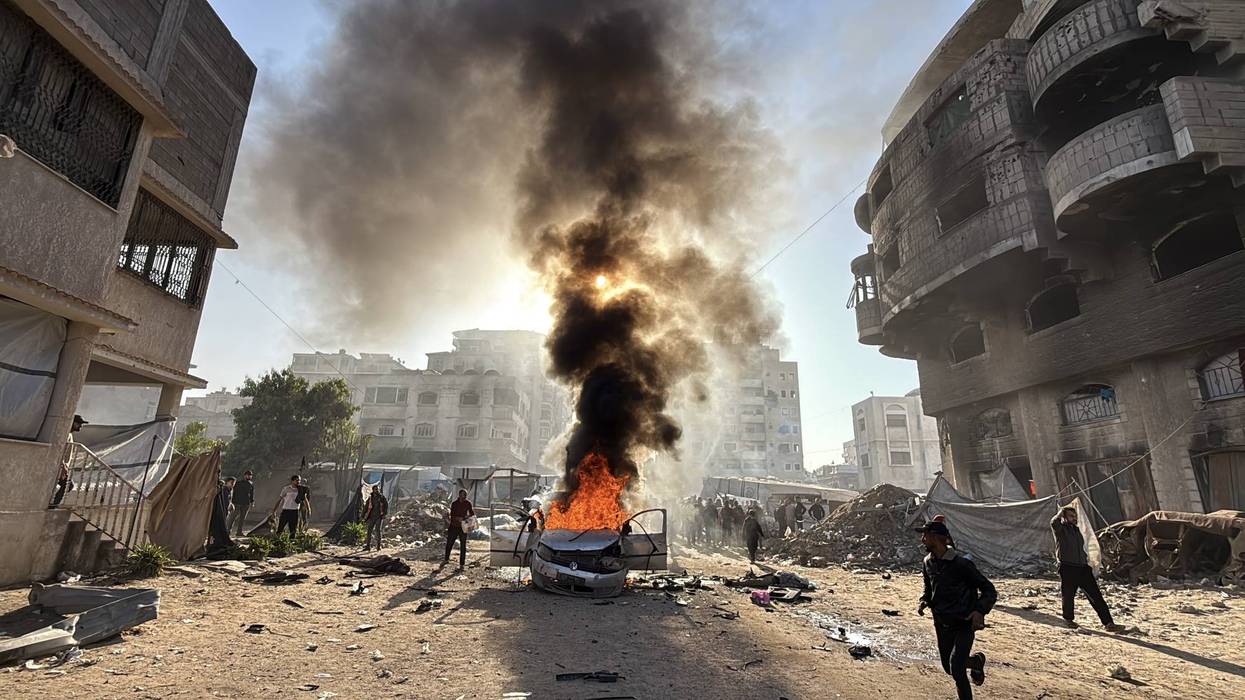
"What is particularly alarming is that this harm has become persistent across conflicts worldwide, risking the normalization of civilian suffering on a massive scale," said the report's lead author.
While the overall number of civilians killed by explosive weapons decreased by 21% last year, largely due to Israel scaling back attacks on the Gaza Strip and Lebanon in response to ceasefire deals, "the majority—56%—of all global civilian fatalities in 2025 could be attributed to Israeli armed forces, most of which occurred in Palestine," according to an annual report released Wednesday.
The report is the latest publication from the Explosive Weapons Monitor, a research initiative of the International Network of Explosive Weapons, whose members include nongovernmental organizations around the world such as Action on Armed Violence, Center for Civilians in Conflict, Human Rights Watch, Humanity & Inclusion (HI), PAX, and Save the Children.
Based on data from Armed Conflict Location & Event Data as well as Insecurity Insight, the monitor found that there were at least 22,616 civilian fatalities from explosive weapons across 65 countries and territories last year.
In addition to Lebanon and Palestine, the Democratic Republic of Congo, Ethiopia, Iran, Iraq, Myanmar, Somalia, South Sudan, Sudan, Syria, Ukraine, and Yemen were "heavily impacted," the publication says. Countries' armed forces were responsible for the vast majority—85%—of all incidents that reportedly affected civilians or civilian infrastructure last year.
"The number of attacks in which explosive weapons affected humanitarian aid operations, aid workers, and camps increased by 52%," to 2,541, last year—and while they were documented in 17 countries and territories, "about 90% of all incidents were recorded in Palestine," the report notes.
Attacks on education increased by 64%, to 1,416; they occurred in 27 places, but were most common in Myanmar, Palestine, and Ukraine. The report also highlights continued attacks on healthcare facilities and workers (1,272 incidents in 22 places), and on food and water systems (1,082 incidents in 15 places).
"Every destroyed school, hospital, market, water system, or humanitarian convoy represents far more than damaged infrastructure—it represents opportunities lost, futures disrupted, and communities pushed further from recovery," said Alma Taslidžan, HI's disarmament advocacy manager, in a statement.
"Long after the explosions end, civilians continue to live with the consequences of disrupted healthcare, interrupted education, damaged livelihoods, and the daily challenge of rebuilding their lives," Taslidžan emphasized. "For many, the consequences of explosive weapons become part of everyday life and suffering for years to come."
Explore the report's data and view country-specific analysis in a new interactive dashboard:➡️ explosiveweaponsmonitor.org/global-figur...
[image or embed]
— Explosive Weapons Monitor (@weaponsmonitor.bsky.social) June 10, 2026 at 8:29 AM
The report argues that "it remains a critical humanitarian priority" to bring the 2022 Political Declaration on Strengthening the Protection of Civilians from the Humanitarian Consequences Arising From the Use of Explosive Weapons in Populated Areas into greater effect.
The publication also calls out eight countries—Cambodia, Kenya, Morocco, Nigeria, Somalia, South Korea, Turkey, and the United States—that endorsed the declaration but whose armed forces reportedly used explosive weapons that caused civilian harm in 2025.
"The devastating impact of explosive weapons on civilians is both foreseeable and preventable. Yet across numerous conflicts, their continued use has entrenched a pattern of civilian harm that is increasingly treated as routine rather than exceptional," said Katherine Young, the report's lead author and the monitor's research and monitoring manager, in a statement.
"When explosive weapons are used in populated areas, civilians suffer," Young stressed. "What is particularly alarming is that this harm has become persistent across conflicts worldwide, risking the normalization of civilian suffering on a massive scale."
The release of the report comes amid renewed Israeli attacks on Lebanon—which intensified after the United States and Israel launched an illegal war on Iran in February, and have continued despite a new ceasefire agreed to in April—as well as on Palestinians in Gaza and the occupied West Bank.
"This weekend, eight children were reported killed and a further 17 injured in five different locations in the Gaza Strip, while in the West Bank, a 7-month-old boy died after being shot by Israeli forces in the Tel Rumeida area of Hebron," said Edouard Beigbeder, the United Nations Children's Fund (UNICEF) regional director for the Middle East and North Africa, on Wednesday.
"We cannot let this become the new normal—children losing their lives to violence should cause global outrage and must be condemned at every level," he continued. "UNICEF calls on the Israeli authorities to take decisive action to protect all Palestinian children. Authorities must ensure transparent, credible, and robust investigations, as well as accountability whenever children are killed or maimed."
Since the Hamas-led October 7, 2023 attack on Israel, Israeli forces have slaughtered at least 72,991 Palestinians in Gaza—an assault widely condemned as genocide. That includes 981 people killed since the ceasefire reached last October, according to local health officials. Israeli attacks on Lebanon have left thousands more dead, including at least 3,666 since early March, per the Lebanese Ministry of Public Health.