

SUBSCRIBE TO OUR FREE NEWSLETTER
Daily news & progressive opinion—funded by the people, not the corporations—delivered straight to your inbox.
5
#000000
#FFFFFF
To donate by check, phone, or other method, see our More Ways to Give page.
Daily news & progressive opinion—funded by the people, not the corporations—delivered straight to your inbox.
This week marks 10 years since Congress passed the "Authorization for Use of Military Force Against Iraq." Among those who voted for it were Rep. Paul Ryan and then-head of the Senate Foreign Relations Committee Joe Biden; see statements below. The two will meet at a Presidential Debate Commission debate this Thursday, Oct. 11 -- exactly 10 years after the Senate voted for war.
The following are available for a limited number of interviews:
This week marks 10 years since Congress passed the "Authorization for Use of Military Force Against Iraq." Among those who voted for it were Rep. Paul Ryan and then-head of the Senate Foreign Relations Committee Joe Biden; see statements below. The two will meet at a Presidential Debate Commission debate this Thursday, Oct. 11 -- exactly 10 years after the Senate voted for war.
The following are available for a limited number of interviews:
PHIL DONAHUE [email]
Among Donahue's many media credits is executive producer for the 2007 feature documentary film, "Body of War." He said today: "Over 4,000 Americans died in Iraq and over 2,000 Americans have already died in Afghanistan. Both vice presidential candidates voted for the Iraq invasion -- neither they nor the men at the top of their respective tickets will even raise the issue of this massive American blunder. The silence continues as American/NATO military trainers are murdered by their own Afghan trainees. Watch your back, Soldier! The other guy in the fox hole may shoot you in the head. And here at home our pundits are debating the fate of Big Bird." See trailer for "Body of War."
Rep. DENNIS KUCINICH, via Nathan White [email]
Congressman Kucinich recently wrote the piece "Iraq: Ten Years, a Million Lives and Trillions of Dollars Later," which states: "It was clear from information publicly available at the time that Iraq did not have Weapons of Mass Destruction, that Iraq had no connection to 9/11, and that Iraq was not a threat to the United States. Anyone who wanted to look could have seen the same information that I did. Yet some of America's top political leaders bought into the Bush-Cheney-Rumsfeld drumbeat of war. Two leading Democrats were among those taken in by the White House hype and the WMD argument:
"'I believe the facts that have brought us to this fateful vote are not in doubt. Saddam Hussein is a tyrant who has tortured and killed his own people ... [I]ntelligence reports show that Saddam Hussein has worked to rebuild his chemical and biological weapons stock, his missile delivery capability and his nuclear program. He has also given aid, comfort and sanctuary to terrorists including Al Qaeda members.' Senator Hillary Clinton (D-NY), October 10, 2002. [video]
"'September 11 was the ultimate wake-up call. We must now do everything in our power to prevent further terrorist attacks and ensure that an attack with a weapon of mass destruction cannot happen. ... the first candidate we must worry about is Iraq... [Saddam Hussein] continues to develop weapons of mass destruction, including nuclear devices.' Leader of the Democratic Caucus in the House, Richard Gephardt (D-MO), October 10, 2002."
Kucinich also recently wrote the piece "Imagine: America Trillions Richer, Our Sons and Daughters Returned to Us, America at Peace in the Middle East with Moral Standing to Lead the World."
MIKE ZMOLEK [email]
In 2002, Zmolek was the outreach coordinator for the National Network to End the War Against Iraq and wrote the piece "Ignore the Distractions: Bush Means War."
Background:
Rep. Paul Ryan (Oct 8, 2002): "This tyrant [Saddam Hussein] has amassed a large cache of chemical and biological weapons of mass destruction and is aggressively seeking nuclear weapons."
Transcript
Video [at 15:05:00]
Ryan recently touted his Iraq war vote, stating that his foreign relations credentials were enhanced because "I voted to send people to war."
Sen. Biden in his remarks rebuffed Sen. Byrd -- who is featured in Donahue's "Body of War" -- and stated: (Oct 10, 2002): "What we have here, I argue, as the rationale for going after Saddam, is that he signed a cease-fire agreement. The condition for his continuing in power was the elimination of his weapons of mass destruction, and the permission to have inspectors in to make sure he had eliminated them. He expelled those inspectors." [Video at 3:30:30]
In fact, the inspectors were withdrawn by UNSCOM head Richard Butler (and were allowed by Iraq to return) -- see FAIR on the myth of the "expelled inspectors."
At the time, former weapons inspector Scott Ritter said: "Sen. Joe Biden is running a sham hearing. It is clear that Biden and most of the Congressional leadership have pre-ordained a conclusion that seeks to remove Saddam Hussein from power regardless of the facts, and are using these hearings to provide political cover for a massive military attack on Iraq."
A nationwide consortium, the Institute for Public Accuracy (IPA) represents an unprecedented effort to bring other voices to the mass-media table often dominated by a few major think tanks. IPA works to broaden public discourse in mainstream media, while building communication with alternative media outlets and grassroots activists.
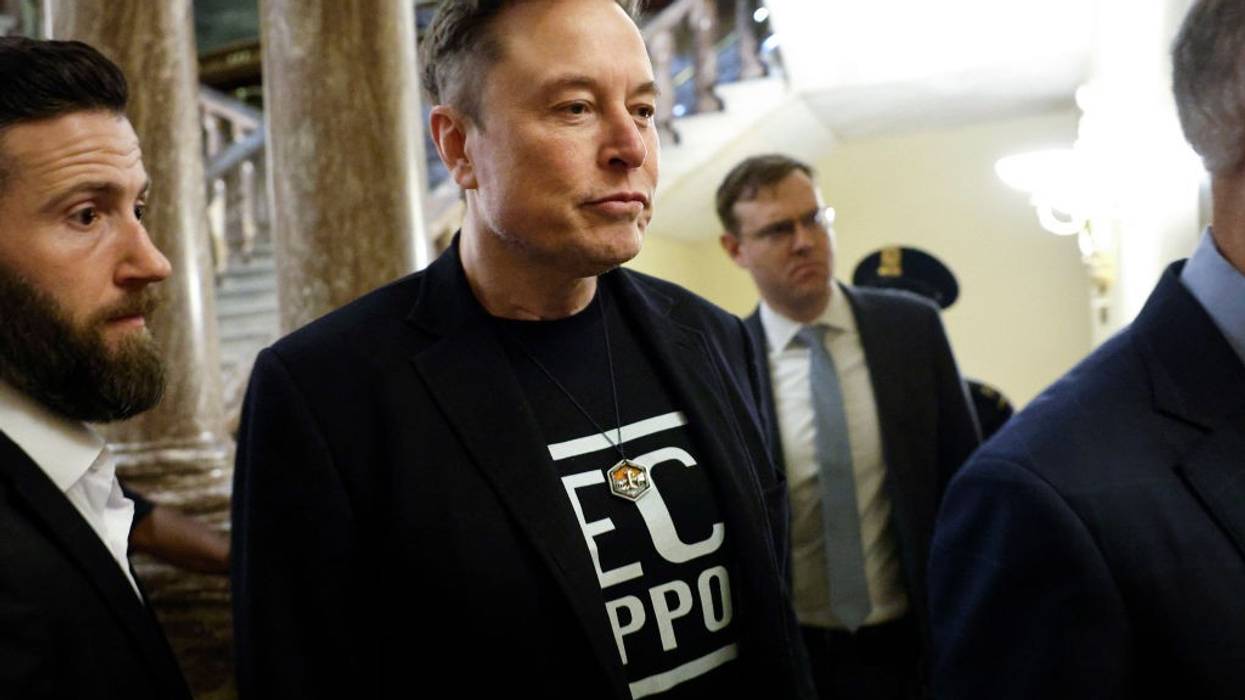
As the Trump-backed oligarch tries to grow even more wealthy and with longstanding rules changed to his benefit ahead of the SpaceX public offering, "retirees could take huge losses, while insiders cash out."
Billionaire Elon Musk has ambitions to become the world's first trillionaire when his company SpaceX makes what is expected to be the biggest initial public offering in history—and money unwittingly invested by ordinary Americans may help him get there.
Progressive media outlet More Perfect Union on Wednesday published a video detailing how the Nasdaq stock market exchange changed its own rules so that SpaceX can be immediately included in index funds without having to wait through the one-year "seasoning" period that used to be required for newly public companies.
The reason companies in the past had to wait a year to be included in index funds is that such funds contain a large chunk of Americans' retirement savings, and are thus supposed to be more averse to risk.
Watch the 12-minute video:
NEW: Elon Musk wants a SpaceX IPO valuing the company at upwards of $1.75 trillion.
To get there he got the rules changed so that index funds, with millions of Americans' retirement savings, are forced to buy in.
Retirees could take huge losses, while insiders cash out. pic.twitter.com/DviJEt0XAu
— More Perfect Union (@MorePerfectUS) May 27, 2026
This means that ordinary investors could see their money plunged into an unproven company while investors who have bankrolled Musk's previous ventures now rolled into SpaceX could cash out at inflated prices.
"Every piece of evidence we have is that the IPO is being engineered to rise very rapidly after it prices, and then fall very dramatically after that," George Pearkes, global macro strategist for Bespoke Investment Group, told More Perfect Union. "That is a recipe for retail investors, especially, to take large losses."
SpaceX is a particularly risky bet, Preakes added, given that it is seeking a $1.75 trillion valuation with its IPO. For a company that made only $19 billion in profits last fiscal year, critics say a valuation 54 times larger than its projected revenue multiple, a measure of its value based on expected future earnings, is a huge red flag.
"This combination of extreme size and this extreme multiple," Peakes said, "is completely unprecedented."
Pearkes isn't in the only expert concerned about the structure of the SpaceX IPO.
Writing at Seeking Alpha, independent equity researcher Julia Ostian similarly argued that the SpaceX IPO is structured using a "calculated mechanism that will feed the artificial demand generated by the forced index fund buyers," and thus at least initially send share values soaring beyond what the company's fundamentals would suggest, and giving insiders an opportunity to quickly cash out.
Ostian added that "it is clear who is the beneficiary here and who pays the price for this engineered system," and said that "the rich are getting richer openly, without hiding it or even without trying to pretend it’s something else."
As More Perfect Union emphasized, the entire IPO was orchestrated by Musk for maximum advantage to himself and his closest allies, but he needed regular Americans to put up the money for the scheme to work.
"He got the rules changed so that index funds, with millions of Americans' retirement savings, are forced to buy in," the outlet noted. "Retirees could take huge losses, while insiders cash out."
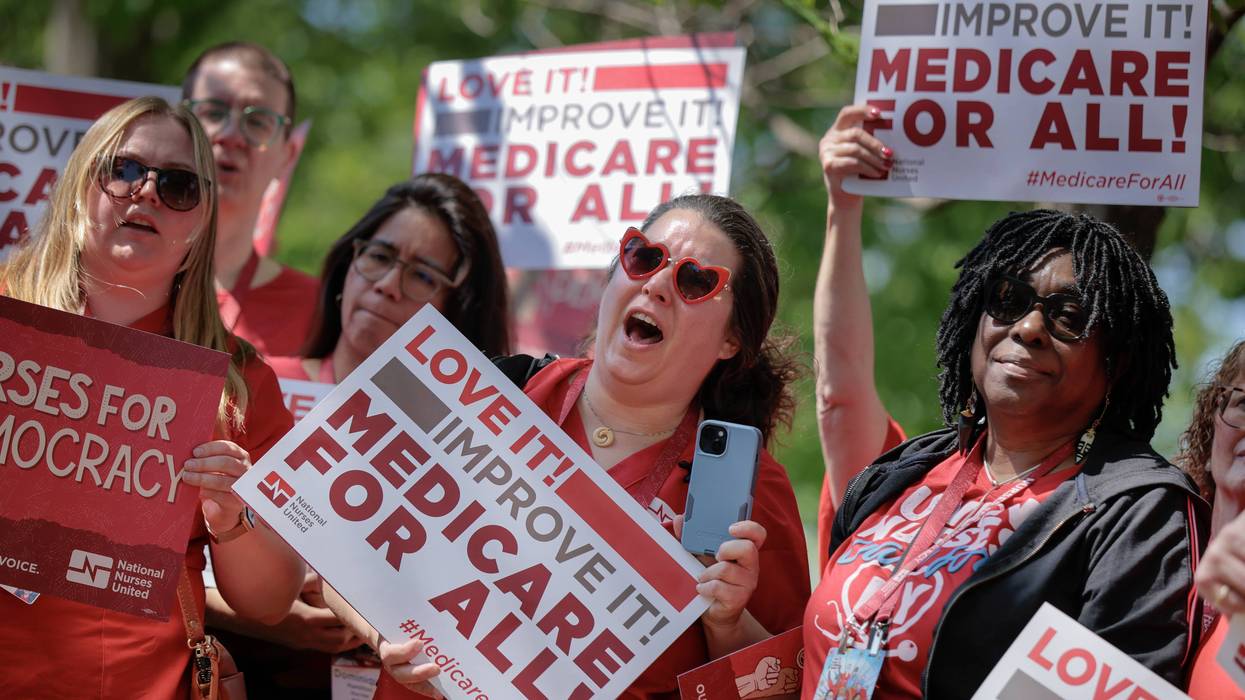
"We know what high-performing health systems look like—other countries have them and are building them. It’s high time the US did better.”
An annual analysis that examines healthcare systems across nearly two dozen wealthy countries around the world once again highlighted the United States' "uniquely poor performance relative to its peers," with this year's US Health Care from a Global Perspective report focusing on "insurance coverage and access to care, affordability of care, delivery of care, and equity of health outcomes."
As advocates for expanding the US Medicare system to the entire population have long warned, the country's for-profit healthcare system—which ties the ability to get care to one's employment and allows insurance companies to boost profits by denying care to patients—"The US, on average, has the poorest health outcomes of any high-income country," the Commonwealth Fund's report reads.
The report examines the US system compared with other countries in the Organization for Economic Cooperation and Development (OECD), including the United Kingdom, France, New Zealand, Japan, and Mexico.
It finds that the US spent 18% of its gross domestic product on healthcare in 2024—nearly twice the OECD average.
Life expectancy in the US reached an all-time high in 2024, but was still among the shortest when compared to the 19 other countries, nearly five years shorter than Japan, Spain, and Switzerland, and longer than the average lifespan in Turkey and Mexico.
While the US and Mexico also both rank high on the list in terms of preventable deaths, the latter nation announced last month that it would soon be joining every other country included in the analysis by shifting to a universal, government-run healthcare system.
In the United States, the for-profit health sector—which spent a record $877.69 million on lobbying last year—contributes to the high number of avoidable deaths, which stands at 312 per 100,000 people. About 27 million Americans are still uninsured, more than 16 years after the passage of the Affordable Care Act, and the Republican Party's refusal to continue ACA subsidies last year as well as its $1 trillion in Medicaid cuts over the next decade, according to Thursday's report, are "projected to increase the number of uninsured Americans by an additional 17 million by 2034, potentially leading to more than 50,000 additional preventable deaths annually."
"By contrast, Mexico’s recently established Universal Health Service will provide all residents with access to free care at any public health institute, starting in 2027," the report states. "The US is one of the only countries to have enacted policies that reduce coverage."
High out-of-pocket costs may also contribute to poor outcomes and the high number of preventable deaths in the US, the Commonwealth Fund suggests. Americans spend $400 per person, per year, on out-of-pocket costs for prescription drugs, while people in France spend $100.
"The US is one of the only countries to have enacted policies that reduce coverage."
"In the US, where approximately 8% of the population is uninsured and one-quarter has coverage that comes with high out-of-pocket costs or deductibles, people are far more likely to forgo needed care because of costs than people in peer countries," reads the report. "This can mean not filling prescriptions, not obtaining diagnostic tests, treatment, or follow-up care, or being unable to adhere to clinician-recommended care plans."
The report also identifies the US as a country that lags behind its peers in producing new doctors, contributing to a crisis in primary care, with the US having the fewest number of primary care providers per 1,000 people. The country also has the "highest medical tuition fees of any country in our analysis," said the Commonwealth Fund.
The organization also found that in 2023, the US had nearly 19 maternal deaths for every 100,000 live births, representing a decline for the country that has long had "among the highest rates of maternal deaths related to complications of pregnancy and childbirth."
"By contrast, in 11 of the 18 countries we studied there were less than five maternal deaths per 100,000 live births," reads the report, which also notes that in the US, maternal mortality is "exceptionally high" among Black women, at 50 deaths per 100,000 live births.
"This far exceeds national maternal mortality in any of the other countries," the report states. "Inequities in access to care and patients’ care experiences—often rooted in discrimination and clinician bias—may be prime contributing factors."
Dr. Joseph Betancourt, president of the Commonwealth Fund, noted that "the US has long prided itself on having the best healthcare in the world, but the population benefits from this excellence unevenly, and it remains largely out of reach for many Americans."
"We spend more than any other nation on healthcare, so our poorer health outcomes aren’t due to a lack of resources—it is about how we choose to use them," said Betancourt. "We know what high-performing health systems look like—other countries have them and are building them. It’s high time the US did better."
"Other countries have shown that alternatives work. What’s striking isn’t the absence of solutions; it’s our reluctance to implement them."
The report does not explicitly call on the US to shift to a universal, government-funded healthcare system, but studies have shown that expanding Medicare to the entire US population, as lawmakers including Sen. Bernie Sanders (I-Vt.) and Reps. Pramila Jayapal (D-Wash.) and Alexandria Ocasio-Cortez (D-NY) have consistently demanded, would address many of the problems listed in the report.
Studies by the Congressional Budget Office and Yale University have shown that Medicare for All would save an estimated $650 billion and prevent 68,000 avoidable deaths each year.
The policy, which has been proposed in Congress numerous times, is also broadly popular; 65% of US voters—including 78% of Democrats, 71% of Independents, and 49% of Republicans—support creating a national, government-run healthcare program, according to a Data for Progress poll last year.
Despite this, both Republican and Democratic lawmakers continue to insist the proposal is unpopular and too expensive, with Michigan state Sen. Mallory McMorrow (D-8), who is running against vehement Medicare for All advocate Abdul El-Sayed in the Democratic US Senate primary, insisting recently that "the support for a true single-payer system isn't there yet."
Reginald Williams II, senior vice president at Commonwealth Fund, emphasized that it is "not inevitable" that "Americans pay more for healthcare and get less in return."
"It’s the result of different choices," he said. "Other countries have shown that alternatives work. What’s striking isn’t the absence of solutions; it’s our reluctance to implement them. The failure of the US health system is not a failure of ideas. It’s a failure of will to act on them.”

The head of a pro-Israel lobbying group called it "a blatant violation of the ceasefire and clear undermining of any plan for post-conflict Gaza."
As Israel expands its control over the Gaza Strip in violation of last year's ceasefire agreement, Prime Minister Benjamin Netanyahu said on Thursday that he had ordered the military to take over even more territory.
During a conference at the Ein Prat pre-military academy in an illegal Israeli settlement in the occupied West Bank, the prime minister acknowledged that Israel has gradually expanded its control over Gaza since the ceasefire agreement was implemented in October.
"We are now in 60% of the Gaza Strip, more or less. We were at 50%; now we’ve moved to 60%," he told the crowd.
"My directive," he continued, "is to move to—"
Members of the audience then interrupted with shouts of "100! 100!"
"Wait, let's go in order," Netanyahu responded. "First 70%. Let's start with that."
The Euro-Mediterranean Human Rights Monitor has said Israel's expansion of control in Gaza and construction of fortified military sites “directly contradicts the requirements of the second phase of the ceasefire agreement" and is creating conditions of "de facto annexation."
That agreement required Israeli forces to withdraw behind a so-called "yellow line" that left the military occupying about 53% of the country. Even that occupation was meant to be temporary, with later stages of the agreement involving a full pullout of Israeli troops as Hamas and other militant groups in the strip disarm.
But in recent months, the opposite has happened. The Israel Defense Forces have gradually pushed the yellow line deeper into Palestinian territory to the point where it encompasses more than 60% of the coastal strip, leaving Palestinians near the yellow line to wake up and learn they are in an "open-fire zone" where they can be shot on sight.
According to data from the United Nations Human Rights Office shared with Reuters on Wednesday, 152 Palestinians—comprising 102 men, 15 women, and 35 children—had been killed near the boundary during the ceasefire period up to February 5, which the office's head said raises "serious concerns that the Israeli army is shooting at and killing presumed civilians simply on the basis of their proximity to the so-called yellow line."
Netanyahu's remark follows Israel's orders on Wednesday for more than 200,000 residents of southern Lebanon to forcibly evacuate north of the Zahrani River despite an ongoing ceasefire that began last month.
Israel has systematically razed villages across southern Lebanon since the beginning of March, gradually pushing northward to the point where it now effectively controls about a fifth of the country's territory.
Those ordered to flee their homes on Wednesday joined more than 1 million Lebanese already forcibly displaced by Israel's forced expulsion orders and bombardments. More than 3,200 Lebanese have been killed, including hundreds of women and children.
Israel's far-right settler movement—represented in the Netanyahu government by figures like Security Minister Itamar Ben-Gvir and Finance Minister Bezalel Smotrich—speaks openly about ethnically cleansing Gaza and Lebanon of their residents to make way for permanent Israeli settlers, in a similar fashion to the intensifying annexation of the West Bank.
On Wednesday, Defense Minister Israel Katz said that Israel was pushing for the mass “voluntary migration” of Palestinians from Gaza and said the government would implement a plan for it “at the right time and in the right manner."
Human rights groups have said that the creation of unlivable conditions in Gaza to push its residents to leave would amount to the war crime of forced transfer.
Itay Epshtain, an Israeli expert in international law and the law of armed conflict, said Katz had "publicly committed himself to the mass deportation of Palestinians from Gaza" and that "members of Israel’s government openly endorsed conduct in gross and systemic breach of peremptory norms of international law."
Netanyahu, meanwhile, has previously expressed sympathy for the idea of "Greater Israel," which involves the expansion of the nation's borders to conquer all or part of current-day Lebanon, Jordan, Syria, Egypt, Iraq, and Saudi Arabia in accordance with Biblical descriptions.
The International Criminal Court has issued an arrest warrant for Netanyahu for war crimes and crimes against humanity during Israel's genocidal military campaign in Gaza, and is reportedly taking actions against Smotrich and Ben-Gvir as well.
Dylan Williams, the vice president for government affairs at the Center for International Policy, said that Netanyahu's pledge on Thursday to further expand Israel's territorial control in Gaza was "a war criminal admitting to his crimes."
Ilan Goldberg, the senior vice president of the pro-Israel lobbying group JStreet, said plans to expand were "a blatant violation of the ceasefire and clear undermining of any plan for post-conflict Gaza."
"Yes, Hamas needs to disarm," he said. "But Israel cannot be launching plans to retake all of Gaza."
Owen Jones, a British journalist, lamented the lack of coverage of the slow-motion ethnic cleansing in the Western press.
"Israel doesn't try to hide its crimes. It broadcasts them to the world, knowing it has impunity," he said on Thursday. "Netanyahu boasts of annexing Gaza. Yesterday, his defense minister said the plan was to remove Gaza's population. No front page headlines. No Western denunciations."