

SUBSCRIBE TO OUR FREE NEWSLETTER
Daily news & progressive opinion—funded by the people, not the corporations—delivered straight to your inbox.
5
#000000
#FFFFFF
To donate by check, phone, or other method, see our More Ways to Give page.
Daily news & progressive opinion—funded by the people, not the corporations—delivered straight to your inbox.
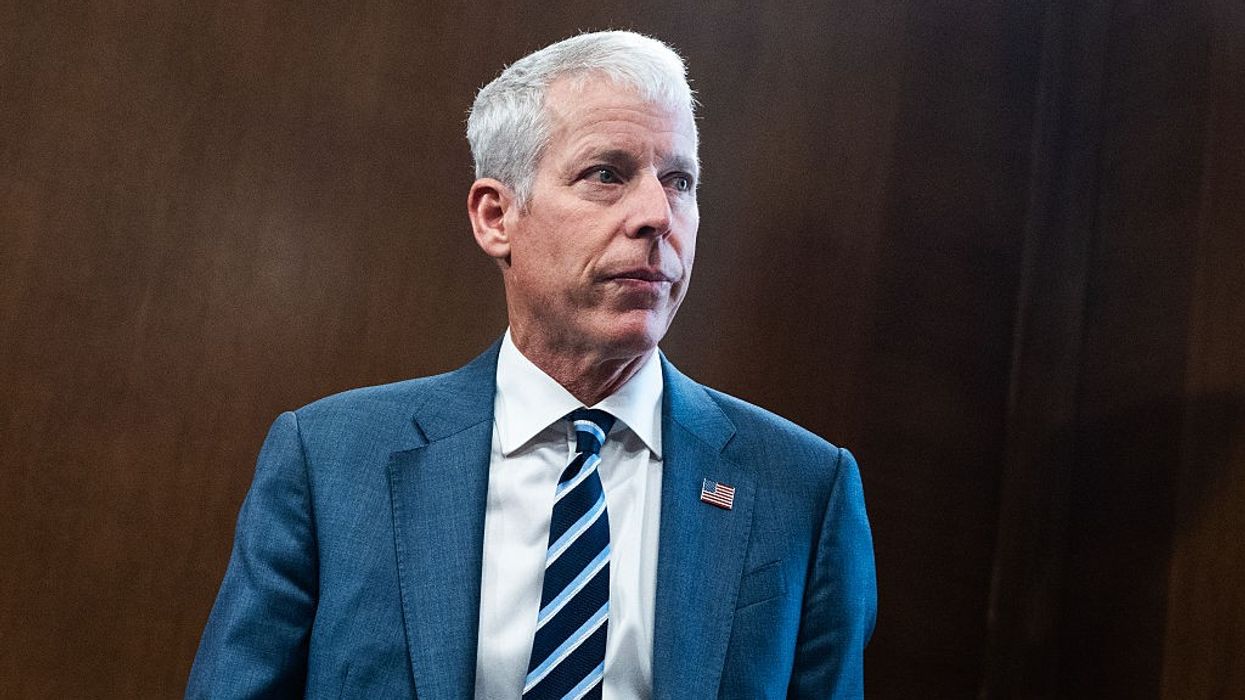
"We have a lot of leverage over Venezuela. We control the sale of oil outside of their country," said US Energy Secretary Chris Wright.
US Energy Secretary Chris Wright on Sunday denied that the Trump administration was stealing Venezuela's oil just one hour after boasting that the country is being "forced to work" with the United States.
During a Sunday morning interview on ABC News, Wright was asked why he trusted interim Venezuelan President Delcy Rodriguez, given that she was previously the vice president of Venezuelan President Nicolás Maduro, who was abducted by the American military earlier this year and brought to the US to face narco-terrorism, drug trafficking, and weapons charges.
"We have a lot of leverage over Venezuela," Wright explained. "We control the sale of oil outside of their country. So right now, they are forced to work in partnership with us, and they are working in partnership with us."
RADDATZ: You attacked the Maduro regime as a "socialist dictatorship." Delcy Rodriguez was the VP of that regime. Why do you trust her?
CHRIS WRIGHT: We have a lot of leverage over Venezuela. We control the sale of oil outside of their country. Right now they are forced to work… pic.twitter.com/FV5eUhsRed
— Aaron Rupar (@atrupar) September 6, 2026
Shortly after, during an interview on Fox News, Wright grew indignant at the suggestion that the US was forcing Venezuela to give up its oil through threats of military force and other coercive measures.
"This is a home run!" Wright said of the Trump administration's arrangements with the Venezuelan government. "These senators saying we're stealing their oil at gunpoint, nothing could be further from the truth. In fact, the more oil that's produced in Venezuela, including with the deal with the US government, the more royalties and tax revenues go to the Venezuelan government and the Venezuelan people."
Chris Wright on Venezuela: "These senators saying we're stealing their oil at gunpoint -- nothing could be further from the truth" pic.twitter.com/idsdl025q9
— Aaron Rupar (@atrupar) September 6, 2026
Venezuelan opposition leader María Corina Machado, who was supportive of the US abducting Maduro, last week criticized the Trump administration for cutting a deal with what she said was still a corrupt and oppressive government in Caracas.
"The wealth of our land does not belong to an illegitimate regime," Machado said in a video posted on social media, "it belongs to the Venezuelan people."
In an analysis published last week, economist Paul Krugman accused the Trump administration of concocting a "plot to steal Venezuela's oil," which he described as equal parts "vile and deeply stupid."
The deal is vile, Krugman said, because it validates " everything the Latin American left has ever said about US imperialism" in the region.
And it is simultaneously stupid, he argued, because the investments required to improve Venezuela's oil infrastructure will be so great that its benefits are unlikely to materialize in the near future, if at all.
"Venezuelan oil currently sells for around $70 a barrel on world markets," Krugman wrote. "But as I said, getting that oil out will require huge investments in infrastructure. Nor does Venezuela oil come gushing out when you drill a well: As one expert put it, 'it comes out of the ground with the consistency of cold peanut butter.'"
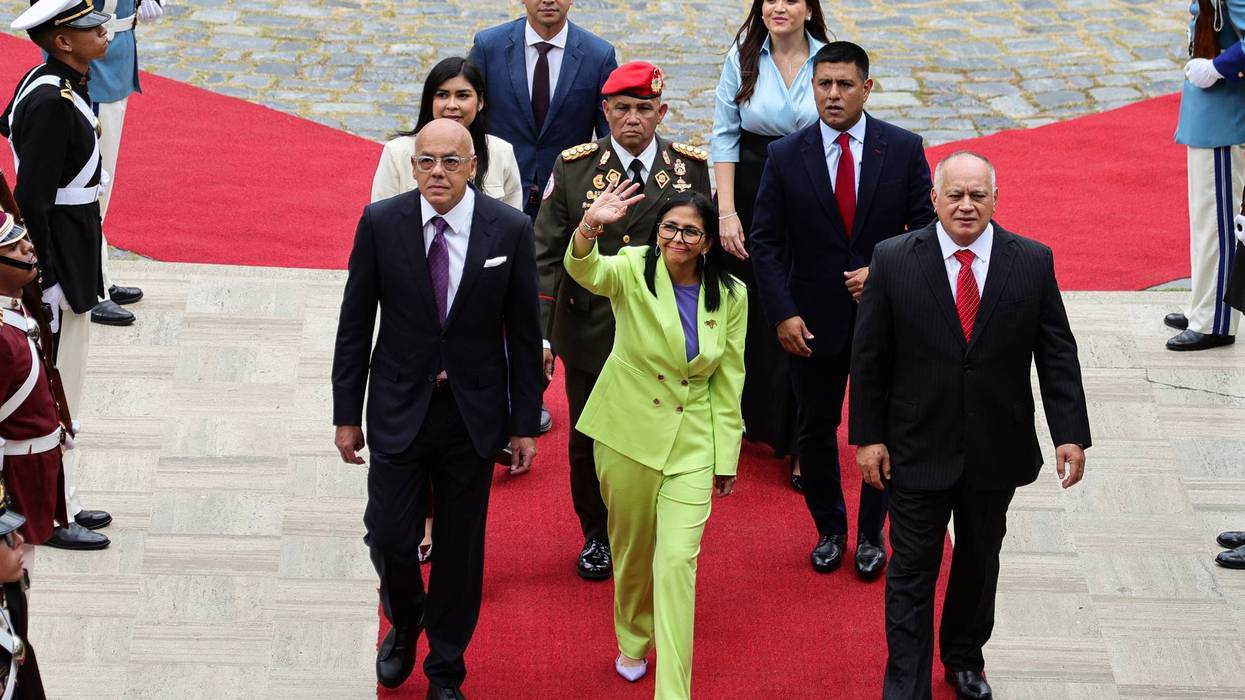
Our first responsibility is not to prescribe Venezuela's political course, but to challenge the coercive power our own government exercises over it.
Ever since Hugo Chávez became Venezuela’s president in 1999 and initiated the Bolivarian Revolution, the country has been under siege by the US. The aggression escalated with the kidnapping of its lawful president, part of a larger and accelerating assertion of US imperial power worldwide. The Bolivarian Revolution survived but is in a forced tactical retreat.
For progressives outside Venezuela, this presents a difficult question. How should we respond when a government resisting US domination makes compromises that we may oppose, but does so under conditions largely imposed by Washington?
This article argues that criticism has its place. But it also needs to be contextualized in the larger struggle over Venezuela’s sovereignty and the consequences of weakening a government confronting overwhelming US power.
Tension between solidarity with an actually existing revolutionary process and criticism of its compromises has recurred throughout the Bolivarian Revolution. Among the first on the left to part company with the Chavista government were anarchists, who proclaimed that they were second to none in supporting revolutions against imperialism—until those projects succeeded in achieving state power.
We can all agree that the Rodríguez government faces demands backed by overwhelming US power and unite to oppose the continuing imperialist siege. Those of us living in the imperial core must aim the main blow at the conditions that have necessitated such retreats.
This tendency still affirmed their abstract solidarity with “the people” but not with their chosen representatives. They felt betrayed because the Bolivarian leadership failed to fulfill their expectations to build a workers’ state on a suitably expeditious timetable.
Riding a global commodities boom, the Bolivarian Revolution funded major social welfare programs, prioritizing poor and working people. To finance these measures, over half of Venezuela’s oil exports and 60% of its overall exports were sold to the US. Dependency on oil sales deepened, with oil accounting for over 95% of the country's foreign earnings.
Chávez proclaimed the goal of a socialist future, although he pardoned the unsuccessful 2002 coup plotters in an effort—perhaps mistaken—to encourage a cooperative domestic business class. He pragmatically sought opportunities to negotiate with them.
When Chávez died in March 2013, his chosen successor Nicolás Maduro won the snap presidential election. Maduro carried the Bolivarian project forward but under geopolitical conditions markedly different from his predecessor. Venezuela scholar Steve Ellner argues that there were no substantive political differences between the two leaders.
During Chávez’s illness, economic problems had accumulated (e.g., a dysfunctional currency exchange system). Maduro was under intense pressure from the moment he entered office.
Immediately, the US-backed and funded opposition started the guarimbas, demonstrations intended to accomplish by violence what they had failed to achieve at the ballot box. Washington, meanwhile, stepped up its hybrid war. Soon oil prices crashed and the US, under President Barack Obama, initiated ever more punishing sanctions in 2015.
Under these coercive measures, the Venezuelan economy by 2019 was in free fall with inflation over 100,000%. Never had an economy contracted so much in modern peacetime.
At this time of maximum weakness, a faction of the Venezuelan Communist Party developed a strategic disagreement with the governing coalition. It argued that the revolution should confront its class enemies more aggressively and expropriate major corporations, rather than seek a temporary rapprochement.
The nearly overwhelming task of righting the economy was ultimately achieved under Maduro's leadership. After precipitous economic contraction, Venezuela has experienced positive economic growth since 2021. Never had a petro-economy achieved such a turnaround, which included near food sovereignty. To do so, the government relied foremost on the strong Chavista base. It also had to appeal to nationalistic elements among the bourgeoisie and offer them economic incentives to secure their cooperation.
Venezuela was not unique in making such accommodations. During this period, Cuba and Nicaragua—the two other Latin American countries striving for socialism—also introduced market-oriented reforms. With all three countries, the measures were pragmatic adjustments to a world economy dominated by the US and hostile to socialism.
The events leading up to Maduro’s abduction on January 3 involved an ever-intensifying regime-change campaign by the US in concert with its allies: asphyxiating sanctions, stolen assets, diplomatic isolation, cyberattacks, assassination attempts, mercenary invasions, among other measures. The last two months saw a total naval blockade on Venezuelan oil shipments, cutting the country’s economic lifeline.
Regardless, Maduro repeatedly maintained his longstanding willingness to negotiate with Washington. Just two days before his abduction, Maduro outlined a program of accommodation in his annual New Year’s interview with Ignacio Ramonet. This is the program that his successor Delcy Rodríguez has followed, including the amnesty and hydrocarbons laws.
The Bolivarian Revolution persevered. Its accommodations may be understood as tactical responses to unfavorable conditions rather than as a full abandonment of the project.
The fact that Maduro did not waver and the Bolivarian Revolution did not break presented a dilemma for Washington. The US—especially as its aggression against oil-rich Iran was heating up—needed access to Venezuelan oil. Neither country benefited by keeping the oil in the ground.
Yet the US had painted itself into a corner. The Trump administration had demonized Maduro as a narco-trafficker. Even though Maduro was more than willing to negotiate, the US had precluded that option. The kidnapping followed.
The US invasion of Venezuela on January 3 demonstrated to both the leadership and the Venezuelan grassroots that they were alone—no country came to their defense. Whatever guardrails had existed before on the hegemon were down.
Yet the Bolivarian Revolution did not collapse. The highly polarized nation did not fall into civil unrest between Chavistas and opposition—if anything, it unified. The far-right María Corina Machado did not make her triumphal return to Caracas. Instead, that part of the opposition found itself discredited and in disarray.
In a seamless constitutional transition, Maduro’s vice president was sworn in as president. The Chavista movement united behind Acting President Delcy Rodríguez. Venezuela’s national recovery continues under a negotiated sovereignty where the US now bargains—with the ever-present threat of an even more lethal military action—over matters that should be the sole purview of Venezuelans.
The Bolivarian Revolution persevered. Its accommodations may be understood as tactical responses to unfavorable conditions rather than as a full abandonment of the project.
For international solidarity activists, the central question is how to forge a stance that advances the anti-imperialist struggle under these conditions. Those of us who support national sovereignty and self-determination should understand that what Venezuela is suffering relates to our failure to constrain our own imperialists.
Aiming the punch at the target. We can all agree that the Rodríguez government faces demands backed by overwhelming US power and unite to oppose the continuing imperialist siege. Those of us living in the imperial core must aim the main blow at the conditions that have necessitated such retreats.
We can all unite on actions to demand freeing President Maduro and “First Combatant” Cilia Flores from jail in New York City, ending sanctions, and returning stolen assets.
Differences among progressives. A useful distinction can be made between disagreements within the “left camp” and the fundamental conflict with imperialism. This does not mean suppressing differences or assuming that they are unimportant. Rather, it suggests approaching tensions among forces resisting imperialism in ways that seek common ground and avoid turning secondary differences into antagonistic ones.
Contextualizing criticism. Under pressure from Washington, the Rodríguez government deported former Venezuelan diplomat and minister Alex Saab and has established consular relations with Israel. These are among the bitter pills to swallow. Criticism of such actions may be entirely warranted, but should be assessed in light of the extraordinary constraints under which the Rodríguez government is operating.
A related example is Cuba, which is forced to tolerate a US military base and torture center in Guantánamo, has had the indignity of having the US secretary of war and the commander of the US Southern Command visit, and has introduced pro-capitalist economic reforms. Those reforms should be understood as “strategic adaptation” according to an article in Black Agenda Report. While not welcoming these accommodations to the US siege, international solidarity activists still unite with and defend Cuba.
Considering the alternatives. For example, the US and its allies waged wars of aggression and deposed Iraq’s Saddam Hussein in 2003, Libya’s Muammar Gaddafi in 2011, and Syria’s Bashar al-Assad in 2024. There were left critiques of these leaders but, in all instances, there were no viable left alternatives to them; nor were conditions for their people improved by their removal. There is no “third way” in a war.
This suggests that the relevant question is not whether a preferable government can be imagined, but what forces actually stand to replace the existing government. For Venezuela, if not the Rodríguez government, what is the actual alternative?
After 26 years of siege and domestic polarization, the Venezuelan people yearn for peace, reconciliation, and reconstruction—more so than ever after the devastating twin earthquakes on June 24. For those of us abroad, we can only imagine the difficulties of life under sanctions from the US and its allies.
Regional trends. Developments in Venezuela reflect a broader shift in Latin America under the “Donroe Doctrine,” where Trump’s reactionary wave has flooded the former Pink Tide. Venezuela should therefore be understood in the context of this region-wide sea change.
Not since Maduro’s election in 2024 has a leftist won in the region. We have witnessed a succession of far-rightists replace center-left presidents in Latin America. Last year, Nasry Asfura replaced Xiomara Castro in Honduras, José Antonio Kast replaced Gabriel Boric in Chile, and Rodrigo Paz replaced Luis Arce in Bolivia. This year, Abelardo de la Espriella replaced Gustavo Petro in Colombia. Coming up in October is the Brazilian presidential election pitting Flávio Bolsonaro against incumbent Luiz Inácio Lula da Silva, with Trump actively interfering as he did in the other contests.
In all cases, the incumbents faced considerable criticism from the left. Yet whatever their shortcomings, the alternatives have been, or would be, less desirable.
Venezuela is not an isolated case. How progressives weigh criticism against solidarity, assess governments operating under US pressure, and consider the actual alternatives is increasingly relevant throughout the region.
Remarkably, given the intense pressure from the imperialists, the core Chavista leadership, the Socialist Party (PSUV), the civil-military union, the high courts and legislature, and the communes and grassroots organizations have all remained unified. Preserving that unity is particularly important; Bolivia’s experience of left fragmentation offers a cautionary example.
Our tasks are to educate the broader public about what is happening in Venezuela under extreme duress and to take collective action against the imperialist siege.
Between the Rubio State Department and corporate media, on one hand, and rejection of the Rodríguez government by some on the left, on the other, there is a vast intermediate terrain that needs to have a voice.
Whatever disagreements progressives may have with decisions made in Caracas, those decisions belong ultimately to Venezuelans. Our first responsibility is not to prescribe Venezuela's political course, but to challenge the coercive power our own government exercises over it. The Venezuelans have not told us how to make our revolution; we should do the same for them.
Our tasks are to educate the broader public about what is happening in Venezuela under extreme duress and to take collective action against the imperialist siege. The Bolivarian Revolution has not failed. But the project urgently requires relief.
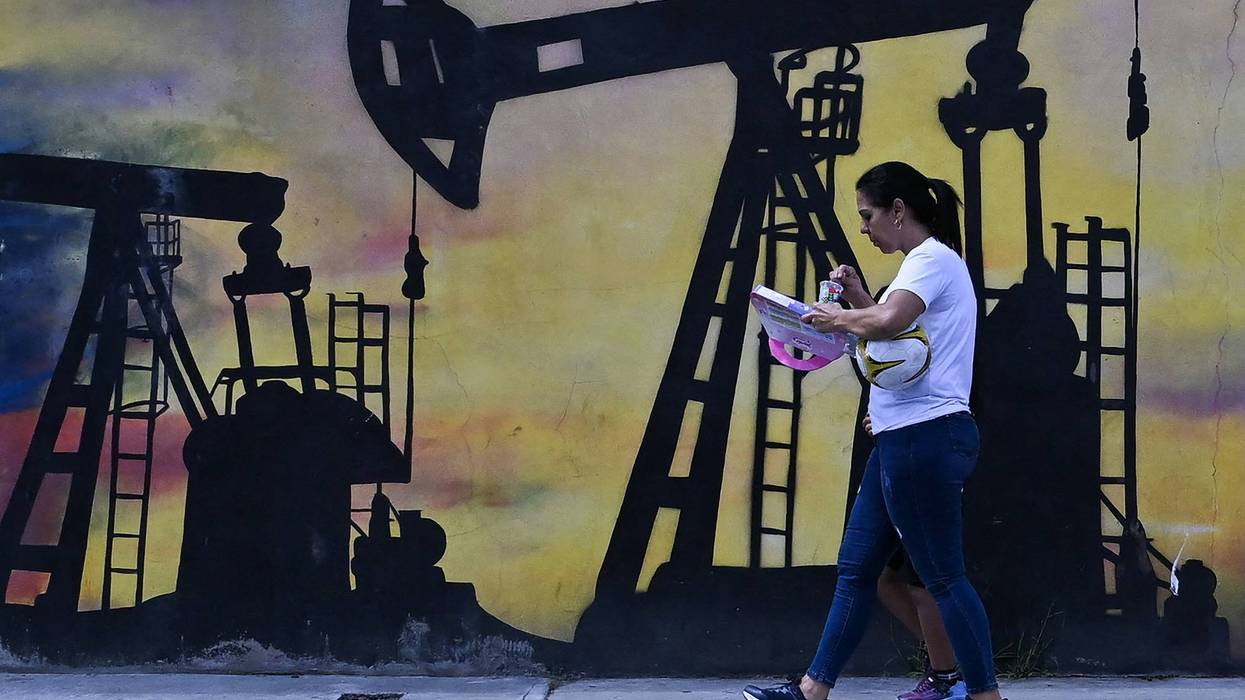
"I used to spend so much time trying to prove that the US was not interested in promoting democracy and just preferred autocratic governments that give us whatever we want. And now he just posts this every day on social media," one journalist wrote.
President Donald Trump was accused of naked gangsterism and revisionist history on Sunday when he announced that Venezuelan oil would be used to refill the US Strategic Petroleum Reserve.
"One of the things I am going to do with the Venezuelan Oil is fill up the Strategic National Reserves which, because of Sleepy Joe Biden, has been virtually emptied. The 'topping out' process will begin very shortly, and is a Gift from Venezuela to the People of the United States," Trump wrote on Truth Social.
The oil in question comes from a deal announced between the governments of Trump and acting Venezuelan President Delcy Rodriguez on Friday, which would allow the US to take majority control of 65 billion barrels worth of Venezuelan oil preserves. While Rodriguez has spoken favorably of the arrangement, it is hard to know how freely she speaks and acts given that her predecessor Nicolás Maduro was kidnapped by US forces in January.
"Describing oil you are looting by force as a 'Gift from Venezuela to the People of the United States' is straight mobster language," Drop Site News journalist Ryan Grim wrote on social media in response to Trump's statement on Sunday.
"No one told the demented jerk that he drained over 100 million barrels from the Strategic Reserves?"
Nathan J. Robinson, editor-in-chief of Current Affairs, also commented on the imperialism inherent in Trump's remarks, writing: "I feel like I used to spend so much time trying to prove that the US was not interested in promoting democracy and just preferred autocratic governments that give us whatever we want. And now he just posts this every day on social media."
In an article on Sunday entitled "Trump’s Venezuela Oil Grab Reprises Industry’s Neocolonial Past," Bloomberg reported that the oil deal reminded some analysts of 20th century US colonialism in Latin America.
Venezuelan economist Francisco Rodríguez told Bloomberg that Venezuela is “functioning as a protectorate of the US in all but name,” and that the current deal “isn’t furthering the interests of Venezuelans. It’s about securing the economic and security interests of the United States.”
New York University associate history professor Alejandro Velasco, meanwhile, compared today's Venezuela with the Central American "Banana Republics" that were heavily influenced by the US-based United Fruit Company during the first half of the 20th century.
The Venezuelan people “are entirely at the whims of whatever the US government, by way of these companies, is going to give to them,” he told Bloomberg. “Venezuela is a client state now.”
Both Rodriguez, the economist, and Robinson questioned whether the deal would survive a change in Venezuela's government.
“If I were an investor in Venezuela right now, I would be asking myself if there’s going to be a government in the future that will repudiate the contracts,” Rodriguez told Bloomberg.
Robinson, meanwhile, wrote on social media, "It's obvious that a democratic Venezuela would never hand over its oil to the US, so the US actually strongly opposes democracy in Venezuela."
Other experts pointed out that Trump lied about how the Strategic Petroleum Preserve (SPR) was depleted in the first place. While President Joe Biden did drawn upon the reserve in response to Russia's invasion of Ukraine, Trump has also relied on reserves to offset the impact of his war on Iran and the subsequent closure of the Strait of Hormuz. As of August 21, the SPR held 289.7 million barrels, a 30% decrease from the start of the year, according to the Energy Information Administration. It is supposed to fall further to 243 million barrels per Trump's orders, Drop Site News reported.
"No one told the demented jerk that he drained over 100 million barrels from the Strategic Reserves?" Dean Baker, senior economist at the Center for Economic and Policy Research, asked on social media.
It is also unclear how quickly any Venezuelan oil could top out the SPR, given that Venezuela's oil industry has been weakened by sanctions and mismanagement and needs substantial investment and work before it can increase production, according to Reuters.
At the same time, Drop Site pointed out that Delcy Rodriguez made no mention of gifting the US oil when she laid out more details of the deal on Saturday night. According to the acting Venezuelan leader, the deal would last 25 years and the country would maintain “ownership of and sovereignty” over the oil “while leveraging capital, technology, and operational expertise to support the recovery of a strategic industry that has been severely affected by sanctions," as Reuters reported.
In response, Francisco Rodriquez outlined a series of questions about the deal, including how Delcy Rodriguez's remarks compared with Trump's.
"President Trump has also said that with immediate effect, the United States' strategic oil reserve will begin to be supplied through a gift from Venezuela. Can you explain under what conditions this gift is being made?" the economist asked the Venezuelan leader on social media on Sunday. "Which articles of the law or Constitution allow you to give away Venezuelan oil property? And if that flow begins immediately, as President Trump says, does that mean it will be supplied from current production, and therefore imply lower revenues for the national treasury in the immediate term?"
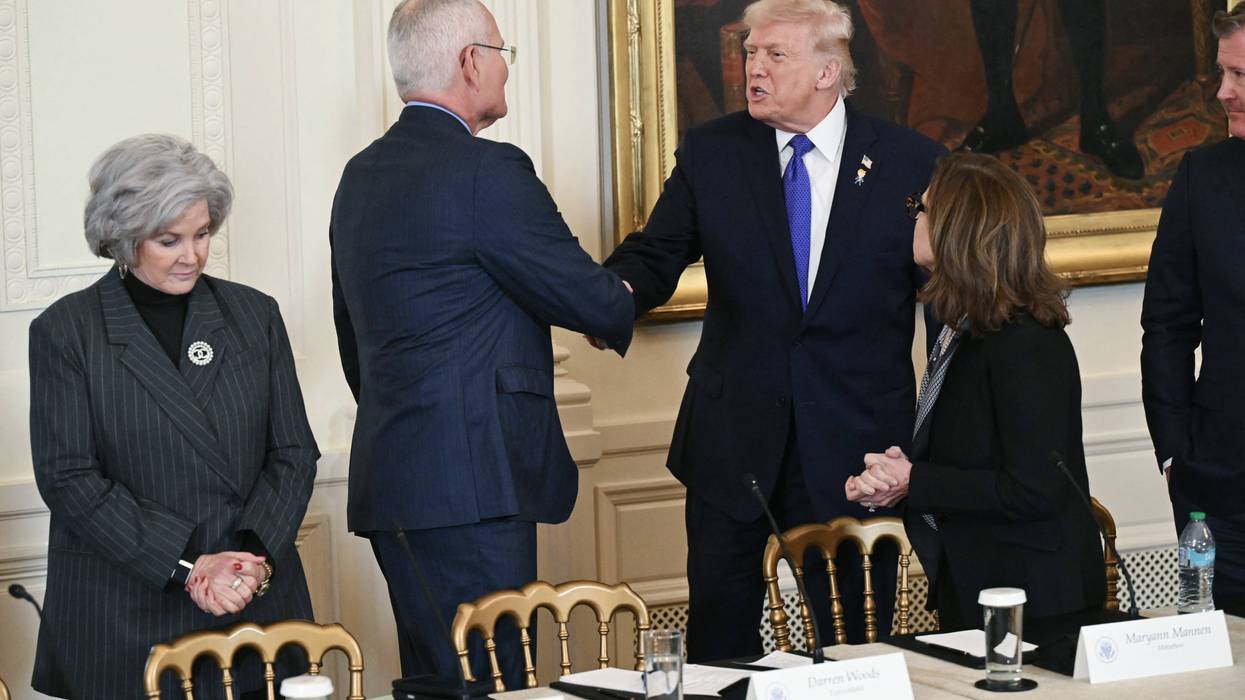
"This is proof Trump put our service members at risk to get Venezuelan oil for his billionaire buddies," one Democratic senator said. "Putting our soldiers’ lives on the line for private profit is a gross dereliction of his constitutional duty."
President Donald Trump announced on Truth Social on Friday that his government had "secured majority US control" of Venezuelan oil reserves containing 65 billion barrels of oil.
The announcement followed on reporting from Axios that a deal was in the works, prompting criticisms that such a move would be "colonial" and calls for Congress to reject any such proposal.
"Let's be clear: This isn't a win," Sen. Chris Van Hollen (D-Md.) wrote on social media in response to the announcement. "This is proof Trump put our service members at risk to get Venezuelan oil for his billionaire buddies. Putting our soldiers’ lives on the line for private profit is a gross dereliction of his constitutional duty."
When US forces invaded Caracas and kidnapped Venezuelan President Nicolás Maduro and his wife First Combatant Cilia Fores on January 3, Trump's own words following the invasion confirmed suspicions that he acted largely to gain access to the country's oil.
"These are some of the largest crimes of our lifetimes."
“We’re going to get the oil flowing the way it should be,” he said in a press conference following the attack.
Friday's deal, which seems like an attempt to make good on that promise, was also announced by Secretary of State Marco Rubio and acting Venezuelan President Delcy Rodriguez, who provided more details.
According to Venezuelanalysis:
Rodríguez stated that the deal will involve private corporations developing 17 “strategic fields” with 65 billion barrels of proven reserves. She echoed Rubio’s $100 billion investment claim and pledged that the projects would yield $209 billion in tax revenues. According to the acting president, the announced agreement “ushers in a new era of growth and prosperity.”
However, economist Francisco Rodríguez, a senior research fellow at the Center for Economic and Policy Research, argued that the agreement was actually a bad deal for Venezuelans.
"President: According to your figures, this agreement will generate tax revenues of just $3.22 per barrel of Venezuelan oil. This represents 4.7% of the current price, and less than half of the royalty rate contemplated in concessions granted by Juan Vicente Gómez," he wrote on social media, addressing the current Venezuelan leader and referring to a Venezuelan dictator from the early 20th century.
Joseph Bouchard, a journalist and researcher who focuses on Latin America, agreed with Rodriguez's criticism of the deal, writing on social media that "Trump [was] 'generously' buying billions of barrels of Venezuelan oil at less than 5% its market price. He's stealing their oil for his own family and cronies' profit. Guessing this may be used as a chip to manipulate the midterms. These are some of the largest crimes of our lifetimes."
Francisco Rodriguez had earlier pointed out that the deal violated the Venezuelan Constitution, which holds that all minerals and hydrocarbons are “inalienable public domain," according to Venezuelanalysis. For the deal to go through, therefore, Venezula would have to alter its Constitution.
Former head of Human Rights Watch Kenneth Roth noted on social media that "senior Venezuelan officials, all fearing arrest, are hardly in a position to negotiate vigorously, making the whole thing seems like one big military theft."
On the plus side, no one has to argue whether the United States is imperialist anymore. https://t.co/nsb87JUARw
— Dean Baker (@DeanBaker13) August 29, 2026
Trump is under pressure to lower gas prices that have spiked due to the fallout of his war on Iran, which entered its sixth month on Friday, and promised in his announcement, "This Historic Transaction MORE THAN DOUBLES American Oil Reserves, greatly increases our Oil Supply, and will substantially lower Gas Prices for all Americans, long into the future."
However, The Associated Press pointed out: "A significant drop in US gas prices tied to the agreement should not be expected immediately. Experts have repeatedly warned that a substantial boost in Venezuelan oil production will not happen quickly as repairing and expanding infrastructure takes years and requires billions of dollars."
Exploiting Venezuela's oil reserves would also exacerbate the climate crisis, which just this summer intensified a deadly heatwave in Europe and is supercharging an El Niño that could contribute to a significant increase in food prices in 2026 and 2027.
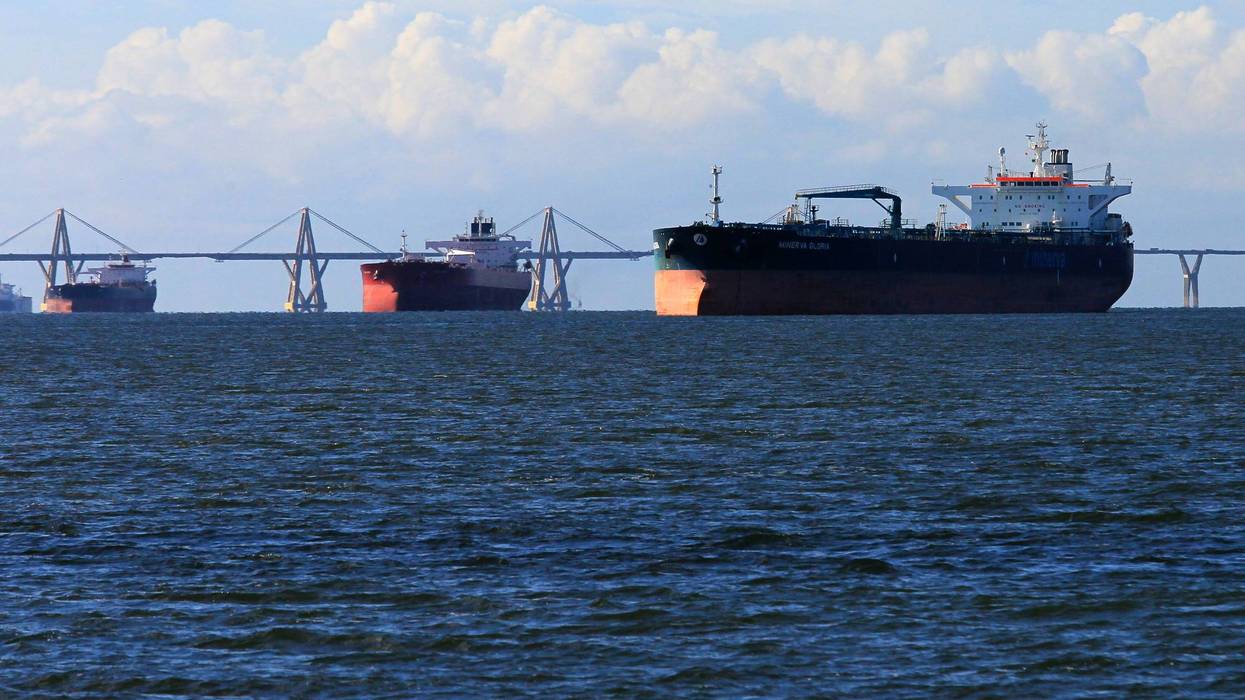
"Handing over Venezuela's oil wealth to the US contravenes the Constitution and is not in the interest of the Venezuelan people—much more when it is done at gunpoint," said one analyst.
Trump administration officials are claiming that talks between US Secretary of State Marco Rubio and the Venezuelan government regarding control of the country's oil fields will ultimately secure "America's energy future for generations to come"—but analysts on Friday called on lawmakers to halt President Donald Trump's "colonial" push to take over the reserves.
As Axios reported, officials including Rubio and Deputy White House Chief of Staff Stephen Miller have been involved in talks with Venezuelan acting President Delcy Rodriguez about taking an ownership stake in more than a dozen oil fields in the Orinoco Belt and Lake Maracaibo regions, which have about 90 billion barrels of oil reserves. In all, Venezuela's vast reserves—the world's largest—contain about 300 billion barrels.
The deal would double US oil reserves at a time when Americans have seen gas prices skyrocket and oil firms reap profits as a result of Trump's war on Iran and the closure of the Strait of Hormuz—events to which countries that have expanded renewable energy sources have proven far more resilient, according to data from JP Morgan Commodities research.
Despite that resilience, the Trump administration has reportedly approached the talks as a way to lock the US into generations of continued reliance on planet-heating oil extraction. According to Bloomberg, one deal under consideration is a 100-year lease on the oil fields.
Axios reported that in return for giving the US an ownership stake—something Trump began privately discussing before US forces invaded Venezuela and abducted President Nicolás Maduro in January—Venezuela "would benefit from private companies, including American firms, developing the fields and returning more oil revenue" to the South American country.
Tyler Slocum, director of Public Citizen's energy program, said that if the deal is finalized, "Trump will likely transfer operational control to US oil companies," which donated heavily to his campaign.
The proposed deal would open "the door to Trump’s typical bilateral transactional corruption" and bestow "lucrative opportunities for the oil companies he chooses to reward," said Slocum.
“In the nearly eight months since Trump’s illegal January 2026 Venezuelan invasion, the Trump administration has managed a $13 billion slush fund gleaned from its control over Venezuelan oil sales, with zero transparency, and little to no public oversight or accounting," Slocum continued. "The president has no authority to negotiate a deal where the federal government takes control over foreign oil production facilities, and Congress must intervene and put an end to Trump’s oil-fueled imperialism."
One opposition leader in Venezuela, where Energy Secretary Chris Wright is expected to travel next week to discuss increasing oil production by US companies, said the deals currently being discussed amount to "a land grab—a massive land grab."
Francisco Rodríguez, a senior research fellow at the Center for Economic and Policy Research and author of The Collapse of Venezuela, said the country's National Assembly "should deny authorization for this predatory deal."
Following Trump's invasion of Venezuela in January, energy historian and Eurasia Group analyst Gregory Brew told The Guardian, "US dominance over Venezuelan oil reserves allows the US to regard Venezuelan reserves as its own reserves: a source of oil from which the United States can draw and that nobody else has access to."
"I think that’s how the administration is conceiving of this—excluding China, excluding Russia, but I think also excluding other potential customers for Venezuelan oil,” Brew said. “It sounds colonial, because it is.”
The president's "effort to establish a South American kleptocracy is an outrage," said Slocum. "There’s been no improvement in human rights in Venezuela, so Trump’s move is further evidence that his illegal actions in Venezuela are all about controlling oil with no public accounting, transparency, or oversight. This is yet another Trump gift for Big Oil.”
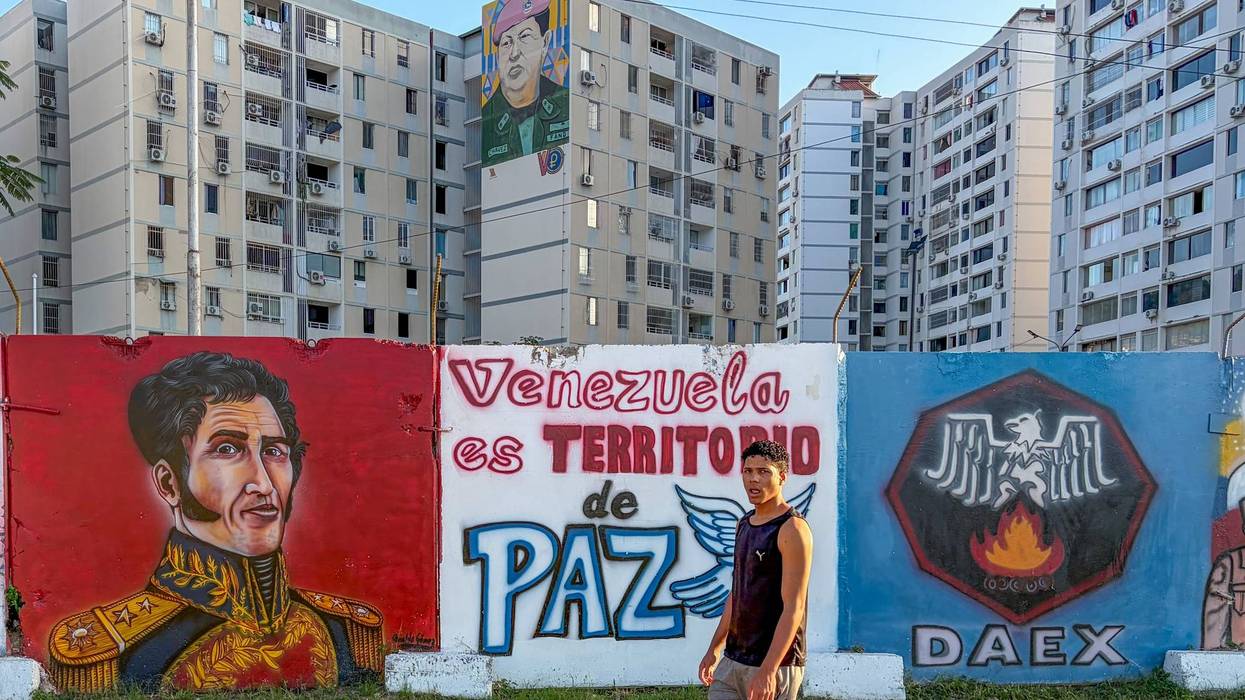
The solidarity movement must unite in the broadest alliance around the defense of national sovereignty and the right to self-determination, strongly opposing the farcical New York trial of Nicolás Maduro and Cilia Flores, demanding the lifting of all sanctions, and calling for the return of stolen assets.
“Nothing is easier than to be idealistic on behalf of others.”—Karl Marx, 1858
Under cover of night, the US military kidnapped the lawful Venezuelan President Nicolás Maduro and his wife and National Assembly deputy Cilia Flores on January 3, 2026. Collateral damage included over 100 fatalities of civilians and Cuban and Venezuelan guards.
This unprovoked surprise attack flagrantly violated international law. The hegemon acted in full expectation that it could operate with impunity. Even the neighboring left-leaning governments of Brazil and Colombia offered only mild rebukes. Then Venezuelan Foreign Minister Yván Gil said, “We found ourselves alone.” That is the context in which subsequent developments need to be understood.
The egregious military action culminated a quarter of a century of US and allied (particularly Canada and the UK) machinations against Venezuela: asphyxiating sanctions, stolen assets, diplomatic isolation, cyberattacks, assassination attempts, mercenary invasions, and establishing an ersatz parallel government. For the two months preceding the invasion, the US navy blockaded oil shipments. Still the empire’s goal of regime change was not achieved.
Washington and its allies failed to destroy Chavismo, the movement founded by Hugo Chávez and carried forward by his successor Nicolás Maduro. Venezuela did not collapse or degenerate into chaos after the decapitation. Domestic peace prevailed.
The US-backed and funded far-right opposition did not seize power, but found itself ever more marginalized and in disarray.
The Chavista leadership continued in a seamless constitutional succession with Vice President Delcy Rodríguez sworn in as acting president. The unity of the top command held firm, backed by the National Assembly and supreme court. Likewise, the civic-military union and the communes and grassroots Chavista institutions fully supported the government.
Notably, the core Chavista leadership, the military, Socialist Party, and communal formations have remained united under tremendous pressure—pressure designed to fracture that unifying accord.
Relying on its overwhelming military superiority, Washington made a Mafia-style offer you can’t refuse. US Secretary of State Marco Rubio called Rodríguez on that day of infamy and delivered an ultimatum to collaborate with the US or face the country’s military destruction and the murder of her and other leaders. Variations of this scenario are corroborated by both the corporate press and Chavista sources.
President Donald Trump explicitly threatened, “There is more where that came from.” The alternative was the devastation currently being rained down on Iran, a country with far greater military capacity. With US forces deployed throughout the region and off its coast, a military confrontation would have meant annihilation, including the destruction of the oil industry. Rodríguez did what any responsible leader would do given the existing options; she made a tactical retreat in the face of overwhelming force.
All the Chavista state institutions and the powerful universe of grassroots organizations that sustain the revolution remain intact. Yet US imperialism, by having a gun pointed to the government’s head, is in a position to exert substantial coercion leading to unpalatable decisions, such as Alex Saab’s deportation.
These accommodations reflect pressures that those of us on the outside can only imagine. How the solidarity movement should respond is a central question.
Former Chávez official Sergio Rodríguez Gelfenstein describes the current negotiations as an exercise in essential national self-preservation. He observes, “What is at stake is the survival of the State and the republic, which if lost, would make the discussion on any other topic banal.” As former Venezuelan Foreign Minister Jorge Arreaza said, “Everything is now negotiated,” with Washington obliged to be in daily give-and-take with Caracas.
Legislative reform had long been on Maduro’s agenda. However, revisions to laws governing the exploitation of hydrocarbons and hard minerals involved offering generous conditions to international capital in order to attract much-needed foreign investment (which Cuba is also doing).
The new amnesty law, another planned initiative, is a key instrument promoting reconciliation and denying extremist elements arguments to incite violence. The law strictly excludes “anyone who has committed war crimes, human rights violations, homicide, drug trafficking, or treason.”
The government is in negotiations with the moderate opposition. Such successive rounds of dialogue were a recurring feature of the Maduro presidency.
Rodríguez has counseled prudence and strategic patience. Notably, the core Chavista leadership, the military, Socialist Party, and communal formations have remained united under tremendous pressure—pressure designed to fracture that unifying accord.
The US has reversed itself and in practice recognizes the Venezuelan government as legitimate. The Bolivarian project has not only persisted but forced its greatest adversary to come to some accommodation.
Not since 2019 had the US allowed transactions with Venezuela’s central bank and major state banks. US restrictions had previously cut Venezuela off from the global financial system, preventing access to dollar-denominated transactions and US financial channels. Oil sales to the US have resumed, with some revenues returning to the domestic economy. The US-dominated International Monetary Fund (IMF) is again engaged with Venezuela. Rodríguez has stated that Venezuela is not seeking IMF loans, but access to its own frozen funds.
As a Venezuelan activist friend said, “You gringos tell us how to make our revolution when our problem is you have failed to make yours.”
Although sanctions largely remain in place, special licenses and a temporary easing of economic restrictions for earthquake relief have provided some breathing room for Venezuela’s besieged economy while also facilitating oil flows to the US. The concessions are limited and reversible, leaving the broader structure of US economic warfare intact. Still, the arrangement is preferable to the total oil blockade imposed immediately before the January 3 assault.
Rodríguez has repeatedly demanded that Venezuela be free of sanctions, while formally seeking the release of Venezuelan assets abroad to address the devastation caused by the earthquakes. She has even appealed to King Charles III for the return of 31 tons of Venezuelan gold held by the Bank of England.
The balance of forces confronting today’s Venezuelan leadership is substantially less favorable than under Chávez, so judging its compromises by an idealized Chávez-era standard is mistaken.
Some internationals invoke Chávez to discredit the current leadership. Overlooked is that during Chávez’s presidency, Venezuela sold oil almost exclusively to the US, when dependency was significant. Ignoring the changed context, infantile leftist claims are made that Chávez never compromised and that “one does not negotiate with the enemy,” forgetting the famous advice from Fidel Castro during the 2002 coup: “Don't immolate yourself, Hugo.”
Chávez governed during a commodities boom that provided the Bolivarian project with resources for material benefits markedly unavailable today under sanctions. The geopolitical context has shifted significantly since Chávez’s time, especially under the present “Donroe Doctrine.” Not since Maduro’s victory in July 2024 has a left-leaning candidate won in Latin America. The last seven presidential elections have been swept by the right. Until this broader reactionary trajectory is reversed, further retreats are likely.
The purpose and cumulative impact of the illegal unilateral coercive measures have been to erode public support for the government. Years of comprehensive sanctions—despite the 2021-2025 economic recovery following an approximately 75% GDP contraction—have left Venezuela in a vulnerable position. Currently the Venezuelan economy is operating at roughly 30% of its pre-sanctions level.
The Rodríguez government is trying to buy time to recover the economy, although the June 24 earthquakes dealt a terrible blow. According to the United Nations, direct physical damage is estimated at over $37 billion, representing over one-third of Venezuela’s gross domestic product.
Most Venezuelans want domestic peace and a return to prosperity, not a confrontation with the empire.
Those were the words of Fidel Castro as he was organizing the Cuban Revolution in 1956. Most dangerous for the sister Bolivarian Revolution is the suggestion that the current leadership has betrayed the cause and that a truly leftist “third way” can be fostered to replace them. There have always been competing factions within the Bolivarian movement. But political choices must ultimately be resolved within Venezuela itself, without interference from internationals.
These “third way” analyses, rejecting both Caracas and Washington, typically fail to address what Venezuelans could realistically do at this historical juncture—long on what’s wrong but short on viable alternatives.
Venezuelans will determine their path without foreign interference, either right or left. Solidarity necessitates efforts to accompany and uplift, not dictate.
It was not so long ago that it was the likes of far-right María Corina Machado who highlighted “cracks and fissures within the Chavista ranks” and anticipated “the beginning of a social explosion” against the elected Venezuelan government. Now some solidarity activists are saying the same.
The “tragic essence” of left disunity in Bolivia should be a cautionary lesson of what could happen in Venezuela. The Chavista leadership is painfully aware of this, hence their vigorous effort to establish the broadest united front against US colonization. Rather than being traitors to the cause, the Rodríguezes and Interior Minister Diosdado Cabello represent the most militant Chavistas—fighters from the very inception of the revolution.
Constructive criticism and solidarity activism need not be counterposed. Dissident opinions are appropriate when contextualized and given as part of a collaborative effort to advance common goals—not as individualistic venting.
Some among the left have appointed themselves as guardians of the faith judging negatively from afar the very difficult and risky tactical retreat undertaken by the Bolivarian leadership, even though it prevented a suicidal military confrontation with US imperialism.
The international left’s angst and disappointment regarding Venezuela’s retreats is understandable. But the Global South is not about to fulfill the revolutionary aspirations of those living in the belly of the beast. That, it should be clear, is the task for people in the imperial core.
As a Venezuelan activist friend said, “You gringos tell us how to make our revolution when our problem is you have failed to make yours.”
Venezuelans will determine their path without foreign interference, either right or left. Solidarity necessitates efforts to accompany and uplift, not dictate. Internationals living in the US, Canada, and the UK need to place the primary focus on our own imperialists. All other contradictions are secondary.
The solidarity movement must unite in the broadest alliance around the defense of national sovereignty and the right to self-determination, strongly opposing the farcical New York trial of Nicolás Maduro and Cilia Flores, demanding the lifting of all sanctions, and calling for the return of stolen assets.
El pueblo unido jamás será vencido.
(A united people will never be defeated.

"The picture now coming into focus is that the intervention has been... little more than a pretext for extracting economic wealth that rightfully belongs to the people of Venezuela," said one economist.
Since President Donald Trump's operation in January to overthrow Venezuelan President Nicolás Maduro, the US has taken more than $13 billion in revenue from Venezuelan oil sales. But nobody, including Congress, is entirely sure where the money has gone.
The Financial Times, which reported the figure on Wednesday based on estimates of oil sales out of Venezuela since January, pointed out that the Trump administration has given vague and contradictory answers about who currently controls the revenues from the Latin American nation's largest export and source of wealth.
Trump said in the days after the US attack that Venezuela's oil wealth would be "controlled by me." At a rally on Wednesday, he boasted that the US "won in Venezuela" and had paid for the operation "many many times over" by "taking tremendous amounts of oil" from the country.
He added that "Venezuela is doing better than they've ever done before." But economic data from the country tells a very different story.
According to economist Francisco Rodríguez of the Center for Economic and Policy Research, in the first quarter of this year, Venezuela had just 2.5% growth in its gross domestic product—its worst in five years. This is despite the fact that its oil exports grew by 25% during the first quarter.
He said this was likely "because the US didn’t transfer to the Venezuelan government the totality of its increased oil revenues."
While the executive order signed by Trump in January describes the proceeds from oil sales as nominally belonging to Venezuela, they are being held in accounts controlled by the US Treasury Department. It prohibits Venezuela from independently withdrawing from the accounts without approval from the secretary of state, Marco Rubio.
At a Congressional hearing this week, Michael Kozak, a senior State Department official, acknowledged that "it's their money, but they have to get our permission" to receive it.
While the State Department has claimed that “billions of dollars have been disbursed to the Venezuelan economy” and that “financial monitoring is under way to ensure funds benefit the Venezuelan people," the FT found little evidence that this is the case.
A website set up by the Venezuelan government to track exports from US-run oil sales shows just a single transfer of $300 million in March.
The administration has made explicitly clear that it is using the oil revenues as a tool to exert leverage over Venezuelan policy. In January, Vice President JD Vance said that the administration would allow Venezuela to sell oil as long as its policies "serve America's national interest."
A senior US official told The New Yorker that the administration has authorized about $6 billion to be disbursed to the government of Venezuela's interim president, Delcy Rodríguez, though there was no indication it had actually been transferred or spent.
Francisco Rodríguez said that even if it was, this "leaves an obvious question: where are the remaining $7 billion?"
He speculated that some of it might have been paid directly to joint venture partners, but noted that this would only account for a "fraction" of the difference and said there could be "other more complex explanations, beyond the possibility that the US is simply sitting on the money."
However, he said, "what is becoming increasingly clear is that the main reason Venezuela's economic recovery has been so sluggish is that, while the country is generating more oil revenue, it is not collecting on it."
In April, Kozak said the administration would provide quarterly reports on where the funds have gone. But Democrats on the Foreign Affairs Committee said they had not received them.
The lack of transparency has drawn concern from members of both parties in Congress, which Rep. Joaquin Castro (D-Texas) said has been “kept in the dark.”
“Trump’s invasion of Venezuela has been about oil, power, and graft from the very beginning, with billions of dollars in Venezuelan oil revenue being controlled by the Trump administration without transparency or safeguards,” Castro told the Financial Times.
Even María Elvira Salazar (R-Fla.)—who promoted a Trump-led regime change effort in Venezuela by saying it would be a "field day" for US oil companies—has called for the administration to publicize reports on where the money is going.
The question of what has happened to Venezuela's wealth is made more urgent by the twin earthquakes the country suffered in June, which killed about 5,000 people, injured 17,000, and left 18,000 homeless, according to government figures.
A World Bank report released Thursday estimated that reconstruction could cost close to $50 billion.
The earthquake has been met with calls for the US to lift its harsh sanctions on Venezuela, which have cost the country tens, if not hundreds, of billions of dollars in lost revenue since 2015 and which advocates have said are further hobbling the nation’s recovery.
Trump ratcheted up these sanctions in the months leading up to his operation to overthrow Maduro, and many have remained in place following the earthquake.
The US has provided more than $386 million in earthquake-related assistance to Venezuela. But it's just a fraction of the oil wealth it appears to be holding.
Francisco Rodríguez said the apparent hoarding of Venezuela’s oil wealth does further damage to Trump’s claim that his intervention was meant to benefit its people, as well as the US.
“The bottom line is that this arrangement is not proving advantageous to Venezuelans,” Rodríguez said. "The picture now coming into focus is that the intervention has been, as its critics have long accused such actions of being, little more than a pretext for extracting economic wealth that rightfully belongs to the people of Venezuela."

"Trump has turned Venezuela into an effective US colony," said one critic.
Some critics of the Trump administration are reacting with horror to revelations that US Secretary of State Marco Rubio has been serving as the de facto ruler of Venezuela.
According to a Saturday report in The New York Times, Rubio for the last several months has been acting informally as the "viceroy" of Venezuela ever since its recognized president, Nicolás Maduro, was abducted by the American military in January and brought to the US to face charges related to "narco-terrorism."
The Times' sources revealed that Rubio "effectively controls Venezuela’s finances, the distribution of its natural resources, and its government" and "is deeply involved in the country’s day-to-day operations," while maintaining regular contact with acting Venezuelan President Delcy Rodríguez.
Under current arrangements, the US Treasury Department takes in revenue from Venezuela's exports, including its petroleum, and then disperses the money back to the country through its private banks with strict conditions set by Rubio over what it can be spent on.
In explaining the system, the Times likened it to "parents handing out allowances to children," adding that it gives Rubio "immense leverage over... Rodríguez, who depends on the money to pay workers and prop up the national currency."
Elizabeth Saunders, professor of political science at Columbia University, described Rubio's power over Venezuela as "insane," as well as "derelict, unconscionable, and impeachable."
"The secretary of state's time is scarce, valuable, and not outsourcable," Saunders emphasized.
Orlando J. Pérez, professor of Political Science at the University of North Texas at Dallas, said the Times report made a mockery of Rubio's professed claims to want to bring democracy back to Venezuela.
"It appears Rubio has transformed from democracy promotion warrior," Pérez commented, "to transactional realpolitik operative!"
Kenneth Roth, former executive director at Human Rights Watch, wrote that US control over Venezuela appeared similar to the kind of imperial power wielded by European nations in the 19th Century.
"Trump has turned Venezuela into an effective US colony," said Roth, "with Marco Rubio as the viceroy and Washington controlling the country’s oil revenue and dictating major foreign and domestic policies. Democracy has been relegated to the distant future."
Bradley Simpson, historian at the University of Connecticut, also saw the current US arrangement with Venezuela as a return to overt imperialism.
"We are literally back in the Dollar Diplomacy days of the 1910s," Simpson wrote, "when the United States invaded countries and took over their financial systems and ran them as effective colonies. Flagrantly illegal, enormously corrupt. Where is the organization of American states or UN in denouncing this?"
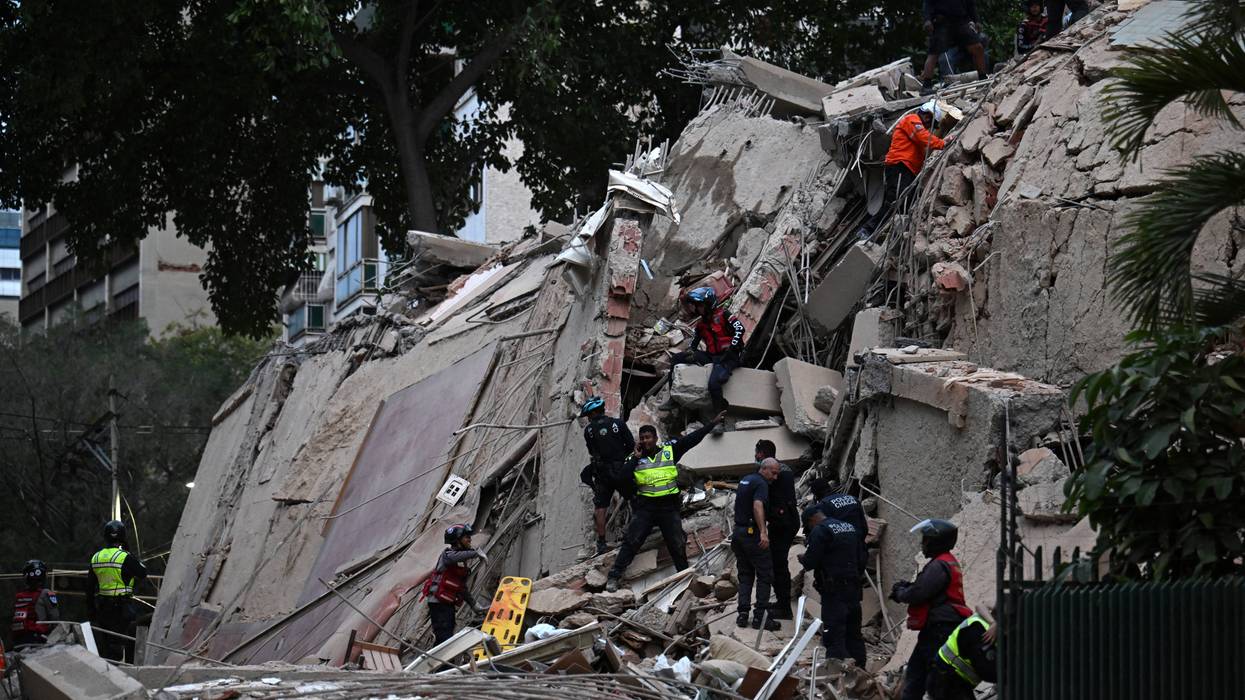
"This is the time for cooperation, compassion, and respect for Venezuela’s sovereignty," said CodePink.
Human rights groups on Thursday implored the United States and allied countries to lift all sanctions against Venezuela—which experts say have already killed tens of thousands of people—as the beleaguered South American country reels from Wednesday's devastating earthquakes.
At least 188 people are dead and over 1,500 others injured, with those figures almost certain to rise, following a 7.2-magnitude temblor centered in San Felipe, Yaracuy—about 100 miles west of Caracas—and a 7.5-magnitude quake that struck less than a minute later, also in centered in Yaracuy.
US President Donald Trump, who authorized the illegal invasion of Venezuela and abduction of President Nicolás Maduro earlier this year, wrote on social media after the earthquakes that his administration “stands ready, willing, and able to help."
“We will be there for our new and great friends," Trump claimed.
Delcy Rodríguez, Maduro's vice president and acting president since his ouster, thanked the Trump administration for "offering support and solidarity to the people of Venezuela in the face of this tragedy that has plunged us into mourning."
However, US sanctions—first imposed during then-President George W. Bush's second term while Hugo Chávez was leading Venezuela and ramped up under the Obama, Trump, and Biden administrations—remain in place, complicating relief efforts after one of the country's worst-ever natural disasters.
While the Trump administration has issued narrow exemptions from sanctions to companies looking to profit from Venezuela's crisis and copious natural resources, primarily oil, these waivers have not delivered broad relief to the people who need it most.
"Today’s catastrophe makes clear what we have long argued: When a country is deliberately weakened through economic warfare, its ability to prepare for, respond to, and recover from disasters is also weakened," the US-based peace group CodePink said in a statement. "The United States has a responsibility to help address the humanitarian consequences of the policies it has imposed."
🇻🇪 CODEPINK extends our deepest condolences to the people of Venezuela following the devastating earthquakes that have taken hundreds of lives, injured thousands, and left entire communities in urgent need of assistance.Our full statement: buff.ly/QzYcQ3p
[image or embed]
— CODEPINK (@codepink.bsky.social) June 25, 2026 at 2:22 PM
CodePink continued:
Too often, we’ve seen the US and other Western countries exploit natural disasters like this in order to deepen foreign control. In Haiti, the US and its allies have repeatedly pushed militarization and politically conditioned aid instead of genuine recovery led by the country itself. In this moment, the world must refuse to allow Venezuela to be forced down the same path.
We also call on the administration to immediately lift all US sanctions on Venezuela and release Venezuelan funds under US jurisdiction so they can be used for emergency relief, reconstruction, and recovery.
"This is the time for cooperation, compassion, and respect for Venezuela’s sovereignty," CodePink added. "We urge the international community to support relief efforts and stand with the Venezuelan people as they rebuild their homes, their communities, and their future."
The Center for Economic and Policy Research (CEPR), a Washington, DC-based think tank, said Thursday that "while the Trump administration has issued a series of general licenses to allow foreign businesses and banks to operate in Venezuela in spite of US sanctions, the continued existence of these sanctions significantly discourages international economic and financial actors from expanding operations there."
CEPR co-director Mark Weisbrot said that “we must remember that Venezuela suffered the worst depression in the history of the world, without a war, due to illegal US economic sanctions."
"This deadly destruction was not a mistake, but an expected result that would happen to any country that was cut off by sanctions from the international financial system, and also from the vast majority of its foreign exchange earnings from exports," he continued.
According to a 2019 CEPR report, as many as 40,000 Venezuelans died due to sanctions during the previous two years. The sanctions ostensibly targeted Maduro's government, but made it much more difficult for millions of people to obtain food, medicine, and other necessities.
“Tens of thousands, and more likely hundreds of thousands, of Venezuelans died as a result of those sanctions," Weisbrot said Thursday. "The United States is therefore obligated to help prevent further loss of life in Venezuela."
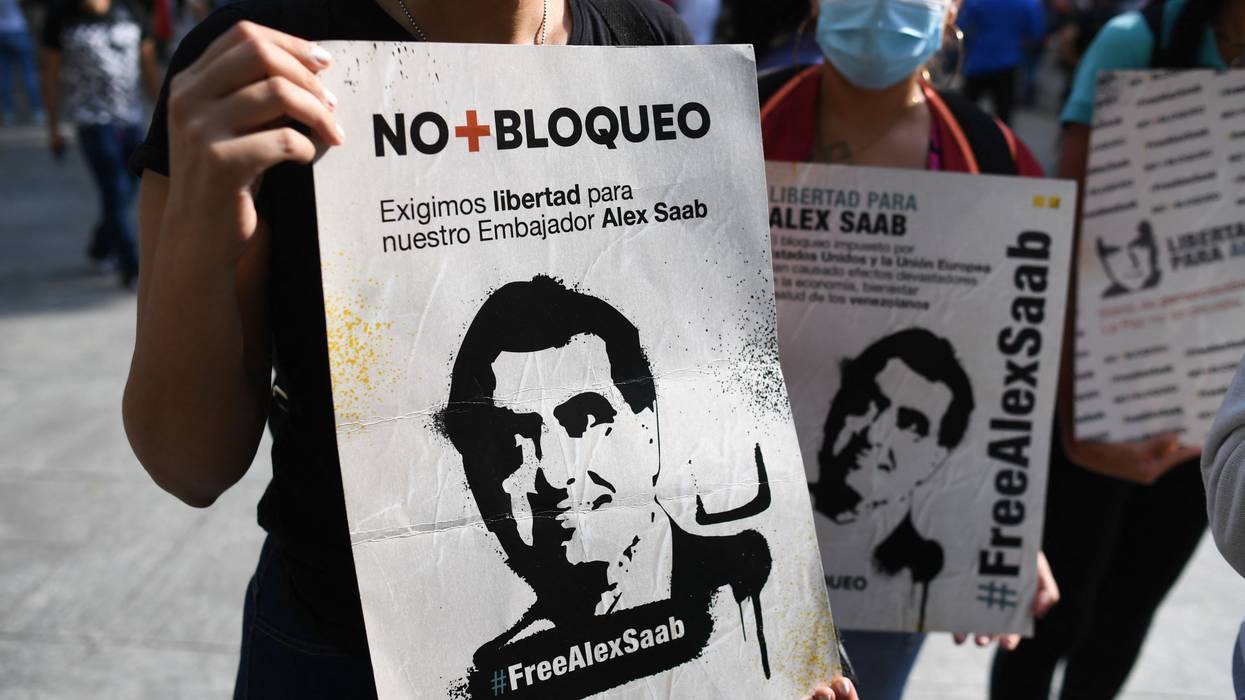
It’s difficult not to see the renewed imprisonment of Alex Saab as a disappointing capitulation to US coercion after so many of us fought for his freedom, but we cannot forget the task at hand.
The recent deportation of Alex Saab from Caracas to the US on May 18, 2026 has generated shock, confusion, anger, and intense debate across sectors of the international solidarity movement and many Venezuelans themselves.
Alex Saab, a Colombian businessman who became closely associated with the Venezuelan government during the years of heavy US sanctions, is seen by many Venezuelans as someone who helped the country bypass sanctions, obtain fuel and food, open financial channels, and resist economic collapse under blockade conditions.
The US accuses Saab of corruption and money laundering connected to Venezuelan state contracts, but for many people in Venezuela and across the international left, Saab came to represent something larger than an individual businessman: the broader struggle over sanctions, sovereignty, and Venezuela’s ability to survive under extraordinary economic and geopolitical pressure.
The Venezuelan revolution did not survive the last decade of US economic warfare without contradictions. It survived through improvisation, exhaustion, loyalty, fear, sanctions, migration, stubbornness, and an almost unbearable national fatigue that few outside the country truly understand.
Reducing every painful decision to betrayal while ignoring the enormous machinery of coercion surrounding Venezuela risks reproducing the very fragmentation that external aggression was designed to create in the first place.
The United States did not merely sanction Venezuela. It attempted to break it. It froze national assets, it openly pursued regime change, backed parallel governments, economically strangled the country, and ultimately launched a military operation to kidnap President Nicolás Maduro and First Lady Cilia Flores from Venezuelan soil.
To understand why Saab became such a powerful figure, one must first understand what Venezuela became under sanctions: a country forced into survival mode.
And now, after the deportation of Saab to the United States and the growing accusations against Delcy Rodríguez, I watch many people speak with the confidence of hindsight. As if everything had always been obvious. As if Venezuelans navigating one of the most aggressive campaigns of economic warfare, destabilization, and military coercion in modern Latin American history had the luxury of moral purity.
As a Venezuelan American, I am struggling too to understand and process this moment. I stood there too. I called for Alex Saab’s freedom when he was detained in Cape Verde during the height of the Trump administration’s maximum pressure campaign against Venezuela. At the time, the reality that existed for many of us was that Saab was a Venezuelan diplomat helping the country navigate sanctions.
Recently, Venezuelan National Assembly President Jorge Rodríguez publicly stated that Alex Saab has maintained relationships with US agencies since 2019. These revelations, combined with Saab’s deportation, have generated painful questions for many people who spent years defending him publicly.
What did we actually know?
What kinds of compromises were going on inside a country trying to survive under siege?
These are painful questions. And at this moment, there are still far more questions than answers.
Maybe painful compromises were made.
Maybe Saab was never what many believed him to be.
Maybe serious betrayals occurred.
Maybe the deportation was justified.
Maybe realities existed behind closed doors that ordinary Venezuelans never had access to. Or maybe decisions were made inside an impossible reality where preventing wider war, deeper collapse, and even greater harm for ordinary Venezuelans became more urgent.
Because since the kidnapping of Maduro, Venezuela has not been operating in an atmosphere of freedom. It is operating under threat.
And it is easy to demand uncompromising heroism from a country under attack when you are not the one responsible for preventing millions of people from falling into even greater catastrophe.
People who defended Saab for years are now confronting the possibility that parts of the story may have been hidden from them. Others are immediately translating uncertainty into accusations of betrayal against Delcy Rodríguez and the entire Bolivarian process.
But I think there is something dangerous about how quickly so many people are rushing toward absolute conclusions while fragments of information, accusations, leaks, and political narratives are still colliding in real time.
Maybe there will come a moment for deeper criticism of Delcy Rodríguez and others within the Bolivarian process. Maybe new information will eventually clarify realities that today remain obscured by contradiction, secrecy, pressure, and war.
But I think there is a certain political myopia in discussing Venezuela's internal contradictions while removing the broader reality of US pressure and coercion from the story entirely.
Because regardless of what may eventually be revealed about Alex Saab, the larger reality remains unchanged: Venezuela was subjected to years of sanctions, destabilization, economic strangulation, coup attempts, international isolation, and eventually direct military intervention.
The aggressor has not disappeared from the story.
And reducing every painful decision to betrayal while ignoring the enormous machinery of coercion surrounding Venezuela risks reproducing the very fragmentation that external aggression was designed to create in the first place.
It’s difficult not to see the renewed imprisonment of Alex Saab as a disappointing capitulation to US coercion after so many of us fought for his freedom, but we cannot forget the task at hand. If we are serious about ending US aggression toward Venezuela, we cannot allow our solidarity with the Venezuelan people to be deterred. They have shown us how to sustain a revolution amid contradictions, and that is what we must do.