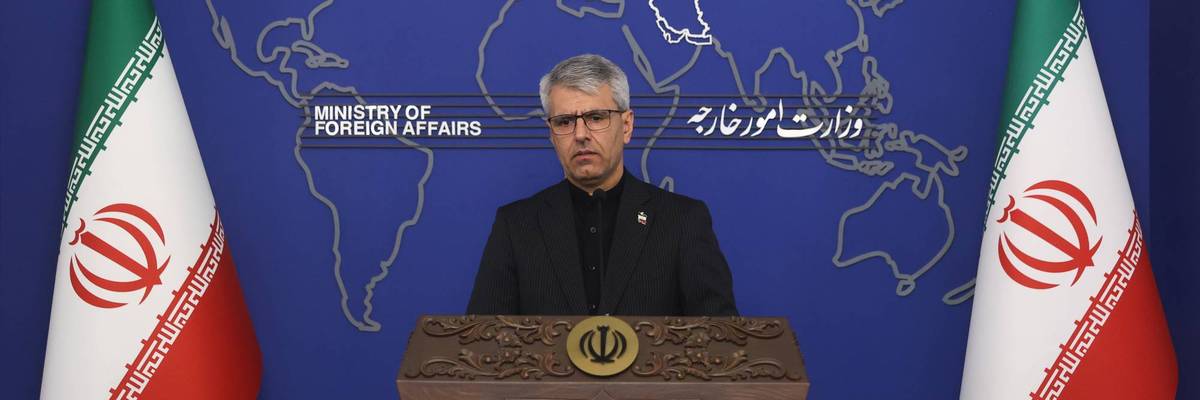
Esmaeil Baghaei Hamaneh, spokesperson of the Iranian Foreign Ministry, delivers his weekly press conference on June 1, 2026.
Iran Says Trump's New Attacks Show Americans 'Stuck in the Massive Error They’ve Made'
"We cannot accept any orders being dictated upon us," said the spokesperson for Iran's Foreign Ministry. "If they continue with this philosophy, they will not get any different result.”
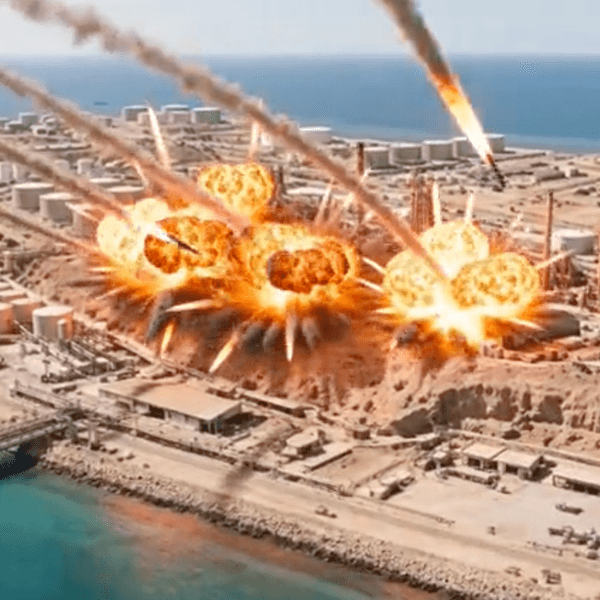
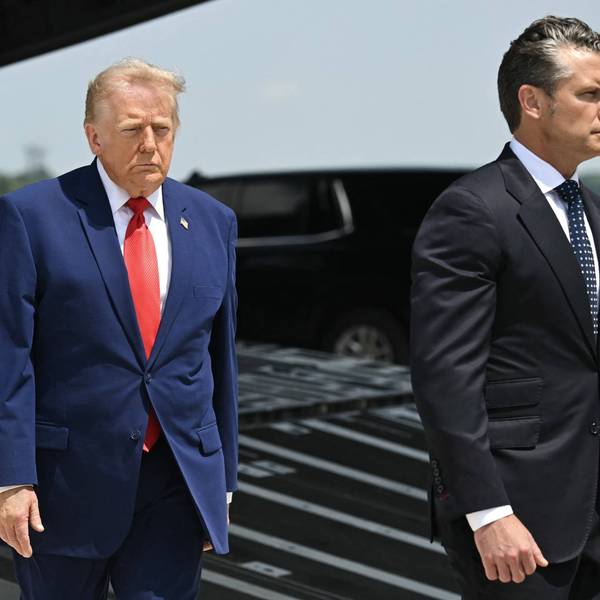
As US President Donald Trump returns to bombing Iranian territory, Esmaeil Baghaei Hamaneh, the spokesperson for Iran's Foreign Ministry, said at a press conference on Tuesday that it's only a sign of the quagmire he's found himself in, and emphasized that the only way out will be negotiation rather than force.
"It has become clear they are now stuck in the massive error they’ve made, and it’s their usual habit to raise excessive demands," Baghaei said, noting that mediation efforts by Pakistan were continuing even as the Trump administration claims that Iran is refusing "meaningful negotiations."
When Trump launched the war in February, he predicted that Iran would be brought to its knees in a matter of weeks. Six months later, there is no sign that an end to the conflict is in sight as Trump rejects a return to the negotiating table.
Baghaei said it's clear that the US was once again falling into "a state of miscalculation." Iran, he said, had been adhering to the Memorandum of Understanding reached in June, while the US refused to abide by its terms of ending its economic blockade, unfreezing assets, and ending threats of aggression, as well as ending attacks by US ally Israel in Lebanon.
Baghaei said Iran was willing to reach another agreement to end the war. The problem, he said, was that Trump had shown himself unwilling to follow any deal that included concessions to Iran and was demanding its full capitulation.
"We cannot accept any orders being dictated upon us," Baghaei said. "If they continue with this philosophy, they will not get any different result.”
Iranian President Masoud Pezeshkian echoed Baghaei's position on Tuesday, saying that Iran would “immediately reciprocate” if Washington honored its commitments under the June interim agreement.
Failing to break Iran with military might, Trump tried to switch last month to a strategy of "economic warfare," imposing "the toughest sanctions in history" and pressuring other nations around the world to do the same in an effort to isolate Iran and fully topple its government.
Baghaei acknowledged that US sanctions were having a devastating effect on the people of Iran. According to Reuters, Iran's foreign trade is down by 35%, and inflation reached 66% in July, cranking up the pain felt by the civilian population.
But efforts to create the "greatest coordinated economic isolation in the history of the world," as Treasury Secretary Scott Bessent described it, have faced resistance, with Iran's major trading partners such as China and Pakistan refusing to cut ties.
"Six months of US bombing and naval blockade have produced no US victory, so the plan now is to starve Iran into capitulation," wrote Columbia University professor Jeffrey Sachs and UN Sustainable Development Solutions Network adviser Sybil Fares on Monday for Al Jazeera. "The new approach is illegal, cruel, and will fail for several reasons."
"To begin with, there is the historical record. Economic sanctions do not bring down governments determined to survive them. Yes, sanctions can impoverish populations, empower the security services that control smuggling, and hand the targeted nation a rallying point built on US malice," Sachs and Fares wrote.
They added that at a time when Iran's restrictions on travel through the Strait of Hormuz have spiked oil prices and sent shocks through the global economy, there is little incentive for the world to cut off Iran's oil exports as well.
"The US proposes to deepen a stagflationary shock already being borne by Europe, Japan, and its other allies, and orders those countries to enforce sanctions that will throttle their economies," they wrote.
And due to Trump's erratic policy, disregard for the United Nations Charter in launching a war of aggression, and the demonstration that his assurances are "unreliable," Sachs and Fares noted that countries are increasingly reaching agreements that rely less on US military guarantees and dollar-based trade.
"Pride goeth before the fall, and no government today is more arrogant than the US under Trump and his enforcer, Bessent," they wrote. "Governments around the world will not follow the US blindly into disaster."
An Urgent Message From Our Co-Founder
Dear Common Dreams reader, It’s been nearly 30 years since I co-founded Common Dreams with my late wife, Lina Newhouser. We had the radical notion that journalism should serve the public good, not corporate profits. It was clear to us from the outset what it would take to build such a project. No paid advertisements. No corporate sponsors. No millionaire publisher telling us what to think or do. Many people said we wouldn't last a year, but we proved those doubters wrong. Together with a tremendous team of journalists and dedicated staff, we built an independent media outlet free from the constraints of profits and corporate control. Our mission has always been simple: To inform. To inspire. To ignite change for the common good. Building Common Dreams was not easy. Our survival was never guaranteed. When you take on the most powerful forces—Wall Street greed, fossil fuel industry destruction, Big Tech lobbyists, and uber-rich oligarchs who have spent billions upon billions rigging the economy and democracy in their favor—the only bulwark you have is supporters who believe in your work. But here’s the urgent message from me today. It's never been this bad out there. And it's never been this hard to keep us going. At the very moment Common Dreams is most needed, the threats we face are intensifying. We need your support now more than ever. We don't accept corporate advertising and never will. We don't have a paywall because we don't think people should be blocked from critical news based on their ability to pay. Everything we do is funded by the donations of readers like you. When everyone does the little they can afford, we are strong. But if that support retreats or dries up, so do we. Will you donate now to make sure Common Dreams not only survives but thrives? —Craig Brown, Co-founder |
As US President Donald Trump returns to bombing Iranian territory, Esmaeil Baghaei Hamaneh, the spokesperson for Iran's Foreign Ministry, said at a press conference on Tuesday that it's only a sign of the quagmire he's found himself in, and emphasized that the only way out will be negotiation rather than force.
"It has become clear they are now stuck in the massive error they’ve made, and it’s their usual habit to raise excessive demands," Baghaei said, noting that mediation efforts by Pakistan were continuing even as the Trump administration claims that Iran is refusing "meaningful negotiations."
When Trump launched the war in February, he predicted that Iran would be brought to its knees in a matter of weeks. Six months later, there is no sign that an end to the conflict is in sight as Trump rejects a return to the negotiating table.
Baghaei said it's clear that the US was once again falling into "a state of miscalculation." Iran, he said, had been adhering to the Memorandum of Understanding reached in June, while the US refused to abide by its terms of ending its economic blockade, unfreezing assets, and ending threats of aggression, as well as ending attacks by US ally Israel in Lebanon.
Baghaei said Iran was willing to reach another agreement to end the war. The problem, he said, was that Trump had shown himself unwilling to follow any deal that included concessions to Iran and was demanding its full capitulation.
"We cannot accept any orders being dictated upon us," Baghaei said. "If they continue with this philosophy, they will not get any different result.”
Iranian President Masoud Pezeshkian echoed Baghaei's position on Tuesday, saying that Iran would “immediately reciprocate” if Washington honored its commitments under the June interim agreement.
Failing to break Iran with military might, Trump tried to switch last month to a strategy of "economic warfare," imposing "the toughest sanctions in history" and pressuring other nations around the world to do the same in an effort to isolate Iran and fully topple its government.
Baghaei acknowledged that US sanctions were having a devastating effect on the people of Iran. According to Reuters, Iran's foreign trade is down by 35%, and inflation reached 66% in July, cranking up the pain felt by the civilian population.
But efforts to create the "greatest coordinated economic isolation in the history of the world," as Treasury Secretary Scott Bessent described it, have faced resistance, with Iran's major trading partners such as China and Pakistan refusing to cut ties.
"Six months of US bombing and naval blockade have produced no US victory, so the plan now is to starve Iran into capitulation," wrote Columbia University professor Jeffrey Sachs and UN Sustainable Development Solutions Network adviser Sybil Fares on Monday for Al Jazeera. "The new approach is illegal, cruel, and will fail for several reasons."
"To begin with, there is the historical record. Economic sanctions do not bring down governments determined to survive them. Yes, sanctions can impoverish populations, empower the security services that control smuggling, and hand the targeted nation a rallying point built on US malice," Sachs and Fares wrote.
They added that at a time when Iran's restrictions on travel through the Strait of Hormuz have spiked oil prices and sent shocks through the global economy, there is little incentive for the world to cut off Iran's oil exports as well.
"The US proposes to deepen a stagflationary shock already being borne by Europe, Japan, and its other allies, and orders those countries to enforce sanctions that will throttle their economies," they wrote.
And due to Trump's erratic policy, disregard for the United Nations Charter in launching a war of aggression, and the demonstration that his assurances are "unreliable," Sachs and Fares noted that countries are increasingly reaching agreements that rely less on US military guarantees and dollar-based trade.
"Pride goeth before the fall, and no government today is more arrogant than the US under Trump and his enforcer, Bessent," they wrote. "Governments around the world will not follow the US blindly into disaster."
As US President Donald Trump returns to bombing Iranian territory, Esmaeil Baghaei Hamaneh, the spokesperson for Iran's Foreign Ministry, said at a press conference on Tuesday that it's only a sign of the quagmire he's found himself in, and emphasized that the only way out will be negotiation rather than force.
"It has become clear they are now stuck in the massive error they’ve made, and it’s their usual habit to raise excessive demands," Baghaei said, noting that mediation efforts by Pakistan were continuing even as the Trump administration claims that Iran is refusing "meaningful negotiations."
When Trump launched the war in February, he predicted that Iran would be brought to its knees in a matter of weeks. Six months later, there is no sign that an end to the conflict is in sight as Trump rejects a return to the negotiating table.
Baghaei said it's clear that the US was once again falling into "a state of miscalculation." Iran, he said, had been adhering to the Memorandum of Understanding reached in June, while the US refused to abide by its terms of ending its economic blockade, unfreezing assets, and ending threats of aggression, as well as ending attacks by US ally Israel in Lebanon.
Baghaei said Iran was willing to reach another agreement to end the war. The problem, he said, was that Trump had shown himself unwilling to follow any deal that included concessions to Iran and was demanding its full capitulation.
"We cannot accept any orders being dictated upon us," Baghaei said. "If they continue with this philosophy, they will not get any different result.”
Iranian President Masoud Pezeshkian echoed Baghaei's position on Tuesday, saying that Iran would “immediately reciprocate” if Washington honored its commitments under the June interim agreement.
Failing to break Iran with military might, Trump tried to switch last month to a strategy of "economic warfare," imposing "the toughest sanctions in history" and pressuring other nations around the world to do the same in an effort to isolate Iran and fully topple its government.
Baghaei acknowledged that US sanctions were having a devastating effect on the people of Iran. According to Reuters, Iran's foreign trade is down by 35%, and inflation reached 66% in July, cranking up the pain felt by the civilian population.
But efforts to create the "greatest coordinated economic isolation in the history of the world," as Treasury Secretary Scott Bessent described it, have faced resistance, with Iran's major trading partners such as China and Pakistan refusing to cut ties.
"Six months of US bombing and naval blockade have produced no US victory, so the plan now is to starve Iran into capitulation," wrote Columbia University professor Jeffrey Sachs and UN Sustainable Development Solutions Network adviser Sybil Fares on Monday for Al Jazeera. "The new approach is illegal, cruel, and will fail for several reasons."
"To begin with, there is the historical record. Economic sanctions do not bring down governments determined to survive them. Yes, sanctions can impoverish populations, empower the security services that control smuggling, and hand the targeted nation a rallying point built on US malice," Sachs and Fares wrote.
They added that at a time when Iran's restrictions on travel through the Strait of Hormuz have spiked oil prices and sent shocks through the global economy, there is little incentive for the world to cut off Iran's oil exports as well.
"The US proposes to deepen a stagflationary shock already being borne by Europe, Japan, and its other allies, and orders those countries to enforce sanctions that will throttle their economies," they wrote.
And due to Trump's erratic policy, disregard for the United Nations Charter in launching a war of aggression, and the demonstration that his assurances are "unreliable," Sachs and Fares noted that countries are increasingly reaching agreements that rely less on US military guarantees and dollar-based trade.
"Pride goeth before the fall, and no government today is more arrogant than the US under Trump and his enforcer, Bessent," they wrote. "Governments around the world will not follow the US blindly into disaster."