

SUBSCRIBE TO OUR FREE NEWSLETTER
Daily news & progressive opinion—funded by the people, not the corporations—delivered straight to your inbox.
5
#000000
#FFFFFF
To donate by check, phone, or other method, see our More Ways to Give page.
Daily news & progressive opinion—funded by the people, not the corporations—delivered straight to your inbox.

The House Committee on Natural Resources will hold a legislative hearing this afternoon on a bill introduced by Rep. Don Young (R-Alaska) that would remove hundreds of acres from Alaska's Izembek National Wildlife Refuge in order to construct a road across the refuge. The Interior Department has studied this issue exhaustively, with the U.S. Fish and Wildlife Service concluding that the road would cause significant, long-term, irreparable damage to this internationally important fish and wildlife habitat and the wilderness values of the refuge.
"This public land giveaway would irreversibly harm the wildlife that call Izembek home," said Randi Spivak, the Center for Biological Diversity's public lands director. "Building a road through this iconic and fragile wilderness is incredibly shortsighted and would deny future generations of Americans the opportunity to visit a unique, unspoiled wild refuge."
Rep. Young's H.R. 218 would carve out 206 acres from Alaska's Izembek National Wildlife Refuge in exchange for low-quality state lands to build a detrimental road connecting the towns of King Cove and Cold Bay. Sen. Lisa Murkowski (R- Alaska) has introduced a Senate companion bill, S. 101.
The Izembek National Wildlife Refuge is a globally important area for millions of migrating birds as well as important habitat for grizzly bears and salmon. Congress designated virtually all of the refuge as a wilderness in 1980.
Young's bill declares that this land swap is not a major federal action, thereby denying the public a right to have input into the bill.
"Rep. Young has a long history of trying to harm and dismantle America's public lands," Spivak said. "The majority of Americans support the protection and preservation of our public lands and the Izembek giveaway would harm one of the most valuable wetlands and wilderness areas in the world."
The Center for Biological Diversity's recent report Public Lands Enemies identified the top 15 members of Congress trying to seize, destroy, dismantle and privatize America's public lands. Both Sen. Murkowski and Rep. Young were on the public lands enemies list, having sponsored or cosponsored 35 anti-public lands bills between them since 2011. These attacks on public lands continue, even though 9 out of 10 American voters across political parties rank as important the protection and maintenance of national parks, public lands and natural places, according to a 2016 poll.
Background
The federal government has repeatedly studied a proposed land swap and road through the refuge, and consistently rejected the project because of its negative effects on the ecological resources and wilderness values of the refuge.
Izembek's lagoon complex is a globally important ecosystem that contains one of the largest eelgrass beds in the world, providing food and habitat for fish and crabs that feed migratory birds from multiple continents. Virtually the entire world populations of Pacific black brant and emperor geese, and a significant portion of the threatened Steller's eider population, visit the refuge to rest and feed during spring and fall migrations. The Department of the Interior determined that these birds would be particularly vulnerable to impacts from road construction and operation on the narrow isthmus. Furthermore, a road across the isthmus would have a major impact on brown bears and caribou.
At the Center for Biological Diversity, we believe that the welfare of human beings is deeply linked to nature — to the existence in our world of a vast diversity of wild animals and plants. Because diversity has intrinsic value, and because its loss impoverishes society, we work to secure a future for all species, great and small, hovering on the brink of extinction. We do so through science, law and creative media, with a focus on protecting the lands, waters and climate that species need to survive.
(520) 623-5252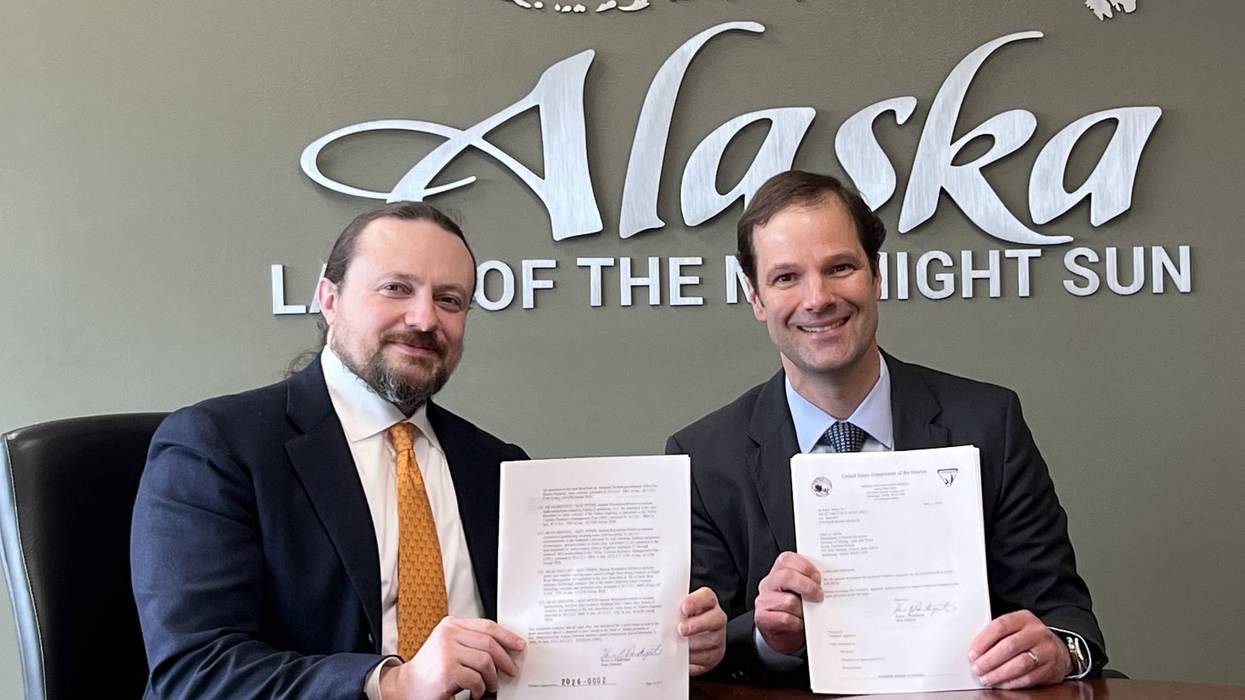
One critic called the transfer of 1.4 million acres a "massive giveaway to out-of-state corporations that don't want to be burdened by the federal protections that safeguard our lands, waters, wildlife, and communities."
Defenders of the planet took aim at President Donald Trump's administration on Wednesday for transferring approximately 1.4 million acres of public lands along the Dalton Utility Corridor from the US Bureau of Land Management to the state of Alaska.
"This corridor encompasses some of Alaska’s most critical transportation and energy assets, including portions of the Trans-Alaska Pipeline System corridor, the Dalton Highway, and proposed routes for the Ambler Road and Alaska Liquefied Natural Gas (LNG) projects," the US Department of the Interior noted in a statement, framing the move as part of DOI's commitment to the Alaska Statehood Act, as well as orders issued by Trump and the agency's secretary, Doug Burgum.
As Burgum and Republican Alaska Gov. Mike Dunleavy cheered the development on Wednesday, Andrea Feniger, director of the state's Sierra Club chapter, declared that "this is less a transfer to Alaskans than a massive giveaway to out-of-state corporations that don't want to be burdened by the federal protections that safeguard our lands, waters, wildlife, and communities."
"Gov. Dunleavy has repeatedly shown he is more interested in helping the Trump administration and fossil fuel executives exploit Alaska than standing up for the people who actually live here," Feniger said. "These companies will not be satisfied until every corner of our state is opened to industrial development and short-term profit, regardless of the permanent damage done to the wild places, subsistence traditions, and communities that make Alaska unique. Alaskans deserve leaders who will protect these lands for future generations, not politicians willing to hand them over to corporate polluters."
Bloomberg reported that "Alaska's acquisition along the highway north of Fairbanks is part of 2.1 million acres" that Burgum offered earlier this year, after revoking a pair of decades-old orders. In March, a coalition of environmental groups, including Trustees for Alaska, filed a federal lawsuit over the secretary "unlawfully removing federal protections."
While Alaska filed a motion to dismiss the case on Wednesday, Bridget Psarianos, senior staff attorney at Trustees for Alaska, told Bloomberg that the land transfer is illegal. She also said that "the interior secretary broke the law when removing federal protections for over 2 million acres of public lands in February without hearings in local communities, without a public comment period, and without addressing that decision's impacts on land, water, and subsistence users."
Other groups supporting that suit include the Alaska Wilderness League, Center for Biological Diversity, National Parks Conservation Association, and Sierra Club, whose director of conservation, Dan Ritzman, condemned Wednesday's transfer.
"This action will only help corporate polluters transform Alaska into an industrial wasteland—destroying irreplaceable landscapes for the sake of expanding the portfolios of mining and oil and gas companies that will never have to live with the consequences of this destruction," Ritzman stressed. "This decision completely ignores the wishes of local communities and tribes that depend upon these untouched areas for their livelihoods, cultures, and regional identities."
"Alaska is home to some of the country's last true wild places, and projects like Alaska LNG and the Ambler Road threaten irreversible damage to these precious landscapes, the wildlife that depend on them, and the communities that have stewarded them for generations," he added. "These lands belong to all Americans, not corporate special interests looking to exploit them for short-term profit. We are fighting this in court and will continue opposing any other attempts to sacrifice Alaska's public lands for the benefit of polluters and extractive industries."
Rebecca Noblin, an Alaska senior attorney at the Center for Biological Diversity, similarly told E&E News that "handing this incredible stretch of federal public lands over to the state puts the communities, fish, and wildlife who live there in danger."
"Alaska officials envision bulldozing the area for a private industrial mining road and the LNG pipeline boondoggle," Noblin said. "We're fighting this transfer of our federal public lands in court, and we'll keep standing up for Alaska's wild places."
Climate and conservation groups have also recently sounded the alarm about Interior's forthcoming fossil fuel lease sale for the Arctic National Wildlife Refuge's Coastal Plain, and warned—in the words of Kristen Monsell, the oceans legal director at the Center for Biological Diversity—that that Trump's "ridiculously reckless" plan to dramatically expand offshore drilling, including near Alaska, "could cause thousands of new oil spills, threatening almost every US coast."

"You are deliberately trying to silence the voices of a community," said one Democratic Tennessee state senator. "You cannot call it anything but racism.”
Voting rights defenders in Tennessee on Wednesday condemned a racially rigged congressional map proposed by Republican state lawmakers in the wake of last week's US Supreme Court decision limiting challenges to discriminatory redistricting.
Tennessee Republicans unveiled a US House map that breaks Memphis—one of the nation's largest majority-Black cities—into three districts in a bid to make it likely for GOP candidates to flip the 9th Congressional District, which has been represented by Democrats for half a century.
"These maps have just been released that look like some coloring book from the Republican Party, without any clarity at a precinct level, of where these new districts are gonna be," state Rep. Justin Pearson (D-86) said Wednesday. Pearson—who is running to unseat incumbent Democratic Congressman Steve Cohen in the 9th District—drew national attention in 2023 when Republican legislators expelled him and Rep. Justin Jones (D-52) following their protest for tighter gun laws after the deadly Covenant School shooting in Nashville.
Tennessee Republicans just unveiled their post-VRA congressional gerrymander.It would eliminate the one majority-Black and solidly Democratic district by splitting Memphis 3 ways to install a 9-0 Republican majority.It also splits Nashville several ways to protect scandal-tarred Rep. Andy Ogles
[image or embed]
— Stephen Wolf (@stephenwolf.bsky.social) May 6, 2026 at 8:34 AM
"This whole process has been a sham," Pearson added. "It's been done in secrecy, behind closed doors, with backroom deals. This is just wrong. And everyone knows why this is happening. This is an attack on our Black majority district, this is an attack on our democracy."
US House Minority Leader Hakeem Jeffries (D-NY) weighed in Wednesday on the proposed gerrymander, writing on X, "MAGA Republicans are taking a blowtorch to Black representation in the American South."
Jeffries said that President Donald Trump "and Supreme Court extremists are responsible for this carnage," vowing to "crush them at the ballot box in November" during midterm elections.
John Bisognano, president of the National Democratic Redistricting Committee (NDRC), said in a statement, “This proposal takes an already egregious gerrymander to an even greater extreme by carving up Memphis into three districts, connecting it to rural areas hundreds of miles away, stretching as far as middle Tennessee—communities with needs far different from those of Memphians."
Bisognano added that the GOP proposal "robs Black voters of the ability to elect a congressional candidate of their choice—reversing a right that Black Memphians fought for with blood, sweat, and tears."
Democratic state lawmakers, civil rights leaders, and concerned citizens rallied outside the Tennessee State Capitol in Nashville Tuesday to protest the proposal as a two-day special legislative session on the issue began.
HAPPENING NOW… marching on the Capitol…. #NewJimCrow @GovBillLee
[image or embed]
— The Tennessee Holler (@thetnholler.bsky.social) May 5, 2026 at 12:33 PM
Republican Tennessee Gov. Bill Lee called the special session just two days after the US Supreme Court's Louisiana v. Callais decision ordering the state to redraw its 2024 congressional map, which created a second majority-Black district to mitigate persistent barriers to equal representation.
Lee's move came a day after a phone call from Trump, who has urged him and other Republican governors to follow the lead of Texas, the first salvo fired in a redistricting war prompted by Republican fears of a midterm loss of one or both houses of Congress. Democrat-controlled California followed Texas' move, with other blue states including Virginia, Maryland, and Washington in various stages of enacting or considering redraws.
Republican Louisiana Gov. Jeff Landry subsequently suspended his state’s scheduled May 16 US House primary election, a move that drew rebuke from liberal Supreme Court Justice Ketanji Brown Jackson and legal challenges from Louisianans who already cast ballots in the contest.
The Louisiana v. Callais decision, which the court's 6-3 right-wing majority framed as limiting the role of race in redistricting, is now being used to defend maps where race still plays a decisive role, not only in Tennessee but also in other states that are moving to redraw their congressional maps to dilute Black voting power. Republican Florida Gov. Ron DeSantis last week signed a rigged congressional map into law.
“The ink was barely dry on the Supreme Court’s disastrous decision to gut the Voting Rights Act before Tennessee Republicans rushed to be the first to shamelessly capitalize on it by proposing a gerrymander that systematically targets Black voters in Memphis... and ensures all of the state’s congressional districts are majority-white," Bisognano said.
Bold, blatant f*cking racism. They're gleeful about it.
[image or embed]
— catnan.bsky.social (@catnan.bsky.social) May 5, 2026 at 7:58 PM
Tennessee House Speaker Cameron Sexton (R-25) said in a statement that “the Supreme Court has opined that redistricting, like the judicial system, should be colorblind—the decision indicated states like Tennessee can redistrict based on partisan politics."
“Tennessee’s redistricting will reduce the risk of future legal challenges while promoting sound and strategic conservatism," Sexton added.
Black Memphians weren't having it. Protesters interrupted the second day of hearings Wednesday as a House committee discussed the proposal, chanting, "Memphis is Black, there's no denying that!" and "Hands off our vote!"
“Memphis is Black! There’s no denying that!”House committee disrupted after Speaker sexton presents the racist Republican maps and claims race has nothing to do with how they carved up the city to dilute black representation with white power 🤔(From @gabbysalinas)
[image or embed]
— The Tennessee Holler (@thetnholler.bsky.social) May 6, 2026 at 3:06 PM
"Voters pick our leaders, not the other way around,” Memphis resident Amber Sherman told WREG. "Slicing up Memphis’ congressional districts across a state map will make it impossible for us to get fair representation in Congress because we know that adding a chunk of rural voters to urban cities will never give us fair representation.”
Nashville students confronted Sen. Joey Hensley (R-28) inside the Capitol on Wednesday about how the proposal will disenfranchise voters affected by the redistricting. Hensley's attempt to gaslight the students was caught on camera by The Tennessee Holler, which has provided extensive coverage of the gerrymandering effort.
HENSLEY: “Their vote will still count the same.”STUDENTS: “Then why not leave it the way it was before?”🤔🔥Sen. Joey Hensley (R-Hohenwald) tries to gaslight NASHVILLE students about the Republican push to strip representation from MEMPHIS… and gets immediately owned.
[image or embed]
— The Tennessee Holler (@thetnholler.bsky.social) May 6, 2026 at 7:09 AM
During Tuesday's session, numerous Democratic lawmakers objected to the proposal, with some invoking the deadly struggle of the Civil Rights era.
"I never thought in my lifetime as the youngest African American to ever serve in this body, in the history of this state, that I’d be standing in a body surrounded by my colleagues who are going to erase the vote of my city and Black people in Memphis,” state Sen. London Lamar (D-33) said, according to Democracy Docket.
“This will be one of the most racist actions taken in the modern history of this Legislature that you are participating in this week," she continued. "Intentionally breaking state law to take my community’s vote is downright disgusting and offensive.”
“This is an opportunity for you to have some courage, show some courage. Y’all know this is wrong,” Lamar added. “You don’t have to do it.”
State Sen. Raumesh Akbari (D-29) said: “There’s no way to sugarcoat eliminating a district that is 61% Black and breaking it up into three different districts. You are deliberately trying to silence the voices of a community. You cannot call it anything but racism.”
“History will not look back kindly on you when you had an opportunity to do what was right and you chose to do something else,” she added.
MEMPHIS SENATOR @raumeshakbari : “This is an act of hate. You cannot call it anything but racism. You cannot sugarcoat this.”Tennessee Republicans are diluting Black representation with white power, stripping their seat in Congress. #JimCrow @GovBillLee @MarshaBlackburn
[image or embed]
— The Tennessee Holler (@thetnholler.bsky.social) May 5, 2026 at 4:31 PM
As Democracy Docket reported: "The debate repeatedly returned to personal history. Black lawmakers invoked ancestors who had fought in wars, lived through segregation, and struggled for the right to vote, placing the proposed map squarely in the lineage of those battles."
The fight for civil rights in Memphis spans centuries, from the Reconstruction-era Memphis Massacre to the Ida B. Wells-led anti-lynching campaign to the assassination of Martin Luther King, Jr. to ongoing struggles over police violence, inequality, and economic justice.
Martin Luther King III warned in a letter to legislative leaders that the redistricting would "dismantle the only congressional district that provides Black voters in Memphis a fair opportunity to have a voice in our democracy."
“Do not take this nation back to the days of Jim Crow," he implored, adding that the “resulting disenfranchisement of Black voters would run contrary to everything that my father, Dr. Martin Luther King Jr. fought for.”
Bisognano vowed to fight the GOP rigging attempt, saying that "Republicans are doing this because they think they can get away with it without consequence."
"But they are wrong," he added. "Tennesseans from across the state are already rising up against this un-American attempt to deny Black voters their voice at the ballot box, and, if enacted, this map will be challenged in court.”
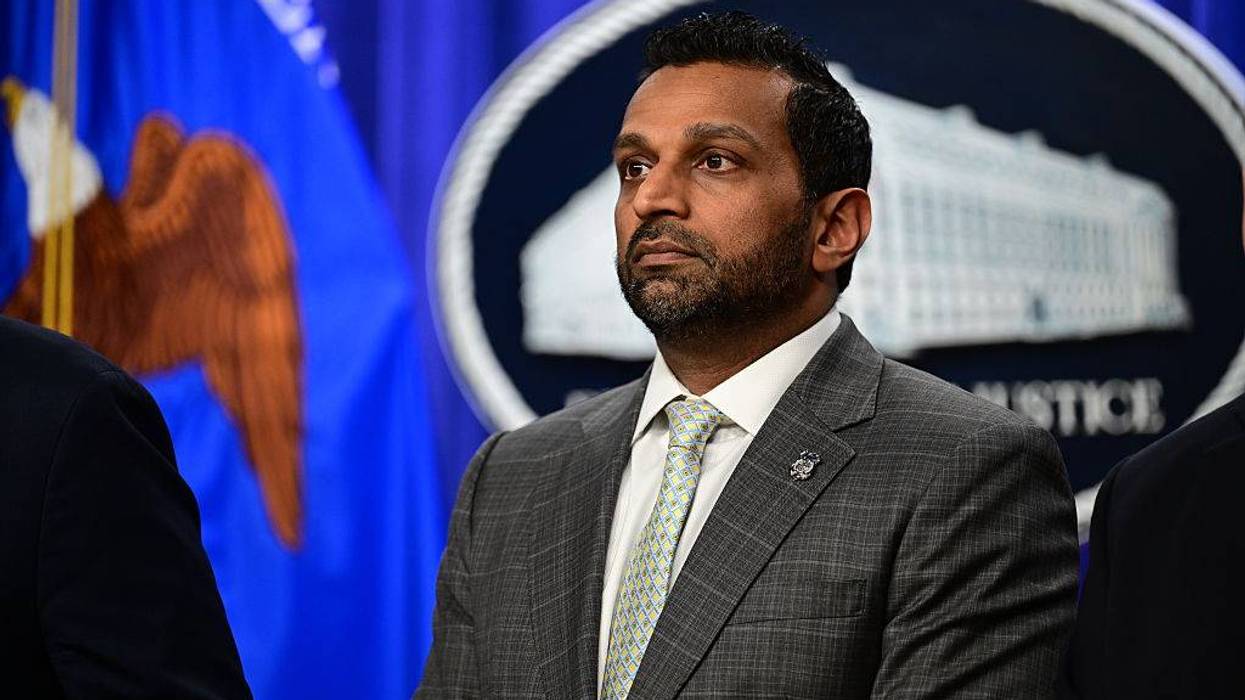
One press freedom advocate said the reported FBI investigation "would be outrageous even if The Atlantic reported classified information, which it didn’t."
The Federal Bureau of Investigation on Wednesday denied that it launched a reported probe into The Atlantic, which recently published a damning account of FBI Director Kash Patel’s alleged drunkenness, though magazine leadership and press freedom advocates remain alarmed.
As reported by MS NOW on Wednesday, the FBI is conducting a criminal leak investigation into The Atlantic's Sarah Fitzpatrick, whose reporting on Patel cited two dozen anonymous sources to document concerns about the FBI director's behavior.
MS NOW noted that the investigation into Fitzpatrick's reporting is "highly unusual because it did not stem from a disclosure of classified information" on the part of government insiders.
One source told MS NOW that the FBI agents assigned to the case have expressed serious reservations about its scope and purpose.
"They know they are not supposed to do this," the source said. "But if they don’t go forward, they could lose their jobs. You’re damned if you do and damned if you don't."
FBI spokesperson Ben Williamson denied to MS NOW that the agency had launched an investigation into Fitzpatrick, saying that "every time there’s a publication of false claims by anonymous sources that gets called out, the media plays the victim via investigations that do not exist."
Jeffrey Goldberg, editor-in-chief of The Atlantic, said the magazine was working to learn more about the alleged investigation, but "if true, this would be an outrageous, illegal, and dangerous attack on the free press and the First Amendment."
"We will defend Sarah and all of our reporters who are subjected to government harassment simply for pursuing the truth," Goldberg added.
Seth Stern, chief of advocacy at the Freedom of the Press Foundation, also condemned the reported investigation, which he said "would be outrageous even if The Atlantic reported classified information, which it didn’t."
"The FBI is reportedly conducting an invasive leak investigation merely to settle a personal vendetta," added Stern. "Separately, it doesn’t make much sense for Patel’s FBI to investigate leaks from what Patel’s lawsuit over the same reporting called ‘sham sources.’ Fake sources can’t leak."
Patel last month filed a $250 million defamation suit against The Atlantic for its report on his behavior, which the magazine said included "episodes of excessive drinking and unexplained absences."
The Atlantic vowed to fight the lawsuit, saying it stood by its reporting while describing Patel's complaint as "meritless."