SUBSCRIBE TO OUR FREE NEWSLETTER
Daily news & progressive opinion—funded by the people, not the corporations—delivered straight to your inbox.
5
#000000
#FFFFFF
To donate by check, phone, or other method, see our More Ways to Give page.
Daily news & progressive opinion—funded by the people, not the corporations—delivered straight to your inbox.
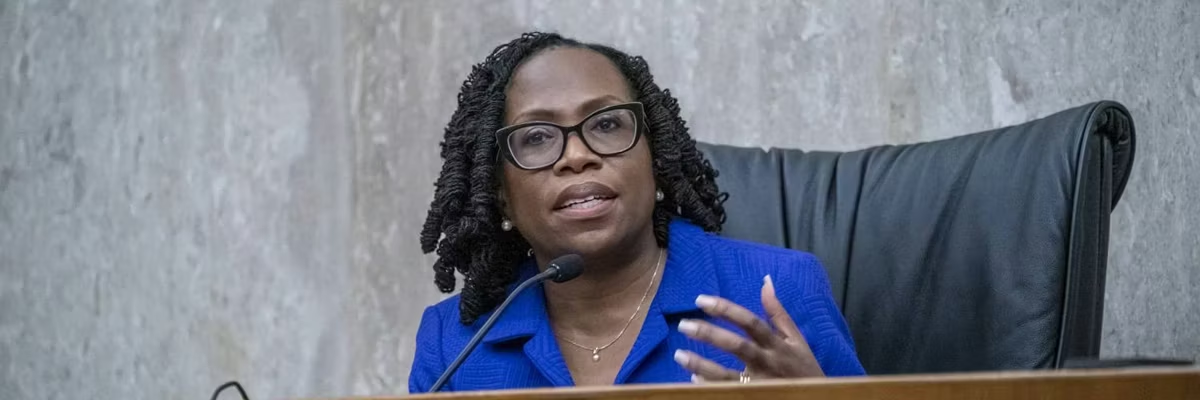
US Supreme Court Justice Ketanji Brown Jackson gives a joint lecture on March 9, 2026 in Washington, DC.
The Monday evening decision "is tantamount to an approval of Louisiana’s rush to pause the ongoing election in order to pass a new map."
Warning that the US Supreme Court's right-wing majority was appearing to give its approval of Louisiana's decision to suspend federal primary elections in the state following the court's ruling on the state's congressional map last week, Justice Ketanji Brown Jackson on Monday evening was the lone dissenter as the court agreed to immediately finalize the ruling instead of waiting the customary 32 days.
By expediting the ruling, suggested Jackson, the court was taking an obviously political stance in support of efforts to ensure Louisiana Republicans can quickly redraw the state's congressional map to yield more electoral wins for the GOP.
"The court’s decision to buck our usual practice," wrote Jackson, "is tantamount to an approval of Louisiana’s rush to pause the ongoing election in order to pass a new map."
Ordinarily, the court would wait 32 days to transmit an opinion to the lower courts, giving the losing party time to request that the justices reconsider the case.
In a brief, unsigned opinion Monday evening, the court said that the Black voters who had defended the state's 2024 congressional map at the center of Louisiana v. Callais had "not expressed any intent to ask this court to reconsider its judgment.”
In Louisiana v. Callais last week, the court ruled along ideological lines that the 2024 map—which was drawn to better represent the population of Louisiana, where one-third of residents are Black—was an unconstitutional racial gerrymander. The ruling effectively struck down the last remaining provision of Section 2 of the Voting Rights Act, which held that voters of color can challenge racially discriminatory electoral maps.
The map that was struck down ensured there were two majority-minority districts in the state. Louisiana's Republican-controlled legislature is expected to try to eliminate at least one of those districts, with a new map yielding five Republicans and one Democrat in the US House.
In transmitting last week's ruling to the lower courts without delay, the court granted a request from the group of white voters who had challenged the state's map.
"Because it is for the District Court to either draw an interim remedial map or approve a legislative remedy, jurisdiction should be returned to the District Court as soon as possible so that it can oversee an orderly process," wrote the plaintiffs.
The Supreme Court granted the plaintiffs' request days after Republican Gov. Jeff Landry took executive action to suspend the state's US House primaries in an effort to ensure they take place after the new map is drawn.
That action, wrote Jackson on Monday, had "a strong political undercurrent" that the court's latest move appeared to openly endorse.
"Louisiana’s hurried response to the Callais decision unfolds in the midst of an ongoing statewide election, against the backdrop of a pitched redistricting battle among state governments that appear to be acting as proxies for their favored political parties," wrote Jackson, noting that the court has only expedited a decision twice in the last 25 years. "As always, the court has a choice... To avoid the appearance of partiality here, we could, as per usual, opt to stay on the sidelines and take no position by applying our default procedures."
"But, today, the court chooses the opposite. Not content to have decided the law, it now takes steps to influence its implementation," she wrote.
John Bisognano, president of the National Democratic Redistricting Committee, said that the court was going against its practice of following the "Purcell doctrine," which came out of a 2006 Supreme Court order and holds that "courts should not change voting or election rules too close to an election in order to avoid confusion for voters and election officials alike."
The Supreme Court, said Bisognano, "decided to inject itself into an ongoing election and at this point no one can say otherwise."
Dear Common Dreams reader, It’s been nearly 30 years since I co-founded Common Dreams with my late wife, Lina Newhouser. We had the radical notion that journalism should serve the public good, not corporate profits. It was clear to us from the outset what it would take to build such a project. No paid advertisements. No corporate sponsors. No millionaire publisher telling us what to think or do. Many people said we wouldn't last a year, but we proved those doubters wrong. Together with a tremendous team of journalists and dedicated staff, we built an independent media outlet free from the constraints of profits and corporate control. Our mission has always been simple: To inform. To inspire. To ignite change for the common good. Building Common Dreams was not easy. Our survival was never guaranteed. When you take on the most powerful forces—Wall Street greed, fossil fuel industry destruction, Big Tech lobbyists, and uber-rich oligarchs who have spent billions upon billions rigging the economy and democracy in their favor—the only bulwark you have is supporters who believe in your work. But here’s the urgent message from me today. It's never been this bad out there. And it's never been this hard to keep us going. At the very moment Common Dreams is most needed, the threats we face are intensifying. We need your support now more than ever. We don't accept corporate advertising and never will. We don't have a paywall because we don't think people should be blocked from critical news based on their ability to pay. Everything we do is funded by the donations of readers like you. When everyone does the little they can afford, we are strong. But if that support retreats or dries up, so do we. Will you donate now to make sure Common Dreams not only survives but thrives? —Craig Brown, Co-founder |
Warning that the US Supreme Court's right-wing majority was appearing to give its approval of Louisiana's decision to suspend federal primary elections in the state following the court's ruling on the state's congressional map last week, Justice Ketanji Brown Jackson on Monday evening was the lone dissenter as the court agreed to immediately finalize the ruling instead of waiting the customary 32 days.
By expediting the ruling, suggested Jackson, the court was taking an obviously political stance in support of efforts to ensure Louisiana Republicans can quickly redraw the state's congressional map to yield more electoral wins for the GOP.
"The court’s decision to buck our usual practice," wrote Jackson, "is tantamount to an approval of Louisiana’s rush to pause the ongoing election in order to pass a new map."
Ordinarily, the court would wait 32 days to transmit an opinion to the lower courts, giving the losing party time to request that the justices reconsider the case.
In a brief, unsigned opinion Monday evening, the court said that the Black voters who had defended the state's 2024 congressional map at the center of Louisiana v. Callais had "not expressed any intent to ask this court to reconsider its judgment.”
In Louisiana v. Callais last week, the court ruled along ideological lines that the 2024 map—which was drawn to better represent the population of Louisiana, where one-third of residents are Black—was an unconstitutional racial gerrymander. The ruling effectively struck down the last remaining provision of Section 2 of the Voting Rights Act, which held that voters of color can challenge racially discriminatory electoral maps.
The map that was struck down ensured there were two majority-minority districts in the state. Louisiana's Republican-controlled legislature is expected to try to eliminate at least one of those districts, with a new map yielding five Republicans and one Democrat in the US House.
In transmitting last week's ruling to the lower courts without delay, the court granted a request from the group of white voters who had challenged the state's map.
"Because it is for the District Court to either draw an interim remedial map or approve a legislative remedy, jurisdiction should be returned to the District Court as soon as possible so that it can oversee an orderly process," wrote the plaintiffs.
The Supreme Court granted the plaintiffs' request days after Republican Gov. Jeff Landry took executive action to suspend the state's US House primaries in an effort to ensure they take place after the new map is drawn.
That action, wrote Jackson on Monday, had "a strong political undercurrent" that the court's latest move appeared to openly endorse.
"Louisiana’s hurried response to the Callais decision unfolds in the midst of an ongoing statewide election, against the backdrop of a pitched redistricting battle among state governments that appear to be acting as proxies for their favored political parties," wrote Jackson, noting that the court has only expedited a decision twice in the last 25 years. "As always, the court has a choice... To avoid the appearance of partiality here, we could, as per usual, opt to stay on the sidelines and take no position by applying our default procedures."
"But, today, the court chooses the opposite. Not content to have decided the law, it now takes steps to influence its implementation," she wrote.
John Bisognano, president of the National Democratic Redistricting Committee, said that the court was going against its practice of following the "Purcell doctrine," which came out of a 2006 Supreme Court order and holds that "courts should not change voting or election rules too close to an election in order to avoid confusion for voters and election officials alike."
The Supreme Court, said Bisognano, "decided to inject itself into an ongoing election and at this point no one can say otherwise."
Warning that the US Supreme Court's right-wing majority was appearing to give its approval of Louisiana's decision to suspend federal primary elections in the state following the court's ruling on the state's congressional map last week, Justice Ketanji Brown Jackson on Monday evening was the lone dissenter as the court agreed to immediately finalize the ruling instead of waiting the customary 32 days.
By expediting the ruling, suggested Jackson, the court was taking an obviously political stance in support of efforts to ensure Louisiana Republicans can quickly redraw the state's congressional map to yield more electoral wins for the GOP.
"The court’s decision to buck our usual practice," wrote Jackson, "is tantamount to an approval of Louisiana’s rush to pause the ongoing election in order to pass a new map."
Ordinarily, the court would wait 32 days to transmit an opinion to the lower courts, giving the losing party time to request that the justices reconsider the case.
In a brief, unsigned opinion Monday evening, the court said that the Black voters who had defended the state's 2024 congressional map at the center of Louisiana v. Callais had "not expressed any intent to ask this court to reconsider its judgment.”
In Louisiana v. Callais last week, the court ruled along ideological lines that the 2024 map—which was drawn to better represent the population of Louisiana, where one-third of residents are Black—was an unconstitutional racial gerrymander. The ruling effectively struck down the last remaining provision of Section 2 of the Voting Rights Act, which held that voters of color can challenge racially discriminatory electoral maps.
The map that was struck down ensured there were two majority-minority districts in the state. Louisiana's Republican-controlled legislature is expected to try to eliminate at least one of those districts, with a new map yielding five Republicans and one Democrat in the US House.
In transmitting last week's ruling to the lower courts without delay, the court granted a request from the group of white voters who had challenged the state's map.
"Because it is for the District Court to either draw an interim remedial map or approve a legislative remedy, jurisdiction should be returned to the District Court as soon as possible so that it can oversee an orderly process," wrote the plaintiffs.
The Supreme Court granted the plaintiffs' request days after Republican Gov. Jeff Landry took executive action to suspend the state's US House primaries in an effort to ensure they take place after the new map is drawn.
That action, wrote Jackson on Monday, had "a strong political undercurrent" that the court's latest move appeared to openly endorse.
"Louisiana’s hurried response to the Callais decision unfolds in the midst of an ongoing statewide election, against the backdrop of a pitched redistricting battle among state governments that appear to be acting as proxies for their favored political parties," wrote Jackson, noting that the court has only expedited a decision twice in the last 25 years. "As always, the court has a choice... To avoid the appearance of partiality here, we could, as per usual, opt to stay on the sidelines and take no position by applying our default procedures."
"But, today, the court chooses the opposite. Not content to have decided the law, it now takes steps to influence its implementation," she wrote.
John Bisognano, president of the National Democratic Redistricting Committee, said that the court was going against its practice of following the "Purcell doctrine," which came out of a 2006 Supreme Court order and holds that "courts should not change voting or election rules too close to an election in order to avoid confusion for voters and election officials alike."
The Supreme Court, said Bisognano, "decided to inject itself into an ongoing election and at this point no one can say otherwise."