

SUBSCRIBE TO OUR FREE NEWSLETTER
Daily news & progressive opinion—funded by the people, not the corporations—delivered straight to your inbox.
5
#000000
#FFFFFF
To donate by check, phone, or other method, see our More Ways to Give page.
Daily news & progressive opinion—funded by the people, not the corporations—delivered straight to your inbox.

Amy Saltzman, 301.656.0348
Chuck Collins, 617.308.4433
Kristin Lawton, 202.207.0137
If current federal wealth-building policies remain in place, it will take the average African-American family 228 years to amass the same amount of wealth that white families have today and it will take Latino families 84 years to reach that goal, according to a new report from the Corporation for Enterprise Development (CFED) and the Institute for Policy Studies (IPS).
The Ever-Growing Gap: Failing to Address the Status Quo Will Drive the Racial Wealth Divide for Centuries to Come shows how the well-documented chasm between white household wealth and African-American and Latino household wealth will play out over a period of decades and even centuries if nothing is done to change the current scenario.
For instance, the report finds that by 2043, when households of color are projected to account for more than half the U.S. population, the racial wealth divide between white households and African- American and Latino households will have doubled from about $500,000 in 2013 to $1 million.
The report notes that if these trends continue unabated, the entire economy will suffer. "By the time people of color become the majority, the racial wealth divide will not just be a racial and social justice issue impacting a particular group of people--it will be the single greatest economic issue facing our country," according to the authors.
The Ever-Growing Gap uses new data from the Survey of Consumer Finances to examine the long-term trajectory of the racial wealth divide. Assuming that white wealth remains stagnant at today's levels and average African-American wealth grows at the same pace it has over the past three decades, it would take the average black family until the year 2241 to accumulate wealth equal to what white families have today. By the same measure, Latino families would not reach parity with white family wealth until 2097.
"Wealth plays an essential role in helping people achieve financial security. It is money in the bank, a first home, a college degree and retirement security. As a nation we cannot sit idly by while huge swaths of society are denied those opportunities," said Dedrick Asante-Muhammad, Director of the Racial Wealth Divide Project at CFED.
While the report documents the continuing impact of historic inequities, such as federally sanctioned housing discrimination and unequal distribution of G.I. Bill benefits, it notes that current tax policies have intensified the wealth divide by helping the highest earners get even wealthier while providing the lowest income families with almost nothing.
During the past two decades alone, the federal government has spent more than $8 trillion through tax programs to assist families in building long-term wealth, including saving for retirement, purchasing a home, starting a business or paying for college, according to the report. Since 1994, the federal government's massive wealth-building spending has more than tripled, going from a little over $200 billion to $660 billion in 2015.
But the impact of these expenditures has been stunningly unequal or "upside down," as the report points out, with typical millionaires today receiving about $145,000 in public tax benefits to grow their wealth while working families get a grand total of $174 on average.
The result is a financial bonanza for wealthy families. Over the past 30 years, the wealth of the Forbes 400 richest Americans has grown 736%--10 times the rate of growth for the Latino population and 27 times the rate of growth for the black population. If average African-American households had been able to enjoy the same growth rate as the Forbes 400 during that same period, they would have an extra $475,000 in wealth today. Latino households would have an extra $386,000.
The Ever-Growing Gap finds that if these trends continue, the Forbes 400 will see their average wealth skyrocket to a staggering $48 billion by 2043--more than eight times the amount they hold today. Similarly, the top 1% would see their average wealth balloon to $33 million. Overall, the average wealth for white families would increase by 84% to $1.2 million compared to $165,000 for Latino families (69% growth) and $108,000 for African-American households (27% growth).
The report calls on the next president and Congress to consider a range of policy options to help close the divide. They include:
"Federal policymakers have a clear choice to make: They can allow this pattern to continue and set our country on a road to economic devastation, or they can stop facilitating the wealth divide and start expanding opportunities to boost wealth for all families, especially households of color," said Chuck Collins, Director of IPS's Program on Inequality and the Common Good.
# #
CFED's work makes it possible for millions of people to achieve financial security and contribute to an opportunity economy. We scale innovative practical solutions that empower low- and moderate-income people to build wealth. We drive responsive policy change at all levels of government. We support the efforts of community leaders across the country to advance economic opportunity for all. Established in 1979 as the Corporation for Enterprise Development, CFED works nationally and internationally through its offices in Washington, D.C.; Durham, North Carolina, and San Francisco, California.
The Institute for Policy Studies is a multi-issue research center that has conducted path-breaking research on inequality for more than 20 years. The IPS Inequality.org website provides an online portal into all things related to the income and wealth gaps that so divide us in the United States and throughout the world.
Institute for Policy Studies turns Ideas into Action for Peace, Justice and the Environment. We strengthen social movements with independent research, visionary thinking, and links to the grassroots, scholars and elected officials. I.F. Stone once called IPS "the think tank for the rest of us." Since 1963, we have empowered people to build healthy and democratic societies in communities, the US, and the world. Click here to learn more, or read the latest below.

The fundraiser comes as a recent study from the Federal Reserve Bank of New York showed food insecurity in the US has reached its highest levels since the Covid-19 pandemic.
A super political action committee created to support Donald Trump is preparing to hold a big-money fundraiser at the president's Virginia golf course that will charge attendees $1 million each.
As reported by NBC News, MAGA, Inc. will host the $1 million-per-plate event at the Trump National Golf Club Washington DC on the day before the president is set to host Ultimate Fighting Championship (UFC) events at the White House as part of his 80th birthday celebration.
"The fundraiser is at least the sixth such $1 million-per-person event held by Trump-aligned groups for the midterm elections," reported NBC News. "Republicans at nearly all levels hold a significant midterm cash advantage over Democrats, who expect to be outpaced financially in many key House and Senate races."
Lisa Gilbert, co-president of Public Citizen, linked the ritzy fundraiser to Trump's economic policies that have primarily benefited the wealthiest Americans at the expense of the working class.
"The comingling of 250th anniversary events, Trump’s UFC fight, and a $1 million per-plate fundraiser on Trump’s own birthday," Gilbert said, "gives corporate interests and wealthy donors not just an ultimate fight—but the ultimate opportunity to pay tribute to the president. Rather than celebrate our nation’s anniversary in the bipartisan manner directed by Congress, the Trump administration has directed public money and public property to politicized events."
"Major corporations, such as Chevron, Exxon, MasterCard, and many more," Gilbert added, "should be ashamed to be associated with this corrupt spectacle."
The fundraiser comes as a recent study from the Federal Reserve Bank of New York showed food insecurity in the US has reached its highest levels since the Covid-19 pandemic.
The New York Fed researchers said their study found “a remarkable increase in food insecurity, particularly among lower-educated and lower-income households and households with young children,” as well as “a contemporaneous increase in pessimism among the same groups, along with a sharp decline in job-finding expectations.”
The researchers noted that "while many households are doing fine and economic activity overall has been expanding at a solid pace," there are large numbers of people "facing high levels of economic insecurity and financial strain," which has resulted in plunging overall consumer sentiment.
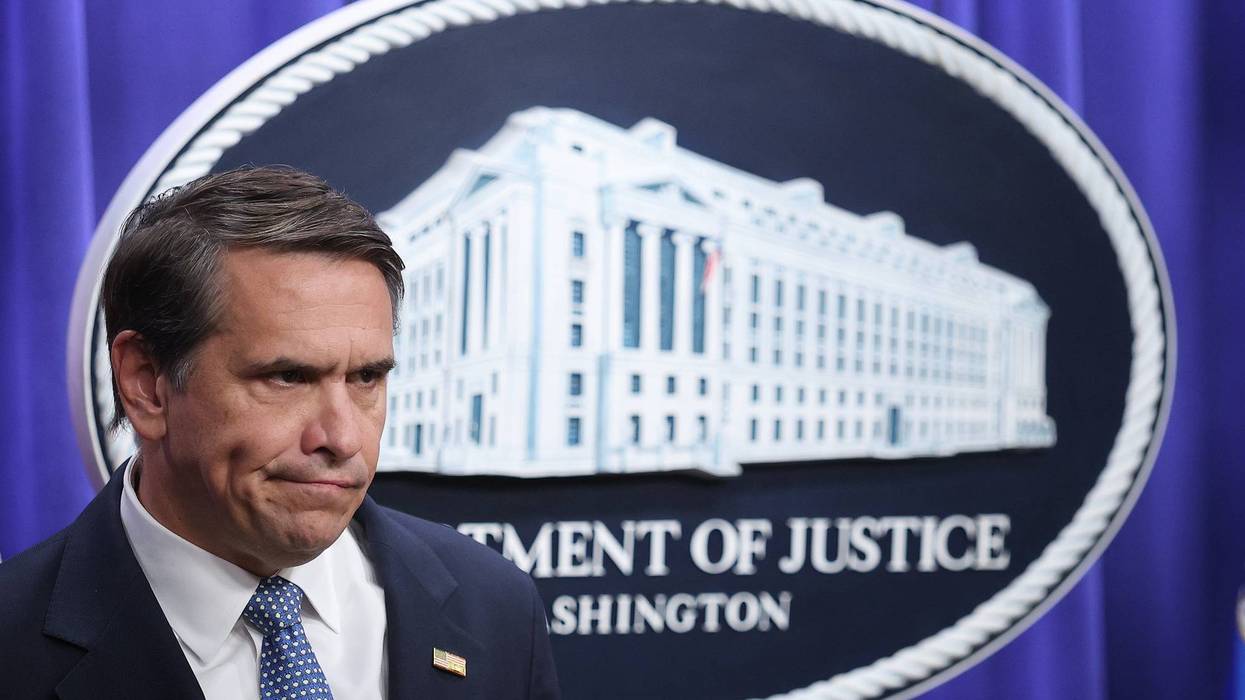
Acting Attorney General Todd Blanche has insisted that the plan to pay taxpayer funds to Trump allies is dead. But he hasn't said so under oath.
A federal judge may have dealt the final blow to President Donald Trump's $1.8 billion "weaponization fund" on Friday, indefinitely blocking it and ordering his administration to state unequivocally that it's no longer happening.
In the face of bipartisan backlash, acting Attorney General Todd Blanche had publicly backed off plans to use the money earlier this month, and a court temporarily blocked the transfer of the money to what opponents had dubbed a "slush fund" for Trump's supporters, including January 6 rioters who claim to be victims of government "weaponization" by the Biden administration.
But The Atlantic reported on Thursday that even as the US Department of Justice (DOJ) publicly swears that the payouts are dead, administration officials have been reassuring Trump's cronies behind the scenes that they'll get their checks and that the administration simply needs to wait for the legal blowback to die down or find an alternative way to award them the money, which was set to follow a DOJ-brokered settlement between Trump and his own Internal Revenue Service (IRS).
That may prove more difficult after Friday, however, when US District Judge Leonie M. Brinkema issued a preliminary injunction indefinitely extending her previous two-week pause on the fund.
She described the arrangement, to have taxpayer funds disbursed without court rulings to “an extremely small group” that many Americans feel engaged in “unacceptable” conduct, as "problematic."
The DOJ had attempted to have the case against the fund dismissed, arguing that it was now a moot point, since Blanche had publicly declared it dead. But Brinkema said, "The [government’s] mootness argument, in my view, doesn’t go anywhere.”
While the DOJ stated that the fund has “not been set up and is now not going forward," Brinkema noted that Blanche had declined to state that under oath, while Trump has publicly continued to champion the fund even as his administration has backed away from it.
During the hearing in the Eastern District of Virginia, Brinkema pressed DOJ lawyer Andrew Block on why, if the fund was truly defunct, the administration had not formally rescinded the order setting it up. He said he didn't know.
The judge gave Blanche, Associate Attorney General Stanley Woodward Jr., and Treasury Secretary Scott Bessent, whose department would have overseen the fund, one week to sign a “clear, unambiguous” declaration stating under penalty of perjury that the fund is dead, and wrote in the order that they must affirm that it "will not proceed in any manner, or under any name."
She said in order for the lawsuit to be thrown out, the government needed to put it in writing because "we don’t have the kind of absolute certainty that this fund wouldn’t rear its head."
CEO @SkyePerryman and Senior Counsel Pooja Boisture break down our major slush fund win from court. pic.twitter.com/ngneLRsl8R
— Democracy Forward (@DemocracyFwd) June 12, 2026
Outside the courtroom, Skye Perryman, the president and CEO of Democracy Forward—the watchdog group that sued the DOJ—celebrated that the court had "put the brakes on Donald Trump's slush fund."
The group is representing several plaintiffs who say they'd be harmed if the fund were to be enacted.
They include a former federal prosecutor fired after leading January 6 cases; the city of New Haven, Connecticut, which has been targeted by the administration over its sanctuary policies; the National Abortion Federation, which says the fund could reward anti-abortion activists convicted of clinic-related offenses; and the watchdog group Common Cause, which argues that the opaque scheme could embolden January 6 defendants.
"We were thrilled that the judge understood the significant harm that our clients face as a result of the fund, as well as the American people," said Democracy Forward senior counsel Pooja Boisture. "We were thrilled that she got it right. She understood that this was not a partisan issue."
It remains unclear whether the order would stop the administration from pursuing other methods for rewarding Trump's allies. Reuters reported on Friday that his legal allies have discussed dusting off a 1946 law called the Federal Tort Claims Act, which would allow individuals to file administrative claims and lawsuits that could be settled out of court with a lot of flexibility for the government.
“The Trump administration cannot be trusted with the public’s money,” said Omar Noureldin, Common Cause’s senior vice president for policy and litigation. "We’ve successfully locked the president’s personal slush fund for now, and we’ll keep the pressure on until it’s shut down for good.”
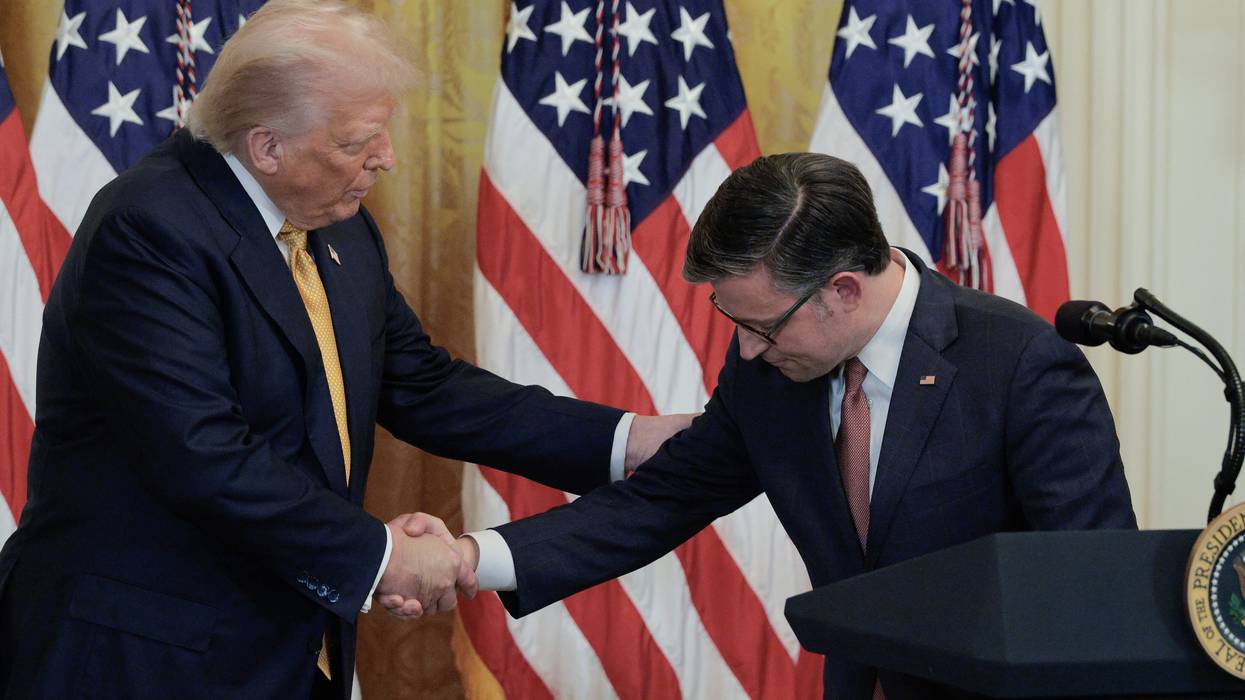
“The money that Trump wants to burn on war should instead be spent on the needs of the American people, including restoring funding for healthcare, food, housing, and climate action,” said one critic.
Republicans in both houses of Congress voted Thursday to advance President Donald Trump's request for record-high US military funding for 2027, prompting rebuke from Democrats and consumer advocates who decried the GOP's deep cuts to social safety net programs amid an ongoing affordability crisis.
The Senate Armed Services Committee voted 18-9 to advance the National Defense Authorization Act (NDAA) for fiscal year 2027. Meanwhile, the House Appropriations Defense Subcommittee advanced the Fiscal Year 2027 Defense Appropriations Bill during a closed-door markup. The House bill provides $1.072 trillion for the Pentagon and other military-related activities, a $234 billion increase from this year's enacted level.
The Trump administration's broader national security proposal requests nearly $1.5 trillion in total defense-related spending for 2027, which includes $350 billion in supplemental funding for munitions production, shipbuilding, missile defense, drones, artificial intelligence, and other long-term military programs. Trump wants Congress to use the budget reconciliation process to secure the additional funding. However, GOP lawmakers are wary to do so for a third time; just this week, Republicans used reconciliation to pass $70 billion in new funding for US Immigration and Customs Enforcement and Customs and Border Protection.
"This year, the majority has written a Defense Appropriations Act that provides the department with over a trillion dollars—an unprecedented sum. But this level of defense spending comes at the cost of cuts to domestic investments like education and workforce training, as well as international diplomacy," Defense Appropriations Subcommittee Ranking Member Betty McCollum (D-Minn.) said in a statement.
"President Trump said, ‘Jump,’ and Republicans in Congress said, ‘How high?’ Meanwhile, Republicans are proposing nearly $13 billion in cuts to domestic programs that provide relief for working families struggling to stay afloat as costs keep rising," the congresswoman added. "The American people are begging for relief from high prices, but the Trump administration and Republicans in Congress are deaf to their pleas."
In addition to increasing the national debt by an estimated $6.9 trillion over the next decade, Trump is seeking over $70 billion in proposed domestic cuts, including the elimination of the Low-Income Home Energy Assistance Program, sharp cuts in student aid, ending the Job Corps, slashing medical research and public health programs and Federal Emergency Management Agency assistance, reducing mental health and substance abuse programs, and halving Environmental Protection Agency funding.
These and other proposed reductions follow the enactment of the biggest cuts to Medicaid and the Supplemental Nutritional Assistance Program in the programs' histories under the so-called One Big Beautiful Bill Act signed by Trump last July. The OBBBA cuts were made to help fund trillions of dollars in tax reductions that disproportionately benefit the wealthiest Americans.
Robert Weisman, co-president of the consumer advocacy watchdog Public Citizen, noted significant opposition to Trump's proposed $234 billion increase in Pentagon spending for 2027.
“There is a rising tide of Democratic and Republican opposition to Trump’s illegal Iran war and massive proposed increases to the Pentagon budget," Weissman said Thursday, pointing to the "dozens" of lawmakers who voted against the additional spending during committee sessions, and the "bipartisan majority of the House" that "voted in support of the war powers resolution that directs Trump to end his war on Iran."
“Trump has repeatedly stated that he doesn’t care about childcare, inflation, or addressing the needs of the American people," Weissman continued. "Instead, he is seeking an overall $600 billion annual increase in Pentagon spending that would raise the total Pentagon budget to over $1.5 trillion."
“The American people are demanding Congress block Trump’s attempts to increase the Pentagon budget," he said. "This means voting against his National Defense Authorization Act, rejecting any Iran war supplemental funding bill, and blocking his proposed third reconciliation bill."
"The money that Trump wants to burn on war should instead be spent on the needs of the American people, including restoring funding for healthcare, food, housing, and climate action," Weissman added.