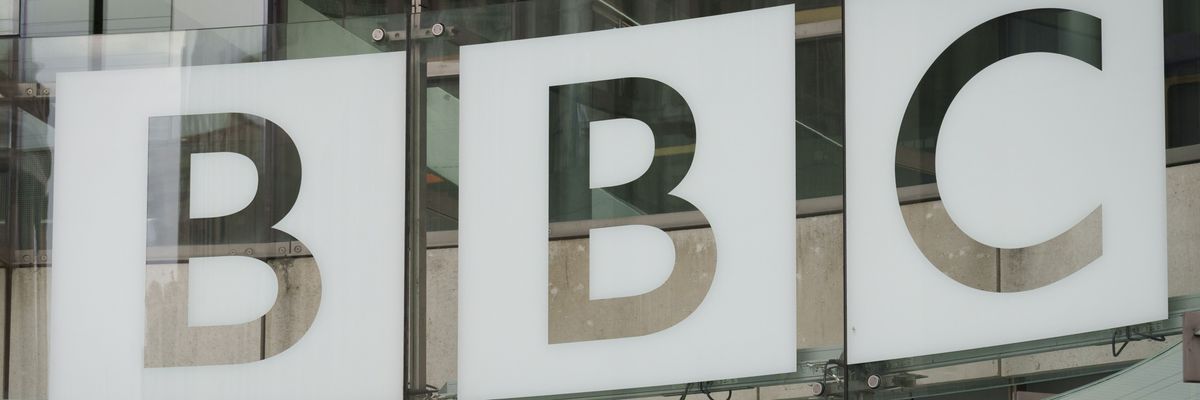
The BBC logo outside Broadcasting House, on 18th November 2025, in London, England.
BBC Rebuked for Censoring Historian Who Called Trump ‘Most Openly Corrupt President in American History’
The Dutch historian said the BBC's edit of his lecture shows what happens "when institutions start censoring themselves out of fear of those in power."
The BBC is being accused of bending to pressure from the White House once again after it removed a historian's claim that President Donald Trump was “the most openly corrupt president in American history” from one of its broadcasts.
Rutger Bregman, a Dutch author and historian, said Tuesday that Britain's flagship news broadcaster cut the "key line" out of a speech he gave as part of its prestigious Reith Lecture series.
The broadcast had included Bregman's descriptions of Trump as "a convicted reality star" and a "modern-day Caligula." It also included his criticism of the "establishment propping up" former President Joe Biden, whom he called "an elderly man in obvious mental decline."
But the BBC admits it cut out the line referring to Trump's corruption.
“The BBC has decided to censor my first Reith lecture,” Bregman said. “This sentence was taken out of a lecture they commissioned, reviewed through the full editorial process, and recorded four weeks ago in front of 500 people in the BBC Radio Theatre."
In a subsequent BBC radio broadcast discussing the controversy, the host said Bregman's assessment of Trump's corruption was removed "on legal advice."
"That same BBC legal advice means I can't tell you what was removed," he continued.
Bregman said he "was told the decision came from the highest levels within the BBC.”
The decision to pull Bregman's quote came as the network faces threats of a multibillion-dollar lawsuit from Trump over its edit of one of his speeches leading up to the January 6, 2021 US Capitol riot, which was fueled by the president's false assertions that his defeat in the 2020 election was the result of widespread voter fraud.
A documentary for the network's Panorama series, released days before the 2024 US election, had spliced together three clips of the president's speech to those assembled at the Capitol, which had occurred about 50 minutes apart. The statements made it appear as if Trump had urged supporters to march with him and called for violence.
Trump has since pardoned everyone who committed acts of violence on January 6, referring to them as “patriots,” and has purged investigators within the Justice Department who pursued cases against them.
The BBC issued an apology for its edit of Trump's comments, and its director general, Tim Davie, and the BBC News chief, Deborah Turness, have both resigned. However, it has insisted it did not defame Trump and that it would not settle any lawsuit with him.
In comments to the Guardian, a BBC spokesperson said it removed Bregman's comments because "all of our programs are required to comply with the BBC’s editorial guidelines, and we made the decision to remove one sentence from the lecture on legal advice.”
On social media, Bregman said the network's explanation did not make sense.
"The edit was made at the last minute, after editorial approval and four weeks after the live recording," he said. "A standard editorial edit doesn’t require days of high-level legal review or the involvement of many people at the top level."
He said the real reason was the network's fear of drawing Trump's ire.
"The truth is that the sentence wasn’t inaccurate—it was removed because of legal fears," he said. "And that’s exactly the concern my lecture raises: when institutions start censoring themselves out of fear of those in power."
We are at a crossroads
This country and this world are at a monumental crossroads. In a few short weeks, US voters will have an opportunity to beat back the forces of fascism and confront the billionaires who are rigging the economy, our media system, and our democracy, making it increasingly impossible for ordinary people to get by. We’re not just talking about the election. We’re talking about what must be done once these fascist elements are vanquished from power. We need a bolder set of solutions than what either major party has so far been willing to offer and a working-class movement ready to fight like hell for it. Trump didn't emerge from nowhere. The conditions that fueled MAGA authoritarianism were created by decades of radical neoliberal economic policies and a corrupt political system dominated by corporate interests. They slashed taxes on the super-rich, promising that the benefits would trickle down. They said giveaways to the corporate titans would make life more affordable for the rest of us. It was all bullshit. And when a bitter, betrayed populace searches for someone to blame, right-wing demagogues have little trouble finding scapegoats. People know when they're being lied to, but you won't hear any of this from the corporate media. Only independent journalism—powered and funded by people who believe in building a better world—can deliver truly trustworthy daily news. Our Fall Campaign is underway, and we need your help. To power our newsroom through the rest of the year, we need to raise $125,000 by midnight on October 31. So if you share our vision, please contribute whatever you can to sustain our work. |
The BBC is being accused of bending to pressure from the White House once again after it removed a historian's claim that President Donald Trump was “the most openly corrupt president in American history” from one of its broadcasts.
Rutger Bregman, a Dutch author and historian, said Tuesday that Britain's flagship news broadcaster cut the "key line" out of a speech he gave as part of its prestigious Reith Lecture series.
The broadcast had included Bregman's descriptions of Trump as "a convicted reality star" and a "modern-day Caligula." It also included his criticism of the "establishment propping up" former President Joe Biden, whom he called "an elderly man in obvious mental decline."
But the BBC admits it cut out the line referring to Trump's corruption.
“The BBC has decided to censor my first Reith lecture,” Bregman said. “This sentence was taken out of a lecture they commissioned, reviewed through the full editorial process, and recorded four weeks ago in front of 500 people in the BBC Radio Theatre."
In a subsequent BBC radio broadcast discussing the controversy, the host said Bregman's assessment of Trump's corruption was removed "on legal advice."
"That same BBC legal advice means I can't tell you what was removed," he continued.
Bregman said he "was told the decision came from the highest levels within the BBC.”
The decision to pull Bregman's quote came as the network faces threats of a multibillion-dollar lawsuit from Trump over its edit of one of his speeches leading up to the January 6, 2021 US Capitol riot, which was fueled by the president's false assertions that his defeat in the 2020 election was the result of widespread voter fraud.
A documentary for the network's Panorama series, released days before the 2024 US election, had spliced together three clips of the president's speech to those assembled at the Capitol, which had occurred about 50 minutes apart. The statements made it appear as if Trump had urged supporters to march with him and called for violence.
Trump has since pardoned everyone who committed acts of violence on January 6, referring to them as “patriots,” and has purged investigators within the Justice Department who pursued cases against them.
The BBC issued an apology for its edit of Trump's comments, and its director general, Tim Davie, and the BBC News chief, Deborah Turness, have both resigned. However, it has insisted it did not defame Trump and that it would not settle any lawsuit with him.
In comments to the Guardian, a BBC spokesperson said it removed Bregman's comments because "all of our programs are required to comply with the BBC’s editorial guidelines, and we made the decision to remove one sentence from the lecture on legal advice.”
On social media, Bregman said the network's explanation did not make sense.
"The edit was made at the last minute, after editorial approval and four weeks after the live recording," he said. "A standard editorial edit doesn’t require days of high-level legal review or the involvement of many people at the top level."
He said the real reason was the network's fear of drawing Trump's ire.
"The truth is that the sentence wasn’t inaccurate—it was removed because of legal fears," he said. "And that’s exactly the concern my lecture raises: when institutions start censoring themselves out of fear of those in power."
The BBC is being accused of bending to pressure from the White House once again after it removed a historian's claim that President Donald Trump was “the most openly corrupt president in American history” from one of its broadcasts.
Rutger Bregman, a Dutch author and historian, said Tuesday that Britain's flagship news broadcaster cut the "key line" out of a speech he gave as part of its prestigious Reith Lecture series.
The broadcast had included Bregman's descriptions of Trump as "a convicted reality star" and a "modern-day Caligula." It also included his criticism of the "establishment propping up" former President Joe Biden, whom he called "an elderly man in obvious mental decline."
But the BBC admits it cut out the line referring to Trump's corruption.
“The BBC has decided to censor my first Reith lecture,” Bregman said. “This sentence was taken out of a lecture they commissioned, reviewed through the full editorial process, and recorded four weeks ago in front of 500 people in the BBC Radio Theatre."
In a subsequent BBC radio broadcast discussing the controversy, the host said Bregman's assessment of Trump's corruption was removed "on legal advice."
"That same BBC legal advice means I can't tell you what was removed," he continued.
Bregman said he "was told the decision came from the highest levels within the BBC.”
The decision to pull Bregman's quote came as the network faces threats of a multibillion-dollar lawsuit from Trump over its edit of one of his speeches leading up to the January 6, 2021 US Capitol riot, which was fueled by the president's false assertions that his defeat in the 2020 election was the result of widespread voter fraud.
A documentary for the network's Panorama series, released days before the 2024 US election, had spliced together three clips of the president's speech to those assembled at the Capitol, which had occurred about 50 minutes apart. The statements made it appear as if Trump had urged supporters to march with him and called for violence.
Trump has since pardoned everyone who committed acts of violence on January 6, referring to them as “patriots,” and has purged investigators within the Justice Department who pursued cases against them.
The BBC issued an apology for its edit of Trump's comments, and its director general, Tim Davie, and the BBC News chief, Deborah Turness, have both resigned. However, it has insisted it did not defame Trump and that it would not settle any lawsuit with him.
In comments to the Guardian, a BBC spokesperson said it removed Bregman's comments because "all of our programs are required to comply with the BBC’s editorial guidelines, and we made the decision to remove one sentence from the lecture on legal advice.”
On social media, Bregman said the network's explanation did not make sense.
"The edit was made at the last minute, after editorial approval and four weeks after the live recording," he said. "A standard editorial edit doesn’t require days of high-level legal review or the involvement of many people at the top level."
He said the real reason was the network's fear of drawing Trump's ire.
"The truth is that the sentence wasn’t inaccurate—it was removed because of legal fears," he said. "And that’s exactly the concern my lecture raises: when institutions start censoring themselves out of fear of those in power."