SUBSCRIBE TO OUR FREE NEWSLETTER
Daily news & progressive opinion—funded by the people, not the corporations—delivered straight to your inbox.
5
#000000
#FFFFFF
To donate by check, phone, or other method, see our More Ways to Give page.
Daily news & progressive opinion—funded by the people, not the corporations—delivered straight to your inbox.
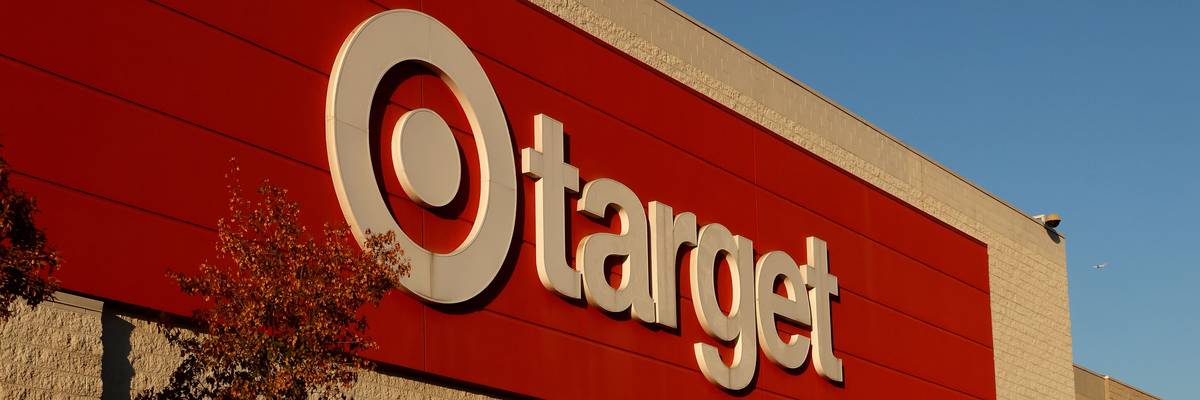
People walk past the front of a Target store on October 3, 2025, in Jersey City, New Jersey.
The incoming CEO announced 1,800 job cuts after 11 difficult quarters, a boycott over its DEI policy, and various complaints from consumers enduring broader economic pain.
As Americans are feeling the pain of President Donald Trump's economic policies, including the US leader's global tariff war, Minneapolis-based Target told employees Thursday that the retail giant is pursuing its first major job cuts in a decade.
The Wall Street Journal reported that Michael Fiddelke, Target's incoming CEO, said in a memo to staff that the company will lay off around 1,000 of its approximately 22,000 corporate employees and cut 800 open positions, mainly in the United States.
"The truth is, the complexity we've created over time has been holding us back," wrote Fiddelke, who is set to take over for CEO Brian Cornell in February. "Too many layers and overlapping work have slowed decisions, making it harder to bring ideas to life."
A Target spokesperson told CNBC that no roles in stores or the company's supply chain will be impacted. The last time the company announced mass cuts was March 2015, when it laid off 1,700 people and declined to fill 1,400 open jobs.
The Journal pointed out that "Target has reported 11 consecutive quarters of falling or weak comparable sales growth," and CNBC highlighted that "its shares have fallen by 65% since their all-time high in late 2021."
As CNBC also detailed:
Compared to retail competitors, Target draws less of its overall sales from groceries and other necessities, which can make its business more vulnerable to the ups and downs of the economy and consumer sentiment. About half of Target's sales come from discretionary items, compared to only 40% at Walmart, according to estimates from GlobalData Retail.
As a result of that and other company-specific challenges, Target's sales trends and stock performance have diverged sharply from competitors. Shares of Walmart are up about 123% in the past five years, compared to Target's decline of 41% during the same time period.
Target is among several that responded to Trump's return to office and executive order on diversity, equity, and inclusion initiatives by ditching its DEI policies. The decision caused some shoppers to boycott Target. While experts have debated the impact of the protest, it has certainly drawn attention to the company's financial state.
"When Target reported $23.85 billion in first-quarter sales, it missed analyst expectations by nearly $500 million. Foot traffic has declined for 11 straight weeks, with Placer.ai data showing consistent year-over-year drops since the boycott began," Investopedia reported last month. "Comparable sales in the second quarter fell 1.9%, with both transaction frequency and spending per visit declining. Operating income dropped by a fifth (19.4%) to $1.3 billion in the second quarter, while earnings per share fell about 20% to $2.05."
No woke, no growth: "Target cuts 1,800 corporate jobs in its first major layoffs in a decade. Target’s shares have fallen by about 65% since their all-time high in late 2021." www.cnbc.com/2025/10/23/t...
[image or embed]
— Social Media Lab (@socialmedialab.ca) October 23, 2025 at 4:59 PM
While acknowledging the DEI boycott, Bloomberg on Thursday also noted other issues, including that "many customers have pointed to long wait lines, empty shelves, and less distinctive items."
"Getting back on track won't be easy," Bloomberg added. "Shoppers remain selective, with consumer sentiment remaining subdued on concerns around inflation and the job market."
Dear Common Dreams reader, It’s been nearly 30 years since I co-founded Common Dreams with my late wife, Lina Newhouser. We had the radical notion that journalism should serve the public good, not corporate profits. It was clear to us from the outset what it would take to build such a project. No paid advertisements. No corporate sponsors. No millionaire publisher telling us what to think or do. Many people said we wouldn't last a year, but we proved those doubters wrong. Together with a tremendous team of journalists and dedicated staff, we built an independent media outlet free from the constraints of profits and corporate control. Our mission has always been simple: To inform. To inspire. To ignite change for the common good. Building Common Dreams was not easy. Our survival was never guaranteed. When you take on the most powerful forces—Wall Street greed, fossil fuel industry destruction, Big Tech lobbyists, and uber-rich oligarchs who have spent billions upon billions rigging the economy and democracy in their favor—the only bulwark you have is supporters who believe in your work. But here’s the urgent message from me today. It's never been this bad out there. And it's never been this hard to keep us going. At the very moment Common Dreams is most needed, the threats we face are intensifying. We need your support now more than ever. We don't accept corporate advertising and never will. We don't have a paywall because we don't think people should be blocked from critical news based on their ability to pay. Everything we do is funded by the donations of readers like you. When everyone does the little they can afford, we are strong. But if that support retreats or dries up, so do we. Will you donate now to make sure Common Dreams not only survives but thrives? —Craig Brown, Co-founder |
As Americans are feeling the pain of President Donald Trump's economic policies, including the US leader's global tariff war, Minneapolis-based Target told employees Thursday that the retail giant is pursuing its first major job cuts in a decade.
The Wall Street Journal reported that Michael Fiddelke, Target's incoming CEO, said in a memo to staff that the company will lay off around 1,000 of its approximately 22,000 corporate employees and cut 800 open positions, mainly in the United States.
"The truth is, the complexity we've created over time has been holding us back," wrote Fiddelke, who is set to take over for CEO Brian Cornell in February. "Too many layers and overlapping work have slowed decisions, making it harder to bring ideas to life."
A Target spokesperson told CNBC that no roles in stores or the company's supply chain will be impacted. The last time the company announced mass cuts was March 2015, when it laid off 1,700 people and declined to fill 1,400 open jobs.
The Journal pointed out that "Target has reported 11 consecutive quarters of falling or weak comparable sales growth," and CNBC highlighted that "its shares have fallen by 65% since their all-time high in late 2021."
As CNBC also detailed:
Compared to retail competitors, Target draws less of its overall sales from groceries and other necessities, which can make its business more vulnerable to the ups and downs of the economy and consumer sentiment. About half of Target's sales come from discretionary items, compared to only 40% at Walmart, according to estimates from GlobalData Retail.
As a result of that and other company-specific challenges, Target's sales trends and stock performance have diverged sharply from competitors. Shares of Walmart are up about 123% in the past five years, compared to Target's decline of 41% during the same time period.
Target is among several that responded to Trump's return to office and executive order on diversity, equity, and inclusion initiatives by ditching its DEI policies. The decision caused some shoppers to boycott Target. While experts have debated the impact of the protest, it has certainly drawn attention to the company's financial state.
"When Target reported $23.85 billion in first-quarter sales, it missed analyst expectations by nearly $500 million. Foot traffic has declined for 11 straight weeks, with Placer.ai data showing consistent year-over-year drops since the boycott began," Investopedia reported last month. "Comparable sales in the second quarter fell 1.9%, with both transaction frequency and spending per visit declining. Operating income dropped by a fifth (19.4%) to $1.3 billion in the second quarter, while earnings per share fell about 20% to $2.05."
No woke, no growth: "Target cuts 1,800 corporate jobs in its first major layoffs in a decade. Target’s shares have fallen by about 65% since their all-time high in late 2021." www.cnbc.com/2025/10/23/t...
[image or embed]
— Social Media Lab (@socialmedialab.ca) October 23, 2025 at 4:59 PM
While acknowledging the DEI boycott, Bloomberg on Thursday also noted other issues, including that "many customers have pointed to long wait lines, empty shelves, and less distinctive items."
"Getting back on track won't be easy," Bloomberg added. "Shoppers remain selective, with consumer sentiment remaining subdued on concerns around inflation and the job market."
As Americans are feeling the pain of President Donald Trump's economic policies, including the US leader's global tariff war, Minneapolis-based Target told employees Thursday that the retail giant is pursuing its first major job cuts in a decade.
The Wall Street Journal reported that Michael Fiddelke, Target's incoming CEO, said in a memo to staff that the company will lay off around 1,000 of its approximately 22,000 corporate employees and cut 800 open positions, mainly in the United States.
"The truth is, the complexity we've created over time has been holding us back," wrote Fiddelke, who is set to take over for CEO Brian Cornell in February. "Too many layers and overlapping work have slowed decisions, making it harder to bring ideas to life."
A Target spokesperson told CNBC that no roles in stores or the company's supply chain will be impacted. The last time the company announced mass cuts was March 2015, when it laid off 1,700 people and declined to fill 1,400 open jobs.
The Journal pointed out that "Target has reported 11 consecutive quarters of falling or weak comparable sales growth," and CNBC highlighted that "its shares have fallen by 65% since their all-time high in late 2021."
As CNBC also detailed:
Compared to retail competitors, Target draws less of its overall sales from groceries and other necessities, which can make its business more vulnerable to the ups and downs of the economy and consumer sentiment. About half of Target's sales come from discretionary items, compared to only 40% at Walmart, according to estimates from GlobalData Retail.
As a result of that and other company-specific challenges, Target's sales trends and stock performance have diverged sharply from competitors. Shares of Walmart are up about 123% in the past five years, compared to Target's decline of 41% during the same time period.
Target is among several that responded to Trump's return to office and executive order on diversity, equity, and inclusion initiatives by ditching its DEI policies. The decision caused some shoppers to boycott Target. While experts have debated the impact of the protest, it has certainly drawn attention to the company's financial state.
"When Target reported $23.85 billion in first-quarter sales, it missed analyst expectations by nearly $500 million. Foot traffic has declined for 11 straight weeks, with Placer.ai data showing consistent year-over-year drops since the boycott began," Investopedia reported last month. "Comparable sales in the second quarter fell 1.9%, with both transaction frequency and spending per visit declining. Operating income dropped by a fifth (19.4%) to $1.3 billion in the second quarter, while earnings per share fell about 20% to $2.05."
No woke, no growth: "Target cuts 1,800 corporate jobs in its first major layoffs in a decade. Target’s shares have fallen by about 65% since their all-time high in late 2021." www.cnbc.com/2025/10/23/t...
[image or embed]
— Social Media Lab (@socialmedialab.ca) October 23, 2025 at 4:59 PM
While acknowledging the DEI boycott, Bloomberg on Thursday also noted other issues, including that "many customers have pointed to long wait lines, empty shelves, and less distinctive items."
"Getting back on track won't be easy," Bloomberg added. "Shoppers remain selective, with consumer sentiment remaining subdued on concerns around inflation and the job market."