

SUBSCRIBE TO OUR FREE NEWSLETTER
Daily news & progressive opinion—funded by the people, not the corporations—delivered straight to your inbox.
5
#000000
#FFFFFF
To donate by check, phone, or other method, see our More Ways to Give page.
Daily news & progressive opinion—funded by the people, not the corporations—delivered straight to your inbox.
Paul Kawika Martin, Peace Action: pmartin@peace-action.org
Kevin Martin, Peace Action: kmartin@peace-action.org
The United States, Russia, China, United Kingdom, and France, plus Germany (P5 + 1) and Iran reached an historic framework agreement regarding Iran's nuclear program in Switzerland today. The "Common Understanding On Principles" claims to take steps that will keep Iran from producing a nuclear weapon in exchange for lifting international sanctions against the country.
The United States, Russia, China, United Kingdom, and France, plus Germany (P5 + 1) and Iran reached an historic framework agreement regarding Iran's nuclear program in Switzerland today. The "Common Understanding On Principles" claims to take steps that will keep Iran from producing a nuclear weapon in exchange for lifting international sanctions against the country.
"This historic agreement between the international community and Iran on its nuclear program will ensure it will not produce a nuclear weapon making the U.S. and the world a safer place. This agreement promises to keep Iran at least a year away from having the fissile material needed to make a crude nuclear weapon. Without an agreement, that timeline shrinks to three months and the threat of war increases dramatically," commented Paul Kawika Martin the political director of Peace Action (the largest peace group in the U.S. founded on abolishing nuclear weapons) who has been working on the Iran issue for over eight years and had the rare opportunity to spend time in Iran and enjoyed hospitality from its people and its vast culture.
Recent polls show that Americans oppose military intervention with Iran by 71% and support reaching an agreement. The parties conducted marathon negotiations past their self-imposed deadline of March 31 to develop the solutions that will create the Comprehensive Joint Plan of Action (CJPOA). The parties have until June 30th to agree to all the technical and implementation specifics and sign the CJPOA that will last ten years with parts lasting longer like inspections and monitoring set to occur indefinitely.
"The success of these talks, again proves that diplomacy works. Instead of isolation, sanctions that don't affect leaders or military intervention that costs vast amounts of blood and treasure and untold longterm costs and unintended consequences, the U.S. used dialogue, negotiations and the international community to solve conflict. These notable negotiations may pave the way for more discussions on issues like human rights and regional security that will further reduce Middle East tensions," added Kevin Martin, executive director, of Peace Action.
The agreement includes five major components. Decreasing the stockpile of material that could possibly be made into fissile material. Limiting the quantity and quality of centrifuges that could make highly enriched uranium needed for a nuclear bomb. Reconfiguring the nuclear reactor (and securing its spent fuel) in the city of Arak so it produces an insignificant amount of weapons grade plutonium. Implementing unprecedented inspections and comprehensive monitoring. And lastly, scheduling and implementing the lifting of specific sanctions on Iran.
"An agreement with Iran on its nuclear program is better than any imaginable alternative. Military strategists have said over and over again that a military intervention with Iran would at best slightly delay any nuclear program and at worst force Iran to engage in getting a nuclear weapon even if they had no such program. Any letters or legislation that offers more sanctions or ties the hands of the negotiators are clearly meant to kill the talks. Poison pill bills like Senator Bob Corker's that could delay implementation of an agreement for months and puts certification hurdles nearly impossible to clear should be defeated. Scuttling the accord would be very short sighted as an agreement with Iran on their nuclear program would likely lead to productive negotiations on other items of concern with the Iranian Government. More sanctions on Iran are likely to only embolden Iranian hardliner rather than solving the problem," concluded Paul Kawika Martin.
Peace Action is the United States' largest peace and disarmament organization with over 100,000 members and nearly 100 chapters in 34 states, works to achieve the abolition of nuclear weapons, promote government spending priorities that support human needs and encourage real security through international cooperation and human rights.
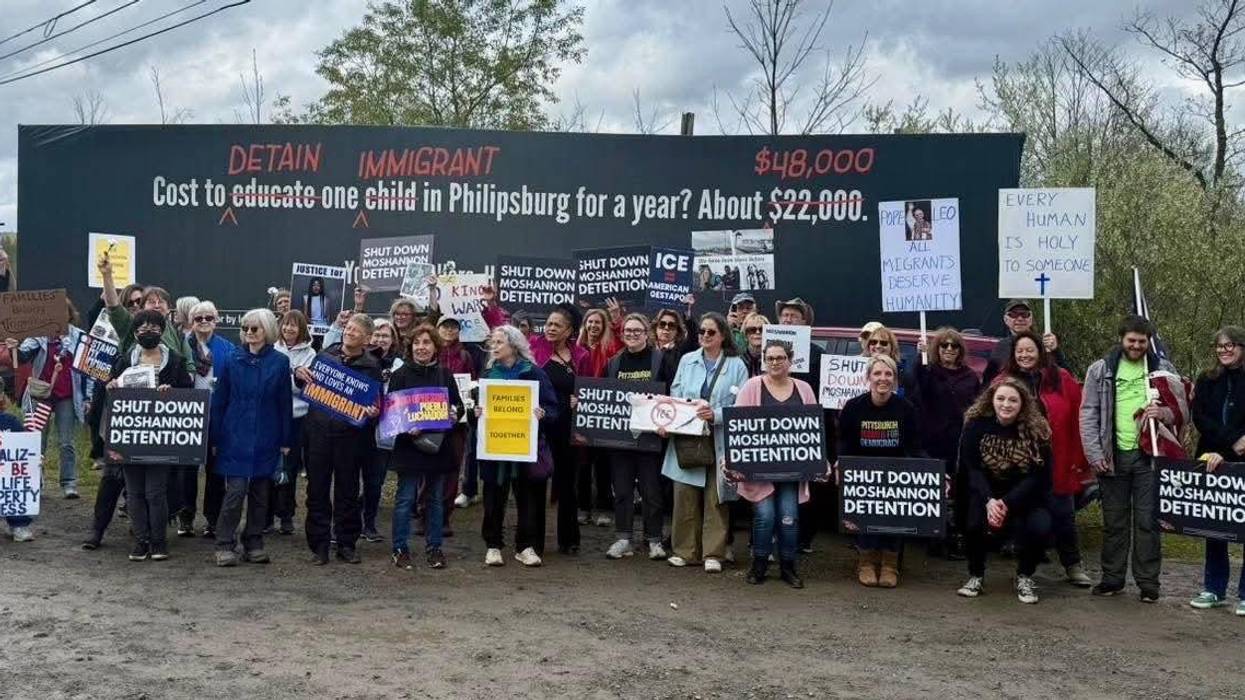
"To really honor Mother's Day, we must fight for our government to pass policies that actually help mothers and families," Sen. Elizabeth Warren said.
Progressive leaders and organizations celebrated US Mother's Day on Sunday with calls for policy changes that would make life easier for families.
Sen. Elizabeth Warren (D-Mass.) pointed out that issues of affordability make mothering—and celebrating mothers—more difficult.
"Despite the average family paying 20% of their income on childcare in 2025, [President Donald] Trump has said, 'It's not possible for us to take care of daycare,'" Warren posted on social media, referring to remarks the president made last month in which he claimed that the federal government could not afford to fund childcare, Medicare, and Medicaid because it needed the money for warfare.
"To really honor Mother's Day, we must fight for our government to pass policies that actually help mothers and families," Warren continued.
"If this country truly valued mothers, our politics would reflect it."
In a separate post, the Massachusetts senator listed several items, from cakes to coffee to flowers, that had gone up in price during the second Trump administration.
"Here's everything that's more expensive this Mother's Day under Donald Trump," she wrote.
Here's everything that's more expensive this Mother's Day under Donald Trump:
Fresh cakes and cupcakes: up 5.2%
Fresh sweetrolls, coffeecakes, doughnuts: up 3.6%
Bananas: up 5%
Citrus fruits: up 2.7%
Coffee: up 18.7%
Candy and chewing gum: up 10.6%
Indoor plants and flowers: up…
— Elizabeth Warren (@SenWarren) May 10, 2026
Progressive political action group Our Revolution also called for a more robust social safety net for Mother's Day.
"If this country truly valued mothers, our politics would reflect it," the group wrote. "Universal childcare. Medicare for All. Paid family leave. A living wage. Affordable housing. Strong public schools. A four-day work week. Reproductive freedom."
Sen. Bernie Sanders (I-Vt.) who founded Our Revolution, wished a happy Mother's Day to his wife Jane and all other mothers, calling for both national and global stability.
"Let us continue our push for a world where all mothers can raise their families without the threat of war, with economic stability, and where their rights are protected," he wrote.
Other lawmakers focused on mothers who are separated from their children due to immigration detention under the second Trump administration, which resumed the practice of family detention after it had largely been abandoned under President Joe Biden.
Rep. Summer Lee (D-Pa.) spent Saturday preparing donations for Immigration and Custom Enforcement's (ICE) Moshannon Valley Processing Center in Decatur Township, Pennsylvania.
"This Mother’s Day I’m thinking of the moms and mother figures unjustly detained at Moshannon who would rather be at home with their babies," she wrote on social media.
This Mother’s Day I’m thinking of the moms and mother figures unjustly detained at Moshannon who would rather be at home with their babies.
Yesterday we packed and sent off buses with donations for them. It’s the least we can do. pic.twitter.com/EocSX6kzrY
— Rep. Summer Lee (@RepSummerLee) May 10, 2026
Rep. Ayanna Pressley (D-Mass.) encouraged followers to donate to Each Step Home, which works to reunite immigrant families and support and release children in immigration detention.
"This Mother's Day, I'm thinking of Trump & ICE's cruel treatment of mothers & traumatization of children. No mother, no child, & no family should be detained—but that's exactly what's happening in Dilley, TX," she wrote, referring to a family detention center reopened by the second Trump administration and run by private prison company CoreCivic.
This Mother's Day, I'm thinking of Trump & ICE's cruel treatment of mothers & traumatization of children.
No mother, no child, & no family should be detained—but that's exactly what's happening in Dilley, TX. pic.twitter.com/NeyB4gVIJo
— Ayanna Pressley (@AyannaPressley) May 10, 2026
Rep. Delia Ramirez (D-Ill.), meanwhile, shared the story of Isidoro González Avilés and Norma Anabel Ramírez Amaya, who were released from Department of Homeland Security (DHS) detention on Friday and reunited Saturday with their son Kevin González, who has terminal cancer.
Kevin, who was born in the US and raised in Mexico, was diagnosed with stage 4 colon cancer during a visit to the US, as CNN reported. His parents attempted to travel to the US to visit him before he died, despite having previous immigration infractions, and were detained. The family was finally able to reunite in Durango, Mexico.
Isidoro González Avilés y Norma Anabel se reunieron este sábado con su hijo Kevin en Durango, México, luego de ser liberados por el Departamento de Seguridad Nacional el viernes.
Kevin, quien nació en Estados Unidos, pero se crió en México, tiene cáncer de colon en etapa cuatro… pic.twitter.com/K341mAlOFU
— N+ UNIVISION (@nmasunivision) May 10, 2026
"My heart is full seeing the images of Kevin and his family reunited," Ramirez wrote. "Our community made this moment possible. As we celebrate Mother's Day, let’s remember all the mothers still separated from their loved ones by DHS. For all the families that have not been reunited yet, we continue the fight."
In a separate post, she added, "To all those who are grieving loss, family separation, and the impacts of genocide and war this Mother's Day, we see you. You are not alone."
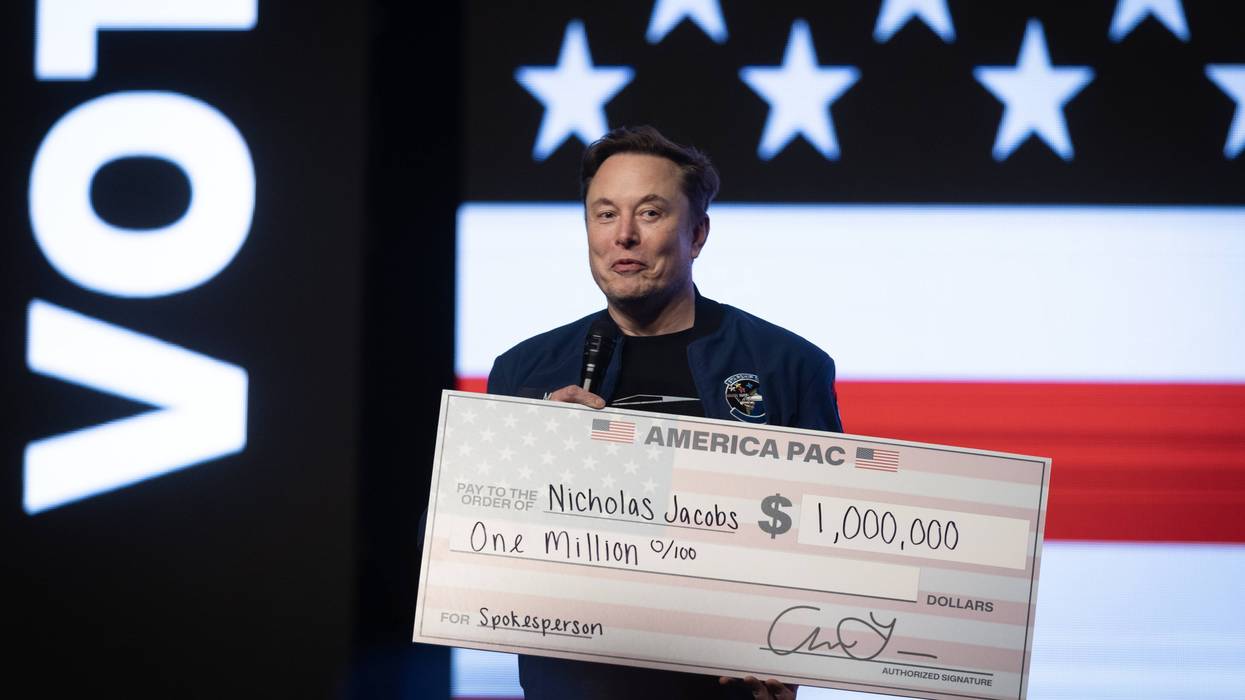
A new poll from Politico found that only 5% of respondents disagree that there is too much money in politics, and 61% think billionaires have too much influence on elections.
A significant majority of Americans agree that there is too much money in the US political system and that the super rich have more influence over election outcomes than ordinary citizens, a poll published by Politico on Saturday found.
The poll comes after outside spending in the 2024 election broke records, with richest-man-alive Elon Musk pouring over $250 million into President Donald Trump's campaign.
"In 2024, the maximum individual donation per candidate was $3,300. Elon Musk donated $277 million to elect Trump because of the loopholes Citizens United created for billionaires to buy elections," Campaign for New York Health executive director Melanie D'Arrigo wrote on social media Sunday in response to the results.
"Elon has increased his wealth by $235 billion during Trump’s second term, and was allowed to gut the federal agencies overseeing and investigating him," she continued. "Big money in politics is a direct threat to democracy and the working class."
“This type of astronomical spending corrodes people’s faith in our system of government."
According to the poll, 72% of Americans agree that there is too much money in politics, while only 5% disagree. There is broad partisan consensus on this issue, with 80% of 2024 Kamala Harris voters and 77% of 2024 Trump voters also agreeing.
At the same time, 61% think that billionaires have too much influence on US politics. There was a larger partisan gap on this issue, with 75% of Harris voters and 55% of Trump voters agreeing
A total of 67% of respondents think that there is too much special interest money specifically in elections, and 53% see it as a form of corruption that should be restricted. There is also bipartisan support for the idea that special interest money is corruption, with 61% of Harris voters and 56% of Trump voters backing this position.
There is slightly more concern about money in politics from Democratic voters, with 49% of 2024 Harris voters stating it could outright buy elections compared with 33% of Trump voters.
In response to the results, Sen. Sheldon Whitehouse (D-RI) argued that the Democratic Party should do more to take advantage of this concern.
"Dems shy away from the issue, despite voting 100% to get rid of dark money when given the chance. (Republicans 100% defend dark money.)," he wrote on social media.
The Democratic National Committee passed a resolution condemning dark money election spending last month, but some lawmakers including Sen. Bernie Sanders (I-Vt.) have called for it to go further by banning dark money contributions to Democratic primaries all together.
Election spending skyrocketed in the US following the Supreme Court's controversial decision Citizens United v. Federal Election Commission in 2010. Dark money spending increased dramatically, reaching $1.9 billion in 2024.
“This type of astronomical spending corrodes people’s faith in our system of government, and I think people are really looking for changes to take some of this outrageous amount of spending and rein it in,” Michael Beckel, the Money in Politics reform director at Issue One, told Politico.
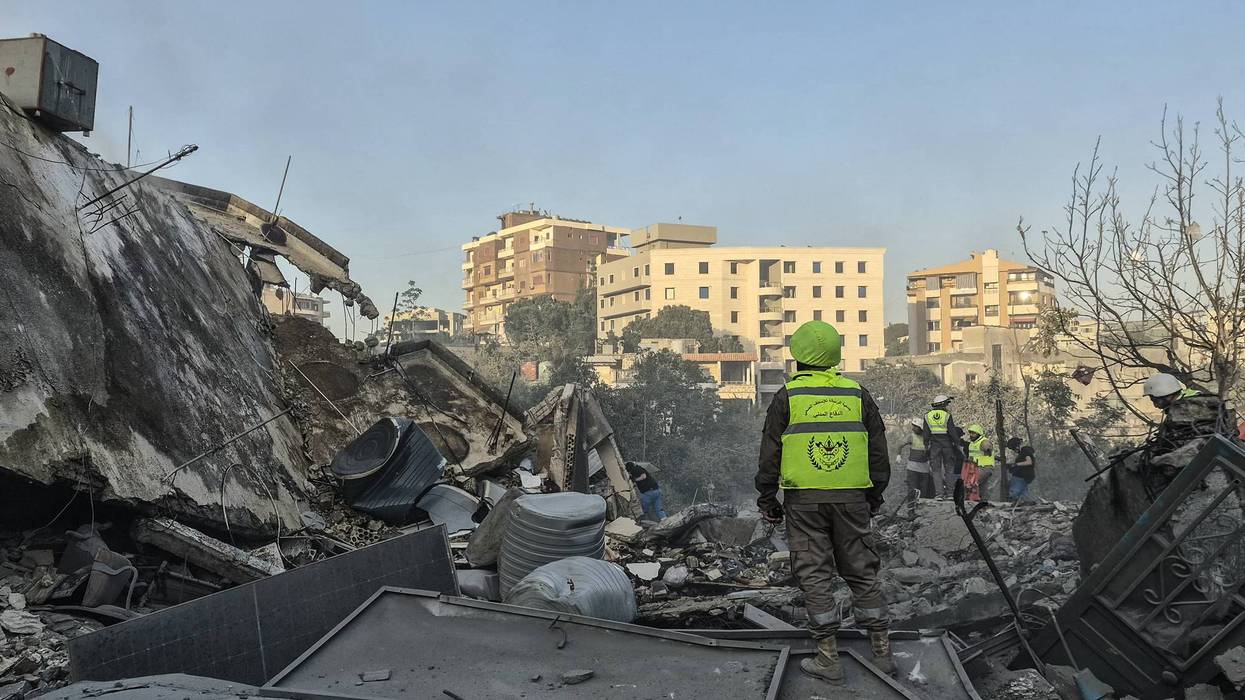
The pair were among the at least 24 people killed by Israeli strikes on Lebanon on Saturday despite a nominal ceasefire.
An Israeli drone killed a Syrian laborer and his 12-year-old daughter in a double-tap attack in southern Lebanon on Saturday, in what the Lebanon Health Ministry described as part of a continuing pattern “of grave violations of International Humanitarian Law.”
The man was riding with his daughter on a motorcycle in Nabatiyeh when the pair were targeted by three drone strikes, according to the ministry.
The Associated Press reported:
The ministry said that after the initial strike, the man and his daughter managed to move away from the site only to be attacked again by the drone instantly killing the man. The girl then moved about 100 meters (yards) away and was hit again by the drone after she had been already wounded.
The girl was taken to the hospital, but did not survive her injuries, according to Lebanon's National News Agency.
"What does terrorism mean to you? If it’s [not] double-tap killings of paramedics, journalists, and today a 12 year old girl, then what is it?"
“The Ministry of Public Health denounces this barbaric targeting and the deliberate violence against civilians and children in Lebanon,” the ministry said, as AP reported.
The father and daughter were among a total of at least 24 people in Lebanon who were killed by Israeli strikes on Saturday, according to Al Jazeera.
One strike on the town of al-Saksakieh killed seven, among them a child. The strike also wounded 15 people including three children.
The bombings continue despite a nominal ceasefire between Lebanon and Hezbollah that went into effect April 17. However, Israel has killed almost 500 people in Lebanon since April 16, raising the death toll since its March 2 invasion to over 2,750.
War correspondent Courtney Schellekens shared the story of the 12-year-old girl and her father in a video on social media on Saturday.
What does terrorism mean to you? If it’s no double-tap killings of paramedics, journalists, and today a 12 year old girl, then what is it?
Westerners, where is your humanity?
Cameraman: @aliezzedine7 pic.twitter.com/ntXIwz4s6H
— courtneybonneauimages (@cbonneauimages) May 9, 2026
"What does terrorism mean to you? If it’s [not] double-tap killings of paramedics, journalists, and today a 12 year old girl, then what is it?" she wrote above the video.
At the conclusion of the video itself, she continued the same line of questioning.
"To my Western followers, I really want you to think critically about the definition of terrorism, to whom it gets applied and who does it benefit," she said. "Because where I've been sitting for the last 18 months, this mass murder and mass, you know, look at this," she gestured to the ruble behind her, "this mass destruction, this ethnic cleansing of south Lebanon, this looks a lot like terrorism to me."