

SUBSCRIBE TO OUR FREE NEWSLETTER
Daily news & progressive opinion—funded by the people, not the corporations—delivered straight to your inbox.
5
#000000
#FFFFFF
To donate by check, phone, or other method, see our More Ways to Give page.
Daily news & progressive opinion—funded by the people, not the corporations—delivered straight to your inbox.
In the U.S.: Nick Magel 1-419-283-2728 nick@amazonwatch.org
In Peru: Gregor MacLennan + 511 - 993 916-389
In
the aftermath of Friday's bloody raid on a peaceful indigenous road
blockade near Bagua in the Peruvian Amazon, numerous eyewitnesses are
reporting that the Special Forces of the Peruvian Police have been
disposing of the bodies of indigenous protesters who were killed.
"Today I spoke to many eyewitnesses in Bagua reporting that they saw
police throw the bodies of the dead into the Maranon River from a
helicopter in an apparent attempt by the Government to underreport the
number of indigenous people killed by police," said Gregor MacLennan,
spokesperson for Amazon Watch speaking.
"Hospital workers in Bagua Chica and Bagua Grande corroborated that the
police took bodies of the dead from their premises to an undisclosed
location. I spoke to several people who reported that there are bodies
lying at the bottom of a deep crevasse up in the hills, about 2
kilometers from the incident site. When the Church and local leaders
went to investigate, the police stopped them from approaching the
area," reported MacLennan.
Police and government officials have been consistently underreporting
the number of indigenous people killed by police gunfire. Indigenous
organizations place the number of protesters killed at least at 40,
while Government officials claiming that only a handful of indigenous
people were killed. Also the Garcia Government claims that 22 police
officers were killed and several still missing.
"Witnesses say that it was the police who opened fire last Friday on
the protesters from helicopters," MacLennan said. "Now the government
appears to be destroying the bodies of slain protesters and giving very
low estimates of the casualty. Given that the demonstrators were
unarmed or carrying only wooden spears and the police were firing
automatic weapons, the actual number of indigenous people killed is
likely to be much higher."
"Another eyewitness reported seeing the bodies of five indigenous
people that had been burned beyond identification at the morgue. I
have listened to testimony of people in tears talking about witnessing
the police burning bodies," continued MacLennan.
At least 150 people from the demonstration on Friday are still being
detained. Eye-witness reports also confirm that police forcibly
removed some of the wounded indigenous protesters from hospitals,
taking them to unknown destinations. Their families expressed concern
for their well being while in detention. There are many people still
reported missing and access to medical attention in the region is
horribly inadequate.
The Organizing Committee for the Indigenous Peoples of Alto Amazonas
Province issued this statement: "It is appalling that political powers
have acted in such a cruel and inhuman manner against Amazonian
Peoples, failing to recognize the fundamental rights and protections
guaranteed to us by the Constitution. We express deep grief over the
death of our indigenous brothers, of civilians and the officers of the
National Police."
The government expanded the State of Emergency and established a curfew
on all traffic in the region from 3 pm to 6 am. Indigenous and
international human rights organizations are worried about plans of
another National Police raid on a blockade in Yurimaguas close to the
town of Tarapoto where thousands are blocking a road.
President Alan Garcia is being widely criticized for fomenting a
climate of fear mongering against indigenous peoples by drawing
parallels to the brutal Shinning Path guerrilla movement of the 1980s
and early 1990s, and by vaguely referring to external and
anti-democratic threats to the country.
The Amazonian indigenous peoples' mobilizations have been peaceful,
locally coordinated, and extremely well organized for nearly two
months. Yet Garcia insists on calling them terrorist acts and
anti-democratic. Garcia has even gone so far as to describe the
indigenous mobilizations as "savage and barbaric." Garcia has made his
discrimination explicit, saying directly that the Amazonian indigenous
people are not first-class citizens.
"These people don't have crowns," Garcia said about the protesters.
"These people aren't first-class citizens who can say -- 400,000
natives to 28 million Peruvians -- 'You don't have the right to be
here.' No way. That is a huge error."
Ironically, Peru was the country that introduced the United Nations
Declaration on the Rights of Indigenous Peoples on the floor of the
General Assembly when it was adopted in September 2007.
A coalition of indigenous and human rights organizations will protest
in front of the Peruvian Embassy in Washington D.C. on Monday, June 8
at 12:30 pm.
Indigenous peoples have vowed to continue protests until the Peruvian
Congress revokes the "free trade" decrees issued by President Garcia
under special powers granted by Congress in the context of the Free
Trade Agreement with the United States.
Among the outpouring of statements condemning the violence in Peru were
those from Peru's Ombudsman's office, the chair of the United Nations
Permanent Forum on Indigenous Issues, a coalition of 45 international
human rights organizations, Indigenous organizations from throughout
the Americas, and the Conference of Bishops of Peru. Also famous
personalities including Q'orianka Kilcher, Benjamin Bratt, Peter Bratt,
and Daryl Hannah and Bianca Jagger called on the Peruvian Government to
cease the violence and seek peaceful resolution to the conflict.
AIDESEP, the national indigenous organization of Peru has called for a nationwide general strike starting June 11th.
Amazon Watch is continually updating photographs, audio testimony, and video footage from Bagua on www.amazonwatch.org.
Newly released b-roll at https://amazonwatch.org/peru-protests-highres-photos.php
Amazon Watch is a nonprofit organization founded in 1996 to protect the rainforest and advance the rights of indigenous peoples in the Amazon Basin. We partner with indigenous and environmental organizations in campaigns for human rights, corporate accountability and the preservation of the Amazon's ecological systems.

"After ICE raids in Minnesota when immigration enforcement officers shot and killed two people, Alex Pretti and Renee Good, DHS repeatedly gave false statements about self-defense in an attempt to justify the murders, eroding community trust."
The Texas Civil Rights Project demanded an independent investigation after US Immigration and Customs Enforcement fatally shot a Mexican immigrant in Houston on Tuesday morning.
The US Department of Homeland Security (DHS), which includes the agency, said on social media that just before 7:00 am CT, "ICE law enforcement attempted to conduct a vehicle stop as part of a targeted enforcement operation to arrest an illegal alien. The driver of the vehicle, Lorenzo Salgado Araujo—an illegal alien from Mexico—attempted to evade arrest."
"From information we are receiving, he rammed an ICE law enforcement vehicle, refused to follow multiple verbal commands, and weaponized his vehicle in an attempt to run over an ICE law enforcement officer, resulting in our officer firing his weapon in self-defense," DHS said. "The driver was struck, and emergency services were immediately contacted. The driver was transported to the hospital, where he passed away from his injuries," the department added.
The Houston Fire Department said that Araujo suffered a gunshot wound to his stomach area and CPR was performed while he was transported to Ben Taub Hospital, where he was declared dead , according to a local NBC affiliate. The Federal Bureau of Investigation is now leading the probe.
"We condemn this violent use of force and hold deep concern for the victim and his family," Texas Civil Rights Project (TCRP) president Rochelle Garza said in a statement. "Immigration enforcement should never lead to violence in our neighborhoods or harm our community members. This raises urgent questions about how enforcement operations are being conducted, what safeguards exist to prevent harm, and how to ensure accountability when people are killed."
"After ICE raids in Minnesota when immigration enforcement officers shot and killed two people, Alex Pretti and Renee Good, DHS repeatedly gave false statements about self-defense in an attempt to justify the murders, eroding community trust," she highlighted. "And in March 2026, only through a public information request did we learn of Ruben Ray Martinez, a 23-year-old US citizen that was killed by ICE in South Padre Island, Texas."
Garza added that "we demand full transparency, an independent investigation into the shooting and any use of racial profiling that led to it, and accountability for the use of deadly force. Our neighborhoods are not battlegrounds. TCRP will continue seeking justice and standing alongside all of our neighbors across Texas."
The shooting—far from the first by the agency during President Donald Trump's mass detention and deportation campaign—occurred in the district of Democratic Congresswoman Sylvia Garcia, who similarly said that "ICE has released an initial account, but the facts must be independently and thoroughly investigated, including the circumstances that led to the use of deadly force."
"All available footage, communications, and other evidence should be preserved and reviewed as part of a full and impartial investigation," Garcia continued. "The victim's family, my constituents, and the entire community deserve a complete and transparent accounting of what happened."
Alejandra Salinas, a member of the Houston City Council, called the shooting "deeply concerning" and said that "the use of deadly force demands full scrutiny and transparency."
"I am calling for a thorough and impartial investigation into the circumstances surrounding the shooting, including the prompt release of all available video and investigative findings," Salinas said. "The public deserves a timely account of what happened, clear answers, and accountability. My office has reached out to the appropriate city departments to determine what additional information is available and whether any city personnel or resources were involved in the incident."
Another homicide by Trump's secret police. Keep in mind they are training always to claim that they were struck by another car. So far this claims have proven uniformly false. An ICE agent shot and killed a Mexican citizen in Houston Tuesday morning after he allegedly drove into an ICE vehicle, an
[image or embed]
— Scott Horton (@robertscotthorton.bsky.social) July 7, 2026 at 5:08 PM
Jason Chavez, who represents Minneapolis' 9th Ward on the City Council, said on social media: "Rest in peace, Lorenzo Salgado Araujo, a Mexican resident murdered by ICE in Houston, Texas this morning. Unfortunately, the federal government is using the same talking points they used against Renee Good in this case. It's disgusting."
"Lorenzo deserves answers and justice. Renee still deserves answers and justice. Every family torn apart by this agency deserves justice," Chavez declared. "Abolish ICE!!!"
The deadly ICE encounter in Texas came less than a week after a federal agent fired at a vehicle in Harrisburg, Pennsylvania after unsuccessfully trying to arrest the driver, identified by the agency as Clemente Lara-Hernandez of Mexico.
In Pennsylvania, ICE similarly said the driver had "weaponized his car and rammed an ICE law enforcement vehicle," then "dangerously drove on the wrong direction on a one-way street."
Meahwhile, Justin Douglas, one of the commissioners in Dauphin County, which includes Harrisburg, called for a "thorough, independent, and transparent investigation," noting that ICE actions caught on camera appeared to run afoul of the US Department of Justice's policy for using deadly force.
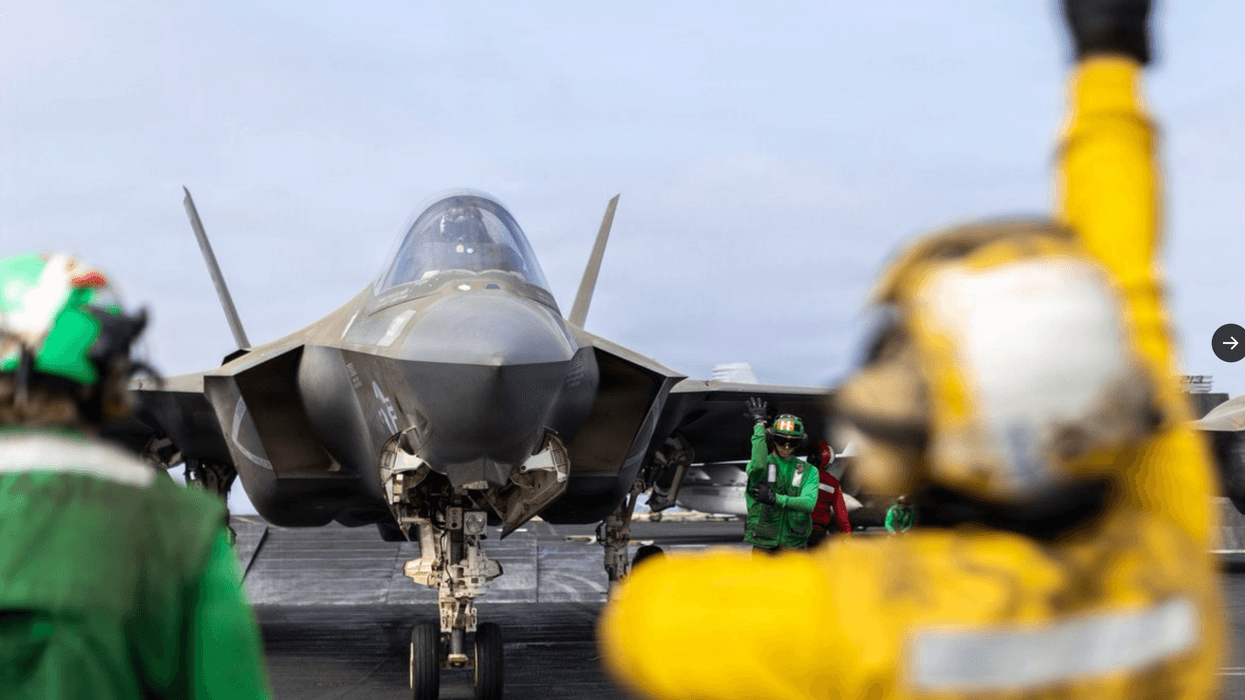
"Listen to the American people. Follow the Constitution," said Just Foreign Policy. "End these illegal and unauthorized hostilities against Iran. NOW."
Less than two weeks after declaring for the umpteenth time that the illegal US-Israeli war on Iran is over, President Donald Trump on Tuesday approved fresh military strikes on the Mideast country over attacks on three merchant ships off the coast of Oman.
"US Central Command forces have begun launching a series of powerful strikes against Iran to impose heavy costs for targeting and attacking commercial shipping crewed by innocent civilians in an international waterway," CENTCOM said on X. "The US strikes are in response to Iranian attacks on three commercial vessels that were transiting the Strait of Hormuz. Iran’s demonstrated aggression was unwarranted, dangerous, and a clear violation of the ceasefire."
Iranian officials blamed the US for the renewed hostilities, claiming efforts to reopen the Strait of Hormuz constitute a violation of the memorandum of understanding (MOU) signed last month, under which Tehran and the Omani government are in charge of managing shipping in the vital waterway controlled by Iran, through which around a fifth of the world's exported oil passed prior to the war.
“But the US has been trying somehow to open new routes," Iran's Foreign Ministry said.
The new US strikes came hours after the Trump administration canceled the 60-day license issued last month by the Treasury Department that waived sanctions on Iranian petroleum exports.
“Iran will only reap benefits if they exhibit good behavior,” an unnamed US official speaking on condition of anonymity told CNBC on Tuesday. “Iran’s actions in the strait were wholly unacceptable to the United States and will be met with consequences.”
Trump has been saying that the Iran War—which began on February 28 with airstrikes including the massacre of 156 students and staff at an elementary school in Minab—was nearly or completely over since early March.
According to Iranian officials, more than 30,000 people have been killed or wounded by US-Israeli strikes during the war. Iranian counterattacks have killed at least 13 US service members. Scores of people in Israel and US-allied Gulf states have been killed and thousands more wounded by Iranian missile and drone strikes.
On Monday, Trump vowed that the US will win the war "one way or the other."
"We're either going to make a deal, or we're going to finish the job," he said. "It won't be tough to finish the job."
The MOU signed by Trump and Iran—and rejected by Israel—had been fiercely criticized in the United States by Republicans and centrist Democrats for leaving Iran in what experts say is a stronger strategic position than before the war, despite the devastation wrought by US-Israeli airstrikes.
Some critics argued that the MOU demanded less of Iran than the Joint Comprehensive Plan of Action—also known as the Iran nuclear deal—signed during the Obama administration but unilaterally abrogated by Trump during his first term, despite verified Iranian compliance.
Talks aimed at a permanent end to the 129-day war—which followed last summer's separate US and Israeli attacks on Iran that killed or wounded more than 5,000 people—were on hold for the multiday funeral of former Iranian Supreme Leader Ali Khamenei, who was slain by US-Israeli bombing on the first day of strikes in February.
Tuesday's renewed US strikes on Iran prompted fresh calls for a lasting ceasefire in the region.
"Listen to the American people. Follow the Constitution," the nonpartisan US advocacy group Just Foreign Policy said on social media. "End these illegal and unauthorized hostilities against Iran. NOW."
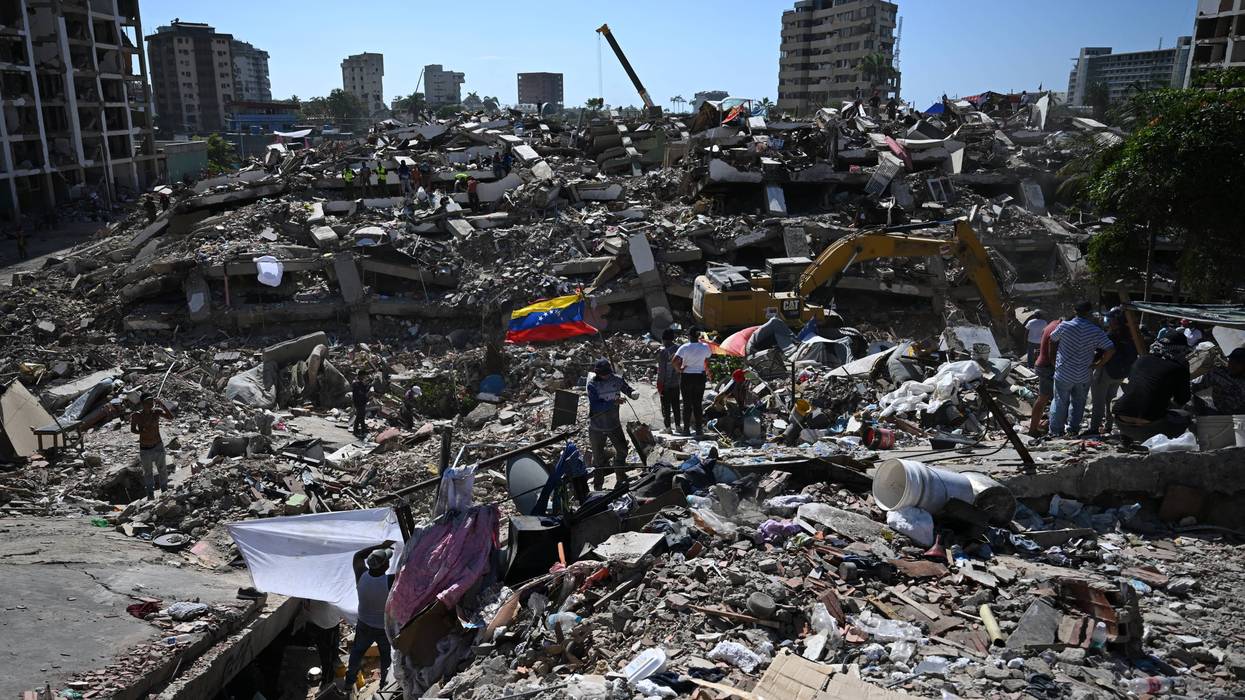
The experts laid out various policies they argued are "required to prevent avoidable deaths, stabilize a sanctioned economy, and allow Venezuelans to rebuild with dignity."
With at least 3,535 people dead, 16,740 injured, and tens of thousands still missing after a pair of major earthquakes hit Venezuela last month, over 100 economists and scholars on Tuesday jointly called for "immediate action to unfetter Venezuela's humanitarian response and reconstruction from ongoing economic and financial sanctions, asset freezes, and onerous debt burdens."
Such demands began to emerge shortly after the 7.2- and 7.5-magnitude quakes, both centered in Yaracuy, on June 24. The new letter, shared with Common Dreams by the Center for Economic and Policy Research, follows a similar message sent to President Donald Trump and Secretary of State Marco Rubio last week by CEPR, Just Foreign Policy, Latin America Working Group, Venezuelan American Community Action, Peace Action, the Quincy Institute for Responsible Statecraft, and a dozen other organizations.
The academics and economists, including several experts at CEPR as well as James Galbraith, Jayati Ghosh, Jason Hickel, Ann Pettifor, Jeffrey Sachs, Robert Wade, and Isabella Weber, highlighted that "Venezuela enters this disaster after years of unilateral coercive measures, financial sanctions, and export controls that have damaged its economy and infrastructure."
That includes decades of US sanctions. On top of those economic moves, Trump earlier this year sent troops into Venezuela to abduct President Nicolás Maduro, then took control of the South American country's nationalized oil industry. The New York Times reported earlier this week that the Trump administration has seized at least $8 billion worth of Venezuela's oil wealth this year.
In a Tuesday piece for Just Security, a pair of experts who signed the new letter—George Lopez, professor emeritus of peace studies at the University of Notre Dame, and Venezuelan economist and CEPR senior Research Fellow Francisco Rodríguez—noted that post-earthquakes, "the United States pledged $300 million to relief agencies, mobilized civilian and military teams to Venezuela that are trained on disaster relief, and issued a limited sanctions waiver for earthquake relief activities.
"But these measures are far from enough," they stressed, explaining that "the United Nations estimates the losses from the quakes stand at $37 billion," or 32% of Venezuela's gross domestic product. They suggested that "the United States should spearhead a major reconstruction effort and lift all remaining sanctions on the Venezuelan economy."
The US was eager to take control in Venezuela earlier this year.Now that the country is facing devastating loss after twin earthquakes, the US should spearhead a major reconstruction effort and lift all remaining sanctions.From Francisco Rodríguez and George A. Lopez:
[image or embed]
— Just Security (@justsecurity.org) July 7, 2026 at 9:06 AM
The broader group argued that "whatever one's position on Venezuela's internal politics, the current set of coercive economic measures directed at the country is an indiscriminate instrument. Sanctions on the central bank, public banking, oil industry, and debt transactions do not land surgically on officials; they incapacitate payment systems, raise import costs, block correspondent banking, freeze reserves, deter suppliers, and produce scarcity across an entire society. This is precisely the moment to remove any economic and financial obstacles to relief and reconstruction."
They called on the Trump administration specifically to lift all economic sanctions, "including any that may impact the Banco Central de Venezuela (BCV), government institutions, Petróleos de Venezuela, SA (PDVSA), public financial institutions, the oil and mining sectors, banking, transportation, shipping, telecommunications, travel, and all related activities," and to immediately issue "the Section 25B certification that is required to enable the BCV to receive, control, use, and transact through its accounts and assets at the Federal Reserve and US banks."
The experts also took aim at the United Kingdom and the Portuguese, calling on the governments to respectively work with "the Bank of England to ensure the immediate unfreezing of the BCV's gold reserves, worth about $5 billion and representing a third of the central bank's reported assets," as well as with Novo Banco, "to return $1.2 billion belonging to Venezuela's development bank, BANDES, and PDVSA affiliates, as set out in a 2023 court decision."
They further pressured the International Monetary Fund (IMF) to "ensure that Venezuela has full access to its approximately $5 billion in special drawing rights (SDRs) for emergency stabilization and imports," and to approve a $4 billion rapid financing instrument (RFI) disbursement immediately, using its emergency and natural disaster rationale, with no conditions."
Beyond those specific recommendations, the economists and scholars urged "a coordinated debt jubilee for Venezuela," writing that "all official bilateral creditors, multilateral creditors to the extent legally possible, and public agencies holding claims should cancel or suspend debt service, interest, penalties, and arrears, and pursue a comprehensive debt reduction consistent with a rights-based recovery and climate-resilient reconstruction."
"A new fund should be established—perhaps financed by the IMF's Resilience and Sustainability Trust (RST)—to repurchase distressed debt from the secondary market, with legal protections against holdout litigation and asset seizures," they proposed. "Money owed to creditors cannot at the same time rebuild hospitals, schools, housing, water systems, and the grid. A debt crisis in these conditions is a developmental and humanitarian crisis."
"Venezuela's people must not be made to pay twice: first through disaster, and then through sanctions, frozen reserves, and unsustainable debt servicing," they concluded. "We urge governments, international financial institutions, and creditors to act now, on the principle that lives, public health, and economic recovery take precedence over coercion and collection. Emergency liquidity, full sanctions relief, SDR access, RFI financing, and debt cancellation are not acts of charity. They are the minimum policy response required to prevent avoidable deaths, stabilize a sanctioned economy, and allow Venezuelans to rebuild with dignity."