SUBSCRIBE TO OUR FREE NEWSLETTER
Daily news & progressive opinion—funded by the people, not the corporations—delivered straight to your inbox.
5
#000000
#FFFFFF
To donate by check, phone, or other method, see our More Ways to Give page.
Daily news & progressive opinion—funded by the people, not the corporations—delivered straight to your inbox.
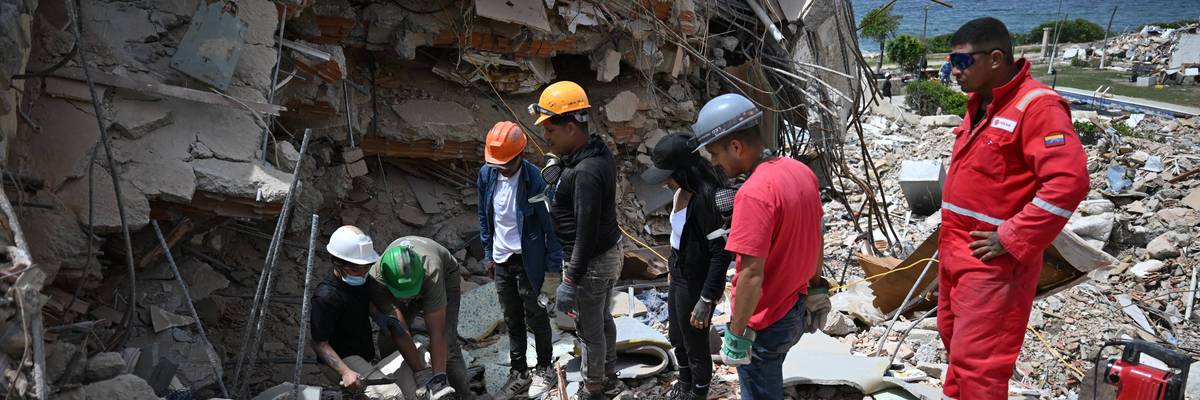
Rescue workers find corpses amid the rubble in Macuto, Vargas state, Venezuela, on July 5, 2026, following the June 24 twin earthquakes.
"Will these funds be released for the disaster response?” asked a former US ambassador to Venezuela.
The Trump administration has seized at least $8 billion worth of Venezuela's oil wealth since it overthrew President Nicolás Maduro in January, according to the New York Times.
Now, as Venezuela struggles to cope with a catastrophic pair of earthquakes late last month that killed at least 3,300 people and left tens of thousands more injured and homeless, and 41,000-50,000 people are reported missing, the US is providing just $300 million in humanitarian aid, a small fraction of the money it purloined.
The Associated Press reported on Monday that international rescue teams have begun to pull out as hopes of finding missing loved ones alive dwindle each day after the disaster.
Shortly after deposing Maduro, US President Donald Trump declared that the US "took over Venezuela... and the oil is flowing.”
Economist Francisco Rodriguez has found that during the first quarter of 2026, after Trump overthrew Maduro and the US began expropriating Venezuelan oil, the country experienced the lowest rate of economic growth since 2021, even as oil exports rose.
As Roxanna Vigil, a former senior sanctions policy adviser at the US Treasury Department’s Office of Foreign Assets Control, explained in an article for the Council on Foreign Relations last month, "almost 100 million barrels of oil worth an estimated $8 billion have flowed through a process marked by no transparency and minimal oversight."
"While the Trump administration has repeatedly framed this control as benefiting both countries, it has not publicly disclosed how much Venezuelan oil it has sold, how much revenue it has collected, or how it has used those funds," she added.
According to an initial report by the United Nations Development Program, the quakes caused $6.7 billion worth of damage.
Former US Ambassador to Venezuela Jimmy Story credited what he said was a “robust” US effort to provide aid. But he told Reuters that it called into question "the transparency over the oil fund," and asked, "Will these funds be released for the disaster response?”
The Times noted that the Trump administration's response to the Venezuela quakes is dwarfed by the humanitarian response to the earthquake that struck Haiti in 2010, when the US launched a more than $3 billion relief effort and deployed more than 7,000 troops.
Just 900 US troops are on the ground in Venezuela, with another 800 positioned in Puerto Rico and Curaçao to support the operation.
The Times' Simon Romero, who has reported on earthquakes in both countries, noted that the Haiti earthquake was more destructive, but said:
The parallels between the disasters are also haunting: Pancaked multistory concrete buildings, bodies flooding into overwhelmed morgues, survivors disparaging government responses, and civilians leading desperate rescues of people trapped in the rubble.
Viewed against cityscapes clouded by dust from pulverized structures, the images speak to hollowed-out first responder agencies, generalized impoverishment, and political dysfunction in both Haiti and Venezuela.
Beyond the $8 billion taken out of Venezuela since January, anti-war and human rights groups in the US have urged the Trump administration to lift the economic sanctions that have crippled the Venezuelan government, arguing that they have hobbled the recovery effort.
The Washington Office on Latin America (WOLA) estimated that during just four years, between 2017-20, US sanctions caused the Venezuelan state to lose between $17 billion and $31 billion in revenue.
A more recent report by the Tricontinental Institute for Social Research found that between 2017-24, Venezuela suffered an estimated $226 billion in lost oil revenue due to US sanctions, equivalent to 213% of its total gross domestic product.
Dear Common Dreams reader, It’s been nearly 30 years since I co-founded Common Dreams with my late wife, Lina Newhouser. We had the radical notion that journalism should serve the public good, not corporate profits. It was clear to us from the outset what it would take to build such a project. No paid advertisements. No corporate sponsors. No millionaire publisher telling us what to think or do. Many people said we wouldn't last a year, but we proved those doubters wrong. Together with a tremendous team of journalists and dedicated staff, we built an independent media outlet free from the constraints of profits and corporate control. Our mission has always been simple: To inform. To inspire. To ignite change for the common good. Building Common Dreams was not easy. Our survival was never guaranteed. When you take on the most powerful forces—Wall Street greed, fossil fuel industry destruction, Big Tech lobbyists, and uber-rich oligarchs who have spent billions upon billions rigging the economy and democracy in their favor—the only bulwark you have is supporters who believe in your work. But here’s the urgent message from me today. It's never been this bad out there. And it's never been this hard to keep us going. At the very moment Common Dreams is most needed, the threats we face are intensifying. We need your support now more than ever. We don't accept corporate advertising and never will. We don't have a paywall because we don't think people should be blocked from critical news based on their ability to pay. Everything we do is funded by the donations of readers like you. When everyone does the little they can afford, we are strong. But if that support retreats or dries up, so do we. Will you donate now to make sure Common Dreams not only survives but thrives? —Craig Brown, Co-founder |
The Trump administration has seized at least $8 billion worth of Venezuela's oil wealth since it overthrew President Nicolás Maduro in January, according to the New York Times.
Now, as Venezuela struggles to cope with a catastrophic pair of earthquakes late last month that killed at least 3,300 people and left tens of thousands more injured and homeless, and 41,000-50,000 people are reported missing, the US is providing just $300 million in humanitarian aid, a small fraction of the money it purloined.
The Associated Press reported on Monday that international rescue teams have begun to pull out as hopes of finding missing loved ones alive dwindle each day after the disaster.
Shortly after deposing Maduro, US President Donald Trump declared that the US "took over Venezuela... and the oil is flowing.”
Economist Francisco Rodriguez has found that during the first quarter of 2026, after Trump overthrew Maduro and the US began expropriating Venezuelan oil, the country experienced the lowest rate of economic growth since 2021, even as oil exports rose.
As Roxanna Vigil, a former senior sanctions policy adviser at the US Treasury Department’s Office of Foreign Assets Control, explained in an article for the Council on Foreign Relations last month, "almost 100 million barrels of oil worth an estimated $8 billion have flowed through a process marked by no transparency and minimal oversight."
"While the Trump administration has repeatedly framed this control as benefiting both countries, it has not publicly disclosed how much Venezuelan oil it has sold, how much revenue it has collected, or how it has used those funds," she added.
According to an initial report by the United Nations Development Program, the quakes caused $6.7 billion worth of damage.
Former US Ambassador to Venezuela Jimmy Story credited what he said was a “robust” US effort to provide aid. But he told Reuters that it called into question "the transparency over the oil fund," and asked, "Will these funds be released for the disaster response?”
The Times noted that the Trump administration's response to the Venezuela quakes is dwarfed by the humanitarian response to the earthquake that struck Haiti in 2010, when the US launched a more than $3 billion relief effort and deployed more than 7,000 troops.
Just 900 US troops are on the ground in Venezuela, with another 800 positioned in Puerto Rico and Curaçao to support the operation.
The Times' Simon Romero, who has reported on earthquakes in both countries, noted that the Haiti earthquake was more destructive, but said:
The parallels between the disasters are also haunting: Pancaked multistory concrete buildings, bodies flooding into overwhelmed morgues, survivors disparaging government responses, and civilians leading desperate rescues of people trapped in the rubble.
Viewed against cityscapes clouded by dust from pulverized structures, the images speak to hollowed-out first responder agencies, generalized impoverishment, and political dysfunction in both Haiti and Venezuela.
Beyond the $8 billion taken out of Venezuela since January, anti-war and human rights groups in the US have urged the Trump administration to lift the economic sanctions that have crippled the Venezuelan government, arguing that they have hobbled the recovery effort.
The Washington Office on Latin America (WOLA) estimated that during just four years, between 2017-20, US sanctions caused the Venezuelan state to lose between $17 billion and $31 billion in revenue.
A more recent report by the Tricontinental Institute for Social Research found that between 2017-24, Venezuela suffered an estimated $226 billion in lost oil revenue due to US sanctions, equivalent to 213% of its total gross domestic product.
The Trump administration has seized at least $8 billion worth of Venezuela's oil wealth since it overthrew President Nicolás Maduro in January, according to the New York Times.
Now, as Venezuela struggles to cope with a catastrophic pair of earthquakes late last month that killed at least 3,300 people and left tens of thousands more injured and homeless, and 41,000-50,000 people are reported missing, the US is providing just $300 million in humanitarian aid, a small fraction of the money it purloined.
The Associated Press reported on Monday that international rescue teams have begun to pull out as hopes of finding missing loved ones alive dwindle each day after the disaster.
Shortly after deposing Maduro, US President Donald Trump declared that the US "took over Venezuela... and the oil is flowing.”
Economist Francisco Rodriguez has found that during the first quarter of 2026, after Trump overthrew Maduro and the US began expropriating Venezuelan oil, the country experienced the lowest rate of economic growth since 2021, even as oil exports rose.
As Roxanna Vigil, a former senior sanctions policy adviser at the US Treasury Department’s Office of Foreign Assets Control, explained in an article for the Council on Foreign Relations last month, "almost 100 million barrels of oil worth an estimated $8 billion have flowed through a process marked by no transparency and minimal oversight."
"While the Trump administration has repeatedly framed this control as benefiting both countries, it has not publicly disclosed how much Venezuelan oil it has sold, how much revenue it has collected, or how it has used those funds," she added.
According to an initial report by the United Nations Development Program, the quakes caused $6.7 billion worth of damage.
Former US Ambassador to Venezuela Jimmy Story credited what he said was a “robust” US effort to provide aid. But he told Reuters that it called into question "the transparency over the oil fund," and asked, "Will these funds be released for the disaster response?”
The Times noted that the Trump administration's response to the Venezuela quakes is dwarfed by the humanitarian response to the earthquake that struck Haiti in 2010, when the US launched a more than $3 billion relief effort and deployed more than 7,000 troops.
Just 900 US troops are on the ground in Venezuela, with another 800 positioned in Puerto Rico and Curaçao to support the operation.
The Times' Simon Romero, who has reported on earthquakes in both countries, noted that the Haiti earthquake was more destructive, but said:
The parallels between the disasters are also haunting: Pancaked multistory concrete buildings, bodies flooding into overwhelmed morgues, survivors disparaging government responses, and civilians leading desperate rescues of people trapped in the rubble.
Viewed against cityscapes clouded by dust from pulverized structures, the images speak to hollowed-out first responder agencies, generalized impoverishment, and political dysfunction in both Haiti and Venezuela.
Beyond the $8 billion taken out of Venezuela since January, anti-war and human rights groups in the US have urged the Trump administration to lift the economic sanctions that have crippled the Venezuelan government, arguing that they have hobbled the recovery effort.
The Washington Office on Latin America (WOLA) estimated that during just four years, between 2017-20, US sanctions caused the Venezuelan state to lose between $17 billion and $31 billion in revenue.
A more recent report by the Tricontinental Institute for Social Research found that between 2017-24, Venezuela suffered an estimated $226 billion in lost oil revenue due to US sanctions, equivalent to 213% of its total gross domestic product.