

SUBSCRIBE TO OUR FREE NEWSLETTER
Daily news & progressive opinion—funded by the people, not the corporations—delivered straight to your inbox.
5
#000000
#FFFFFF
To donate by check, phone, or other method, see our More Ways to Give page.
Daily news & progressive opinion—funded by the people, not the corporations—delivered straight to your inbox.
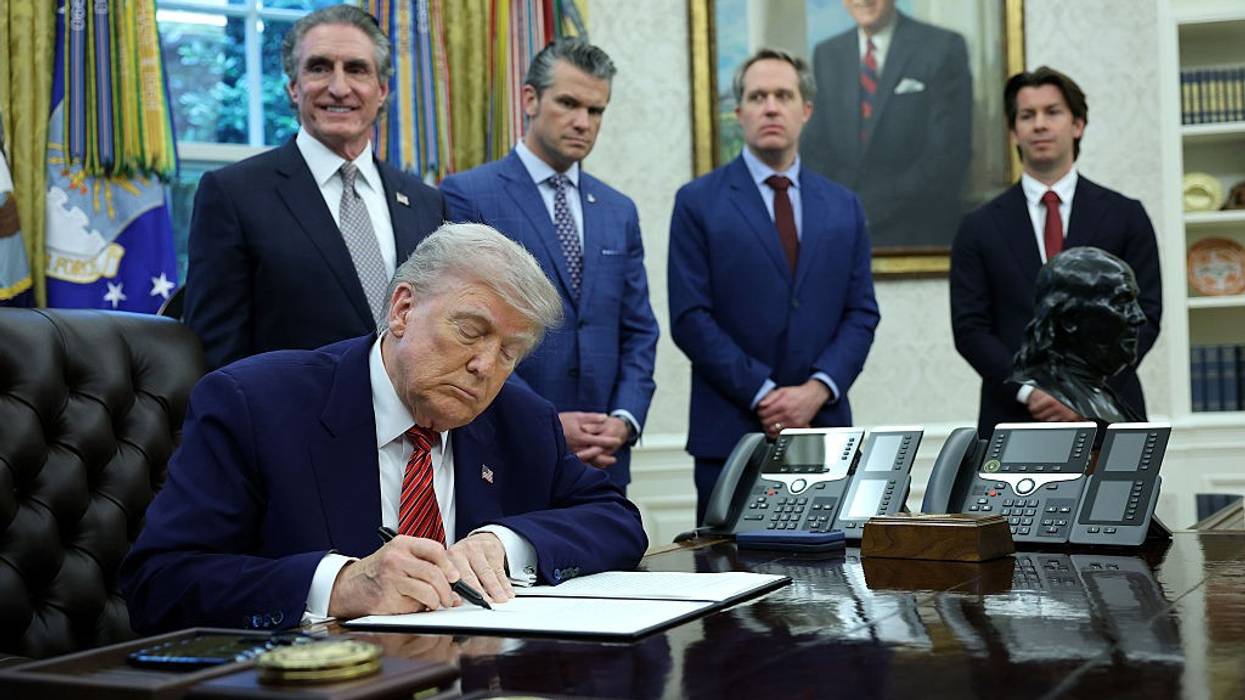
"I think the DOE's attempts to cut corners on safety, security, and environmental protections are posing a grave risk to public health, safety, and our natural environment," said one expert.
Less than a week after NPR revealed that "the Trump administration has overhauled a set of nuclear safety directives and shared them with the companies it is charged with regulating, without making the new rules available to the public," the US Department of Energy announced Monday that it is allowing firms building experimental nuclear reactors to seek exemptions from legally required environmental reviews.
Citing executive orders signed by President Donald Trump in May, a notice published in the Federal Register states that the DOE "is establishing a categorical exclusion for authorization, siting, construction, operation, reauthorization, and decommissioning of advanced nuclear reactors for inclusion in its National Environmental Policy Act (NEPA) implementing procedures."
NEPA has long been a target of energy industries and Republican elected officials, including Trump. The exemption policy has been expected since Trump's May orders—which also launched a DOE pilot program to rapidly build the experimental reactors—and the department said in a statement that even the exempted reactors will face some reviews.
"The US Department of Energy is establishing the potential option to obtain a streamlined approach for advanced nuclear reactors as part of the environmental review performed under NEPA," the DOE said. "The analysis on each reactor being considered will be informed by previously completed environmental reviews for similar advanced nuclear technologies."
"The fact is that any nuclear reactor, no matter how small, no matter how safe it looks on paper, is potentially subject to severe accidents."
However, the DOE announcement alarmed various experts, including Daniel P. Aldrich, director of the Resilience Studies Program at Northeastern University, who wrote on social media: "Making America unsafe again: Trump created an exclusion for new experimental reactors from disclosing how their construction and operation might harm the environment, and from a written, public assessment of the possible consequences of a nuclear accident."
Foreign policy reporter Laura Rozen described the policy as "terrifying," while Paul Dorfman, chair of the Nuclear Consulting Group and a scholar at the University of Sussex's Bennett Institute for Innovation and Policy Acceleration, called it "truly crazy."
As NPR reported Monday:
Until now, the test reactor designs currently under construction have primarily existed on paper, according to Edwin Lyman, director of nuclear power safety at the Union of Concerned Scientists, a nonprofit environmental advocacy group. He believes the lack of real-world experience with the reactors means that they should be subject to more rigorous safety and environmental reviews before they're built.
"The fact is that any nuclear reactor, no matter how small, no matter how safe it looks on paper, is potentially subject to severe accidents," Lyman said.
"I think the DOE's attempts to cut corners on safety, security, and environmental protections are posing a grave risk to public health, safety, and our natural environment here in the United States," he added.
Lyman was also among the experts who criticized changes that NPR exposed last week, after senior editor and correspondent Geoff Brumfiel obtained documents detailing updates to "departmental orders, which dictate requirements for almost every aspect of the reactors' operations—including safety systems, environmental protections, site security, and accident investigations."
While the DOE said that it shared early versions of the rules with companies, "the reduction of unnecessary regulations will increase innovation in the industry without jeopardizing safety," and "the department anticipates publicly posting the directives later this year," Brumfiel noted that the orders he saw weren't labeled as drafts and had the word "approved" on their cover pages.
In a lengthy statement about last week's reporting, Lyman said on the Union of Concerned Scientists website that "this deeply troubling development confirms my worst fears about the dire state of nuclear power safety and security oversight under the Trump administration. Such a brazen rewriting of hundreds of crucial safeguards for the public underscores why preservation of the Nuclear Regulatory Commission (NRC) as an independent, transparent nuclear regulator is so critical."
"The Energy Department has not only taken a sledgehammer to the basic principles that underlie effective nuclear regulation, but it has also done so in the shadows, keeping the public in the dark," he continued. "These long-standing principles were developed over the course of many decades and consider lessons learned from painful events such as the Chernobyl and Fukushima disasters. This is a massive experiment in the deregulation of novel, untested nuclear facilities that could pose grave threats to public health and safety."
"These drastic changes may extend beyond the Reactor Pilot Program, which was created by President Trump last year to circumvent the more rigorous licensing rules employed by the NRC," Lyman warned. "While the DOE created a legally dubious framework to designate these reactors as 'test' reactors to bypass the NRC's statutory authority, these dramatic alterations may further weaken standards used in the broader DOE authorization process and propagate across the entire fleet of commercial nuclear facilities, severely degrading nuclear safety throughout the United States."
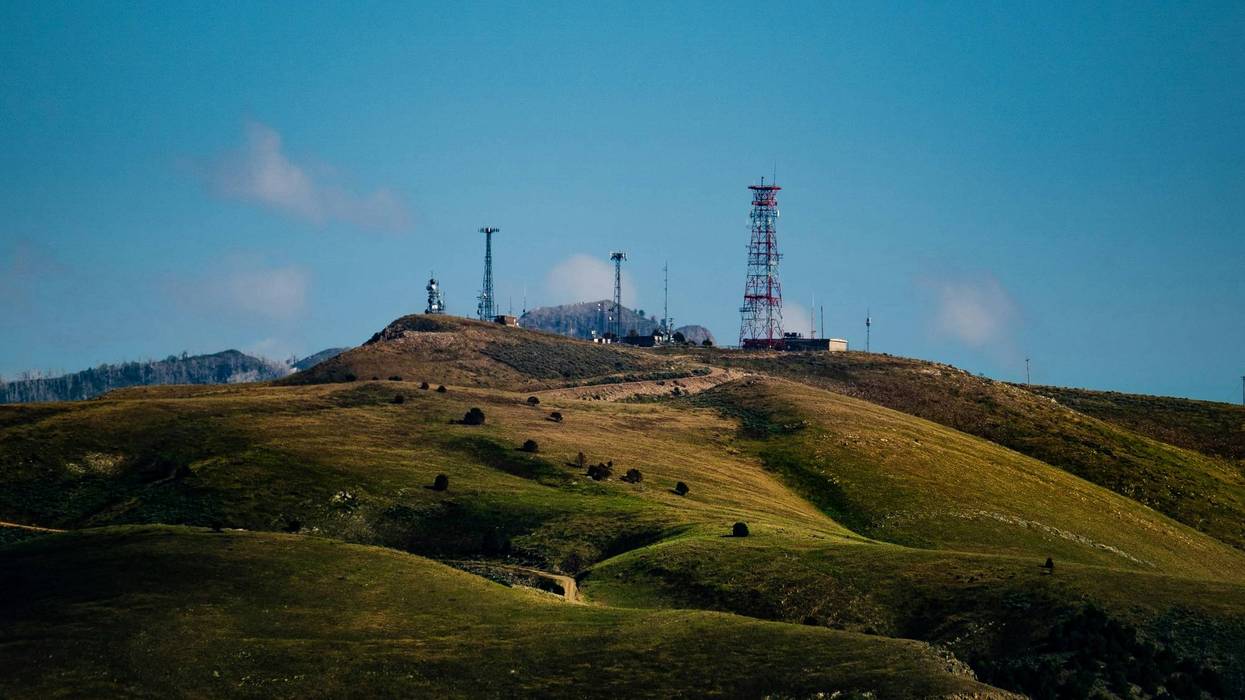
Two new FCC proposals would render an already weak NEPA process largely meaningless, strip local and state governments of nearly all of their congressionally granted authority, and leave the agency even less accountable to the public.
The Federal Communications Commission is poised to release two orders that would steamroll states and communities on behalf of the wireless industry. Long in bed with that industry, it will soon eliminate virtually any say locals have in the rollout of new infrastructure. Reflecting the industry’s wish list, these rules would override already-limited state and local control over how and where cell tower infrastructure is built, further erode environmental review safeguards, and trample on states’ rights.
Federal law already restricts states and communities from taking actions that “prohibit or effectively prohibit” the provision of wireless service. Yet Congress also recognized that local governments serve an essential role in responsible siting of telecommunications deployment through land-use planning, zoning, engineering oversight, public safety, and preservation of neighborhood character.
Historically, states and localities have retained the authority to charge industry reasonable fees and to regulate for public welfare—setting standards for structural safety, wildfire risk, flood exposure, resiliency, decommissioning, environmental protection, and aesthetics. Before siting, city councils, boards of supervisors, and other officials evaluate the impacts of large, industrial towers on homes and critical community assets, like parks, slope stability, or historic buildings.
For years, however, the Federal Communications Commission (FCC) has steadily chipped away at these core local functions through litigation and rulemakings that sharply curtail community authority to impose requirements on carriers. In November, the FCC proposed an even more aggressive series of changes that would all but obliterate what remains of local authority over wireless siting. The FCC claims these measures are necessary to “free towers and other wireless infrastructure from unlawful regulatory burdens imposed at the state and local level.”
As wireless technologies proliferate—with presumably even less scrutiny, oversight, and public input—the environmental and community impacts will only multiply.
One proposal would mandate automatic approval of tower and small-cell applications if localities miss federal deadlines. California officials warn these “unrealistic timelines” risk incomplete safety review and “threaten to silence the very people who must live with the consequences.”
The FCC would broadly preempt local aesthetic standards and cap fees that fund environmental review, rights-of-way management, and safety inspections, shifting industry costs on to taxpayers. It would treat setbacks aimed at limiting noise and visual impacts as impermissible RF radiation regulation, bar local requirements for industry-funded RF testing to verify compliance, prohibit updated safety and design standards at permit renewal, and override requirements that carriers consider less intrusive alternatives or demonstrate actual service need.
Taken together, these measures would eviscerate any local role in siting decisions that consider neighborhoods, landscapes, safety, and environmental integrity in communities across the nation, and replace it with the will of the wireless industry.
At the same time, the FCC is finalizing another rule that would eliminate community input in the agency’s already weak environmental review process. Under the National Environmental Policy Act (NEPA), federal agencies must assess and disclose environmental impacts and consider public concerns, yet the FCC has one of the least rigorous NEPA frameworks of any agency. Few of its authorized activities undergo any meaningful review. It delegates the preliminary environmental review to industry with no oversight or agency record; industry also prepares the few environmental assessments that may be required from the preliminary review. Its notice and comment procedures seem designed to exclude the public, and, unlike most agencies, the FCC has no web page devoted to NEPA documents or compliance. It has almost never enforced its environmental rules against industry violators.
The consequences of these failures are visible nationwide: protected landscapes and historic viewsheds marred, wetlands filled, endangered species habitat destroyed, sacred sites desecrated, burial mounds disturbed, and fragile underwater environments degraded. Equally important, the voices of communities and citizens have been suppressed and ignored.
Now, echoing industry demands to cut “regulatory red tape,” the FCC is proposing to further weaken its skeletal NEPA rules, exempt more of its actions from environmental review, and further exclude the public. It would redefine which actions trigger environmental review so that even fewer authorizations—covering most cell towers and satellite deployments—would be assessed for environmental effects. It would narrow the scope of the few environmental documents that remain and make them less available to the public. Most egregiously, the FCC proposes eliminating its lone public notice provision that alerts communities when a new tower is proposed, thereby allowing residents to object. Although the FCC routinely dismisses objections, the provision complies with a key NEPA requirement.
Both of the FCC’s proposals are a draconian solution to a nonexistent “problem.” At the end of 2024, industry statistics show 651,000 cell towers and wireless facilities operating nationwide, with thousands more, including satellites, approved or underway. Every major wireless carrier has nationwide coverage. Industry has prepared few environmental assessments over the years, and the FCC has never produced a more thorough environmental impact statement. Contrary to industry claims, red tape has not hindered deployment.
As wireless technologies proliferate—with presumably even less scrutiny, oversight, and public input—the environmental and community impacts will only multiply. Taken together, the FCC’s twin proposals would render an already weak NEPA process largely meaningless, strip local and state governments of nearly all of their congressionally granted authority, and leave the agency even less accountable to the public.
With almost 30 bills introduced on accelerating broadband siting this session, Congress too is doing its part to “free” industry from local control and environmental laws. Any and all of these radical new frameworks will hand industry a carte blanche to deploy infrastructure that runs roughshod over local, state, and public interests as well as the environment.
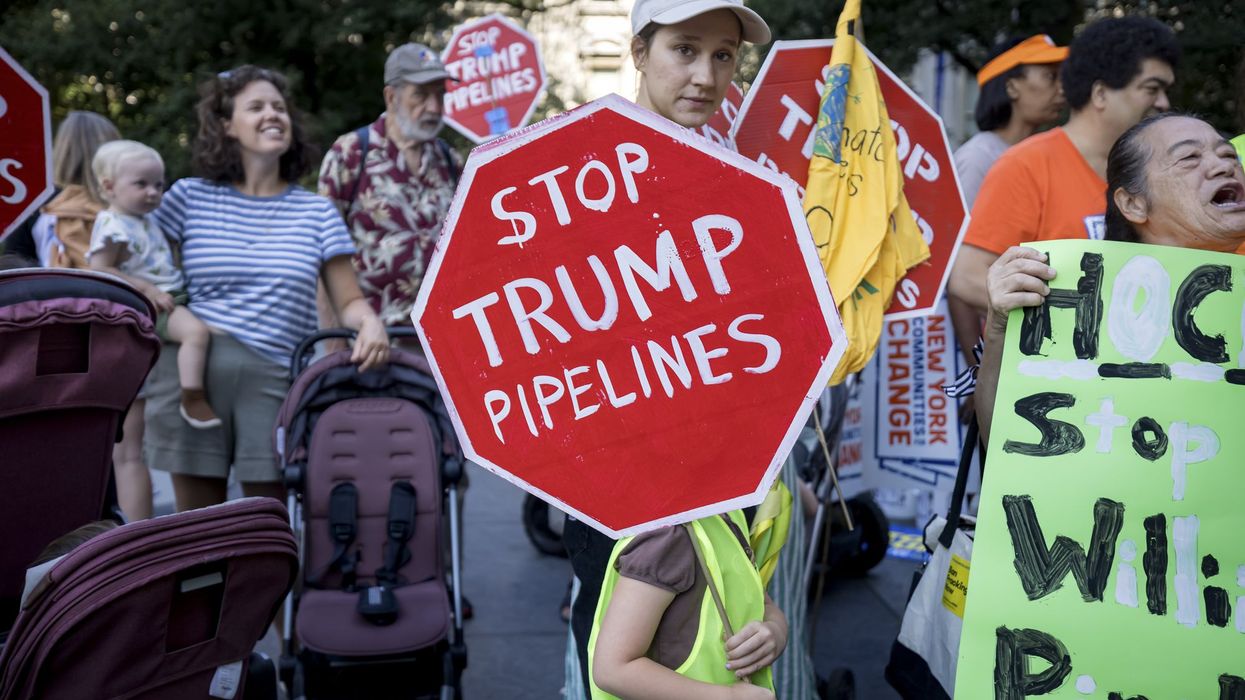
"The SPEED Act protects corporate interests, not the public, and it should be rejected by any senator who claims to stand with the people," said one campaigner.
Eleven Democrats on Thursday voted with nearly all Republicans in the US House of Representatives to advance a permitting reform bill that climate and frontline organizations warn is a "disastrous" attack on a landmark environmental protection law.
Democratic Reps. Jim Costa (Calif.), Henry Cuellar (Texas), Don Davis (NC), Chris Deluzio (Pa.), Lizzie Fletcher (Texas), Jared Golden (Maine), Vicente Gonzalez (Texas), Adam Gray (Calif.), John Mannion (NY), Marie Gluesenkamp Perez (Wash.), and Marc Veasey (Texas) voted with all Republicans present expect Rep. Brian Fitzpatrick (Pa.) to pass the bill.
The Standardizing Permitting and Expediting Economic Development (SPEED) Act, spearheaded by Golden and House Committee on Natural Resources Chair Bruce Westerman (R-Ark.), would amend the National Environmental Policy Act (NEPA), which "is often called the 'Magna Carta' of federal environmental laws."
In a statement after the vote, Food & Water Watch legal director Tarah Heinzen said that "for decades, NEPA has ensured logical decision-making and community involvement when the federal government considers projects that could harm people and the environment. The SPEED Act would eviscerate NEPA's protections."
The group detailed key ways in which the SPEED Act attacks NEPA:
"Today's absurd House vote is yet another handout to corporate polluters at the expense of everyday people who have to live with the real-world impacts of toxic pollution from dirty industries like fossil fuels and factory farms," Heinzen argued. "This nonsense must be dead on arrival in the Senate."
Other campaigners also looked to the upper chamber after the vote. Erik Schlenker-Goodrich, executive director of the Western Environmental Law Center, said that "renewable energy and climate advocates in the Senate must hold the line against the SPEED Act's evisceration of our bedrock environmental and community protection law."
Allie Rosenbluth, Oil Change International's US campaign manager, stressed that "our senators must stand up against the SPEED Act's attempts to undermine democratic decision-making, pollute our communities, and threaten our collective future."
For a Better Bayou's James Hiatt similarly said that "the SPEED Act protects corporate interests, not the public, and it should be rejected by any senator who claims to stand with the people."
Anthony Karefa Rogers-Wright, co-coordinator of Black Alliance for Peace's Climate, Environment, and Militarism Initiative, warned that the bill "represents yet another assault on the health of frontline, Black, Brown, Indigenous, and poor white communities that have been designated as sacrifice zones by big polluters who bribe lawmakers with big money to continue a culture of extract, slash, burn, and emit at the expense of oppressed and marginalized peoples."
"Rather than speeding up the approval of dirty projects, Congress should increase funding for federal agencies and grassroots organizations accountable to frontline communities to carry out legally defensible and accurate environmental analyses," he continued, pointing to the Environmental Justice for All Act, previously led by the late Democratic Congressmen Raúl Grijalva (Ariz.) and Donald McEachin (Va.).
Mar Zepeda Salazar, legislative director at Climate Justice Alliance, also pointed to that alternative: "The SPEED Act fast-tracks harmful fossil fuel and polluting projects, not the community-led clean energy solutions families and Indigenous peoples across the country have long called for. Instead of pushing the SPEED Act—a bill that would strip away what few legal protections communities still have, weaken safeguards for clean air, land, and water near new industrial development, and sidestep meaningful consultation with federally recognized tribal nations—Congress should be advancing real, community-driven permitting reform."
"Examples include the Environmental Justice for All Act, which lays out meaningful public engagement, strong public health protections, respect for tribal sovereignty and consultation obligations, and serious investments in agencies and staff," she said.
Representatives from the Institute for Policy Studies, Sacred Places Institute for Indigenous Peoples, and Unitarian Universalists for Social Justice also spoke out against what David Watkins, director of government affairs for the Climate and Energy Program at the Union of Concerned Scientists, condemned as "a sizable holiday gift basket for Big Oil and Gas." He, too, urged the Senate to "reject this retrograde legislation and stand up to the deep-pocketed, polluting industries lobbying for it."
Lauren Pagel, policy director at Earthworks, pointed out that passing the SPEED Act wasn't the only way in which the House on Thursday "chose corporate interests over people, Indigenous Peoples' rights, and our environment." It also passed the Mining Regulatory Clarity Act, which "will remove already-scarce protections for natural resources and sacred cultural sites in US mining law."
"Today's House votes are a step backwards for our nation, but we continue to stand firm for the rights of the people and places on the frontlines of oil, gas, and mining," Pagel said. "Communities and ecosystems shouldn't pay the price while corporations rush to profit off extraction—with a helping hand from our elected officials."
Along with those two pieces of legislation, Public Citizen pointed to the House's approval of the Power Plant Reliability Act and Reliable Power Act earlier this week. David Arkush, director of the consumer advocacy group's Climate Program, said that the bills advancing through Congress "under the guise of 'bipartisan permitting reform' are blatant handouts to the fossil fuel and mining industries."
"We need real action to lower energy bills for American families and combat the climate crisis," Arkush asserted, calling on congressional Republicans and President Donald Trump "to fast-track a buildout of renewable energy, storage, and transmission—an approach that would not just make energy more affordable and sustainable, but create US jobs and bolster competitiveness with China, which is rapidly outpacing the US on the energy technologies of the future."
"With the Trump administration, the Republican-led Congress, and right-wing Supreme Court advancing their attacks on bedrock environmental law, Abundance proponents are sounding more like their echo than their opposition."
The much-discussed 'Abundance Agenda' is not the solution its proponents claim it be, according to a devastating report published this week by a pair of progressive watchdogsdraw which argues the policy framework is more of a neoliberal Trojan Horse than anything else.
Journalists Ezra Klein and Derek Thompson's book Abundance, released earlier this year in the first months of President Donald Trump's second term, was described as a "once-in-a-generation, paradigm-shifting call" to change how the US thinks about problems like housing and the environmental impact of infrastructure projects, with the authors calling on the Democratic Party to fight the Trump agenda with "liberalism that builds."
Instead of getting bogged down in debates over wealth and income inequality or harnessing growing outrage over the hold that the superrich have on the US political system, Klein and Thompson advised the party to reach out to voters by pushing to end the "stifling bureaucratic requirements that killed private sector innovation."
Reining in "burdensome government processes" like environmental and tenant safety regulations—not fighting for programs that would benefit everyone in the US regardless of their wealth or income—was the key to securing "abundance for all," said the authors and their supporters in government, such as Reps. Ritchie Torres (D-N.Y.) and Josh Harder (D-Calif.).
But in addition to beginning their book with a "glaring error," said the authors of a new report by the government watchdogs Revolving Door Project (RDP) and Open Markets Institute on Tuesday—asserting that "supply is how much there is of something" without accounting for the fact that private corporations decide how much of a product they want to sell to make a profit—Klein and Thompson ignore the fact that long before they put pen to paper, right-wing politicians and think tanks were already pushing an "abundance" agenda.
"When abundance-supporting politicians are asked about it, Klein's name is often the first word out of their mouth," said Jeff Hauser, executive director of RDP. "But this obscures the powerful coalition of political pundits, politicians, and think tanks that have painstakingly constructed a national movement around 'abundance' for years before the publication of this book. These interested parties have taken on the more detail-oriented work of actually producing policy for abundance, and it is often far more conservative and destructive than implied in Klein and Thompson's superficial tract."
Klein and Thompson rely on a "dishonest or sloppy" interpretation of the National Environmental Policy Act (NEPA), which they equate with a permitting law and claim requires drawn-out environmental impact reviews, to make their argument that approvals for new infrastructure should be less cumbersome, said RDP.
The law requires the government to assess environmental impacts before developers can build major infrastructure, and has been heralded as a bedrock environmental statute—but it had been a target of the fossil fuel industry and the policymakers that do its bidding long before "abundance" proponents took aim at NEPA.
"When abundance-supporting politicians are asked about it, Klein's name is often the first word out of their mouth. But this obscures the powerful coalition of political pundits, politicians, and think tanks that have painstakingly constructed a national movement around 'abundance' for years before the publication of this book."
Proponents of "permitting reform"—a tenet of the abundance movement—claim that NEPA is a barrier to clean energy development, but the report finds that renewable energy projects are typically delayed for other reasons and that NEPA oppenents' frequently cited examples of "four- to ten-year timelines to complete a NEPA analysis are the exception, not the rule," as University of Utah law professor Jamie Pleune found in a 2023 Roosevelt Institute report.
Quoting Pleune, the report—titled Debunking the Abundance Agenda—notes that "most delays in the NEPA process are functional, not regulatory."
Pleune explained that most sources of delay are "insufficient staff, unstable budgets, vague or incomplete permit applications, waiting for information from a permit applicant, or poor coordination among permitting authorities." Such delays, however, "can be addressed without eliminating environmental standards, analytical rigor, or community engagement."
RDP's report recounts efforts by former right-wing Democratic Sen. Joe Manchin of West Virginia to pass permitting reform legislation in 2022-23, as the Biden administration fought to pass the Inflation Reduction Act, in the interest of getting approval of the controversial Mountain Valley Pipeline fast-tracked.
The Fiscal Responsibility Act, which raised the debt limit, expedited the MVP's approval, and codified a number of changes to NEPA—including arbitrary time limits on environmental impact assessments—came out of Manchin's efforts.
NEPA has been credited with protecting crucial wetlands near an industrial facility that was built with with American Recovery and Reinvestment Act funds; providing a process to explain to the public in Stephentown, New York the greenhouse gas savings that could be achieved if the area's new electrical grid shifted away from fossil fuels-based frequency regulation technology; and ensuring soil and groundwater contamination would be remediated ahead of the construction of a senior living facility in Kansas City, Missouri.
But as RDP noted, throughout Manchin's efforts to roll back environmental assessment requirements and pave the way for the MVP, "abundance proponents... criticized progressive skeptics who warned that weakening environmental review procedures would likely benefit the fossil fuel industry most of all."
Klein argued that “stream-lined permitting will do more to accelerate clean energy than it will to encourage the use of fossil fuels,” because "a simpler, swifter path to construction means more for the clean energy side of the ledger."
He claimed that Democratic opponents to right-wing "permitting reform" legislation lacked their own solutions for expediting the construction of clean energy projects—but soon after he made those claims, lawmakers including Reps. Mike Levin (D-Calif.) and
Sean Casten (D-Ill.) introduced a bill "that would expedite the green transition by facilitating quicker construction of interregional transmission lines, incentivizing renewable energy production on public lands and in federal waters, and increasing grid reliability—all while enhancing community engagement and without giveaways to the fossil fuel industry."
As RDP senior researcher and report co-author Kenny Stancil said, "Abundance advocates erroneously blame environmental review for hindering the clean energy transition, for example, but they have little to say about the real causes of delay, including privately owned utilities' profit-driven opposition to building interstate transmission lines, investors' prioritization of short-term oil and gas profits, and interference from fossil fuel-backed politicians."
The RDP report also points to Klein and Thompson's "indiscriminate anti-regulatory ethos" in regards to their arguments about housing supply, which they argue should be increased by reforming land use policy and loosening zoning rules.
"We agree that it’s a good idea to increase housing supply, and that liberalizing zoning rules is necessary in many places (especially in affluent, low-density suburbs, important locations the book ignores almost entirely)," reads the report. "However, abundance advocates seem to lose their way when they begin to veer away from arbitrary restrictions on housing construction... towards regulations that—in their mind—impede housing development. For instance, zoning can keep polluting industrial activities away from residential areas and ensure adequate infrastructural capacity like water, sewers, schools, and hospital beds for a community."
Klein and Thompson claim that requirements for air filtration systems in housing next to highways raise construction costs and contribute to homelessness, and suggest tenant protections could contribute to housing shortages by making "landlordism less profitable."
"In both cases, abundance proponents prioritize aggregate housing supply above all else, spending little time examining the real
world impact of their policy prescriptions," writes RDP. "What percentage of overall construction cost is the addition of a HEPA air filtration system? Will this requirement truly result in increased homelessness? How much? What are the potential long-term health
benefits and financial savings from having these residents breathe cleaner air? Will this requirement begin to alleviate the dire
racial disparities seen in asthma rates? These questions go unanswered in Klein and Thompson's book."
The Abundance authors also support eliminating land-use regulations in disaster-prone areas, even as hurricane and wildfire threats intensify—a policy that would "not only imperil human life, but it will result in post-disaster housing crises and could threaten the stability of crucial financial institutions."
The real estate investors the abundance movement focuses on maximize profits, which do not always correlate with construction output, said RDP—and centering the interests of landlords and developers who aim to cut construction costs distracts from what RDP calls the only solution that would provide affordable housing for all: social housing, or community-owned housing that exists outside of the private real estate market.
The report details how—although Thompson and Klein may identify themselves as liberals—their abundance worldview mirrors that of commentators and policymakers on the right, from the libertarian Niskanen Center to Trump's own appointees.
The stated mission of Trump's National Energy Dominance Council, chaired by Energy Secretary Chris Wright and Interior Secretary Doug Burgum, couches its mission in the language favored by the Abundance authors, calling for "improving the processes for permitting, production, generation, distribution, regulation, and transportation across all forms of American energy"—and has been praised by abundance enthusiasts like author Matt Yglesias.
The administration has also expedited permitting for liquefied natural gas exports while undertaking permitting reforms against clean energy.
"As the report explores, abundance talking points have already been adopted by Trump's energy appointees to justify new fossil fuel projects, while circumventing public participation and transparency in the environmental review process," said Hannah Story Brown, RDP research director and co-author of the report. "With the Trump administration, the Republican-led Congress, and right-wing Supreme Court advancing their attacks on bedrock environmental law, Abundance proponents are sounding more like their echo than their opposition."
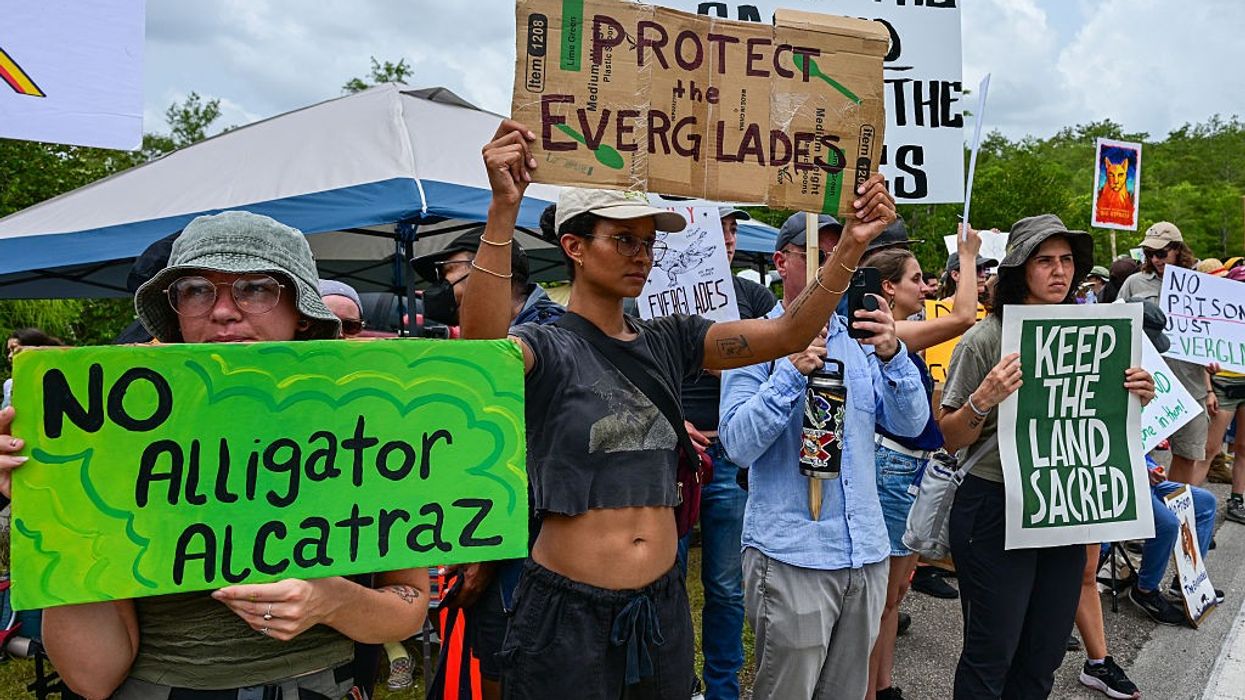
Paul Schwiep, the attorney representing the plaintiffs, described the judge's ruling as "a temporary but appropriate pause on any further destruction of a sensitive area."
A federal judge on Thursday ordered a temporary halt to the construction of an immigrant detention center being built in the Florida Everglades dubbed "Alligator Alcatraz."
The Associated Press reports that U.S. District Judge Kathleen Williams of the United States District Court for the Southern District of Florida has order that all construction at the facility be halted for the next 14 days, although the government can continue to operate the center and detain immigrants there.
The judge's ruling was in response to a lawsuit filed by the local Miccosukee Tribe and some environmental organizations who had argued that further construction at the site risked damage to protected wetlands nearby.
"The crux of the plaintiffs' argument is that the detention facility violates the National Environmental Policy Act, which requires federal agencies to assess the environmental effects of major construction projects," wrote the AP.
Florida attorney Jesse Panuccio, representing the state, argued that the facility shouldn't be subject to this federal law because it is entirely under the control of the Florida state government. However, Williams rejected this argument and said that the detention center was at the very least a joint operation between Florida and the federal government given that it was handling people detained by the federal government.
Florida officials have outlined ambitions to double the capacity of the current facility, according to The New York Times.
Paul Schwiep, the attorney representing the plaintiffs, described the judge's ruling as "a temporary but appropriate pause on any further destruction of a sensitive area, to allow the parties to present their evidence and arguments on the preliminary injunction request" that would potentially permanently halt construction at the site.
The facility was first announced earlier this summer when Republican Florida Attorney General James Uthmeier unveiled a plan to renovate the Dade-Collier Training and Transition Airport and transform it into a mass detention center for immigrants. During a press event touting the new facility last month, Republican Florida Gov. Ron DeSantis boasted that detainees being held there had little hope of ever escaping given that it was surrounded by miles of alligator-infested swamps.
The center has drawn criticism from human rights groups as well as from Democrats who visited the facility last month. Rep. Maxwell Frost (D-Fla.), one of the lawmakers to visit the facility, said afterward that "what I saw made my heart sink," referring to the conditions where detainees are being held.
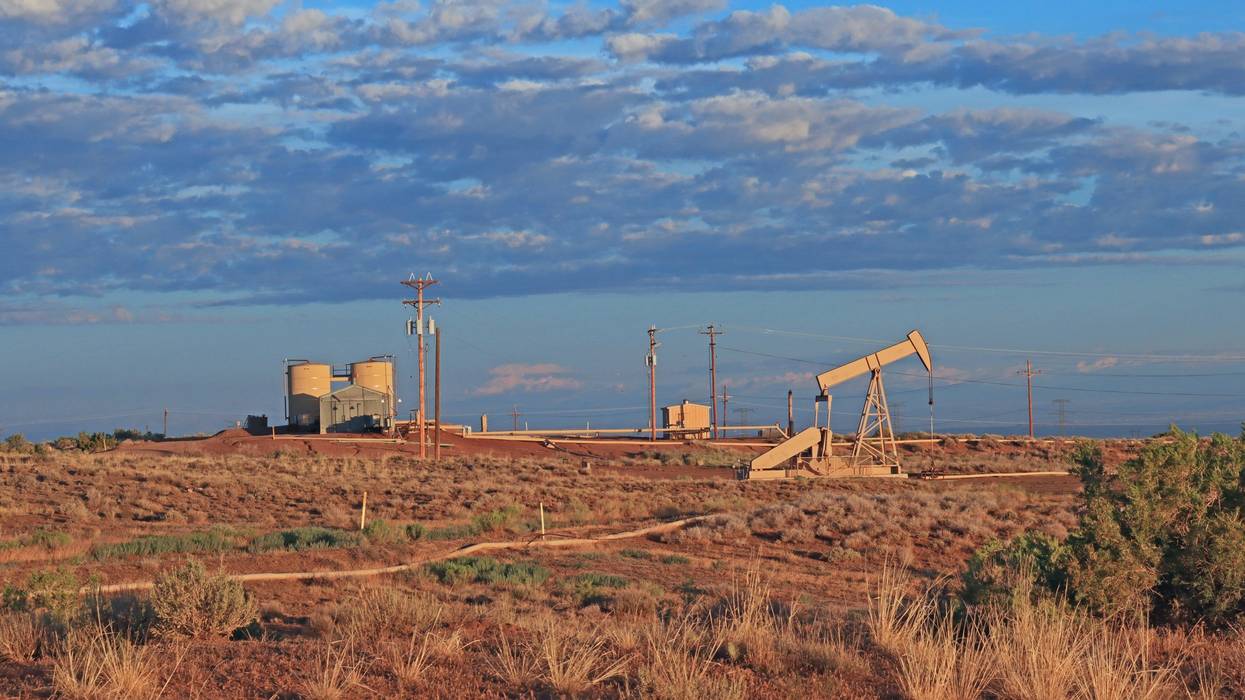
"The Trump administration will treat this decision as an invitation to ignore environmental concerns as it tries to promote fossil fuels, kill off renewable energy, and destroy sensible pollution regulations."
In a 8-0 ruling on Thursday, the U.S. Supreme Court not only reversed a block on a proposed oil train in Utah but also narrowed a landmark federal environmental law, sparking intense alarm about what the ruling will mean for communities and all living things across the country.
"Today's decision undermines decades of legal precedent that told federal agencies to look before they leap when approving projects that could harm communities and the environment," said Earthjustice senior vice president of program Sam Sankar in a statement. "The Trump administration will treat this decision as an invitation to ignore environmental concerns as it tries to promote fossil fuels, kill off renewable energy, and destroy sensible pollution regulations."
Since the National Environmental Policy Act (NEPA) was signed into law in 1970 by Republican then-President Richard Nixon, it has become a key target for GOP policymakers aligned with the planet-wrecking fossil fuel industry, including President Donald Trump, who swiftly took aim at the law after returning to office in January.
"We urgently need to strengthen laws like NEPA, not weaken or narrow them, so that we can prioritize the health of people over polluters and corporate greed."
NEPA requires federal agencies to prepare an environmental impact statement (EIS) for certain infrastructure projects. In 2023, the U.S. Court of Appeals for the District of Columbia Circuit tossed both an EIS for the proposed Uinta Basin Railway and the U. S. Surface Transportation Board's approval of the project, which would connect Utah's oil fields to the national rail network.
After hearing arguments for Seven County Infrastructure Coalition v. Eagle County in December, the nation's highest court reversed that decision on Thursday, continuing a trend of rulings slammed by environmentalists as gifts to corporate polluters.
Conservative Justice Neil Gorsuch recused himself without explanation. Politico noted that "it followed a public pressure campaign from environmental groups and Democrats who argued his close connections to the owner of oil and gas producer Anschutz—which filed a brief in the case saying NEPA's scope was critical to developing oil and gas reserves—disqualified him."
Justice Brett Kavanagh delivered the opinion, joined by the other right-wingers who participated in the case. Justice Sonia Sotomayor filed a concurring opinion, joined by the other two liberals.
Kavanaugh wrote for the majority that "the D. C. Circuit failed to afford the board the substantial judicial deference required in NEPA cases and incorrectly interpreted NEPA to require the board to consider the environmental effects of upstream and downstream projects that are separate in time or place from the Uinta Basin Railway."
Sotomayor, joined by Kagan and Jackson, refuses to join Kavanaugh's majority opinion, saying it "unnecessarily" grounds its analysis "largely in matters of policy." (It's clear that Kavanaugh wants to weaken NEPA's restrictions on energy permitting.) www.supremecourt.gov/opinions/24p...
[image or embed]
— Mark Joseph Stern (@mjsdc.bsky.social) May 29, 2025 at 10:09 AM
Environmental and public health advocates were quick to warn of the impacts of not only this 88-mile rail project, if completed, but also the decision more broadly.
"This decision is terrible news for the entire Colorado River Basin," said John Weisheit, conservation director at Living Rivers. "To avoid the pending collapse of the Colorado River, we have to immediately reduce water consumption by 25% and cut carbon emissions by 50% by the end of this decade. Our federal decision-makers must deny any project that counters these objectives. The Uinta Basin Railway unquestionably falls into that category and should never see the light of day."
Critics of the ruling are worried about increased oil extraction in Utah as well as additional refining in Gulf of Mexico communities.
"Regrettably, the Supreme Court has scored one for the oil companies who don't want you to look too closely at the harm their product will do to Black and Brown communities in Cancer Alley," said Sierra Club senior attorney Nathaniel Shoaff. "Our bedrock environmental laws, like NEPA, are meant to ensure people are protected from corporate polluters."
"Fossil fuel infrastructure projects do not exist in a vacuum and have far-reaching impacts on communities, especially those on the frontlines of climate change or those who face serious health harms from increased pollution," Shoaff stressed.
"The last thing we need is another climate bomb on wheels that the communities along its proposed route say they don't want."
Center for Biological Diversity senior attorney Wendy Park declared that "the last thing we need is another climate bomb on wheels that the communities along its proposed route say they don't want," and vowed to "keep fighting to make sure this railway is never built."
Park also looked beyond the train project, warning that "this disastrous decision to undermine our nation's bedrock environmental law means our air and water will be more polluted, the climate and extinction crises will intensify, and people will be less healthy."
WildEarth Guardians staff attorney Katherine Merlin similarly emphasized that "today's decision is a devastating loss for our wild places, our wild rivers, and for all of the human and nonhuman communities that depend on a clean environment and stable climate."
The ruling comes as the Trump administration and congressional Republicans are working to boost planet-heating fossil fuels, ignoring scientists' warnings about the worsening climate emergency.
"After the hottest year on record, when the U.S. should be improving environmental safeguards and empowering frontline communities, this decision is a giant step backwards," said Ashfaq Khalfan, Oxfam America's director of climate justice. "Everyone deserves to live and work in communities with clean air and safe drinking water. We urgently need to strengthen laws like NEPA, not weaken or narrow them, so that we can prioritize the health of people over polluters and corporate greed."

"Trump's promise to cut Americans' energy bills is a lie," said one campaigner.
With more than 100 permits for oil pipeline projects and gas-fired power plants likely to be fast-tracked under U.S. President Donald Trump's so-called "energy emergency" declaration, consumer advocates on Wednesday called on lawmakers and state officials to stand up to the president's "bullying" and block his efforts to build pollution-causing fossil fuel projects—and slow clean energy progress.
"Trump's declaration of a sham energy emergency attempts to set into motion the weaponization of national security law to dismantle generations of public health and safety protections," said Tyler Slocum, director of Public Citizen's energy program. "The ultrawealthy fossil fuel executives who donated huge sums to Trump's campaign see this fraudulent emergency declaration as an opportunity to destroy the remarkable progress of wind and solar development, while maximizing fossil fuel exports and domestic consumption."
Trump signed a day-one executive order claiming that the U.S. faces an "energy emergency" and must "unleash" fossil fuel production—which has already been on the rise in recent years despite clear warnings from scientists that oil, gas, and coal extraction must end in order to avoid catastrophic planetary hearing.
"Trump's national energy emergency is a sham."
The U.S. Army Corps of Engineers cited that order in recent days when it created a new "emergency" designation for infrastructure project permits, paving the way for officials to push forward nearly 700 pending applications, including more than 100 for fossil fuel projects.
Clean Water Action told The New York Times that one major project it has fought against, Canadian firm Enbridge's Line 5 pipeline, which the company wants to build under the Mackinac Straits, could threaten the Great Lakes and tens of millions of people who rely on them for drinking water.
"If this is pushed through on an emergency permit, the implications of an oil spill if there's an explosion or something during tunnel construction is that over 700 miles of Great Lakes shoreline could be at risk," Sean McBrearty, Michigan policy director for Clean Water Action, told the Times.
"If approved, this project will risk our fresh water and the millions of people who rely on it for drinking, jobs, and tourism in exchange for a foreign oil company's profits," added McBrearty.
On Wednesday, U.S. Sens. Tim Kaine (D-Va.) and Martin Heinrich (D-N.M.)—who earlier this month introduced a resolution challenging Trump's emergency declaration—held a Capitol Hill press conference with environmental leaders.
"We are producing more energy now than at any other point in our history, and the U.S. is the envy of the world when it comes to energy innovation and production," Kaine said at the event. "The passage of the Bipartisan Infrastructure Law and Inflation Reduction Act have accelerated clean energy projects and created jobs, and we are on an amazing trajectory."
"Trump's sham emergency threatens to screw all of that up," Kaine added. "Why? Because he'd rather benefit Big Oil and suspend environmental protections than lower costs and create jobs for the American people. I hope my colleagues will join me in voting to terminate President Trump's emergency."
Heinrich said: "Trump's fake emergency declaration is causing enormous uncertainty. If you're thinking about opening a new factory, you don't know what your tax structure will be in the next 12 months. If you're trying to site and build a new transmission line, the federal agencies you work with just had a ton of their expert staff sacked, making it more difficult to get a permit."
"This is going to kill skilled trades jobs and drive up the cost of your electricity bills by as much at $480 a year by 2030," the senator added. "Trump's war on affordable, American-made energy is killing jobs and raising costs on working families."
Slocum urged senators to back Kaine and Heinrich's resolution.
"Trump's promise to cut Americans' energy bills is a lie, as every action under the fraudulent energy emergency would subject Americans to higher energy burdens," he said on Wednesday. "Having senators support Senate Joint Resolution 10 is a first step, but every governor of states in the Northeast and West Coast targeted by Trump's phony emergency order needs to stand up to his bullying."
The headline of this article has been changed to reflect that President Donald Trump's executive order moved to expedite the permit approval process rather than fast-tracking projects.
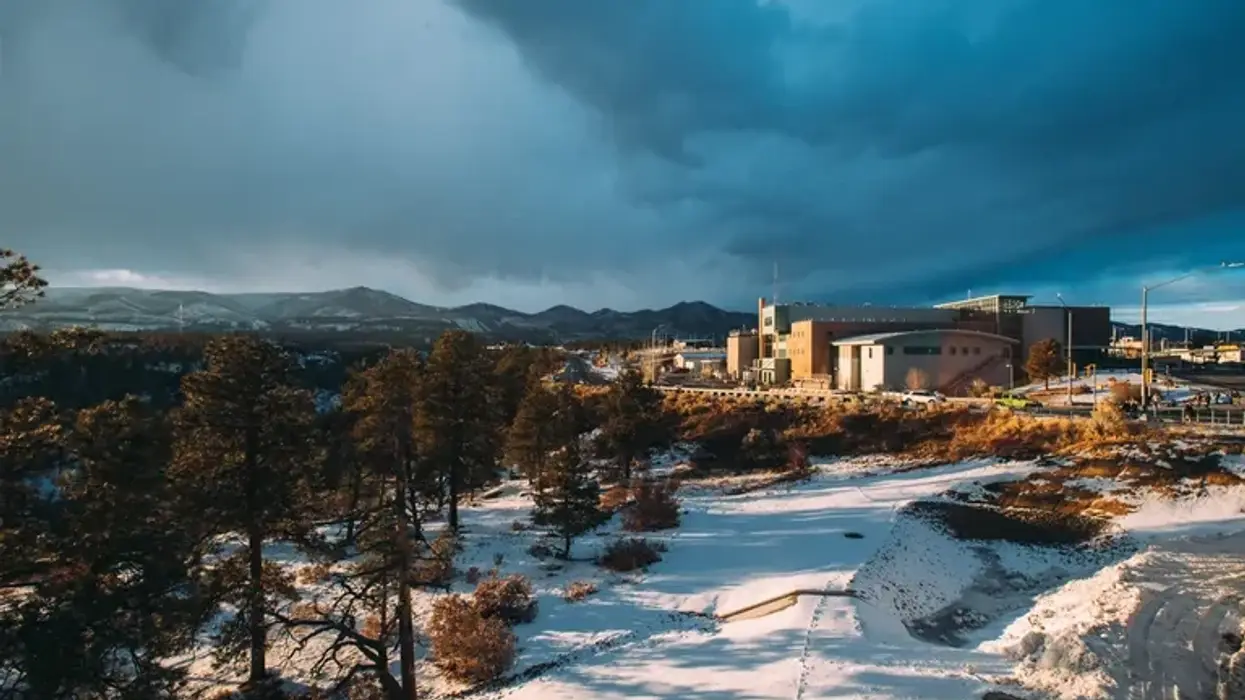
"Public scrutiny is especially important because the activities at issue here, by their very nature, result in the production of dangerous weapons and extensive amounts of toxic and radioactive waste," a plaintiffs' lawyer said.
In what advocates called a major win for frontline communities and the rule of law, a U.S. district court judge ruled on Monday that the federal government could not move forward with producing plutonium pits—"the heart and trigger of a nuclear bomb"—at two proposed sites in New Mexico and South Carolina.
Instead, Judge Mary Geiger Lewis agreed with a coalition of nonprofit community groups that the Department of Energy (DOE) and the National Nuclear Security Administration (NNSA) violated the National Environmental Policy Act (NEPA) by failing to fully consider alternatives to producing the pits at New Mexico's Los Alamos National Laboratory and South Carolina's Savannah River Site (SRS). Now, the federal government must conduct a full environmental impact statement of how pit production would work at sites across the U.S.
"This is a significant victory that will ensure NEPA's goal of public participation is satisfied," attorney for the plaintiffs Ben Cunningham, of the South Carolina Environmental Law Project, said in a statement. "Public scrutiny is especially important because the activities at issue here, by their very nature, result in the production of dangerous weapons and extensive amounts of toxic and radioactive waste. I hope the public will seize the upcoming opportunity to review and comment on the federal agencies' assessment."
"This is a victory for public transparency, and hopefully will result in alternative proposals that are more protective of the environment and affected communities around these sites."
Making plutonium pits means working with "extremely hazardous and radioactive materials," Nuclear Watch New Mexico, one of the groups behind the suit, pointed out. As of 2018, the government had planned to produce at least 80 pits a year by 2030—30 or more in New Mexico and 50 or more in South Carolina.
Yet these pits are not intended to maintain the United States' existing nuclear weapons stockpile. Instead, they would be for future, experimental weapons that could not even be tested without violating the Nuclear Test-Ban Treaty. What's more, making the pits would cost U.S. taxpayers over $60 billion over the next three decades, and the Government Accountability Office (GAO) found that the NNSA has not made reliable cost estimates for production at the two proposed sites.
"The DOE and NNSA have been on the GAO's 'High Risk List' for project mismanagement and cost overruns for more than 30 years," said Jay Coghlan, the executive director of Nuclear Watch New Mexico. "Nevertheless, these agencies think they can proceed with their most expensive and complex project ever without required public analyses and credible cost estimates."
Coghlan continued: "Public scrutiny and formal comment under the National Environmental Policy Act have proven time and again to improve public safety and save taxpayers' money. A nationwide programmatic environmental impact statement [PEIS] on expanded plutonium pit production will hold DOE and NNSA accountable for just that."
It will also give local communities a chance to have a say in potentially dangerous projects being implemented near their homes. The plaintiffs were composed mostly of frontline groups: Savannah River Site Watch, Nuclear Watch New Mexico, Tri-Valley Communities Against a Radioactive Environment (CAREs), and the Gullah/Geechee Sea Island Coalition.
"Native Gullah/Geechees, including the Gullah/Geechee Fishing Association and Gullah/Geechee Sea Island Coalition members, rely on safe and healthy water in order to sustain ourselves and our community," said Gullah Geechee Nation Chieftess Queen Quet. "Therefore, it is critical that the public is fully aware of any and all potential negative impacts that projects will have on critical resources such as our water supplies and water bodies."
If the DOE and NNSA's plans had gone ahead, it would have been the first time that plutonium pits were manufactured at the Savannah River Site, at a facility which could cost between $11 and $25 billion to complete. However, Judge Lewis concluded that the agencies had not updated their plans to account for production at two sites at once and must therefore conduct a PEIS considering production at potential sites across the U.S. as well as the handling and disposal of waste.
"In our comments, it was repeatedly stressed that the agency violated the law by failing to take a hard look at alternatives for this 'two-site' plan," said Scott Yundt, executive director of the Livermore, California-based Tri-Valley CAREs. "Additionally, commenters pointed out the lack of inclusion in the environmental review of the other affected sites involved in the plan, chief among them Lawrence Livermore National Laboratory and the Waste Isolation Pilot Plant, where the scope of work and the corresponding impacts was largely left out of the analysis and, again, no alternatives were offered or analyzed as required by NEPA. The judge saw these violations clearly and ordered agencies do the analysis that should have been done at the outset. This is a victory for public transparency, and hopefully will result in alternative proposals that are more protective of the environment and affected communities around these sites."
Tom Clements, who directs Savannah River Site Watch and was also an individual plaintiff in the case, said the ruling was "a notable victory for the main argument in our lawsuit—that the NNSA's NEPA analysis on plutonium pit production was inadequate."
In addition, it provides a reprieve for the project's concerned neighbors.
"The design and construction work on the proposed SRS pit plant should be put on hold until the PEIS has been finalized," Clements said.
Dylan Spaulding, senior scientist at the Union of Concerned Scientists, also applauded the ruling.
"NNSA skirted the rules and now they are being held accountable—this is a victory for transparency," he said.
Spaulding added that he was unsure whether or not this would delay the planned plutonium pit production blitz.
"There are still a lot of environmental hazards and questions that need to be addressed," he said. "We should be pausing and thinking about that before this hugely expensive project goes forward."
This piece has been updated to included comments from Dylan Spaulding of the Union of Concerned Scientists.
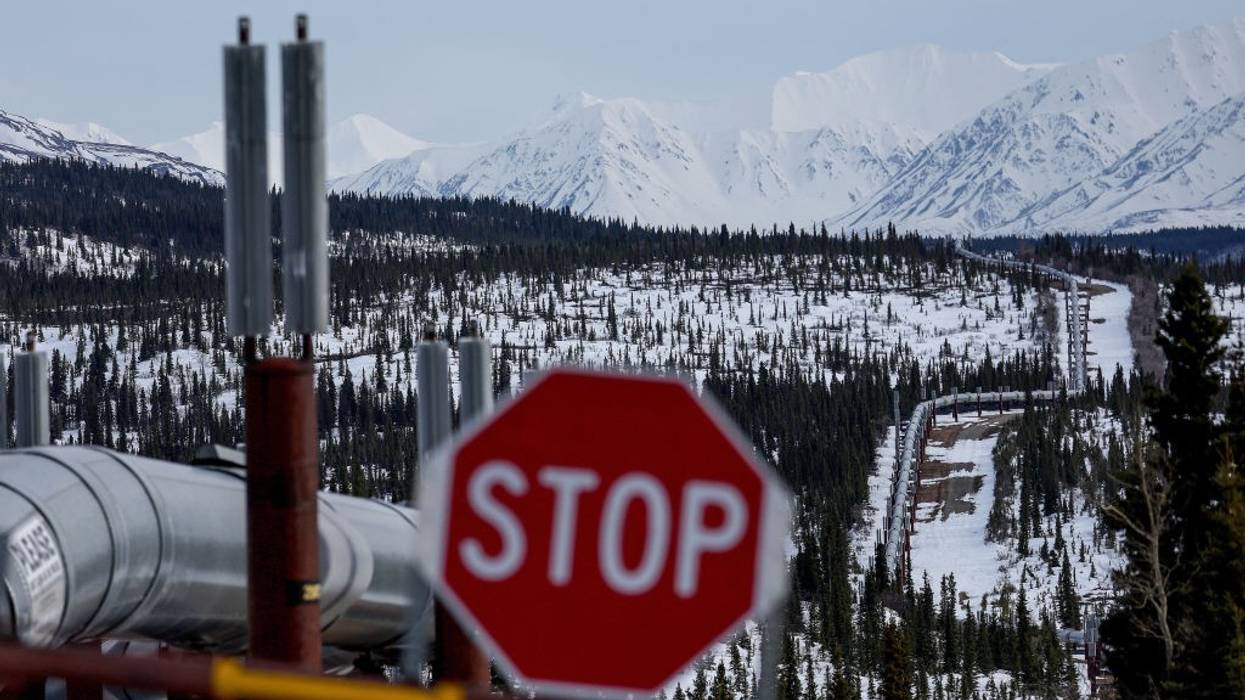
Pacific Environment and other green groups filed a legal petition this week asking the Department of the Interior for a new analysis of the climate damage and other harms related to the Trans-Alaska Pipeline System.
Recent technology breakthroughs have unlocked the potential production of many billions of barrels of Alaska’s high viscosity heavy oil, a development not yet accounted for in U.S. climate strategy. Federal intervention is needed now to keep this heavy oil carbon bomb in the ground.
Pacific Environment, alongside other environmental groups, filed a legal petition this week asking the Department of the Interior for a new analysis of the climate damage and other harms related to the Trans-Alaska Pipeline System (TAPS). The petition was filed by the Center for Biological Diversity, Pacific Environment, Sovereign Iñupiat for a Living Arctic, Alaska Community Action on Toxics, Fairbanks Climate Action Coalition, and Public Employees for Environmental Responsibility.
Right now, more than 5 billion barrels of previously unrecoverable Alaska North Slope (ANS) heavy oil appear commercially feasible to produce using polymer flooding technology. For comparison, the sprawling, massive Willow field—development approval of which by the Biden administration last year sparked widespread objection because of the impacts to the climate, communities, and wildlife—is estimated to have 576 million barrels of recoverable oil reserves. The potential and incentive to produce the massive, viscous, and heavy oil accumulation larger than Willow is a huge, dangerous development for the climate.
It’s time for the Department of the Interior to review the nearly 50-year-old aging TAPS infrastructure and put a plan in place to decommission it.
The ANS heavy oil accumulation is enormous—large enough to qualify as a “carbon bomb” (greater than 1 gigaton of CO2 equivalent) with roughly 3 gigatons of CO2 emissions—and is Alaska’s largest prospective oil development. The accumulation contains an estimated 20 to 25 billion barrels, with more than 5 billion now commercially feasible to produce.
Although the international scientific consensus urges a rapid transition away from fossil fuels, Alaska crude oil production is projected to nearly double between 2024 and 2048, according to the U.S. Department of Energy’s (DOE) Energy Information Administration’s Annual Energy Outlook 2023.
The increase in Alaska production is driven by a combination of Willow, Pika, enhanced oil recovery in aging existing oil fields, and new enhanced oil recovery in previously uneconomic viscous and heavy oil formations using new polymer flooding technologies adapted for the Alaska North Slope. In contrast, the entire Lower 48 crude oil production is projected to be flat over the long run, growing by only one-twelfth of 1% (12.29 million barrels per day to 12.30 million b/d) from 2024 to 2048.
The heavy oil accumulation overlays deeper reservoirs on state-owned land in production for decades, including the Prudhoe Bay, Kuparuk River, and Milne Point units. ANS heavy oil, with a consistency ranging from molasses to tar, is extremely carbon intensive and is driving the greenhouse gas emissions intensity of ANS oil upward from already high levels, which have increased by 25% since 2012, according to California Air Resources Board greenhouse gas emissions estimates.
Polymer flooding technology for enhanced oil recovery was field tested and validated at the Milne Point Unit in a DOE-funded, four-year study that concluded in 2022, which dramatically improved the outlook for production of ANS heavy oil. The study was conducted by the University of Alaska, Fairbanks’ petroleum engineering department, with technical support from Hilcorp.
Because of the enormous climate impacts more heavy oil production would unleash, the Biden administration should act now to start a new environmental analysis that will evaluate and lead to implementation of remedial actions addressing climate impacts.
The existing environmental analysis of TAPS, now more than two decades old, fails to examine the climate harms of the extraction and burning of oil moving through the pipeline.
A Supplemental Environmental Impact Statement (EIS) process for TAPS should be initiated immediately to examine existing and potential climate impacts and the effects of using the heavy oil that could be transported through the nearly 50-year-old aging pipeline, among other issues.
During the past 45 years, TAPS has undergone two environmental assessments required by the National Environmental Policy Act (NEPA): the initial pre-construction EIS in 1972 and the Reauthorization EIS in 2002. NEPA requires that an existing EIS must be supplemented whenever there is new information or circumstances relevant to environmental concerns, or if there are significant environmental impacts that were not evaluated.
A lot has changed since 2002—more than 20 years of science have increased understanding of the causes, impacts, and necessary actions to address the climate emergency. The contributions of fossil fuels to greenhouse gas emissions have been irrefutably documented. Global climate change has accelerated with dramatically observable effects including the increase in the frequency and severity of climate disasters and disruptions and storms eroding the rapidly melting Arctic.
The prior EIS assessments did not sufficiently address climate impacts nor the impact TAPS will have as the infrastructure that delivers Alaska’s heavy oil to market.
The 2002 EIS contains this dubious prediction: “Carbon dioxide (CO2) emissions from TAPS would add little to the global CO2 concentration level.”
Neither outdated EIS discussed the fact that the 18.5 billion barrels of crude oil transported through TAPS already has contributed 9 billion metric tons of CO2 equivalent to the global atmosphere, including methane through leaks, venting, and flaring. The stale 2002 pipeline renewal EIS estimates refer only to emissions from the pipeline system itself (the pump stations, generators, etc.) and do not include the 92 million metric tons of CO2 per year currently associated with the crude oil that TAPS transports after it gets refined and burned.
Ironically, the physical stability of TAPS is threatened by thawing permafrost caused by fossil fuel-driven warming. The combination of advanced age and unstable land caused by thawing permafrost potentially jeopardizes the integrity of the pipeline and substantially increases environmental risk, including the increased potential for leaks and spills.
Under the current authorization the TAPS EIS will be reviewed again in 2032; however, changing circumstances and new information require that the Biden administration immediately reevaluate the TAPS authorization by initiating a Supplemental EIS process. New information since 2002 includes the commercialization of heavy oil and the listing of species as endangered including polar bears and ringed and bearded seals.
As the Trans Alaska Pipeline System approaches the end of its life, climate change is impacting Alaska and the Arctic region significantly. Alaska is warming faster than any other state and nearly four times faster than the global average.
By transitioning beyond fossil fuels, Alaska can build a thriving economy based on its abundant renewable energy resources, reduce energy costs for families and businesses, and increase the state’s energy security.
It’s time for the Department of the Interior to review the nearly 50-year-old aging TAPS infrastructure and put a plan in place to decommission it. How the TAPS is managed is key to America’s climate future.

"Today's rule restores strong environmental review of federal actions and will go a long way towards having a meaningful process to assess the health and safety impacts of an array of projects," said one campaigner.
In a clear demonstration of how U.S. President Joe Biden's priorities differ from those of his GOP predecessor, the Democrat on Tuesday finalized a two-part push to revive and strengthen a landmark environmental law eviscerated by the Trump administration in 2020.
While in office, former Republican President Donald Trump—who has pledged to "drill, baby, drill" if he wins back the White House—attacked the National Environmental Policy Act (NEPA), which ensures communities can weigh in on projects that are built nearby or otherwise impact them.
The White House Council on Environmental Quality on Tuesday released regulations that "aim to undo Trump's gift to polluters," in the words of Food & Water Watch, one of several groups that applauded the Biden administration's new rules.
"This rule is yet another reminder that we do not have to choose between environmental justice and meeting our energy needs."
"NEPA gives communities the power to participate and advocate for themselves when the federal government greenlights polluting projects like factory farms and fossil fuel power plants," said Food & Water Watch legal director Tarah Heinzen. "Today's rule restores strong environmental review of federal actions and will go a long way towards having a meaningful process to assess the health and safety impacts of an array of projects."
"Over the past few years, NEPA has been targeted by polluters and their political allies as an impediment to permitting sensible and necessary projects," Heinzen noted. "But this is simply not the case; full, transparent consideration of a project's impacts—including climate and environmental justice impacts—is critical to informed decision making and ultimately transitioning away from fossil fuels."
In addition to reinstating provisions gutted under Trump, Biden's rule introduces new climate and environmental justice requirements.
"These are the most significant improvements in decades to the NEPA process that analyzes gas pipelines, power plants, and other polluting projects," said Brett Hartl, government affairs director at the Center for Biological Diversity. "These rules undo the damage from both the previous administrations' efforts to weaken NEPA and the Fiscal Responsibility Act of 2023."
Hartl also highlighted some inconsistency with Biden's record, saying that "these rules come not a moment too soon, as the Department of Energy, the Bureau of Land Management, and other federal agencies continue to unthinkingly approve climate-killing fossil fuel projects. All federal agencies must now meaningfully adjust their environmental reviews so that fossil fuel companies' profits aren't put above the interests of our most vulnerable communities and our climate."
Friends of the Earth legal director Hallie Templeton similarly praised the progress while stressing that the fight is far from over.
"This marks a victory in our yearslong litigation to reverse the rollbacks and benefits frontline communities who rely on NEPA for a voice in the permitting process and for transparency around our government's activities," said Templeton. "While much more must be done to shore up our nation's environmental and environmental justice laws, this is a certain step in the right direction for safeguarding people and the planet."
Abigail Dillen, Earthjustice's president, emphasized that "smart, transparent blueprinting for the future has never been more important."
"We need to build out the clean energy infrastructure of the future as efficiently and affordably as possible, while forcing a shift in business-as-usual thinking that is driving fossil fuels expansion, entrenching environmental injustice, and accelerating biodiversity loss," she asserted. "This new rule restores NEPA to its original intent while modernizing its implementation to address the scale of the environmental problems we face now."
Sierra Club executive director Ben Jealous pointed out that "this rule is yet another reminder that we do not have to choose between environmental justice and meeting our energy needs."
"Through this commonsense reform, we can unlock the benefits of the Inflation Reduction Act and bring abundant clean energy resources online without sacrificing communities or rubber-stamping more fossil fuels," he continued, referencing a package signed by the president in 2022. "We applaud the Biden administration for taking this important step toward ensuring certainty, efficiency, and transparency in the federal environmental review process."
David Watkins, the director of government affairs for the Climate and Energy Program at the Union of Concerned Scientists, said that "by restoring and strengthening key provisions of NEPA, the Biden administration has unequivocally declared that polluting industries will not have the only say in how federal investments and projects are evaluated."