

SUBSCRIBE TO OUR FREE NEWSLETTER
Daily news & progressive opinion—funded by the people, not the corporations—delivered straight to your inbox.
5
#000000
#FFFFFF
To donate by check, phone, or other method, see our More Ways to Give page.
Daily news & progressive opinion—funded by the people, not the corporations—delivered straight to your inbox.
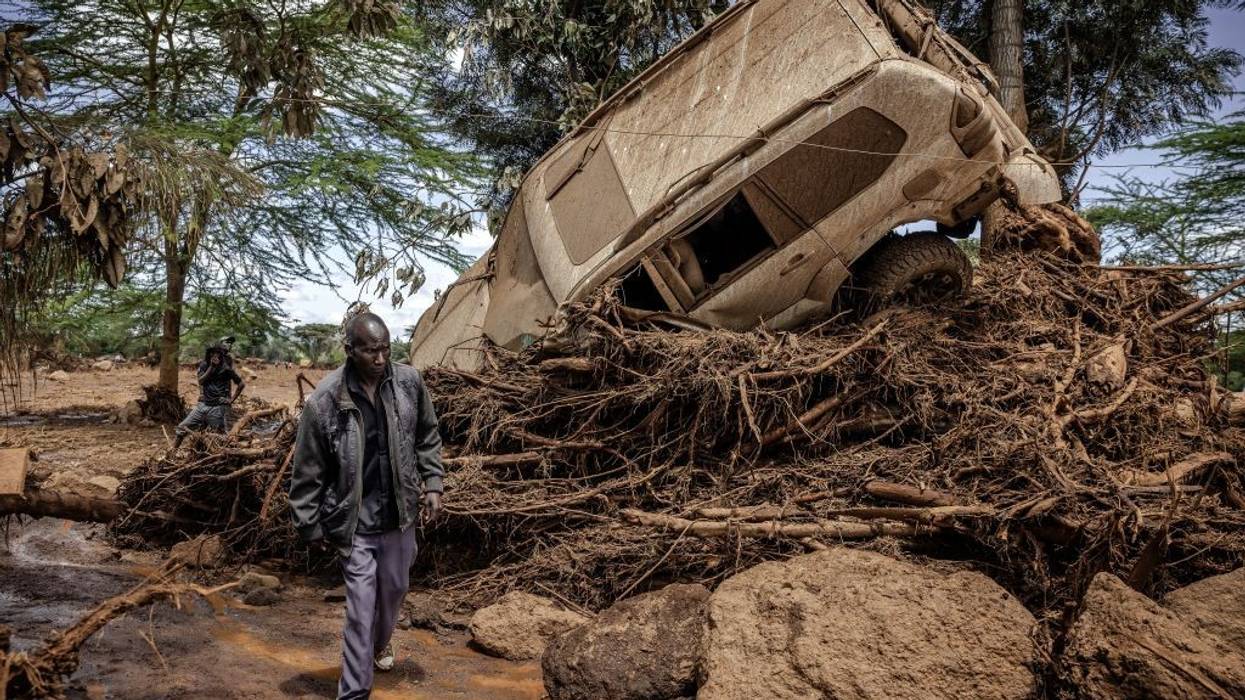
"The ongoing floods in East Africa are the present and future if we don't accelerate the energy transition to renewables," said one African climate campaigner.
The United Nations migration agency warned Wednesday that extreme flooding caused by weeks of torrential rain has triggered widespread displacement in half a dozen East African countries, with hundreds of thousands of people affected and more than 200,000 displaced over the past five days alone.
The International Organization for Migration (IOM) said that more than 637,000 people in Burundi, Kenya, Rwanda, Somalia, Ethiopia, and Tanzania have been affected and at least 234,000 people have been displaced as "torrential rains have unleashed a catastrophic series of events, including flooding, mudslides, and severe damage to vital infrastructure such as roads, bridges, and dams."
"These disasters have not only claimed numerous lives but have also escalated the suffering of the affected populations and heightened the risk of waterborne diseases," IOM added.
At least 238 people have died in Kenya alone, with many more injured. Kenyan President William Ruto has declared a day of mourning on Friday.
"No corner of our country has been spared from this havoc," Ruto said in a May 3 address to his nation. "Sadly, we have not seen the last of this perilous period as this situation is expected to escalate."
While Africa is responsible for less than 4% of global greenhouse gas emissions—the lowest share on the planet—the continent is suffering disproportionately during the worsening planetary emergency, with 17 of the 20 countries most threatened by global heating located on the continent of nearly 1.5 billion people.
East Africa and the Horn of Africa are particularly affected. Yet fossil fuel projects including the East African Crude Oil Pipeline (EACOP)—which, if completed, will transport up to 230,000 barrels a day of crude oil nearly 900 miles from fields in the Lake Albert region of western Uganda to the Tanzanian port city of Tanga on the Indian Ocean—continue apace.
Meanwhile, activists who oppose projects like EACOP face persecution and even arrest.
"The unprecedented and devastating flooding has unveiled the harsh realities of climate change, claiming lives and displacing communities," IOM East and Horn of Africa Regional Director Rana Jaber said in a statement. "As these individuals face the daunting task of rebuilding, their vulnerability only deepens."
"In this critical moment even as IOM responds, the call remains urgent for sustainable efforts to address human mobility spurred by a changing climate," Jaber added.
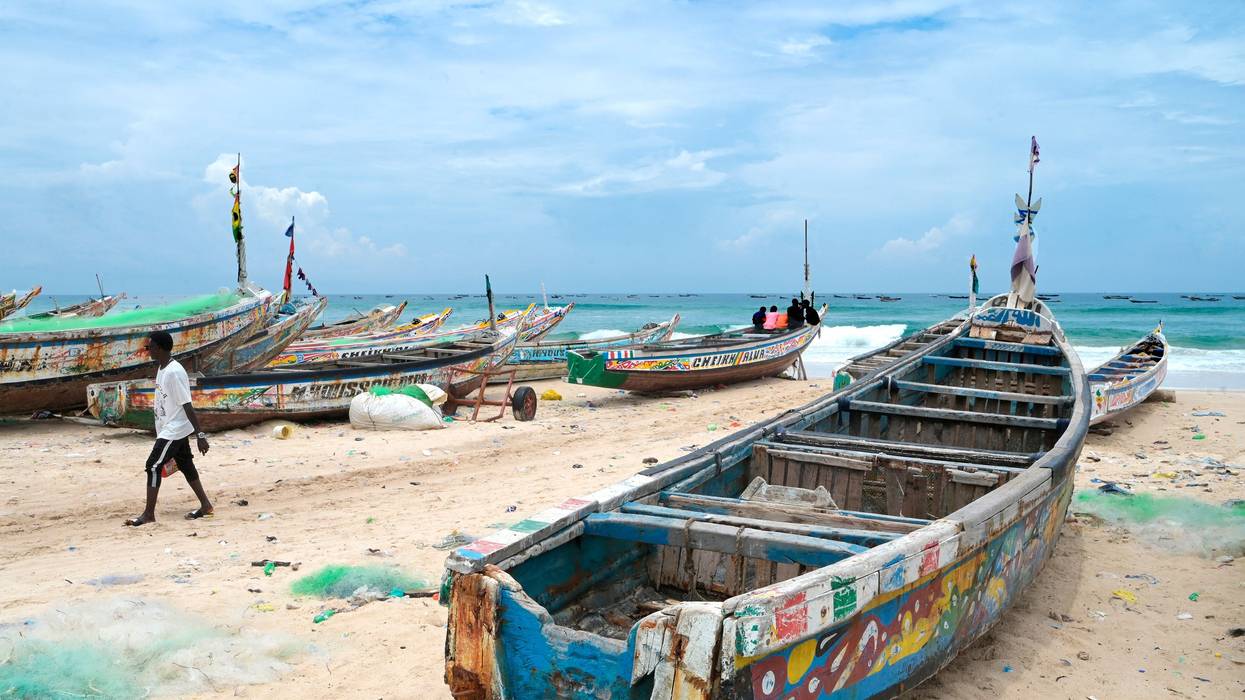
"We all—all the nations—have to sit down at the table and see what we can do so that we don't lose any more lives at sea," said Cabo Verde's health minister.
Human rights defenders on Thursday called on the international community to work together to better protect migrants making the perilous journey from Africa to Europe amid reports that scores of people likely drowned after the boat on which they were traveling was found adfrit in the Atlantic Ocean near Cabo Verde.
At least 63 migrants are believed to have died at sea after their pirogue, or wooden Senegalese fishing boat, was found floating approximately 150 nautical miles off the island of Sala in the West African archipelago nation, the United Nations' International Office for Migration (IOM) said Wednesday. Seven bodies were found aboard the boat, while an estimated 56 people are missing.
"Generally, when people are reported missing following a shipwreck, they are presumed dead," IOM spokesperson Safa Msehli told Agence France-Presse.
Msehli said that 38 survivors from the boat, including four children, were rescued earlier this week by a Spanish fishing boat near Cabo Verde. Almost all of the rescued migrants were from Senegal, where the boat reportedly set sail more than a month ago. Others hailed from Guinea-Bissau and Sierra Leone.
Cabo Verde, located nearly 400 miles off the West African coast, lies along a major migration route to the Spanish Canary Islands, considered a gateway to mainland Europe. At least 67,000 migrants landed in the Canary Islands between 2020 and 2023, according to BBC News.
Over that same period, nearly 2,500 people are known to have died trying to reach the islands—although experts say many migrant deaths are not registered, so the actual toll is likely much higher. In June, the IOM said that nearly 3,800 people died on all Middle East and North Africa migration routes last year, the highest annual total since 2017, when 4,255 deaths were recorded.
"It's absolutely devastating what's happened, because we know that these deaths are entirely avoidable," Natasha Tsangarides, associated director of advocacy at the U.K.-based advocacy group Freedom From Torture, told BBC News in response to the Cabo Verde tragedy. "No one gets in a boat like that unless they're absolutely desperate."
Cabo Verdean Health Minister Filomena Gonçalves said that "we know that migration issues are global issues, which require international cooperation, a lot of discussions, and global strategy."
"We all—all the nations—have to sit down at the table and see what we can do so that we don't lose any more lives at sea, above all," she added.
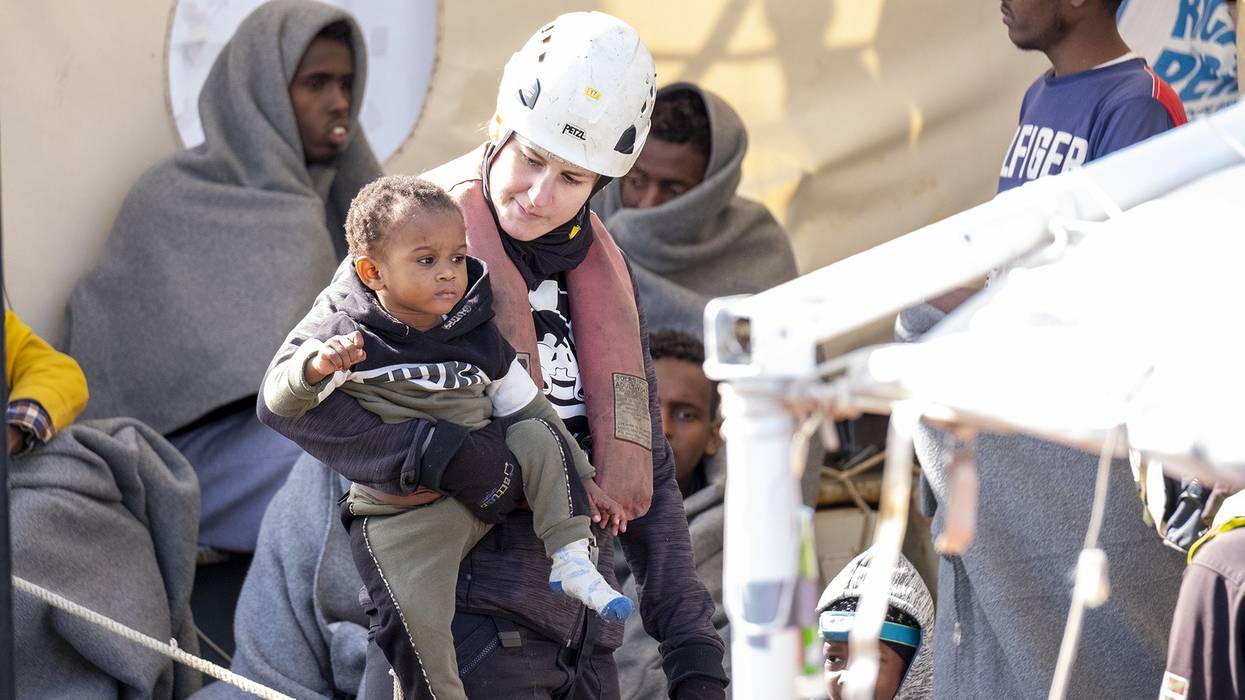
"Children are dying not just in front of our eyes; they are dying while we seem to keep our eyes closed," laments one UNICEF official. "Hundreds of girls and boys are drowning in the world's inaction."
Roughly twice as many migrant children died crossing the Mediterranean Sea during the first half of this year as during the same period in 2022, the United Nations Children's Fund reported Friday.
In a sobering update, UNICEF said at least 289 children drowned while attempting to cross the Mediterranean from Africa into Europe during the first six months of 2023.
That's the equivalent of about 11 children per week, which is "far beyond what we hear in news headlines," according to UNICEF Global Lead on Migration and Displacement Vera Knaus.
"We cannot continue to ignore what is happening [and] stand by silently when nearly 300 children—an entire plane full of children—are dying in the waters between Europe and Africa in just six months," Knaus said. "Children are dying not just in front of our eyes; they are dying while we seem to keep our eyes closed. Hundreds of girls and boys are drowning in the world's inaction."
Approximately 11,600 children crossed the Mediterranean between January and June, UNICEF said. Many of them undertook the perilous journey without parents or guardians—the agency said 3,300 unaccompanied or separated children arrived in Europe during just the first three months of this year.
"This is three times higher than the number in the same period last year," Knaus noted. "Girls traveling alone are especially likely to experience violence before, during, and after their journeys."
UNICEF warned that "the true number of child casualties is likely to be higher as many shipwrecks in the central Mediterranean leave no survivors or go unrecorded."
Knaus stressed that "these deaths are preventable."
"They are as much driven by the complex emergencies, conflicts, and climate risks that drive children from their homes as by the lack of political and practical action to do what it takes to enable safe access to asylum and to protect the rights and lives of children wherever they come from and whatever their mode of travel," she added.
The U.N.'s International Office for Migration said in April that 441 migrants of all ages drowned while trying to cross the Mediterranean in the first three months of 2023 alone, the deadliest quarter since 2017.
Recent incidents include the drowning deaths of at least 79 migrants aboard an overloaded fishing vessel that capsized off the southwestern coast of Greece last month. More than 500 people remain missing and are presumed dead.
An analysis published earlier this week by media outlets and the Berlin-based research agency Forensis suggests the Greek coast guard's efforts to tow the vessel caused it to capsize and sink.
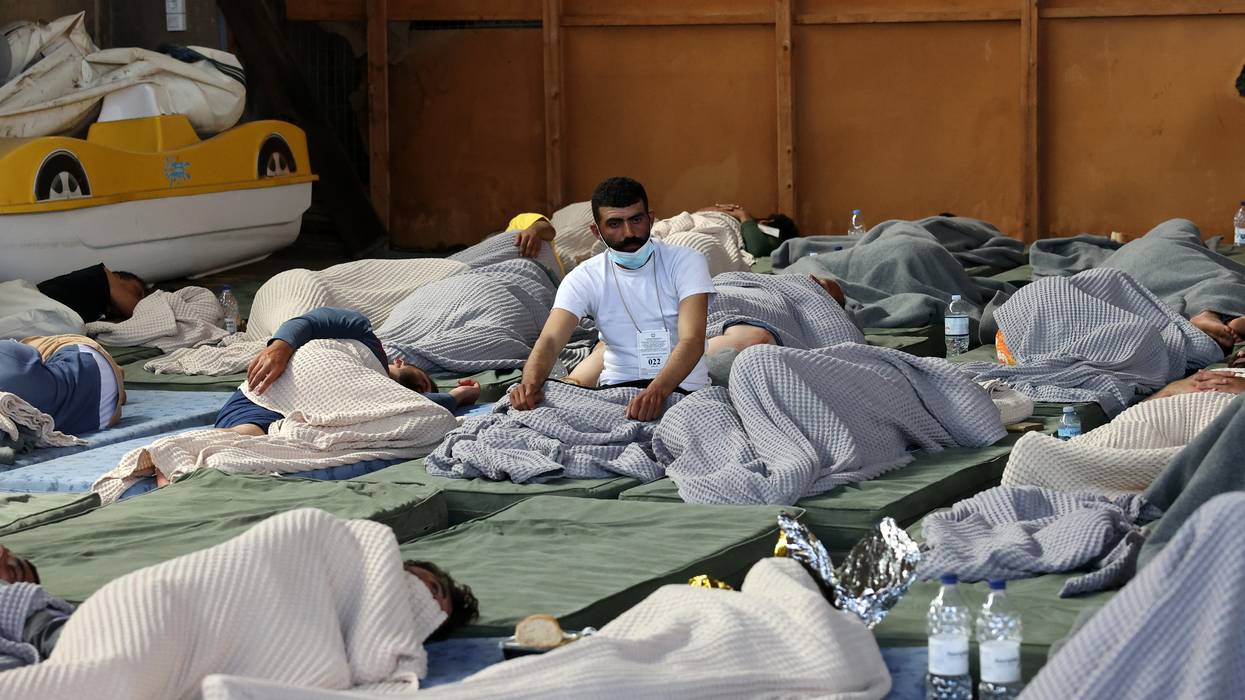
"No person fleeing conflict, persecution, or hunger should have to die trying to reach safety," said one U.N. official.
At least 79 migrants drowned early Wednesday when the overloaded fishing vessel in which they were attempting to cross the Mediterranean Sea capsized off the southwestern coast of Greece.
Reuters reports that hundreds more people are missing and presumed drowned, while 104 others had been rescued from the sunken boat by midday. The Greek state broadcaster ERT reported that the boat was en route to Italy from Tobruk in eastern Libya.
Arguing that "Europe's borders kill," the international rescue organization Alarm Phone said on Twitter that yesterday it was "alerted by a boat in distress" that had left Libya with 750 migrants on board. According to a transcript of Alarm Phone's communications with the vessel, "the captain left on a small boat" sometime before 5:20 pm on Tuesday. The group's last contact with the vessel was at 12:46 am Wednesday.
The Hellenic Coast Guard said that Greek officers approached the boat and offered aid, but that the migrants declined and stated their desire to continue toward Italy.
"Nobody should be forced to risk such dangerous journeys in search of protection," the migrant advocacy group International Rescue Committee tweeted. "With the number of displaced people at a record high, [the European Union] must act now to expand safe routes."
Speaking in New York, United Nations Spokesperson Stéphane Dujarric said U.N. Secretary-General António Guterres stressed "that every person searching for a better life needs dignity and safety."
"This is yet another example of the need for member states to come together and create orderly safe pathways for people forced to flee and for comprehensive action to save lives at sea and reduce perilous journeys," Dujarric added.
U.N. High Commissioner for Refugees Filippo Grandi said he felt "only sadness, and anger, after another deadly tragedy at sea in the Mediterranean."
"May the victims rest in peace," he added. "May the survivors find consolation and care. May governments cooperate to increase safe pathways and work together on collective solutions to address these flows."
Media reports are calling Wednesday's "devastating" disaster the deadliest migrant shipwreck off Greece this year. The country has been on the frontlines of Europe's migration crisis since 2015, when people fleeing wars—including ones waged by European powers—hunger, and economic privation began leaving the Middle East, Asia, and Africa in massive numbers.
Greek politicians halted their election campaigns in the wake of the disaster. Kyriakos Mitsotakis—the leader of the center-right New Democracy party who is expected to resume the prime ministership after the June 25 election—tweeted that "the priority now is to save as many lives as possible."
"This new incident, however, dramatically demonstrates that migration remains a problem that requires a coherent European policy," he added.
Opposition Leader Alex Tsipras of the leftist Syriza party tweeted: "This is a human tragedy, which captures in the saddest way the hopelessness of those seeking asylum in Europe. The moment demands that we put forward humanity and stand by the survivors of the shipwreck, while intensifying every effort to locate the missing."
The U.N.'s International Office for Migration said in April that 441 migrants drowned crossing the Mediterranean in the first three months of 2023 alone, the deadliest quarter since 2017.
Human rights groups say that nearly 25,000 migrants have died in the Mediterranean since 2014. On Wednesday,