

SUBSCRIBE TO OUR FREE NEWSLETTER
Daily news & progressive opinion—funded by the people, not the corporations—delivered straight to your inbox.
5
#000000
#FFFFFF
To donate by check, phone, or other method, see our More Ways to Give page.
Daily news & progressive opinion—funded by the people, not the corporations—delivered straight to your inbox.
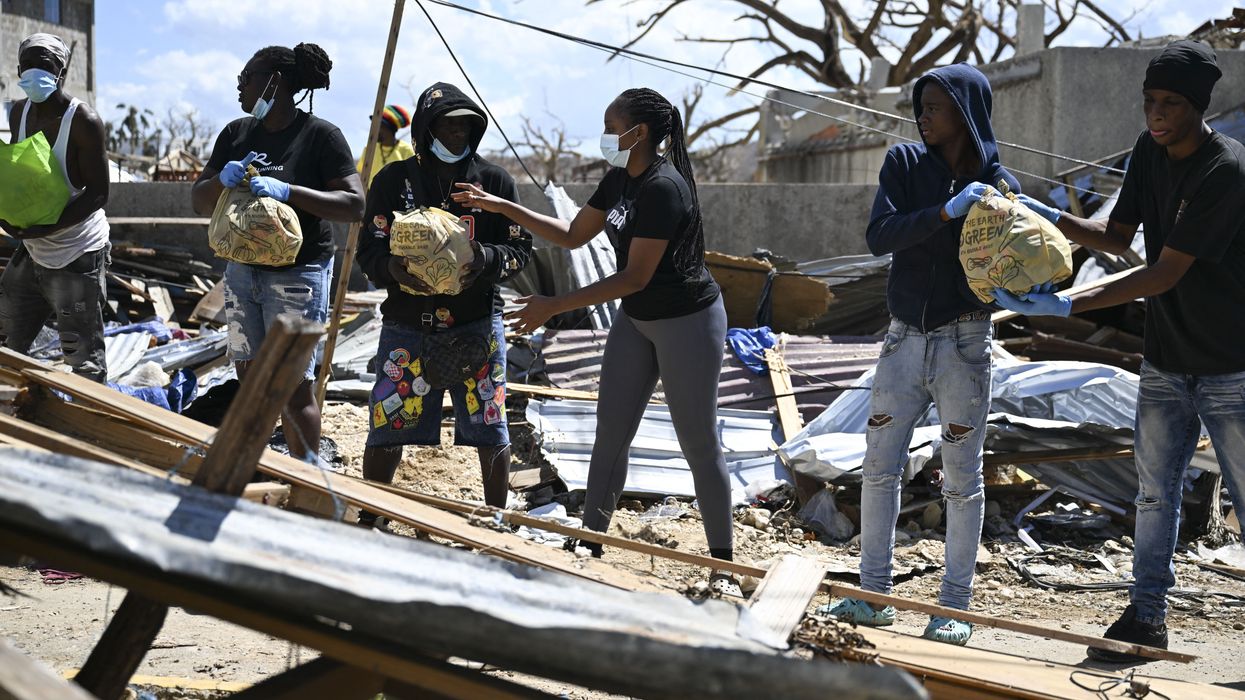
Hurricane Melissa was no “natural disaster.” It was the predictable result of choices made by powerful interests that continue to profit from a warming planet.
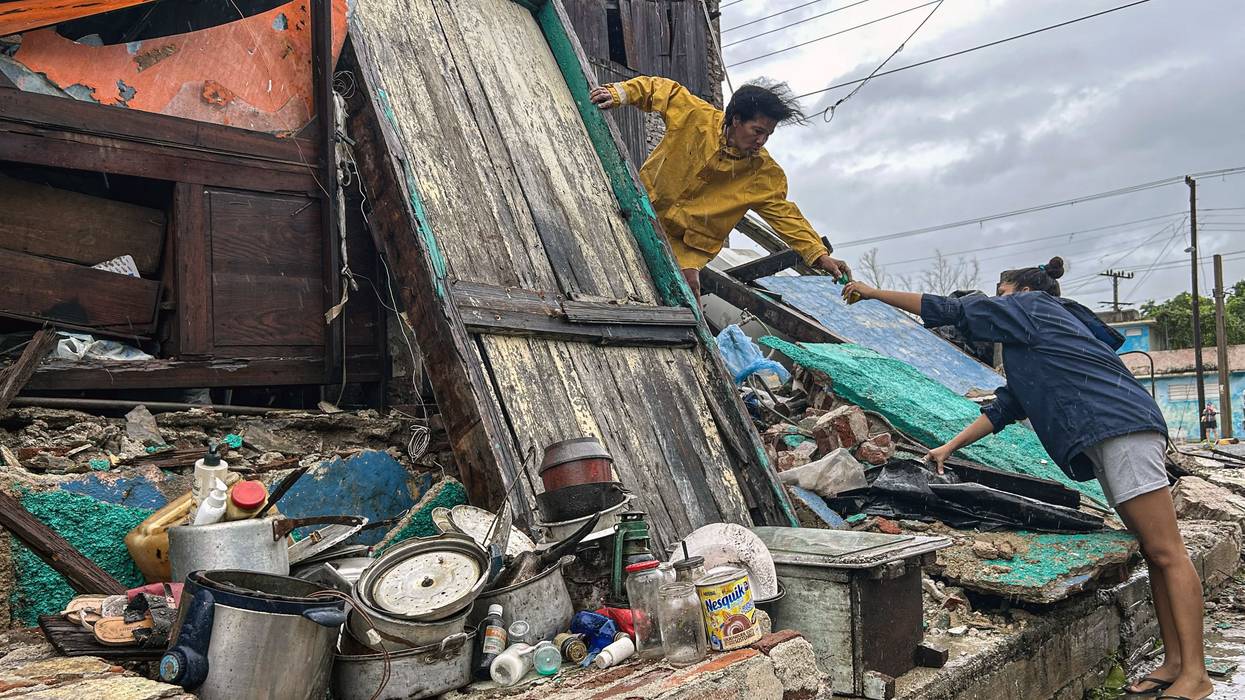
The wind began howling shortly after midnight on a Tuesday morning. My husband and I gathered the children and moved them into our designated “safe space.” We couldn’t sleep. The roof groaned. The windows rattled. By dawn, the sun broke through to reveal the aftermath. Debris and fallen trees littered the area around our home, but we were fortunate—though we’d lost power, our house was intact. But as I scrolled through the images now flooding social media, primarily from the western side of the island, my emotions swung from relief to despair to sorrow. Black River, Savanna-la-Mar, Santa Cruz, Treasure Beach, Montego Bay, and many other communities were devastated.
Hurricane Melissa, a Category 5 storm at landfall, approached Jamaica slowly before drifting westward along the southern coast. Meteorologists struggled to predict its path. The storm’s slow crawl and eventual path across Jamaica brought something even more dangerous: hours of torrential rain, widespread flooding, and destructive winds.
It’s already considered among the most powerful Atlantic hurricanes in recent history. Yet as the media breathlessly warned of the dangers, few spoke of the connection between this storm and the climate crisis. We kept hearing the term “natural disaster.” Hurricane Melissa, however, was anything but natural.
While hurricanes are natural hazards, the scale of destruction we now face is man-made. Over the past century, the burning of coal, oil, and gas has supercharged our atmosphere with greenhouse gases, trapping heat and warming the oceans that fuel storms like Melissa. Warmer seas mean more intense hurricanes, heavier rainfall, and slower-moving systems that linger and devastate. Meteorologists continuously emphasized how warm the Caribbean Sea was before Melissa made landfall, and how deep the warm water extended, fueling the hurricane.
As the media breathlessly warned of the dangers, few spoke of the connection between this storm and the climate crisis.
While fossil fuel companies have known about the correlation between the warming and a changing climate for decades, they have spent billions sowing doubt, funding misinformation, and lobbying against climate policies that could have curbed emissions. Their profits have come at the expense of our safety and our future. Countries like Jamaica, responsible for less than one percent of global emissions, are left to shoulder the costs of adaptation, recovery, and rebuilding. Longer recovery times and deeper economic strain are becoming the norm.
So, no, Hurricane Melissa was not a “natural disaster.” It was the predictable result of choices made by powerful interests that continue to profit from a warming planet. If global emissions are not drastically reduced urgently, these events will only escalate.
After a disaster, we often applaud those who are able to recover quickly. But we cannot just be resilient in the face of climate chaos —we must be climate resilient. This type of resilience goes further: it’s about the capacity of individuals, communities, and ecosystems to anticipate, prepare for, and respond to the impacts of the climate crisis. That ability to recover means more than rebuilding roads, bridges, hospitals, schools, and homes. It means enforcing environmental laws that prevent unsafe development, investing in nature-based solutions, and ensuring that recovery reaches everyone. It also means supporting community-led adaptation initiatives that are rooted in local knowledge and collective care.
Preparedness must become a culture, not a scramble, before a storm makes landfall. That includes maintaining drainage systems year-round, preserving wetlands that buffer storm surges, enforcing no-build zones and ensuring that technical experts, including meteorologists, hydrologists, and climate scientists—not just politicians—play visible roles in guiding public communication and action.
Hurricane Melissa forces us to confront this issue of climate justice. That’s why the Caribbean Climate Justice Alliance, a coalition of grassroots leaders, creatives, academics, and activists, is calling for bold, unified, justice-centered action at COP30 happening right now in Brazil. The message to world leaders is clear:
This message reflects the lived realities of people across our islands. Hurricane Melissa has reminded us of our vulnerability, but also of our strength, our knowledge, and our capacity to lead. In the coming weeks and months, as relief turns to recovery, we must also keep an eye on transformation. The choices we make now about how we rebuild our towns and cities, as well as how we support farmers, fishers, and community groups will determine whether the next storm brings the same level of devastation.
Let Hurricane Melissa mark not just a moment to rebuild, but a turning point for radical and just changes that are long overdue.
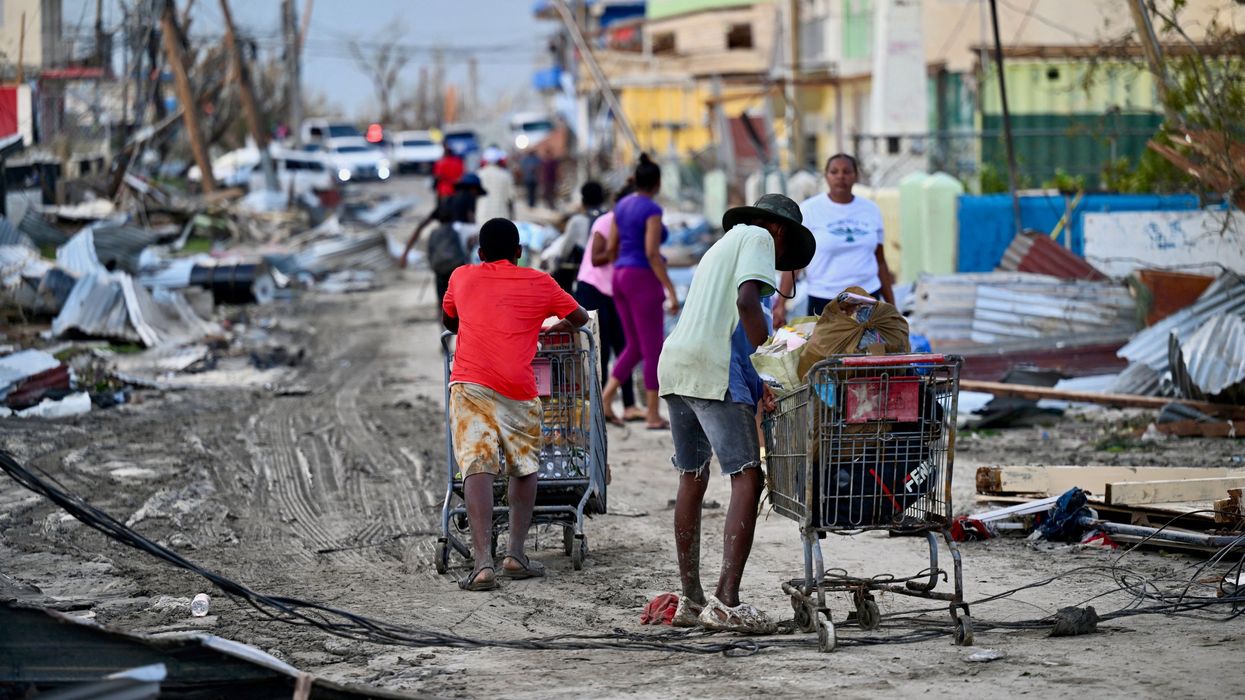
A system rooted in the exploitation of natural resources and labor in the name of corporate profits requires grotesque levels of inequality—all of which could be seen both before and after Hurricane Melissa slammed into Jamaica.
Kingston buzzed with feverish preparations and anxious alerts in the days before Melissa, a powerful Category 5 hurricane, made landfall earlier this week on the island of Jamaica. Supermarkets and hardware stores endured the crush of customers scrambling to stockpile water, food, and other supplies while residents boarded up windows and cut away vulnerable branches from hulking mango trees.
Even for a Caribbean capital city that is no stranger to the perennial threat of hurricanes, the alarming forecasts about Melissa's steady approach and certain intensification put communities across the city on edge. Throughout the island, which has had its share of impacts from deadly tropical weather, including Hurricane Beryl just last year, there was a palpable feeling that Melissa might be a different kind of storm.
"All we can do is try to be prepared," said Kevin, a local handyman who lives in Portmore, an urban center on Kingston's outskirts. "We can only do so much to get ready for it. The rest is in God's hands."
Melissa made weather history as one of the strongest Atlantic hurricanes to ever make landfall. As it moved into Jamaica's southwestern coast, the storm's 185-mph sustained winds and sub-900 barometric pressure left meteorologists in awe and Jamaicans under the dark howling shadow of a monster churning over their heads. Yet, as horrifying as Melissa's fury was this week, its destructive strength follows a pattern that has become all too unsurprising on a planet subjected to entirely preventable climate chaos.
"This is actually a complete catastrophe, and it’s really quite terrifying," Jamaican-British climate activist Mikaela Loach told Democracy Now! "And it also makes me quite angry that it doesn’t have to be this way. This has been caused by the climate crisis, by fossil fuel companies. I think it’s important that we’re not just devastated and sad about this, but also that we are angry and direct that anger towards the people who are responsible."
While Hurricane Melissa may be called a natural disaster, the conditions that make super storms like Melissa possible are anything but natural. As Loach and just about every climate scientist on Earth point out, the unprecedented warmth of ocean waters act like fuel for tropical cyclones, supercharging them to the point that Melissa was able to double its wind speeds in under 24 hours. Such rapid hurricane intensification is almost unheard of and is the result of unnaturally warm seawater that extends deep below the surface – water temperatures that are themselves directly linked to the fossil fuel industry and an economic system built around its carbon emissions.
That system, rooted in the exploitation of natural resources and labor in the name of corporate profits, also requires grotesque levels of inequality, which could be seen both before and after Hurricane Melissa slammed into Jamaica.
It was, of course, the wealthiest of communities that enjoyed the means and resources to prepare and weather the storm. From the gated communities of New Kingston where residents quickly summoned workers to close their built-in storm shutters and fuel up generator tanks to the high-end hotels and office buildings outfitted with hurricane-proof glass, there stood one end of Jamaican society girding for Melissa's wrath. On the other end, representing a much larger portion of the Jamaican people, were the poor and working-class communities with far fewer means to prepare for the tempest. From Kingston and beyond, this included thousands of Jamaicans living in ramshackle housing, with corrugated tin roofs that turned into propeller blades thrown into the air by 130-mph wind gusts. It included the fishing villages of Port Royal and other coastal areas, scrambling to shore up boats and flee inland away from the devastating storm surge. It included the shanty neighborhoods on the edge of waterways and canals, prone to severe flooding, as well as hillside hamlets perched along the steep slopes of Jamaica's Blue Mountains that were swept away by dangerous landslides. Then there are the many rural areas that are likely to remain without power and communications for many weeks, along with the farming communities whose crops have been wiped out by the storm.
All of these people were placed in the path of a storm whose destructive power was exacerbated by the climate emergency of the corporate elite and wealthy nations whose profit-obsessed industries have turbocharged the Caribbean's hurricane season.
Just a few days removed from Melissa's torrent of deadly rainfall and winds, the extent of damage and fatalities are yet to be known. In the western parishes of the island where the eyewall of Melissa came ashore, entire communities have been cut off from civilization, unreachable by destroyed telecommunications networks and roads that have been washed away. Many of these communities, lying near the southern coast from 60 to 120 miles west of Kingston, are dealing with widespread structural failure, including flattened homes and roofs sheared off many buildings. In addition to relief operations being mobilized by the Jamaican government, efforts are under way among residents on the east side of the island to gather and transport donated supplies to communities that bore the brunt of Melissa. And the urgency is building for those communities as the shock and hunger have set in, along with reports of looting, i.e., acts of basic human survival. While staying alive in the coming days and weeks is the preoccupation for survivors in these hard-hit areas, the daunting months of clean-up and rebuilding ahead compounds the crippling hardship they are carrying right now.
Back in Kingston, the economic and infrastructural disparities seen in the lead-up to the storm persist in its aftermath. While more than 70 percent of the island remains without electricity, some of the wealthiest parts of Kingston – those that were armed with generators and thus suffered less than a few hours or minutes without lights in their homes – seem to be among the first communities with restored grid power. On the other hand, many neighborhoods within the poorer sections of Kingston continue to have no power and, in many cases, no running water.
Such is the nature of capitalism and its attendant regime of climate disasters, bringing the devastation of extreme weather patterns – induced by the excessive greenhouse gas emissions of rich nations – upon the people of smaller nations who are the least responsible for global climate changes. The disparate impacts are felt on a global scale and at the local level among classes within affected regions.
Disasters like Hurricane Melissa have historically been used by business interests to remake entire cities into free-market dystopias, displacing poorer communities to make way for investment opportunities. The market vultures of what author and activist Naomi Klein calls disaster capitalism may soon be circling Jamaica, poised to prey upon the storm's victims and profit from the wreckage.
In fact, climate capitalists are already watching post-Melissa Jamaica as a test case for bond markets. The Jamaican government was recently issued a $150-million "catastrophe bond" which appears set for a full payout to partially cover rebuilding efforts. These bonds may offer a temporary solution for climate-vulnerable countries but, as property insurers have increasingly pulled out of high-risk areas in the path of extreme weather and natural disasters, it seems likely that U.S. and European investors will become more reluctant to buy in to catastrophe bonds for hurricane-prone areas like Jamaica as such disasters inevitably become more common. In any event, the damage from Melissa will total far more than $150 million and Jamaica will need to take on more debt from global financial institutions to rebuild roads and infrastructure. This includes the more standard World Bank loans which have traditionally kept countries like Jamaica under the neocolonial boot of wealthy nations, with loans conditioned on exploitative trade policies, privatization, and gutted public services within poorer, indebted countries.
So, while Jamaica and Hurricane Melissa fade from headlines over the next week or so, the destructive forces of capitalism and Mother Nature's vengeance will continue to collide over the island.

If we were listening to people on the grounds of whether they had a good track record, the world would not spend a lot of time on Gates and climate. But if you have a hundred billion dollars all is forgiven.
I feel quite strongly that we should pay less attention to billionaires—indeed that’s rather the point of this small essay—so let me acknowledge at the outset that there is something odd about me therefore devoting an edition of this newsletter to replying to Bill Gates’ new missive about climate. But I fear I must, if only because it’s been treated as such important news by so many outlets—far more, say, than covered the United Nations Secretary General’s same-day appeal to international leaders that began with a forthright statement of the science. Here’s António Guterres:
The truth is that we have failed to avoid an overshooting above 1.5°C in the next few years. And that going above 1.5°C has devastating consequences. Some of these devastating consequences are tipping points, be it in the Amazon, be it in Greenland, or western Antarctica or the coral reefs.
In fact, I could probably just note that Gates, with impeccable timing, decided to drop his remarks at the same moment that Hurricane Melissa plowed into Jamaica, doing incalculable damage because of winds made stronger by the ocean heat attributable to global warming. As Jeff Masters reported:
Human-caused climate change increased Hurricane Melissa’s wind speeds by 7% (11 mph, or 18 km/h), leading to a 12% increase in its damages, found researchers at the Imperial College of London in a rapid attribution study just released. A separate study by scientists at Climate Central found that climate change increased Melissa’s winds by 10%, and the near-record-warm ocean waters that Melissa traversed—1.2°C (1.2°F) warmer than average—were up to 900 times more likely to be that warm because of human-caused climate change.
And, oh, the same day Hue, in Vietnam, reported one of the two or three greatest rainfalls in recorded human history: 5 feet of rain in 24 hours, the kind of deluge made ever more likely by a warming atmosphere that can hold more water vapor. As the Associated Press reported, “Global warming is making tropical storms stronger and wetter, according to experts, because warmer oceans provide them with more fuel, driving more intense winds, heavier rainfall and shifting precipitation patterns across East Asia.”
Anyway, Bill Gates’ letter.
It was wrong of him to write it because if his high-priced pr team didn’t anticipate the reaction, they should be fired. I assume they did, and that they were okay with the entirely predictable result from our president. Here’s how the Washington Times described it:
“I (WE!) just won the War on the Climate Change Hoax,” said Mr. Trump in a Wednesday post on Truth Social. “Bill Gates has finally admitted that he was completely WRONG on the issue. It took courage to do so, and for that we are all grateful. MAGA!!!”
Bill Gates didn’t, of course, say that. He said climate change was real and we should be worried about it, but that it wouldn’t lead to “humanity’s demise” or “the end of civilization” (which seems like the lowest of low bars) and that:
Although climate change will hurt poor people more than anyone else, for the vast majority of them it will not be the only or even the biggest threat to their lives and welfare. The biggest problems are poverty and disease
and therefore that’s where we should focus our money. His letter is actually directed at delegates to the global climate conference next month in Brazil, essentially telling them to back off the emissions reductions and concentrate on growing economies in the developing world because “health and prosperity are the best defense against climate change.”
Any conversation about Bill Gates and climate should begin by acknowledging that he’s been wrong about it over and over again. He’s explained that up until 2006—i.e., 18 years after Jim Hansen’s testimony before Congress laying out the science, and well past the point where George W. Bush had acknowledged its reality—he like Trump thought the whole thing was a crock. “I had assumed there were cyclical variations or other factors that would naturally prevent a true climate disaster,” he explained—at the time he was the richest man in the world, and yet his scientific advisers couldn’t get across the simple facts to him.
And he was last heard from on the topic in 2021, when he wrote a book explaining that it was going to be very hard to do renewable energy because it came with a “green premium”—i.e. it cost more. Sadly for his argument, that was pretty much the year that sun and wind crossed the invisible line making them less expensive than coal and oil and gas. (You can read my review from the New York Times here, and you can read his response to it in Rolling Stone here where he explains, “McKibben is stuck in this time warp.”)
So—if we were listening to people on the grounds of whether they had a good track record, the world would not spend a lot of time on Gates and climate. But if you have a hundred billion dollars all is forgiven, and so there has been lots of fawning coverage. The fact that Gates framed all this in a way designed to appeal to the president is so obvious that it hardly bears mentioning (the richest men in the world have all been sucking up to him, so no extra shame here); let’s instead just go to the heart of his argument. Which is weak in the extreme.
Take the case of Jamaica. The warming-fueled hurricane that smashed into the island on Tuesday did a lot of damage. How much? The first estimates from the insurance industry say between 30 and 250% of the country’s annual GDP. The wide range is because we don’t yet have pictures from much of the country, so let’s go with the very low end of the range. Thirty percent of a country’s GDP is… a lot of money. It’s as if Hurricane Katrina had cost America $8 trillion. If America suddenly had an $8 trillion hole, what do you think that would do to its ability to pay for education and healthcare and the like? That’s what “development” is. Jamaica is in a hole it will spend forever getting out of.
And oh, Cuba and Haiti got smacked too. And Vietnam. And… and that was just last week. According to the National Bureau of Economic Research, every one degree climb in temperature knocks 12% off GDP. The paper concluded that “by the end of the century people may well be 50% poorer than they would’ve been if it wasn’t for climate change.” And who gets hurt the most? That would be the developing countries that Gates in theory worries about. Here’s a Stanford study showing that “the gap between the economic output of the world’s richest and poorest countries is 25% larger today than it would have been without global warming.”
Gates goes on and on about public health, but as the US Global Leadership Coalition (a group he has lauded extensively) said a few years ago:
Warmer temperatures could expose as many as one billion people to deadly infectious diseases such as Zika, dengue, and chikungunya. In the US alone, disease cases from mosquitoes, ticks, and fleas more than tripled from just under 30,000 to almost 100,000 a year from 2004 to 2016. A warmer climate could lead to an additional 250,000 people dying of diseases including malaria each year between 2030 and 2050, according to the World Health Organization.
Is this a smaller effect than the things he worries about? On the same day that Gates issued his letter, the premier medical journal the Lancet issued its annual update on climate and health, and what it found was:
Rising global heat is now killing one person a minute around the world, a major report on the health impact of the climate crisis has revealed.
It says the world’s addiction to fossil fuels also causes toxic air pollution, wildfires, and the spread of diseases such as dengue fever, and millions each year are dying owing to the failure to tackle global heating.
The irony of Gates’ new letter is that he acknowledges, in passing, how wrong he was four years ago about the “green premium”:
You probably know about improvements like better electric vehicles, dramatically cheaper solar and wind power, and batteries to store electricity from renewables. What you may not be aware of is the large impact these advances are having on emissions.
Ten years ago, the International Energy Agency predicted that by 2040, the world would be emitting 50 billion tons of carbon dioxide every year. Now, just a decade later, the IEA’s forecast has dropped to 30 billion, and it’s projecting that 2050 emissions will be even lower.
But he uses that new knowledge to argue that since they’ve done so well we’ve knocked the high end off climate projections and hence can calm down about it all. He misses the most obvious point, which is that if you care about development the rapid expansion of solar and wind power gives us the greatest possible chance we’ve ever had to really knock down poverty, at exactly the same point that we’re spreading the technology that can help limit how high the temperature eventually gets.
Jigar Shah, who led the Department of Energy loans office under Biden, put it best:
Bill Gates hasn’t made sense on Climate since he teamed up with Bjorn Lomborg in 2009. This is just a restating of Bjorn’s book from this year about how we have a finite amount of money and we shouldn’t use it for climate. What they get wrong is that climate solutions are now fully profitable.
Here’s Rajiv Shah, writing in the New York Times last year, about the opportunity:
As world leaders gather this week for the United Nations General Assembly they should reimagine their approach. In today’s digital world, nothing matters more to individual well-being than energy: Access to electricity determines fundamental aspects of individuals’ lives, like whether they are healthy or have a job.
Instead of treating electrification as one of many goals, it’s time to see it is essential to all of them. And that means the world needs to focus investment and effort on getting reliable, clean electricity to the nearly 700 million people who don’t have any—and the 3.1 billion more who don’t have enough.
As Rajiv Shah explained in the headline to that article, “Want to End Poverty? Focus on One Thing.” Clean electricity.
I doubt Rajiv Shah can say anything about Gates’ letter—he worked at the Gates Foundation for years as part of his long and distinguished career. In fact, not many people can really reply—Gates money is too important to too many agencies and organizations. But since I don’t get any of it, let me say: He’s really not the guy to be listening to on this stuff. Really.
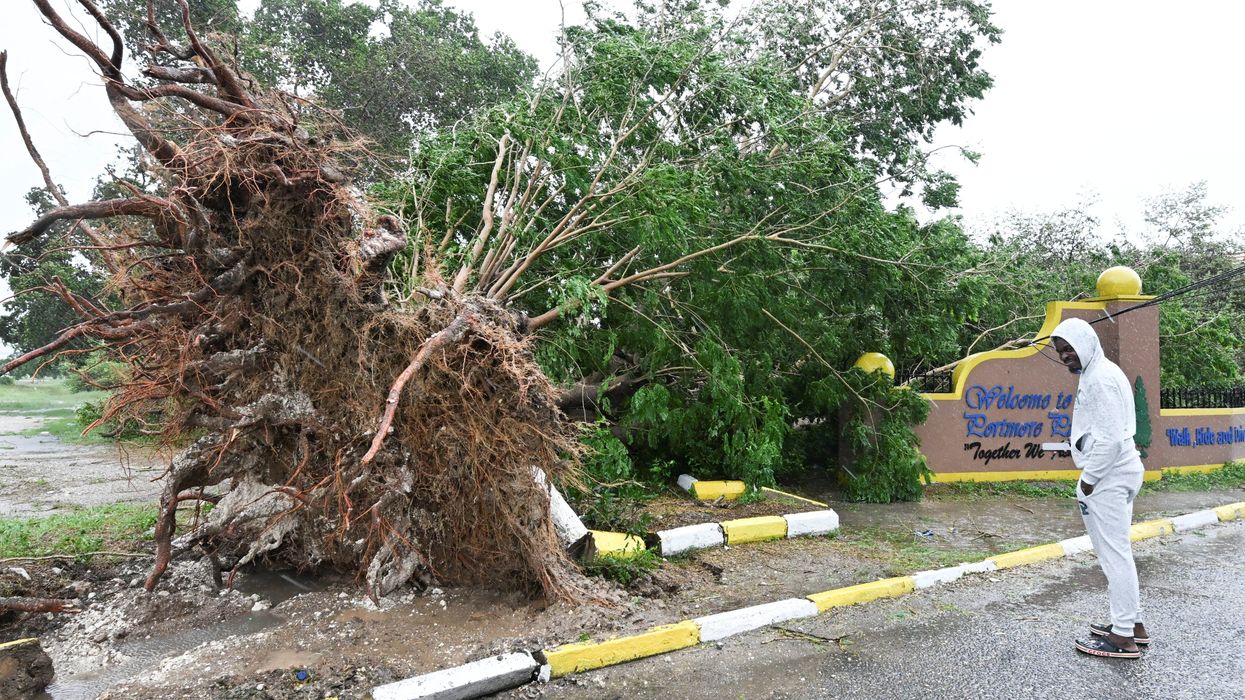
The more carbon dioxide we put into the atmosphere by burning fossil fuels, the more we heat up the planet, and the fiercer we make the hurricanes and cyclones.
Hurricane Melissa is the most devastating storm to hit Jamaica in recorded history, CNN reports. It rapidly intensified over the past few days, with its winds reaching 185 miles per hour at the time of landfall. This intensification is a feature of hot water, and the Caribbean in that area is hot, at about 86.1°F or 30.1°C, much higher than it would have been 50 years ago.
Hot water also puts more moisture into the atmosphere, which the storm dumps when it makes landfall, causing massive flooding. Jamaican reporters trying to cover the maelstrom reported being unable to get to affected areas because the roads are flooded.
Only three other such Atlantic storms have reached 185 m/h, and only one has exceeded it. This is the first such monster to sweep into Jamaica. Of course, it is hardly the island’s first big hurricane. Category 4 Beryl hit last July. But this one was a Godzilla, a Category 5.
President Donald Trump calls climate change a “hoax,” and 51% of Americans still say in polling that climate change is not a serious threat. The slightly good news is that Gallup reports that an unprecedented 48% of Americans now say that global warming will pose a serious threat to their way of life sometime in their lifetimes, up from 44% last year. The reason that everybody doesn’t say this (since it is manifestly true) is that a vast apparatus of propaganda by Big Oil, the Republican Party (there, I’ve repeated myself), and Saudi Arabia and Russia floods the airwaves and social media constantly. Even news outlets that don’t deny our climate breakdown seldom make the connection between people-caused climate change and the billion-dollar natural disasters that increasingly strike us annually.
Without people-caused climate breakdown, the winds instead would have been about 168 miles per hour.
Oneal Robinson of St. Elizabeth Parish said the houses were full of water, according to the Jamaica Star: “Beryl was terrible, but this is about three times worse than Beryl. I have never experienced anything like this. Melissa is giving St. Elizabeth a flogging. Some persons have lost their roofs here in Mountainside, and I know Treasure Beach is also getting a beating.”
Indeed, in many parishes all the buildings lost their roofs.
Beryl knocked out electricity for weeks, and Melissa will, too. Already, 77% of Jamaica Public Service customers are without electricity, some 530,000 people.
Half of the utility poles that hold up electrical wires in Westmoreland were knocked down by the winds.
The Jamaica Star says that fierce winds ripped off roofs, sent debris hurtling through the air, and caused significant damage to four big hospitals. When a natural disaster hits, you need hospitals, but what if it hits them, too? The Black River Hospital was completely destroyed.
Eminent climate scientist Michael E. Mann points out that burning coal, fossil gas, and petroleum heated up the water, which then increased the peak wind speed by 10% above what it would otherwise have been. That is, without people-caused climate breakdown, the winds instead would have been about 168 miles per hour.
Here’s the trick. The destructive potential of an increase in wind speeds is exponential, not serial. It doesn’t go 1, 2, 3, 4. It jumps. So 185 m/h winds are fully 33% more destructive than than 168 m/h winds are.
Why were this hurricane’s wind speeds so high? Because hot water generates hurricanes, and the hotter it is, the more powerful the storm it generates. People, by burning fossil fuels, have added 1°C. (1.8°F) to the temperature of the oceans since about 1750 before the Industrial Revolution.
The more carbon dioxide we put into the atmosphere by burning fossil fuels, the more we heat up the planet, and the fiercer we make the hurricanes and cyclones. The hurricanes’ intensity has necessitated the creation of a new Category 6 storm because the old scale is inadequate to our climate breakdown reality.
Michael E. Mann and his colleague Peter Hotez have explained the climate change denial scam, its origins, and its threat to humanity in their book Science Under Siege.

A deadly force is brewing—and it's not caused by the climate.
A deadly force, intensifying as it goes, claiming lives and destabilizing nations. Hurricane Melissa’s assault on the Caribbean was devastating. So is President Donald Trump's extrajudicial bombing campaign.
When Melissa hit Jamaica, Cuba, Haiti, and the Dominican Republic, we saw heartrending pictures of homes underwater, families wading through muck, and hospitals with their roofs blown off. The compassion we felt was real, the urgency high, and for a news cycle or two, the media made the world pay attention.
But not too far from Melissa’s flood zone, another kind of disaster has been unfolding in comparative media quiet. This one is caused not by climate, but by our autocratic president, who gave us two month’s warning.
On September 23, in a thuggish address to the United Nations, Donald Trump explicitly threatened to blow “Venezuelan terrorist drug smugglers” “out of existence” in blatant disregard of international law or due process. Sure enough, as of the end of October, US forces had conducted 15 air strikes on multiple vessels in the Caribbean and the eastern Pacific.
Politicians, pundits, and the press still have time to get the American people activated enough to stop this country’s next catastrophic war.
The White House thumps on about stopping narcotics flow, but we’ve seen no interceptions, no arrests, no narcotics cargo—only executions.
Melissa took, by an early count, 32 lives. Trump’s warships and drones have officially killed at least 61 people. The survivors and victims include nationals from Colombia, Ecuador, Venezuela, and Trinidad, mostly fishermen and boat crews whose families—and governments—dispute all allegations of narco trafficking. The Trump team doesn’t care. Nor does it care to consult Congress—as the War Powers Act requires—or offer proof.
Now, a massive military force is massed just to the south and east of Melissa’s path of destruction. The US deployment reportedly includes tens of thousands of troops, eight major warships, three amphibious assault ships, a guided-missile cruiser, several fighter jets, and a nuclear submarine. The US military has also reopened formerly inactive facilities in Puerto Rico to support these operations.
It’s the largest military buildup in the Caribbean since the invasion of Panama in 1989, and yet it’s generating less media attention than a gale-force storm.
It’s not too late. Politicians, pundits, and the press still have time to get the American people activated enough to stop this country’s next catastrophic war.
The resignation of the military commander overseeing the operation—Admiral Alvin Halsey—head of US Southern Command, should sound an alarm. Meanwhile, “Demolition Don” is making no bones about his plans. After it was revealed that he’d secretly authorized the CIA to conduct covert action in Venezuela, he bragged, “We are certainly looking at land now.”
What are we waiting for? The blatant buildup to this country’s next imperialist war is at least as terrifying as a hurricane—or it should be.
Catch my conversation this Friday, October 31 at 5:00 pm ET with US Rep. Pramila Jayapal (D-Wash) and Marine Captain Janessa Goldbeck on the president’s threat to invoke the Insurrection Act, exclusively on Laura Flanders & Friends.
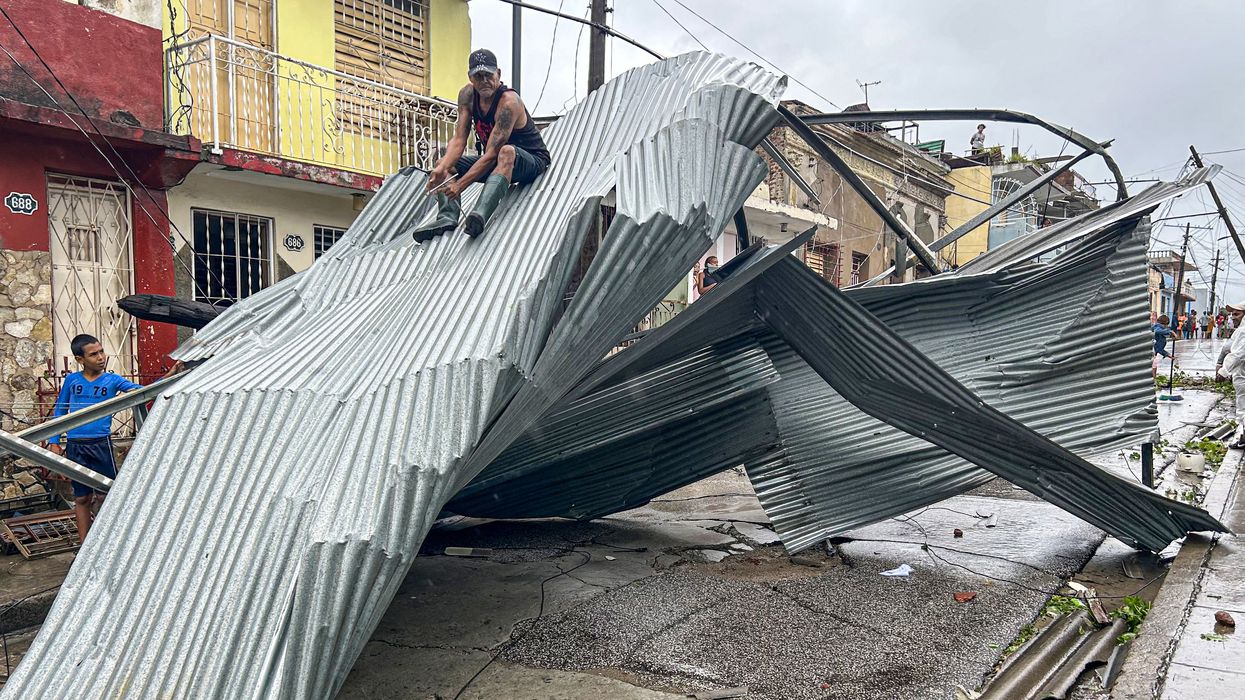
"The accumulation of economic suffocation imposed from abroad for generations is equivalent to the destruction caused by war," said Venezuelan UN ambassador Samuel Moncada.
As Cuba was among the Caribbean nations hit by one of the strongest Atlantic hurricanes on record, the United Nations General Assembly on Wednesday voted overwhelmingly in favor of a resolution calling on the US government to end its 65-year-old embargo on the country.
The final tally for the resolution was 165 nations voting in favor, with just seven nations opposed. Twelve nations abstained from voting.
This now marks the 33rd consecutive year that the UN General Assembly has voted in favor of a resolution to end the US embargo, which has economically isolated Cuba for decades even as the Cold War between the US and the Soviet Union, which had long been used to justify the blockade, ended more than three decades ago.
Cuban Foreign Minister Bruno Rodriguez told the assembly ahead of the vote that the US blockade was "a policy of collective punishment" that "flagrantly, massively, and systematically violates the human rights of Cubans." Nonetheless, Rodriguez vowed that "Cuba will not surrender."
The International Peoples' Assembly, a coalition of 200 trade unions and social justice groups, noted that the vote was taking place as Hurricane Melissa was "worsening the economic, structural, and living conditions of the Cuban people"—suffering that is likely to be compounded by the embargo.
Representatives from several other Latin American nations made the case for ending the US embargo during speeches delivered at the UN on Wednesday.
"The accumulation of economic suffocation imposed from abroad for generations is equivalent to the destruction caused by war," said Venezuelan UN ambassador Samuel Moncada. "Because the blockade is an act of economic war, aimed at subduing an entire population through hunger, disease, and death. This is the truth the US seeks to hide when they call this crime simply a political measure."
Walton Alfonsi Webson, Antigua and Barbuda's ambassador to the UN, described Cuba as a "vital partner" in the region and demanded that the US "remove the embargo and let the Cuban people breathe."
Colombian UN ambassador Leonor Zalabata noted that Cuba has played a crucial role in helping uphold a 2016 peace treaty between the Colombian government and the Fuerzas Armadas Revolucionarias de Colombia (FARC), a Marxist guerrilla organization that agreed to disarm as part of a ceasefire deal that ended decades of violent conflict.
"Cuba has been, and continues to be, a trusted partner in efforts to consolidate peace in Colombia and across the region," she said.
At the UN, Latin American and Caribbean leaders demanded an end to the U.S. embargo on Cuba — calling it “an act of economic warfare.” Dozens of nations condemned Washington’s sanctions and urged the U.S. to let Cuba breathe.
Watch what they said.#Cuba #UN #Embargo #LetCubaLive pic.twitter.com/Qr4up0dc4i
— Belly of the Beast (@bellybeastcuba) October 29, 2025
Despite overwhelming support at the UN for lifting the embargo, the resolution's passage will have no real-world impact on US foreign policy since ending the decades-old blockade would require an act of US Congress.
The latest vote to lift the US embargo came as Hurricane Melissa was causing massive devastation in Cuba and countries throughout the Caribbean. According to CNN, the hurricane was a Category 3 storm when it made landfall in Cuba early Wednesday morning, and it forced at least 735,000 Cubans to evacuate their homes.
"The very richest individuals in the world are funding and profiting from climate destruction, leaving the global majority to bear the fatal consequences of their unchecked power."
A report released Tuesday showed that the wealthiest people on the planet are disproportionately fueling the climate emergency that is intensifying weather catastrophes like Hurricane Melissa, which slammed Cuba on Wednesday after leaving a trail of devastation in Jamaica.
The Oxfam International report, titled Climate Plunder: How a Powerful Few Are Locking the World Into Disaster, features updated figures showing that the consumption-based carbon emissions of the richest 0.1% of the global population grew by 92 tonnes between 1990 and 2023, while the emissions of the poorest half of humanity grew by just 0.1 tonnes.
"A person from the world's richest 0.1% emits over 800kg of CO2 every day. Even the strongest person on earth could not lift this much," the report notes. "In contrast, someone from the poorest 50% of the world emits an average of just 2kg of CO2 per day, which even a small child could lift."
"A person in the top 0.1% emits more in a day than a person in the poorest 50% emits all year," the report adds.
The destruction caused by Hurricane Melissa—the most powerful storm on Earth this year and the strongest to ever hit Jamaica—underscored the extent to which vulnerable nations are bearing the brunt of a crisis they did little to cause as wealthy countries and individuals continue to spew planet-warming emissions with abandon.
Jamaica, where the true extent of the damage from Melissa is only just beginning to emerge, is responsible for an estimated 0.02% of global greenhouse gas emissions, according to the latest available data.
"The climate crisis is an inequality crisis," said Oxfam executive director Amitabh Behar. "The very richest individuals in the world are funding and profiting from climate destruction, leaving the global majority to bear the fatal consequences of their unchecked power."
"We must break the chokehold of the super-rich over climate policy by taxing their extreme wealth."
Oxfam's report was published less than two weeks before the start of COP30 in Belém, Brazil, where world leaders will gather once again to weigh climate solutions after years of failing to reach an agreement to curb fossil fuel production and use.
In its new report, Oxfam implores governments to target the emissions of the ultra-wealthy, including through "climate-specific taxes" such as "frequent flyer levies and taxes on luxury travel."
"It is a travesty that power and wealth have been allowed to accumulate in the hands of a few, who are only using it to further entrench their influence and lock us all into a path to planetary destruction," said Behar. "We must break the chokehold of the super-rich over climate policy by taxing their extreme wealth, banning their lobbying, and instead put those most affected by the climate crisis in the front seat of climate decision-making."
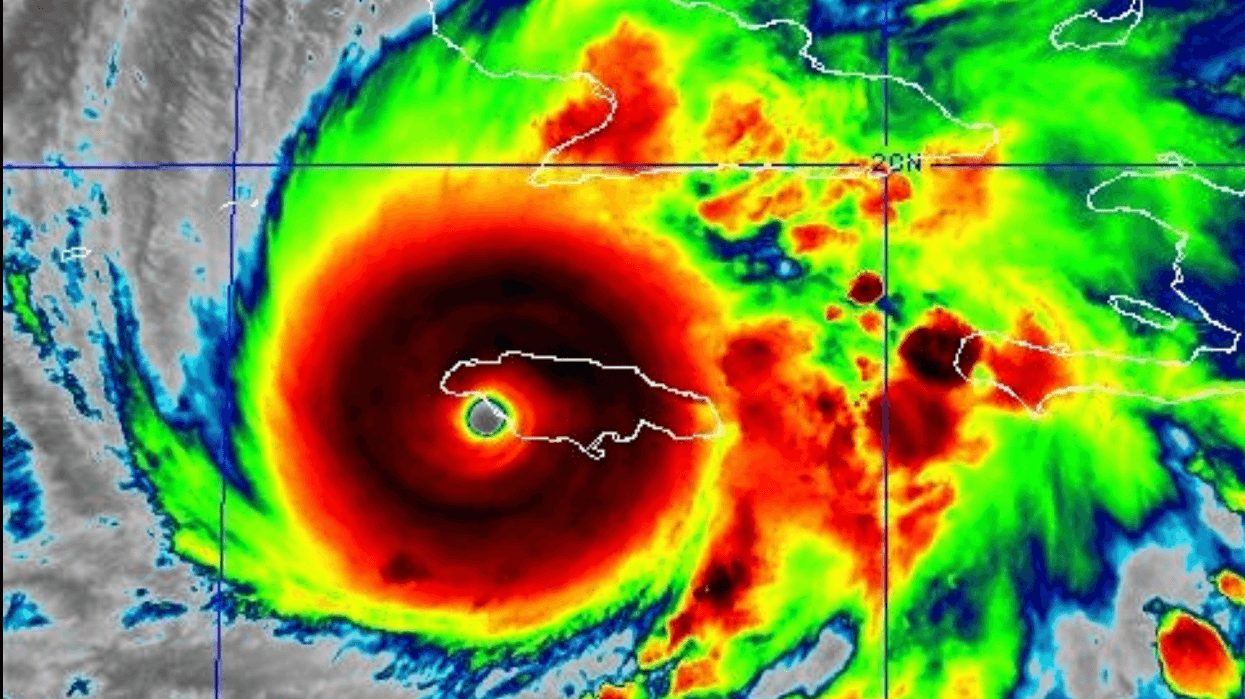
"The Trump administration and its Republican allies in Congress are condemning people around the world to more frequent and severe extreme weather," said one critic.
As Jamaica was flogged Tuesday by Hurricane Melissa, a Category 5 monster, climate defenders highlighted how US President Donald Trump's policies—including reckless fossil fuel expansion, eviscerating federal agencies, and slashing international aid—will deepen the devastating impacts of this and future natural disasters.
Melissa—the strongest storm to slam Jamaica since 1851—made landfall near New Hope at approximately 1:00 pm local time, with sustained winds of 185 miles per hour, with significantly stronger gusts. As of 5:00 pm local time, the storm had weakened to a Category 4 as it crossed the Caribbean island's rugged mountain terrain, but still packed maximum sustained winds of 145 mph. Melissa is expected to strike Cuba next, with significant impacts also forecast for the Bahamas and Haiti.
Not only is Melissa the strongest storm to hit Jamaica—parts of which are still rebuilding following last year's devastating Hurricane Beryl—in nearly 175 years, it is also one of the fastest-intensifying storms in history.
As scientists have long predicted, planetary heating caused by human activity, primarily the burning of fossil fuels, is driving the intensification of natural disasters including hurricanes.
According to a new study published Monday by ClimaMeter, "Compared to previous decades, meteorological conditions for cyclones like Hurricane Melissa are now more intense and potentially destructive, bringing heavier rainfall and stronger winds."
"The devastating impacts of Melissa show that fossil fuels do far more than warm the world—they make hurricanes wetter, stronger, and more violent," study co-author Davide Faranda said in a statement. "The science is clear: If emissions aren’t rapidly cut, countries like Jamaica will face storms more destructive than anything ever seen before."
However, Trump—who ran for reelection on a "drill, baby, drill" energy platform—and his fossil-friendly administration have no intention of cutting emissions, or pursuing any sort of pro-climate policies.
The Trump administration has also suppressed climate science, gutted the National Oceanic and Atmospheric Administration (NOAA) and its forecasting infrastructure, and worked to undermine Federal Emergency Management Agency (FEMA) operations.
Much of this has occurred under the direction of Office of Management and Budget (OMB) Director Russell Vought, who co-authored the policy portion of Project 2025, a blueprint for overhauling the federal government that includes dramatic cuts to critical public programs, abolishing or gutting essential government agencies, and a litany of other far-right wish list items.
Some of those items have already been checked off the list, including shutting down the US Agency for International Development (USAID), which previously administered foreign aid. International assistance, which has been dramatically slashed, is now under the auspices of the US State Department.
“Hurricane Melissa is poised to unleash unspeakable harm on Jamaica and other parts of the Caribbean, a tragedy which will be deepened by Donald Trump and Russell Vought’s lawlessly unilateral cessation of USAID funding," lamented Jeff Hauser, the executive director of the Revolving Door Project, in a statement Tuesday.
"Flooding risks are projected to be elevated in the US Virgin Islands and Puerto Rico, both US territories," Hauser continued. "By further expanding planet-heating fossil fuel pollution, the Trump administration and its Republican allies in Congress are condemning people around the world to more frequent and severe extreme weather, including rapidly intensifying monster hurricanes."
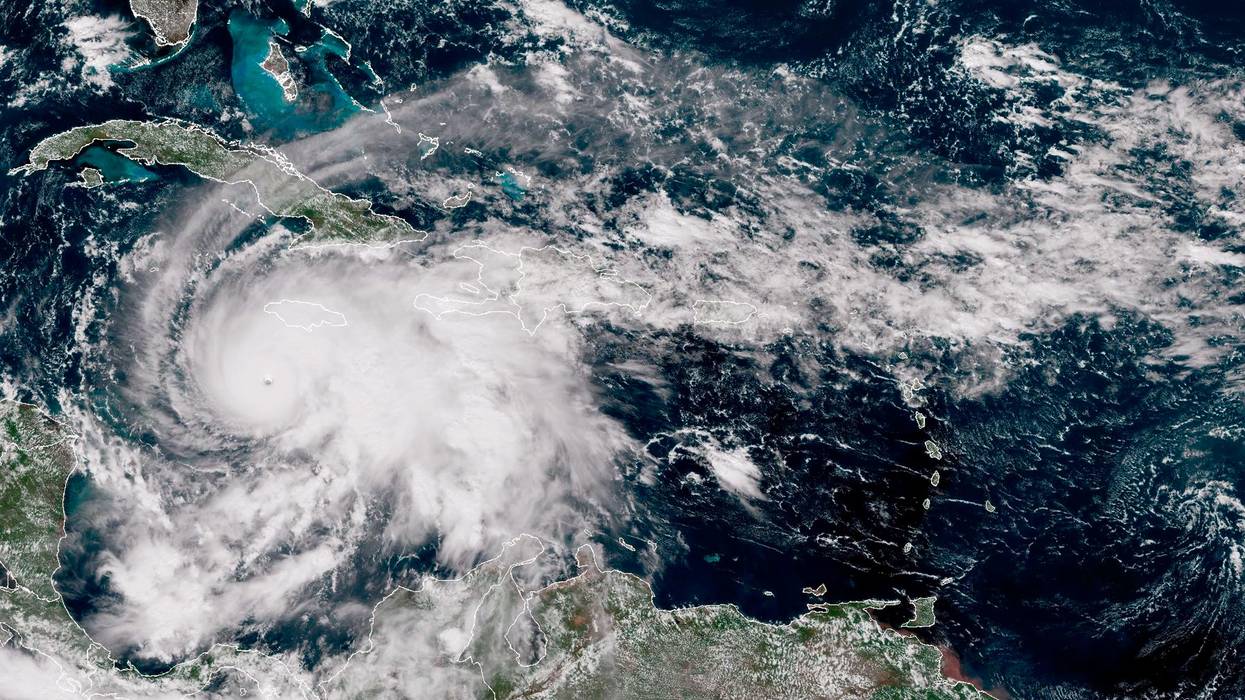
"This is an extremely dangerous and life-threatening situation," said the National Hurricane Center.
Hurricane Melissa made landfall in Jamaica on Tuesday as a monstrous Category 5 storm as the island country braced for devastating impacts, humanitarian operations urgently mobilized, and experts voiced horror at the latest climate-fueled weather disaster.
"This is an extremely dangerous and life-threatening situation," the National Hurricane Center said in an update after the storm made landfall.
Early video footage posted to social media shows the storm—the most powerful to ever strike the island and the third-strongest to ever form in the Atlantic—wreaking havoc and destruction.
🇯🇲 | Video que muestra los daños y las inundaciones en el área de Black River, Jamaica, por el huracán Melissa. pic.twitter.com/k6RZDE9jdB
— Entredostv (@Entredostv1) October 28, 2025
Anne-Claire Fontan, the World Meteorological Organization's tropical cyclone specialist, told reporters that "a catastrophic situation is expected in Jamaica" and described the hurricane as "the storm of the century" for the island. Melissa's landfall is expected to bring extreme flooding, landslides, and other life-threatening impacts.
Tens of thousands of Jamaicans lost power as the slow-moving storm approached the island, bringing torrential rain and maximum sustained winds of 185 mph, with gusts over 220 mph. Storms like Melissa are the reason scientists are pushing to formally add a Category 6 for hurricanes.
"Unimaginable violence is hiding in the very small and compact eyewall of Melissa," said Greg Postel, hurricane specialist at The Weather Channel. "Nearly continuous lightning will accompany the tornadic wind speeds."
The International Federation of the Red Cross said up to 1.5 million people in Jamaica—roughly half the island's population—are expected to be directly affected by Hurricane Melissa, the strongest storm on Earth this year.
"We are okay at the moment but bracing ourselves for the worst," Jamaican climate activist Tracey Edwards said Tuesday. "I've grown weary of these threats, and I do not want to face the next hurricane."
The International Organization for Migration warned that "the risk of flooding, landslides, and widespread damage is extremely high," meaning that "many people are likely to be displaced from their homes and in urgent need of shelter and relief."
Melissa's landfall came on the same day that United Nations Secretary-General António Guterres said the international community has failed to prevent planetary warming from surpassing the key 1.5°C threshold "in the next few years."
Meteorologist Eric Holthaus wrote on social media that "this is the news I've dreaded all my life."
"Humanity has failed to avoid dangerous climate change," he wrote. "We have now entered the overshoot era. Our new goal is to prevent as many irreversible tipping points from taking hold as we can."
Hurricane Melissa will make landfall in Jamaica in a few hours as one of the two strongest hurricanes ever to make landfall anywhere in the Atlantic Basin -- on par with the 1935 Labor Day hurricane in south Florida.Just horrific. The stuff of nightmares.
[image or embed]
— Eric Holthaus (@ericholthaus.com) Oct 28, 2025 at 9:48 AM
Climate experts said Hurricane Melissa bears unmistakable fingerprints of the planetary crisis, which is driven primarily by the burning of fossil fuels.
The warming climate is "clearly making this horrific disaster for Jamaica, Cuba, and the Bahamas even worse," Jennifer Francis, a senior scientist at the Woodwell Climate Research Center, told the New York Times.
Akshay Deoras, a meteorologist at the University of Reading in the United Kingdom, told the Associated Press that the Atlantic "is extremely warm right now."
"And it's not just the surface," said Deoras. "The deeper layers of the ocean are also unusually warm, providing a vast reservoir of energy for the storm."
Amira Odeh, Caribbean campaigner at 350.org, warned in a statement Tuesday that "what is happening in Jamaica is what climate injustice looks like."
"Every home without electricity, every flooded hospital, every family cut off by the storm is a consequence of political inaction," said Odeh. "We cannot continue losing Caribbean lives because of the fossil fuel industry's greed."
"As world leaders head to COP30, they must understand that every delay, every new fossil fuel project, means more lives lost," Odeh added. "Jamaica is the latest warning, and Belém must be where we finally see a steer to change courses. The Caribbean is sounding the alarm once again. This time, the world must listen."
This story was updated after Hurricane Melissa made landfall.
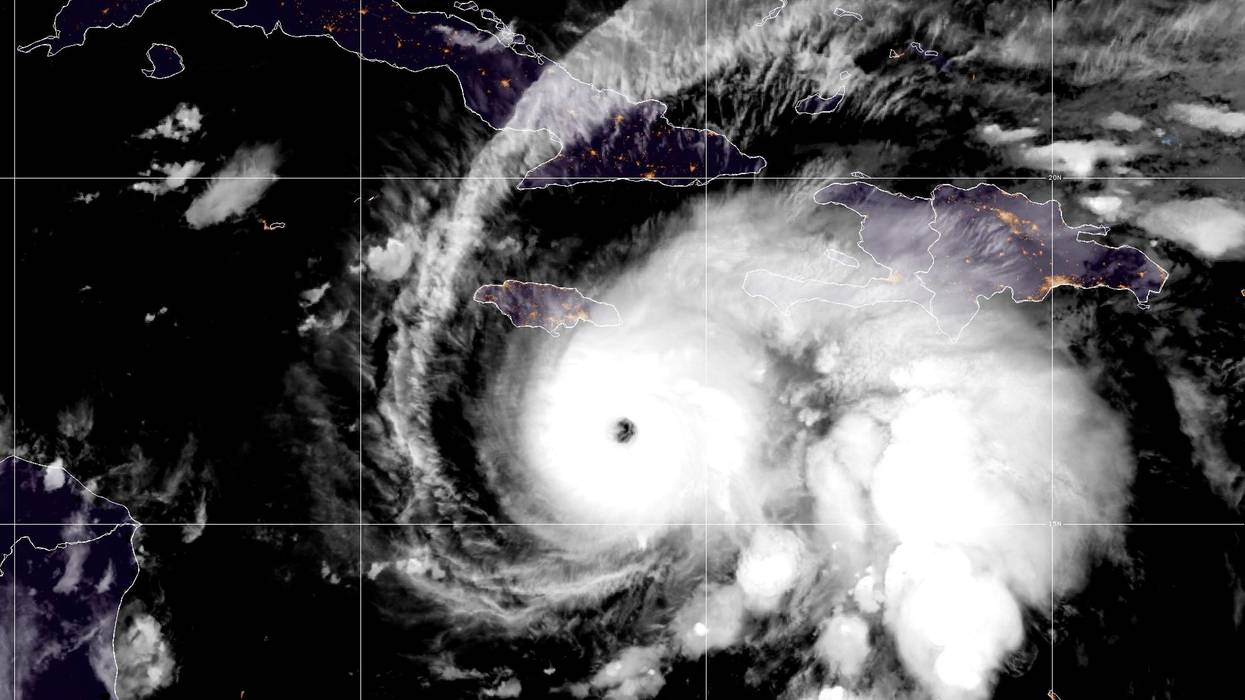
One hurricane historian said the world is "witnessing history on satellite right now" as the people of Jamaica came under evacuation orders and braced for impact of a storm that threatens severe flooding, landslides, and winds of over 200 mph.
The people of Jamaica are making emergency preparations on Monday as Hurricane Melissa intensified overnight, with meteorologists in awe of the scale and shape of the "monster" storm now bearing down on the island nation, already saturated from previous rains and bracing for what could be a major climate-related catastrophe.
In a 5:00 am EDT advisory on Monday, the US National Hurricane Center said Melissa is "now a Category 5 Hurricane" and warned of "destructive winds and storm surge and catastrophic flooding" that would worsen across Jamaica throughout the day and into the night. Landfall is expected Tuesday morning, with devastating consequences across the island nation.
The storm, reports the Weather Channel, "will be one of the most intense, devastating hurricanes on record in Jamaica, with widespread flooding, landslides, and destructive winds."
According to NBC News:
Some areas of eastern Jamaica could be inundated with up to 40 inches of rain, more than some areas of the country typically get in a year.
Wind speeds in mountainous areas could be 30% higher that the main storm, meaning potential winds of more than 200 mph.
With Cuba, Turks and Caicos, the Bahamas, and Haiti also within reach of the storm's impacts, governments across the region are ordering evacuations of the most vulnerable areas and preparing infrastructure for the rescue and recovery operations from the life-threatening destruction almost certain to be unleashed.
"Hurricane Melissa could be one of the most intense and devastating hurricanes on record for Jamaica," said Katharine Hayhoe, a professor of climate science, "and it's rapidly becoming a textbook example of how climate change is making hurricanes more dangerous: explosive intensification, slow movement, and massive rainfall."
In a Monday morning address to the nation, Prime Minister Andrew Holness urged "every Jamaican to prepare, stay indoors during the storm, and comply with evacuation orders. Check on your neighbours, especially the elderly and vulnerable, and continue to pray for our nation’s safety."
Hurricane Melissa has strengthened to a Category 5 system and is now approximately 100 miles south of Kingston, moving slowly westward.
Based on current projections, all of Jamaica is likely to experience hurricane-force winds, heavy rainfall, and flooding.
The Government has… pic.twitter.com/GUd0FxuCmD
— Andrew Holness (@AndrewHolnessJM) October 27, 2025
Melissa is now the third storm of the 2025 hurricane season to reach Category 5 status, the first time that has happened in the Atlantic since 2005, the year a devastating Hurricane Katrina struck communities along the US Gulf Coast.
Weather experts expressed alarm about the storm's size, power, and trajectory overnight.
Jordan Smith, a meteorologist with WJHG-TV in Panama City, Florida, said he was "absolutely speechless" after seeing the latest satellite images of the storm.
"This satellite image of Hurricane Melissa needs to be put in meteorology textbooks," exclaimed Smith. "Please, everyone, send all your prayers and thoughts to the island of Jamaica. Catastrophic impacts are expected on so many levels. Jamaica will be unrecognizable after this."
Michael Ferragamo, a hurricane historian, said the world is "witnessing history on satellite right now," just before Melissa officially hit Category 5 status.
In remarks to reporters on Sunday night, Desmond Mackenzie, Jamaica’s minister of local government and community development, warned that many Jamaican communities "will not survive" the flooding predicted for the island. McKenzie said all citizens, residents, and visitors to the island should follow the instructions of the government and emergency officials.
“This is not the time for people to become complacent. I believe that we have been giving Jamaicans adequate notice,” he said. “I can only urge Jamaicans to heed the warnings."