

SUBSCRIBE TO OUR FREE NEWSLETTER
Daily news & progressive opinion—funded by the people, not the corporations—delivered straight to your inbox.
5
#000000
#FFFFFF
To donate by check, phone, or other method, see our More Ways to Give page.
Daily news & progressive opinion—funded by the people, not the corporations—delivered straight to your inbox.
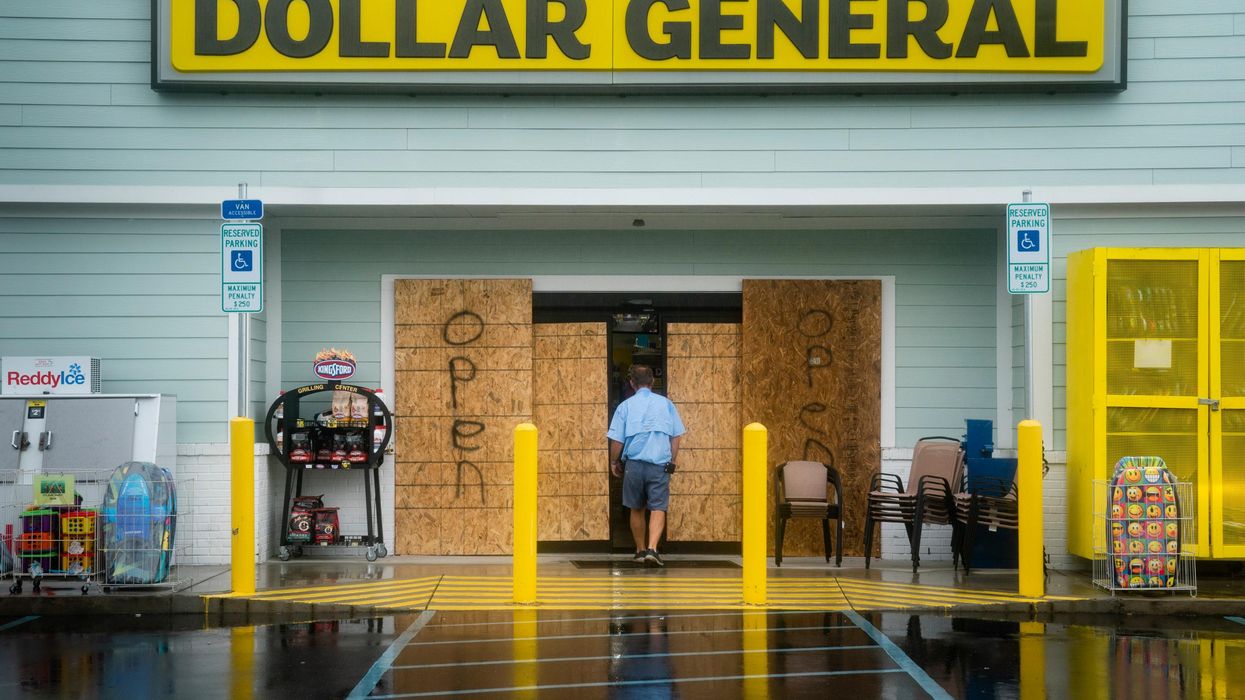
The nation’s largest dollar stores continually fail to meaningfully strengthen their chemical policies and intervene in their supply chains to keep their shoppers safe.
When shopping for the holidays, most people reasonably assume that products sold in major American retail stores are free of toxic chemicals. After all, harmful substances like lead and mercury have no place in the shopping cart, and regulations must prevent this kind of dangerous exposure, right?
Unfortunately, this is not the case. A recent study revealed that over half of the items tested on dollar stores’ shelves contained toxic chemicals. This includes lead found in tablecloths, jewelry, and baby toys with known links to brain development harm; phthalates in school supplies, silly straws, and bath toys with links to early puberty in girls, birth defects in the male reproductive system, obesity, and diabetes; BPA in receipts, cookware, and can linings that can affect the brain and prostate gland of fetuses, infants, and children; and PFAS—long-lasting synthetic chemicals—found in popcorn bags that can affect the immune system and liver function.
Just last month Toxic Free Future released their latest Retailer Report Card, which graded Dollar General with a D+ and Dollar Tree/Family Dollar with a D for safety, based on hazardous chemicals in their products, company commitment to transparency, a willingness to change, and how easily customers can tell what substances are on store items.
With the incoming presidential administration promising to slash health and safety rules, customers and communities will have even fewer protections.
But for many families, shopping elsewhere isn’t an option. Dollar stores are often the only retailers selling essential household goods, including food, in many rural towns and urban neighborhoods, leaving customers with nowhere else to go. Dollar stores are frequently located in communities that already face multiple health and environmental risk factors, such as industrial pollution from factories or deteriorated drinking water. This means a family’s exposure to chemicals via items purchased at dollar stores is part of accumulated exposures.
Dollar stores’ leadership has been aware for over a decade that their products contain lead, BPA, phthalates, and PFAS, jeopardizing customer health. During this time, environmental justice and public health groups nationwide have advocated for safer products. Investors in these companies have raised concerns directly with management and through shareholder resolutions. Yet, the problem persists. Even this year Dollar Tree knowingly kept lead-contaminated apple sauce on its shelves, putting children in harm’s way. The stores have taken only minimal actions to address a handful of chemicals in some product categories.
To say federal agencies tasked with regulating these products fall short would be an understatement. Many take a “graveyard approach,” acting only after someone has suffered a physical toll. The federal Toxic Substances Control Act is so weak that only a handful of chemicals have ever been restricted, while tens of thousands have been exempted or fast-tracked for approval. With the incoming presidential administration promising to slash health and safety rules, customers and communities will have even fewer protections.
With this lack of protective action on the part of state and federal regulators, we urge dollar stores to do the right thing. In 2023, Dollar General's net sales were over $38 billion, and Dollar Tree’s revenues were over $30 billion. They can afford to stop buying products from suppliers that use toxic chemicals and switch to readily available safer alternatives. Mike Creedon, interim chief executive officer for Dollar Tree, claims, “Safety First, Safety Always is the guiding mantra for our store.” But these are only words when there is no action.
Instead, the nation’s largest dollar stores continually fail to meaningfully strengthen their chemical policies and intervene in their supply chains to keep their shoppers safe. Dollar General failed to expand its list of 19 restricted substances. The list does not include PFAS, most phthalates, and many other chemicals known to cause harm. It also applies only to private-label products. Similarly, Dollar Tree has not publicly documented progress on reducing chemicals or plastics of high concern in the last four years and has made no indication of support for the development or sale of safer products.
Competitors, including Walmart, have already made this change. In 2022, the company disclosed that it removed 37 million pounds of phthalates from products in response to consumer demand, with publicly available corporate policies. Similarly, Apple recently received praise for removing harmful chemicals and plastics from its products and even committed to a Full Material Disclosure program which promises manufacturers full transparency on products’ material compositions. These transitions are increasingly mainstream, and dollar stores are falling further and further behind.
Every family has the right to feel safe while shopping, and with the holidays around the corner, this issue is even more important. Dollar stores should transparently report on their progress and work with their suppliers to prevent all known dangerous chemicals from being used to make products sold in stores. Until this happens, dollar stores are putting already vulnerable communities at risk. Safe alternatives exist, and the transition to non-toxic products is both feasible and cost-effective in the long run. Dollar stores must stop prioritizing profit over families. We refuse to be sacrificed for the bottom line.
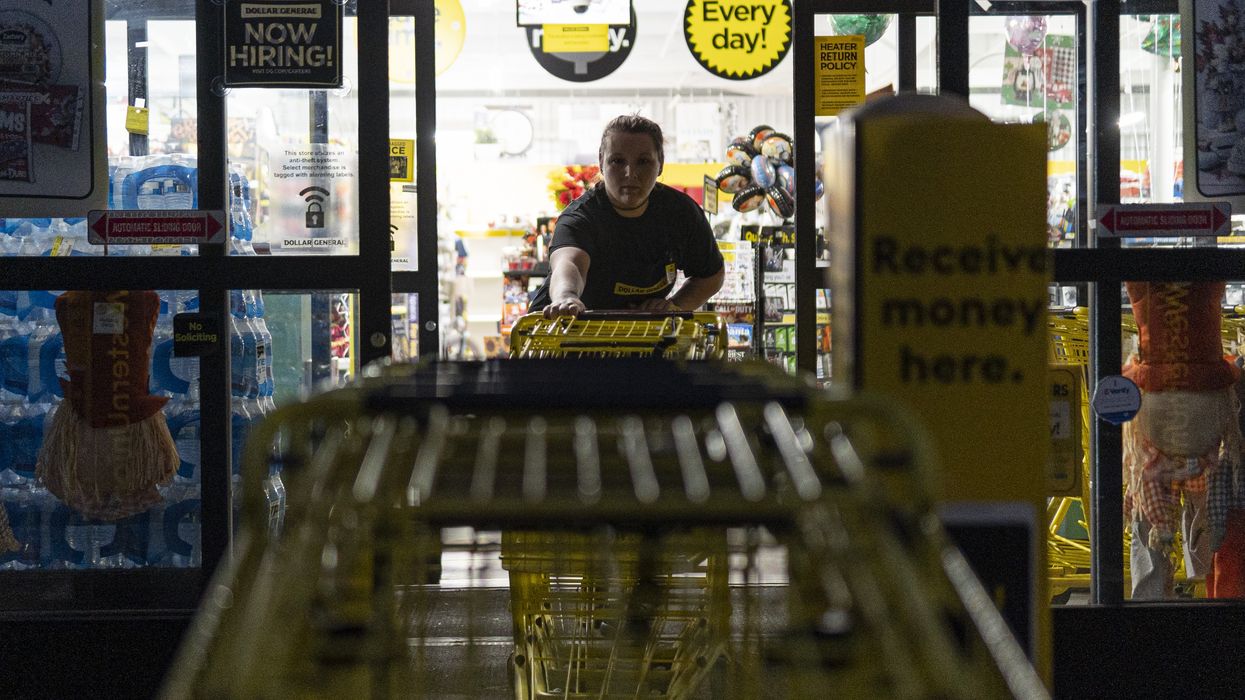
At many big stores, workers are short-handed and face difficult working conditions—even when their companies are highly profitable.
I’ve always felt that working in customer-facing jobs is my calling. I’m passionate about making people feel comfortable when they enter a business, be it a retail store or a restaurant.
But it was hard to keep that passion when I worked at Dollar General. Like workers at many other big retailers, we were so short-staffed and poorly trained that it was next to impossible to give good customer service.
My interview and first day on the job went well. Managers, co-workers, and customers all seemed pretty happy. The second day was a complete 180. All of a sudden I was thrown into my duties with zero training. They even scheduled me to close out the store that day without instructions.
Dollar General has also been taking profits that could go toward worker pay or fixing up their stores and spending them instead on stock buybacks.
Quickly I had shifts where I was the only worker for hours at a time, dealing with long lines of impatient customers, tons of merchandise to stock, and frustrated vendors subject to long wait times.
I frequently had to get overstock items from unstable top shelves and constantly worried I’d fall. The back door also wouldn’t close correctly—and even though I brought it up to management several times, it remained an easy way for anyone to sneak in.
I didn’t know it then, but Dollar General has repeatedly faced huge penalties for workplace safety violations.
Once I was called out to help with a truck delivery of refrigerated and frozen products. I went to grab a tote bag full and had to do a triple take because it was full of black mold. Another afternoon, I picked up a bag of potting soil to stock and realized it was covered with dead insects, which got all over the floor and other products.
When I had problems like these with merchandise, I was expected to contact the warehouse myself. But that was hard to do, given how understaffed we were.
Dollar General isn’t the only tough place for retail employees. At many big stores, workers are short-handed and face difficult working conditions—even when their companies are highly profitable.
Where is all the money going? Well, I can tell you not much went to me.
I made $14.75 an hour for part-time hours, even though I often wound up working full-time. After the first few weeks, my schedule became so unpredictable that I sometimes worked only a few hours a week. Eventually it just wasn’t worth all the hard work and stress, so I quit.
By contrast, Dollar General CEO Todd Vasos made nearly $10 million last year—521 times as much as a typical worker at his company, the Institute for Policy Studies reported recently.
Dollar General has also been taking profits that could go toward worker pay or fixing up their stores and spending them instead on stock buybacks. That’s when a company repurchases its own shares to inflate the value of its stock and make CEOs even richer. Between 2019 and 2023, the company spent $9 billion on this financial scam.
I also learned from the Institute’s report that 88% of Dollar General workers who are eligible to participate in the company 401(k) plan don’t have one dime in their accounts. Low-wage workers like me just don’t earn enough to be able to save for our retirement.
I saw up close how a business that’s focused on exploiting employees to make those at the top even richer isn’t just bad for workers like me, but for customers as well. And anyone who’s worked for one of these low-wage companies can tell you Dollar General is hardly unique.
If we want a strong economy, we need to do more to make sure all workers can make a decent living and feel safe and respected in their workplace.
Dollar General, Dollar Tree, and Kroger rake in a combined $90 million a year from cash-back fees, according to a new report by the Consumer Financial Protection Bureau.
The Consumer Financial Protection Bureau published a report Tuesday highlighting how large retailers such as Dollar General and Kroger exploit low-income communities' lack of access to local banking to hit consumers with predatory cash-back fees.
The CFPB found that while many retailers still offer free cash back at the register, Dollar General, Dollar Tree, and Kroger collectively rake in $90 million a year from fees imposed on people using the retail locations to access their own money.
"At Dollar General and Dollar Tree/Family Dollar, cash-back fees for small withdrawal amounts are the highest in the sample ($1 fee or more for cash-back amounts under $50)," the bureau found. "Kroger, the country's largest grocery chain, recently announced new charges at their Harris Teeter stores (75 cents for $100 cash back or less), and charges 50 cents for up to $100 cash back at their other brand stores such as Ralph's, Fred Meyer, and others."
The CFPB emphasized that such fees are disproportionately levied against people with lower incomes, who are more likely to live in areas with fewer banking options—forcing residents to rely on dollar stores for easy access to cash. The report notes that banking industry consolidation and branch closures have left a "void" of cash access spots that retailers like Dollar General have rushed to fill.
"While retail chains had long provided cash back on debit card purchases for free, the CFPB has found that dollar store chains and other retailers are now charging fees for access to cash," Rohit Chopra, the CFPB's director, said in a statement Tuesday. "Many people living in small towns no longer have access to a local bank where they can withdraw money from their account for free. This has created the competitive conditions for retailers to charge fees for cash back."
"Dollar General alone chalked up gross profits of $11.82 billion in 2023. But they nonetheless find new ways to squeeze even more money from their shoppers."
Stacy Mitchell, co-executive director of the Institute for Local Self-Reliance (ILSR), applauded the CFPB's new research as an "important report" that "exposes yet another way in which dollar stores' exploitative business practices take advantage of consumers."
"The three big dollar store chains make enormous profits," said Mitchell. "Dollar General alone chalked up gross profits of $11.82 billion in 2023. But they nonetheless find new ways to squeeze even more money from their shoppers—in this case, by charging them a few dollars to get cash back on their transactions, which average only a modest $25 or so. All three major dollar store chains have been fined for overcharge errors, and all use their market muscle to force suppliers to create 'cheater' sizes for them. CFPB's report will help alert shoppers to these abusive retailing practices."
ILSR has long worked to shine light on the abuses of dollar stores, releasing a report last year detailing how the retailers have invaded low-income communities and preyed on vulnerable consumers as well as workers.
"One might assume that the dollar chains are simply filling a need, providing basic retail options in cash-strapped communities. But the evidence shows something else," reads ILSR's report. "These stores aren't merely a byproduct of economic distress, they are a cause of it."
"In small towns and urban neighborhoods alike," the report adds, "dollar stores drive grocery stores and other retailers out of business, leave more people without access to fresh food, extract wealth from local economies, sow crime and violence, and further erode the prospects of the communities they target."

According to the company’s latest figures, Dollar General’s new CEO is making 702 times the pay of the company’s median employee.
A president of the United States this past week walked a picket line in solidarity with striking auto workers at a major American corporation. An amazing sight. What could President Biden do for an encore? He could stand before an outlet of a major American retailer — Dollar General — with a simple two-word placard.
The placard’s message? For Shame.
Americans — thanks to the solidarity of UAW members and the media and political attention that this solidarity has captured — now know a good bit about the pressures auto workers face. As a nation, unfortunately, we know next to nothing about the much heavier pressures on Dollar General workers.
Dollar General may well be, as a Bloomberg reporting team last week put it, the “worst” retail employer in the United States today. Why does that charge so matter? Dollar General has become “America’s most ubiquitous retailer,” with more outlets than Walmart and Wendy’s combined.
The U.S. economy isn’t delivering for American families, and that failure is delivering — for investors in and executives at Dollar General — an opportunity to thrive at astounding levels.
Dollar General’s core mantra, as Bloomberg sums up: “Build as many stores as possible, pack them with tons of stuff while using as little warehouse space as possible, and spend as little as possible on everything else.”
As little as possible on basic store upkeep. Businessweek investigators have “found expired products on Dollar General shelves,” everything from chicken soup in Louisiana to doughnuts in Illinois. In one Oklahoma store, birds nested in the ceiling and pooped down on the merchandise.
As little as possible on safety. Government inspectors have reported “fire extinguishers blocked by boxes” and “shaky, leaning towers of product” as high as nine feet tall. The Occupational Safety and Health Administration last year tagged Dollar General a “severe violator” of federal workplace safety law, in the process making the company the first major retailer to earn that dishonor.
And, of course, Dollar General spends as little as possible on wages. One of every four Dollar General employees makes less than $10 an hour, over half under $12, notes an Economic Policy Institute study of 2021 survey data. Even notoriously low-wage Walmart was paying workers, that same year, at least $12 an hour.
Dollar General doesn’t just skimp on wages. The company skimps on workers as well. Entire stores go hours every day with only one employee responsible for maintaining and servicing an average 7,500 square feet of retail space.
This brutal Dollar General approach to managing retail has paid off handsomely — for Dollar General investors and execs. The New York-based private-equity giant KKR bought up Dollar General for about $7 billion in 2007 and then watched happily as the Great Recession left middle-class households more desperate than ever for bargain-basement prices. KKR ended up exiting the Dollar General scene in 2013 after the company’s shares, notes Bloomberg, “had almost tripled” in value.
Overall, Dollar General’s stock price has quintupled since 2009, over double the share price gain at Walmart over those same years.
Top execs at Dollar General have profited quite amply from all these trendlines. Todd Vasos became the company’s CEO midway through 2015. Over the next six years, analysts at Equilar point out, he pocketed $182.8 million in compensation.
At the May 2022 Dollar General annual meeting, adds As You Sow executive pay researcher Rosanna Weaver, the company reported a CEO-median employee pay ratio of 935 to 1, with Vasos collecting $16.6 million and the “median” employee a mere $17,773. But that published “median,” Weaver suggests, may have substantially overstated what the typical Dollar General employee actually took home.
The company, turns out, had recently changed its median calculations by “annualizing” the pay of permanent employees who didn’t work the full year. If an employee had to leave work to care for an ill family member, for instance, Dollar General calculated that employee’s “annual” pay as if that worker had labored the entire year.
CEO Vasos, for his part, remained on the Dollar General executive payroll after exiting the company’s top slot last fall, as a senior advisor. He has collected $15.6 million in the company’s most recent fiscal year, with his successor, Jeffrey Owens, pulling down a mere $12 million. Over another $14 million has gone to Dollar General’s four other top executive officers.
These hefty sums, Ranmore Fund Management Ltd portfolio manager Sean Peche reminds us, understate what the top execs at Dollar General have actually been making. Executive pay reporting standards focus on the value of stock awards calculated at the grant date of any awarded stock, not the date an executive actually cashes in on the stock’s market value.
According to the company’s latest figures, Dollar General’s new CEO is making 702 times the pay of the company’s median employee. But his predecessor Vasos, after cashing out on a huge chunk of his stock awards, made nearly 4,500 times the annual pay of his 163,000 employees. He essentially made more in a single weekday — $328,000 — than his median employee could earn in 18 years.
But let’s not fall into the trap of attributing all this Dollar General “success” — for top execs and private equity wheelers and dealers — to some isolated individual greed grabs. Dollar General’s “success” essentially rests on a half-century of ever-greater American inequality. For two generations now, a shrinking share of U.S. income and wealth has gone into the pockets of America’s working families.
Simply put, thanks to this shrinking share, tens of millions of American families today couldn’t get by without the “bargain-basement” prices that dollar stores like Dollar General offer — at the expense of their customers’ health and safety and the economic security of their workers. The U.S. economy isn’t delivering for American families, and that failure is delivering — for investors in and executives at Dollar General — an opportunity to thrive at astounding levels.
Between 2008 and 2020, the American Public Health Association journal reported earlier this year, dollar stores like Dollar General upped their share of retail food purchases by just under 90 percent. Advocacy groups like the Environment, Equity & Justice Center have begun confronting that enormous surge. They’re pointing out that many dollar store chains “operate intentionally in food-deprived areas.”
The foods these discount retail chains offer up, meanwhile, come highly processed, offer little in the way of nutritional value, and sit packaged within toxic chemical-laden wrappings.
“Dollar General’s practices have an immense impact on communities across the country,” note advocacy attorneys Sara Imperiale and Margaret Brown, “especially communities of color and low-income communities.”
In other words, you’re likely never going to find the households of Dollar General execs doing their weekly food shopping at Dollar General outlets.