

SUBSCRIBE TO OUR FREE NEWSLETTER
Daily news & progressive opinion—funded by the people, not the corporations—delivered straight to your inbox.
5
#000000
#FFFFFF
To donate by check, phone, or other method, see our More Ways to Give page.
Daily news & progressive opinion—funded by the people, not the corporations—delivered straight to your inbox.
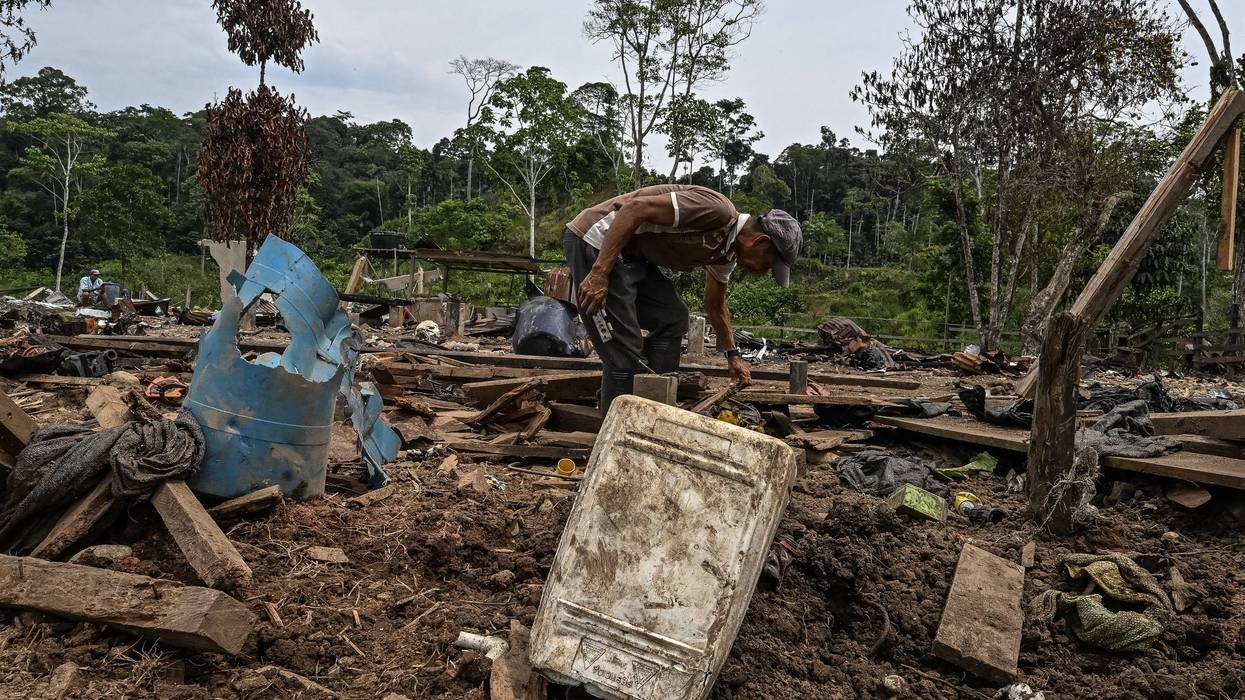
“US-Ecuador cooperation on security has been too opaque and too dangerous for Ecuadorians," said a representative for Human Rights Watch.
Human rights advocates are urging Congress to investigate the deepening military relationship between the US and Ecuador, which they say has been marred by severe abuses against civilians, including torture, arbitrary detentions, unexplained drone strikes, and disappearances.
A report out Tuesday from Human Rights Watch documents how the Trump administration's cooperation with the right-wing government of Ecuadorian President Daniel Noboa in response to organized crime in the country has been carried out under a veil of secrecy that has left few safeguards in place to protect human rights.
Dozens of victims, witnesses, lawyers, and others were interviewed for the report, which provides details about four incidents in which ordinary people were subject to abuse allegedly by Ecuadorian forces trained and armed by the United States as part of what the governments have called "Operation Total Extermination."
In one case—which was reported on by Common Dreams after being documented by local outlets in early March—Ecuadorian soldiers partnered with the US and stormed into the rural town of San Martín along the Colombian border in search of facilities owned by an armed group known as the Border Commandos.
Soldiers detained four dairy farmers without evidence of a crime and interrogated them for hours while beating, kicking, and striking them with rifle butts. One of the men said he was taken to the main house on the farm and waterboarded. According to the men, the soldiers doused the house with gasoline and set the property on fire.
Soldiers fired their weapons at another group of villagers who'd come to ask about the workers, which caused them to flee.
The four men were later taken to an unidentified military facility, where they said they were doused with water and electrocuted. Two of the men said soldiers pointed guns at them and threatened to kill them and cut off their fingers unless they confessed where they were keeping drugs and arms.
The men were released hours later without charges, and prosecutors said the soldiers failed to provide sufficient evidence to charge them. Human Rights Watch found they had no criminal records.
Days later, the military returned and dropped munitions on the remnants of the burned property and two others that had been abandoned. Human Rights Watch did not find evidence that the destroyed properties had any connection to armed criminal groups.
In a hearing before the US Senate Armed Services Committee, Gen. Francis L. Donovan described the operation as a "success" and said Ecuadorian forces had acted "professionally." The Trump administration has said US forces were "present" for the operation, but has not disclosed their role in the bombing of the houses or the torture of the farmworkers.
The Human Rights Watch report also details three attacks on fishing boats between January and March off the coast of the Galápagos Islands, which are possessed by Ecuador.
On January 20, the Fiorella disappeared along with eight crew members who remain missing more than six months later. Two surviving crew members, who'd left the main vessel to set fishing lines, said they suddenly lost contact with the ship while they were waiting to be picked up. As they searched for the vessel, they saw a "column of smoke" off in the distance, but no sign of the Fiorella.
They added that in the days before the ship went missing, they had seen what they thought were surveillance drones flying overhead as well as a gray patrol vessel flying an American flag nearby.
The families of the eight missing sailors have been demanding answers about their whereabouts for months with little response from the Ecuadorian government. The United Nations has issued urgent actions on behalf of the fishermen, calling on Ecuador to immediately search for them.
"The families of the eight individuals whose whereabouts are unknown fear that this is a case of enforced disappearance at the hands of the United States," said Ana Piquer, Americas director at Amnesty International, on Monday. "The US and Ecuadorian authorities must confirm or deny whether state agents from either country were involved, take all necessary steps to ascertain the fate and whereabouts of the victims, and provide reliable evidence showing what happened to them."
In March, two other boats—La Negra Francisca Duarte II and Don Maca—were hit with drones off the Galápagos. In both cases, the shipwrecked men were picked up by a blue and white ship by armed personnel wearing American military attire.
The fishermen were hooded, tied up, and in some cases beaten before being left on a hot metal deck for several hours without food, water, or adequate medical care.
Members of both crews said they saw the alleged US personnel destroy their fishing boats. They were then handed off to Salvadoran authorities and later sent back to Ecuador. Several of the men sustained serious injuries from the drone attacks, including severe burns, hearing loss, vision loss, broken and dislocated bones, and wounds from drone propellers.
Ecuadorian authorities have not confirmed that the attacks took place. According to the captain of La Negra Francisca Duarte II, and later an Ecuadorian port captain, Ecuadorian Coast Guard officers had boarded their ship for a routine inspection and found no evidence of illicit activity, just eight hours before the vessel was struck. No such inspections were reported aboard Don Maca.
The attacks closely resemble the ongoing campaign of extrajudicial boat bombings carried out by the United States, known as "Operation Southern Spear," in which at least 221 people have been killed across more than 60 attacks.
Though 13 of the survivors said they were detained by what appeared to be US personnel, the Department of Defense and Coast Guard denied involvement in all three attacks off the Galápagos.
“US-Ecuador cooperation on security has been too opaque and too dangerous for Ecuadorians,” said Juanita Goebertus, Americas director at Human Rights Watch. “Before more harm is done, the US Congress should demand real answers and effective safeguards.”
“Joint security operations against organized crime," Goebertus added, "should not become a cover for abuses."

An Ecuadorian human rights group has called for a probe after “bombings, burning of homes, arbitrary detentions, torture, and threats against the civilian population” by the joint US-Ecuadorian military operation.
Just a day after President Donald Trump suggested that he'd use his crushing economic blockade in a bid to "take" Cuba, an administration official said much more American warfare is on the horizon across Latin America.
It's called "Operation Total Extermination," according to Joseph M. Humire, the acting assistant secretary of war for homeland defense and Americas security affairs, who testified last week before the House Armed Services Committee.
Humire explained in written testimony that beginning on March 3, the US Department of Defense (which the Trump administration refers to as the Department of War) "supported, at the request of Ecuador, bilateral kinetic actions against cartel targets along the Colombia-Ecuador border."
"The joint effort," Humire said, "is the start of a military offensive by Ecuador against transnational criminal organizations with the support of the US, setting the pace for regional, deterrence-focused operations against cartel infrastructure throughout Latin America and the Caribbean."
The operation with Ecuador, led by the right-wing president Daniel Noboa, is part of "Operation Southern Spear," the Trump administration's illegal bombing campaign in the Caribbean and eastern Pacific Ocean, targeted at boats accused, with little evidence, of ferrying drugs to the US.
The latest of these bombings, which killed at least two more people, occurred on Friday and brought the total death toll since September of last year up to at least 160.
No casualty counts have yet been released by the US or Ecuadorian government for its operations to target what they said were "domestic terrorist organizations." But reports from those on the ground suggest they may have been similarly bloody.
Víctor Gómez, a journalist for the Ecuadorian outlet Radio Sucumbíos, conducted interviews with the residents of the rural town of San Martín in northeastern Ecuador near the Colombian border, who said their community was attacked twice by Ecuadorian and American forces on March 3 and 6.
Noboa celebrated the attacks on the area, which he said housed "a training ground for drug traffickers," and reportedly the home of "Mono Tole," who is the leader of the Colombian drug trafficking group known as the Border Commandos.
But Gómez described the town as having "no trenches, no firing ranges, no traces of a clandestine military infrastructure," adding that "the only things there are horses, cows, and donkeys, at least that's what can be seen on the Radio Sucumbíos cameras."
Locals, many of whom did not have their names published to avoid retaliation, describe military patrols landing on the riverbank on March 3 and launching an "ambush" against four farmers.
“They tied my hands and feet and then hung me up. They put me in a bucket of water, as long as I could stand it… they kicked me, they hit me with the butt of a gun," one of the workers described.
Another said that the soldiers "were looking for someone we didn't know... they told us to hand things over, but we had nothing to hand over."
The soldiers then reportedly "doused the main house and the wooden kitchen with gasoline" and set it ablaze, leaving the flames to consume large amounts of farm equipment.
As residents attempted to advocate for their loved ones, the farm owner said, "The commander in charge wouldn't let us near; they greeted us with gunfire until they took them away."
The four captured farmers were reportedly transported by helicopter to the capital of Sucumbíos, Lago Agrio, where one of the young men described being taken to a tiny room and tortured.
“They shocked us with that thing they called a taser," he said. "They poured water on me and placed it on my ribs and asked us questions."
After finding no evidence of guilt, authorities released the four men near a hospital in the capital.
Three days later, planes and helicopters flew over San Martín, dropping bombs on the ruins of the same house that had already been burnt to the ground three days earlier and on another abandoned house.
Video of that bombing was shared on social media by the Ecuadorian Armed Forces.
“First they burned it on the 3rd, and then on the 6th they came to bomb it. That’s what they did," said the farm's owner.
“How can it be a training camp if this is a livestock area?" he asked. "There is nothing to justify it, there are no training grounds, there is nothing."
The Alliance for Human Rights Ecuador has called for an investigation into the military's alleged "bombings, burning of homes, arbitrary detentions, torture, and threats against the civilian population," which it said were "serious violations of international humanitarian law."
The fallout from the attack has spilled over to create an international incident with neighboring Colombia. Two weeks after the bombing of San Martín, an unexploded 500 lb. bomb was discovered on a farm on the other side of the San Miguel River in Colombia's Putumayo region.
The bomb was identified as a US-made Mark-82. According to the New York Times, "had the bomb exploded, it would have done so with the force of 192 pounds of TNT" and could have harmed people as far as over 1,900 feet away.
"We're being bombed by Ecuador," said Colombian President Gustavo Petro in response to the explosive's discovery. Noboa denied the accusation, saying that "we are acting in our territory, not yours."
Following the US military's January abduction of Venezuelan President Nicolás Maduro, whom the US Department of Justice accused of drug trafficking, leaks have suggested that the US may soon attempt to bring similar charges against Petro, another left-wing leader who has resisted cooperation with Trump. Petro has denied accusations of drug trafficking.
One unnamed official told Nick Turse of The Intercept that attacks along the Ecuador-Colombia border "increasingly look like a coordinated campaign to foment 'discord' if not conflict" in the country.
In his hearing before Congress, Humire said that the US military was providing Ecuador with “capabilities that they otherwise would not have."
Humire said he was not sure how many strikes have been conducted on land so far as part of Operation Total Extermination, but responded "yes" when asked by the committee's ranking member, Rep. Adam Smith (D-Wash.), if the Department of Defense would “be moving to a lot more terrestrial strikes."
He said that these attacks were "just the beginning" of a much broader campaign, adding that the US has entered into agreements with 17 partner nations in the Western Hemisphere as part of the so-called Americas Counter Cartel Coalition.
While Humire said the nations that have reached these agreements "want this support and most of them all are looking for this,” the same cannot necessarily be said for the people living in the crossfire of the operation.
Gomez said that the people of San Martín are still living with “psychological trauma” following the attack. According to the town's vice president, Vicente Garrid, families are living in constant fear that their homes could be targeted next.
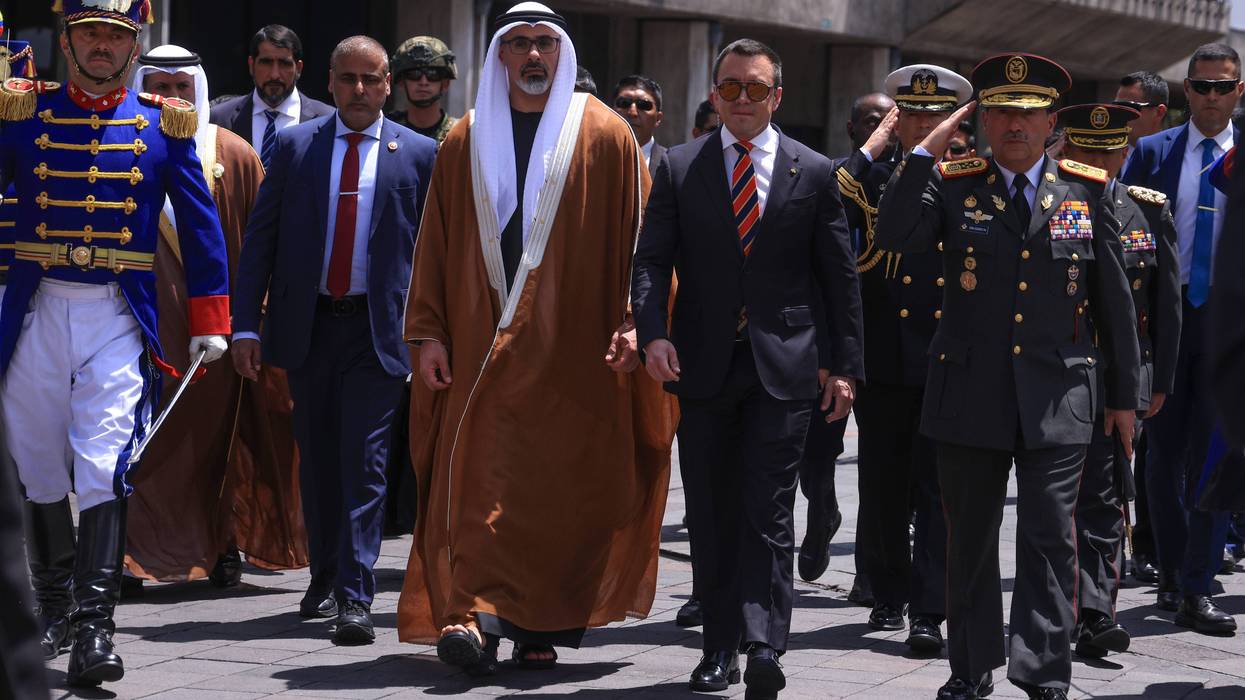
The decision blocks the right-wing president's unconstitutional attempt to bypass the National Assembly. Still, this is just one step in Ecuador's continued fight for its Constitution and its democracy.
In a major rebuke to President Daniel Noboa, Ecuador's Constitutional Court ruled unanimously on March 9 that his controversial Bilateral Investment Treaty with the United Arab Emirates cannot be fast-tracked and must be approved by the National Assembly.
The decision blocks the right-wing president's unconstitutional attempt to bypass the National Assembly. Still, this is just one step in Ecuador's continued fight for its Constitution and its democracy.
This treaty is the test case for a far broader corporate coup, one that aims to resurrect a legal weapon Ecuador’s people have repeatedly rejected: Investor-State Dispute Settlement (ISDS).
The treaty, signed in a rushed ceremony in December 2025, was littered with errors, referencing the non-existent "United Arab States" and citing provisions that aren't there. When Ecuador’s pro-corporate Constitutional Court rightly demanded a corrected text, it asked for an English version, a bizarre move in a Spanish-speaking republic.
“We are witnessing a government ignoring its own Constitution and the will of its people to serve the interests of transnational capital."
In response, Noboa issued an extraordinary decree authorizing Ecuador’s ambassador to unilaterally correct the text, bypassing normal diplomatic and legal channels.
The court has now sided with Ecuador’s progressive Constitution. However, that is not where this fight ends; instead, the treaty will have to be taken through a two-stage review process, unless Noboa decides to ignore the court altogether—a move that would be unsurprising given the young autocrat’s continued destruction and dismissal of Ecuador’s other branches of government.
The Constitutional Court will have 30 days to conduct a second, deeper review of the treaty's content to verify its full conformity with the Constitution. If the treaty survives that scrutiny (or if the court does not respond in 30 days), it will go to the National Assembly, where it requires absolute majority approval. Currently, Noboa’s party only has two-fifths of the total assembly seats, with leftist, pro-Indigenous, and some centrist parties occupying the rest.
The urgency of this corporate agenda explains the government's simultaneous brutal crackdown on democratic opposition. In a move that has drawn international condemnation, an electoral judge, on the request of the Noboa-aligned prosecutor general, suspended the country's largest opposition party, the left-wing Revolución Ciudadana (RC), for nine months.
The RC would not be able to conduct any political activities, or run in the 2027 local elections. The left-wing party, which won 44% of the vote in the last presidential election, controls the country's largest cities, including Quito and Guayaquil.
Interestingly, the right-wing pro-Trump billionaire president has himself been credibly accused of electoral fraud, corruption, and stakes in the drug-trafficking trade.
The case against RC relies on the testimony of an individual awaiting trial for child sexual abuse, who was given preferential treatment in prison in exchange for implicating the party on cooked-up money laundering charges. This follows the February pre-trial detention of Guayaquil's Mayor, Aquiles Alvarez, another opposition leader targeted by the prosecutor general. This thus follows a long pattern of Noboa's crackdown on opposition. The right is also cutting off the opposition's ability to vote against Noboa's measures in the assembly.
The UAE BIT contains ISDS provisions that grant foreign investors the right to sue Ecuador in international tribunals for billions over laws or policies that harm their profits, and those they expect to make in the future, including environmental and health regulations that protect local and marginalized populations. This is explicitly prohibited by Article 422 of Ecuador’s Constitution, a prohibition upheld by the people in national referenda in 2024 and again in 2025.
“This is all very clearly unconstitutional,” says Ladan Mehranvar, a senior legal researcher at the Columbia Center on Sustainable Investment who focuses on international investment law and human rights. “They are trying to push the BIT through by sidestepping constitutional safeguards, including the requirement of prior approval by the National Assembly,” she added.
“We are witnessing a government ignoring its own Constitution and the will of its people to serve the interests of transnational capital,” said Pedro Labayen Herrera and Mario Osorio, both researchers with the Center for Economic and Political Research (CEPR) in Washington. “They are fast-tracking the UAE treaty by claiming it requires only executive ratification, thus avoiding the scrutiny of the Ecuadorian legislature and the public. That is simply false.”
There are serious concerns about the court’s independence. One justice, Claudia Salgado, nominated by Noboa, comes from a family of legal and arbitration specialists and has previously written on Ecuador’s constitutional ban on ISDS. Her apparent shift, alongside pressure from an executive that has publicly attacked and threatened the Constitutional Court judges, paints a picture of a state institution under siege. “Either the Constitutional Court is captured, or it feels threatened,” Mehranvar noted.
So why such a reckless, rushed push for a treaty with the UAE? Because it is the blueprint and the battering ram for something far more consequential, namely, a Free Trade Agreement with Canada and other pro-corporate actions that would permanently lock in ISDS for the (mostly foreign) mining industry.
There is also significant personal corruption at play. The Noboa family holds a significant stake in Silvercorp, a Canadian mining company, as well as other financial holdings with direct interests in ISDS and the president’s deregulation crusade.
An ISDS chapter in a Canada-Ecuador FTA would directly benefit the president’s own financial interests, allowing corporate actors, potentially including his family’s holdings, to sue the Ecuadorian state. “ISDS is a tool for the Noboa family to protect their own financial interest,” said Herrera and Osorio.
This agenda is being synchronized with a brutal domestic deregulation campaign. In late January, Noboa proposed gutting Ecuador’s Mining Law by replacing the mandatory environmental license with a simplified authorization, which local Indigenous groups say decimates their constitutional right to prior consultation, a key tool they use to oppose harmful extractive projects. Ecuador is one of the most biodiverse countries on Earth; about half of its territory is made up of the Amazon rainforest and Indigenous lands.
Combined with ISDS, this creates a vicious trap—remove environmental safeguards now, deter future governments from reinstating them, and use international tribunals to sue any future government that tries to reinstate them for “indirect expropriation” of future profits.
Companies could do this even without any intent to finish the projects, or invest while knowing that the projects are legally or politically untenable, winning out on billions of dollars in Ecuadorian taxpayer funds, at a time when Ecuador is facing a historic financial, energy, and security crisis, and remains one of the poorest countries in the Western Hemisphere.
The United Nations special rapporteur on human rights and the Environment has argued that ISDS has catastrophic consequences for climate action and human rights. Nobel prize-winning economist Joseph Stiglitz has even argued ISDS is “litigation terrorism,” while even the libertarian Cato Institute has said the mechanism actually threatens the rule of law, growth, and investment.
This deal and its progenitors represent the fusion of state and corporate power against democracy. It was preceded by the violent crushing of protests against subsidy removals, the criminalization of water defenders, and the continued advancement of mining projects in sensitive ecosystems like the Amazon and near the Yasuní National Park, despite, once again, popular referenda opposing them. The Noboa government has conducted a war against democracy, the rule of law, and human rights.
If the court and National Assembly allow this breach, the floodgates open for a corporate takeover dressed as trade policy, with only global mining capital standing to gain. Ecuador’s people have resisted corporatocracy many times over. Their government is now trying to force it on them by decree, while suppressing all opposition. At a time when global democracy and rights are falling off a cliff, the world must heed this crucial test.
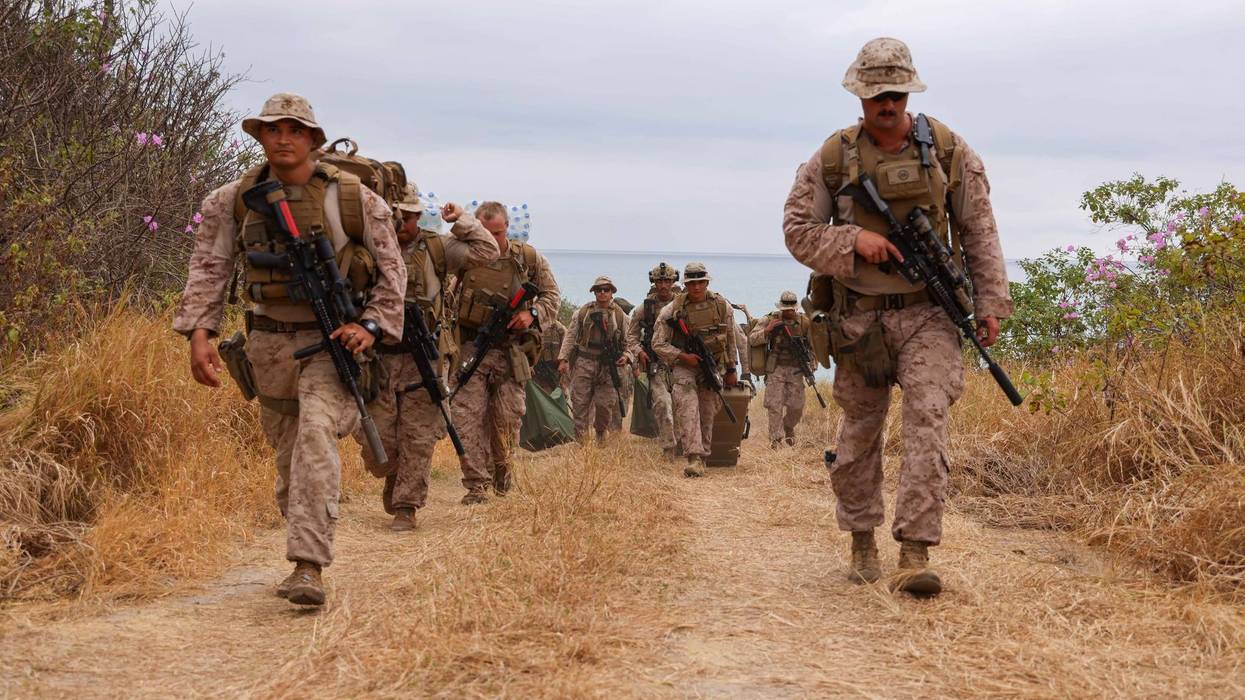
"Why is Trump attacking Ecuador?" asked one leftist news outlet. "Same reason he’s in Iran + Venezuela: oil 'secured' by force, sold as fighting a 'dictatorship' and/or 'drugs.'"
Just over two months after US forces bombed and invaded Venezuela and abducted its alleged drug-trafficking president, the Pentagon on Tuesday announced the launch of a joint campaign with Ecuador to combat "narco-terrorists" in the South American nation.
US Southern Command (SOUTHCOM) announced the operation, which, with the deployment of ground troops, opens a new front in the Trump administration's Operation Southern Spear targeting alleged drug traffickers. The campaign had previously consisted of dozens of airstrikes against boats that the US military claimed were transporting drugs in the Caribbean Sea and Pacific Ocean. More than 150 people have been killed in such bombings.
Right-wing Ecuadorian President Daniel Noboa—a close ally of US President Donald Trump whose family shipping business is allegedly linked to cocaine trafficking—hailed the joint operation as "a new phase against narco-terrorism."
However, many Ecuadorian leftists denounced the operation.
"How can our armed forces allow so much?" asked former President Rafael Correa, who expelled the US military from Ecuador and famously said that he would let the US renew a lease on a controversial air base in Manta only if "they let us put a base in Miami."
Last year, Ecuadorian voters rejected a proposal by Noboa to reopen US military bases in the country that were shuttered by Correa's refusal to renew their leases.
Former National Assembly president and Imbabura Province Gov. Gabriela Rivadeneira noted in a television interview that Ecuador has "the only constitution in the world that prohibits foreign military presence" within its borders.
“As the US militarization advances, organized crime and drug trafficking advance further; this country was safer without foreign bases," she contended.
The announcement of the joint campaign also prompted criticism around the world.
"As Trump deploys US troops in Ecuador, there's a real danger that he'll authorize them to summarily shoot rather than capture drug suspects as legally required," former Human Rights Watch executive director Kenneth Roth said on social media. "In short, to commit more criminal murders."
US climate campaigner Elise Joshi said on X that "Ecuador's corrupt billionaire president Noboa just gave Trump permission to carry out a military operation in the country as he guts public services, Indigenous rights, and free speech."
"Noboa sold out Ecuador to Trump's war against the [Latin American] people," Joshi added. "Shameful."
My sense is that some in the administration have been itching to put US military boots on the ground somewhere for an operation against “narco-terrorists” and then publicly brag about it and Ecuador was more amenable than say Mexico.
— Brian Finucane (@bcfinucane.bsky.social) March 3, 2026 at 7:11 PM
Others questioned the US explanation for the intervention.
"Why is Trump attacking Ecuador?" the leftist magazine In These Times wrote on its X page. "Same reason he’s in Iran + Venezuela: oil 'secured' by force, sold as fighting a 'dictatorship' and/or 'drugs.' Ecuador’s Indigenous organizers forced a pullback in drilling in 2019. Now they face the US military."
Once one of Latin America's most peaceful countries, Ecuador in recent years has become what many observers call a "cocaine superhighway" via which the majority of drugs produced in neighboring Colombia and Peru are shipped to the United States and other international markets. The booming drug trade has sparked a fierce turf war between traffickers that has plunged areas of Ecuador, especially in the coastal province of Guayas, into violence and terror.
The Trump and Noboa administrations have forged closer ties since the US leader's return to office last year, much to the chagrin of many Ecuadorian leftists—who point to the long history of US military invasions and other interventions throughout Latin America, including a CIA-backed coup in Ecuador in 1963.
The Ecuador operation comes amid the US-Israeli war on Iran, which has killed more than 1,000 people, according to the Iranian Red Crescent Society. Iran is the 10th country bombed on orders from US President Donald Trump, the self-proclaimed "president of peace," who has also attacked Afghanistan, Iran, Iraq, Libya, Nigeria, Pakistan, Somalia, Syria, and Yemen.