
SUBSCRIBE TO OUR FREE NEWSLETTER
Daily news & progressive opinion—funded by the people, not the corporations—delivered straight to your inbox.
5
#000000
#FFFFFF
To donate by check, phone, or other method, see our More Ways to Give page.


Daily news & progressive opinion—funded by the people, not the corporations—delivered straight to your inbox.
“The Trump administration’s decision to purchase cluster munitions shows that the Pentagon no longer considers protecting civilians a priority," said one critic.
A coalition of advocacy groups is imploring US lawmakers to stop the purchase of next-generation cluster bombs from an Israeli state arms maker, citing "severe, foreseeable dangers" that the internationally banned weapons pose to civilians.
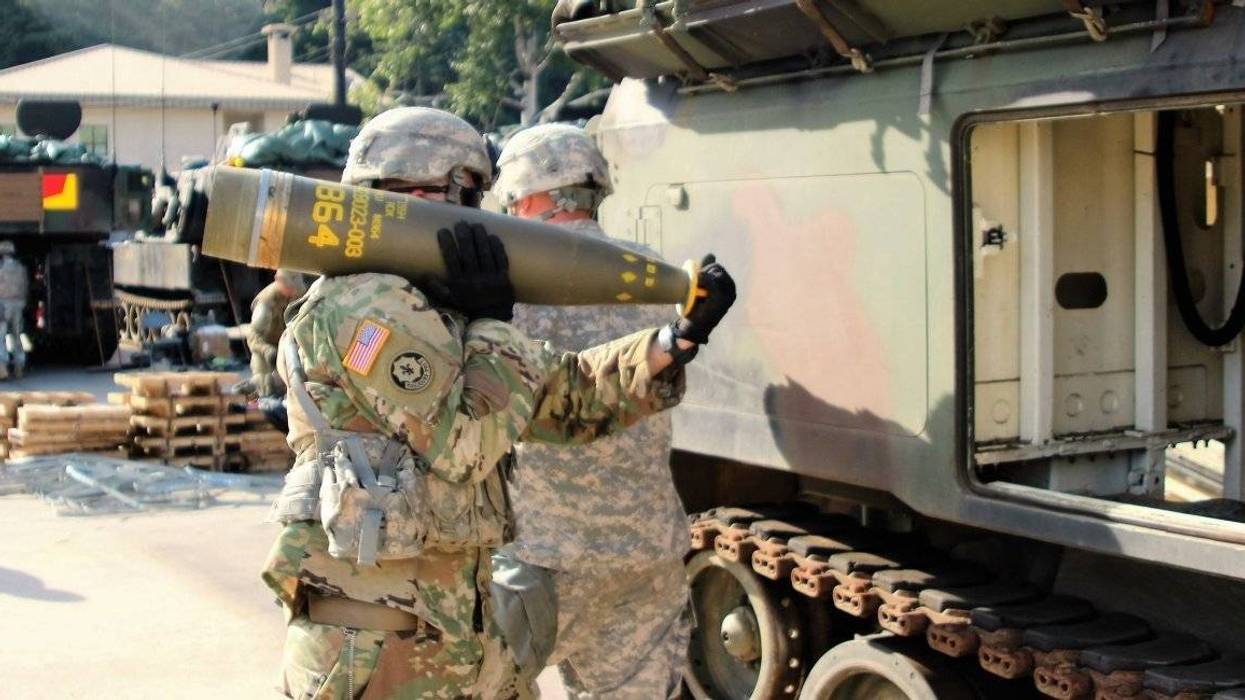
Responsible Statecraft said Wednesday that the 36 human rights, peace, and faith groups shared an open letter they sent to lawmakers urging them to cancel a $210 million no-bid contract with Tomer to produce weapons, including a new generation of US 155-millimeter cluster munition shells for land-based artillery.
The letter's signatories—who include Amnesty International USA, Arms Control Association, Centers for Civilians in Conflict, Center for International Policy, Human Rights Watch, the Quincy Institute for Responsible Statecraft, RootsAction, and United Methodist Church—note that these weapons are "dramatically out of step with civilian protection practices" because they "disperse submunitions across broad areas, making it exceedingly difficult to confine their impact to lawful military targets."
"We urge members of Congress to take immediate action to oppose this purchase and prevent the transfer of cluster munitions, which pose well-documented and lasting risks to civilian populations," the letter states.
Congressional efforts to ban the transfer of cluster bombs have failed, most recently in late 2023, when House lawmakers voted down a proposed amendment to the 2024 military spending bill a week after then-President Joe Biden said the US would send some of its stockpiled cluster munitions to Ukraine to help defend against Russia's invasion.
Last year, a group of congressional Democrats led by Reps. Delia Ramirez (Ill.), Sara Jacobs (Calif.), Pramila Jayapal (Wash.), and Mark Pocan (Wis.) introduced the Block the Bombs Act, stalled legislation that would withhold the transfer of offensive weapons to Israel as it wages a genocidal war on Gaza. The bill is backed by the Congressional Progressive Caucus.
Cluster bombs are no longer manufactured domestically. However, the United States has not joined the 2008 Convention on Cluster Munitions, which has been ratified by more than 111 nations but not some of the world's biggest military powers, including China, Russia, India, and Israel. Last year, Lithuania became the first country to withdraw from the treaty, citing threats from Russia.
According to the Intercept, which first reported the proposed new sale:
Known as the XM1208 munition, America’s new cluster shells are designed to have a dud rate—or risk of failure to explode—of less than 1%. They rely on more complex fuses and self-destruct features to reduce long-term danger to civilians, according to army procurement documents and weapons experts. But researchers say those low failure rates in testing do not reflect real-world performance, and advocates argue that cluster weapons’ battlefield effectiveness cannot justify their humanitarian costs.
"These weapons’ humanitarian impacts vastly outweigh any possible tactical benefit that they provide,” Ursala Knudsen-Latta of the Friends Committee on National Legislation, which signed the letter, told Responsible Statecraft. “Unfortunately, it is really sowing seeds of terror for generations to come anywhere they are used.”
A 2025 report published by the governance board of the International Campaign to Ban Landmines and the Cluster Munition Coalition revealed that 100% of reported cluster bomb casualties in 2024 were civilians, and 42% were children.
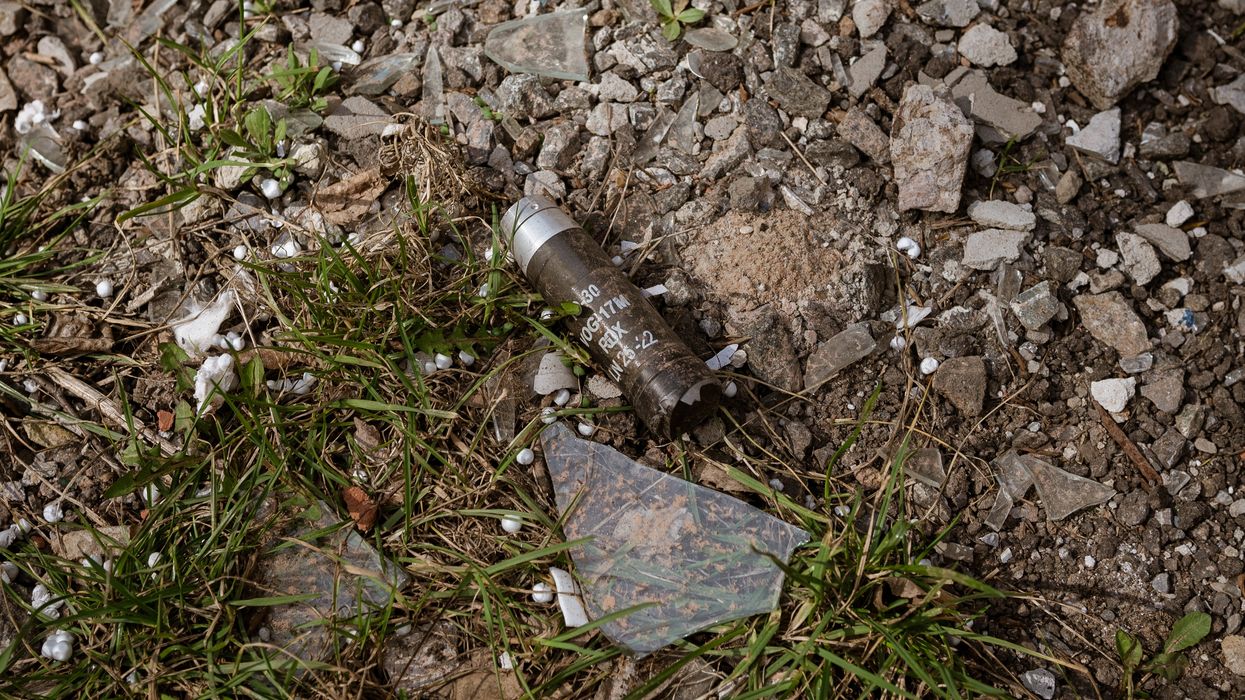
Unexploded cluster bomblets are often found by children, who sometimes mistake them for toys. Unexploded ordnance (UXO) including cluster munitions have killed and maimed at least tens of thousands of people since the US stopped dropping them on countries like Vietnam, Cambodia, Laos, and Iraq.
“They are inherently indiscriminate,” Brian Castner, an Amnesty International weapons investigator and former US Air Force explosive ordnance disposal officer, said of cluster bombs in an interview with the Intercept earlier this month. “There’s not a way to use them responsibly, in that you can’t control where they land, and with this high dud rate you can’t control the effect on the civilian population afterwards.”
Rights groups have been sounding the alarm on the Trump administration’s systematic erosion of policies meant to minimize civilian harm and uphold international law. For example, last year Defense Secretary Pete Hegseth lifted restrictions on US use of antipersonnel landmines, which killed or wounded more than 6,000 people worldwide in 2024, according to Landmine Monitor.
“The US government’s revival of indiscriminate weapons that the world has worked to ban puts civilian lives at risk,” Sarah Yager, Washington director at Human Rights Watch, said Tuesday. “The Trump administration is simply disregarding foreseeable harm to civilians, from children who pick up unexploded bomblets to communities forced to live with unmarked minefields long after a conflict ends."
“The Trump administration’s decision to purchase cluster munitions shows that the Pentagon no longer considers protecting civilians a priority," Yager added.

"The Convention on Cluster Munitions provides a vital framework for ending the immediate and long-term harm and suffering caused by these abhorrent weapons," said one of the treaty's architects.
The overwhelming majority of cluster bomb casualties last year were civilians, with children making up nearly half of those killed or maimed by remnants of the internationally banned munitions, a report published Monday revealed.
Human Rights Watch (HRW) published its annual Cluster Munition Monitor report, which "details the policy and practice of all countries with respect to the international treaty that prohibits cluster munitions and requires destruction of stockpiles, clearance of areas contaminated by cluster munition remnants, and victim assistance."
That treaty, the landmark Convention on Cluster Munitions, has been ratified by 112 nations. However, numerous countries that are not parties to the agreement—including Myanmar, Russia, Syria, Ukraine, and the United States—continued to use or sell cluster bombs.
"Cluster munitions can be fired from the ground by artillery, rockets, missiles, or mortars, or dropped by aircraft," HRW explained. "They typically open in the air, dispersing multiple submunitions or bomblets over a wide area. Many submunitions fail to explode on initial impact, leaving unexploded duds that can indiscriminately injure and kill like landmines for years, until they are found and destroyed."
The results have been devastating. According to the report, 93% of cluster munition casualties reported by the monitor last year were civilians, while children made up 47% of those killed or wounded by cluster bomb remnants. Children are particularly vulnerable to unexploded cluster bomblets, which are often mistaken for toys.
According to the report, the following countries suffered more than 1,000 cluster bomb casualties in 2023: Laos (7,810), Syria (4,445), Iraq (3,201), Vietnam (2,135), and Ukraine (1,213).
HRW noted that "Russia has used stocks of old cluster munitions and newly developed models in Ukraine since 2022" and that "between July 2023 and April 2024, U.S. President Joe Biden approved five transfers to Ukraine of U.S. cluster munitions delivered by 155mm artillery projectiles and by ballistic missiles."
Meanwhile, unexploded cluster munitions dropped by the United States during the Vietnam War are still killing and maiming people, mostly children. In Laos, where the U.S. dropped more bombs than all sides in World War II combined, as many as 270 million cluster munitions were sprinkled over the country. Unexploded bomblets have killed an estimated 20,000 Laotians since the end of the war. It is believed that less than 1% of unexploded cluster munitions have been cleared in Laos.
The report highlighted some promising developments:
In December 2023, the convention reached a major milestone when Peru completed the destruction of its stockpiled cluster munitions, as it was the last state party with declared stocks to complete this obligation. Bulgaria, Slovakia, and South Africa announced the completion of the destruction of their respective cluster munition stocks in September 2023. These developments mean that member countries have collectively now destroyed 100% of their declared cluster munition stocks, destroying 1.49 million cluster munitions and 179 million submunitions.
However, there were also setbacks, such as legislation in Lithuania approving the Baltic nation's withdrawal from the cluster bomb treaty.
"Lithuania's ill-considered move to leave the Convention on Cluster Munitions stains its otherwise excellent reputation on humanitarian disarmament and ignores the risks of civilian harm," said HRW deputy crisis, conflict, and arms director Mary Wareham, who edited the new report. "It's not too late for Lithuania to heed calls to stop its planned withdrawal."
Speaking more broadly of the new report, Wareham—a joint recipient of the 1997 Nobel Peace Prize for her work with the International Campaign to Ban Landmines—said that "the Convention on Cluster Munitions provides a vital framework for ending the immediate and long-term harm and suffering caused by these abhorrent weapons."
"All countries should join and adhere to the convention if they are serious about protecting civilians from these weapons in the face of rising conflict," Wareham added.
"The legacy of cluster bombs is misery, death, and expensive cleanup after generations of use," said Rep. Betty McCollum. "These weapons should be eliminated from our stockpiles."
The U.S. House of Representatives on Wednesday rejected a bipartisan amendment to the 2024 military spending bill that would have prohibited the transfer of cluster munitions—which are banned under a treaty ratified by more than 100 nations but not the United States—to any country.
The House voted 160-269 on the amendment to next year's National Defense Authorization Act co-sponsored by Reps. Sarah Jacobs (D-Calif.), Matt Gaetz (R-Fl.), Ilhan Omar (D-Minn.), Pramila Jayapal (D-Wash.), and Jim McGovern (D-Mass.). Seventy-five Democrats voted for the measure, while 137 voted "no"; 85 GOP lawmakers approved the amendment while 132 opposed it.
The vote took place less than a week after U.S. President Joe Biden said the United States would send more cluster munitions to Ukraine.
"Many of us have this idea of American exceptionalism, that America is set apart from the rest of the world. Well, that's certainly true when it comes to cluster munitions and not in the way that we want," Jacobs said on the House floor before Wednesday's vote.
"America is an outlier. We are one of the few countries that hasn't become party to the Convention on Cluster Munitions, and that is a grave mistake," she asserted, referring to a landmark 2008 treaty, to which 112 nations are parties.
Jacobs continued:
These weapons maim and kill indiscriminately. In 2021, the Landmine and Cluster Munition Monitor found that over 97% of casualties from cluster bomb remnants were civilians, and two-thirds of those were children. That's because these bomblets are small, colorful, and interesting shapes, so to children they look like toys. So when kids find these unexploded bomblets stuck in trees, or in the water, or simply on the ground and try to pick them up and play with them, they could lose a limb or their life in the blink of an eye.... These weapons are unpredictable, and the human cost is far too high to justify.
Since the end of the Vietnam War half a century ago, unexploded cluster munitions have killed approximately 20,000 civilians in Laos, where the U.S. dropped more bombs than all sides in World War II combined. The U.S. rained as many as 270 million cluster bombs on Laos, and less than 1% of the unexploded bomblets have been cleared since. They are still killing civilians today.
"These cluster bombs are indiscriminate," Gaetz said on the House floor Wednesday. "They've killed tens of thousands of people... and when this is all done, we'll be right back here on the floor appropriating money to de-mine the cluster bombs that we're now sending, which seems ludicrous to me."
"These cluster bombs are indiscriminate. They've killed tens of thousands of people."
Since Vietnam, the U.S. has used cluster bombs in wars including the 1999 NATO air campaign against Yugoslavia; the 1991 Desert Storm war in Iraq and Kuwait; and in Afghanistan, Iraq, and Yemen during the so-called War on Terror. U.S. cluster munitions have been linked to birth defects, miscarriages, cancers, and other ailments.
Earlier this year, the U.S. began sending artillery-fired cluster munitions to Ukraine. Russian invaders and Ukrainian homeland defenders have both killed and wounded soldiers and civilians with cluster bombs during the war.
"The decision by the Biden administration to transfer cluster munitions to Ukraine in my opinion was unnecessary and a sad mistake," McCollum told her House colleagues Wednesday. "The legacy of U.S. cluster munitions... undermines our moral authority and places the U.S. in a position that directly contradicts 23 of our NATO allies who have joined the Convention on Cluster Munitions."
"The legacy of cluster bombs is misery, death, and expensive cleanup after generations of use," McCollum added. "These weapons should be eliminated from our stockpiles."
"Sending these weapons anywhere makes us complicit in unavoidable civilian harm and creates blowback that undermines our national security."
Last week, Biden informed Ukrainian President Volodymyr Zelenskyy that the United States will provide Kyiv with long-range missiles with cluster munition warheads.
"Let's be clear," Jacobs added. "This isn't about one country, this is not about Ukraine. This is about protecting civilian lives and ensuring our national security all over the world. Because sending these weapons anywhere makes us complicit in unavoidable civilian harm and creates blowback that undermines our national security."
Multiple efforts by lawmakers to ban the export of U.S. cluster munitions have failed to advance. Earlier this year, the GOP-controlled House Rules Committee voted down a resolution proposed by Omar and Jacobs (D-Calif.), while backing another led by Rep. Marjorie Taylor Greene (R-Ga.)—whose controversial sponsorship doomed the proposal.