

SUBSCRIBE TO OUR FREE NEWSLETTER
Daily news & progressive opinion—funded by the people, not the corporations—delivered straight to your inbox.
5
#000000
#FFFFFF
To donate by check, phone, or other method, see our More Ways to Give page.
Daily news & progressive opinion—funded by the people, not the corporations—delivered straight to your inbox.

Ninety percent of the more than 6,000 killed by landmines last year were civilians, and half of them were children. There can be no justification for weapons such as these.
One step can be the difference between life and death in many communities around the world. Srey Neang, a young girl living in rural Cambodia, ran outside to play in her uncle’s backyard, and her life was upended in a moment when she stepped on a landmine. She was rushed to the hospital, where her leg was amputated at only four years of age. Her story—like so many others—shows that even decades after conflict ends, the threat of these weapons never does.
Every year, thousands of civilians, particularly children, are injured or killed by landmines and cluster munitions. The use of landmines and cluster munitions had been on the decline since the signing of the Mine Ban Treaty in 1997 and the Convention on Cluster Munitions in 2010.
But despite progress, we are seeing more countries return to the use of landmines and cluster munitions as security concerns rise globally. Some will argue that these weapons make countries safer, but that’s faulty thinking. Security can’t come at the expense of innocent lives. Nor do these weapons actually provide meaningful military advantage; they leave behind contamination that destabilizes communities, limits economic recovery, and threatens peacekeeping forces long after conflicts end. You can’t be safe from a weapon that can’t distinguish between a soldier and a child.
The 2025 Landmine Monitor, out today, reports that more than 6,000 people were killed or injured by landmines and explosive remnants of war in 2024—the highest annual figure since 2020, and a 9% increase from the previous year. Ninety percent of those victims were civilians, and half of them were children. The 2025 Cluster Munition Monitor, published on September 15, also revealed that all reported casualties from this weapon in 2024 were civilians. New uses by countries like Russia, Myanmar, and Syria challenge the treaty. Lithuania’s withdrawal from the Convention, effective March 2025, sends a dangerous message to other countries in the region.
As these findings are released, there is a growing need for clear analysis and public understanding. On December 3, I’ll be joining fellow experts for a virtual briefing hosted by the US Campaign to Ban Landmines—Cluster Munition Coalition to discuss the latest Monitor reports, the human cost of these weapons, and the role US leadership must play at this pivotal moment. Bringing these insights directly to policymakers and advocates is essential to strengthening global norms and advancing effective solutions.
Despite never joining either treaty, the United States has long been one of the world’s largest supporters of mine clearance and victim assistance, helping make former battlefields safe for farming, economic investment, and community life. These investments are among the most cost-effective and high-impact uses of US international assistance, directly saving lives and restoring livelihoods.
The case for action is both moral and pragmatic. Every mine removed or cluster bomb destroyed reopens land for cultivation, enables displaced families to return home, and prevents future casualties. These are tangible, measurable outcomes that support U.S. foreign policy priorities: stability, economic recovery, and the protection of civilians in conflict.
Humanity & Inclusion, which has worked in mine action for more than 40 years, witnesses the human toll daily, as seen in the case of Srey and her family in Cambodia. The organization where I work, Humanity & Inclusion, supported Srey, now 13, in receiving a new prosthetic leg, which allows her to ride her bike to school, help take care of her family, and play soccer, one of her favorite hobbies.
Srey’s story and those of many others are reminders that behind every statistic is a person whose future depends on the choices policymakers make today. US leadership has always mattered. When the United States aligns its policies, funding, and diplomacy toward a humanitarian goal, the world follows. The US has made progress in recent years. In 2022, the Biden administration restricted US landmine use to the Korean Peninsula and reaffirmed the goal of ultimately joining the Mine Ban Treaty. But the transfer of US cluster munitions to Ukraine in 2023 and landmines in 2024, undercut those commitments and send mixed signals to the world.
US leadership in aligning policy with the Mine Ban Treaty and the Convention on Cluster Munitions, and in sustaining robust funding for mine action, comes at a critical time. Washington can once again set the global standard for protecting civilians and strengthening international law.
In a time of never-ending partisan fights, this is a place where both sides can come together and agree on the right steps forward. This is not an abstract debate. It’s about whether children can walk to school safely. Whether farmers can plant crops without fear. Whether communities emerging from war can build futures on land that no longer hides deadly remnants of the past. Eliminating landmines and cluster munitions aligns with American values, advances security, and reflects our nation’s enduring commitment to human dignity.
The world doesn’t need new reasons to fear these weapons. Instead, we must take the kind of step that brings hope rather than harm. If we lead with courage now, our next steps can help ensure that every step, everywhere, is safe.

"Cluster munitions are banned for a reason: Civilians, including children, account for the vast majority of casualties," said one rights advocate.
Human rights leaders on Monday called on the 112 countries that are party to a treaty banning cluster munitions to reinforce the ban and demand that other governments sign on to the agreement, as they released an annual report showing that the bombs only serve to cause civilian suffering—sometimes long after conflicts have ended.
The governance board of the International Campaign to Ban Landmines (ICBL) and the Cluster Munition Coalition (CMC) released the 16th annual Cluster Munition Monitor on Monday, compiling data on the impact of cluster munitions for 2024 and revealing that all reported cluster bomb casualties last year were civilians—and close to half, 42%, were children.
Cluster bombs are particularly dangerous to civilians because after being dropped from aircraft or fired by rockets or other weapon, they open in the air and send multiple submunitions over wide areas—often leaving unexploded bomblets that are sometimes mistaken by children for harmless toys, and can kill and injure people in populated areas for years or even decades after the initial bombing.
The report, which was released as officials prepare to convene in Geneva for the Cluster Munitions Conference, says at least 314 global casualties from cluster munitions were recorded in 202, with 193 civilians killed in attacks in Ukraine—plus 15 who were killed by unexploded munitions.
Since the Convention on Cluster Munitions was adopted in 2008, none of the 112 signatories have used cluster bombs—but countries that are not party to the convention, including Russia and Ukraine, used the munitions throughout 2024 and into this year, and the US has said it transferred cluster bombs to Ukraine at least seven times between July 2023-October 2024.
The report details recent uses of cluster bombs, the impact of which may not be known for years as civilians remain at risk from the unexploded bombs, including by Thailand—by its own apparent admission—in its border conflict with Cambodia and allegedly by Iran, which Israel claimed used cluster munitions in its attack in June. Cluster munitions have also reportedly been used in recent years in Myanmar—including at schools—and Syria.
"Governments should now act to reinforce the stigma against these indiscriminate weapons and condemn their continued use."
This year, the withdrawal of Lithuania from the Convention on Cluster Munitions—an unprecedented step—garnered condemnation from at least 47 countries. While it had never previously used or stockpiled cluster bombs, the country said it was necessary to have the option of using the munitions "to face increased regional security threats."
The casualties that continued throughout 2024 and into 2025 "demonstrate the need to clear more contaminated land and to provide more assistance to victims," said Human Rights Watch, a co-founder of CMC.
"The Convention on Cluster Munitions has over many years made significant progress in reducing the human suffering caused by cluster munitions," said Mark Hiznay, associate crisis, conflict, and arms director for HRW. "Governments should now act to reinforce the stigma against these indiscriminate weapons and condemn their continued use."
The report notes that funding cuts by donor states including the US, which under the second term of President Donald Trump has cut funding for landmine and cluster bomb clearance and aid, have left many affected countries struggling to provide services to survivors.
Children, the report notes, are often particularly in need of aid after suffering the effects of cluster munitions, as they are "more vulnerable to injury and frequently require repeated surgeries, regular prosthetic replacements as they grow, and long-term opportunities to access physical rehabilitation and psychological support."
"Without adequate care for children, complications can worsen, affecting their schooling, social interactions, mental health, and overall well-being," explained IBCL and CMC.
At the Cluster Munitions Conference taking place from September 16-19, said Anne Héry, advocacy director for the group Humanity and Inclusion, states must "reaffirm their commitment to this vital treaty."
"Cluster munitions are banned for a reason: Civilians, including children, account for the vast majority of casualties," said Héry. "Questioning the convention is unacceptable. States convening at the annual Cluster Munition Conference must reaffirm their strong attachment to the treaty and their condemnation of any use by any party."

"The Convention on Cluster Munitions provides a vital framework for ending the immediate and long-term harm and suffering caused by these abhorrent weapons," said one of the treaty's architects.
The overwhelming majority of cluster bomb casualties last year were civilians, with children making up nearly half of those killed or maimed by remnants of the internationally banned munitions, a report published Monday revealed.
Human Rights Watch (HRW) published its annual Cluster Munition Monitor report, which "details the policy and practice of all countries with respect to the international treaty that prohibits cluster munitions and requires destruction of stockpiles, clearance of areas contaminated by cluster munition remnants, and victim assistance."
That treaty, the landmark Convention on Cluster Munitions, has been ratified by 112 nations. However, numerous countries that are not parties to the agreement—including Myanmar, Russia, Syria, Ukraine, and the United States—continued to use or sell cluster bombs.
"Cluster munitions can be fired from the ground by artillery, rockets, missiles, or mortars, or dropped by aircraft," HRW explained. "They typically open in the air, dispersing multiple submunitions or bomblets over a wide area. Many submunitions fail to explode on initial impact, leaving unexploded duds that can indiscriminately injure and kill like landmines for years, until they are found and destroyed."
The results have been devastating. According to the report, 93% of cluster munition casualties reported by the monitor last year were civilians, while children made up 47% of those killed or wounded by cluster bomb remnants. Children are particularly vulnerable to unexploded cluster bomblets, which are often mistaken for toys.
According to the report, the following countries suffered more than 1,000 cluster bomb casualties in 2023: Laos (7,810), Syria (4,445), Iraq (3,201), Vietnam (2,135), and Ukraine (1,213).
HRW noted that "Russia has used stocks of old cluster munitions and newly developed models in Ukraine since 2022" and that "between July 2023 and April 2024, U.S. President Joe Biden approved five transfers to Ukraine of U.S. cluster munitions delivered by 155mm artillery projectiles and by ballistic missiles."
Meanwhile, unexploded cluster munitions dropped by the United States during the Vietnam War are still killing and maiming people, mostly children. In Laos, where the U.S. dropped more bombs than all sides in World War II combined, as many as 270 million cluster munitions were sprinkled over the country. Unexploded bomblets have killed an estimated 20,000 Laotians since the end of the war. It is believed that less than 1% of unexploded cluster munitions have been cleared in Laos.
The report highlighted some promising developments:
In December 2023, the convention reached a major milestone when Peru completed the destruction of its stockpiled cluster munitions, as it was the last state party with declared stocks to complete this obligation. Bulgaria, Slovakia, and South Africa announced the completion of the destruction of their respective cluster munition stocks in September 2023. These developments mean that member countries have collectively now destroyed 100% of their declared cluster munition stocks, destroying 1.49 million cluster munitions and 179 million submunitions.
However, there were also setbacks, such as legislation in Lithuania approving the Baltic nation's withdrawal from the cluster bomb treaty.
"Lithuania's ill-considered move to leave the Convention on Cluster Munitions stains its otherwise excellent reputation on humanitarian disarmament and ignores the risks of civilian harm," said HRW deputy crisis, conflict, and arms director Mary Wareham, who edited the new report. "It's not too late for Lithuania to heed calls to stop its planned withdrawal."
Speaking more broadly of the new report, Wareham—a joint recipient of the 1997 Nobel Peace Prize for her work with the International Campaign to Ban Landmines—said that "the Convention on Cluster Munitions provides a vital framework for ending the immediate and long-term harm and suffering caused by these abhorrent weapons."
"All countries should join and adhere to the convention if they are serious about protecting civilians from these weapons in the face of rising conflict," Wareham added.

With carnage persisting in Gaza, it's easy enough to say that Israel’s prime minister Benjamin Netanyahu has shown us who he is. But so has President Biden, and so have the most powerful Republicans and Democrats in Congress.
"When someone shows you who they are,” Maya Angelou said, “believe them the first time."
That should apply to foreign-policy elites who show you who they are, time after time.
Officials running the Pentagon and State Department have been in overdrive for more than 250 days in support of Israel’s ongoing slaughter of Palestinian civilians in Gaza. Supposedly dedicated to defense and diplomacy, those officials have worked to implement and disguise Washington’s war policies, which have taken more lives than any other government in this century.
Among the weapons of war, cluster munitions are especially horrific. That’s why 67 Democrats and an equal number of Republicans in the House of Representatives voted last week to prevent the U.S. government from continuing to send those weapons to armies overseas.
But more than twice as many House members voted the other way. They defeated a Pentagon funding amendment that would have prohibited the transfer of cluster munitions to other countries. The lawmakers ensured that the U.S. can keep supplying those weapons to the military forces of Ukraine and Israel.
As of now, 124 nations have signed onto a treaty banning cluster munitions, which often wreck the bodies of civilians. The “bomblets” from cluster munitions “are particularly attractive to children because they resemble a bell with a loop of ribbon at the end,” the Just Security organization explains.
But no member of Congress need worry that one of their own children might pick up such a bomblet someday, perhaps mistaking it for a toy, only to be instantly killed or maimed with shrapnel.
The Biden administration correctly responded to indications (later proven accurate) that Russia was using cluster munitions in Ukraine. On Feb. 28, 2022, White House spokeswoman Jen Psaki told journalists that if the reports of Russian use of those weapons turned out to be true, “it would potentially be a war crime.”
Back then, the front page of the New York Times described “internationally banned cluster munitions” as “a variety of weapons—rockets, bombs, missiles and artillery projectiles—that disperse lethal bomblets in midair over a wide area, hitting military targets and civilians alike.”
Days later, the Times reported that NATO officials “accused Russia of using cluster bombs in its invasion,” and the newspaper added that “anti-personnel cluster bombs . . . kill so indiscriminately they are banned under international law.”
But when the Ukrainian military forces ran low on ammunition last year, the U.S. administration decided to start shipping cluster munitions to them.
“All countries should condemn the use of these weapons under any circumstances,” Human Rights Watch has declared.
BBC correspondent John Simpson summed up a quarter-century ago: “Used against human beings, cluster bombs are some of the most savage weapons of modern warfare.”
As the Congressional Research Service reported this spring, cluster munitions “disperse large numbers of submunitions imprecisely over an extended area.” They “frequently fail to detonate and are difficult to detect,” and “can remain explosive hazards for decades.”
The CRS report added: “Civilian casualties are primarily caused by munitions being fired into areas where soldiers and civilians are intermixed, inaccurate cluster munitions landing in populated areas, or civilians traversing areas where cluster munitions have been employed but failed to explode.”
The horrible immediate effects are just the beginning. “It’s been over five decades since the U.S. dropped cluster bombs on Laos, the most bombed country in the world per capita,” Human Rights Watch points out. “The contamination from cluster munitions remnants and other unexploded ordnance is so vast that fewer than 10 percent of affected areas have been cleared. An estimated 80 million submunitions still pose a danger, especially to curious children.”
The members of Congress who just greenlighted more cluster munitions are dodging grisly realities. The basic approach is to proceed as though such human realities don’t matter if an ally is using those weapons (or if the United States uses them, as happened in Southeast Asia, Yugoslavia, Afghanistan, Iraq and Yemen).
Overall, with carnage persisting in Gaza, it's easy enough to say that Israel’s prime minister Benjamin Netanyahu has shown us who he is. But so has President Biden, and so have the most powerful Republicans and Democrats in Congress.
While the U.S. has been supplying a large majority of the weapons and ammunition imported by Israel, a similar approach from official Washington (with ineffectual grumbling) has enabled Israel to lethally constrict food going into Gaza.
During his State of the Union address in early March, Biden announced plans for the U.S. to build a port on the Gaza coast to bring in food and other vital aid. But his speech didn’t mention the Pentagon’s expectation that such a seaport could take 60 days to become operational.
At the time, a Common Dreams headline summed up the hollowness of the gambit: “Biden Aid Port Plan Rebuked as ‘Pathetic’ PR Effort as Israel Starves Gazans.” Even at full tilt, the envisioned port would not come anywhere near compensating for Israel’s methodical blockage of aid trucks—by far the best way to get food to 2.2 million people facing starvation. “We are talking about a population that is starving now,” said Ziad Issa, the head of humanitarian policy for ActionAid. “We have already seen children dying of hunger.”
An official at Save the Children offered a reality check: “Children in Gaza cannot wait to eat. They are already dying from malnutrition, and saving their lives is a matter of hours or days—not weeks.” The Nation described “the tragic absurdity of Biden’s Gaza policies: the U.S. government is making elaborate plans to ameliorate a humanitarian catastrophe that would not exist without its own bombs.”
And this week—more than three months after the ballyhooed drumroll about plans for a port on the Gaza coast—news broke that the whole thing is a colossal failure even on its own terms.
“The $230 million temporary pier that the U.S. military built on short notice to rush humanitarian aid to Gaza has largely failed in its mission, aid organizations say, and will probably end operations weeks earlier than originally expected,” the New York Times reported on June 18. “In the month since it was attached to the shoreline, the pier has been in service only about 10 days. The rest of the time, it was being repaired after rough seas broke it apart, detached to avoid further damage or paused because of security concerns.”
As Israel’s crucial military patron, the U.S. government could insist on an end to the continual massacre of civilians in Gaza and demand a complete halt to interference with aid deliveries. Instead, Israel continues to inflict “unconscionable death and suffering” while mass starvation is closing in.
Maya Angelou’s advice certainly applies. When the president and a big congressional majority show that they are willing accomplices to mass murder, believe them.
It’s fitting that Angelou, a renowned poet and writer, gave her voice to words from Rachel Corrie, who was crushed to death one day in 2003 while standing in front of an Israeli army bulldozer as it moved to demolish a Palestinian family’s home in Gaza.
A few years after Corrie died, Angelou recorded a video while reading from an email that the young activist sent: “We are all born and someday we’ll all die. Most likely to some degree alone. What if our aloneness isn’t a tragedy? What if our aloneness is what allows us to speak the truth without being afraid? What if our aloneness is what allows us to adventure—to experience the world as a dynamic presence—as a changeable, interactive thing?”
Nobel laureate Mary Wareham admonished nonsignatories to the Convention on Cluster Munitions to join "without delay" as Bulgaria, Slovakia, and South Africa said they have dismantled their arsenals.
As the U.S. gives cluster bombs to Ukraine—and as the Biden administration reportedly moves to send longer-range missiles armed with them to Kyiv—three nations this week said they've finished destroying their stockpiles of the internationally banned weapons amid renewed calls for more countries to join the Convention on Cluster Munitions.
The 11th meeting of parties to the 2008 Convention on Cluster Munitions (CCM), to which 112 nations are party, wrapped up Thursday in Geneva on a high note as Bulgaria, Slovakia, and South Africa announced that they have completed the destruction of a combined 9,582 bombs and 585,422 bomblets. South Africa is the only country that once possessed but gave up both nuclear weapons and cluster bombs.
"Countries that have joined the Convention on Cluster Munitions have repeatedly demonstrated their commitment to destroy their stockpiles, clear remnants, and oppose the weapon's use," said Human Rights Watch acting arms director Mary Wareham, who played a key role in the CCM's success.
"The main concern remains with countries unwilling to ban the weapon that may continue to use them now or start using them in the future," added Wareham, who was also jointly awarded the 1997 Nobel Peace Prize for her work with the International Campaign to Ban Landmines.
As Common Dreams reported earlier this month, the refusal of countries including Russia, Ukraine, and the United States to end the use and transfer of cluster munitions caused nearly 1,000 civilian casualties last year.
"Countries that have not banned cluster munitions should heed the call of the United Nations secretary-general and join the convention without delay," Wareham asserted.
A youth contingent of the advocacy group Mine Action Fellows, members of which attended the Geneva meeting, said in a statement that "while we have much to celebrate, we cannot ignore the harm done by states not party and the escalation in deaths from cluster munitions."
"Producing, using, and transferring cluster munitions by any actor, under any circumstance is unacceptable," the group added. "We call for an immediate stop to the transfer and use of this indiscriminate weapon."
The remarks from Wareham and Mine Action Fellows came as the Biden administration is reportedly close to approving the shipment of longer-range ballistic missiles armed with cluster munitions to Ukrainian forces defending their country from a 19-month Russian invasion. This, after the U.S. began sending 155mm artillery shells to Kyiv earlier this summer. Russian and Ukrainian forces have both killed and wounded soldiers and civilians with cluster bombs during the war.
Earlier this month, the U.S. also started sending Ukraine depleted uranium munitions, which have been linked to birth defects, miscarriages, and cancers after their use by U.S. forces in Iraq and Yugoslavia.
Multiple congressional efforts to prohibit the export of U.S. cluster munitions to any country have failed to advance. Earlier this summer, the Republican-controlled House Rules Committee voted down a resolution proposed by Reps. Ilhan Omar (D-Minn.) and Sara Jacobs (D-Calif.), while backing a new one led by Rep. Marjorie Taylor Greene (R-Ga.)—whose controversial sponsorship doomed the measure.
The latest effort to thwart the transfer of cluster bombs is an amendment spearheaded by Jacobs and Rep. Matt Gaetz (R-Fla.), with Reps. Jesús "Chuy" García (D-Ill.), Barbara Lee (D-Calif.), Thomas Massie (R-Ky.), Jim McGovern (D-Mass.), Andrea Salinas (D-Ore.), Rashida Tlaib (D-Mich.), and Jill Tokuda (D-Hawaii) as co-sponsors.
"Sending cluster munitions anywhere in the world makes the United States complicit in the unavoidable and inevitable civilian harm that follows," Jacobs told The Intercept on Thursday. "No amount of guardrails or promised precautions are enough because these weapons are unpredictable and maim and kill indiscriminately—potentially years after their intended use."
Claiming that the U.S. "has a strong reputation for upholding human rights around the world," Jacobs added that "that message is muddied when we're willing to send these weapons that are infamous for the carnage they cause."
Since the end of the Vietnam War, unexploded cluster munitions—which can look like inviting toys to children who find them—have killed approximately 20,000 civilians in Laos, where the U.S. dropped more bombs than all sides in World War II combined. The U.S. dropped as many as 270 million cluster bombs on Laos, and less than 1% of the unexploded bomblets have been cleared since. They are still killing civilians to this day.
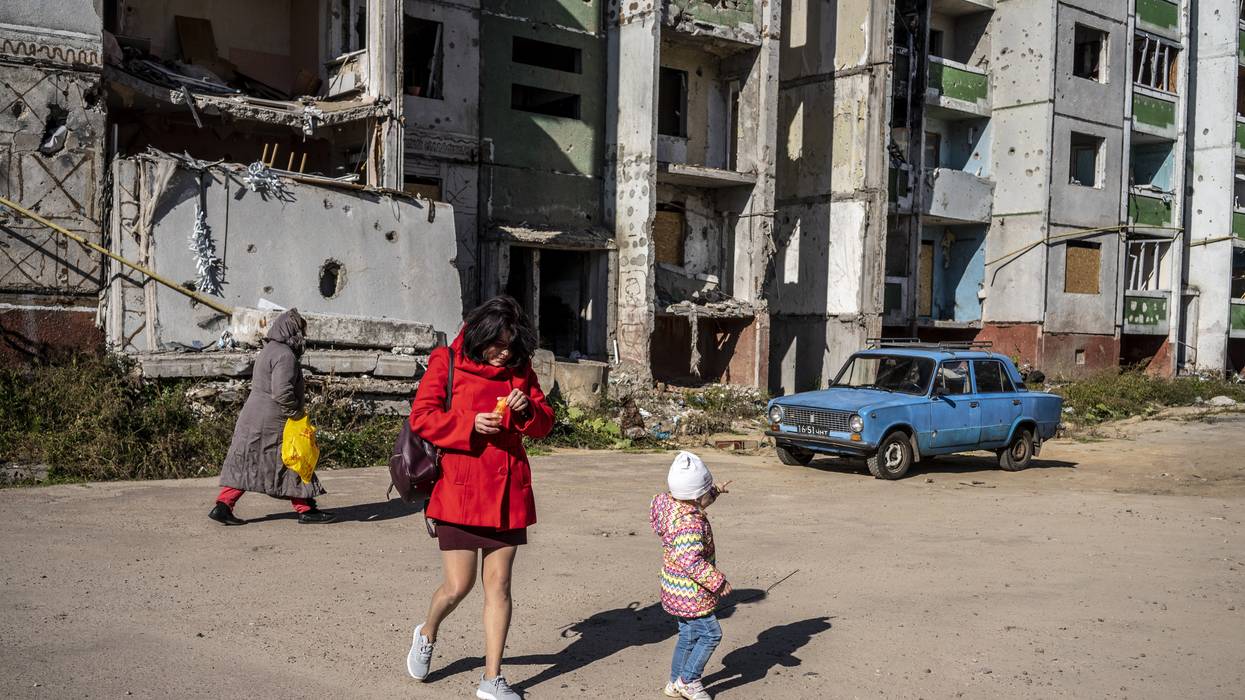
"It's unconscionable that civilians are still dying from cluster munition attacks 15 years after these weapons were outlawed," said one advocate.
The refusal of countries including Russia, Ukraine, and the United States to end the use and transfer of cluster munitions caused nearly 1,000 civilian deaths and injuries in 2022, according to the latest international report on the use of the widely banned weapons.
In the Cluster Munition Monitor 2023 report on Tuesday, a coalition including Human Rights Watch (HRW), Humanity & Inclusion, and the Colombian Campaign to Ban Landmines reported that cluster munitions killed or wounded at least 1,172 people last year.
Nearly 1,000 people were killed or injured by cluster bomb attacks—including 890 in Ukraine, which has been under invasion by Russia since February 2022—while at least 185 people were killed or wounded by the remnants of cluster munitions.
Cluster munitions explode in the air after being fired by rockets or aircraft and can disperse numerous submunitions across a wide area, creating de facto landmines in residential neighborhoods and other places frequented by civilians and making the bombs deadly for years after they initially explode.
The "immediate and long-term civilian harm and suffering" caused by cluster munitions are the reason they have been banned by 112 countries that have ratified the 2008 Convention on Cluster Munitions, said Mary Wareham, arms advocacy director at HRW.
"It's unconscionable that civilians are still dying from cluster munition attacks 15 years after these weapons were outlawed," she said in a statement.
Twelve additional countries have signed the convention, signaling a willingness to abide by its ban on the use, production, stockpiling, or transfer of cluster munitions.
More than 70 countries, however, have yet to sign onto the agreement, leaving civilians in countries including Ukraine, Myanmar, and Syria in danger of the bombs.
In 2022, the remnants of cluster munitions killed or maimed civilians in Azerbaijan, Iraq, Laos, Lebanon, Syria, Ukraine, and Yemen, with 71% of the casualties recorded among children, who sometimes mistake unexploded ordnance for harmless metal balls and pick them up to play with them.
There were no new cluster bomb attacks in Iraq in 2022, but 15 people were killed by their remnants and 25 were wounded, according to HRW. Ninety people were wounded by remnants in Yemen, where there were also no new attacks, and five were killed.
"This weapon must be stopped," said Beatrice Fihn, former executive director of the International Campaign to Abolish Nuclear Weapons, after HRW's study was released.
According to HRW's report, Russia used old stockpiles of cluster munitions as well as new weapons in 2022 and the first half of this year. This past July, the U.S. began transferring to Ukraine cluster munitions that have a 6%-14% rate of delivering unexploded ordnance.
HRW says that the progress made by countries that have ratified the Convention on Cluster Munitions suggests that casualties caused by the bombs would be drastically reduced if the U.S. and other countries signed the treaty.
"The greatest obstacle to countries working to eradicate cluster munitions are governments that are unwilling to join the convention and that undermine its principles by using or transferring the weapon," Wareham said. "Overall, countries that have banned cluster munitions are making steady progress to destroy their stockpiles and clear contaminated areas, despite wide-ranging challenges."
There have been no confirmed reports of new use, production, or transfers of cluster munitions by any of the countries that have ratified the agreement.
State parties that have signed onto the treaty have collectively destroyed 99% of their cluster bomb stockpiles, amounting to 1.47 million munitions and 178.5 million submunitions.
Bulgaria destroyed the last of its stockpile in June, and Belgium destroyed 95% of its munitions in 2022. Eleven countries have retained live cluster munitions "for permitted research and training purposes," according to HRW.
"Cluster munitions are widely stigmatized weapons for ethical, legal, and humanitarian reasons," Wareham said. "Governments that buck the stigma against cluster munitions should reconsider their position in light of the terrible harm these weapons cause and join the international ban."

Peace groups have long campaigned for a ban on DU munitions
The Biden administration will, for the first time, send controversial armor-piercing munitions containing depleted uranium to Ukraine, according to Reuters.
The munition can be fired from US Abrams tanks, which are expected to arrive in Ukraine in the coming weeks.
The shells, which will come from US excess inventory, would be funded by the Presidential Drawdown Authority, which lets the president make transfers from US stocks without Congress' approval in the case of an emergency.
This follows an earlier decision by the Biden administration to provide cluster munitions to Ukraine despite concerns over the dangers such weapons pose to civilians.
If the US deploys depleted uranium shells to Ukraine, Russian President Vladimir Putin has threatened to retaliate with DU rounds—which are linked to birth defects, miscarriages, and cancer.
Depleted uranium is a byproduct of the production of fuel used in nuclear power stations. Its extreme density gives rounds the ability to penetrate armor-plating easily.
The use of depleted uranium munitions has been fiercely debated, with opponents like the International Coalition to Ban Uranium Weapons saying there are dangerous health risks from ingesting or inhaling depleted uranium dust, including cancers and birth defects.
Common Dreams has reported:
The U.S.-led NATO coalition that waged the 1999 air war against Yugoslavia also used DU munitions, which experts believe are responsible for a surge in leukemia in the region, both among the local population and foreign troops deployed in the war zone.
Peace groups have long campaigned for a ban on DU munitions. Last September, the United Nations General Assembly approved an Indonesian draft resolution urging further research of the "health risks and environmental impact" of DU weapons and calling for a "cautionary approach" to their use.
The resolution was approved by 147 nations. The U.S., U.K., France, and Israel voted against the proposal.

In total, the Post has published five pieces in its opinion section (including Ignatius’ Q&A) that take a direct stance in favor of arming Ukraine with U.S. cluster munitions, and only one opposed to it.
The Washington Post (6/23/22) describes its opinion section as a platform for articles that “provide a diversity of voices and perspectives for our readers.” Yet as the U.S. and its allies pour military aid into Ukraine, escalating the already bloody conflict with ever-more deadly new weapons, the paper’s opinion pages begin to look less like a platform for diverse voices and more like a cheerleading squad for the military-industrial complex.
Post opinion journalism abounds with pieces advocating the sort of “light side vs. dark side” moral rhetoric characteristic of corporate media’s war coverage (FAIR.org, 12/1/22). A consequence of this binary worldview is the tendency to present the deployment of increasingly horrific means, like President Joe Biden’s recent decision to arm Ukraine with U.S. cluster munitions, as essentially just and necessary to achieve the West’s always-noble ends.
Cluster munitions are a type of ordinance which can leave unexploded “bomblets” around for decades. Almost 50 years after the end of the U.S. government’s war of aggression against Laos, unexploded cluster bombs continue to kill and maim innocent people—frequently children.
These weapons are rightly so reviled that, shortly after Russia’s invasion of Ukraine in February 2022, then-White House Press Secretary Jen Psaki responded to the possibility that Russia had already begun using cluster munitions against Ukraine by calling it “potentially a war crime.” Even so, U.S. cluster munitions have arrived in Ukraine, and are now being used by Kyiv (Washington Post, 7/20/23).
Advocating for escalation, a Post editorial headlined “NATO’s Annual Summit Could Define a Decade of Western Security” (7/8/23) argued that NATO needs to “step up their game” in order to meet the threat of Putin’s regime in Moscow. It called Biden’s decision to arm Ukraine with cluster munitions a “tough but correct call.” The editorial board explained:
Their use is banned by some major NATO allies, because dud bombs left behind on the battlefield pose a threat to civilians. But Russia has used them intensively in Ukraine, and the Biden administration is legally required to export only shells that have a very low dud rate.
“Some” major allies? Out of the 31 NATO member states, the U.S. finds company with only seven others in its refusal to join the Convention on Cluster Munitions. More than two-thirds of NATO countries, including “major” allies like Canada, Britain, Germany, and France—and every European country west of Poland—have signed.
The editorial board cites the fact that the cluster munitions being sent by the U.S. have a “very low dud rate,” and will therefore pose less of a risk to civilians. The Pentagon claims that the munitions it is sending have a dud rate of 2.35%; even if that’s accurate, it exceeds the 1% limit the Pentagon itself considers acceptable.
According to The New York Times’ John Ismay (7/7/23), a failure rate of 2.35% “would mean that for every two shells fired, about three unexploded grenades would be left scattered on the target area.” There is reason to believe that the true dud rate may be much higher—possibly exceeding 14%, by the Pentagon’s own reckoning.
Another Post op-ed, by columnist Max Boot (7/11/23), headlined “Why Liberals Protesting Cluster Munitions for Ukraine Are Wrong,” illustrates the “ends justify the means” rhetoric so pervasive in discourse over the war in Ukraine.
Boot acknowledged the devastating impact of cluster munitions, noting that “in Laos alone, at least 25,000 people have been killed or injured by unexploded ordnance since the US bombing ended.” He added:
Such concerns led more than 100 nations—but not the United States, Russia, or Ukraine—to join the 2008 Convention on Cluster Munitions abolishing the use of these weapons.
Of course, the United States is notorious for isolating itself from the rest of the world when it comes to the signing of international treaties—as the Council on Foreign Relations, where Mr. Boot is a senior fellow, has shown. The U.S. signed but failed to ratify the 1996 Comprehensive Nuclear-Test-Ban Treaty (which has 178 state parties) and the 1979 Convention on the Elimination of All Forms of Discrimination Against Women (which has 189 state parties). It refused to even sign the 1997 Mine Ban Treaty (which has 164 state parties).
Boot cited the probability that the dud rate of U.S. cluster munitions is much higher than the given 2.35%, but immediately downplayed this fact on the basis that
Ukraine’s democratically elected leaders, whose relatives, friends, and neighbors are in the line of fire, are more mindful of minimizing Ukrainian casualties than are self-appointed humanitarians in the West watching the war on television.
In other words, the Ukraine government should be allowed to decide how many Ukrainian civilians are acceptable to kill. This is a dubious principle even when you aren’t talking about a war against separatists; in the areas where the weapons are likely to be used, a large minority to a majority of the population identifies as ethnically Russian. Is the Iraqi government the best judge of how many Kurdish civilians are all right to kill?
“Using cluster munitions has the potential to save the lives of many Ukrainian soldiers,” Boot claimed, despite the fact that these same U.S. munitions have a history of killing both civilians and U.S. personnel alike.
Moreover, Boot argued,
cluster munitions remain a lawful instrument of warfare for countries that haven’t signed the 2008 convention, and Kyiv has shown itself a responsible steward of all the Western weaponry it has received.
Setting aside international norms, even countries who have not joined the cluster munitions convention must respect the Geneva Conventions, which prohibit indiscriminate attacks in civilian areas. That makes cluster munitions used in such areas illegal—yet “responsible steward” Ukraine has already used its own cluster munitions in the city of Izium, predictably resulting in civilian casualties (Human Rights Watch, 7/6/23).
Meanwhile, Post columnist David Ignatius (7/8/23) approvingly quoted National Security Adviser Jake Sullivan touting the deployment of cluster munitions as giving Ukraine a “wider window” for success, with no mention of any arguments against them. Ignatius later stated in his biweekly Q&A (7/17/23) that he was compelled by the Ukrainians’ reported “moral argument” for cluster bombs.
The Post’s sole “Counterpoint” piece (7/7/23) on cluster munitions, authored by Sen. Jeff Merkley and former Sen. Patrick Leahy, justly pointed out the “unsupportable moral and political price” of supplying Kyiv with cluster munitions. Unfortunately, the Post didn’t seem to have much time for such considerations, with the only other traces of criticism within the opinion section being found amidst the letters to the editor.
This was true even months before Biden made his decision. A March piece by columnist Josh Rogin (3/2/23) framed the weapons as a sort of necessary evil as the Ukrainian forces are “running out of options.” Rogin referred to concerns from human rights groups and deemed the use of cluster munitions as “not to be taken lightly,” but did not dwell on these concerns, arguing, similar to Boot, that “more innocent lives will be saved if Ukrainian forces can kill more invading Russians faster.” Rogin concluded: “Because it is their lives on the line, it is their risk to take, and we should honor their request.”
In total, the Post has published five pieces in its opinion section (including Ignatius’ Q&A) that take a direct stance in favor of arming Ukraine with U.S. cluster munitions, and only one opposed to it. Meanwhile, a recent poll by Quinnipiac University concluded that 51% of Americans disapprove of the president’s decision, while only 39% approve (The Hill, 7/19/23).
With so much preference for escalation and so little toward military restraint, one thing seems clear: There aren’t many Einsteins in The Washington Post op-ed section.

"Many investors, given a choice, would not want to profit from companies that manufacture weapons of mass destruction," said As You Sow's Andrew Behar.
Amidst what the Bulletin of Atomic Scientists calls "an exceedingly dangerous nuclear situation" facing humanity today, the largest U.S. mutual funds—which manage the retirement and other savings of tens of millions of Americans—are profiting from investments in nuclear weapons, cluster munitions, and other banned or controversial arms, an analysis by a leading shareholder advocacy group revealed Tuesday.
Measured by dollars invested, the top 25 U.S. asset managers "all earn a D grade or worse, with significant investments in arms manufacturers and major military contractors, including companies involved with nuclear weapons and controversial weapons like cluster munitions, anti-personnel landmines, incendiary weapons, and depleted uranium," Berkeley, California-based As You Sow said in its new report.
Some of the largest corporate 401(k)s like American Funds, John Hancock Funds, and Franklin Templeton Investments were among the most heavily invested in these armaments, while "fund managers that focus on sustainable investing have less exposure to military weapons, on average."
"Nearly every retirement plan has nuclear and other controversial weapons embedded in their plan."
Seven funds profiled in the analysis—Eventide Funds, Ecofin, New Alternatives, Vert Asset Management, Aspiration Funds ,Thrivent, and Kayne Anderson—held no investments in the controversial weapons.
"Many investors, given a choice, would not want to profit from companies that manufacture weapons of mass destruction," As You Sow CEO Andrew Behar said in a statement. "Yet nearly every retirement plan has nuclear and other controversial weapons embedded in their plan. Our new ratings empower investors with the tools to know what they own so they can invest their money in alignment with their values."
As You Sow's mutual fund ratings are part of the group's Weapons Free Funds investment tool, "built to help responsible investors prioritize peace and people over war and violence."
Nuclear weapons, landmines, and cluster munitions are all banned under international law. However, the United States is not a signatory to any of the bans, and none of the world's nine nuclear powers have signed the landmark Treaty on the Prohibition of Nuclear Weapons.
Common Dreams reported last month that nuclear-armed nations spent $82.9 billion on their arsenals last year, with the United States accounting for more than half of the global total, according to the Nobel Prize-winning International Campaign to Abolish Nuclear Weapons.
Meanwhile, U.S. House Republicans last week blocked a bipartisan amendment to the 2024 National Defense Authorization Act that would have banned the export of cluster munitions. This, as the Biden administration was giving final approval to transfer cluster bombs to Ukraine's military—which, like its Russian enemy, has used the weapons during the ongoing war with devastating effects.
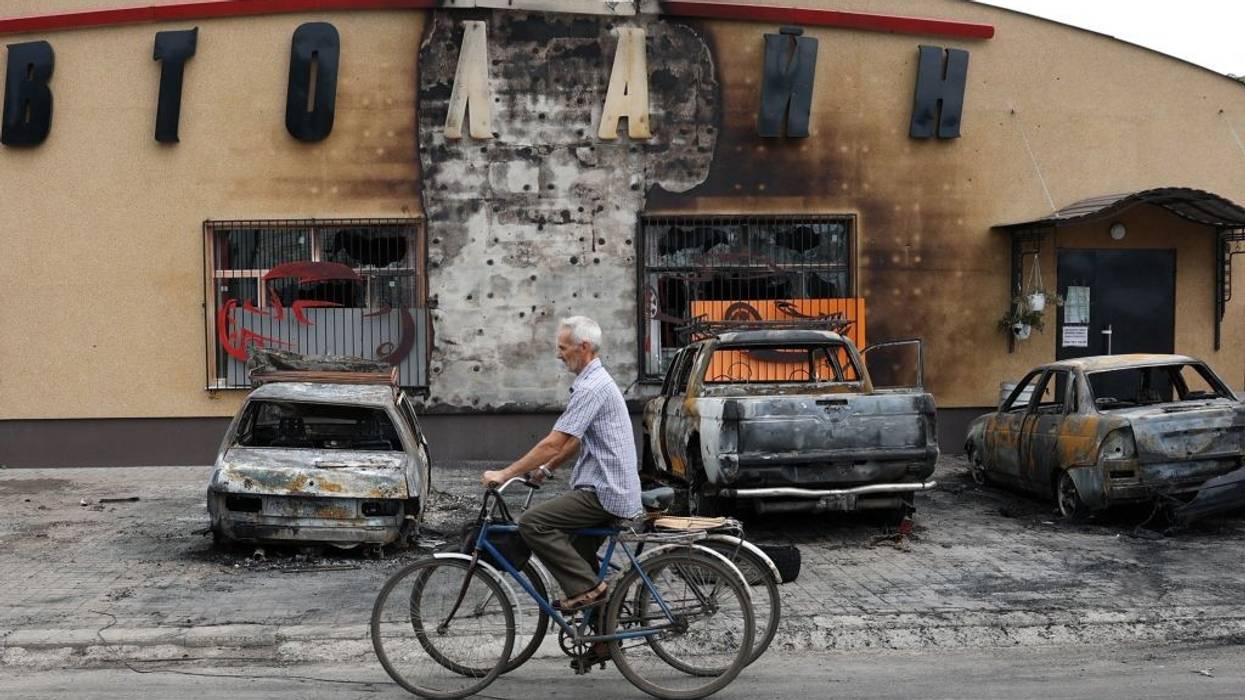
In order to protect children and other innocent civilians in Ukraine, all countries must permanently ban the use and production of cluster munitions.
The use of cluster bombs by the warring factions in Ukraine is a tragic turn of events that will result in many more civilian deaths, many of them children. Russian forces have used cluster munitions in populated areas of Ukraine since they started the invasion of that country on February 24, 2022. Ukraine has also been using them and will increase their use with the recent approval from the United States to deliver those weapons.
President Joe Biden justified his decision to send cluster bombs to Ukraine because its forces are running out of ammunition. The decision to send cluster bombs to Ukraine is happening at the same time that the United States government is destroying its chemical weapons stockpile from a military installation in Kentucky. It is a tragic irony that while the U.S. is stopping the use of a dangerous weapon, it is still promoting the use of an equally indiscriminate one.
Cluster bombs eject explosive bomblets (little bombs) designed to kill indiscriminately and destroy vehicles over a wide expanse. According to national security adviser Jack Sullivan, while Russian submunitions were 30 to 40% duds, the ones sent to Ukraine did not have a dud rate (the rate at which they fail to explode upon landing) higher than 2.35%. Those unexploded bomblets can continue killing or maiming civilians long after a conflict has ended, and are very costly to find and remove.
“Cluster bombs make evident the perverse use of technology. They kill more with less.”
“Cluster munitions used by Russia and Ukraine are killing civilians now and will continue to do so for many years,” said Mary Wareham, acting arms director at Human Rights Watch. “Both sides should immediately stop using them and not try to get more of these indiscriminate weapons.” Studies of cluster munitions use have found that between one-quarter and two-thirds of the victims are children.
The use of cluster munitions has been condemned by the United Nations, the Red Cross, Human Rights Watch, Amnesty International, the Cluster Munition Coalition, and Doctors Without Borders. In a statement, the U.S. Cluster Munition Coalition said it was “appalled by the decision by President Biden to transfer these banned weapons, and urges that he reconsider given the significant humanitarian, human rights, and political risks involved.”
Attacks using cluster munitions may be considered war crimes, since they are carried out in violation of accepted international rules of war. All nations that ratified the Convention on Cluster Munitions adopted in Dublin, Ireland, in May 2008, are prohibited from using them. This Convention entered into force and became binding international law on August 1, 2010. The Convention on Cluster Munitions “bans the stockpiling, use and transfer of virtually all existing cluster bombs, and provides for the clearing up of unexploded munitions.”
As of February 10, 2022, a total of 123 states joined the Convention, 110 as state parties and 13 as signatories. Many of the world’s major military powers, including the United States, Russia, Brazil, China, and Ukraine, are not signatories of that treaty. The treaty’s obligations became legally binding after 30 states ratified the convention, and subsequently for all other ratifying states.
More than 100 countries have agreed in principle that their stockpiles of cluster munitions should be destroyed. However, at least 17 countries have used cluster munitions in recent times. Since 2005, Handicap International has collected hundreds of thousands of signatures to support its campaign to ban these weapons. “Cluster bombs make evident the perverse use of technology. They kill more with less,” says Carlos Duguech, an Argentinian peace activist.
There is a disconnect between leaders’ decisions about the war in Ukraine, and what most of the people worldwide, horrified by the traumas of war, truly want. In order to protect children and other innocent civilians in Ukraine, all countries must permanently ban the use and production of cluster bombs. Avoiding the loss of thousands of innocent children’s lives justifies this decision.