

SUBSCRIBE TO OUR FREE NEWSLETTER
Daily news & progressive opinion—funded by the people, not the corporations—delivered straight to your inbox.
5
#000000
#FFFFFF
To donate by check, phone, or other method, see our More Ways to Give page.
Daily news & progressive opinion—funded by the people, not the corporations—delivered straight to your inbox.
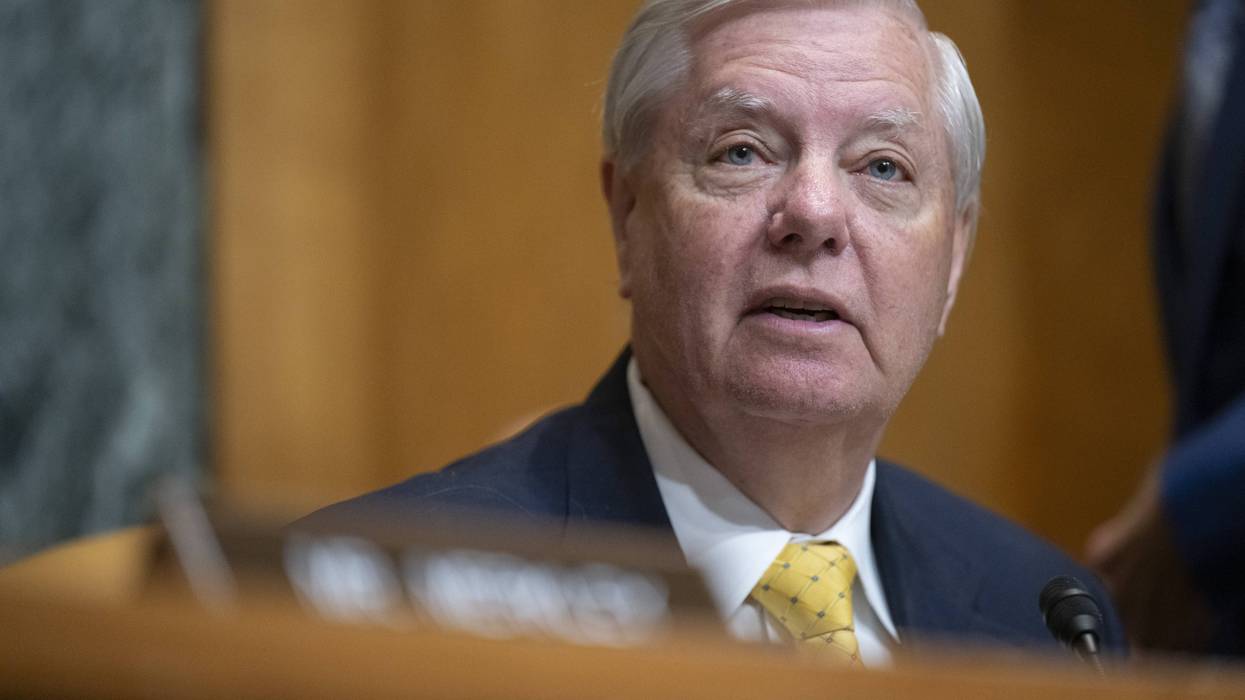
"They want to give $140 billion for ICE and Border Patrol without reforms, but $0 to lower Americans’ costs," said Senate Minority Leader Chuck Schumer.
Congressional Democrats and advocacy groups on Tuesday slammed Senate Republicans' proposed budget resolution, which authorizes up to $140 billion in new deficit spending for Department of Homeland Security agencies responsible for President Donald Trump's deadly immigration crackdown.
Senate Budget Committee Chair Lindsey Graham (R-SC) introduced the fiscal year 2026 budget resolution, which the senator's office described as "the blueprint that unlocks the pathway for a targeted reconciliation bill that will provide funding for US Immigration and Customs Enforcement (ICE) and US Customs and Border Protection (CBP)" for at least the remainder of Trump's term.
"The resolution includes reconciliation instructions allowing for up to $70 billion of deficit increases each for the Judiciary and Homeland Security and Governmental Affairs committees," explained the advocacy group Committee for a Responsible Federal Budget.
ICE is already flush with a $75 billion funding boost thanks to Republicans' so-called One Big Beautiful Bill Act, which Trump signed last July 4.
“The threats to our homeland from radical Islam are only getting more intense," Graham said, despite there being no significant attack by such forces on US soil in a decade. "Now is not the time to defund Border Patrol, and now is certainly not the time to put ICE out of business."
"These men and women have been dealing with the consequences of the over 11 million illegal immigrants that came to the United States during the Biden administration," the senator added.
There is no evidence that anywhere near that number of undocumented migrants entered the US during former President Joe Biden's tenure.
Responding to Graham's proposal, Senate Minority Leader Chuck Schumer (D-NY) said: "Earlier today, we caught our first glimpse of the Senate Republicans’ budget resolution. Forget being on the same page, Republicans aren’t even on the same planet as the American people."
"They want to give $140 billion for ICE and Border Patrol without reforms, but $0 to lower Americans’ costs," he continued. "Let me say that again: $140 billion for ICE and Border Patrol—no reforms, no accountability, no strings attached; $0 to lower Americans’ costs."
"That’s their priority. That’s why they are dragging the Senate through the arduous, convoluted reconciliation process: to put money in the coffers of Trump’s rogue agencies, rather than in Americans’ pockets," Schumer said.
"Democrats want to lower Americans’ grocery, gas, healthcare, and housing costs. Senate Republicans want to appease Donald Trump... by giving ICE and Border Patrol tens of billions of dollars to continue spreading violence in our streets," he added.
Center for American Progress (CAP) senior director of federal budget policy Bobby Kogan called the GOP budget proposal "a missed opportunity to help Americans."
"In addition to doing nothing to rein in DHS, many civil and human rights abuses, congressional Republicans’ reconciliation plan misses an opportunity to do affirmative good for struggling households," he said.
Kogan continued:
While there was broad agreement in Congress on the funding levels for the agencies within DHS itself, congressional Democratic leadership asked for a handful of reforms to try to prevent more killings of citizens and noncitizens and avoid another wave of other civil rights violations from being undertaken by the department. Congressional Republican leadership has rejected calls for legislative reforms to ICE and Border Patrol operations and is now instead using this process to provide funding with no oversight.
The Republican proposal comes as immigrant deaths in ICE custody have soared, with at least 17 people dying since January. DHS officers have also killed two US citizens, Renee Good and Alex Pretti, during the Operation Metro Surge blitz in Minneapolis.
One expert stressed that "trust between the sides remains at zero."
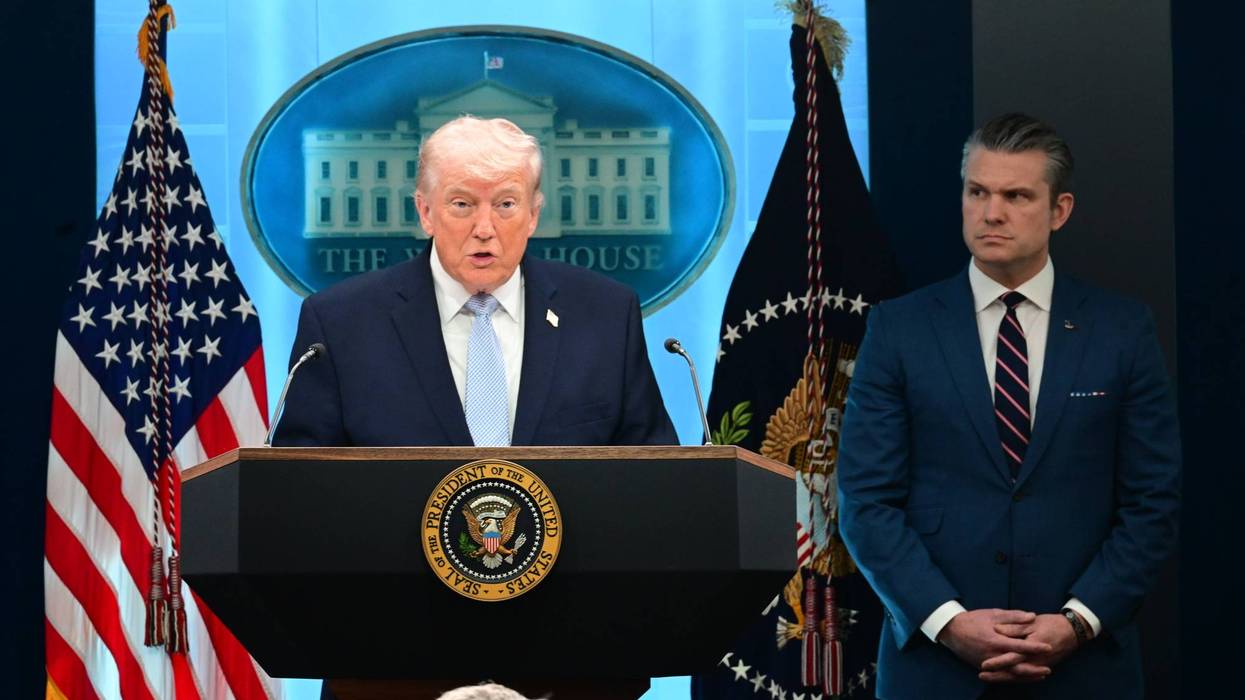
President Donald Trump on Tuesday afternoon extended a two-week ceasefire for his and Israel's war on Iran, but the US leader also said that a naval blockade of the Mideast nation will continue, and fears of fresh attacks remain high.
Two weeks after threatening to take out the "whole civilization" of Iran just hours before the ceasefire agreement was reached, Trump took to his Truth Social platform again to announce the extension, without a clear timeline.
"Based on the fact that the Government of Iran is seriously fractured, not unexpectedly so and, upon the request of Field Marshal Asim Munir, and Prime Minister Shehbaz Sharif, of Pakistan, we have been asked to hold our Attack on the Country of Iran until such time as their leaders and representatives can come up with a unified proposal," Trump wrote. "I have therefore directed our Military to continue the Blockade and, in all other respects, remain ready and able, and will therefore extend the Ceasefire until such time as their proposal is submitted, and discussions are concluded, one way or the other."
Trump has imposed the blockade in response to Iran's closure of the Strait of Hormuz, a waterway between the Persian Gulf and the Gulf of Oman that's a key trade route, including for fossil fuels. As part of the blockade, the president said Sunday, US forces seized Touska, a nearly 900-foot Iranian-flagged cargo ship.
Trita Parsi, co-founder and executive vice president of the Quincy Institute for Responsible Statecraft, concluded Tuesday that Trump's cave "reflects the outcome I have argued is the most likely: No deal, no sanctions relief, no nuclear compromise, no return to war, while Iran continues to control the strait. Not a stable situation, but one in which Trump pockets the central thing he sought—exiting the war—while Iran is bereft of the main thing it was looking for: sanctions lifting."
While a spokesperson for United Nations Secretary-General António Guterres said that he welcomes Trump's announcement as "an important step toward de-escalation and creating critical space for diplomacy and confidence-building between Iran and the United States," and encouraged all parties "to build on this momentum," comments out of Iran suggested limited progress.
Drop Site News co-founder Jeremy Scahill reported Tuesday that "an Iranian official tells me that, as of this moment, Iran's position remains unchanged: Lifting of the naval blockade is a condition for a second round of talks."
According to Reuters chief national security reporter Phil Stewart, an adviser to Mohammad Bagher Ghalibaf, speaker of Iran's Parliament, said that Tuesday's extension means nothing and could even be a ploy to buy time for a surprise strike, plus the US continuing its blockade is the same as bombardment and must be met with military force.
Noting Stewart's reporting on social media, Center for International Policy senior fellow Sina Toossi noted that reporting and warned that "after coming under surprise attack twice, some in Tehran are calling for Iran to take initiative and strike first, including at US vessels or tankers ready to exit Hormuz."
Toossi also stressed that "trust between the sides remains at zero and renewed war could break out at any time."
"Let's be real, Pakistan isn't deciding whether the US goes to war with Iran," he added. "They're a conduit, not a driver. More a convenient excuse and diplomatic cover than having any sort of actual influence over Trump on Iran."
Ahead of the extension, Toossi had published an op-ed in The Guardian arguing that "having fought what they see as an existential war with the US and Israel and held their ground, Iranian officials see little reason to rush into major concessions. The priority is not a sweeping deal, but reducing the risk of war while preserving core sources of power, from Hormuz to its nuclear program."
"In the short term, that may simply mean extending the ceasefire rather than reaching a substantive agreement. Beyond that, the likelier outcome is an interim arrangement, or a broad memorandum-of-understanding-style framework that defers key details, rather than a decisive breakthrough," he continued. "In this view, the conflict is not being resolved but managed—and with time, Iran believes its position will strengthen as the global fallout from energy disruption makes renewed escalation a cost no one is willing to bear."
A Tuesday report from the climate advocacy group 350.org estimates that during the first 50 days of the Iran war, consumers and businesses worldwide have paid an additional $158.6-166.9 billion due to soaring fuel costs.
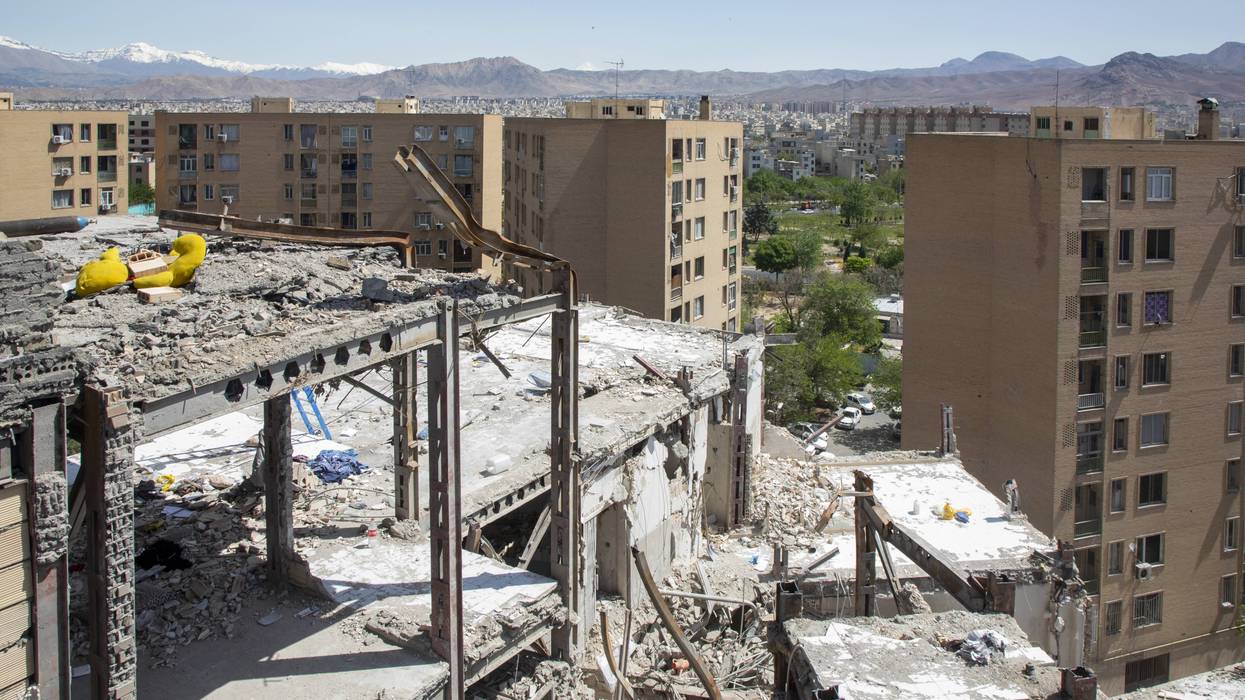
Additionally, thousands of people have been killed in Iran and across the region, and at least tens of thousands of Iranian civilian infrastructure sites have been damaged since the US and Israel first launched attacks in February.
"They treated us like animals," said an Ecuadorian fisher who survived an attack on the Don Maca.
President Donald Trump, Defense Secretary Pete Hegseth, and US Southern Command have repeatedly taken to social media to brag about deadly boat bombings supposedly targeting drug traffickers in the Caribbean Sea and Pacific Ocean for nearly eight months. On Tuesday, survivors of some alleged US strikes on fishing boats accused American forces of torture.
The Ecuadorian fishing boat La Fiorella "went up in smoke" on January 20, and "the eight fishermen aboard have not been seen since," Camila Lourdes Galarza reported for Drop Site News on Tuesday. "Now, 36 survivors of two Pacific attacks fitting a similar profile alleged that they were abducted and tortured by American forces and taken by boat all the way to El Salvador before being returned to Ecuador."
The journalist spoke with attorneys, relatives, and survivors, including Hernán Flores, captain of La Negra Francisca Duarte II, which was bombed by a drone with a yellow cylinder on March 17. Flores said: "A lot of us had wounds all over our bodies from the explosion. One young man was bleeding so much he filled the floor of our lifeboat with blood... The drone had flown through our cabin window, torn my nephew's foot so bad you could see flesh and bone, and made the boat's roof cave in on the back of my neck. A few seconds later, an explosion shook the boat, causing a terrible ringing in our ears. Out of exasperation, the guys threw themselves into the water, some without life jackets, even the ones who don't know how to swim."
The survivors made their way to a blue boat with "spear" on the hull, full of armed, blond, English-speaking men in camouflage uniforms—who drew their guns, handcuffed the fishers, put hoods over their heads, and held them on the vessel's "scorching metal deck for over 24 hours, blistering their skin," Galarza reported. They were only given a bottle of water, and "all but one fisherman were denied medical attention, despite the severity of what they had just endured."
They were eventually returned to Ecuador, where Trump has recently deployed US forces for a joint campaign targeting "narco-terrorists." However, first, they were turned over to El Salvador's Coast Guard—which, on April 3, also intercepted 20 more Ecuadorian fishers with "vision and hearing loss, bruised limbs, and perforated arms."
According to Galarza, those fishers had been aboard the Don Maca, and "they reported a strikingly similar account of an alleged attack by US soldiers: a bombarded boat, a round of bullets, and no due process." Sebastián Palacios, one of the survivors allegedly held hostage for eight days, said that "they treated us like animals."
⚡️New from @dropsitenews.com: Rare Survivors of Pacific Boat Strikes Allege US Forces Kidnapped & Tortured ThemAs airstrikes & reports of torture under Ecuador’s US-backed military regime continue to mount, fishermen tell Drop Site...By Camila Lourdes Galarzawww.dropsitenews.com/p/rare-survi...
[image or embed]
— Drop Site (@dropsitenews.com) April 21, 2026 at 2:50 PM
Galarza noted that US SOUTHCOM directed questions about all three incidents to Ecuador, whose Port Authority hung up after hearing that a phone call requesting comment was from journalists.
Harriet Barber got a similar response from SOUTHCOM for her Tuesday reporting on the Don Maca attack in The Guardian. The journalist spoke with survivors, including Palacios, as well as an attorney representing the crew, Fernando Bastias Robayo of the Human Rights Council.
"A US vessel intercepted them and forced them aboard. Once they were detained, their fishing boat was blown up," said the lawyer. "They were arbitrarily hooded and later abandoned on the Salvadorian coast. Any apprehension followed by incommunicado detention constitutes an enforced disappearance."
"It was a form of psychological torture, not knowing what's really going to happen to your life and having your face covered," he added.
Palacios told Barber that "I get scared in the middle of the night. I can't sleep well. My ears still hurt... I think that's it for me. I'm done with fishing. Going back out there is impossible. I thought they were going to kill us."
“If there were no drugs aboard those boats, it’s a hugely embarrassing ‘false positive’ for US intelligence at a time when that intelligence is being used to kill people, no questions asked.”
[image or embed]
— Adam Isacson (@adamisacson.com) April 21, 2026 at 10:23 AM
Tuesday's reporting came just two days after SOUTHCOM announced on social media that "Joint Task Force Southern Spear conducted a lethal kinetic strike on a vessel operated by designated terrorist organizations... along known narco-trafficking routes in the Caribbean," killing three alleged "male narco-terrorists."
Sunday's strike brought the death toll from Trump's boat-bombing campaign to at least 180, according to The New York Times. The Intercept's tally is 181, while the Washington Office on Latin America believes 182 people are dead. Critics of the campaign have accused the US administration of "war crimes, murder, or both."
Responding to Trump's latest confirmed attack, Amnesty International USA on Monday condemned "three more murders at sea" and declared that "Congress must act to stop these bombings."
So far, both chambers of the Republican-controlled Congress have refused to pass war powers resolutions aimed at halting Trump's boat strikes. Similar measures targeting his aggression toward Venezuela and Iran have also failed to advance.
"It does feel like if a group of Palestinians with machine guns broke into an Israeli school and shot a bunch of children, it would be breaking news in every outlet on Earth," said one reporter.
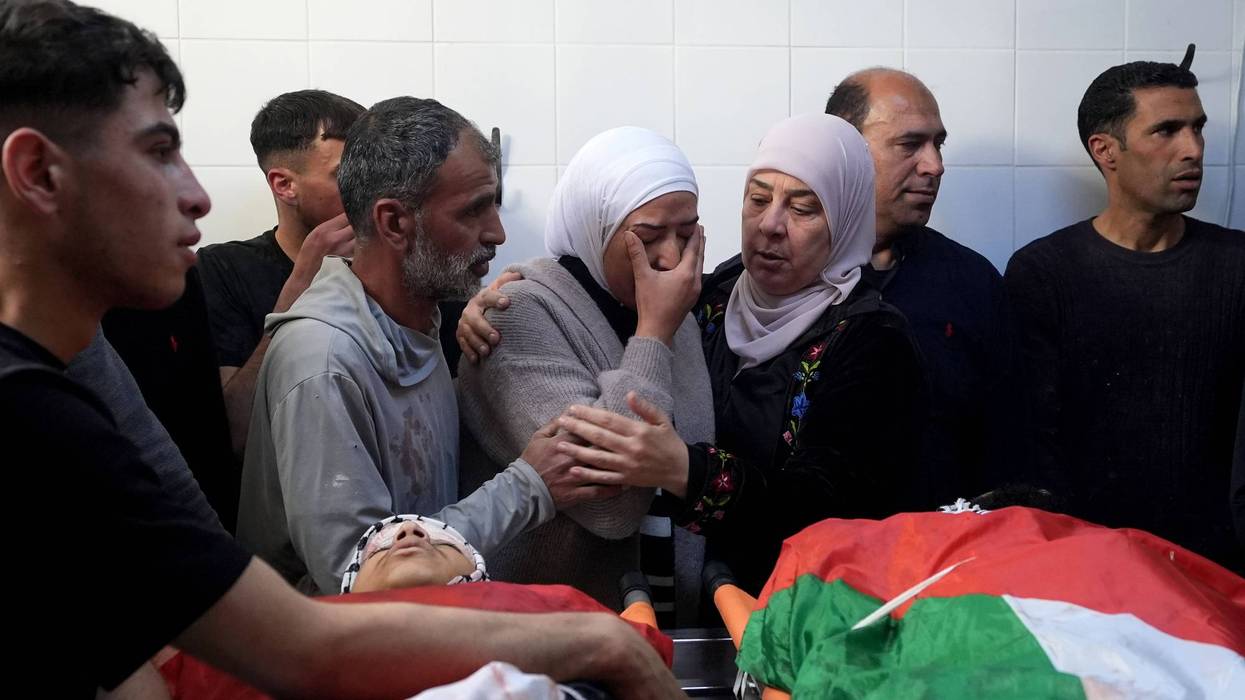
Israeli soldiers and settlers opened fire on a school in a West Bank village Tuesday, killing a Palestinian man and child and wounding at least four other people amid their escalating ethnic cleansing efforts in the illegally occupied territory.
The Palestinian Ministry of Health and Palestine Red Crescent Society (PRCS) said settlers attacked a school in the village of al-Mughayyir, east of Ramallah, on Tuesday morning.
Amin Abu Ulaya, head of the local council, told Reuters that settlers and Israel Defense Forces (IDF) soldiers entered the village and then shot at students at the school and other Palestinians who rushed to the scene.
PRCS said that 14-year-old Aws Hamdi Al-Naasan and 32-year-old Marzouq Abu Naim were shot and killed by the attackers.
An IDF spokesperson claimed that troops were deployed to the area following reports of stones being thrown at a military vehicle, and that a reservist then opened fire at "suspects."
The IDF also said the reservist, who has not been identified, has been suspended pending an investigation. Most Israelis who harm Palestinians are never punished. Meanwhile, Israel last month passed legislation legalizing the hanging of terrorists convicted killing of Israelis—a law critics contend will not apply to Israelis who commit similar crimes against Palestinians.
Kathem Al-Haj-Ahmed, a 57-year-old al-Mughayyir resident, told Reuters on Tuesday that settlers arrived first and began attacking the school. Parents and others who came to pick up their children came under fire. Al-Haj-Ahmed said that's when the man and child were killed.
Drop Site News reported:
A paramedic at the scene said at least three settlers deliberately fired at children attempting to escape from classrooms from a position approximately 50 meters away, with a level of accuracy he described as close to sniping. An eyewitness said shooting was directed at classroom windows and balconies still full of children as residents attempted to evacuate the school by crawling.
Israeli forces arrived during the attack and, according to witnesses, provided protection to the settlers rather than stopping them. A 63-year-old man, Attallah Abu Aliya, said he was shot in the leg by an Israeli soldier without warning as he walked toward the school after hearing it was under attack.
IDF troops often protect, and sometimes join, settlers attacking Palestinians.
Another 14-year-old, Mohammed Naasan, was killed by IDF troops in al-Mughayyir in January. The slain boy's father was also killed by settlers in 2019.
Tuesday's shooting occurred about 15 miles from where a Palestinian family—a mother, father, and two young children—were massacred by Israeli troops while traveling in their car in Tammum in March. The two children, ages 7 and 5, were shot in the head; two of their siblings were wounded but survived.
Two other West Bank Palestinians died Tuesday as a result of encounters with Israelis. Sixteen-year-old Mohammad Majdi al-Jaabir of Hebron was struck and killed by a vehicle in a convoy sent to secure Israeli Settlement Minister Orit Strock, while a woman, 49-year-old Raja' Fadl Bitawi, succumbed to injuries sustained from Israeli army gunfire in Jenin nearly two years ago, according to local media reports.
"This is our reality in al-Mughayyir village; they aim to displace us, and both the army and the settlers are exchanging roles among them," Al-Haj-Ahmed said.
Both Israel’s occupation of Palestine and the colonization of Palestinian lands by Jewish settlers are illegal under international law. Article 49 of the Fourth Geneva Convention states that an “occupying power shall not deport or transfer parts of its own civilian population into the territory it occupies.”
In July 2024, the International Court of Justice—where Israel is currently facing a genocide case related to the Gaza war, which has left more than 250,000 Palestinians dead or wounded—found the occupation of Palestine to be an illegal form of apartheid that must be ended as soon as possible. The ICJ also ruled that Israeli settler colonization of the West Bank amounts to annexation, also a crime under international law.
As the world’s attention focused on Gaza after the October 7, 2023 Hamas-led attack and, later, the US-Israeli war on Iran and Israel's assault on Lebanon, Israeli soldiers and settlers have killed at least 1,079 Palestinians—at least 235 of them children—in the West Bank, according to the United Nations agency for Palestinian refugees.
Numerous US citizens—most but not all of them Palestinians—have been killed by Israeli soldiers and settlers in recent years.
Settler pogroms have been compared to the Nakba, during which more than 750,000 Palestinians were ethnically cleansed to make way for the modern state of Israel.
On Monday, the West Bank Protection Consortium—which is led by the Norwegian Refugee Council and funded by donors including 13 European nations—published a report detailing sexual violence committed by Israeli soldiers and settlers in the West Bank. Crimes including sexual assaults have facilitated Israel's ongoing ethnic cleansing of Palestine.