

SUBSCRIBE TO OUR FREE NEWSLETTER
Daily news & progressive opinion—funded by the people, not the corporations—delivered straight to your inbox.
5
#000000
#FFFFFF
To donate by check, phone, or other method, see our More Ways to Give page.
Daily news & progressive opinion—funded by the people, not the corporations—delivered straight to your inbox.

"My arrest has focused international attention on Japan's continuing illegal whaling operations and their intent to go back to the Southern Ocean," said Watson. "So, in fact, these five months have been an extension of the campaign."
The prominent anti-whaling activist Paul Watson was released Tuesday from prison in Greenland after Danish officials rejected a request by Japan to extradite him.
Watson was arrested in Greenland, an autonomous territory of Denmark, in July due to a warrant issued by Japan in 2012, which alleged that Watson had interfered with a Japanese whaling vessel and caused injury to a crew member in 2010, according to The New York Times. He could have faced up to 15 years in jail if convicted.
"I am certainly relieved as this means I get to see my two little boys. That's really been my only concern this entire time. I understand the risks of what we do and sometimes you get arrested—although I am proud of the fact that I have never been convicted of a crime," Watson told the Guardian. Watson's two sons are aged three and eight.
To the outlet AFP, he said: "My arrest has focused international attention on Japan's continuing illegal whaling operations and their intent to go back to the Southern Ocean... So, in fact, these five months have been an extension of the campaign."
Watson, a Canadian American who co-founded Greenpeace and founded Sea Shepherd—a group that uses direct action to protect marine wildlife and oceans—was traveling in July with 25 volunteers on a mission to the North Pacific for the Captain Paul Watson Foundation (CPWF), which he started after leaving Sea Shepherd in 2022. When the vessel arrived in Nuuk, Greenland to refuel, Danish police arrested him.
The CPWF denounced the surprise arrest, which came as Watson planned to intercept a new Japanese factory whaling ship.
Watson was also featured in the Animal Planet television show Whale Wars that ran from 2008 until 2015, in which he led efforts to disrupt Japanese whaling on the high seas.
Japan has a long, complicated history with whaling. Whale meat was seen as an important protein for the country after World War II. Japan joined the International Whaling Commission, an international body that placed a moratorium on commercial whaling in the 1980s, in 1951. In 2019, Japan left the body and began catching whales commercially the same year, according to the International Whaling Commission.
In 2014, the International Court of Justice ruled against Japan in a case involving charges that Japan was using a scientific research program as a front for a commercial whaling venture in the Antarctic.
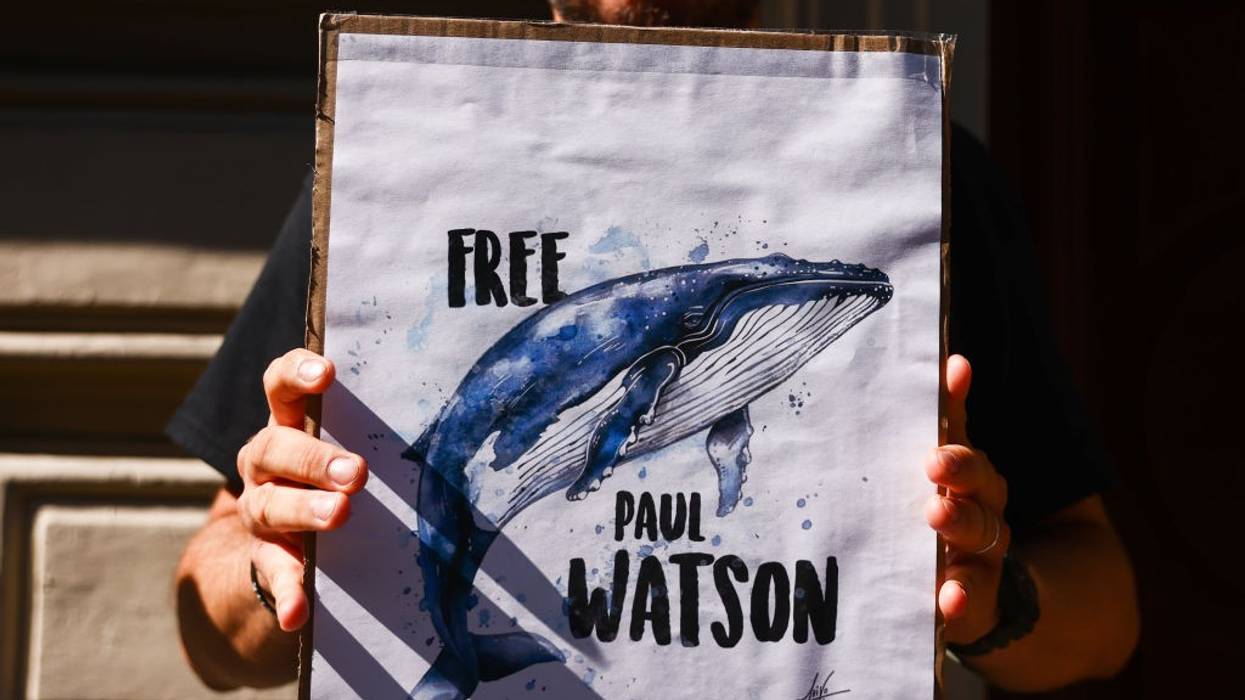
Whaling, it turns out, has very little to do with whaling and much more to with how powerful nations want to dominate the world's oceans.
In early August, the crew on Japan’s new whaling factory ship dismembered a male fin whale, the first commercial catch of the species in several decades. A few days earlier, Paul Watson was arrested in Nuuk, Greenland. He sits in a Danish prison, waiting a decision on his extradition to Japan. Given the Japanese courts’ record of 99.9% conviction rate for criminal cases, and issues with Japanese justice system, if extradited, he will probably spend the rest of his life imprisoned.
A few months ago, a paper led by Norwegian government scientists showed that there are around 50,000 fin whales in just one small part of the Southern Ocean. Also in Antarctic waters, the Japanese Institute of Cetacean Research has been running a research program which, as the the Institute states, is the “aimed at the sustainable use of whale resources in the Antarctic Ocean.” A new era of commercial whaling in the Antarctic looms.
Forty years ago, the International Whaling Commission introduced the whaling moratorium—a pause in slaughter, to allow whale populations to recover. At the time, the belief by most in the whale conservation community was that by the time that whale populations finally recovered, those still engaged in whaling would have given up, making the moratorium permanent. That’s not what’s happened. Three nations—Japan, Norway, and Iceland—still engage in commercial whaling.
There are many arguments against whaling: it’s cruel, it has to be subsidized, most people in whaling nations don’t care about it, it’s traditional in very few places in Japan, whales don’t eat all the fish, instead they’re ecosystem engineers that contribute to carbon sequestration. These points have been made for many years, and have never had the slightest impact on the Japanese whaling bureaucracy. They’re not only irrelevant, they’ve proven pointless.
Whaling, it turns out, isn’t about whales at all. Japan’s primary interest in commercial whaling is to maintain their geopolitical clout to exploit other marine wildlife (“living marine resources”) internationally. Tuna, for example. This point’s been made recently in a couple of forums. For the Japanese government, whaling’s a thin-edge-of-the-wedge problem. The moratorium was a big win for marine conservation that couldn’t be repeated with other international fisheries.
Given this framing, the actions of the Japanese whaling industry over the past forty years are rational. Whaling is primarily about asserting dominance in international negotiations over access to marine wildlife, so whether or not Japanese people eat much whale meat is irrelevant. What matters is access to other fisheries by Japan’s pelagic fishing fleets. Subsidizing whaling is a minuscule price to pay. The primary role of Japan’s new floating factory, the Kangei Maru, is as a flagship, a symbol of Japanese hegemony in international maritime negotiations. So its $48 million price tag is trivial. A Ford class US aircraft carrier, with a build cost of around $13 billion and an annual upkeep of $700 million, puts that in perspective. The Kangei Maru’s costs are a rounding error.
Despite Japan leaving the International Whaling Commission (IWC) in late 2018, the Japanese fisheries bureaucracy still controls the activities of the pro-whaling bloc. This September, the IWC meets again. One rumor currently swirling is that the Japanese will rejoin the IWC with a reservation to commercial whaling, one way to demolish the whaling moratorium. Another appeared a couple of weeks ago, when the prestigious scientific journal Nature published an opinion piece calling for the IWC to be dismantled. The article’s first author is a former chair of the IWC, who with his coauthors, argue that the IWC is now a “zombie” organization that has outlived its usefulness and should be dismantled.
Interesting timing.
Once, the threat of US sanctions in response to “diminishing the effectiveness” of the IWC regulated the manner in which the whaling bloc engaged there. That threat—obviously—no longer exists. How have the whalers brought the U.S. to heel on whaling? What’s their lever?
There was a belief in the NGO community that the threat of withholding IWC quotas on U.S. Inuit bowhead whaling was driving U.S. acquiescence. The pro-whaling bloc engaged in brinkmanship on this several times in the past. But the “Aboriginal Subsistence” whaling issues at the IWC have been resolved, removing this threat. Besides, ending the IWC would put bowhead whaling management back entirely with the U.S., internally. It can’t be that.
It’s here the military comes in. The U.S. has around 55,000 military personnel based in Japan. This is, for example, almost the size of the Australia’s active duty defense forces. Their weaponry includes some the most advanced in the U.S. arsenal. Most of those personnel are based in Okinawa, where there were over 6,000 criminal cases involving U.S. military personnel in the 50 years since the island was handed back to Japan in 1972. That’s a couple of crimes a week. And they include reported 134 rapes, or two to three reported rapes per year, including recent charges of the sexual assault of a child. Understandably, there is a vocal anti-US-base movement in Okinawa that regularly engages in mass protest.
These put Paul Watson’s “accomplice to assault” and “ship trespass” charges in context.
At the same time, the U.S. is reconstituting its forces in Japan, a buildup in response to the perceived threat to U.S. hegemony now posed by China. The Japanese government has leverage. Getting its way on whaling is Japan’s price for U.S. bases.
What could happen? Possibilities include Japan rejoining the IWC with a reservation that allows it to conduct commercial whaling wherever it wants. Perhaps the IWC will collapse. The recent Nature article shows that destroying the IWC is being considered. Returning the management of whaling to whaling nations? We know how that worked. And allowing Japan’s return to the IWC with a reservation will return the IWC’s role to that of a toothless body overseeing mass slaughter.
The huge U.S. military presence in Japan matters to the national security apparatus of the United States. The bureaucracy has worked with the Japanese government to see commercial whaling return. The return of commercial whaling is the U.S. military's quid pro quo for its regional dominance in the Pacific—not to mention its rapists in Okinawa.
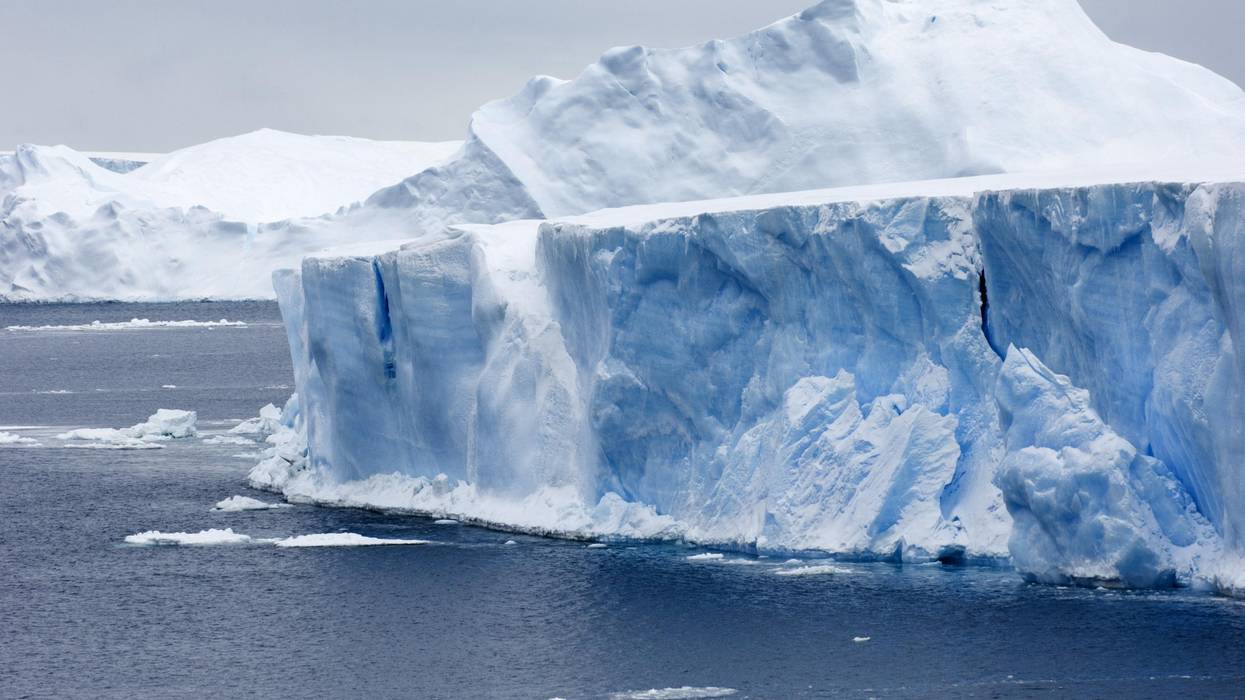
"These extreme temperatures remain a tangible indication of the effects of a changing climate for many regions," said one European climate official.
Less of the Antarctic Sea was covered by ice last month than in any January ever recorded, scientists said Wednesday while warning that melting sea ice is accelerating global heating.
The European Union's Copernicus Climate Change Service (C3S) said analysis of satellite imagery showed Antarctic sea ice coverage was 31% below average last month, significantly lower than the previous January low mark set in 2017.
At the opposite end of the Earth, Arctic ice coverage was 4% below average and the third-lowest January level observed, the agency reported.
C3S also said last month was the third-warmest January ever recorded in Europe, with above-average air temperatures—including the Balkans and Eastern Europe—prevailing throughout much of the continent.
"While January 2023 is exceptional, these extreme temperatures remain a tangible indication of the effects of a changing climate for many regions and can be understood as an additional warning of future extreme events," C3S deputy director Samantha Burgess said in a statement. "It is imperative for global and regional stakeholders to take swift action to mitigate the rise in global temperatures."
Last month, a 600-square-mile iceberg—nearly the size of Greater London—broke off Antarctica's Brunt Ice Shelf, although scientists said the event was unrelated to climate change. January is summer in the Southern Hemisphere.
Still, "while the decline in Antarctic sea ice extent is always steep at this time of year, it has been unusually rapid this year," scientists at the U.S. National Snow and Ice Data Center reported last month, "and at the end of December, Antarctic sea ice extent stood at the lowest in the 45-year satellite record."
Environmental activist group Sea Shepherd warned Japan against resuming "research" whaling in the Antarctic in defiance of an International Court of Justice ruling that it cease the practice and called on the Australian government to intervene.
After a decade of activism by Sea Shepherd and other groups, Japan was forced to abandon its 2014-15 Southern Ocean hunt after the International Court of Justice said the annual expedition was a commercial activity masquerading as research. But on Saturday, Japanese media reported it would start again soon, despite global regulators calling for more evidence that the expeditions have a scientific purpose. Japan's Yomiuri Shimbun and other media said the Japanese fleet could depart possibly by the end of December.
Despite international disapproval, Japan has hunted whales in the Southern Ocean under an exemption in the global whaling moratorium that allows for lethal research.
Japan's fisheries agency has told the International Whaling Commission that it would resume whaling in the Antarctic Ocean by killing 333 minke whales this season and kill almost 4,000 minke whales in the Antarctic over the next 12 years.
CEO of Sea Shepherd Global, Captain Alex Cornelissen, has condemned Japan's plans to return to the Southern Ocean to slaughter whales.
"The pristine waters of the Southern Ocean are once again under threat from poachers," said Cornelissen. "We would like to remind the Japanese government that the whales of the Southern Ocean are protected by international law, by Australian law and by Sea Shepherd. As such, any violation of the sanctity of the Southern Ocean Whale Sanctuary or the Australian Whale Sanctuary will be regarded as a criminal act."
On Saturday, the Japanese Fisheries Agency officially notified the International Whaling Commission (IWC) that it is readying its whaling fleet's harpoons to return to Antarctica's waters.
Sea Shepherd has again called on Australian Prime Minister Malcolm Turnbull to intervene to ensure that the whale poachers do not depart from Japan and prevent whale poachers from departing
"Prime Minister Turnbull has a duty to ensure that the dire matter of Japan's whale poaching operations is at the top of the agenda when he visits Japan in December," said Sea Shepherd Australia Managing Director Jeff Hansen. "It must be made clear to Japan that whaling in the Australian Whale Sanctuary is a criminal act and that Australia has the international responsibility to intervene and arrest criminals operating in our waters," he continued.
On March 31, 2014, the International Court of Justice (ICJ) declared Japan's whaling program to be commercial and illegal and ordered that it immediately cease.
Initially, Japan's government said it would abide by the ruling. However, within months, Japan had unveiled its plans for a new whaling program titled NEWREP-A, under which a further 4,000 protected Minke whales would be slaughtered over a 12-year period.
The Sea Shepherd ship Steve Irwin, currently docked in Melbourne, Australia, has been undergoing preparations for the organization's second campaign to target illegal toothfish operators in the Southern Ocean.
"Sea Shepherd is an anti-poaching organization. We are ready to find, document, report on, and, where possible, intervene against poaching operations that threaten the precious balance of life in the Southern Ocean; whatever form those poachers might take, whatever life they threaten," said Cornelissen. "If Sea Shepherd comes across criminal activity, then our history speaks for itself. We will, as always, directly intervene to prevent that crime from taking place," he concluded.
In April 2013, Japan announced its whaling haul from the Southern Ocean was at a record low because of "unforgivable sabotage" by activists from Sea Shepherd.
Paul Watson, founder of the marine conservation organization Sea Shepherd, stepped down today as Captain of the Steve Irwin and group director after nine years of fighting to stop the Japanese whaling industry in the Southern Ocean.
As the Sea Shepherd fleet prepares to blockade Japanese whaling vessels in the Antarctic, Watson plans to remain on board to document the voyage but has handed over the reins of the group for this year's campaign to former Australian Green Party founder Bob Brown.
Sea Shepherd Australia director Jeff Hansen said the change in leadership had to do with Watson's recent legal problems.
Watson, who recently returned to the Sea Shepherd fleet, had spent the past several months evading Interpol. He fled from Germany earlier this year after being arrested at the request of the Costa Rican government, which is pursuing him on a warrant that claims he endangered a fishing vessel crew in 2002.
Watson maintains that the charges against him are politically motivated and can be traced to the Japanese government, which wants to remove him from the world's oceans.
"We obviously always want to stay within the law in everything that we do, and in order for us to stay within the law Sea Shepherd Australia is taking over the leadership of this campaign, the management of this campaign and Paul will step down from the board in Australia and in America," Hansen told Agence-France Presse.
"I am honored to serve the great whales of the Southern Ocean and Sea Shepherd in this way," said Brown. "My admiration for Paul Watson is inversely proportional to the Japanese government's anger at Sea Shepherd's success at preventing the slaughter of almost 4,000 whales in recent years," he added.
Captain Paul Watson is gearing up for Sea Shepherd's biggest fight yet against Japanese whaling in the Antarctic, despite a second "red notice" being issued by Interpol for the oceans defender.
Sea Shepherd Conservation Society's Operation Zero Tolerance campaign this year will be the ninth year the marine conservation group has fought to stop Japan's killing of whales in the Southern Ocean, with this year set to be the biggest campaign yet, the group says.
Sea Shepherd founder Watson has written that what Japan says are "research" whaling operations are "nothing more than a mask for commercial operations," violating a moratorium on whaling set by the International Whaling Commission.
"The Japanese whalers are sorely mistaken if they think another 'red notice' is going to stand in the way of Sea Shepherd's defense of the whales this season," said Susan Hartland, Administrative Director of Sea Shepherd. "It will in no way impact Sea Shepherd's next Antarctic campaign, Operation Zero Tolerance, whose goal it is to send the whaling fleet home with zero kills."
Telling Australia's Fairfax Media of his determination of the mission, Watson, who remains in a secret location, said, "We aim to stop them completely this time. They will be so financially in the hole that they can't climb out."
"I believe that saving the lives of a thousand whales must take priority over playing courtroom games with Japan and Costa Rica," he added. "You don't win a battle by playing by the rules of the opposition."
In an interview with a Sea Shepherd crewmember posted on the group's website, Watson remarks that he is "not a fugitive from justice" and says that all the attention from charges he faces from Japan and Costa Rica have brought more support to the campaign.
Asked if he fears consequences of being captured, he says:
All of my life I have been afraid of only one thing and that is of doing nothing. I have never been able to fathom the idea of accepting the way things are. We humans are killing our oceans, we are diminishing bio-diversity, we are over heating the planet, we are pouring poisons into the sea and air. I cannot accept that meekly and I know with absolute certainty that if we kill the oceans, we kill ourselves. If the oceans die, we die and the oceans are dying in our time. My greatest fear is that people simply accept that fact.
* * *
In a TED talk delivered in 2010, Watson described Sea Shepherd's fight to save marine life and said the whales "are our clients. They are who we represent."