

SUBSCRIBE TO OUR FREE NEWSLETTER
Daily news & progressive opinion—funded by the people, not the corporations—delivered straight to your inbox.
5
#000000
#FFFFFF
To donate by check, phone, or other method, see our More Ways to Give page.
Daily news & progressive opinion—funded by the people, not the corporations—delivered straight to your inbox.

Leftist formerde President Gustavo Petro called the nationwide protests "a wake-up call" for Colombia's "tyrannical" government.
Colombians took to the streets Wednesday to protest the right-wing government of President Abelardo de la Espriella, denouncing austerity measures, renewed ties with Israel amid its genocidal assault on Gaza, and policies protesters fear will roll back hard-won social and worker rights.
The nationwide mobilizations—which are backed by trade unions, Indigenous organizations, students, and political opposition groups—came one day after de la Espriella signed a controversial decree expanding police power to violently quash demonstrations.
Leftist former President Gustavo Petro joined demonstrators in Bogotá, where protesters carried Colombian and Palestinian flags and condemned the government's rapprochement with the United States and Israel.
In a message addressed to Interior Minister Rodrigo Lara, Petro said: “A decree without prior public notice is not valid. Mr. Lara, stop wasting time and study law again.”
De la Espriella's foreign policy has marked a sharp break with Petro's government, which severed diplomatic relations with Israel in 2024 over its assault on Gaza and suspended Israeli arms imports. De la Espriella has restored relations, reopened trade ties, and moved to recognize Israeli sovereignty over the illegally occupied Syrian Golan Heights. On Wednesday, Colombia also opened an embassy in Jerusalem, a deeply controversial move given the city's disputed status, with Palestinians also claiming it as their capital.
The de la Espriella administration's economic policies have also fueled the new demonstrations. Protesters voiced opposition to funding cuts affecting public institutions, including the National Learning Service, the agency responsible for reintegrating former combatants, and electricity subsidies—particularly in the Caribbean region. Labor organizations and student groups are also demanding protections for workers, public education, and university autonomy.
In stark contrast, under Petro—Colombia's first left-wing president—the government expanded access to public universities, increased the minimum wage, and improved labor protections.
The protests are taking place amid growing alarm over de la Espriella's Decree 1525, signed Tuesday, which revises police protocols for responding to demonstrations.
Ana Erazo, a Colombian lawmaker from the leftist Historical Pact party, slammed the decree for "criminalizing protest."
The president's order establishes a five-stage protest intervention framework, which starts with "preventive engagement" and dialogue and escalates toward use of force. However, it specifies that, under certain circumstances involving violence, officers can skip the dialogue phase before responding with force.
While insisting that the right to peaceful protest is guaranteed by Colombia's Constitution, de la Espriella said Tuesday: “Never again a permanent blockade of a highway. Never again an urban bus lane turned into a trench. Attacking a person, throwing objects to injure someone, detaining someone, or using a child in a protest is not protest; it is a crime and will be treated as such."
In the streets of Colombia's cities, demonstrators decried what they described as an erosion of rights under de la Espriella.
“I feel like we have no guarantees," teacher Ester Guerra told Agence France-Presse in the capital Bogotá, "and that the little we did obtain... we’re about to lose."
Jimena Rodriguez, a 20-year-old student protester, said she believes that de la Espriella “just wants to hand the country over to the United States, to Israel."
"I feel dark times are coming," she added.
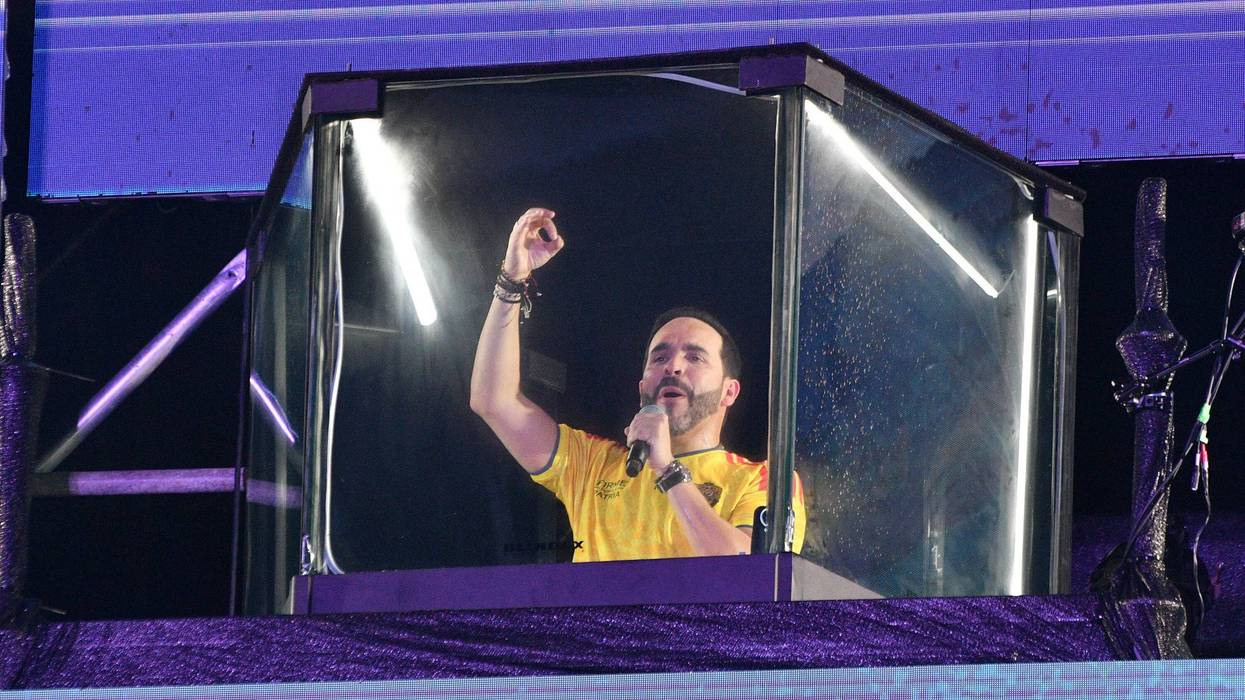
But the support for Ivan Cepeda offers some hope for the country's future.
It’s still hard to swallow, almost 24-hours after one of the most intense, indeed stressful election days in Colombia that I’ve witnessed, albeit from here in New York.
Colombian right-wing candidate Abelardo de la Espriella does appear to have clinched a very narrow victory in Sunday's presidential election, at least according to the initial ballot count that still needed to be officially verified as of this writing.
De la Espriella had 49.66% of the vote while his rival, Senator Ivan Cepeda, trailed by roughly 250,000 votes at 48.70%, according to the national registrar's tally of just under 100% of ballots in the runoff election.
In trying to make personal sense of the closest presidential elections in recent Colombian history, I can’t help but think that the final results are a reflection of how Colombia has failed to acknowledge its stained history of state-sponsored, politically motivated violence, even ten years after a fragile peace accord was signed that put an end to one aspect of the decades-long conflict.
What we must not take away from this electoral outcome is that de la Espriella is an “outsider” who, by challenging the political status quo in Colombia, will bring something new in his approach to governing the country.
This latest election represents a national rejection—albeit by a very narrow margin—of the policies of “total peace” of the current administration of President Gustavo Petro. The results are an affirmation of and an open call for “total war,” reminiscent of some of the darkest days of the widespread regional violence that occurred throughout the country at the turn of the century and the early stages of this century.
A portion of the Colombian electorate—almost half—continues to view the country’s troubles through a fractured lens of national security, of unrepentant militarism, and of the firm belief in the need to apply the heavy hand of the state to confront criminality. These Colombians have essentially vetoed their collective memory of generational violence, of a civil war whose origins have always been traced back precisely to the lack of a state presence where it is most needed—in a sustainable public health system; in accessible housing and education; in the opportunities that come with equitable distribution of land, the protection of human rights, and universal support for robust democratic participation across the citizenry, regardless of race, class, or political affiliation.
Instead, they’ve voted for a person openly committed to gutting 40% of the already weakened state in all these sectors. De la Espriella has blamed Petro, the former M-19 guerilla leader and outgoing president, for the country's current economic and security troubles. The growth of these armed groups throughout the country in recent years are attributed to Petro’s attempt to negotiate directly an end to the violence during his time in office. Rarely are the policies of Petro’s predecessor, Ivan Duque, mentioned in this context, despite his deliberate efforts to jettison just about every aspect of the 2016 peace accords between FARC and the Colombian government, leading in many ways to the expansion of these groups.
And now, the president-elect has vowed to end all talks with the armed criminal organizations, while boosting the oil and gas sector, lowering taxes for the middle and upper classes, and building massive prisons to detain indefinitely all the criminals they can find in the process, a la strongman Nayib Bukele of El Salvador. He pledges to fortify the military and manage the state security forces with an iron fist, something that will be made much easier by a blank-check insurance policy granted to him by the Trump-Rubio-Hegseth Western Hemisphere doctrine of domination and control.
The opposing candidate of the left-of-center coalition known as Pacto Historico, Senator Ivan Cepeda, 63, had pledged to continue many of the policies of President Petro, the country's first leftist president. Those policies included state pension payments for the poor, union-backed labor reforms, a moratorium on new oil projects, and continued peace talks with armed groups to try to put an end of the ongoing violence. Some analysts think Cepeda should have distanced himself a bit more from Petro on the campaign trail, given how the media openly embraced the Kryptonite narrative that Petro represents for the left in Colombia. Instead, Cepeda, himself the victim of state-sponsored violence, stuck to a set of arguments tied to building peace through social justice, human rights, and most importantly, not returning to the past.
Despite the youthful energy and visible enthusiasm of the very diverse range of supporters who came out for Cepeda’s candidacy, it was not enough to put a pause on the establishment’s profound, almost religious hatred of left-wing leaders with social movement connections, who are almost instantaneously written off as puppets of guerrilla terror, branded threats to the Colombian homeland. In many ways, it’s much like the simplistic MAGA refrain for attacking their opponents as un-American or enemies of the people, except in the Colombian context, it is a recipe for extreme violence, death sentences for many of those on the receiving end.
Over 12 million Colombians did not vote for this reactionary, ahistorical vision for the country. More than 12 million voters placed their bets on a future of peace and dignity for all Colombians.
What we must not take away from this electoral outcome is that de la Espriella is an “outsider” who, by challenging the political status quo in Colombia, will bring something new in his approach to governing the country, a tantalizing myth that somehow caught traction during the campaign in the Colombian corporate press and their counterparts in the US media. De la Espriella may not have the privileged political pedigree of the openly nepotistic tradition that has characterized over a century of Colombian political history, but to call him an outsider in 2026 is to ignore the foundation of his success as a defense attorney, a businessman, and of the fortune that allowed him to fund his campaign independent of the “mainstream” power bosses of the Colombian political elite.
He is an entrenched insider within the right-wing, para-state apparatus that had metastasized like a slow-moving blood cancer into every part of the governing class in Colombia since the early 2000s. This para-state infrastructure was built on the backs of the millions of internally displaced Black, Indigenous, and peasant communities; tens of thousands of forcibly disappeared; and the many innocent civilians murdered in countless massacres that brought fear to the countryside for decades.
While FARC rebels were guilty of much of the violence in Colombia since the mid-1990s, it was the brutal reaction to FARC criminality carried out by the unholy alliance between large landowners, narco-traffickers, and the military that blew the lid open for the widespread terror we saw from 2000 to 2010.
Behind this was a public discourse framed by the term “democratic security,” coined by former two-term President Alvaro Uribe Vélez, and backed wholeheartedly by the US under its Plan Colombia project. It was followed by eventual “negotiations” between the paramilitaries and the Uribe government, as well as a major scandal where it was exposed that almost half of the elected members of Colombia’s Congress had direct ties with the paramilitary organizations that were responsible for the above-mentioned crimes. De la Espriella understood this when he defended many of the paramilitary leaders and narco-traffickers implicated in these crimes. This is an insider who made his mark in this process. There’s no denying this.
The tough-guy approach to national politics that the “Tiger” so openly declared on the campaign trail is the continuation of a long process of authoritarian, right-wing extremism that emerged in the early 1990s, one that sees any opposition to their political, economic, or territorial control of the country as the equivalent of terrorism that must be liquidated militarily. This is the profound danger I see right now in the days, months, and years ahead for Colombia.
Nevertheless, with all these dark clouds on the horizon, for the millions of people who supported Ivan Cepeda in these elections, there is room for some optimism, albeit with considerable caution.
That is the fact that over 12 million Colombians did not vote for this reactionary, ahistorical vision for the country. More than 12 million voters placed their bets on a future of peace and dignity for all Colombians. They hit the streets and attended rallies and posted online videos recalling the darkest days of the war, shouting the names of the victims of this violence, saluting the brave mothers who still demand justice for their sons killed by state security forces.
They did not vote against their collective memory.
They are a very powerful force today, and for the future of Colombia.
They will not be backing down any time soon.
For they’ve faced the barrel of many guns in the past, and they’re still here.
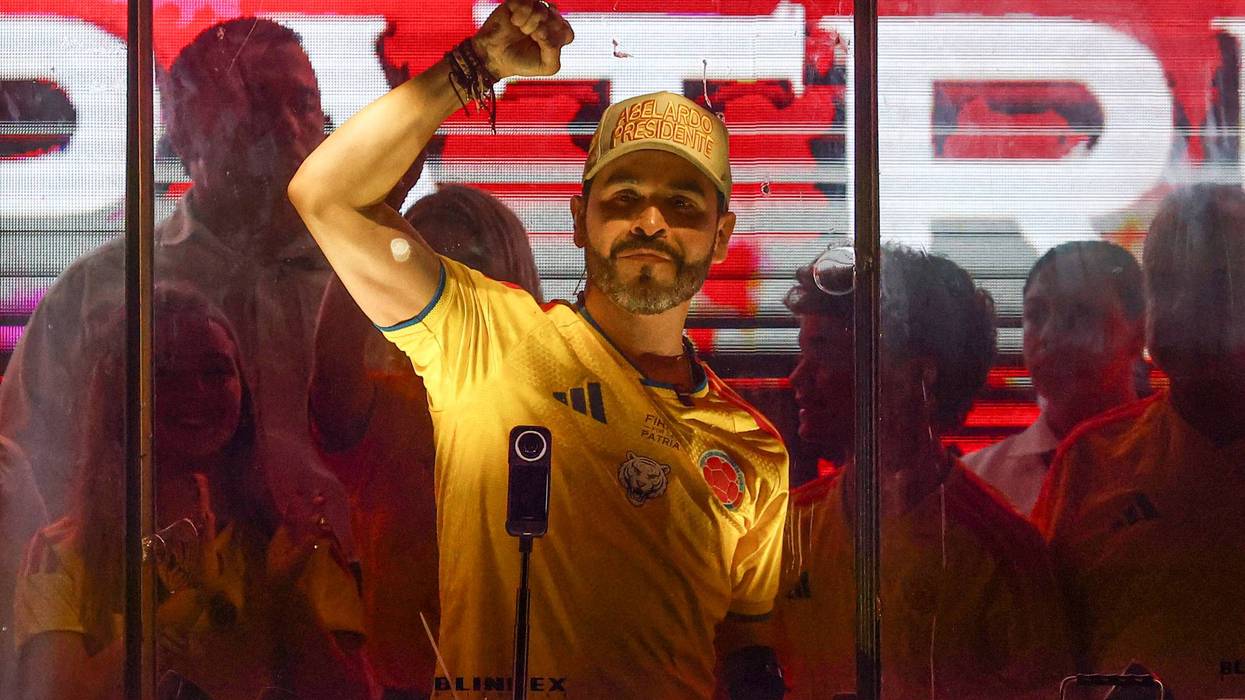
Leftist Colombian President Gustavo Petro has refused to accept the preliminary results, claiming there were 800,000 or more additional voter IDs in the nation's election system than in the electoral census.
Abelardo de la Espriella—a far-right political upstart who promises to wield an "iron fist" against criminals and who emulates right-wing presidents, including Donald Trump in the United States—secured the most votes in the first round of Colombia's presidential election and will advance to a second-round runoff, the country's electoral authorities announced over the weekend.
Leftist Sen. Iván Cepeda, the handpicked successor of outgoing President Gustavo Petro, had been expected to win the first-round contest, based on voter surveys. However, de la Espriella and his running mate, former Finance Minister José Manuel Restrepo Abondano, won 43.74% of the vote, with Cepeda and Aida Marina Quilcué Vivas, a senator and Indigenous leader, garnering 40.9%, according to preliminary results published by the National Electoral Council.
Addressing a jubilant crowd in Barronanquilla—a city he lost—de la Espriella, who represents the Defensores de la Patria (Defenders of the Homeland) party, triumphantly declared, "We will punish the enemies of Colombia!"
"Today, the people spoke," said the 47-year-old attorney, who is also known as the Tiger. "For the first time in political history, an independent man, without silencers and with the necessary character, has won."
“Gustavo Petro, do not dare to ignore the results of the elections because the people are going to rise up and they will punish you," he added.
Petro has refused to acknowledge Sunday's preliminary results due to alleged irregularities, claiming there were roughly 800,000–885,000 additional voter IDs in the election system compared with the official electoral census.
Cepeda, 63, addressed the discrepancy during a speech to supporters in Bogotá, saying that "there is a gap we want to verify... We are talking about 885,000 people."
People rallied in Bogotá and elsewhere in Colombia on Sunday in support of Cepeda and the incumbent Pacto Histórico (Historic Pact) party.
LAS CALLES DE BOGOTÁ ESTALLAN CONTRA ABELARDO DE LA ESPRIELLA pic.twitter.com/AmVvaOSIYw
— Julian D. Martinez (@jumartinezp) June 2, 2026
The global leftist coalition Progressive International (PI) issued an urgent alert "regarding conduct by US Sen. Bernie Moreno that appears to constitute a direct violation of Colombia’s electoral law" amid reporting that the Ohio Republican traveled to Colombia to try to facilitate an alliance between de la Espriella and establishment conservative candidate Sen. Paloma Valencia with the goal of defeating Cepeda. Moreno and the candidates denied that any such meetings were planned.
David Adler, PI's co-general coordinator, told Colombian National Radio that US corporate media are "orchestrating a smear campaign" looking "for new ways to defame the candidate Iván Cepeda, alleging links to drug trafficking, just as they did" with Petro.
Adler also reported police officers conducting entry checks at polling places, telling voters to "stand at attention for the homeland"—one of de la Espriella's campaign slogans.
De la Espriella—a criminal defense attorney who has represented mass murderers, drug traffickers, money launderers, paramilitary militiamen, and others—ran on a "law and order" platform and promised to wield an "iron fist" against criminals. He has pledged to build megaprisons like the violence-plagued Terrorism Confinement Center (CECOT) built under Salvadoran President Nayib Bukele, whom he once called "the best example in the world of what a country must do."
“The 'Total Peace' policy ends with me," de la Espriella previously said, referring to Petro's effort to end Colombia’s long-running internal conflict through a broad, multi-track approach.
"Total Security will begin," he said. "The public [security] forces... must be strengthened through an agreement with the United States. We want to be part of the Shield of the Americas, and we want to build a major policy with the United States to end drug trafficking."
De la Espriella has said he wants to withdraw Colombia from the United Nations and forge closer ties with the United States and Trump, one of the right-wing leaders for whom he has expressed admiration. He has also repeatedly praised Bukele and Argentinian President Javier Milei.
According to El País, American flags and "Make America Great Again" hats were seen at Sunday's victory rally in Barranquilla. Israeli flags were also spotted; de la Espriella has vowed to restore ties with Israel, which Petro severed in 2024 due to the country's annihilation of Gaza. Under Petro, Colombia also formally intervened in South Africa's genocide case against Israel at the International Court of Justice.
De la Espriella's desire for closer cooperation with Washington comes as the Trump administration illegally bombs boats in the Caribbean Sea, including off the Colombian coast, and Pacific Ocean, claiming—without providing evidence—that the vessels were smuggling drugs.
Trump also ordered an invasion of Venezuela to abduct President Nicolás Maduro on dubious narco-terrorism charges, and the US is taking part in military operations against alleged drug cartels in Ecuador, where civilians have reportedly been killed and tortured during the campaign.
The US Department of Justice is now reportedly investigating whether Petro has any links to narco-traffickers—a claim that the president vehemently denies.
On the domestic front, de la Espriella has vowed to "put God back in the classrooms" as part of a revival of Christian conservatism. He has also been accused of misogyny for comments—including telling female journalists that he gained many women's votes due to the size of his genitals—and of homophobic harassment of Valencia's running mate, Juan David Oviedo.
In an incident that alarmed many Colombians, de la Espriella laughingly boasted on national television about how, in his youth, he tortured and killed cats by blowing them up with fireworks.
The second round runoff between de la Espriella and Cepeda is scheduled for June 21. Valencia has thrown her support behind de la Espriella, but having won less than 7% of the first-round vote, and with centrist candidate Sergio Fajardo's 1 million votes up for grabs, observers say it's anyone's race to win—or lose.
“As the saying goes," Colombian political strategist Miguel Jaramillo Luján told Al Jazeera on Monday, "whoever makes fewer mistakes will be the winner.”