SUBSCRIBE TO OUR FREE NEWSLETTER
Daily news & progressive opinion—funded by the people, not the corporations—delivered straight to your inbox.
5
#000000
#FFFFFF
To donate by check, phone, or other method, see our More Ways to Give page.
Daily news & progressive opinion—funded by the people, not the corporations—delivered straight to your inbox.
A new House Bill provision would arguably do more to intertwine the US military with the Israeli military than the more than $200 billion (inflation adjusted) in military assistance Israel has received from the US since its founding in 1948.
At a time when the American public is expressing unprecedented levels of distrust in the Israeli government, Congress just proposed tying the US to the Israeli military more than ever before.
Buried in the House's version of the 2027 National Defense Authorization Act (NDAA) released on Tuesday, is section 224, entitled “United States-Israel Defense Technology Cooperation Initiative.” The provision would arguably do more to intertwine the US military with the Israeli military than the more than $200 billion (inflation adjusted) in military assistance Israel has received from the US since its founding in 1948.
Section 224 lays the groundwork for bilateral research and development, co-production of weapons, joint ventures, licensing agreements, and seemingly every manner of US-Israeli military-industrial complex cooperation. The US and Israel already work together heavily on missile defense, but this provision would greatly expand coordination to seemingly every area of defense tech, including AI, quantum, autonomous systems, directed energy, cyber, biotech, and many more. It also proposes “network integration” and “data fusion.” In other words, the US military’s data could soon be the Israeli military’s data.
If fully enacted, this proposal would provide a higher level of military-industrial integration than the US has with any other country in the world. To be sure, the US has worked closely with its NATO partners on co-production and shared supply chains, most notably via the Defence Production Action Plan. And, as the No. 1 arms dealer in the world, the US provides weapons to militaries across the globe. But that is mostly a one-way street, with the US providing weapons to foreign buyers who only occasionally make parts for those weapons themselves, as in the case of the F-35’s global supply chain.
The enormous gulf between what most Americans want and what the president is doing when it comes to Israel and what Congress is proposing here should not be ignored.
Section 224 would be a different beast entirely. It would fuse the US and Israeli defense sectors in multiple areas vital to the battlefields of the future, like autonomous systems and cyber. It would also bring extraordinary Israeli influence to the US beyond what it already has through the Israel lobby and its robust network of social media influencers. It would give the Israeli government the opportunity to greatly expand one of the most powerful levers of influence in US politics: jobs in the US. By expanding or starting new co-production facilities like it already has in Mississippi and Arkansas, the Israeli government could boast of providing jobs on US soil, thereby securing allies among members of Congress who represent the districts where those jobs lie.
The result could well be a US political system even more susceptible to the whims of an Israeli government that seemingly has no qualms about drawing the US into military conflicts in the Middle East.
This unprecedented level of US-Israeli military integration stands in stark contrast to the traditional aid model of defense cooperation, in which Israel already stood out as the top recipient of US military assistance. As laid out in a recent Quincy Institute brief, authored by Steven Simon, this shift from an aid model to a military integration model has troubling implications, namely:
The shift will strip away the political and diplomatic oversight mechanisms that make the relationship publicly accountable, moving it from a visible annual aid vote into the opaque machinery of defense acquisition, where oversight is limited and political accountability is minimal. The result would be a defense relationship that is simultaneously deeper and less transparent.
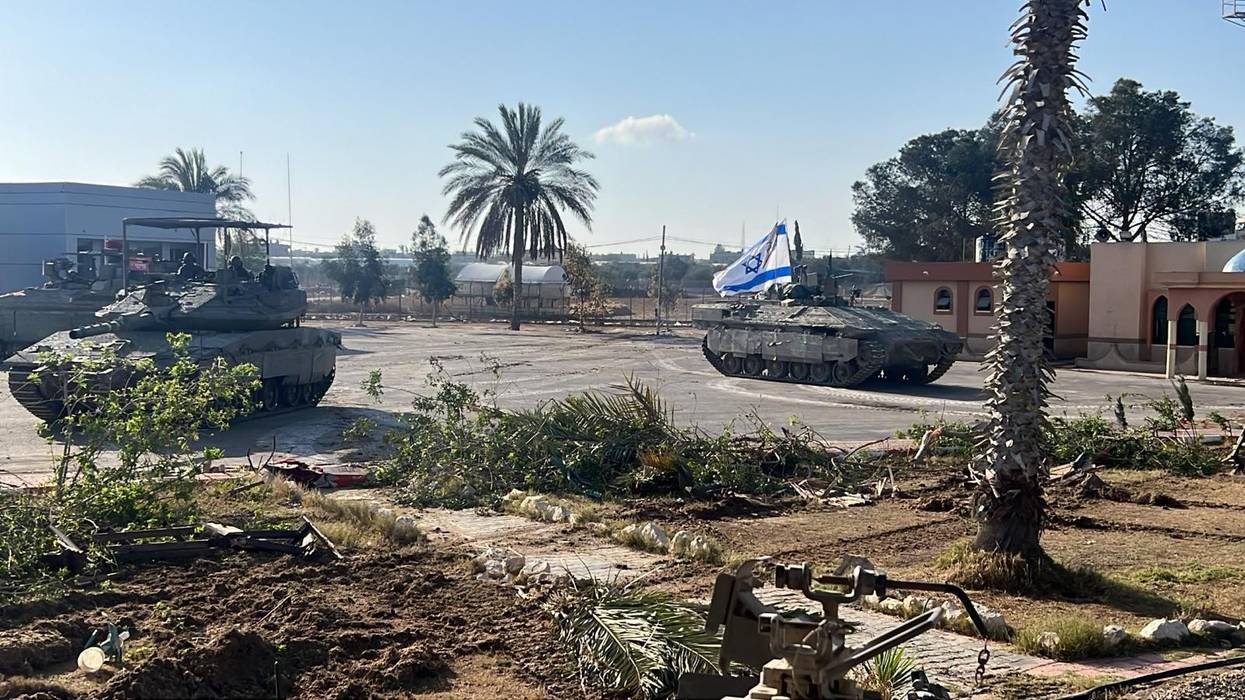
This all comes at a time when the Israeli military has repeatedly used US weapons in strikes that have violated international humanitarian laws in Gaza, and as Israel has repeatedly violated ceasefires (as has the US itself) in the Trump administration’s unnecessary war with Iran.
The enormous gulf between what most Americans want and what the president is doing when it comes to Israel and what Congress is proposing here should not be ignored. Just 30% of respondents to a New York Times-Sienna poll from mid-May believe President Donald Trump made “the right decision” to go to war with Iran, with 64% saying it was wrong. An Institute for Global Affairs poll released earlier this week dove even deeper into the American psyche when it comes to arming Israel, finding that “just 16% say the United States should keep supplying Israel with weapons without new restrictions. Thirty-eight percent want to stop supplying weapons entirely, and another 24% want weapons conditioned on how they’re used.”
Yet, mainstream leadership in both parties remains largely pro-Israel and continues to shape the base legislative text before amendments and broader congressional debate open it to the full body, as is the case with this NDAA provision.
Though slowly, tides within both parties are shifting as more and more members speak out against the growing divide between Israel’s actions and America’s interests. For example, Sen. Chris Van Hollen (D-Md.) wrote in The New York Times on Tuesday that, “the Democratic Party has provided reflexive and unconditional support to Israeli governments, even as their actions have increasingly undermined American interests and values.” On the Republican side of the aisle, Rep. Thomas Massie (R-Ky.) and former Rep. Marjorie Taylor Green (R-Ga.) have openly decried the Israel lobby’s corrosive influence—a stance that may have, at least partially, cost both of them their seats in Congress.
What can other members of Congress who are concerned about Israel’s destabilizing actions do right now? Stop the Israeli-US military-industrial merger in its tracks. Lawmakers should reject Section 224 from the NDAA to avoid deep integration with Israel's military at a time when a growing number of Americans oppose Israel's actions in the region.
What some may regard as unjustifiable compromises by the Venezuelan government pale in comparison with our obligations as international solidarity activists: defending Venezuela and Cuba against the policies of imperialism.
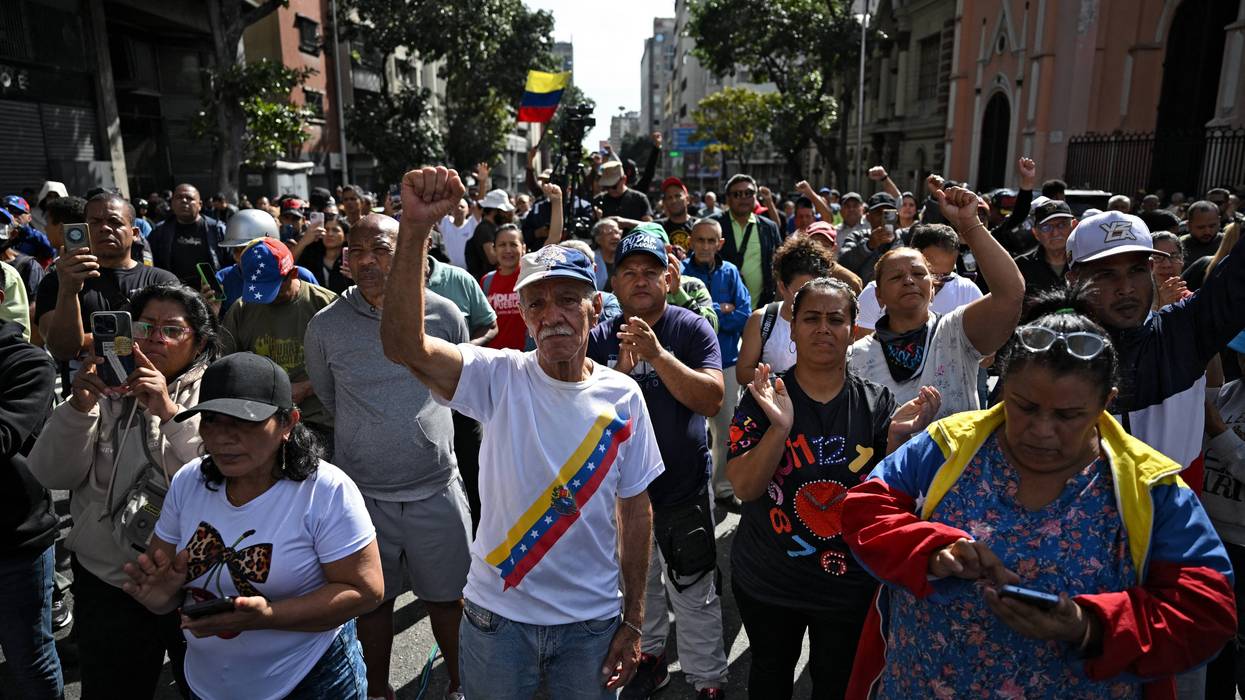
In response to recent developments in Venezuela under imperialist siege, international solidarity activists should adopt a stance that does not inadvertently reinforce Washington’s drive for domination. Our central responsibility is not to adjudicate every tactical decision made under siege conditions, but to oppose the imperialist aggression that creates those conditions.
The overwhelming structure of US hybrid warfare against Venezuela remains intact, continuing to suffocate the country’s economic recovery and undermine its sovereignty. Washington continues to exert decisive pressure over the country’s principal source of national revenue, the oil sector. It uses sanctions, financial coercion, and domination of global banking systems, as it has against other targeted states such as Iraq and Syria.
At the same time, the threat of direct military escalation remains ever present, a danger underscored by continuing military deployments, aggressive rhetoric, and repeated threats.
What some may regard as unjustifiable compromises by the Venezuelan government pale in comparison with our obligations as international solidarity activists: defending Venezuela and Cuba against the policies of imperialism. The US continues to intensify blockades, sanctions, destabilization efforts, and military threats against these revolutionary processes while simultaneously waging disinformation campaigns against the Chavista leadership and the Cuban Revolution.
The role of internationalists is to oppose imperialism at home, not to instruct Venezuelans on how to defend their revolution.
Both Fidel Castro and Hugo Chávez identified US imperialism as the principal enemy of humanity. Our primary political focus should therefore remain opposition to imperialist domination, rather than allowing secondary disagreements to obscure the central contradiction.
First and foremost, the main blow must be directed against US imperialism. Any discussion of shortcomings, compromises, or concessions should be understood within the context of relentless external aggression, destabilization efforts, and military threats.
That is why internationals vigorously campaign both for the safe return to Venezuela of President Nicolás Maduro and First Lady Cilia Flores and for the immediate and unconditional lifting of all sanctions.
The political choices made by the Venezuelan leadership must ultimately be resolved within Venezuela itself. The role of internationalists is to oppose imperialism at home, not to instruct Venezuelans on how to defend their revolution.
Support for Venezuela against US imperialism does not require agreement with every decision taken under conditions of coercion. Understanding political decisions made under such circumstances is to situate them within the realities imposed by imperialist military power. This includes the extradition of Alex Saab.
A longstanding objective of US policy has been to fracture the unity of the Chavista leadership, military, and popular base. Despite immense pressure, that unity has largely held. Attempts to counterpose solidarity with the popular base against solidarity with the leadership, however well intentioned, objectively strengthen imperialist aims.
We do not know the full extent of the pressures exerted on the Venezuelan government, nor the range of alternatives realistically available under present conditions. The Venezuelan leadership operates under severe geopolitical constraints. The US openly threatens Libya- or Iran-style retaliation. Another major military escalation remains entirely possible.
Unlike in earlier periods, Venezuela today lacks strong regional allies, while in the context of the ongoing Gaza genocide, so-called “international law” offers little meaningful restraint on US power.
In conclusion, under conditions of economic warfare, military threat, diplomatic isolation, and perpetual destabilization efforts, Venezuela’s contradictions cannot be analyzed abstractly or outside the realities of imperialist power.
Given the vast military asymmetry between the two countries, the consequences of direct military confrontation would be catastrophic for Venezuela, potentially including the destruction of vital infrastructure and long-term devastation of the oil industry upon which the country depends.
If the US succeeds in placing the extreme right-wing opposition in power, the likely result would be devastating political repression directed against Chavismo and the popular sectors.
While continuing to rely upon the Chavista base, the government also recognizes the necessity of building a broader patriotic bloc capable of resisting imperialist pressure more effectively.
Even amid forced compromises, the central achievements of the Bolivarian process remain significant: preservation of the revolutionary leadership, survival against destabilization efforts, and avoidance of a full-scale invasion.
Years of sanctions and economic warfare severely degraded Venezuela’s oil infrastructure. Restoring productive capacity, reestablishing trade, and attracting investment have therefore become vital imperatives.
The political transitions from Chávez to Maduro to Delcy Rodríguez largely reflect changes in the international geopolitical landscape. Yet there has remained substantial political continuity within Chavismo, evident in continued solidarity with Cuba, the vitality of the communal system, and the endurance of the revolutionary mass movement.
In conclusion, under conditions of economic warfare, military threat, diplomatic isolation, and perpetual destabilization efforts, Venezuela’s contradictions cannot be analyzed abstractly or outside the realities of imperialist power. The primary task of solidarity movements within the imperial centers remains what it has always been: opposing the aggression of our own ruling classes.
From noose to needle to nitrogen, our constant search for a more acceptable way to administer the death penalty is a story of failure—not moral progress.
As a long-time death penalty abolitionist, I’ve often compared the death penalty in America to a train with no brakes: Once the machinery starts moving, it becomes extraordinarily difficult to stop.
But the real problem is that the train should never have been built.
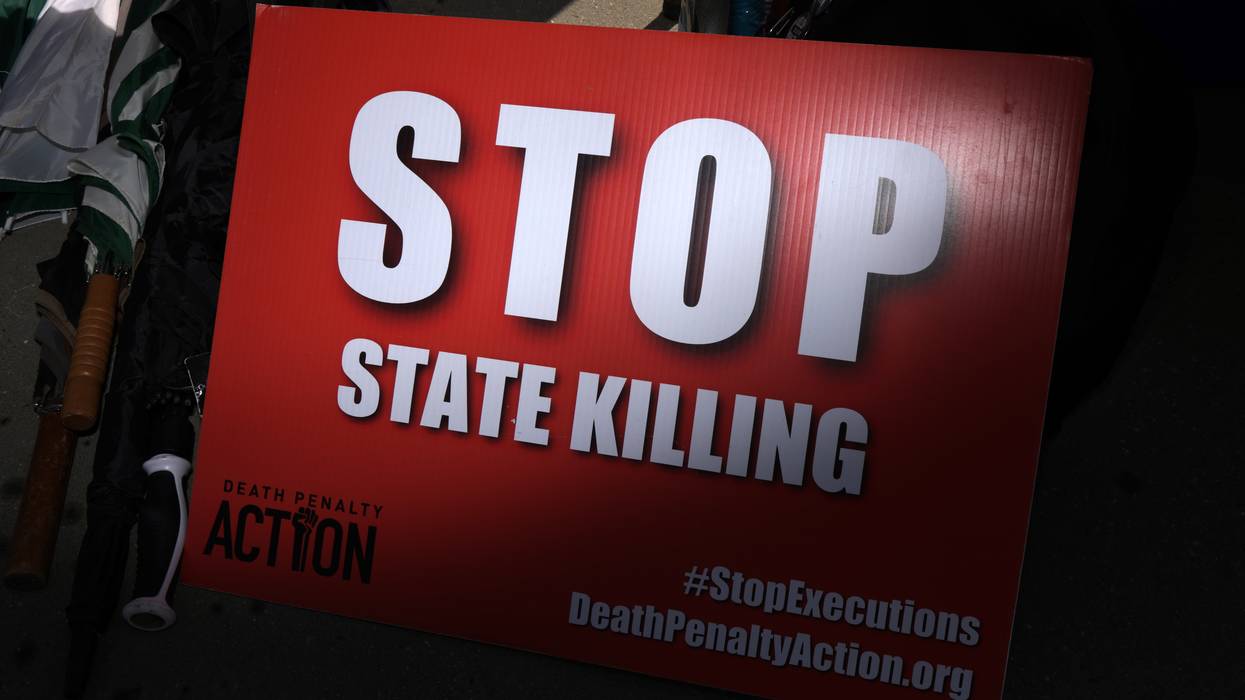
Today, Alabama, Louisiana, Mississippi, Oklahoma, and Arkansas are experimenting with nitrogen gas executions, a method officials claim is more humane. But from noose to needle to nitrogen, our constant search for a more acceptable way to kill is a story of failure—not moral progress.
There’s no acceptable way to practice a form of state killing that, for Black Americans especially, has long been intertwined with terror.
History should make us skeptical whenever governments begin searching for new technologies to make killing appear more acceptable.
Take my home state of Arkansas. Within a year of becoming a state in 1836, Arkansas adopted laws establishing a racial hierarchy by which even civilian whites could dispossess or punish a Black person. These codes even designated certain offenses as capital crimes when committed by Black people but lesser crimes when committed by white people.
The message was clear: Some lives were worth less than others.
That message echoed through the decades that followed. Between 1877 and 1950, Arkansas recorded 493 documented lynchings—the highest per capita rate in the nation. In Arkansas and throughout the South, these killings were not hidden crimes. They were public spectacles—acts of terror meant to reinforce social hierarchy.
Eventually, lynching became politically unacceptable. But state killing did not disappear—it simply changed form. The spectacle moved behind prison walls, and the language became more clinical. But the act of killing remained the same.
George Hays, who served two terms as governor of Arkansas, wrote in 1927 that “if the death penalty were to be removed from our statute-books, the tendency to commit deeds of violence would be heightened owing to the Negro problem. The greater number of the race do not maintain the same ideals as the whites.”
Since the Civil War, Arkansas has executed nearly 500 people—and 68% of those executed were Black or Native American. This is not distant history. Black inmates make up about 50% or more of the state’s death row today, despite Black Arkansans comprising less than 16% of the state’s total population.
Nor is Arkansas an outlier. Nationally, over half the people on death row today are Black or Hispanic.
Modern executions are often carried out by lethal injection, presented as sterile and humane. The condemned is strapped to a gurney while witnesses sit behind glass and chemicals stop the heart. But as these chemicals become less available, Arkansas and some other states have replaced lethal injection with nitrogen gas executions.
They claim the method is painless, but it is death by suffocation. Even veterinarians are forbidden from euthanizing cats and dogs with nitrogen hypoxia because it takes too long to lose consciousness and amounts to torture.
History should make us skeptical whenever governments begin searching for new technologies to make killing appear more acceptable. During the Holocaust, Nazi Germany constructed gas chambers designed to turn mass death into a technical process. This process was bureaucratic, hidden from public view, and deemed “efficient.”
Today, the death penalty follows a disturbingly similar logic. Each generation promises that the newest method will finally make execution humane. The noose. The electric chair. The gas chamber. Lethal injection. Now nitrogen gas.
Yet the fundamental act has never changed. The state still kills. The train keeps moving. Even when jurors change their minds. Even when victims’ families plead for mercy. Stopping the train requires courage—especially from elected leaders who have the power to do it.
Our history tells us what happens when a society accepts killing as justice. The death penalty has evolved for nearly two centuries, but there is only one real measure of moral progress: not how we kill, but whether we finally choose to stop.
Western media is trying to make it sound like war was China’s idea, when it’s the US that has been actively preparing for it for the last decade.
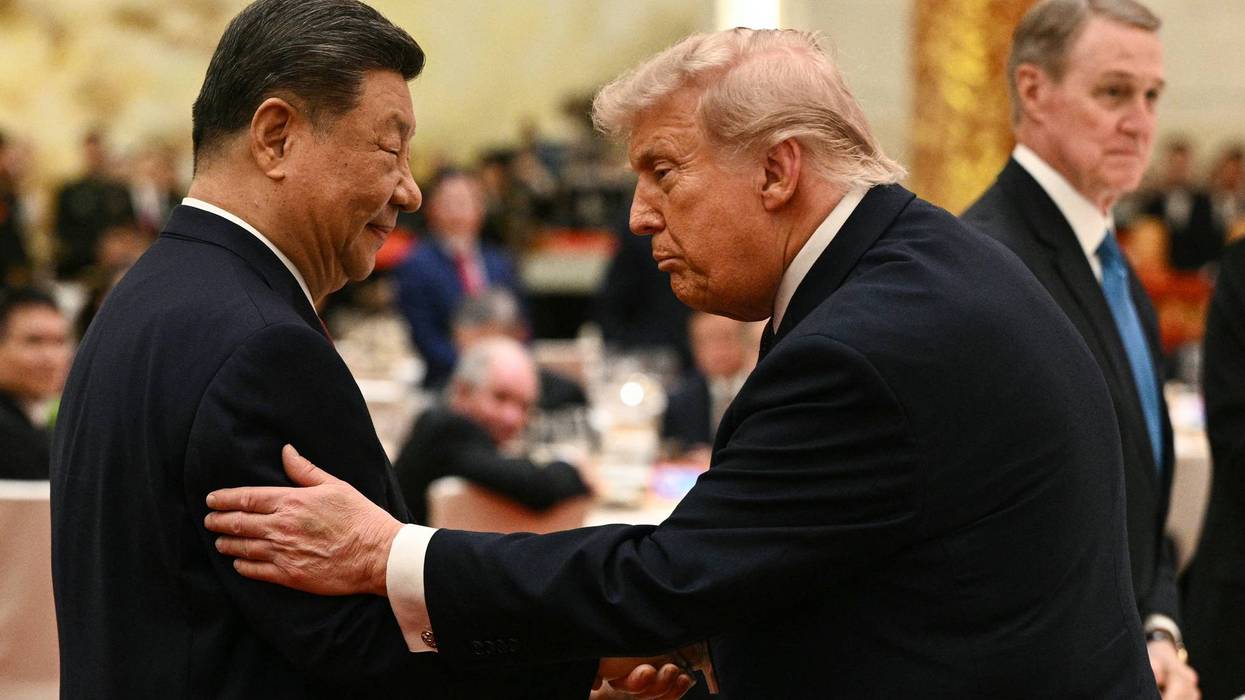
This month, the world watched as US President Donald Trump wrangled up his bro-squad of capitalist billionaires and chartered them across the world to China. We watched in disbelief as the China-hating Trump administration paraded around Beijing gawking at beautiful ceilings and giant rose bushes. “China is beautiful,” Trump said.
All the while, the top US oligarchs met with Chinese officials, hoping to find openings they could us to slither into China’s large, booming markets and siphon off even more wealth that they most definitely don’t need. Fortunately, China just wasn’t that interested.

Even though nothing much came of the meetings, all the China hawks in Washington were on the edge of their seats, anxious that better relations with China would risk their favorite justification for raising the military budget to an unprecedented $1.5 trillion. But we need to prepare for war with China by 2025… no, 2027… wait, maybe 2030? Forever?
Mainstream media had a lot to say about the meeting. The Guardian was especially deceptive, with one article titled:

This is the kind of headline we’ve come to expect from outlets like the New York Post, whose credibility is on par with a spam email. In fact, they did have a similar article:

It’s not a huge surprise that Western media is trying to make it sound like war was China’s idea, when it’s the US that has been actively preparing for it for the last decade. It’s part of their strategy to use misleading headlines to stoke fear about China, so nobody pays attention to the war-antagonizing behavior of the United States.
When President Xi Jinping speaks about the “Thucydides Trap,” he is warning the US against treating war with China as inevitable and instead urging it to pursue diplomacy and cooperation. Many US policymakers, however, continue to frame China’s rise primarily as a military threat, expanding military posturing across the Asia-Pacific in an effort to preserve US dominance even at the risk of escalation.
It’s reported that Trump and Xi also talked at length about the US war on Iran. This conflict—as well as US military actions in Venezuela—is also tied to the broader US confrontation with China. Both countries possess major oil, gas, and critical mineral reserves and have become important economic partners to China. By targeting two of China’s key energy suppliers, the US is attempting to limit China’s access to the resources, while hoarding them for itself (and Israel).
The US war on Iran has been a disaster, which is one of the reasons Trump is in China, hoping for concessions. It’s not just energy dominance the US is worried about. While oil and gas prices are skyrocketing around the world, Iran has made an exception for Chinese oil tankers, which trade with Iran using the Chinese yuan. For decades, US global power has depended on the petrodollar system, which keeps global energy trade tied to the US dollar and gives the US enormous economic warfare abilities. But China’s continued purchase of Iranian oil using the yuan, along with growing efforts by countries across the Global South to trade outside the dollar system, threatens to weaken that dominance.
The global order is clearly shifting toward a more multipolar world. The question is whether the US will respond with diplomacy or attempt to preserve unipolar dominance through military confrontation with China. To prevent escalation, we must reject the idea that war between great powers is inevitable. And we must also demand media coverage that accurately and credibly covers the role the United States is playing in escalating tensions. That includes news outlets like The Guardian, which clearly prioritize painting China as the villain over credible and in-depth reporting.