SUBSCRIBE TO OUR FREE NEWSLETTER
Daily news & progressive opinion—funded by the people, not the corporations—delivered straight to your inbox.
5
#000000
#FFFFFF
To donate by check, phone, or other method, see our More Ways to Give page.
Daily news & progressive opinion—funded by the people, not the corporations—delivered straight to your inbox.

Performative violence—aka executions without trial at sea—overshadows how the administration is building a new US policy towards the hemisphere: acts of murder as a tool to create permanent structures of dominance and extraction.
“American dominance in the Western Hemisphere will never be questioned again,” declared the State Department in a new video tying, somewhat improbably, the Monroe Doctrine of 1823 to killing people on boats in the Caribbean and Pacific 200 years later. Blowing up speedboats supposedly to stop fentanyl smuggling—which notably does not come to the US on speedboats—appears senseless. As a counter-narcotics strategy, it is ineffective, an assessment echoed by the DEA. The performative violence overshadows its role in building a new US policy towards the hemisphere: acts of murder as a tool to create permanent structures of US dominance and extraction.
Laid out in the December 2025 National Security Strategy (NSS), the “Donroe Doctrine” aims to restore US preeminence in a region where it has been eclipsed by China, convert security claims into exceptional military authority against “narco-terrorists,” institutionalize that authority through permanent commands, “enlist and expand” governments aligned with Washington, and use it to secure strategic and commercial access. The desired end: military cooperation, trade agreements, access to critical minerals and rare earths, likely accompanied by shady personal deals for the Trump family. Democratic backsliding, in a region where democracy is still relatively young, is a necessary condition for its success.
The Donroe Doctrine's architecture is still under construction. Latin American governments can still resist Washington’s pressures, refusing to co-create his transactional order. Greater regional integration would rebalance that bargaining power, helping less powerful countries impose conditions, defend constitutional limits, reject particular operations, and withstand the costs of US pressure. More than 100 legislators, political leaders, and experts from 15 countries are gathering at the Third Pan-American Congress in Montevideo this weekend to strengthen regional collaboration, the basis for an alternate architecture to one premised on US domination.
- YouTube
Resistance to US coercion, however, also depends on democratic repair within the region. Governments captured by authoritarian leaders cannot provide a durable basis for sovereignty. Corruption erodes state capacity and public trust, making foreign military solutions more appealing. The Trump administration is betting on a hemispheric doctrine that favors authoritarian leaders, eager to share in corruption.
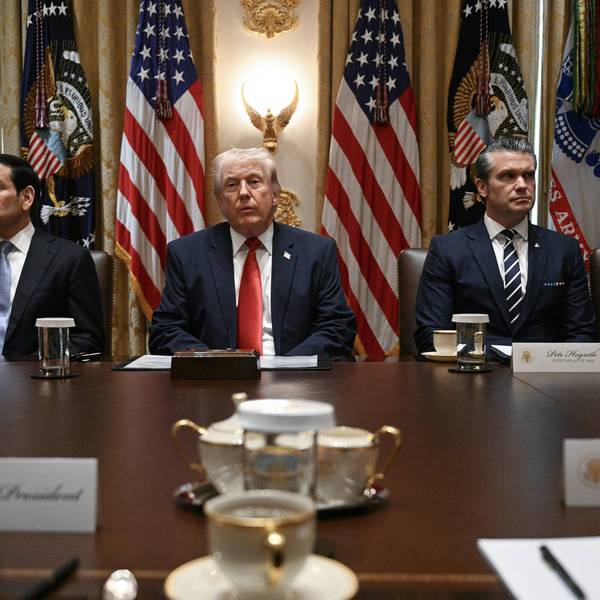
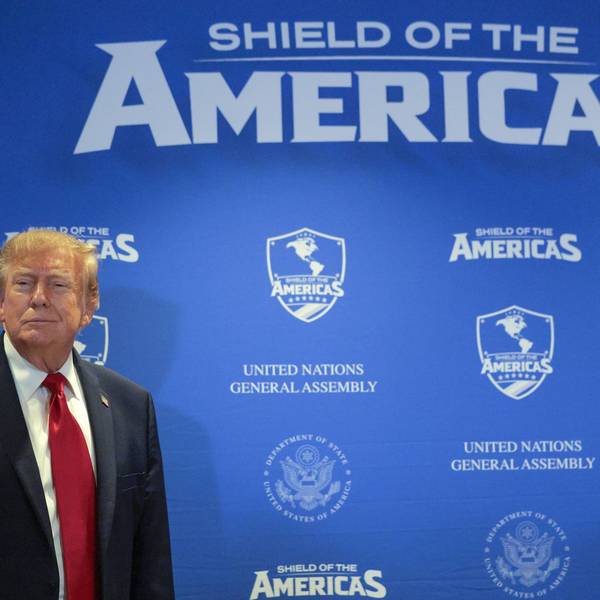
The Donroe Doctrine’s highest profile proof of concept began with airstrikes on boats off the coast of Venezuela, to the killing of fishermen in the Pacific—since revealed to be a covert CIA program—to August’s announcement of a new Joint Task Force-Western Hemisphere, establishing a standing headquarters for efforts to turn such extrajudicial killings into joint operations with allied governments. This maps onto the administration's Shield of the Americas, a coalition of right-wing Latin American governments allied with the Trump administration. From the abduction of Venezuela’s President Nicolás Maduro to the boat strikes murders, all leaned on two forever wars framing and justification that long predated Trump: The War on Drugs and the War on Terror.
The Trump administration is betting on a hemispheric doctrine that favors authoritarian leaders, eager to share in corruption.
Targeting supposed smugglers, many of them probably fishermen, as “narcoterrorists” is a way to move trafficking from the framework of criminal law into the claimed authorities of war. Suspects become targets not of investigation but of immediate execution, secret assessments replacing due process and evidence in courts. The urgency of national security puts executive discretion over judicial authority. The boat strikes publicly declare exceptional authority of the executive. The Pentagon’s and CIA’s programs institutionalize it.
Like the War on Terror, this framing pictures an enemy and creates an industry to manage. It creates quid pro quo partnerships with other governments who leverage military cooperation into access to US foreign assistance, weapons, intelligence, and diplomatic cover for unsavory ends, whether domestic repression, corruption, or state murder of their own. With public opinion showing falling trust in all institutions but the military, stoking fears of all-powerful narcoterrorists serve mutual interests of reactionaries in Washington, Bogotá, and Tegucigalpa. The main risk is that it creates bureaucratic structures that outlive sitting administrations. With multilateral cooperation and institutions on the decline, this new military-industrial complex makes it nearly irreversible.
It also creates tools for meddling in domestic partisan politics. The success of Trump’s “Shield of the Americas” is predicated on Latin America’s continued turn to the right. Ecuador and Colombia have already agreed to “joint” military strikes on their territory, which are likely to become unilateral US strikes. Trump openly intervened in supporting the election of Nasry Asfura in Honduras, as it is currently doing with Flávio Bolsonaro in Brazil. That many of these allies are themselves tied to the drug trade is of little consequence: Colombia’s President de la Espriella made a career as a defense attorney for top narcos, Ecuador’s president Noboa’s family’s fruit business was found to be transporting cocaine, and Honduras’ former president Juan Orlando Hernández won a Trump pardon after his US conviction on drug-trafficking charges.
The project functions more easily where democratic foundations are weak and leaders face fewer constraints from citizens, legislatures, courts, and independent institutions, reflecting Trump’s own effort to weaken checks on executive authority inside the United States. Bukele in El Salvador provides a marquee case for using the specter of crime to consolidate a permanent “state of exception” and authoritarian rule. Such regimes can authorize operations, share intelligence, sign agreements, allocate land, and suppress opposition with less scrutiny.
Democratic scrutiny can expose the climate costs of extraction, contest land allocations and territorial interventions, demand transparency over contracts, and insist that resource wealth benefit the public. Corruption circumvents those checks by connecting external power with local gatekeepers able to transfer public resources and protect the bargain. The lack of transparency surrounding more than $13 billion collected by the United States from Venezuelan oil sales illustrates the scale of the accountability problem.
For the region, the emerging system depends on governments choosing to participate and institutions holding its authority. As progressives in the United States, we must challenge the false counternarcotics claims, unchecked lethal force, and waste of public resources sustaining this project, and hold our government accountable. Regional resistance and democratic repair must proceed together.
Dear Common Dreams reader, It’s been nearly 30 years since I co-founded Common Dreams with my late wife, Lina Newhouser. We had the radical notion that journalism should serve the public good, not corporate profits. It was clear to us from the outset what it would take to build such a project. No paid advertisements. No corporate sponsors. No millionaire publisher telling us what to think or do. Many people said we wouldn't last a year, but we proved those doubters wrong. Together with a tremendous team of journalists and dedicated staff, we built an independent media outlet free from the constraints of profits and corporate control. Our mission has always been simple: To inform. To inspire. To ignite change for the common good. Building Common Dreams was not easy. Our survival was never guaranteed. When you take on the most powerful forces—Wall Street greed, fossil fuel industry destruction, Big Tech lobbyists, and uber-rich oligarchs who have spent billions upon billions rigging the economy and democracy in their favor—the only bulwark you have is supporters who believe in your work. But here’s the urgent message from me today. It's never been this bad out there. And it's never been this hard to keep us going. At the very moment Common Dreams is most needed, the threats we face are intensifying. We need your support now more than ever. We don't accept corporate advertising and never will. We don't have a paywall because we don't think people should be blocked from critical news based on their ability to pay. Everything we do is funded by the donations of readers like you. When everyone does the little they can afford, we are strong. But if that support retreats or dries up, so do we. Will you donate now to make sure Common Dreams not only survives but thrives? —Craig Brown, Co-founder |
“American dominance in the Western Hemisphere will never be questioned again,” declared the State Department in a new video tying, somewhat improbably, the Monroe Doctrine of 1823 to killing people on boats in the Caribbean and Pacific 200 years later. Blowing up speedboats supposedly to stop fentanyl smuggling—which notably does not come to the US on speedboats—appears senseless. As a counter-narcotics strategy, it is ineffective, an assessment echoed by the DEA. The performative violence overshadows its role in building a new US policy towards the hemisphere: acts of murder as a tool to create permanent structures of US dominance and extraction.
Laid out in the December 2025 National Security Strategy (NSS), the “Donroe Doctrine” aims to restore US preeminence in a region where it has been eclipsed by China, convert security claims into exceptional military authority against “narco-terrorists,” institutionalize that authority through permanent commands, “enlist and expand” governments aligned with Washington, and use it to secure strategic and commercial access. The desired end: military cooperation, trade agreements, access to critical minerals and rare earths, likely accompanied by shady personal deals for the Trump family. Democratic backsliding, in a region where democracy is still relatively young, is a necessary condition for its success.
The Donroe Doctrine's architecture is still under construction. Latin American governments can still resist Washington’s pressures, refusing to co-create his transactional order. Greater regional integration would rebalance that bargaining power, helping less powerful countries impose conditions, defend constitutional limits, reject particular operations, and withstand the costs of US pressure. More than 100 legislators, political leaders, and experts from 15 countries are gathering at the Third Pan-American Congress in Montevideo this weekend to strengthen regional collaboration, the basis for an alternate architecture to one premised on US domination.
- YouTube
Resistance to US coercion, however, also depends on democratic repair within the region. Governments captured by authoritarian leaders cannot provide a durable basis for sovereignty. Corruption erodes state capacity and public trust, making foreign military solutions more appealing. The Trump administration is betting on a hemispheric doctrine that favors authoritarian leaders, eager to share in corruption.
The Donroe Doctrine’s highest profile proof of concept began with airstrikes on boats off the coast of Venezuela, to the killing of fishermen in the Pacific—since revealed to be a covert CIA program—to August’s announcement of a new Joint Task Force-Western Hemisphere, establishing a standing headquarters for efforts to turn such extrajudicial killings into joint operations with allied governments. This maps onto the administration's Shield of the Americas, a coalition of right-wing Latin American governments allied with the Trump administration. From the abduction of Venezuela’s President Nicolás Maduro to the boat strikes murders, all leaned on two forever wars framing and justification that long predated Trump: The War on Drugs and the War on Terror.
The Trump administration is betting on a hemispheric doctrine that favors authoritarian leaders, eager to share in corruption.
Targeting supposed smugglers, many of them probably fishermen, as “narcoterrorists” is a way to move trafficking from the framework of criminal law into the claimed authorities of war. Suspects become targets not of investigation but of immediate execution, secret assessments replacing due process and evidence in courts. The urgency of national security puts executive discretion over judicial authority. The boat strikes publicly declare exceptional authority of the executive. The Pentagon’s and CIA’s programs institutionalize it.
Like the War on Terror, this framing pictures an enemy and creates an industry to manage. It creates quid pro quo partnerships with other governments who leverage military cooperation into access to US foreign assistance, weapons, intelligence, and diplomatic cover for unsavory ends, whether domestic repression, corruption, or state murder of their own. With public opinion showing falling trust in all institutions but the military, stoking fears of all-powerful narcoterrorists serve mutual interests of reactionaries in Washington, Bogotá, and Tegucigalpa. The main risk is that it creates bureaucratic structures that outlive sitting administrations. With multilateral cooperation and institutions on the decline, this new military-industrial complex makes it nearly irreversible.
It also creates tools for meddling in domestic partisan politics. The success of Trump’s “Shield of the Americas” is predicated on Latin America’s continued turn to the right. Ecuador and Colombia have already agreed to “joint” military strikes on their territory, which are likely to become unilateral US strikes. Trump openly intervened in supporting the election of Nasry Asfura in Honduras, as it is currently doing with Flávio Bolsonaro in Brazil. That many of these allies are themselves tied to the drug trade is of little consequence: Colombia’s President de la Espriella made a career as a defense attorney for top narcos, Ecuador’s president Noboa’s family’s fruit business was found to be transporting cocaine, and Honduras’ former president Juan Orlando Hernández won a Trump pardon after his US conviction on drug-trafficking charges.
The project functions more easily where democratic foundations are weak and leaders face fewer constraints from citizens, legislatures, courts, and independent institutions, reflecting Trump’s own effort to weaken checks on executive authority inside the United States. Bukele in El Salvador provides a marquee case for using the specter of crime to consolidate a permanent “state of exception” and authoritarian rule. Such regimes can authorize operations, share intelligence, sign agreements, allocate land, and suppress opposition with less scrutiny.
Democratic scrutiny can expose the climate costs of extraction, contest land allocations and territorial interventions, demand transparency over contracts, and insist that resource wealth benefit the public. Corruption circumvents those checks by connecting external power with local gatekeepers able to transfer public resources and protect the bargain. The lack of transparency surrounding more than $13 billion collected by the United States from Venezuelan oil sales illustrates the scale of the accountability problem.
For the region, the emerging system depends on governments choosing to participate and institutions holding its authority. As progressives in the United States, we must challenge the false counternarcotics claims, unchecked lethal force, and waste of public resources sustaining this project, and hold our government accountable. Regional resistance and democratic repair must proceed together.
“American dominance in the Western Hemisphere will never be questioned again,” declared the State Department in a new video tying, somewhat improbably, the Monroe Doctrine of 1823 to killing people on boats in the Caribbean and Pacific 200 years later. Blowing up speedboats supposedly to stop fentanyl smuggling—which notably does not come to the US on speedboats—appears senseless. As a counter-narcotics strategy, it is ineffective, an assessment echoed by the DEA. The performative violence overshadows its role in building a new US policy towards the hemisphere: acts of murder as a tool to create permanent structures of US dominance and extraction.
Laid out in the December 2025 National Security Strategy (NSS), the “Donroe Doctrine” aims to restore US preeminence in a region where it has been eclipsed by China, convert security claims into exceptional military authority against “narco-terrorists,” institutionalize that authority through permanent commands, “enlist and expand” governments aligned with Washington, and use it to secure strategic and commercial access. The desired end: military cooperation, trade agreements, access to critical minerals and rare earths, likely accompanied by shady personal deals for the Trump family. Democratic backsliding, in a region where democracy is still relatively young, is a necessary condition for its success.
The Donroe Doctrine's architecture is still under construction. Latin American governments can still resist Washington’s pressures, refusing to co-create his transactional order. Greater regional integration would rebalance that bargaining power, helping less powerful countries impose conditions, defend constitutional limits, reject particular operations, and withstand the costs of US pressure. More than 100 legislators, political leaders, and experts from 15 countries are gathering at the Third Pan-American Congress in Montevideo this weekend to strengthen regional collaboration, the basis for an alternate architecture to one premised on US domination.
- YouTube
Resistance to US coercion, however, also depends on democratic repair within the region. Governments captured by authoritarian leaders cannot provide a durable basis for sovereignty. Corruption erodes state capacity and public trust, making foreign military solutions more appealing. The Trump administration is betting on a hemispheric doctrine that favors authoritarian leaders, eager to share in corruption.
The Donroe Doctrine’s highest profile proof of concept began with airstrikes on boats off the coast of Venezuela, to the killing of fishermen in the Pacific—since revealed to be a covert CIA program—to August’s announcement of a new Joint Task Force-Western Hemisphere, establishing a standing headquarters for efforts to turn such extrajudicial killings into joint operations with allied governments. This maps onto the administration's Shield of the Americas, a coalition of right-wing Latin American governments allied with the Trump administration. From the abduction of Venezuela’s President Nicolás Maduro to the boat strikes murders, all leaned on two forever wars framing and justification that long predated Trump: The War on Drugs and the War on Terror.
The Trump administration is betting on a hemispheric doctrine that favors authoritarian leaders, eager to share in corruption.
Targeting supposed smugglers, many of them probably fishermen, as “narcoterrorists” is a way to move trafficking from the framework of criminal law into the claimed authorities of war. Suspects become targets not of investigation but of immediate execution, secret assessments replacing due process and evidence in courts. The urgency of national security puts executive discretion over judicial authority. The boat strikes publicly declare exceptional authority of the executive. The Pentagon’s and CIA’s programs institutionalize it.
Like the War on Terror, this framing pictures an enemy and creates an industry to manage. It creates quid pro quo partnerships with other governments who leverage military cooperation into access to US foreign assistance, weapons, intelligence, and diplomatic cover for unsavory ends, whether domestic repression, corruption, or state murder of their own. With public opinion showing falling trust in all institutions but the military, stoking fears of all-powerful narcoterrorists serve mutual interests of reactionaries in Washington, Bogotá, and Tegucigalpa. The main risk is that it creates bureaucratic structures that outlive sitting administrations. With multilateral cooperation and institutions on the decline, this new military-industrial complex makes it nearly irreversible.
It also creates tools for meddling in domestic partisan politics. The success of Trump’s “Shield of the Americas” is predicated on Latin America’s continued turn to the right. Ecuador and Colombia have already agreed to “joint” military strikes on their territory, which are likely to become unilateral US strikes. Trump openly intervened in supporting the election of Nasry Asfura in Honduras, as it is currently doing with Flávio Bolsonaro in Brazil. That many of these allies are themselves tied to the drug trade is of little consequence: Colombia’s President de la Espriella made a career as a defense attorney for top narcos, Ecuador’s president Noboa’s family’s fruit business was found to be transporting cocaine, and Honduras’ former president Juan Orlando Hernández won a Trump pardon after his US conviction on drug-trafficking charges.
The project functions more easily where democratic foundations are weak and leaders face fewer constraints from citizens, legislatures, courts, and independent institutions, reflecting Trump’s own effort to weaken checks on executive authority inside the United States. Bukele in El Salvador provides a marquee case for using the specter of crime to consolidate a permanent “state of exception” and authoritarian rule. Such regimes can authorize operations, share intelligence, sign agreements, allocate land, and suppress opposition with less scrutiny.
Democratic scrutiny can expose the climate costs of extraction, contest land allocations and territorial interventions, demand transparency over contracts, and insist that resource wealth benefit the public. Corruption circumvents those checks by connecting external power with local gatekeepers able to transfer public resources and protect the bargain. The lack of transparency surrounding more than $13 billion collected by the United States from Venezuelan oil sales illustrates the scale of the accountability problem.
For the region, the emerging system depends on governments choosing to participate and institutions holding its authority. As progressives in the United States, we must challenge the false counternarcotics claims, unchecked lethal force, and waste of public resources sustaining this project, and hold our government accountable. Regional resistance and democratic repair must proceed together.