
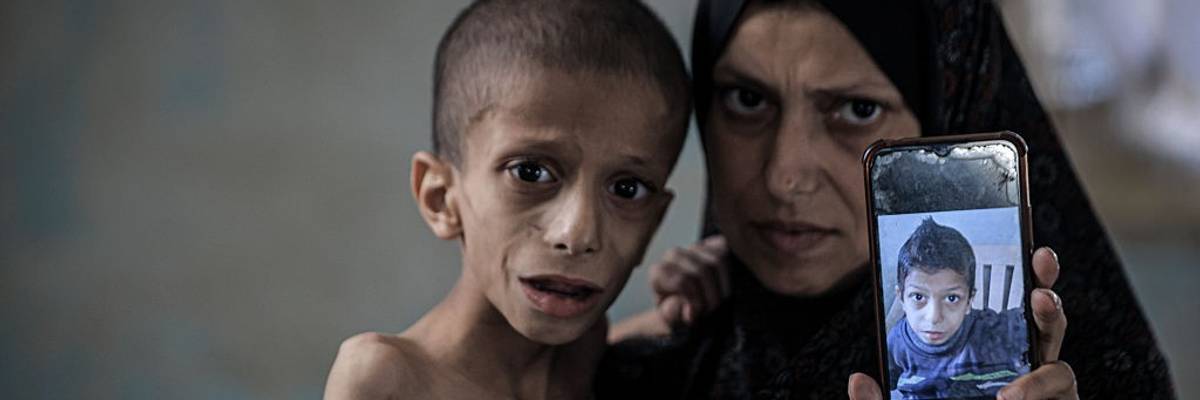
Ten-year-old Nafez Mohammed Khidr Nasser struggles with serious health issues due to malnutrition and brain atrophy in Gaza City, Gaza on August 5, 2025.
History Will Judge Those Who Stayed Silent on Gaza
Gaza is infinitely small when judged by its geography, economic worth, or political import. Yet, it has proven to be the most significant global event defining this generation's political consciousness.
The consequences of the Israeli genocide in Gaza will be dire. An event of this degree of barbarity, sustained by an international conspiracy of moral inertia and silence, will not be relegated to history as just another "conflict" or a mere tragedy.
The Gaza genocide is a catalyst for major events to come. Israel and its benefactors are acutely aware of this historical reality. This is precisely why Israeli Prime Minister Benjamin Netanyahu is in a race against time, desperately trying to ensure his country remains relevant, if not standing, in the coming era. He pursues this through territorial expansion in Syria, relentless aggression against Lebanon, and, of course, the desire to annex all occupied Palestinian territories.
But history cannot be controlled with such precision. However clever he may think he is, Netanyahu has already lost the ability to influence the outcome. He has been unable to set a clear agenda in Gaza, let alone achieve any strategic goals in a 365-square-kilometer expanse of destroyed concrete and ashes. Gazans have proven that collective sumud can defeat one of the most well-equipped modern armies.
Indeed, history itself has taught us that changes of great magnitude are inevitable. The true heartbreak is that this change is not happening fast enough to save a starving population, and the growing pro-Palestinian sentiment is not expanding at the rate needed to achieve a decisive political outcome.
For now, however, it is most urgent that we use our collective will and action to influence one single historical event: ending the genocide and the famine in Gaza.
Our confidence in this inevitable change is rooted in history. World War I was not just a "Great War" but a cataclysmic event that fully shattered the geopolitical order of its time. Four empires were fundamentally reshuffled; some, like the Austro-Hungarian and Ottoman, were erased from existence.
The new world order resulting from World War I was short-lived. The modern international system we have today is a direct outcome of World War II. This includes the United Nations and all the new Western-centric economic, legal, and political institutions that were forged by the Bretton Woods Agreement in 1944. This includes the World Bank, the International Monetary Fund, and ultimately the North Atlantic Treaty Organization, thus sowing the seeds of yet more global conflicts.
The fall of the Berlin Wall was heralded as the singular defining event that resolved the lingering conflicts of the post-WWII geopolitical struggle, supposedly ushering in a new, permanent global realignment, or, to some, the "end of history."
History, however, had other plans. Not even the horrific September 11 attacks and the subsequent US-led wars could reinvent the global order in a way that was consistent with US-Western interests and priorities.
Gaza is infinitely small when judged by its geography, economic worth, or political import. Yet, it has proven to be the most significant global event defining this generation's political consciousness.
The fact that the self-proclaimed guardians of the post-WWII order are the very entities that are violently and brazenly violating every international and humanitarian law is enough to fundamentally alter our relationship with the West's championed "rule-based order."
This may not seem significant now, but it will have profound long-term consequences. It has largely compromised and, in fact, delegitimized the moral authority imposed, often by violence, by the West over the rest of the world for decades, especially in the Global South.
This self-imposed delegitimization will also impact the very idea of democracy, which has been under siege in many countries, including Western democracies. This is only natural, considering that most of the planet feels strongly that Israel must end its genocide and that its leaders must be held accountable. Yet, little to no action follows.
The shift in Western public opinion in favor of Palestinians is astounding when considered against the backdrop of total Western media dehumanization of the Palestinian people and Western governments' blind allegiance to Israel. More shocking is that this shift is largely the result of the work of ordinary people on social media, activists mobilizing in the streets, and independent journalists, mostly in Gaza, working under extreme duress and with minimal resources.
A central conclusion is the failure of Arab and Muslim nations to factor into this tragedy befalling their own brethren in Palestine. While some are engaged in empty rhetoric or self-flagellation, others subsist in a state of inertia, as if the genocide in Gaza were a foreign topic, like the wars in Ukraine or Congo.
This fact alone shall challenge our very collective self-definition—what it means to be an Arab or a Muslim, and whether such definitions carry supra-political identities. Time will tell.
The left, too, is problematic in its own way. While not a monolith, and while many on the left have championed the global protests against the genocide, others remain splintered and unable to form a unified front, even temporarily.
Some leftists are still chasing their own tales, crippled by the worry that being anti-Zionist would earn them the label of antisemitism. For this group, self-policing and self-censorship are preventing them from taking decisive action.
History does not take its cues from Israel or Western powers. Gaza will indeed result in the kind of global shifts that will affect us all, far beyond the Middle East. For now, however, it is most urgent that we use our collective will and action to influence one single historical event: ending the genocide and the famine in Gaza.
The rest will be left to history, and to those who wish to be relevant when the world changes again.
We are at a crossroads
This country and this world are at a monumental crossroads. In a few short weeks, US voters will have an opportunity to beat back the forces of fascism and confront the billionaires who are rigging the economy, our media system, and our democracy, making it increasingly impossible for ordinary people to get by. We’re not just talking about the election. We’re talking about what must be done once these fascist elements are vanquished from power. We need a bolder set of solutions than what either major party has so far been willing to offer and a working-class movement ready to fight like hell for it. Trump didn't emerge from nowhere. The conditions that fueled MAGA authoritarianism were created by decades of radical neoliberal economic policies and a corrupt political system dominated by corporate interests. They slashed taxes on the super-rich, promising that the benefits would trickle down. They said giveaways to the corporate titans would make life more affordable for the rest of us. It was all bullshit. And when a bitter, betrayed populace searches for someone to blame, right-wing demagogues have little trouble finding scapegoats. People know when they're being lied to, but you won't hear any of this from the corporate media. Only independent journalism—powered and funded by people who believe in building a better world—can deliver truly trustworthy daily news. Our Fall Campaign is underway, and we need your help. To power our newsroom through the rest of the year, we need to raise $125,000 by midnight on October 31. So if you share our vision, please contribute whatever you can to sustain our work. |
The consequences of the Israeli genocide in Gaza will be dire. An event of this degree of barbarity, sustained by an international conspiracy of moral inertia and silence, will not be relegated to history as just another "conflict" or a mere tragedy.
The Gaza genocide is a catalyst for major events to come. Israel and its benefactors are acutely aware of this historical reality. This is precisely why Israeli Prime Minister Benjamin Netanyahu is in a race against time, desperately trying to ensure his country remains relevant, if not standing, in the coming era. He pursues this through territorial expansion in Syria, relentless aggression against Lebanon, and, of course, the desire to annex all occupied Palestinian territories.
But history cannot be controlled with such precision. However clever he may think he is, Netanyahu has already lost the ability to influence the outcome. He has been unable to set a clear agenda in Gaza, let alone achieve any strategic goals in a 365-square-kilometer expanse of destroyed concrete and ashes. Gazans have proven that collective sumud can defeat one of the most well-equipped modern armies.
Indeed, history itself has taught us that changes of great magnitude are inevitable. The true heartbreak is that this change is not happening fast enough to save a starving population, and the growing pro-Palestinian sentiment is not expanding at the rate needed to achieve a decisive political outcome.
For now, however, it is most urgent that we use our collective will and action to influence one single historical event: ending the genocide and the famine in Gaza.
Our confidence in this inevitable change is rooted in history. World War I was not just a "Great War" but a cataclysmic event that fully shattered the geopolitical order of its time. Four empires were fundamentally reshuffled; some, like the Austro-Hungarian and Ottoman, were erased from existence.
The new world order resulting from World War I was short-lived. The modern international system we have today is a direct outcome of World War II. This includes the United Nations and all the new Western-centric economic, legal, and political institutions that were forged by the Bretton Woods Agreement in 1944. This includes the World Bank, the International Monetary Fund, and ultimately the North Atlantic Treaty Organization, thus sowing the seeds of yet more global conflicts.
The fall of the Berlin Wall was heralded as the singular defining event that resolved the lingering conflicts of the post-WWII geopolitical struggle, supposedly ushering in a new, permanent global realignment, or, to some, the "end of history."
History, however, had other plans. Not even the horrific September 11 attacks and the subsequent US-led wars could reinvent the global order in a way that was consistent with US-Western interests and priorities.
Gaza is infinitely small when judged by its geography, economic worth, or political import. Yet, it has proven to be the most significant global event defining this generation's political consciousness.
The fact that the self-proclaimed guardians of the post-WWII order are the very entities that are violently and brazenly violating every international and humanitarian law is enough to fundamentally alter our relationship with the West's championed "rule-based order."
This may not seem significant now, but it will have profound long-term consequences. It has largely compromised and, in fact, delegitimized the moral authority imposed, often by violence, by the West over the rest of the world for decades, especially in the Global South.
This self-imposed delegitimization will also impact the very idea of democracy, which has been under siege in many countries, including Western democracies. This is only natural, considering that most of the planet feels strongly that Israel must end its genocide and that its leaders must be held accountable. Yet, little to no action follows.
The shift in Western public opinion in favor of Palestinians is astounding when considered against the backdrop of total Western media dehumanization of the Palestinian people and Western governments' blind allegiance to Israel. More shocking is that this shift is largely the result of the work of ordinary people on social media, activists mobilizing in the streets, and independent journalists, mostly in Gaza, working under extreme duress and with minimal resources.
A central conclusion is the failure of Arab and Muslim nations to factor into this tragedy befalling their own brethren in Palestine. While some are engaged in empty rhetoric or self-flagellation, others subsist in a state of inertia, as if the genocide in Gaza were a foreign topic, like the wars in Ukraine or Congo.
This fact alone shall challenge our very collective self-definition—what it means to be an Arab or a Muslim, and whether such definitions carry supra-political identities. Time will tell.
The left, too, is problematic in its own way. While not a monolith, and while many on the left have championed the global protests against the genocide, others remain splintered and unable to form a unified front, even temporarily.
Some leftists are still chasing their own tales, crippled by the worry that being anti-Zionist would earn them the label of antisemitism. For this group, self-policing and self-censorship are preventing them from taking decisive action.
History does not take its cues from Israel or Western powers. Gaza will indeed result in the kind of global shifts that will affect us all, far beyond the Middle East. For now, however, it is most urgent that we use our collective will and action to influence one single historical event: ending the genocide and the famine in Gaza.
The rest will be left to history, and to those who wish to be relevant when the world changes again.
- Holocaust Survivor Tells Student Anti-Genocide Protesters: 'Just Keep Doing It' ›
- Israel's War on Palestinian Children Must End ›
- ICC President Warns Attacks on Court Threaten 'Future of Humanity' ›
- 'Crucial Moment in History': ICJ Orders Israel to Prevent Acts of Genocide in Gaza ›
- 'History Will Judge': Sanders Says US Must Stand With Gaza Children, Not Netanyahu ›
- Opinion | 'We Will Not Be Silent:' Hearing Stilled Voices of the Gaza Genocide | Common Dreams ›