

SUBSCRIBE TO OUR FREE NEWSLETTER
Daily news & progressive opinion—funded by the people, not the corporations—delivered straight to your inbox.
5
#000000
#FFFFFF
To donate by check, phone, or other method, see our More Ways to Give page.

Americans United: Moisés Serrano, media@au.org
ACLU of Texas: Kristi Gross, media@aclutx.org
ACLU: Ella Wiley, media@aclu.org
FFRF: Amit Pal, apal@ffrf.org
Simpson Thacher & Bartlett LLP: mediainquiries@stblaw.com
The American Civil Liberties Union was founded in 1920 and is our nation's guardian of liberty. The ACLU works in the courts, legislatures and communities to defend and preserve the individual rights and liberties guaranteed to all people in this country by the Constitution and laws of the United States.
(212) 549-2666

Trump raged against Democratic Gov. Tim Walz, whom he described as an "incompetent thief who doesn't want to get involved," and seemed to suggest that if ordinary Minnesotans took matters into their own hands, they'd have the blessing of the federal government.
"The Somalians [sic] should not be allowed to get away with what they are doing," Trump said. "They view you as weak and stupid people. Fight back, Minnesota, fight back! If you need, the Federal Government will come to your rescue."
It's hardly the first time Trump has slurred Somali immigrants. He's previously referred to them as "garbage," "very low-IQ people," and "pirates," and said they should all be deported from the country.
But Trump’s comments on Thursday went a step further than that, leaving community members on edge about the possibility that they could instigate violent attacks by his supporters.
“President Trump is placing a target on the backs of Somali Americans," said Jaylani Hussein, the executive director of the Council on American-Islamic Relations in Minnesota, in a statement. "His words are not simply political rhetoric. They are a dangerous invitation to hatred and potentially violence."
"Minnesota has led the nation in attacks on mosques, including fire-bombings," he said. "We know firsthand what happens when hateful rhetoric turns into violence.”
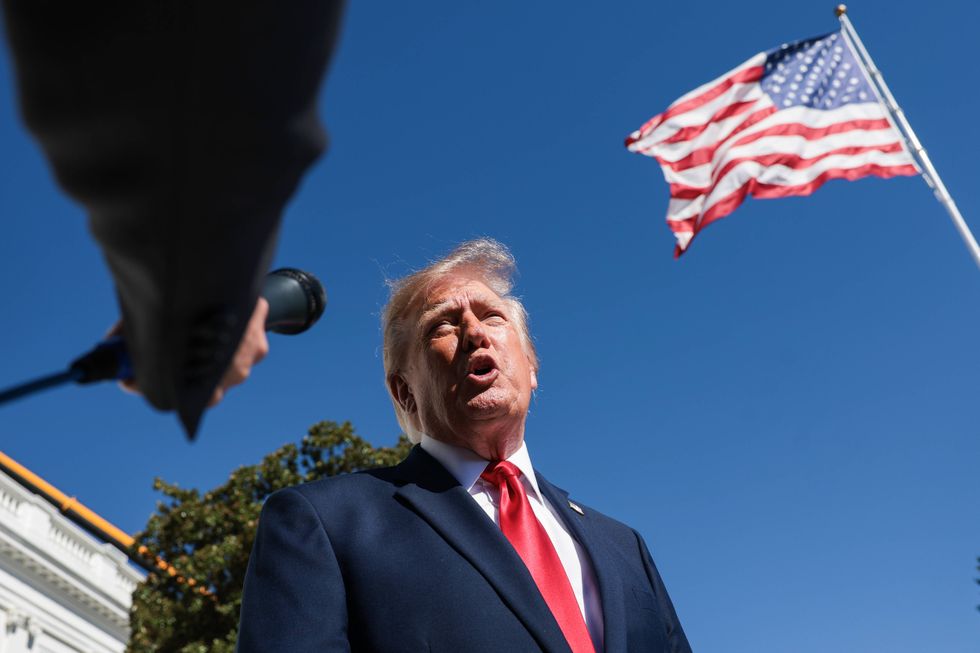 President Donald Trump speaks to reporters before boarding Marine One on the South Lawn of the White House on October 7, 2026 in Washington, DC. (Photo by Anna Moneymaker/Getty Images)
Faisa Ahmed, a Somali American political organizer and senior adviser to the reelection campaign of Minnesota Attorney General Keith Ellison, said unease ran deep in her home city of Minneapolis on Thursday night.
"Every Somali I know is walking through our own neighborhoods scared tonight," she said.
"The president just told Minnesotans to 'fight back' against Somalis by name," she added. "This is incitement, and everyone should call it that."
Though most of them are US citizens, Somalis were aggressively targeted when thousands of immigration agents descended on Minnesota during Trump's Operation Metro Surge earlier this year.
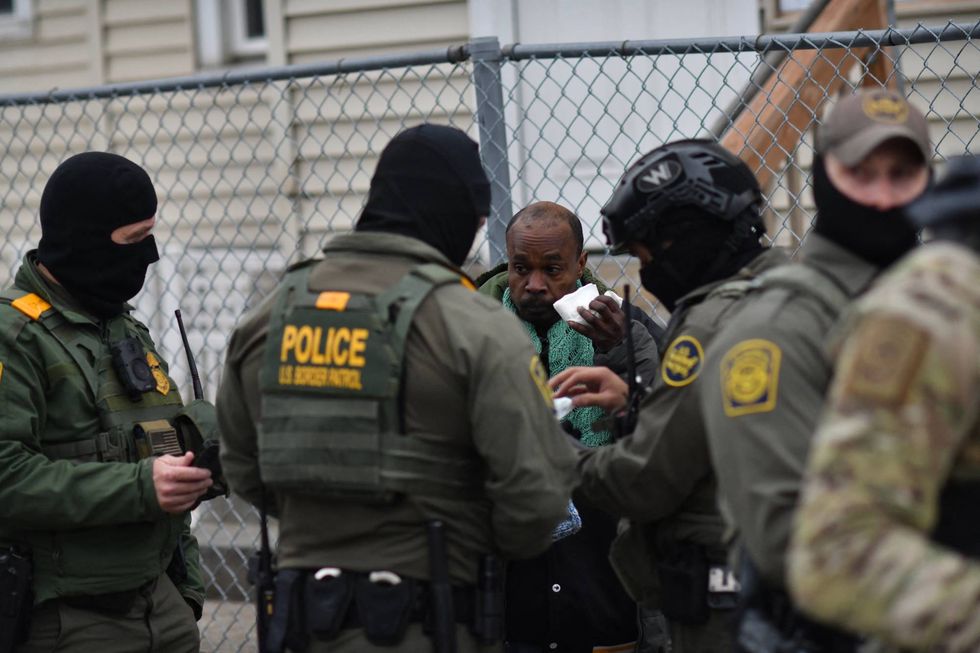 US Border Patrol agents detain an unidentified man of Somali descent in Minneapolis, Minnesota, on January 8, 2026. (Photo by Octavio Jones/AFP via Getty Images)
In numerous cases, Immigration and Customs Enforcement (ICE) and other federal agents were documented engaging in explicit racial profiling directed at Somali citizens—as well as other immigrants—many of whom were detained arbitrarily and attacked with physical violence.
Ellison, who has sued the administration for civil rights violations and pushed for agents to be investigated under state law, said he would not let this happen again.
"We've seen what Trump's government coming to the 'rescue' looks like," he wrote on social media Thursday. "It ended with two Minnesotans shot dead by federal agents, racial profiling, assaults, and the violation of our rights."
"Never again. If Trump tries, I'll drag him back to court," he said. "Somali Minnesotans are our neighbors. They are part of Minnesota. And the Minnesota I know and love is so much better than this bigotry."
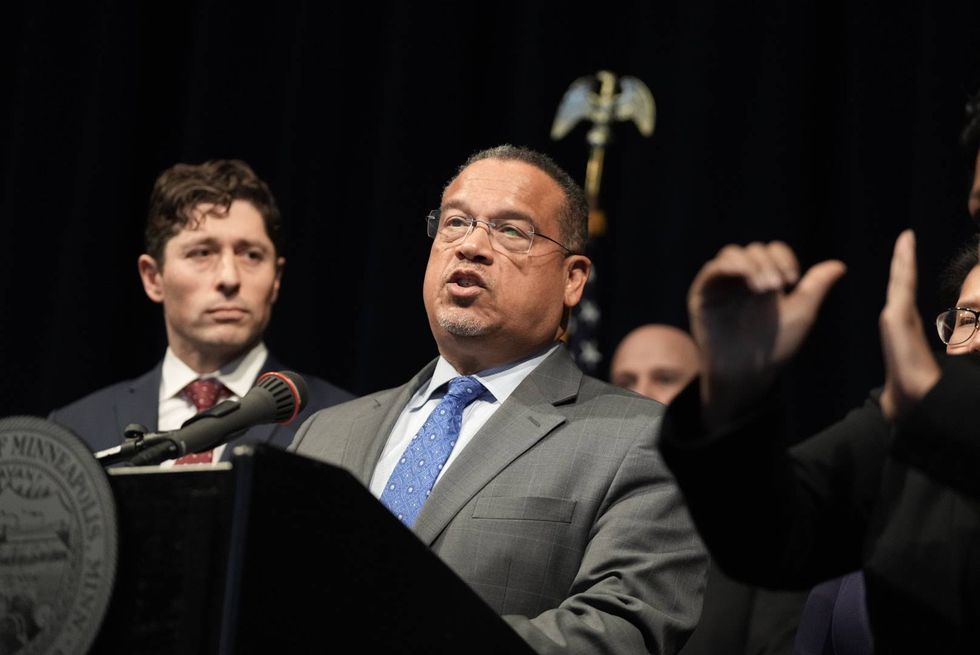 Minnesota Attorney General Keith Ellison, along with Minneapolis Mayor Jacob Frey, announced a lawsuit against the Trump administration's deployment of ICE agents to the Twin Cities during a press conference at Minneapolis City Hall on Monday, January 12, 2026. (Photo by Richard Tsong-Taatarii/The Minnesota Star Tribune via Getty Images)
With less than a month to go before the midterm elections, Minnesota Republicans have sought to harness bigotry against Somalis to rally support.
Democratic candidate Doug Chapin, who is trying to unseat Republican House Majority Whip Tom Emmer in Minnesota's 6th district, put it plainly during an event on Thursday night.
"I'll call it what it is," Chapin said. "The president is trying to foment a race war here in Minnesota."
But as the violent rhetoric has ramped back up, so have expressions of solidarity from community members who have called it out as a cynical political tactic.
"This is KGB-style fear-mongering before an election. Trump’s terrified he’s going to lose the House and Senate and get impeached," said Mike Norton, the former vice chair of the Democratic Farmer-Labor Party in Minneapolis.
"I love my Somali friends and neighbors. They make Minnesota a better place," Norton said. "If Trump tries to come for them, he needs to come through all of us."


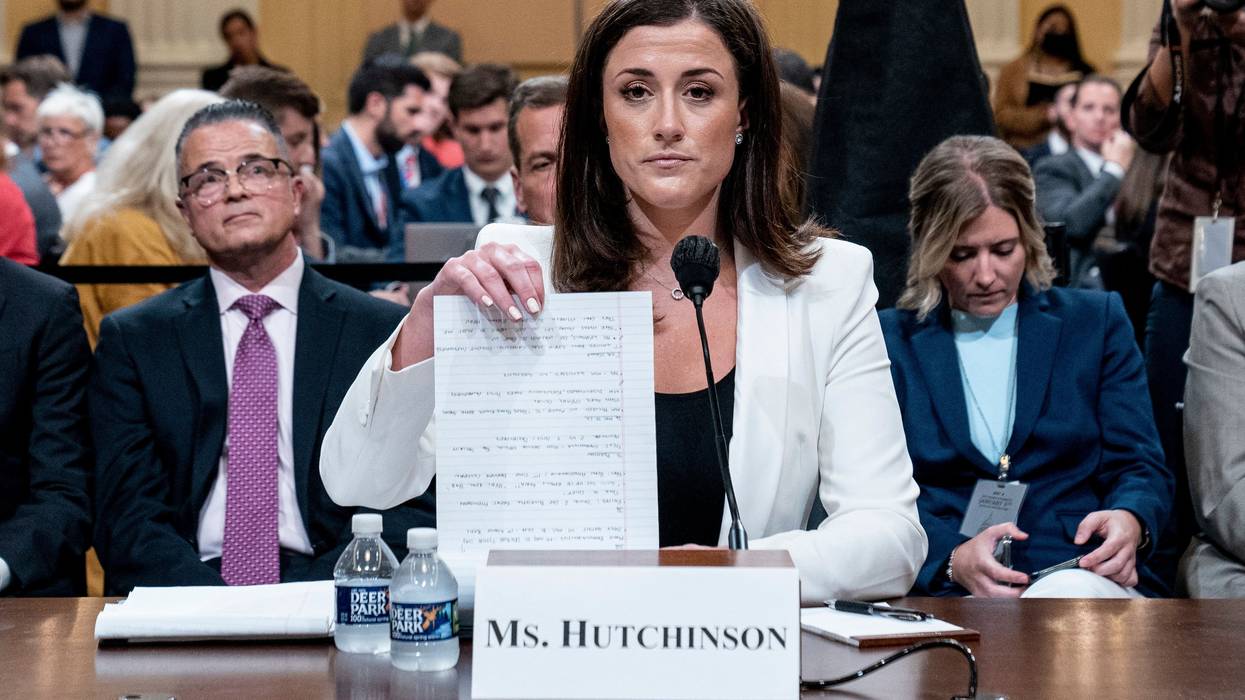
Hutchinson, who was an aide to then-White House chief of staff Mark Meadows, told Congress she overheard Trump demand the removal of metal detectors at his rally near the White House before the riot, despite knowing that some attendees were armed. She quoted him saying, "They're not here to hurt me."
She also relayed information she claimed to have learned secondhand from others in the Trump White House. She said that Anthony Ornato, the deputy White House chief of staff for operations, told her that Trump tried to grab the steering wheel of his SUV away from the Secret Service agent driving it so he could join supporters at the Capitol.
Ornato has since said he does not recall recounting this incident to Hutchinson, and the agents in the vehicle have denied that it took place, according to a subsequent investigation by Republicans in the House of Representatives. However, other witnesses have testified more broadly to Trump's anger that he could not join his supporters at the Capitol.
Hutchinson also said Meadows was reluctant to intervene as rioters threatened to hang then-Vice President Mike Pence. She claimed Meadows told her that Trump believed Pence—who'd refused to assist his efforts to overturn the election result—deserved the threats and that the rioters had done nothing wrong.
Trump has since pardoned every one of the more than 1,500 people convicted of offenses related to the Capitol attack, including those who committed violent felonies.
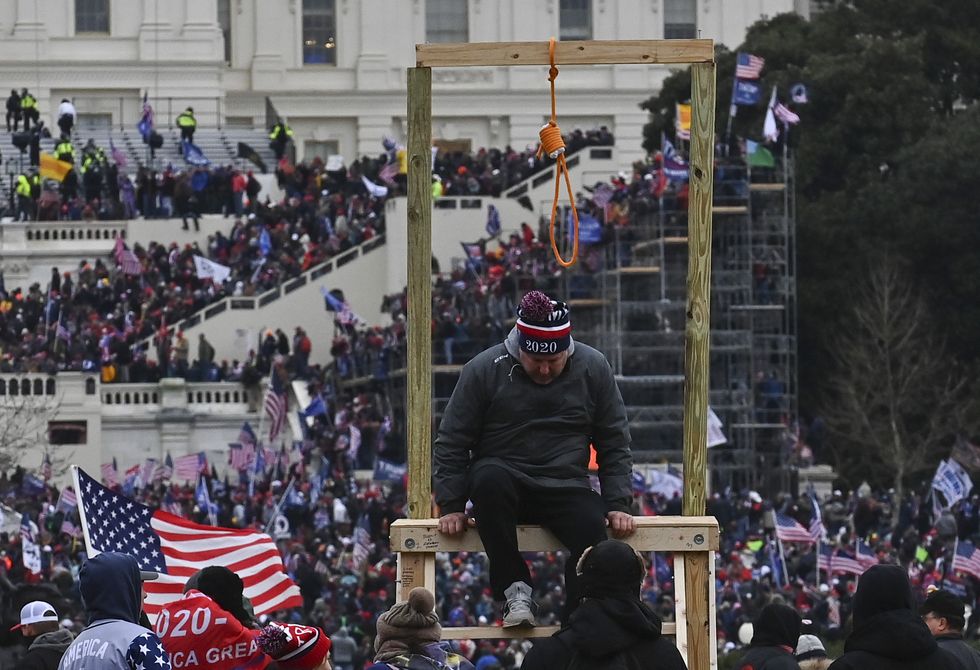 A man climbs down after being photographed with a noose during a protest calling for legislators to overturn the election results in President Donald Trump's favor at the US Capitol on January 6, 2021 in Washington, DC. (Photo by Ricky Carioti/The Washington Post via Getty Images)
Asked about plans to bring charges against Hutchinson, a DOJ spokesperson said, "The department does not confirm or deny the existence of investigations, or the lack thereof."
But the department's pursuit of Hutchinson has been public knowledge since at least April, when The New York Times reported that a criminal investigation into the former White House aide had been opened.
The Times noted that it was highly unusual for such a probe to be undertaken by the Civil Rights Division—which usually handles cases of discrimination—rather than the US attorney for the District of Columbia.
Efforts to prosecute Hutchinson follow attempts by the DOJ to bring charges against the president's other perceived enemies, including former FBI Director James Comey and New York Attorney General Letitia James, both of which have been thrown out of court.
In a post on social media, Andrew Fleischman, a Georgia-based trial and appeals lawyer, decried the targeting of Hutchinson as "a chilling and corrupt indictment of a woman who told the truth," but also "yet another opportunity for the Trump DOJ to shit its pants in court."