

SUBSCRIBE TO OUR FREE NEWSLETTER
Daily news & progressive opinion—funded by the people, not the corporations—delivered straight to your inbox.
5
#000000
#FFFFFF
To donate by check, phone, or other method, see our More Ways to Give page.
Daily news & progressive opinion—funded by the people, not the corporations—delivered straight to your inbox.
15 leading organisations working with migrants have today written to the Speaker of the House of Commons, John Bercow, to express deep concern over hundreds of cases of MPs reporting their constituents to the Home Office's immigration hotline for immigration crime.
The letter, which has been signed by the Joint Council for the Welfare of Immigrants, Doctors of the World and Bail for Immigration Detainees among others, describes the revelation as a "fundamental breach of trust" which leaves many migrants fearful of approaching their MP.
Home Office figures uncovered by a parliamentary question show that 723 people have been reported by MPs for immigration enforcement since the government's 'hostile environment' policy was introduced in 2012.
Despite migrants often having "nowhere to turn" for help with immigration cases following years of legal aid cuts, the advice groups say they can no longer recommend people approach their MP for support unless the MP has signed a pledge promising not to report them to the Home Office.
The 'MPs not Border Guards' pledge was launched by Migrants Organise, one of the signatories of the letter, and campaign group Global Justice Now in the summer. It has been signed by more than 100 MPs from all political parties, including shadow Home Secretary Diane Abbott.
Satbir Singh, Chief Executive of Joint Council for the Welfare of Immigrants, said:
"Everyone has the right to seek advice from their MPs in a confidential and safe environment. Parliament must clarify whether passing constituent data to immigration enforcement breaches data protection. It must also explain to the country, under what circumstances is this practice taking place? MPs should not be taking it upon themselves to act as "border guards", betraying the trust of their constituents and perpetuating a culture of hostility towards migrants. Have we not learnt anything from the scandal and tragedy of Windrush? MPs acting as border guards puts highly vulnerable people at risk, driving them further underground and into the shadows."
Akram Salhab, Campaigns and Advocacy Officer at Migrants Organise, said:
"The demand that MPs represent all their constituents equally is a basic principle of how Parliament works. Sadly, this is yet another pillar of our democracy that has been sacrificed at the altar of the Government's Hostile Environment policies. Many of our members are now afraid of approaching their MPs lest their reaching out for support be used to detain and deport them. All political parties, whether in Government or not, can end this practice today by instructing their MPs not to share their constituent's data for immigration enforcement purposes."
Notes
1. The full list of signatories to the letter is: Migrants Organise, Joint Council for the Welfare of Immigrants, Doctors of the World, Asylum Matters, Bail for Immigration Detainees, Right 2 Work UK, Right to Remain, Project 17, Women for Refugee Women, Unity Project, Latin American Women's Rights Service, Migrants Resource Centre/Asylum Aid, Praxis Community Projects, Refuweegee
2. Under the MPs Not Border Guards pledge, MPs commit to represent and advocate for all their constituents, regardless of immigration status, in order to maintaining their constituency surgeries as a safe space for migrants. The list of MPs who have signed the pledge is available at: www.globaljustice.org.uk/pledge
Global Justice Now is a democratic social justice organisation working as part of a global movement to challenge the powerful and create a more just and equal world. We mobilise people in the UK for change, and act in solidarity with those fighting injustice, particularly in the global south.
020 7820 4900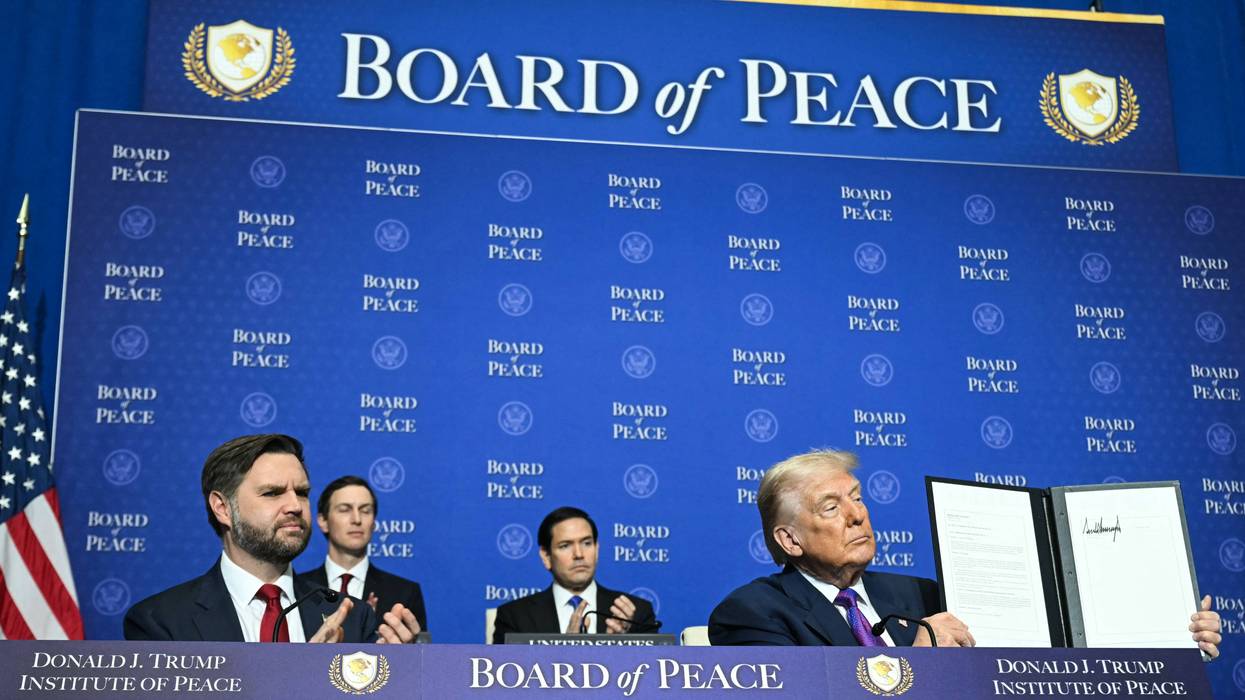
“The plan was supposed to bring relief. Instead, Palestinians in Gaza are still hungry, still cannot reach medical care, and civilians are still being killed."
Six months in, US President Donald Trump's so-called "Board of Peace" has failed to deliver on its promise of a "secure and prosperous future" for Palestinians in Gaza, who are still being killed, maimed, and deprived of food and other crucial supplies by Israel's ongoing genocide.
"The humanitarian infrastructure sustaining life in Gaza remains in peril over six months after the ceasefire agreement in October 2025," Human Rights Watch said on Tuesday.
"As the Board of Peace prepares to brief the United Nations Security Council on May 21 on its newly-issued six-month progress report, Israeli authorities are undermining humanitarian lifelines," HRW continued.
"Continuing Israeli attacks have killed at least 856 Palestinians and wounded 2,463 others, according to Gaza Health Ministry," the group said.
"Aid volumes remain far below required levels and critical humanitarian access routes have been repeatedly obstructed, according to the UN Office for the Coordination of Humanitarian Affairs (OCHA)," HRW noted.
HRW continued:
In its May 15 report, the Board of Peace said that aid distributed by UN agencies and partners increased by over 70% during the reporting period compared to pre-ceasefire levels, and that "basic food needs have been stabilized for the first time since 2023." The Board's headline figures leave out that aid volumes have fallen since early 2026, have not recovered to where they were before the US and Israel-Iran war began in late February, and have never reached the minimum the UN says is needed. Four UN agencies warned in December 2025 that famine, pushed back only weeks earlier through the ceasefire, could rapidly return without sustained access and supplies.
“The plan was supposed to bring relief. Instead, Palestinians in Gaza are still hungry, still cannot reach medical care, and civilians are still being killed,” HRW Middle East deputy director Adam Coogle said in a statement. “Whatever the Board of Peace tells the Security Council, that is what life looks like six months in.”
HRW said that while "commercial trucks have started entering Gaza again in larger numbers," total aid deliveries—which were dramatically curtailed following the launch of the illegal US-Israeli war of choice on Iran—are "far short of what Gaza’s population needs."
Furthermore, "none of Gaza’s 37 hospitals were fully operational, and only 19 were even partially functioning, according to OCHA."
"Over 43,000 people have suffered life-changing injuries, 1 in 4 of them children, and more than 50,000 need long-term rehabilitation care, the World Health Organization (WHO) estimates," HRW said. "No rehabilitation facility is fully running. Israeli delays in approving specialized surgical equipment are limiting complex care, and at least 46% of essential medicines are out of stock, according to WHO."
"According to the Gaza Health Ministry, more than 1,400 patients have died waiting for medical evacuation since the Rafah crossing was seized in May 2024, and over 18,500 patients, including 4,000 children, still await evacuation," the publication reported.
"Israeli restrictions on bringing in generators, engine oil, and spare parts are causing breakdowns across healthcare, sanitation, debris removal, and humanitarian work," HRW said.
"Rodents and insects are spreading across displacement camps, and skin infections and other diseases are on the rise, OCHA reported," the publication noted. "UN agencies and aid groups working on water and sanitation warn that severe shortages of lubricant oil and spare parts are causing generators to fail."
Israeli forces are still killing and wounding humanitarian workers in Gaza.
"As of late April, OCHA had recorded the killing of at least 593 aid workers in Gaza since October 2023, including 8 since the ceasefire," HRW said.
Funding pledges have also fallen far short of what's needed.
"At the Board of Peace’s inaugural meeting in February, 10 Board member states and observers pledged a total of $17 billion for reconstruction against UN estimates of $70 billion needed," HRW said. "As of April, the Board had received less than $1 billion of the pledged amount, with only three contributors having delivered funds, according to Reuters."
“When the Board of Peace briefs the Security Council, members should weigh what they hear against what UN agencies are reporting from the ground,” Coogle said. “No spin can hide the fact that aid is not entering at the needed scale, patients do not have access to adequate medical care, and crossings to Gaza remain limited.”
The HRW report came a day after the UN Human Rights Office urged Israel to prevent further "acts of genocide" in Gaza, while raising concerns about escalating "ethnic cleansing" in the illegally occupied West Bank of Palestine.
A panel of UN human rights experts found last year that Israel was committing genocide in Gaza. South Africa filed a genocide case against Israel at the International Court of Justice that's now backed by nearly 20 nations.
Israeli Prime Minister Benjamin Netanyahu and former Defense Minister Yoav Gallant are wanted by the International Criminal Court for war crimes and crimes against humanity, including murder and forced starvation. The ICC is also reportedly seeking to arrest Israeli National Security Minister Itamar Ben-Gvir and Finance Minister Bezalel Smotrich over the illegal settler colonization and ethnic cleansing of the West Bank.
More than 250,000 Palestinians have been killed or wounded in Gaza since the Hamas-led attack of October 2023. Nearly all of the coastal strip's approximately 2.1 million people have also been forcibly displaced, starved, or sickened during that period. Through it all, the Biden and Trump administrations have provided Israel with more than $20 billion in armed aid and diplomatic cover, including vetoes of several UN Security Council ceasefire resolutions.
One Democratic lawmaker said the legislation "puts trans youth in harm's way and censors content that acknowledges trans people’s existence."
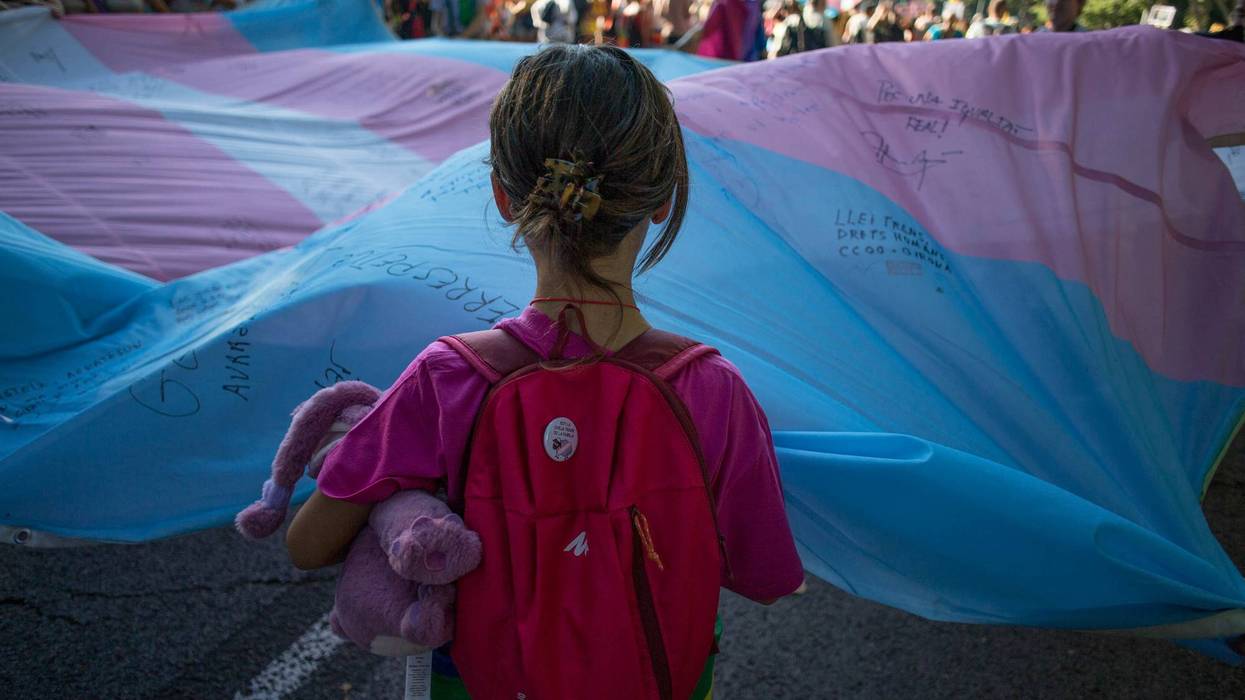
The Republican-controlled US House of Representatives on Wednesday passed legislation that critics warn would force public schools receiving federal funding to "out" transgender students to their parents without or without their consent, a policy that advocates warn could endanger many trans youth.
HR 2016, the Stopping Indoctrination and Protecting Kids Act—but dubbed the "Don't Say Trans" bill by some critics—was introduced by Reps. Tim Walberg (R-Mich.) and Burgess Owens (R-Utah) and passed by a vote of 217-198, with eight Democrats joining every Republican and one Independent present in voting for the legislation.
The bill—which faces an uncertain future in the Senate—requires federally funded elementary and middle schools to obtain parental consent before changing a student's gender markers, pronouns, or preferred names on school forms. It also mandates parental consent for a student's access to sex-based accommodations, such as locker rooms or bathrooms.
The legislation also prohibits federal elementary and secondary education funds from being used to advance concepts of so-called "gender ideology"—an inaccurate term that GLAAD says is "deployed by opponents to undermine and dehumanize transgender and nonbinary people"—in the classroom. The term features prominently in a day-one executive order signed by President Donald Trump in what critics say is an effort to effectively erase trans people from public existence.
"Too many schools are keeping parents in the dark about what’s happening in their own children’s classrooms, even going so far as to withhold critical information about their kids’ well-being and development," Walberg said.
"Families deserve honesty, not secrecy—especially when it comes to issues like gender identity," he continued. "Simply put, parents should never be the last to know—that’s not political, it’s common sense."
"Meanwhile, political and ideological agendas are being pushed through curriculum without parents’ knowledge or consent, sidelining the very people responsible for raising these children," Walberg added.
However, Rep. Pramila Jayapal (D-Wash.)—whose daughter is transgender—accused Republicans of "targeting trans kids with a bill that would require public schools to forcibly out students who want to use certain pronouns or accommodations, even if it would put them in danger."
"I'm a hell no," Jayapal said of the bill. "Trans kids deserve better."
Other House Democrats echoed Japayal's objections, with Rep. Robin Kelly of Illinois warning that the "Republicans’ extreme bill puts trans youth in harm's way and censors content that acknowledges trans people’s existence."
"I will always stand up for student safety, and I am voting NO," Kelly added.
Rep. Christian Menefee of Texas said that "instead of making sure America’s schools have the resources and support they need to ensure every student is given the same shot at success, Republicans are bringing a 'Don't Say Trans' bill to the floor today to forcibly out trans students, even if doing so would put students in immediate physical danger."
"Parents across the country want their children to learn in safe, affirming environments, without worrying about their kids being outed for their gender identity," he added. "I won’t vote to put those kids in danger."
Rep. Laura Friedman of California lamented: "This week, congressional Republicans could have spent their time working with us to help Americans afford groceries and pay their rent. Instead, they spent their time advancing a bill meant to demean trans youth."
"I voted no and urge them to focus on the real needs of Americans," Friedman added.
The eight Democrats who voted for the bill are: Reps. Vicente Gonzalez and Henry Cuellar of Texas, Don Davis of North Carolina, Cleo Fields of Louisiana, Laura Gillen of New York, Marcy Kaptur of Ohio, Marie Gluesenkamp Perez of Washington, and Eugene Vindman of Virginia.
The Human Rights Campaign (HRC) called HR 2616 part of "MAGA’s weird obsession with trans people."
"When the going gets tough for Republicans in Congress—when they have no answers to soaring gas prices from Trump’s illegal war with Iran, rampant corruption, or spiking health premiums—they can’t help but fall back on their favorite strategy: fearmongering," HRC's Jennifer Pike Bailey wrote on Tuesday. "And unfortunately, the transgender community is still the scapegoat du jour."
"Policies that denigrate trans youth don’t succeed in erasing these students, they just make their lives immeasurably harder," she continued. "It’s the job of schools to keep youth safe. And as we’ve seen, LGBTQ+ students are in physical danger when harmful policies are implemented. Recent FBI data shows that in states that have passed these types of laws, anti-LGBTQ+ hate crimes in schools have quadrupled."
"Opponents of LGBTQ+ equality are creating a lot of noise, and the only way to stop them is to be louder," Pike Bailey stressed. "We need phone calls, emails, letters to every member of Congress telling them to stop these attacks. And then we need to show up at the ballot box."
BREAKING: The House of Representatives just voted to require teachers to forcibly out transgender youth against their will.Censoring "gender ideology" does nothing to advance the basic promise that every child deserves the same opportunity to thrive, and that includes transgender students.
— ACLU (@aclu.org) May 20, 2026 at 2:32 PM
Tyler Hack, executive director of the trans political advocacy group Christopher Street Project, said in a statement that “HR 2616 is yet another escalation in Republicans’ sick obsession with criminalizing queer people and trans youth."
"This ‘Don’t Say Trans’ bill does not protect kids—it is government-mandated forced outing," Hack added. "Mandating that teachers act as agents of the state and out their own students is not protection; it’s cruelty."
According to the Trans Legislation Tracker, "an independent research organization tracking bills that impact trans and gender-diverse people across the United States," there are currently 778 state-level and 126 national bills under consideration "that would negatively impact" targeted people.
One of the most recently approved bills, signed into law Friday by Republican South Carolina Gov. Henry McMaster, forces trans and nonbinary students who need to use public school restrooms to go outside to porta-potties. LGBTQ Nation's Greg Owen slammed the law as a "latter-day 'separate but equal' attack on trans rights."
The Campaign for Southern Equality (CSE) said that “this bill will do nothing to make our schools safer."
"Rather," CSE added, "it will make using the bathroom a difficult and even dangerous experience for trans and nonbinary youth, who are extremely likely to be bullied and harassed when using the bathroom."
"The court must stand firmly on the side of truth, fairness, and the basic principle that we should not take a life while serious questions of innocence remain unanswered."
The ACLU on Wednesday urged the US Supreme Court to intervene and block the state of Tennessee from executing a man who could be exonerated by DNA evidence.
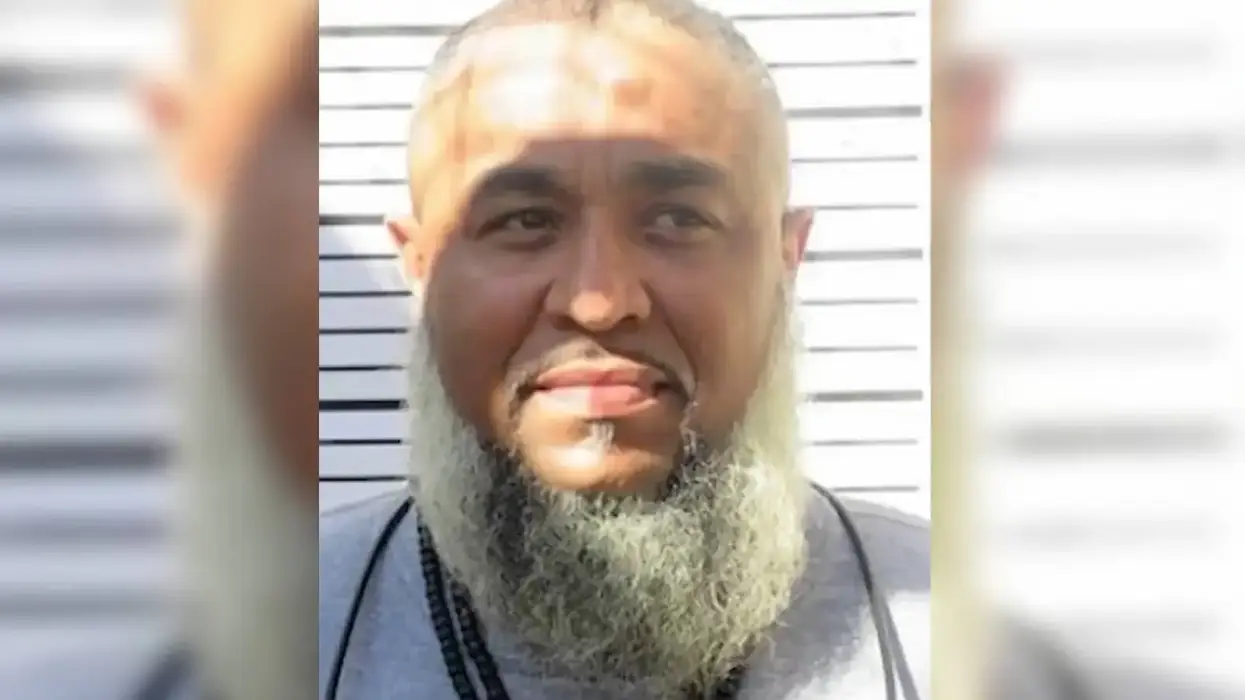
In its plea to the court, the ACLU said that Tennessee is "sitting on unidentified DNA and fingerprint evidence" that could prove the innocence of Tony Carruthers, who has been on death row for three decades after being convicted of kidnapping and murdering three people in 1996.
The ACLU has repeatedly asked for Carruthers' execution, which is scheduled for Thursday, to be postponed so that investigators can take between two and three weeks to examine potentially exculpatory forensic evidence.
Lucas Cameron-Vaughn, legal director of the ACLU of Tennessee, said the state had a duty to ensure that it had convicted the right man, and he pointed to troubling aspects of the case that should give courts pause before signing off on his execution.
“Mr. Carruthers was forced to represent himself at trial, and now faces death based on flimsy circumstantial evidence and unreliable witnesses," Cameron-Vaughn said. "Forensic evidence the state refuses to test could change everything. The Supreme Court must act now to stop Tennessee from taking an irreversible step while so many critical questions remain unanswered.”
Maria DeLiberato, senior counsel at the ACLU’s Capital Punishment Project, argued that the Supreme Court is "the final safeguard between Tennessee and this irreversible injustice" that would come from executing someone for a crime they may not have committed.
"We are only hours away from the state of Tennessee executing a potentially innocent man while they are sitting on evidence that could prove who really committed this crime," DeLiberato said. "The court must stand firmly on the side of truth, fairness, and the basic principle that we should not take a life while serious questions of innocence remain unanswered and while readily available forensic testing could answer those very questions."
Republican Tennessee Gov. Bill Lee on Tuesday said he would not intervene to stop Carruthers' execution, even after local faith leaders and past exonerees delivered a petition signed by more than 130,000 Americans asking him to reconsider.