SUBSCRIBE TO OUR FREE NEWSLETTER
Daily news & progressive opinion—funded by the people, not the corporations—delivered straight to your inbox.
5
#000000
#FFFFFF
To donate by check, phone, or other method, see our More Ways to Give page.
Daily news & progressive opinion—funded by the people, not the corporations—delivered straight to your inbox.
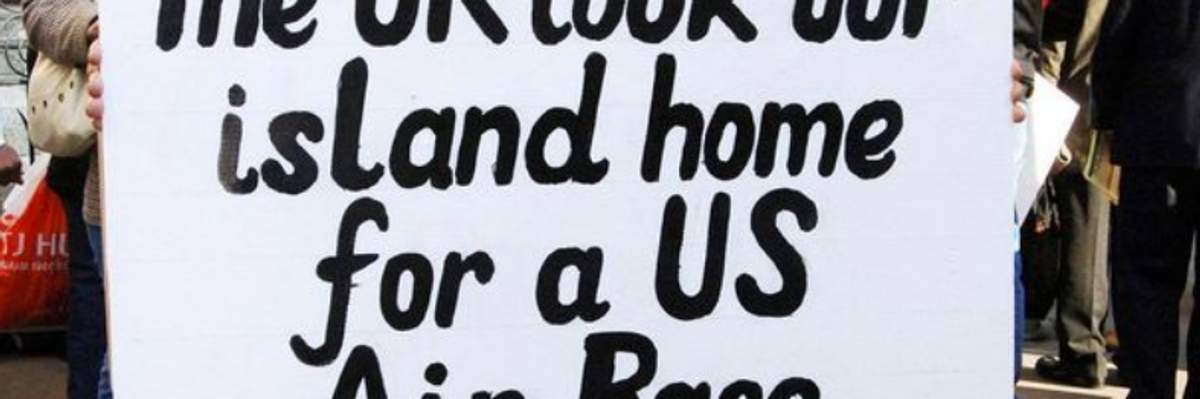
"This is a historic moment for Mauritius and all its people, including the Chagossians who were unconscionably removed from their homeland and prevented from returning for the last half century."(Photo: PA)
The United Nations' highest court on Monday called Britain's claim of sovereignty over the Chagos Islands "illegal" and urged London to "decolonize" the remote archipelago -- which is home to one of the most important US overseas military bases -- by returning the islands to Mauritius.
In a 13-1 vote, the International Court of Justice (ICJ) in The Hague, Netherlands issued an advisory opinion declaring that the Chagos Islands were not lawfully separated from the former British colony of Mauritius, which was forced to give up the islands in 1965 in exchange for independence. ICJ President Abdulqawi Ahmed Yusuf said the "unlawful" separation had not been based on a "free and genuine expression of the people concerned" and was therefore a "wrongful act."
"The United Kingdom is under an obligation to bring an end to its administration of the Chagos Archipelago as rapidly as possible, thereby allowing Mauritius to complete the decolonization of its territory," Yusuf asserted.
The ICJ agreed with Mauritius' submission, which argued it had been coerced into giving up the islands. Such an act is a violation of UN Resolution 1514, which prohibits the breakup of colonies before independence. The only judge who dissented from the court's main opinion was Joan E. Donoghue of the United States.
"This is a historic moment for Mauritius and all its people, including the Chagossians who were unconscionably removed from their homeland and prevented from returning for the last half century," Mauritius Prime Minister Pravind Kumar Jugnauth said after the decision. "Our territorial integrity will now be made complete, and when that occurs, the Chagossians and their descendants will finally be able to return home."
The British Foreign Office responded by noting the ICJ action was "an advisory opinion, not a judgment" and that it would "carefully" consider its contents. London calls the remote archipelago the British Indian Ocean Territory (BIOT). It paid Mauritius, which gained independence in 1968, over PS4 million, or nearly $90 million today, for islands, which include the Diego Garcia atoll.
Today Diego Garcia is one of the largest and most important US military bases in the world. Dozens of US warships along with thousands of troops and support staff are stationed there, and the base is crucial to US operations in the Middle East. However, until the late 1960s Diego Garcia was home to around 1,500 Chagossians, a Creole-speaking people who lived peacefully in the paradisiacal archipelago with their beloved dogs. The John F. Kennedy and Lyndon B. Johnson administrations secretly convinced Britain to grant exclusive control over the atoll, "without local inhabitants," to the US. American documents refer to "sweeping" and "sanitizing" the island, while a top British official privately wrote that "we must surely be very tough about this... there will be no indigenous population except seagulls." One British diplomatic cable at the time referred to Chagossians as "Tarzans."
The island's residents were tricked, scared or forced into leaving. When a contingent of US Marines arrived, they told the Chagossians they would be bombed or shot if they didn't go.
The island's residents were tricked, scared or forced into leaving. When a contingent of US Marines arrived, they told the Chagossians they would be bombed or shot if they didn't go. In a bid to hasten the evacuation, the islanders' dogs were rounded up and gassed to death with exhaust fumes from US military vehicles before being burned in front of grieving and terrified children. Chagossians were allowed to take a single suitcase each before being herded onto cargo ships, never to return home again.
Most Chagossians were dumped, initially without any compensation, a thousand miles (1,600 km) away in the island nation of Mauritius, where they were treated as second-class citizens and where many ended up living lives of abject poverty and heartbreak in the slums of the capital, Port Louis. There, they learned the meaning of debt, unemployment, drugs and prostitution. It wasn't long before suicides and child deaths took a heavy toll on the refugees. Meanwhile, and without any apparent sense of irony, the US military called its new Halliburton-built base on Diego Garcia Camp Justice.
The expulsion of an entire people from its homeland was not reported to Congress or the American people. Britain lied, claiming "there is nothing in our files about a population and an evacuation." To this day, Chagossians are fighting for the right to return to their homeland. They've been unsuccessful despite two British High Court rulings declaring their removal illegal. Most will likely die without ever seeing home again.
"Back home was paradise," 81-year-old Samynaden Rosemond, who was 36 when he was forced from Diego Garcia, told the BBC in Port Louis, Mauritius last year. "If I die here my spirit will be everywhere; it wouldn't be happy. But if I die there, I will be in peace."
Dear Common Dreams reader, It’s been nearly 30 years since I co-founded Common Dreams with my late wife, Lina Newhouser. We had the radical notion that journalism should serve the public good, not corporate profits. It was clear to us from the outset what it would take to build such a project. No paid advertisements. No corporate sponsors. No millionaire publisher telling us what to think or do. Many people said we wouldn't last a year, but we proved those doubters wrong. Together with a tremendous team of journalists and dedicated staff, we built an independent media outlet free from the constraints of profits and corporate control. Our mission has always been simple: To inform. To inspire. To ignite change for the common good. Building Common Dreams was not easy. Our survival was never guaranteed. When you take on the most powerful forces—Wall Street greed, fossil fuel industry destruction, Big Tech lobbyists, and uber-rich oligarchs who have spent billions upon billions rigging the economy and democracy in their favor—the only bulwark you have is supporters who believe in your work. But here’s the urgent message from me today. It's never been this bad out there. And it's never been this hard to keep us going. At the very moment Common Dreams is most needed, the threats we face are intensifying. We need your support now more than ever. We don't accept corporate advertising and never will. We don't have a paywall because we don't think people should be blocked from critical news based on their ability to pay. Everything we do is funded by the donations of readers like you. When everyone does the little they can afford, we are strong. But if that support retreats or dries up, so do we. Will you donate now to make sure Common Dreams not only survives but thrives? —Craig Brown, Co-founder |
The United Nations' highest court on Monday called Britain's claim of sovereignty over the Chagos Islands "illegal" and urged London to "decolonize" the remote archipelago -- which is home to one of the most important US overseas military bases -- by returning the islands to Mauritius.
In a 13-1 vote, the International Court of Justice (ICJ) in The Hague, Netherlands issued an advisory opinion declaring that the Chagos Islands were not lawfully separated from the former British colony of Mauritius, which was forced to give up the islands in 1965 in exchange for independence. ICJ President Abdulqawi Ahmed Yusuf said the "unlawful" separation had not been based on a "free and genuine expression of the people concerned" and was therefore a "wrongful act."
"The United Kingdom is under an obligation to bring an end to its administration of the Chagos Archipelago as rapidly as possible, thereby allowing Mauritius to complete the decolonization of its territory," Yusuf asserted.
The ICJ agreed with Mauritius' submission, which argued it had been coerced into giving up the islands. Such an act is a violation of UN Resolution 1514, which prohibits the breakup of colonies before independence. The only judge who dissented from the court's main opinion was Joan E. Donoghue of the United States.
"This is a historic moment for Mauritius and all its people, including the Chagossians who were unconscionably removed from their homeland and prevented from returning for the last half century," Mauritius Prime Minister Pravind Kumar Jugnauth said after the decision. "Our territorial integrity will now be made complete, and when that occurs, the Chagossians and their descendants will finally be able to return home."
The British Foreign Office responded by noting the ICJ action was "an advisory opinion, not a judgment" and that it would "carefully" consider its contents. London calls the remote archipelago the British Indian Ocean Territory (BIOT). It paid Mauritius, which gained independence in 1968, over PS4 million, or nearly $90 million today, for islands, which include the Diego Garcia atoll.
Today Diego Garcia is one of the largest and most important US military bases in the world. Dozens of US warships along with thousands of troops and support staff are stationed there, and the base is crucial to US operations in the Middle East. However, until the late 1960s Diego Garcia was home to around 1,500 Chagossians, a Creole-speaking people who lived peacefully in the paradisiacal archipelago with their beloved dogs. The John F. Kennedy and Lyndon B. Johnson administrations secretly convinced Britain to grant exclusive control over the atoll, "without local inhabitants," to the US. American documents refer to "sweeping" and "sanitizing" the island, while a top British official privately wrote that "we must surely be very tough about this... there will be no indigenous population except seagulls." One British diplomatic cable at the time referred to Chagossians as "Tarzans."
The island's residents were tricked, scared or forced into leaving. When a contingent of US Marines arrived, they told the Chagossians they would be bombed or shot if they didn't go.
The island's residents were tricked, scared or forced into leaving. When a contingent of US Marines arrived, they told the Chagossians they would be bombed or shot if they didn't go. In a bid to hasten the evacuation, the islanders' dogs were rounded up and gassed to death with exhaust fumes from US military vehicles before being burned in front of grieving and terrified children. Chagossians were allowed to take a single suitcase each before being herded onto cargo ships, never to return home again.
Most Chagossians were dumped, initially without any compensation, a thousand miles (1,600 km) away in the island nation of Mauritius, where they were treated as second-class citizens and where many ended up living lives of abject poverty and heartbreak in the slums of the capital, Port Louis. There, they learned the meaning of debt, unemployment, drugs and prostitution. It wasn't long before suicides and child deaths took a heavy toll on the refugees. Meanwhile, and without any apparent sense of irony, the US military called its new Halliburton-built base on Diego Garcia Camp Justice.
The expulsion of an entire people from its homeland was not reported to Congress or the American people. Britain lied, claiming "there is nothing in our files about a population and an evacuation." To this day, Chagossians are fighting for the right to return to their homeland. They've been unsuccessful despite two British High Court rulings declaring their removal illegal. Most will likely die without ever seeing home again.
"Back home was paradise," 81-year-old Samynaden Rosemond, who was 36 when he was forced from Diego Garcia, told the BBC in Port Louis, Mauritius last year. "If I die here my spirit will be everywhere; it wouldn't be happy. But if I die there, I will be in peace."
The United Nations' highest court on Monday called Britain's claim of sovereignty over the Chagos Islands "illegal" and urged London to "decolonize" the remote archipelago -- which is home to one of the most important US overseas military bases -- by returning the islands to Mauritius.
In a 13-1 vote, the International Court of Justice (ICJ) in The Hague, Netherlands issued an advisory opinion declaring that the Chagos Islands were not lawfully separated from the former British colony of Mauritius, which was forced to give up the islands in 1965 in exchange for independence. ICJ President Abdulqawi Ahmed Yusuf said the "unlawful" separation had not been based on a "free and genuine expression of the people concerned" and was therefore a "wrongful act."
"The United Kingdom is under an obligation to bring an end to its administration of the Chagos Archipelago as rapidly as possible, thereby allowing Mauritius to complete the decolonization of its territory," Yusuf asserted.
The ICJ agreed with Mauritius' submission, which argued it had been coerced into giving up the islands. Such an act is a violation of UN Resolution 1514, which prohibits the breakup of colonies before independence. The only judge who dissented from the court's main opinion was Joan E. Donoghue of the United States.
"This is a historic moment for Mauritius and all its people, including the Chagossians who were unconscionably removed from their homeland and prevented from returning for the last half century," Mauritius Prime Minister Pravind Kumar Jugnauth said after the decision. "Our territorial integrity will now be made complete, and when that occurs, the Chagossians and their descendants will finally be able to return home."
The British Foreign Office responded by noting the ICJ action was "an advisory opinion, not a judgment" and that it would "carefully" consider its contents. London calls the remote archipelago the British Indian Ocean Territory (BIOT). It paid Mauritius, which gained independence in 1968, over PS4 million, or nearly $90 million today, for islands, which include the Diego Garcia atoll.
Today Diego Garcia is one of the largest and most important US military bases in the world. Dozens of US warships along with thousands of troops and support staff are stationed there, and the base is crucial to US operations in the Middle East. However, until the late 1960s Diego Garcia was home to around 1,500 Chagossians, a Creole-speaking people who lived peacefully in the paradisiacal archipelago with their beloved dogs. The John F. Kennedy and Lyndon B. Johnson administrations secretly convinced Britain to grant exclusive control over the atoll, "without local inhabitants," to the US. American documents refer to "sweeping" and "sanitizing" the island, while a top British official privately wrote that "we must surely be very tough about this... there will be no indigenous population except seagulls." One British diplomatic cable at the time referred to Chagossians as "Tarzans."
The island's residents were tricked, scared or forced into leaving. When a contingent of US Marines arrived, they told the Chagossians they would be bombed or shot if they didn't go.
The island's residents were tricked, scared or forced into leaving. When a contingent of US Marines arrived, they told the Chagossians they would be bombed or shot if they didn't go. In a bid to hasten the evacuation, the islanders' dogs were rounded up and gassed to death with exhaust fumes from US military vehicles before being burned in front of grieving and terrified children. Chagossians were allowed to take a single suitcase each before being herded onto cargo ships, never to return home again.
Most Chagossians were dumped, initially without any compensation, a thousand miles (1,600 km) away in the island nation of Mauritius, where they were treated as second-class citizens and where many ended up living lives of abject poverty and heartbreak in the slums of the capital, Port Louis. There, they learned the meaning of debt, unemployment, drugs and prostitution. It wasn't long before suicides and child deaths took a heavy toll on the refugees. Meanwhile, and without any apparent sense of irony, the US military called its new Halliburton-built base on Diego Garcia Camp Justice.
The expulsion of an entire people from its homeland was not reported to Congress or the American people. Britain lied, claiming "there is nothing in our files about a population and an evacuation." To this day, Chagossians are fighting for the right to return to their homeland. They've been unsuccessful despite two British High Court rulings declaring their removal illegal. Most will likely die without ever seeing home again.
"Back home was paradise," 81-year-old Samynaden Rosemond, who was 36 when he was forced from Diego Garcia, told the BBC in Port Louis, Mauritius last year. "If I die here my spirit will be everywhere; it wouldn't be happy. But if I die there, I will be in peace."