

SUBSCRIBE TO OUR FREE NEWSLETTER
Daily news & progressive opinion—funded by the people, not the corporations—delivered straight to your inbox.
5
#000000
#FFFFFF
To donate by check, phone, or other method, see our More Ways to Give page.
Daily news & progressive opinion—funded by the people, not the corporations—delivered straight to your inbox.
COLEEN ROWLEY, rowleyclan at earthlink.net, @ColeenRowley
COLEEN ROWLEY, rowleyclan at earthlink.net, @ColeenRowley
Rowley, a former FBI special agent and division counsel whose May 2002 memo to the FBI Director exposed some of the FBI's pre-9/11 failures -- was named one of TIME magazine's "Persons of the Year" in 2002. Rowley wrote to the FBI Director again in February 2003 with some hard questions about the reliability of the evidence being adduced to "justify" the impending invasion of Iraq. She now warns of terror attacks being used as pretexts for official agendas. She also warns that bulk collection of personal data by government, like military interventions, is not only counter to liberty, but counterproductive to the alleged goal of stopping attacks.
She just wrote the piece "Visa Waiver Program Has Same Weak Links; Mass Surveillance and Terrorist Watchlisting Don't Work," which states: "Politicians are scoring points with a frightened U.S. population by hyping the supposed danger of letting in up to 10,000 Syrian refugees, but a much greater or actual risk exists in the current gaps in a visa-waiver program. Yesterday's massacre in San Bernardino again underscores the ineffectiveness of relying upon bulk data collection and intelligence agencies' watch-listing processes to 'keep us safe from terrorism.'
She wrote a piece for the Star Tribune, "Coleen Rowley: Ten years after Iraq," which in 2013 gave an overview of major issues: "Ten years ago, I made the ultimately futile effort of writing to FBI Director Robert Mueller warning that he needed to tell the truth about the Bush administration's unjustified decision to preemptively invade Iraq and the likelihood it would prove counterproductive. ...
"My letter compared Bush-Cheney's rush to war with the impatience and bravado that had led to the FBI's disastrous 1993 assault at Waco, where 'the children [the FBI] sought to liberate all died when [David] Koresh and his followers set fires.' On a much more tragic scale, hundreds of thousands of Iraqi civilians were killed and millions more were wounded or displaced. Iraq's infrastructure was destroyed. Severe problems remain with lack of clean drinking water, electricity and a lack of professionals in Iraq to help rebuild.
"Even worse, the flames of sectarian hatred were ignited, based on religious and ethnic differences, leading to violent civil strife, ethnic cleansing and terror bombings. Those fires continue to burn."
A nationwide consortium, the Institute for Public Accuracy (IPA) represents an unprecedented effort to bring other voices to the mass-media table often dominated by a few major think tanks. IPA works to broaden public discourse in mainstream media, while building communication with alternative media outlets and grassroots activists.
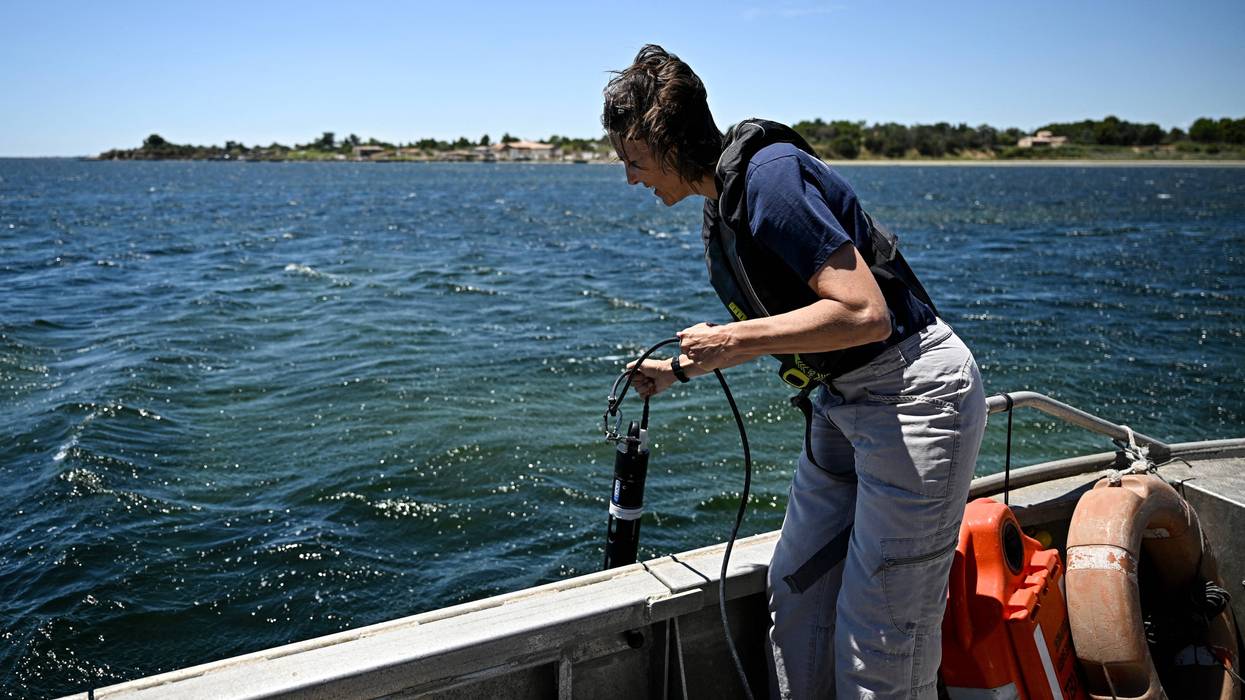
New data from Copernicus Climate Change Service, said one campaigner, shows that the "natural systems we depend on are being pushed closer to their limits.”
Last month's average global ocean surface temperature was the hottest ever recorded in the month of July, fueled in part by uniquely intense, fossil fuel-driven El Niño conditions that have wreaked deadly havoc around the world this summer.
The European Union's Copernicus Climate Change Service (C3S) said Monday that last month—which ranked as the second warmest July on record—"saw exceptionally high temperatures for the month across a large portion of the tropical Pacific, an area where El Niño conditions are present and forecast to further strengthen in the coming months." Average global sea surface temperatures (SSTs) were 20.96°C last month, surpassing the July 2023 record of 20.89°C.
"Around Europe, SSTs reached record highs for July along the Atlantic coast and western Mediterranean, associated with widespread strong or severe marine heatwave conditions," C3S said.
Brian O'Donnell, director of the Campaign for Nature, said the latest Copernicus data "is more than another climate milestone; it is a warning that the natural systems we depend on are being pushed closer to their limits."
"Governments have become very good at documenting these records. Now they need to become much better at safeguarding the forests, wetlands, and oceans that help regulate the climate and protect communities from the impacts of warming world," said O'Donnell. "With land and ocean temperatures across Europe breaching records, governments should be investing far more and delivering on their global commitment to protect at least 30% of land and ocean by 2030."
The new analysis was released as western Europe and other regions faced deadly heat, wildfires, drought, and other extreme weather as the international community, including the US and other leading polluters, fails to rein in fossil fuel use—and as oil and gas giants reap record profits.
“Our leaders’ response has to be swifter and stronger than El Niño," Anne Jellema, executive director of the environmental group 350.org, said Monday. "We already know that global heating is supercharging extreme weather damage, and the public wants polluters to pay for it. With Big Oil’s earnings skyrocketing while a global food crisis looms, now is the time to act. The only way to stave off a humanitarian disaster is to make those causing it pay upfront—before even more damage is done.”
Scientists have characterized this year's El Niño, which officially began on June 11, as historically strong and dangerous, earning it the informal "Super El Niño" label.
The Washington Post reported Monday that the 2026 El Niño is "on track to become the strongest ever recorded, with cascading effects on global climate peaking late this year and into next."
"El Niño’s effects have already been felt around the planet," the Post observed. "The higher frequency of heat domes worldwide, the nonstop temperature records in Peru and deadly storms in Chile can all be linked to this pattern. As can the destructive typhoons in the western Pacific Ocean and the relative calm of the Atlantic hurricane season so far."
United Nations Secretary-General António Guterres warned in remarks to reporters last month that El Niño is no longer just "on our doorstep."
"It is inside the house—and turning up the heat," said Guterres. "We have already endured a summer of extremes—record-shattering heat domes, apocalyptic wildfires raging in Spain, France, and far beyond. Thousands of lives lost in the scorching conditions.”
“But according to the latest science," he added, "this is only a warm-up act."
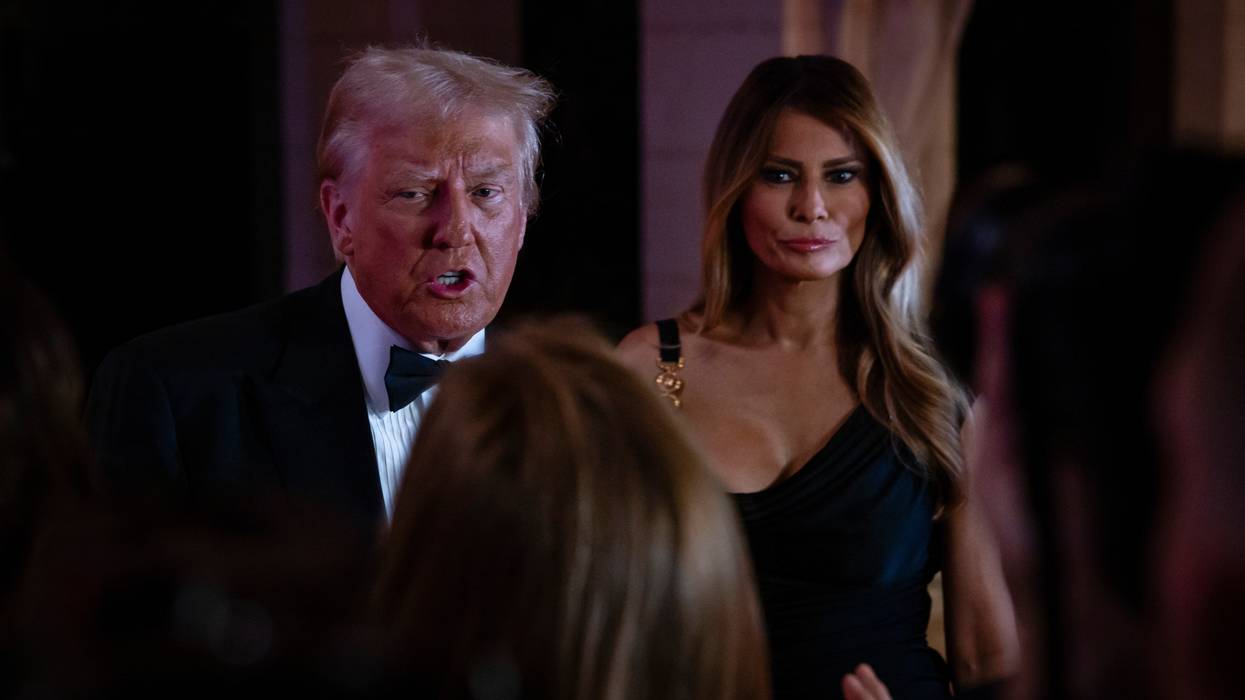
President's smear of Michigan Democrat described as "not just an attack on American Muslims, but on the idea of America itself."
President Donald Trump, a notorious racist and serial liar, is being denounced once again for his hateful contributions to public discourse and American politics for an Islamophobic social media post over the weekend targeting Dr. Abdul El-Sayed, the Democratic nominee for US Senate in Michigan, and his wife, Dr. Sarah Jukaku—both of whom are practicing Muslims.
On Saturday evening, Trump posted side-by-side images with he and his wife, Melania Trump, wearing formal dinner attire, on the left and El-Sayed and his wife, who wears a Islamic hijab, both dressed casually in what appears to be a diner, on the right.
The heading above the photo posted by Trump declared, "Two VERY DIFFERENT Americas."
The overtly anti-Muslim message, now pervasive within the Republican Party, stirred immediate anger and harsh rebuke.
"America does not belong to any one race or religion, and President Trump does not get to decide who counts as an American," said Nihad Awad, executive director of the Council on American-Islamic Relations (CAIR).
"An American man of Egyptian descent is just as American as an American man of German descent, and an American woman wearing a hijab is just as American an American woman without one," Awad continued. "President Trump's racist and bigoted social media post was not just an attack on American Muslims, but on the idea of America itself."
As Zeteo's Mehdi Hasan wrote on Friday, El-Sayed's recent victory in the Michigan primary last week has unleashed a fresh wave of GOP-led attacks on Muslims, a strategy that is well-worn, that is only likely to intensify.
"We are about to witness an explosion of Islamophobia in America of the kind we have not seen for decades," warned Hasan. "Expect them to throw the whole bigoted kitchen sink at El-Sayed. This will be the anti-Zohran Mamdani campaign on anti-Muslim steroids."
Asked about Trump's racist attack by CNN on Sunday, El-Sayed turned the Islamophobic smear into an opportunity to explain what does distinguish people like the president and the First Lady from the kind of lawmaker the Michigan Democrat said he wants to be and the kind of relationship he and his wife have.
“Yeah, he’s right,” El-Sayed told CNN, when asked about the post on Sunday.
“One in which your overlords are two people who don’t like each other, but join in the interest of making billions of dollars off of you—or two people who genuinely love each other, enjoyed some pancakes together, want to come together to build the kind of America where they can raise a family and know that that family is going to have the good things.”
“Yes, you’ve got two different visions of America,” said El-Sayed. “Donald Trump’s vision is the one you’re living in right now. Can you afford your gas? Can you afford your groceries? Do you believe, when you look in your children's eyes, that they're going to have a better future than you did?”
Democratic Michigan Senate nominee Abdul El-Sayed responds to President Trump posting a picture of his wife. pic.twitter.com/j8lGGwPET8
— State of the Union (@CNNSOTU) August 9, 2026
"Sarah and I are running," he continued, "because when we look our daughters in the eye, we want them to believe that they are every bit as able to have a better future than the one they could have had under the Trump administration—that they can live together with their sisters and brothers in America in a way that they lock arms to build the good things that they deserve together. Where they'll know they have the good healthcare that they need and good jobs, and know that there are kids who live 15 minutes away whose lives are very, very different from theirs because we've been okay for far too long with a level of inequality in this country."
For his daughters, El-Sayed added, "I want them to live in a country where they breath clean air and drink clean water. And actually, Sarah and I like each other. I don't know about about the First Lady and the president, but from what I've heard it's a bit of a rocky road."
CAIR's Awad called on Trump to "immediately remove this hateful post and to uphold his responsibility to represent all Americans, regardless of race, religion, or background." He also said that all members of Congress must "reject ongoing efforts to fuel anti-Muslim hatred and division" that has become so commonplace in recent decades, only intensifying under Trump's leadership.
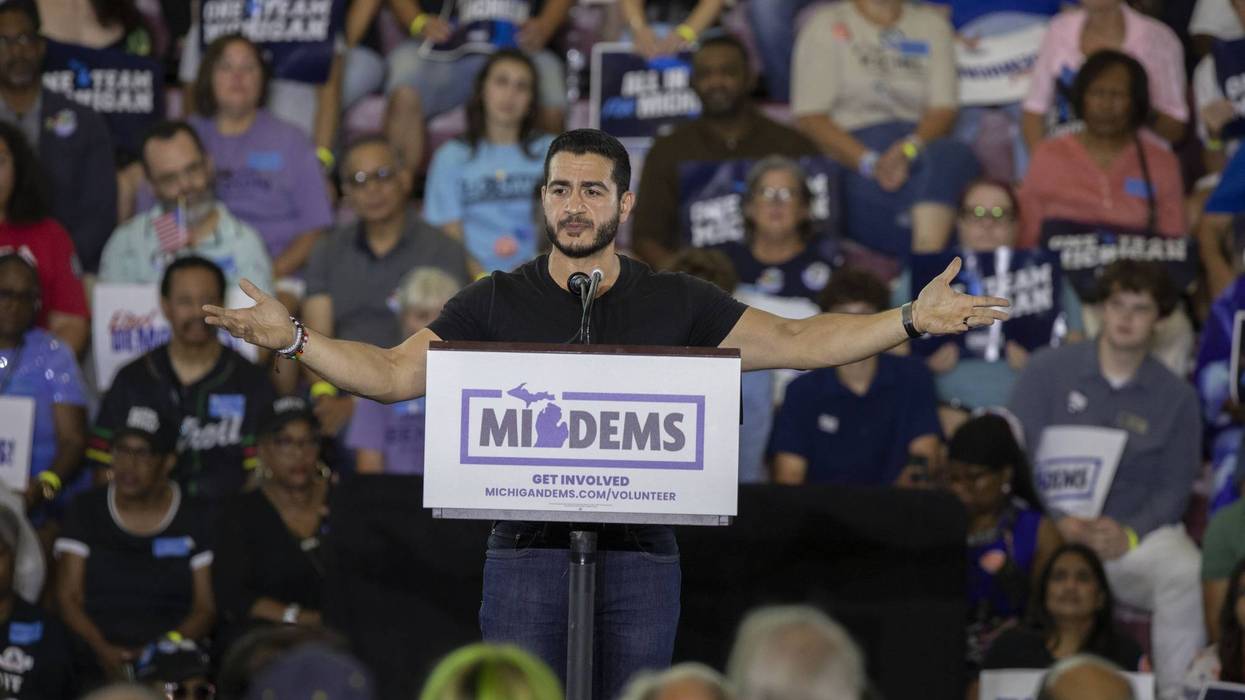
"Donald Trump's vision is the one you're living in right now," said the Democratic US Senate nominee. "Can you afford your gas? Can you afford your groceries?"
Fresh off his victory in the Democratic primary race for US Senate in Michigan, progressive epidemiologist Abdul El-Sayed used television appearances on Sunday to respond to increasingly hysterical attacks by Republicans and President Donald Trump while offering a positive vision for the future, underscoring his support for Medicare for All and a humane foreign policy that doesn't fund genocide.
"It’s not radical to believe that people should be able to afford their groceries," El-Sayed, who is set to face Republican Mike Rogers in November, told NBC's Kristen Welker in response to the Senate GOP's first attack ad of the general election. "It’s not radical to believe that you should have healthcare in this country. It’s not radical to believe that you don’t think the president should be able to deny elections or make $2.2 billion off of his role in office. It’s not radical to believe that all of us should be able to breathe clean air and drink clean water. Those are the things that I’ve been fighting for."
Trump and congressional Republicans wasted no time launching unhinged and bigoted attacks on El-Sayed following his primary victory last week. In a Truth Social post on Saturday, Trump posted an image showing a photo of himself and First Lady Melania Trump alongside a photo of El-Sayed and his wife, psychiatrist Sarah Jukaku. The caption of the photo blared, "Two VERY DIFFERENT America's [sic]."
Asked by CNN's Jake Tapper to respond to the post, El-Sayed said Sunday that the caption is "right."
"One [America] in which your overlords are two people who don't like each other, but joint in the interest of making billions of dollars off of you, or two people who genuinely love each other, enjoyed some pancakes together, want to come together to build the kind of America where they can raise a family and know that that family is going to have the good things," said the Michigan Democrat.
"So, yes, you got two different visions of America. Donald Trump's vision is the one you're living in right now," he continued. "Can you afford your gas? Can you afford your groceries? Do you believe, when you look your kids in the eye, that they're going to have a better future than you did?"
Democratic Michigan Senate nominee Abdul El-Sayed responds to President Trump posting a picture of his wife. pic.twitter.com/j8lGGwPET8
— State of the Union (@CNNSOTU) August 9, 2026
El-Sayed overcame more than $30 million in spending by the American Israel Public Affairs Committee (AIPAC)—and over $60 million in total outside spending—to defeat Rep. Haley Stevens (D-Mich.) in last week's primary contest. Throughout his primary campaign, El-Sayed criticized AIPAC as a destructive force in US politics and spoke out in support of ending American military aid to Israel—a stance that Trump and Republicans have sought to equate to antisemitism.
"He doesn’t love Israel. He doesn’t love Jewish people," Trump said of El-Sayed last week. "He hates them. He hates them with a passion that burns in his heart."
During his CNN appearance on Sunday, El-Sayed hit back at the president's smear, saying, "I love and revere Judaism and the Jewish people."
"They are not the same as AIPAC in Israel," he said. "I want our tax dollars spent to provide good schools, to pay for healthcare, to rebuild our roads here in Michigan, rather than it being sent abroad to subsidize foreign militaries. That’s not just Israel, by the way. That is also Egypt and Saudi Arabia and Jordan and Pakistan."
"So I believe in international law," El-Sayed continued. "I believe in equal rights to peace, dignity, and self-determination for all people. I believe in a process that allows a free Palestinian people and free Jewish Israeli people to come together around what they believe the ultimate peace should look like."
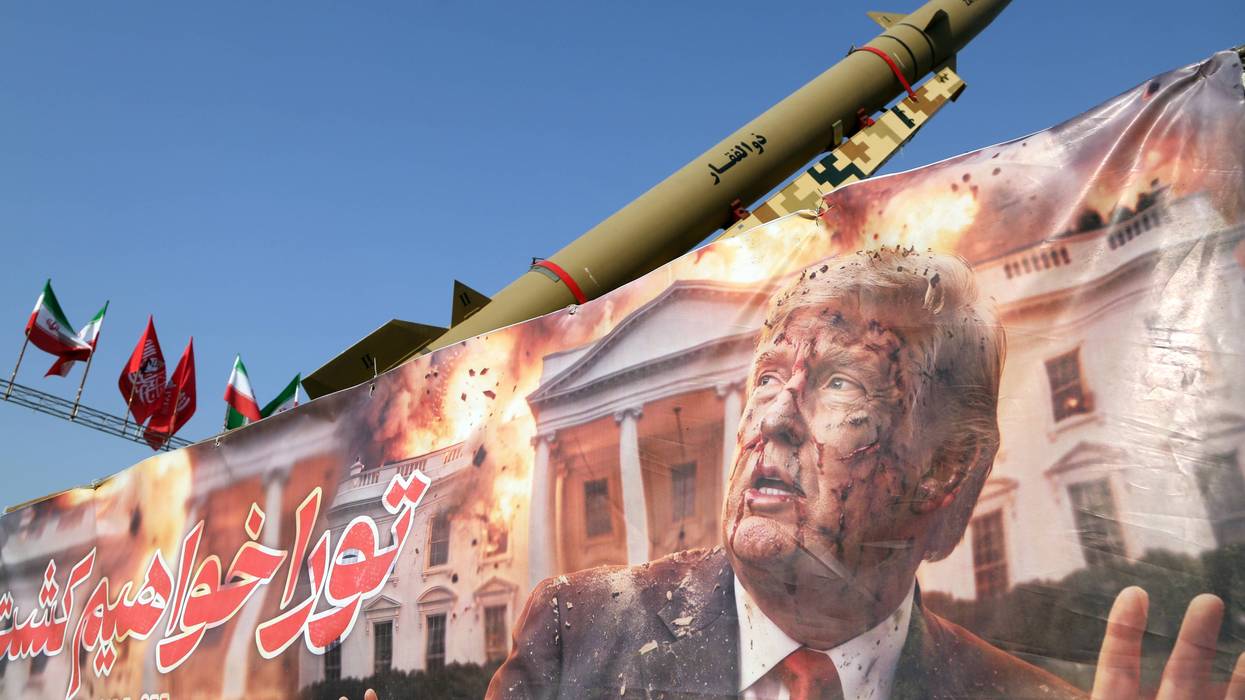
As it becomes clear that there is "no escalatory military path out of this war," Iran is demanding an even steeper toll for Trump to pull out.
President Donald Trump is now quietly conceding that he's willing to walk away from his Iran war without meeting all of his demands if they agree to reopen the Strait of Hormuz. But Iran won't let him back out of the quagmire without a steep price.
Iran is in the process of negotiating a limited reopening of the critical waterway with Oman. But Mohammad Bagher Zolghadr, the secretary of Iran's Supreme National Security Council, said on Saturday that "until America corrects its behavior, the Strait of Hormuz will not open.”
He outlined a list of demands on Saturday, even harsher than those Trump walked away from when he abandoned the "memorandum of understanding" negotiated in June.
Zolghadr said the US must permanently end its war and naval blockade against Iran, and withdraw military forces from the region. He also said the US must fully compensate Iran for damages from the war, lift sanctions, and unfreeze assets abroad.
This demand for an end to US "aggression" applies not just to Iran, but to its allies in the region: Zolghadr also demanded an end to Israel's attacks on Palestinians and a withdrawal of Israeli forces from southern Lebanon, as well as an end to US and Israeli attacks against the Houthis in Yemen.
The Trump administration, which is not known to be in direct talks with Iran, has not yet responded to the demands. Trump told Axios on Sunday that "We are low-keying it" and "only semi-negotiating with Iran," claiming that it was "in very bad shape" economically.
It's clear, however, that the Iranians believe they have enough of an upper hand to make Trump grovel, especially as news emerges that the US has burned through nearly all its available stocks of long-range precision weapons, making the war increasingly costly, though the administration has denied this.
Domestic concerns are also weighing on Trump. Over the past month, as the war heated up again, average gas prices in the US have shot back up above $4 a gallon, a major liability for Republicans heading into a midterm election cycle in which many voters say the cost of living is a top concern.
Approval of Trump among Americans has fallen to a new all-time low of 34% according to a YouGov poll late last month. And just 28% of Americans say they approve of his handling of the war, according to an Associated Press/NORC poll.
As the Wall Street Journal reported, Trump has privately signaled a willingness to declare victory if Iran opens the strait, even without getting any sort of nuclear agreement, which was purportedly the reason he launched the war in the first place.
Kenneth Roth, the former executive director of Human Rights Watch, said Trump was "showing his desperation for a deal before it is completed, so Iran predictably demand[ed] major new concessions," adding that it was a "masterclass in how not to negotiate."
"As time passes, Tehran appears increasingly confident that the pressure is shifting onto Washington," said the Israeli national security analyst Danny Citrinowicz. "Iranian leaders seem to believe that the United States is now more eager than Iran to bring the confrontation in the Strait of Hormuz to an end, and, crucially, that Washington has few attractive military options for changing that equation."
Trita Parsi, the executive vice president of the Quincy Institute for Responsible Statecraft, told CNN, "At this point, it is absolutely clear that there is no escalatory military path out of this war."
"It's been tried in several different variations, and it has not ended up particularly well," Parsi said. "In fact, the US's position has been weakened, in my view, by additional military action. And as a result, I think there needs to be a full dedication to the diplomatic pathway."
He added that for the Iranians, "the promise and the credibility of sanctions relief will carry far more weight than threats of further bombings."
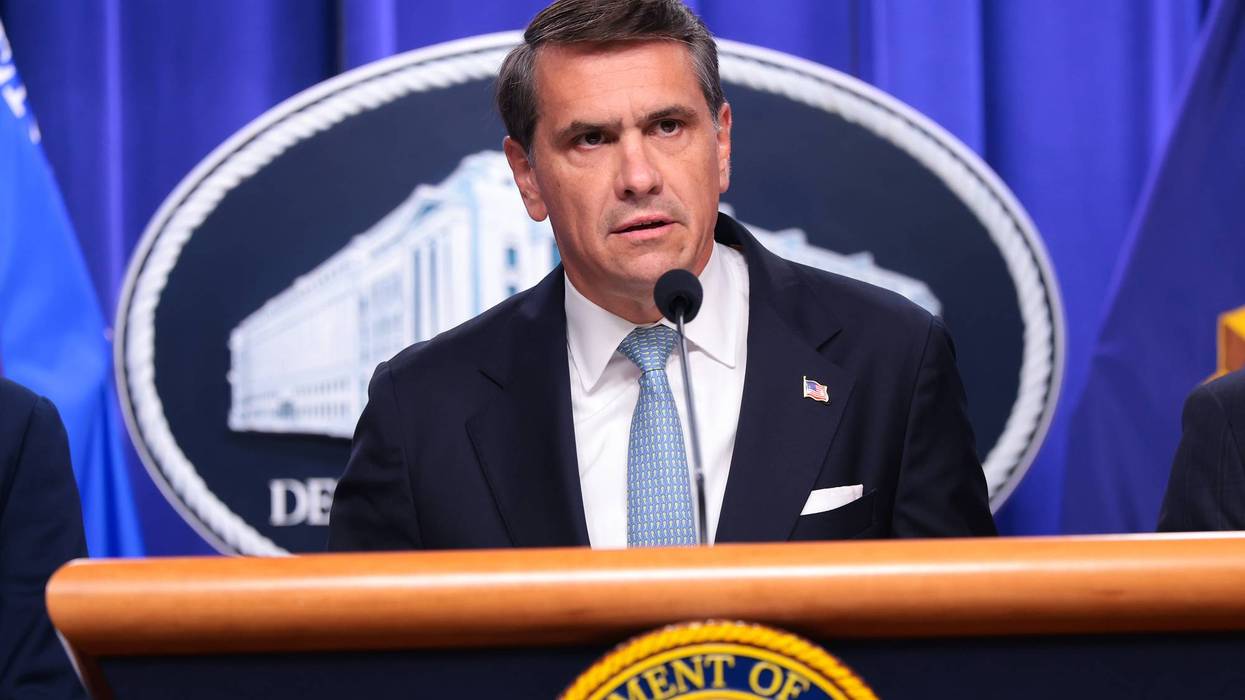
"There's no circumstance under which we shouldn't expect Blanche to seize ballots and seize voting machines and try to interfere in the process of the upcoming election."
One of the many questions swirling around new US Attorney General Todd Blanche is whether he'd go along with President Donald Trump's efforts to subvert the result of another election.
In 2020, when Trump attempted to overturn his loss to former President Joe Biden, his attempts to claim the result was marred by systemic fraud were met with resistance from then-Attorney General William Barr.
But under Blanche, who served for two years as Trump's personal defense attorney, things may be very different.
That's according to another of Trump's former lawyers, Ty Cobb, who served as White House special counsel for nearly a year during Trump's first term, as he came under investigation by then-special counsel Robert Mueller over his campaign's alleged coordination with the Russian government.
Cobb, who has been an outspoken critic of both Trump and his appointment of Blanche, appeared for an interview released Saturday on Zeteo's "Mehdi Unfiltered." Host Mehdi Hasan asked Cobb, "Come 2028, does American democracy survive Donald Trump?"
"I’m not sure they survive it in 2026,” Cobb responded.
Meet the Former Trump White House Lawyer Who Says Our Democracy Could Be ‘Screwed’ in 2026 by Mehdi Hasan
Ty Cobb, who represented the Trump White House during the Mueller investigation, questions whether democracy will survive the midterms and accuses Trump of 'unprecedented' corruption.
Read on SubstackNoting Barr's resistance to Trump in 2020, Hasan asked: "If the midterms don’t go Trump’s way this fall, is there any world in which Todd Blanche stands up to Trump if he’s asked to find some fake evidence of voter fraud, or are we screwed now?”
“We’re screwed,” Cobb said bluntly.
“Great,” Hasan said. “That’s what I suspected.”
Trump has, on multiple occasions, floated the idea of canceling the midterm elections outright and has enacted measures aimed at blocking mail-in voting and seizing voter information from states. He has also said he wants Republicans to "nationalize" elections in Democratic-leaning locales.
Cobb noted that Blanche "has already echoed [former Trump chief strategist] Steve Bannon's view that [Immigration and Customs Enforcement] should be on the street during the election," adding, "I think we'll almost certainly see that."
Hasan pointed out that the administration has routinely ignored court orders, especially with regard to its immigration enforcement. Cobb predicted that "the level of noncompliance" so far "is nothing compared to what we're about to see."
He said that if Democrats take the US House of Representatives and begin pursuing investigations, he suspects there will be "a number of contemptuous acts" by the administration. "We can count on the Justice Department to pursue zero of those referrals."
"That's assuming that the midterms actually produce a Democratic Congress," he continued, noting that even if one were elected legitimately, "whether they get seated or not by [Republican House Speaker] Little Mikey Johnson and his service to the president, that remains to be seen."
Cobb said that's in addition to other "dangers" around the election, including the presence of ICE agents. "Blanche has suggested that people should be happy to see ICE at the polls."
Where Barr refused Trump's requests to do so in 2020, Cobb said, "There's no circumstance under which we shouldn't expect Blanche to seize ballots and seize voting machines and try to interfere in the process of the upcoming election."
"I think that the president has made it very clear that he doesn't want immigrants or people of color to have the ability to go to the polls," Cobb said. "He's going to do everything he can in blue states and elsewhere to try to prevent this election from going smoothly."
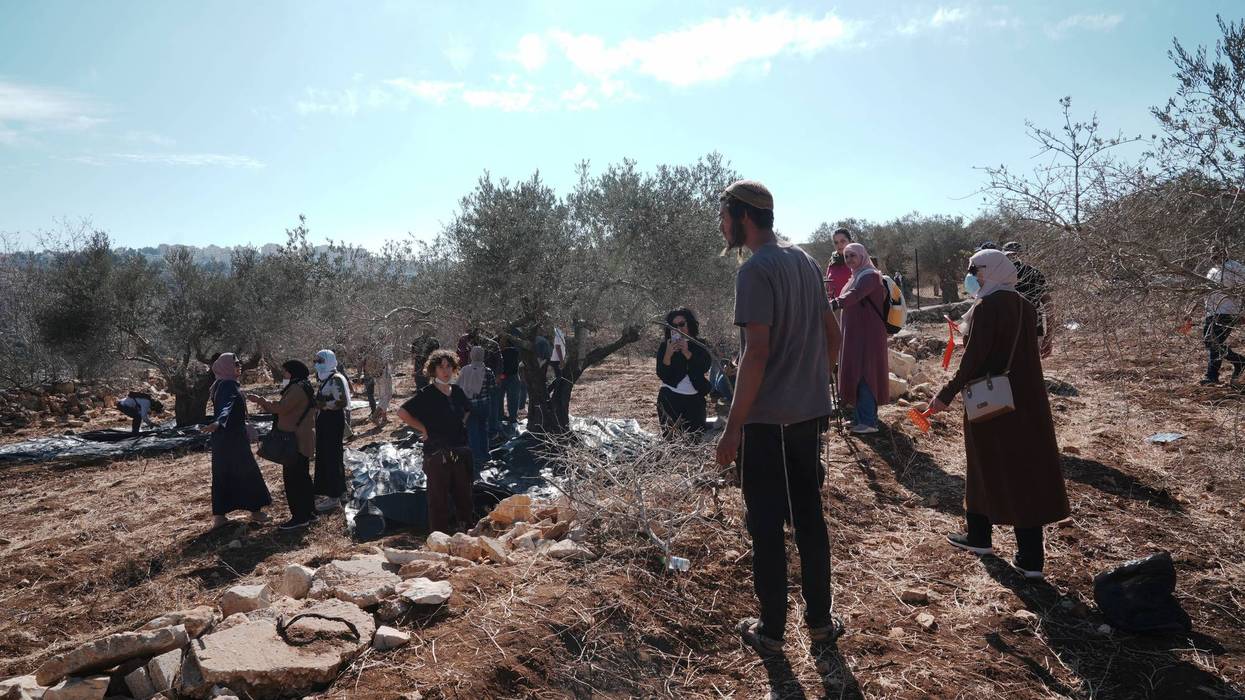
"Israeli-occupied territory is not a 'safe place' for all Jews," said one Jewish American activist.
The Israeli government is closing its doors to some Jewish Americans. Their crime? Volunteering to protect Palestinians in the occupied West Bank from violence by illegal settlers.
The Forward reported on Friday that at least seven young American Jews have had their electronic travel authorization (ETA) revoked over their involvement with activist groups involved with "protective presence." This practice involves unarmed nonviolent activists, often Israelis or other Jewish volunteers from abroad, accompanying Palestinians at risk of being attacked by Israeli settlers.
None of the seven Americans who spoke with The Forward had been arrested or charged with crimes.
One activist from New York, Sam Sherman, said he and some other volunteers received emails informing them that their status had been revoked while they were in the West Bank with a program known as Hineinu, started by the Center for Jewish Nonviolence in 2021.
The program places Jewish volunteers within Palestinian communities for around three months, where they participate in protective presence, accompany Palestinians at risk of attack, and document human rights abuses with the hope of deterring them.
Sherman said that while he was volunteering in Masafer Yatta in the Southern West Bank, he was harassed by a group of soldiers, police, and armed settlers who photographed his passports.
“We were just there hanging out with people, essentially,” he said. “But we were treated as if it was almost criminal for us to be there.”
Other activists explained that once Sherman left, he likely would not be allowed to return unless he immigrated there permanently.
"If I’m the wrong kind of Jew for Israel,” he said, “Sure. Great.”
Increasingly, the Israeli government seems to believe that people like Sherman are the wrong kinds of Jews for Israel.
In April 2024, Israel's far-right national security minister created a police task force aimed at handling foreign and Israeli left-wing activists. He has taken credit for having dozens of activists deported from the country.
As +972 Magazine reported back in October 2024, the task force was set up after the Biden administration began imposing sanctions on violent Israeli settlers and settler organizations.
Activists detained and deported by the task force have described being threatened, intimidated, and falsely accused of crimes like terrorism during interrogations by soldiers.
According to the Center for Jewish Nonviolence, dozens of its foreign volunteers in Hineinu and other protective-presence initiatives have had their entry permits revoked over the past two years.
News of Israel's efforts to keep out Jewish American activists comes amid an extraordinary surge of settler violence in the West Bank that the United Nations recently said had reached an “all-time high."
As of Late July, the UN Office for the Coordination of Humanitarian Affairs reported that 18 Palestinians have been killed this year in incidents involving settler attacks, already surpassing the total killed all of last year. About 900 Palestinians have been injured this year in settler attacks, representing more than half of all the Palestinian injuries documented in the West Bank this year.
Cameron Kasky, a Jewish American activist who was recently detained by armed settlers in the West Bank while visiting with US Rep. Ro Khanna (D-Calif.), said Israel's treatment of Jews who show solidarity with Palestinians calls into question its purported commitment to Jewish safety.
"Israeli-occupied territory is not a 'safe place' for all Jews," Kasky said. "Jewish American, Israeli, and European activists are frequently brutalized by Jewish settlers and soldiers."

"Let nobody think Trump has given up on taking Greenland," warned one professor of European politics.
After appearing to back off earlier this year, President Donald Trump this week renewed his threats to seize Greenland. A Saturday report that a Texas oil company with ties to Trump had begun preparing to drill in the Arctic territory without permission has raised fresh concerns that his push for control of the island may already be moving beyond rhetoric.
As The Guardian reported, Greenland’s government issued a “strong warning” last week after learning that a Texas oil company called Greenland Energy had begun making unauthorized preparations for oil extraction in Jameson Land, a remote area of eastern Greenland, including bringing drilling materials ashore.
The company, founded last year, has claimed that Jameson Land may contain $1 trillion worth of crude oil and announced plans to drill two wells there—a project that requires approval from Greenland’s government.
The company also has ties to several Trump allies and associates. According to The Guardian:
Greenland Energy has retained Phil McGraw, better known as Dr. Phil, a prominent right-wing former chatshow host who served on Trump’s religious freedom commission, to make a documentary series that will “capture the mission of these modern-day wildcatters.”
It has also appointed as a director a US Navy veteran who is working on Golden Dome, the missile defense plan for which Trump says controlling Greenland is “vital.”
Larry Swets, Greenland Energy’s chair and a big shareholder, appears to enjoy access to Trump’s circle. He has said the oil project is “not related to American annexation.”
A Greenland Energy representative falsely claimed in June that the company had permission to place equipment on Jameson Land, before later saying there had been confusion.
But the following month, residents saw a barge arrive with drilling equipment. A Danish outlet confirmed that the delivery was intended for Greenland Energy.
Following the delivery, Greenland’s government said on July 30 that the company "did not have the necessary approvals from the mineral resources authority" and would receive a warning that "all future logistical matters must be advised and approved by the mineral resources authority—before they are carried out."
Two days later, Trump posted an ominious digitally altered image to Truth Social depicting himself as a giant looming over a Greenlandic town, captioned "Hello, Greenland!"
A day earlier, Trump had appeared on the right-wing network Real America’s Voice, where host Steve Gruber reminded him that he had predicted Greenland would be under US control by the time he leaves office in 2029.
“You’ll be right," Trump replied. "Greenland is important. Not from their standpoint, from our standpoint. You should make that bet.”
Before this week’s comments, Trump had spoken far less publicly about Greenland since January, when he threatened to use military force to take over the island if Denmark did not cede it. To pressure NATO allies, Trump threatened steep tariffs on several European countries, but backed off after Europe pledged retaliatory tariffs, causing panic in the financial markets.
"Let nobody think Trump has given up on taking Greenland," said John O’Brennan, professor of European politics at Maynooth University in Ireland. He added that Greenland Energy’s unauthorized activity "is the latest act of lawlessness his acolytes are engaged in."
Kenneth Roth, the former executive director of Human Rights Watch, responded to the story by asking, "Has Trump’s invasion of Greenland already begun?"
Historian Ruth Ben-Ghiat suggested it was possible. "Invasions," she said, "often start with 'technical' projects that justify the presence of operatives and 'technical experts' who are also doing recon and advance prep."
The Greenlandic government ultimately said it “would not be proportionate” to order Greenland Energy to remove the drilling equipment, a decision that The Guardian said underscored the difficult position facing its officials.
"They could grant permission for oil drilling, even though the planned wells appear to fall within a conservation area protected by the Ramsar convention on wetlands," the report explained. "Or they could refuse and, some worry, give Trump a pretext to advance his imperialist agenda."
Although the project has not been approved, a Greenland Energy representative said a vessel carrying additional drilling equipment would depart Canada in September, with drilling set to begin in October.
Jessica Berlin, a senior fellow at the Center for European Policy Analysis, warned that allowing the equipment to remain would signal weakness that Trump could exploit.
"Don’t even think about allowing this," she wrote in a post directed to the Greenlandic and Danish governments. "If you give them an inch, they’ll take 100 miles. Kick them out now or accept that you just opened the floodgates."
"Like Putin, you can’t negotiate with Trump," she added. "Showing weakness will just guarantee the next outrage."
As part of the Kingdom of Denmark, Greenland is covered by NATO’s Article 5 collective-defense clause, which obligates member nations to defend one another from armed attack. But NATO has no precedent for how Article 5 would apply if one member—the US—attacked another.
O'Brennan warned, "Europe—you are about to be seriously tested."
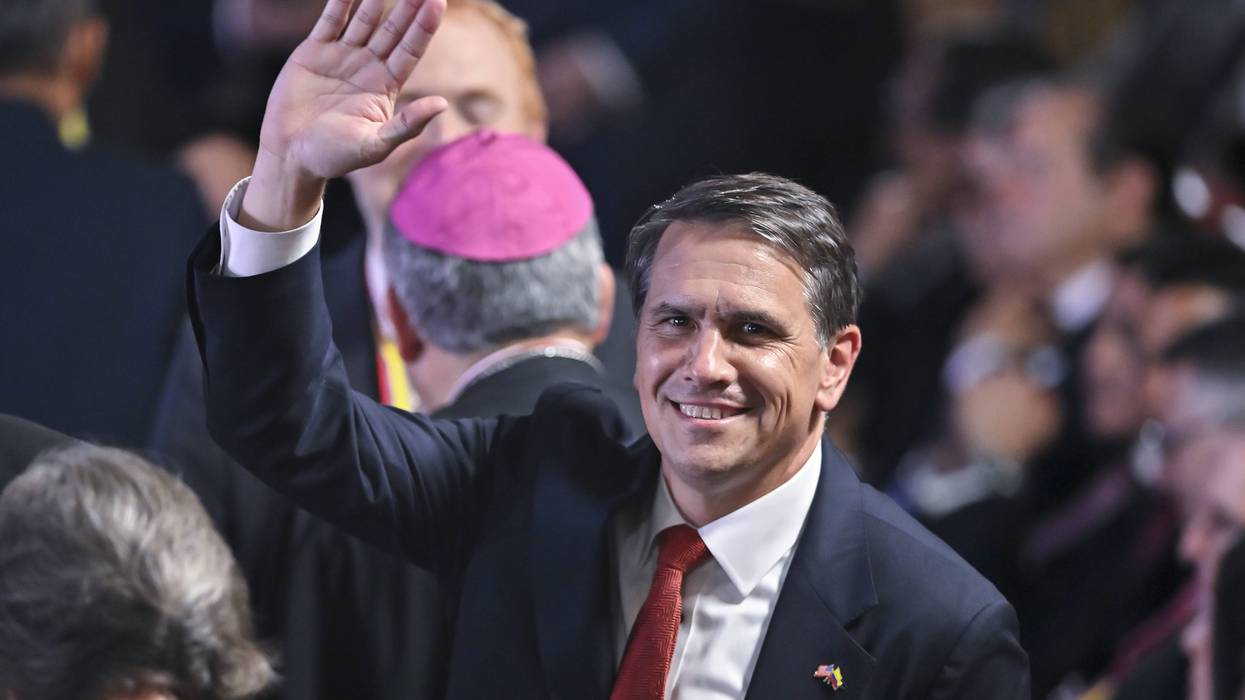
"If he is tasked with leading Trump’s revenge agenda against his political enemies and critics, we have every reason to believe he will execute this mission with eagerness and fealty."
Early Saturday, outgoing Sen. Bill Cassidy cast the deciding vote to confirm Todd Blanche as US Attorney General shortly after outlining a litany of reservations about the nominee.
Around 4:30 am ET, the US Senate voted 50-49 to confirm Blanche, President Donald Trump's former personal attorney and acting attorney general since April, as the nation's chief law enforcement officer. It did so despite widespread concerns, including among some Republicans, that he would use the office primarily to carry out the president's whims.
Sen. Lisa Murkowski (Alaska), one of two Republicans who voted against Blanche, outlined her concerns in a social media post Friday ahead of the vote, saying Trump had "accelerated" the "politicization—even weaponization" of the US Department of Justice (DOJ) and that Blanche had played a part.
"I take issue with the handling of the release of the Epstein files; the sweeping immunity protections granted to the president, his family, and their businesses; the statements that have been made to anti-abortion groups; and the repeated targeting of individuals ranging from former administration staff to sitting US senators," Murkowski said.
Murkowski also expressed doubt about Blanche's promise to eliminate the department's so-called $1.8 billion "weaponization fund" for Trump's supporters and allies—including January 6 Capitol insurrectionists. Referring to it as a "slush fund," she said confirming Blanche would cost the Senate any "leverage" to prevent it from being revived.
In a speech Friday ahead of the vote, Cassidy (R-La.)—who lost his Senate primary in May after being attacked by Trump as "disloyal"—raised similar concerns about Blanche, but ultimately said they did not prevent him from supporting the nominee.
"Mr. Blanche showed poor judgment in approving the anti-weaponization slush fund and exempting the president from [Internal Revenue Service] audits," Cassidy said on the Senate floor. "Mr. Blanche said these were mistakes and has made efforts to kill the slush fund."
To secure his confirmation, Blanche struck a deal with Republican holdouts, including Sens. Thom Tillis (NC) and John Cornyn (Texas), earlier last week and issued an order to eliminate the $1.8 billion fund, but did not agree to end the exemption from tax audits of Trump's past activity.
Cassidy also said he was concerned about "DOJ bringing suits against political enemies," but argued that Trump's "unrelenting" targeting of his foes meant any attorney general he appointed would face the same pressure.
To address the allegation that Blanche would act as a "yes-man" for Trump, Cassidy quoted William Barr, who served as attorney general during Trump's first term: "Because of his previous client-attorney relationship with President Trump, Mr. Blanche would be precisely the person to push back on President Trump."
Sen. Chris Coons (D-Del.), who sits on the Senate Judiciary Committee, said on CNN Friday night that the Republicans who were voting to confirm Blanche despite their reservations "know better" than to trust him and would ultimately "regret" the decision.
"He advanced... this $1.8 billion slush fund. That's a terrible idea. And frankly, that my colleagues and friends, John Cornyn and Bill Cassidy, accept this paper-thin excuse of a signed deal by Todd Blanche doesn't pass the smell test because, frankly, President Trump is the one who continues to berate and push for that weaponization fund," he said. "I have no confidence that Todd Blanche won't just turn around and give it to him once confirmed."
Asked about Cassidy's reasoning that Blanche, as Trump's former attorney, would be more willing and able to constrain the president, Coons said, "I don't buy that at all."
"What I've seen from Todd Blanche in the role of [acting] attorney general and in his confirmation hearing was that he still thinks of himself as President Trump's personal lawyer, not the person who is trying to protect the Department of Justice and the Constitution from presidential overreach," Coons said.
Ultimately, just two Republicans joined every Democrat to vote against confirming Blanche—Murkowski and Sen. Susan Collins, who faces a difficult reelection battle against Democratic nominee Troy Jackson in Maine. Cassidy, Tillis, and Cornyn all voted yes.
Former Ambassador Norm Eisen, the co-founder and board member of Democracy Defenders Action, said that Blanche's confirmation was "a dark day for the rule of law."
"Senate Republicans sounded the alarm, rightfully so, calling out the ‘fund that would pay people who beat police officers,’ and exposing a nominee who has never stopped serving the personal and political interests of Donald Trump. Yet, at the precipice, they lost their nerve and the majority voted for him anyway."
Praveen Fernandes, vice president of the Constitutional Accountability Center, said that approving the slush fund was "one of the most brazen attempts to circumvent the law and benefit Trump and his cronies."
She added that every senator who voted for Blanche "cast a vote in support of the Blanche-led Department of Justice’s continued failure to comply with the Epstein Files Transparency Act and its unconscionable treatment of Epstein survivors, its efforts to wipe clean the records of those who participated in January 6th violence against lawmakers and law enforcement officers, its record of weaponized prosecutions, and its brazen rejection of the notion of prosecutorial independence from White House pressure."
Lisa Gilbert, co-president of the watchdog group Public Citizen, said that "Moving forward, our country has to contend with an attorney general who sees himself as a personal servant to Donald Trump instead of a public servant to the American people."
"If he is tasked with leading Trump’s revenge agenda against his political enemies and critics, as he likely will be," she said, "we have every reason to believe he will execute this mission with eagerness and fealty."
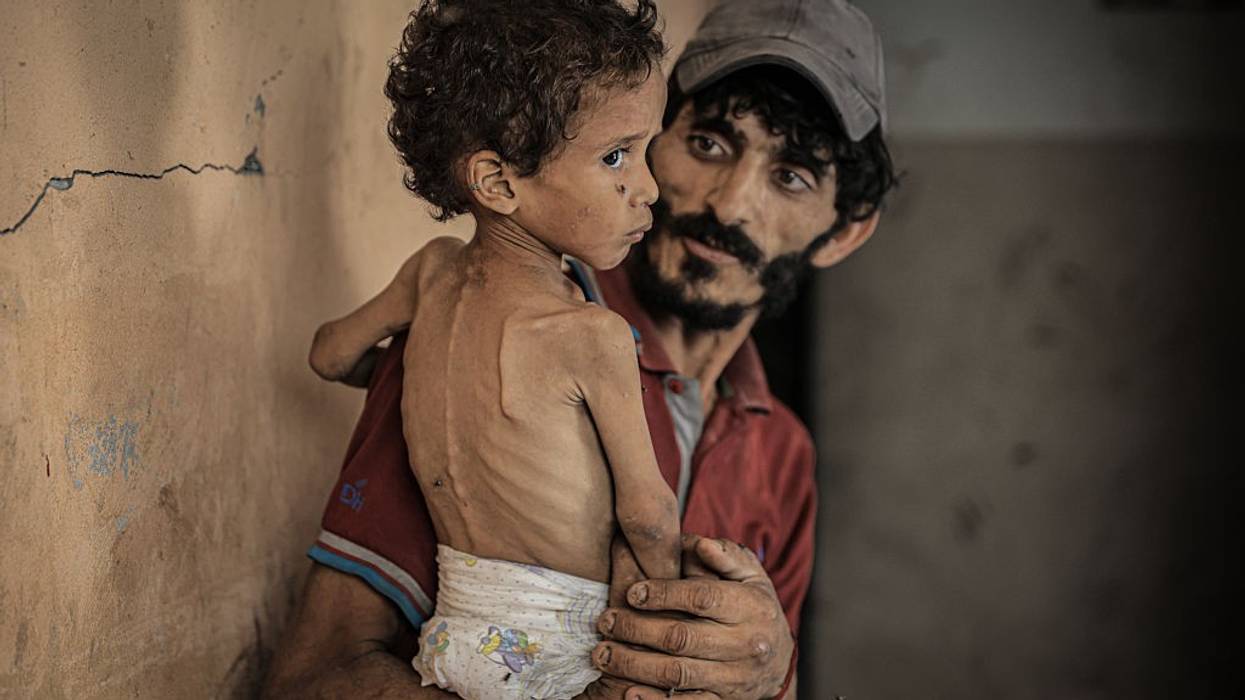
US Ambassador to Israel Mike Huckabee—who last year admitted Gazans were starving—was among those noting a new global hunger report by the UN agency that reported the 2025 famine as it unfolded.
For nearly three years, Israeli officials and their US backers have denounced United Nations agencies reporting the facts of Israel's genocidal assault on Gaza as lies, but now many of them are citing the latest global hunger study by the United Nations Children's Fund as proof that last year's famine that killed at least hundreds of Palestinians in the coastal exclave was a "hoax."
The UNICEF-led State of Palestine Nutrition Cluster Coordination Meeting report, published on July 22, shows decreased hunger rates in areas of Gaza accessible to those conducting the survey. With Israeli forces controlling the majority of Gaza's territory and much of the strip flattened and inaccessible, the report's authors warned that "the survey findings should therefore be interpreted as representative."
This did not stop the Israeli government and media, and Israel's supporters and sympathetic media abroad, from citing UNICEF—which on Thursday said that Israel is killing about one child a day in Gaza despite a so-called ceasefire—and the broader UN, which they formerly accused of "lies," "antisemitism," "blood libels," and "hoaxes" throughout a war that a UN commission of inquiry called a genocide.
"Once again, facts prevail over fiction," Israeli Ambassador to the United Nations Danny Danon said. "UN bodies are acknowledging that the false narrative against Israel is falling apart."
US Ambassador to Israel Mike Huckabee may have forgotten his acknowledgement last year—along with President Donald Trump and Vice President JD Vance—that Palestinians were "starving" in Gaza, aspersing the media for reporting on the starvation.
Eylon Levy—the British-Israeli former spokesperson for Israel known for purveying disinformation like the infamous October 7 "beheaded babies" lie—also ran with the narrative, posting on X that "the 'Gaza Famine' was always a hoax."
Except it wasn't.
UN agencies and other humanitarian groups started sounding the alarm on looming starvation in Gaza in the weeks after Israel began annihilating the strip in retaliation for the Hamas-led attack of October 7, 2023. By February 2024, UNICEF warned that "famine is imminent" in Gaza as the UN Office for the Coordination of Humanitarian Affairs cited the deaths of six infants from malnutrition and dehydration.
As Gaza's hunger crisis worsened under Israel's "complete siege," UN agencies, including UNICEF, regularly warned about starvation in the strip. In February 2024, UN officials were accusing Israel of using starvation as a weapon of war—one of the alleged crimes against humanity and war crimes for which Israeli Prime Minister Benjamin Netanyahu and Yoav Gallant, his former defense minister, are wanted by the International Criminal Court in The Hague. Michael Fakhri, the top UN expert on the right to food, accused Israel of genocidal forced starvation of Gazans.
In August 2025, the Integrated Food Security Phase Classification (IPC)—the UN-aided top global authority on hunger crises—declared a Phase 5, or "catastrophic," famine in Gaza as at least hundreds of Palestinians perished from malnutrition and related causes.
“Famine is now a grim reality for children in Gaza," UNICEF executive director Catherine Russell said at the time. “As we have repeatedly warned, the signs were unmistakable: children with wasted bodies, too weak to cry or eat; babies dying from hunger and preventable disease; parents arriving at clinics with nothing left to feed their children."
The IPC lifted Gaza's famine designation in December 2025, citing improved—but still highly restricted—access of humanitarian aid into Gaza following a nominal ceasefire agreement reached two months earlier. However, last month the IPC published an analysis showing that from mid-April to the end of June, more than 1.2 million people, or 59% of Gaza’s population, were experiencing Phase 3 (crisis) or worse levels of food insecurity. This included about 212,000 people in Phase 4 (emergency).
"The situation remains fragile," IPC warned.
Many of the people who deny that Israeli forces have killed or wounded a quarter million Palestinians in Gaza or that Israel is committing genocide there—a conclusion reached by numerous UN officials, scholars, jurists, rights groups, and the approximately 20 nations that formally joined South Africa's pending genocide case against Israel at the International Court of Justice—are the same ones who have denied not only the Gaza famine, but that anyone was ever starving there.
They asked to see photos of starving Palestinians, and when shown them, they, and corporate media outlets including The New York Times, attempted to explain or even dismiss the evidence by claiming the emaciated—or often dead—children suffered from preexisting conditions, as if that somehow absolved Israel for their deaths. Others posted images of a Gaza market stocked with food or overweight Palestinians in a bid to debunk the fact of starvation in Gaza.
Still others dismissed images of starving Gazans as Hamas propaganda, with US media personality Megyn Kelly opining that Palestinians are "fine having their own children starve just as long as they can put them on camera."

"These are the first smart glasses guaranteed to never record nude videos of you and send them to random people. I never thought I’d have to guarantee that, but here we are.”
As Meta faces heat for selling artificial intelligence-powered sunglasses that record people without their knowledge, the web browser DuckDuckGo responded with what it called "the world's most innovative anti-surveillance sunglasses"... otherwise known as normal sunglasses.
Meta, the Big Tech behemoth that owns Facebook and Instagram, likely did not expect to become the subject of relentless scorn and mockery over its new line of "Meta Glasses," which retail for upwards of $299 and have been plugged by the likes of Kylie Jenner.
But internet users have saddled the shades with the nickname "pervert glasses." For good reason: among other high-tech bells and whistles, the latest version is equipped with photo and video technology that some of the clientele have used to discreetly film strangers.
As the Los Angeles Times chronicles, some women have been approached by bespectacled creeps only to later find a recording of the encounter posted online, entirely without their consent. Although the glasses have a white light to indicate that recording is in progress, some elite-tier perverts have found ways to disable it.
DuckDuckGo, a company that has billed itself as an alternative to its data-mining, privacy-violating competitors, responded to the backlash against Meta by partnering with the eyewear company Knockaround and selling its own pair of glasses whose primary gimmick is that they do absolutely nothing but sit on your face.
"No camera, no microphone, no AI, no battery, no electronics of any kind," reads the website, "Just a beautifully crafted pair of matte black sunglasses with a glossy DuckDuckGo logo, designed to block the sun and never send data to the cloud."
“We’re obsessed with innovation. So when Big Tech started putting cameras in smart glasses, we asked ourselves a radical question: What if we just didn’t do that?” a July 30 social media post from DuckDuckGo said. “These are the first smart glasses guaranteed to never record nude videos of you and send them to random people. I never thought I’d have to guarantee that, but here we are.”
This was not merely a hyperbolic what-if. It's been reported that Meta's AI glasses have recorded videos of users having sex and using the bathroom that were then viewed by Kenyan subcontractors involved in manually training Meta's AI systems.
Internal documents have also revealed plans by Meta to embed facial recognition technology into the glasses, which dozens of rights groups, including the American Civil Liberties Union, warned "would allow anyone wearing them to identify by name any strangers in their vicinity—including at protests, medical clinics, and businesses."
After being secretly implemented for a brief period without being accessible to consumers, the technology was rolled back. But concerns remain that it could be added again, and there have been growing calls from lawmakers and privacy groups in the US and Europe to ban the glasses.
One British activist group called Everyone Hates Elon has begun a viral guerrilla marketing campaign against the Meta glasses.
One satirical ad, placed at a bus stop in London, shows the infamous sex criminal Jeffrey Epstein wearing the frames, with the tagline "glasses for people who don't do consent" next to the Meta logo.
"These glasses feel like they’re making perverts’ and abusers’ lives easier when we should actually be making women’s lives easier. They are pervert glasses," a spokesperson for the group told The Times of London. "We wanted to use Jeffrey Epstein to highlight who these glasses will be used by, and it’s powerful men and abusers.”
In this environment, it's perhaps not a surprise that DuckDuckGo's tech-free alternative has been a hit. The company said that within a week, the shades, which cost $35 a pair, had sold out.