

SUBSCRIBE TO OUR FREE NEWSLETTER
Daily news & progressive opinion—funded by the people, not the corporations—delivered straight to your inbox.
5
#000000
#FFFFFF
To donate by check, phone, or other method, see our More Ways to Give page.
Daily news & progressive opinion—funded by the people, not the corporations—delivered straight to your inbox.
President Barack Obama must revisit the promise he made in 2009 to close the Guantanamo detention facility and this time commit the USA to releasing the detainees or bringing them to fair trial, Amnesty International said ahead of the 11th anniversary of the first detainee transfers to the US naval base in Cuba and just days before his re-inauguration as president.
Today 166 detainees are still held at Guantanamo - out of the 779 men taken to the facility since 2002, the vast majority were held for years without charge or criminal trial.
President Barack Obama must revisit the promise he made in 2009 to close the Guantanamo detention facility and this time commit the USA to releasing the detainees or bringing them to fair trial, Amnesty International said ahead of the 11th anniversary of the first detainee transfers to the US naval base in Cuba and just days before his re-inauguration as president.
Today 166 detainees are still held at Guantanamo - out of the 779 men taken to the facility since 2002, the vast majority were held for years without charge or criminal trial.
Seven men have been convicted by military commission, including five as a result of pre-trial agreements under which they pled guilty in return for the possibility of release from the base.
Six detainees are currently facing the possibility of death sentences after military commission trials that do not meet international fair trial standards. All six were subjected to enforced disappearance prior to their transfer to Guantanamo and, among other abuses, two of them were subjected to the torture technique known as "water-boarding", effectively mock execution by interrupted drowning.
"The USA's claim that it is a champion of human rights cannot survive the Guantanamo detentions, the military commission trials, or the absence of accountability and remedy for past abuses by US personnel, including the crimes under international law of torture and enforced disappearance," said Rob Freer, USA researcher at Amnesty International.
After first taking office in January 2009, President Obama pledged to resolve the Guantanamo detentions and close the facility within a year.
He also ordered an end to the Central Intelligence Agency's use of "enhanced" interrogation techniques and long-term "black sites".
But President Obama adopted the USA's unilateral and flawed "global war" paradigm and accepted indefinite detentions under this framework.
Then, in 2010, his administration announced that it had decided that four dozen of the Guantanamo detainees could neither be prosecuted nor released, but should remain in indefinite military detention without charge or criminal trial. The administration also imposed a moratorium on repatriation of Yemeni detainees. and said that 30 such detainees would be held in "conditional" detention based on "current security conditions in Yemen". This moratorium is still in place.
The Obama administration has blamed its failure to close the Guantanamo detention facility on Congress, which has repeatedly blocked the USA from meeting its human rights obligations in this context. On 2 January 2013, President Obama nevertheless signed the National Defense Authorization Act, while criticizing provisions in the Act which once again placed obstacles in the way of resolving Guantanamo detainee cases.
"International law does not allow different branches of government to duck the requirements of international law with this kind of blame game ," said Freer. "A country's failure to meet its human rights obligations cannot be legitimized by pointing to domestic laws or policies."
In any event, without real policy change, the Obama administration's adoption of a notion of "global war" means that even if the Guantanamo detention facility were to be closed, unlawful detentions would simply be relocated rather than ended.
The broad acceptance of the "global war" paradigm across all three branches of the US federal government, the shielding of officials through immunity provisions and the continuing use of secrecy, has also facilitated the blocking of accountability and remedy for abuses committed at Guantanamo, in the secret CIA detention and rendition programmes, and elsewhere.
"What needs to happen now is recognition and application of international human rights principles by the US authorities," said Freer. "Military commission trials should be abandoned in favour of fair trials in ordinary civilian courts, detainees whom the USA has no intention of prosecuting should be released, and there must be full accountability and access to redress for human rights violations."
Five men charged with involvement in the 9/11 attacks are currently facing the death penalty after trial by military commission. The government is also seeking the death penalty against a sixth Guantanamo detainee in another trial.
Details of where such detainees were held in CIA custody and how they were treated continues to be classified at the highest levels of secrecy.
Last month the military judge overseeing the "9/11" trial signed a protective order to prevent disclosure of such details during proceedings, purportedly on national security grounds. Information concerning gross violations of human rights or serious violations of international humanitarian law should never be kept secret on national security grounds.
Further pre-trial proceedings in all six cases are scheduled to take place at Guantanamo later this month.
Amnesty International is a worldwide movement of people who campaign for internationally recognized human rights for all. Our supporters are outraged by human rights abuses but inspired by hope for a better world - so we work to improve human rights through campaigning and international solidarity. We have more than 2.2 million members and subscribers in more than 150 countries and regions and we coordinate this support to act for justice on a wide range of issues.
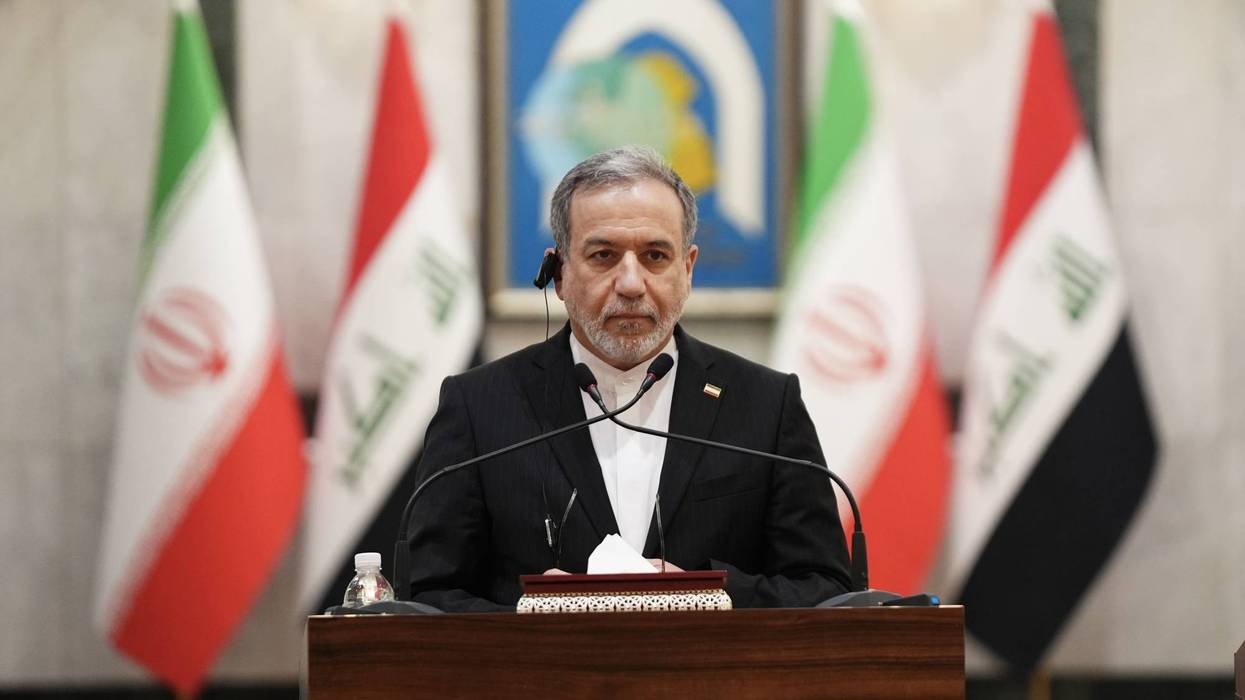
Iran's Foreign Ministry accused the Trump administration of "rendering futile all efforts made over the past several months to reduce tensions and restore stability."
The Iranian Foreign Ministry on Sunday condemned the United States' latest round of airstrikes as a "flagrant violation" of international law that threatens to permanently derail efforts to achieve a peaceful resolution to the war, which US President Donald Trump launched earlier this year in coordination with the Israeli government.
This past weekend, said Iran's Foreign Ministry, the US carried out "brutal attacks" and "acts of aggression" that pose "a serious threat to international peace and security, rendering futile all efforts made over the past several months to reduce tensions and restore stability in the West Asia region."
On Saturday and Sunday, the US military bombed dozens of targets across Iran, which retaliated with strikes on American military installations in Kuwait, Bahrain, and other Middle East nations. Iran's Foreign Ministry accused those nations of illegally serving as launch pads for US strikes.
In response to the new wave of bombings, Iran announced the closure of the Strait of Hormuz, blaming the US for causing "insecurity" in the critical waterway. Trump claimed in an interview on Sunday morning that the strait is "open" after the US "bombed the hell out of" Iran the previous night.
"The US ruling establishment continues its campaign of disinformation and the dissemination of fake news in an attempt to distort the facts and justify its unlawful actions," said the Iranian Foreign Ministry, accusing the Trump administration of undermining talks between Iran and Oman regarding commercial traffic through the Strait of Hormuz.
The Iranian statement also voiced "regret" over what it described as the head of the United Nations' "unconstructive approach" to the Trump administration's "blatant lawlessness and bullying."
"The Ministry of Foreign Affairs underscores the responsibility of the UN secretary-general and the Security Council to address violations of international peace and security," the statement reads. "It calls for the aggressor parties to be held accountable and for those who ordered and carried out the crimes committed against the Iranian nation to be brought to justice and punished."
Earlier Sunday, Stéphane Dujarric, a spokesperson for UN Secretary-General António Guterres, voiced concern over the "serious escalation and renewed military confrontations in the Gulf, including the Iranian attacks on ships in the Strait of Hormuz, the attacks by the United States on Iran, and the attacks by Iran on targets in the neighboring countries."
"These attacks must all stop," said Dujarric. "The secretary-general reiterates that a return to full-scale hostilities would have catastrophic consequences—for the peoples of the region, for international peace and security, and for the global economy. He further reaffirms the need for the restoration of full freedom of navigation in the Strait of Hormuz."
The military exchanges came less than a month after the US and Iran signed a memorandum of understanding aimed at facilitating a permanent end to the war. Last week, Trump declared the agreement "over" and said negotiations were "a waste of time," even as the US and Iran agreed to continue talks.
The National Iranian American Council (NIAC) noted Sunday that "Iran and the United States have once again entered a cycle of direct military confrontation," adding that "what was presented as an end to the war now appears to have been little more than a temporary pause."
"The continued evisceration of diplomatic agreements will make any attempt to restore peace extremely difficult," NIAC argued. "Iran, fresh off new US attacks amid the late supreme leader’s funeral ceremonies, will view any US pivot back to diplomacy with even deeper distrust. US hawks will likewise paint Iran’s actions as the predictable irrationality of radicals, even if US actions have helped trigger Iranian retaliation every step of the way."
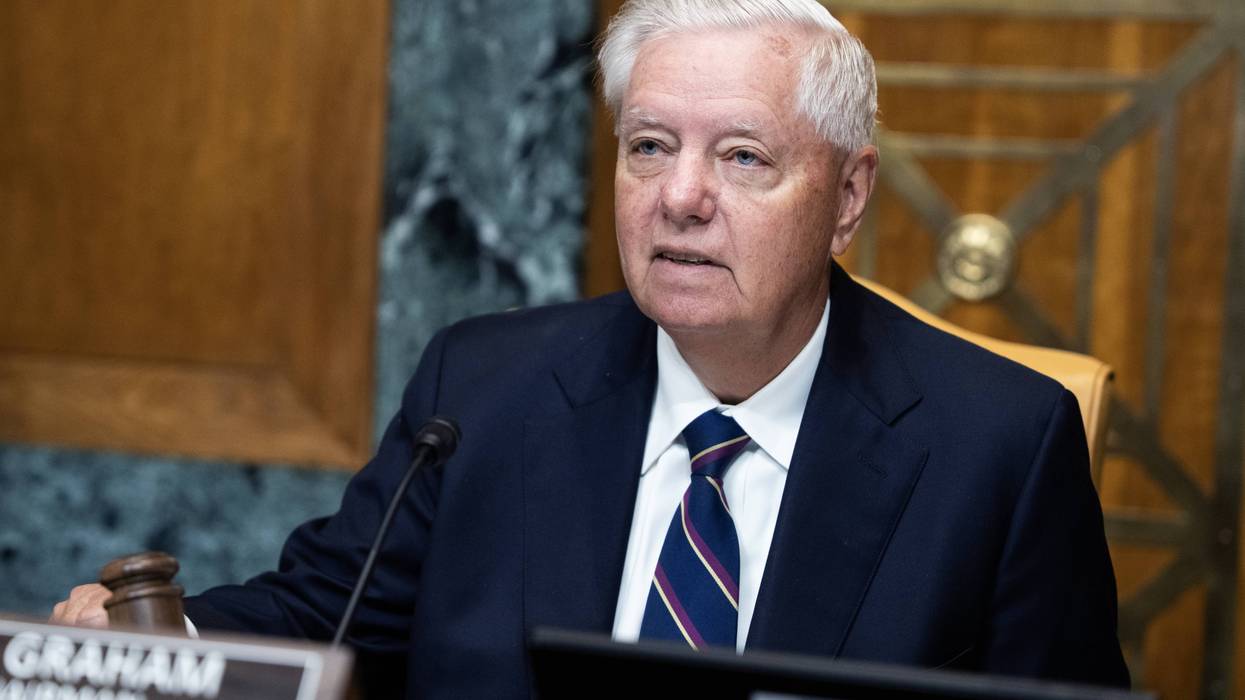
"I don't care about any other part of him: his choices caused mass death. That's it," said one critic.
Hours after Sen. Lindsey Graham unexpectedly died on Saturday, many of his Democratic colleagues in the US Senate posted statements on their social media pages paying tribute to the South Carolina Republican.
Sen. Adam Schiff (D-Calif.) said that he would most remember Graham (R-SC) for his "his sense of humor and how he deployed it to move his policy positions forward."
"Though we did not often agree," Schiff added, "Senator Graham was never disagreeable."
Sen. Elizabeth Warren (D-Mass.) similarly said of Graham that "even though we disagreed on much, he was always willing to negotiate, with humor and wit," adding "my heart goes out to his loved ones."
Sen. Andy Kim (D-NJ) said he was "saddened" to hear of news of Graham's death, which he said came "as a real shock."
"I’m grateful I had the chance to work with Lindsey," said Kim, "including several international trips working on foreign policy."
However, many critics argued that these tributes to Graham overlooked his destructive legacy in public office, including his decades of war mongering and his slavish devotion to the authoritarian President Donald Trump.
"I don't give a fuck that Graham used to be friends with Democratic senators," wrote Thomas Lecaque, associate professor of history at Grand View University. "He was a bloodthirsty bastard who cheered the killing of Muslims and sold his soul to the fascists to be able to push it more effectively. I don't care about any other part of him: his choices caused mass death. That's it."
Princeton historian Kevin Kruse, responding directly to Schiff's post, reminded him of Graham's behavior during the Brett Kavanaugh confirmation hearings when he "threw an angry tantrum in defense of a SCOTUS nominee credibly accused of rape."
"Did you all have a good collegial chuckle over that?" Kruse asked.
Brandon Friedman, co-founder of the Rakkasan Tea Company and a veteran of the Iraq War, also responded directly to Schiff.
"What I'll remember most about Senator Graham," Friedman wrote, "is how he sent my friends to die in an unnecessary war in Iraq."
Jen Rubin, editor-in-chief of The Contrarian and former columnist for The Washington Post, described the Democrats' tributes to Graham as "nauseating" and "everything that is wrong" with the US Senate.
Nicholas Grossman, professor of international relations at the University of Illinois, said the Democrats' statements were just one more signal of weakness from the party.
"The Democratic Party's approval rating is in the toilet," Grossman wrote, "and the main reason is voters see Dem leaders and prominent members acting like things are basically okay instead of fighting like there's an emergency. Slot 'my friend Lindsey Graham, so funny, how great to work with him' comments into that."
Cartoonish Eli Valley was apoplectic about Democrats' fawning hagiography of their late Republican colleague.
"That Democrats see mass-murdering fascists dismantling the country as nothing more than 'colleagues they dislike' is why we've been in a non-stop plummet," Valley wrote. "Incredible this is still debatable, by people who ostensibly oppose fascism, ten years into this?!?"
Political consultant Jamison Foser wrote a parody of the Democrats' statements that imagined them paying tribute to none other than Satan.
"Deeply saddened to learn of the loss of my dear friend Satan, the Prince of Lies," wrote Foser. "Though we often disagreed about matters such as the appropriate role of torture in the afterlife, I will most remember how his quick wit and affable nature made our weekly golf outings a ritual. He will be missed."
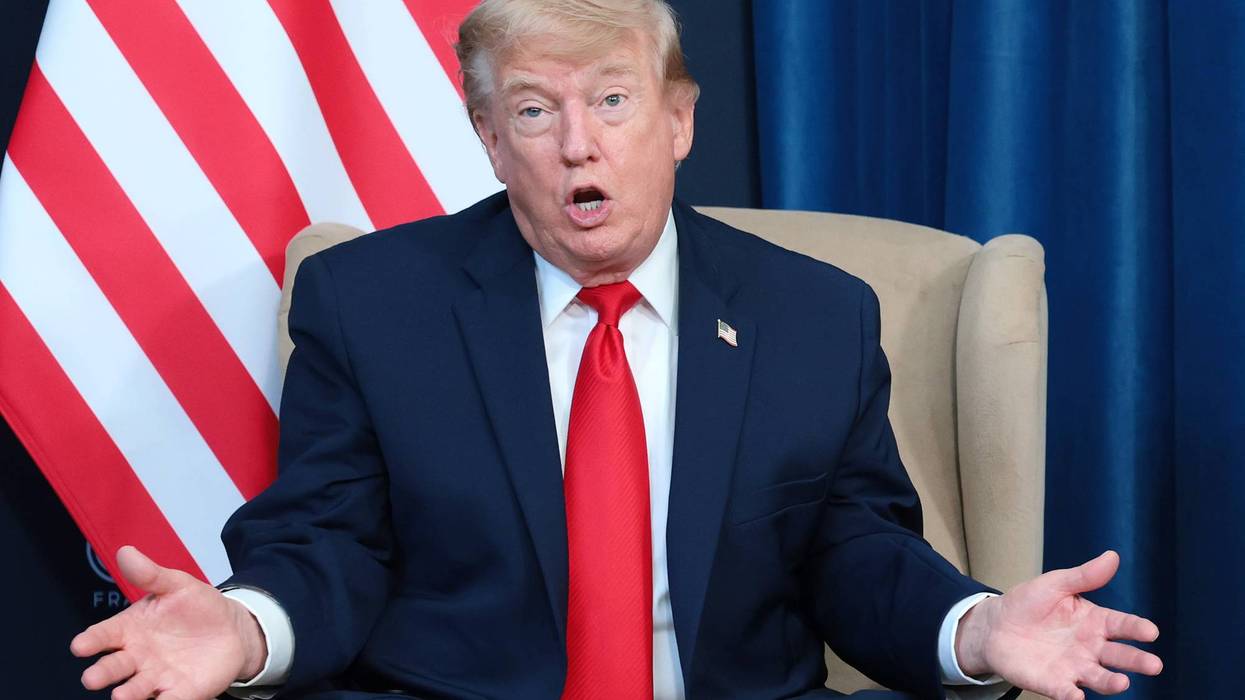
Despite the strait's closure, Trump insisted it was "open as far as we're concerned."
US President Donald Trump on Sunday twice told journalists to stop asking him about the status of the Strait of Hormuz, which Iran once again closed after the president declared an end to the ceasefire deal between the two countries.
The first instance came during an interview with NBC News' Kristen Welker, who pointed to conflicting statements from the Iranian government and US Central Command about the status of the strait, which is an essential shipping lane for global petroleum supplies.
Trump replied that "it's open, and I don't want to talk about it because I want to honor the life" of the late Sen. Lindsey Graham (R-SC), who died on Saturday from what his office described as "a brief and sudden illness."
"So I don't want to talk about it," Trump continued. "I told you that before the call."
WELKER: Iran says the Strait of Hormuz is closed. CENTCOM says it's open. Which is it?
TRUMP: It's open, and I don't want to talk about because I want to honor the life of Lindsey Graham, so I don't want to talk about it. I told you that before the call. pic.twitter.com/3ed7dN1bhK
— Aaron Rupar (@atrupar) July 12, 2026
Shortly after, during an interview with CNN's Jake Tapper, Trump was again asked whether the strait was still open.
"It's open as far as we're concerned," Trump told Tapper. "Don't talk about it. Talk about the reason you asked me to speak."
"Okay," Tapper replied. "We appreciate your time, sir."
TAPPER: Iran has declared the Strait of Hormuz closed. Is that true?
TRUMP: It's open as far as we're concerned. Don't talk about it. Talk about the reason you asked me to speak. pic.twitter.com/TwssTycQdF
— Aaron Rupar (@atrupar) July 12, 2026
Iran shut down shipping traffic in the strait after Trump launched an illegal war against the country in late February. The strait's closure resulted in spiking oil and gasoline prices, which coincided with further erosion in Trump's approval ratings.
Although traffic through the strait initially picked up in the wake of a June memorandum of understanding signed by the US and Iran, it has since slumped as the ceasefire between the two nations has fallen apart.
Ana Marie Cox, contributing editor at The New Republic, bashed both Welker and Tapper for heeding the president's requests and not pushing him to answer questions about the war he unlawfully started.
"Frankly astonished that supposed news sources agreed to terms to interview Trump and appeared to be deferential to them," Cox wrote in a social media post, "enough that they were apologetic in brining up other topics."
Cox's sentiment was echoed by Kai Ryssdal, host of NPR's Marketplace, who remarked that "the guy being interviewed doesn’t get to pick the questions."
Journalist Helen Kennedy challenged Trump's assertion that asking about the status of the Iran war was irrelevant when talking about Lindsey Graham.
"Making war with Iran was Lindsey Graham's favorite thing," Kennedy observed. "It's not like it's unrelated."