July, 07 2011, 12:32pm EDT
For Immediate Release
Contact:
Meredith Turner, Farm Sanctuary, 646-369-6212, mturner@farmsanctuary.org
Animal Welfare Groups Win Industry Backing for First-Ever Federal Regulation of Hen Welfare
Groundswell of Public Support Results in Full Court Press for Nationwide Law Protecting Chickens to Replace State-by-State Initiatives
WATKINS GLEN, N.Y.
In a groundbreaking move that should result in the greatest advancement for farmed animals in U.S. history, the United Egg Producers (UEP)has agreed to support national legislation that will, upon enactment, improve the welfare of all laying hens in the nation. Enactment of the bill will bring about the first federal law relating to the treatment of chickens used for food, the first federal law relating to the treatment of animals while on factory farms, and the first farmed animal protection legislation in more than 30 years.
Today's deal is the apex of a 25 year-long struggle that Farm Sanctuary (www.farmsanctuary.org) and other animal protection organizations have had with the egg industry, in which Farm Sanctuary has investigated and produced undercover video of battery farms, produced and disseminated scientific reports on caged hen welfare, initiated statewide ballot initiatives, and constantly mobilized its hundreds of thousands of supporters to write letters, sign petitions, and work on behalf of hens in cages in myriad ways.
Because of the work of Farm Sanctuary supporters and other animal protection advocates across the nation, the UEP now understands the overwhelming opposition to battery cages, which were subject to a ballot initiative in California in 2008, in which California citizens voted overwhelmingly to ban the cages; the initiative received more "yes" votes than any other ballot measure in California history. Similar legislation, on hold as a result of today's agreement, was planned in Washington State and Oregon. Specifically, if it becomes law the legislation will:
- require the nationwide elimination of battery cages--tiny cages that nearly immobilize hundreds of millions of laying hens today;
- require environmental enrichments so that birds can engage in important natural behaviors currently denied to them in barren cages, such as perches, nesting boxes, and scratching areas;
- mandate labeling on all egg cartons nationwide to inform consumers of the method used to produce the eggs, such as "eggs from caged hens" or "eggs from cage-free hens;"
- prohibit forced molting through starvation--an inhumane practice which is inflicted on tens of millions of hens each year and which involves withholding all food from birds for up to two weeks in order to shock their bodies into another laying cycle;
- prohibit excessive ammonia levels in henhouses--a common problem in the industry that is harmful to both hens and egg industry workers;
- require standards for euthanasia practices; and
- prohibit the sale of all eggs and egg products nationwide that don't meet these requirements.
Some of the provisions will be implemented almost immediately after enactment, such as those relating to starvation, ammonia levels, and euthanasia, and others after just a few years, including labeling and the requirement that all birds will have to have at least 67 square inches of space per bird. Currently, approximately 50 million laying hens are confined at only 48 square inches per bird.Further improvements in mandated minimum space for hens occur later in the agreement.
"This deal represents a majorvictory for farmed animals," explains Gene Baur, president and co-founder of Farm Sanctuary. "For too long, animals on factory farms have had no federal protection from even the most heinous abuse. We are proud of our significant part in making this legislation a reality, and we salute the hard work of animal protection advocates nationwide who worked so hard on behalf of our nation's hens."
Farm Sanctuary fights the disastrous effects of animal agriculture on animals, the environment, social justice, and public health through rescue, education, and advocacy.
LATEST NEWS
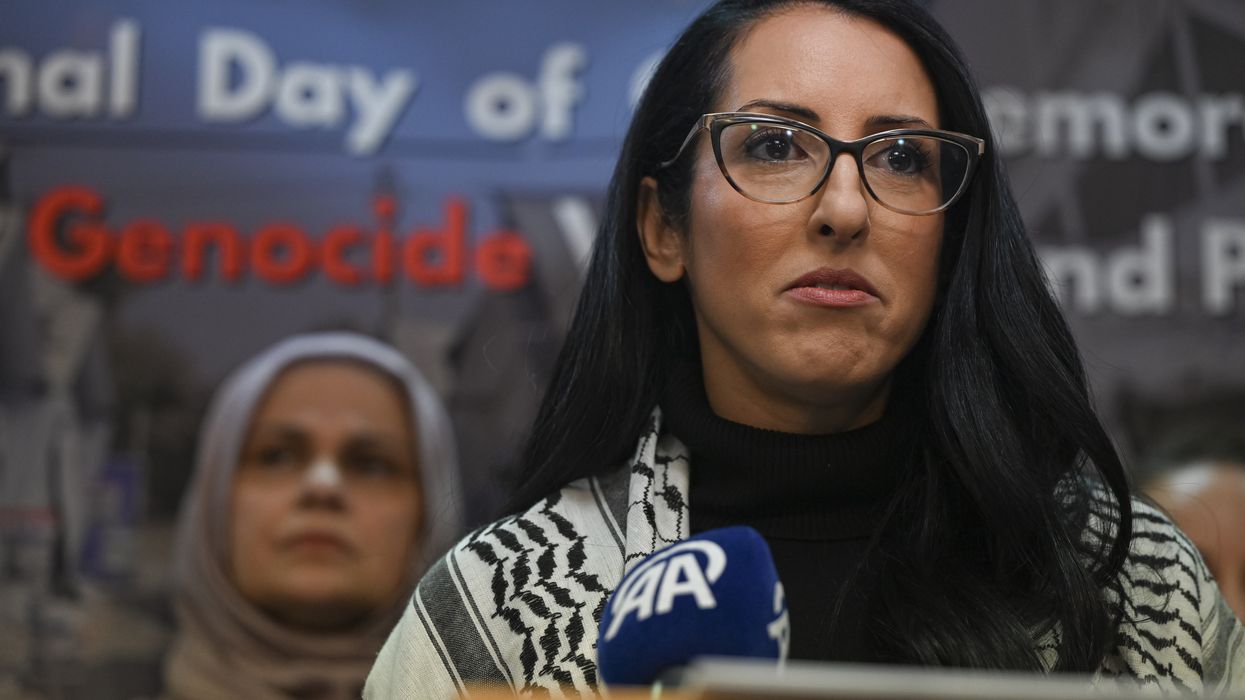
US Diplomat Who Resigned Over Gaza Condemns Biden Officials Who Defended Genocide—And Now Claim to Regret It
"They actually had the power to stop unconditional arms assistance to Israel," said Hala Rharrit. "They enabled it 100%."
Aug 28, 2026
Recent expressions of regret by top Biden administration officials who vehemently defended the United States' billions of dollars in military aid to Israel as it was bombarding Gaza have not gone far with former diplomat Hala Rharrit, who was retaliated against for speaking out about the US policy before she ultimately resigned, and who condemned her former colleagues recent "PR game" this week.
In an interview with Middle East Eye, Rharrit said the former officials who have mused that they would now support withholding weapons from Israel, or that they should have backed such a move while serving under President Joe Biden, are "just so despicable."
"They're so disgusting," Rharrit said. "Those individuals, particularly [National Security Adviser] Jake Sullivan and a handful of others, actually had the power to save human lives. They actually had the power to stop unconditional arms assistance to Israel, right? The Israelis were not killing the Palestinians by themselves. The Israelis were killing the Palestinians with American bombs, with American jets, with American everything. We enabled it 100%. They enabled it 100%."
"They’re so disgusting."
Former US diplomat Hala Rharrit, who resigned in 2024 over Gaza, responds to the Biden officials who’ve recently claimed they should have done more on Gaza.
Watch early by joining MEE's YouTube membership ➡ https://t.co/kSRg1sVXCo pic.twitter.com/szijxYjczk
— Middle East Eye (@MiddleEastEye) August 27, 2026
Rharrit, who resigned as the Arabic language spokesperson for the US State Department in April 2024, six months into Israel's US-backed assault—which has been called a genocide by leading human rights organizations and Holocaust experts—spoke to MEE months after former Secretary of State Antony Blinken said the US should have called for a ceasefire earlier than it did, "such that the suffering the people endured, the loss of the children, so many others, could have been averted.”
Sullivan last year said—weeks before a ceasefire was finally agreed to—that he'd had a change of heart regarding providing Israel with weapons, and that he would no longer support the policy.
In November, Sullivan added in an interview with The Dartmouth that "it’s fair to say that there were a lot of objections from a lot of parts of the international community about the US continuing to support Israel over the course of last year—2024—and over the course of this year in 2025. I think a lot about what we could have done differently."
Rharrit told MEE that "it's despicable that now they're trying to make themselves look like, 'Oh we should have done better and we're so sorry.'"
The former diplomat emphasized that the apology tour has taken place as it's become increasingly clear that "America has changed" in terms of its views on Israel, Palestine, and the United States' decadeslong, unconditional support for the Israeli military—despite US statutes like the Foreign Assistance Act of 1961 and Leahy Laws, which bar the government from providing military aid to countries that block humanitarian assistance and that are accused of human rights abuses.
A poll released this week showed that large majorities of Democratic voters in the first six states that will vote in the 2028 presidential primaries support cutting off weapons aid to Israel, and another survey by Hart Research Associates and Public Opinion Strategies in March found that just 32% of Americans viewed Israel positively, compared with 47% in 2023.
"America is forever changed," said Rharrit. "Americans no longer support these forever wars, they no longer support unconditional arms assistance to Israel. They no longer agree with US policy in the Middle East. And so now... they're doing a PR game. This is just pure PR."
Rharrit and other officials who resigned over the US policy on Israel and Gaza "were vindicated," she said. "Of course we were right the whole time, because it's international law. It's US law. I abided by my oath to the Constitution... That is exactly what I did. That is exactly why I resigned."
Francesca Albanese, the United Nations special rapporteur on the occupied Palestinian territories, said Rharrit is one of "a rare breed" of diplomats.
"During this genocide I've met courageous diplomats and officials who denounced it at real personal cost," said Albanese, whom the Trump administration targeted with sanctions earlier this year. "Imagine foreign policy built by more of them. Because the problem is never one unfit minister/head of state: It's whole spineless cohorts around them."
Keep ReadingShow Less

After Supreme Court Ruling, 4th Circuit Tosses Verdict Against US Company for Abu Ghraib Torture
"History will show that it was the Supreme Court that denied us justice," said Salah Al-Ejaili, one of the Iraqi plaintiffs.
Aug 28, 2026
The US Supreme Court recently delivered a "lethal blow" to lawsuits filed under an 18th-century law, including a case brought by Iraqis tortured at Abu Ghraib as part of the George W. Bush administration's invasion of Iraq, whose landmark verdict was struck down on Friday by a federal appellate court.
The Iraqis' case against US military contractor CACI Premier Technology was first filed in 2008, and eventually led to a trial and retrial in 2024. That November, a federal jury found the company liable for torture at the notorious prison in Iraq, and ordered it to pay the three prisoners a total of $42 million.
After unsuccessfully seeking another trial at the US District Court for the District of Virginia, CACI turned to the US Court of Appeals for the 4th Circuit, which this past March upheld the historic verdict in favor of the three tortured men: middle school principal Suhail Al Shimari, fruit vendor Asa'ad Zuba'e, and journalist Salah Al-Ejaili.
Then came the Supreme Court's June decision in Cisco Systems v. Doe, which effectively reversed the high court's 2004 ruling on the Alien Tort Statute (ATS), nullifying "a vital law that could check corporate abuses and provide an essential remedy to those whose rights have been violated," as University of California, Berkeley law professor Erwin Chemerinsky wrote earlier this week.
As legal experts feared, the 4th Circuit reconsidered the CACI verdict in the wake of the June decision, and determined that "just as the court concluded that the Cisco plaintiffs' ATS claims—including aiding and abetting torture—must be dismissed, so too must we dismiss plaintiffs' claims here—conspiracy to commit torture" and cruel, inhuman, and degrading treatment.
Baher Azmy, legal director of the Center for Constitutional Rights, which represented the Iraqis alongside other law firms, responded with a Friday statement calling out both the Supreme Court and CACI.
"As radical and regressive as the Supreme Court's decision in Cisco is," Azmy said, "it will never change this fundamental truth: A jury heard voluminous testimony and unanimously concluded CACI was responsible for the torture and abuse of dozens of Iraqis at Abu Ghraib, including these plaintiffs, rendering CACI, in the words of a foundational ATS-human rights case, 'hostis humani generis'—an 'enemy of all mankind.'"
"We remain in awe of the bravery and dedication of our clients, who fought for 18 years for justice for themselves, their families, and other survivors of horrific human rights abuses," Azmy added. "This Supreme Court may continue to do great damage to human rights cases, but it cannot take the courage and dignity away from our clients' historic achievement."
One of the plaintiffs in the case, Al-Ejaili, also took aim at the country's highest court, which is dominated by right-wing justices.
"What we did in pursuing accountability for 18 years for the torture we suffered at Abu Ghraib was a big thing. We trusted a US jury with our stories, and they believed us and sided with us—this is the most important part of the case," he said Friday. "History will show that it was the Supreme Court that denied us justice."
Keep ReadingShow Less
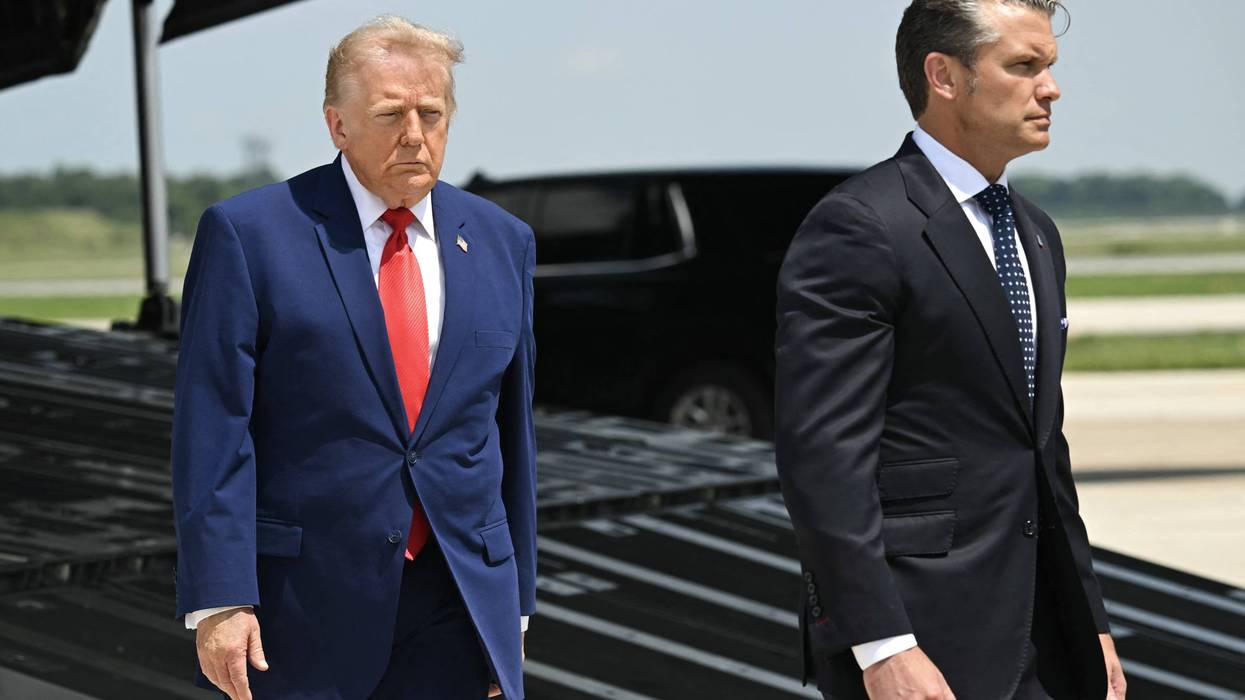
Iran War Trump Said Would Be Quick Has Now Lasted 6 Months With 'No End In Sight'
Trump has "lost the Iran War in every way possible in less than six months," said one critic.
Aug 28, 2026
The illegal war with Iran that President Donald Trump said would be over in a matter of weeks entered its sixth month on Friday, and there is little sign of it wrapping up in the near future.
A Friday report in The Washington Post marking the six-month anniversary of the illegal war noted that Trump's ability to decisively win the conflict declined markedly "after Iranian leaders discovered that they could withstand intense bombardment and slowly degrade the world’s most powerful military with a cheap combination of mines and drones."
The biggest weapon in Iran's arsenal has been its ability to shut down the Strait of Hormuz, a vital shipping lane for petroleum. Since the strait's closure, oil and gas prices have soared, costing US consumers an estimated $71.5 billion more to fill up their cars than they otherwise would have paid.
Trump this week has tried to claim that the strait has actually been reopened, but the Post found that the president's proclamations do not match reality.
"More than 100 ships traversed the Strait of Hormuz on average every day before the war," the Post wrote. "Just five went through on one day this week, according to Kpler, a commodities and shipping tracker."
A Friday report in The Associated Press focused on the White House's announcements this week of new measures to put economic pressure on Iran, which are a sign that the administration no longer thinks it can use military force to force Tehran's hand.
"The turn to using sanctions as the cudgel of choice," wrote the AP, "comes as the administration weighs diminished munitions stockpiles after months of war, sparking concerns that the prolonged conflict could undermine US military readiness in other parts of the globe."
The AP also flagged a shift in rhetoric from Trump, who once promised the war would end quickly but now says he's "not in a hurry" to end the campaign.
Harrison Mann, a former US Defense Intelligence Agency officer, wrote in an analysis published by Zeteo on Thursday that Trump has "lost the Iran War in every way possible in less than six months," which he said would mark "the arrogant, violent end of American dominance in the Middle East."
In fact, Mann argued that Trump lost the Iran War three different ways: The first in his failed attempt to force regime change in Tehran, the second in an aborted campaign to incite an Iranian Kurdish uprising, and finally in his desperate efforts to reopen the Strait of Hormuz.
All of these failures have combined to put Iran in a decisively stronger position than it was in before the war began, Mann wrote.
"After another four months of Trump threats, half-hearted bombing runs, and not one but two US blockades of Iran, Tehran’s military exercises formal authority over at least a third of the ships transiting the strait," he wrote. "Plus, it now regularly shoots at 'unauthorized' ships with impunity."
US Rep. Don Breyer (D-Va.) summed up the failure of Trump's war in a Friday social media post.
"When Trump began his illegal, unpopular war with Iran, he said it would last a week," Breyer wrote. "SIX MONTHS later: The administration has lied about our casualties and the deaths of civilians, the stated objectives haven't been met, Iran has a new economic weapon in the Strait of Hormuz, the region is less stable, our prices are higher, our allies are angry, our adversaries are emboldened, and there's no end in sight."
Keep ReadingShow Less

'Yet Another Trump Grift': Congress Called to Stop US Takeover of Venezuelan Oil Fields
"Handing over Venezuela's oil wealth to the US contravenes the Constitution and is not in the interest of the Venezuelan people—much more when it is done at gunpoint," said one analyst.
Aug 28, 2026
Trump administration officials are claiming that talks between US Secretary of State Marco Rubio and the Venezuelan government regarding control of the country's oil fields will ultimately secure "America's energy future for generations to come"—but analysts on Friday called on lawmakers to halt President Donald Trump's "colonial" push to take over the reserves.
As Axios reported, officials including Rubio and Deputy White House Chief of Staff Stephen Miller have been involved in talks with Venezuelan acting President Delcy Rodriguez about taking an ownership stake in more than a dozen oil fields in the Orinoco Belt and Lake Maracaibo regions, which have about 90 billion barrels of oil reserves. In all, Venezuela's vast reserves—the world's largest—contain about 300 billion barrels.
The deal would double US oil reserves at a time when Americans have seen gas prices skyrocket and oil firms reap profits as a result of Trump's war on Iran and the closure of the Strait of Hormuz—events to which countries that have expanded renewable energy sources have proven far more resilient, according to data from JP Morgan Commodities research.
Despite that resilience, the Trump administration has reportedly approached the talks as a way to lock the US into generations of continued reliance on planet-heating oil extraction. According to Bloomberg, one deal under consideration is a 100-year lease on the oil fields.
Axios reported that in return for giving the US an ownership stake—something Trump began privately discussing before US forces invaded Venezuela and abducted President Nicolás Maduro in January—Venezuela "would benefit from private companies, including American firms, developing the fields and returning more oil revenue" to the South American country.
Tyler Slocum, director of Public Citizen's energy program, said that if the deal is finalized, "Trump will likely transfer operational control to US oil companies," which donated heavily to his campaign.
The proposed deal would open "the door to Trump’s typical bilateral transactional corruption" and bestow "lucrative opportunities for the oil companies he chooses to reward," said Slocum.
“In the nearly eight months since Trump’s illegal January 2026 Venezuelan invasion, the Trump administration has managed a $13 billion slush fund gleaned from its control over Venezuelan oil sales, with zero transparency, and little to no public oversight or accounting," Slocum continued. "The president has no authority to negotiate a deal where the federal government takes control over foreign oil production facilities, and Congress must intervene and put an end to Trump’s oil-fueled imperialism."
One opposition leader in Venezuela, where Energy Secretary Chris Wright is expected to travel next week to discuss increasing oil production by US companies, said the deals currently being discussed amount to "a land grab—a massive land grab."
Francisco Rodríguez, a senior research fellow at the Center for Economic and Policy Research and author of The Collapse of Venezuela, said the country's National Assembly "should deny authorization for this predatory deal."
Following Trump's invasion of Venezuela in January, energy historian and Eurasia Group analyst Gregory Brew told The Guardian, "US dominance over Venezuelan oil reserves allows the US to regard Venezuelan reserves as its own reserves: a source of oil from which the United States can draw and that nobody else has access to."
"I think that’s how the administration is conceiving of this—excluding China, excluding Russia, but I think also excluding other potential customers for Venezuelan oil,” Brew said. “It sounds colonial, because it is.”
The president's "effort to establish a South American kleptocracy is an outrage," said Slocum. "There’s been no improvement in human rights in Venezuela, so Trump’s move is further evidence that his illegal actions in Venezuela are all about controlling oil with no public accounting, transparency, or oversight. This is yet another Trump gift for Big Oil.”
Keep ReadingShow Less
Destruction of East India Company Gives US Lawmakers a Blueprint for Confronting Big Tech: Historian
The instruments to take apart entrenched corporate power "still exist," but current governments are "lacking... the political nerve to use them," said historian William Dalrymple.
Aug 28, 2026
A historian who has written four books about the British East India Company is warning that big technology companies in the US are amassing similar levels of unchecked power and will need to be reined in.
In a New York Times op-ed published on Friday, William Dalrymple described how the British government eventually realized that it had allowed the East India Company—key to the British Empire's rise in the 18th and 19th centuries—to become too powerful and decided to finally clamp down.
The situation faced by the British Parliament in the 19th Century was strikingly similar to the situation faced by US lawmakers today, Dalrymple explained, as the East India Company had spent decades spending money to capture influence within the government.
"Around one in 20 members of Parliament sat on the East India Company’s board," the historian wrote, "and more than a fifth of the company’s directors sat in Parliament at some point; about 40% of members of Parliament were shareholders."
In the contemporary context, the executives of the nation's largest tech firms are spending lavishly to curry favor with lawmakers and government officials of both major parties
Writing in The Nation last month, investigative journalist David Moore detailed the massive political spending of major tech firms in the 2026 midterms, noting that "Super PACs working on behalf of crypto, AI, and AIPAC donors are the highest-spending groups on independent expenditures to influence voters this cycle—combining to spend more than $180 million so far, according to a review of Federal Election Commission records."
In addition to political clout, the East India Company in its day also had the power to raise its own army, which at its peak topped 200,000 soldiers, twice the size of England's own armed services.
Dalrymple pointed out that this is one power that today's Big Tech firms do not have, although he argued that they have been increasingly integrating themselves into the US military-industrial complex.
"In June 2025 the US Army commissioned the chief technology officers of Palantir and Meta and OpenAI’s chief product officer as lieutenant colonels in a new Reserve unit," he noted. "The new dispensation puts tech executives straight into a position of federal power, which in one way puts them ahead of their 18th-century counterparts."
The government finally dropped the hammer on the East India Company, Dalrymple said, after the bloody Indian Rebellion of 1857, as they feared the firm's "greed and self-interest" would cause the British Empire to lose what it considered its most valuable colony.
"The company’s navy was disbanded and its army passed to the Crown," wrote Dalrymple. "In 1858 the governor general of India announced that the company’s Indian possessions would be nationalized and pass into the control of the British Crown."
Less than two decades later, what was once the most powerful private corporation in world history shut down after the expiration of its charter.
What this shows, concluded Dalrymple, is that "states can master corporations," even if those corporations have their own private armies.
However, he said that while the instruments to take apart entrenched corporate power "still exist," it appears our current governments are "lacking... the political nerve to use them."
Dalrymple's op-ed was echoed thematically by a Friday op-ed written by SFGATE travel editor Silas Valentino, who argued that the city of San Francisco has not gotten any benefit from the current artificial intelligence boom, despite being the home of OpenAI and Anthropic, the world's two biggest AI firms.
In particular, Valentino argued that the AI firms have done nothing to give back to the city and alleviate its affordable housing crisis. In fact, Valentino found that the AI firms' initiatives in the city appear to be mostly self-serving.
"OpenAI says it has invested in our community, but so far, that’s meant less than a million dollars in 'SF civic contributions,'" Valentino wrote. "And worst of all, some of that is for things like AI training programs... That’s not improving the city; it’s OpenAI trying to make more money."
Valentino also noted that Anthropic last year teamed with the Tipping Point Community nonprofit group, which was founded by current San Francisco Mayor Daniel Lurie, to provide free training on the company's Claude chatbot.
"In the years since language models like ChatGPT and Claude proliferated to usher in the AI boom," the travel editor wrote, "I’m only counting negatives for nearly everyone trying to figure out a way to live here."
Valentino concluded by warning that if Lurie and his administration "don’t demand these companies start giving back and enhance our city for the better, they’ll continue ruining our city without pause."
Keep ReadingShow Less

'America Is For Sale': Trump Reportedly Trying to Hand Private Developer Part of Yosemite
"Government of the people, by the people, but for friends and donors of the president above everyone else."
Aug 28, 2026
Even while repeatedly serving the interests of destructive industries, President Donald Trump and Interior Secretary Doug Burgum have claimed they are committed to protecting US national parks—but the Republican administration is now working to give a private developer a piece of Yosemite, NOTUS reported on Friday.
Specifically, according to unnamed sources and government documents, federal staffers are working on a potential land exchange to give a quarter-mile strip of land in California's Yosemite National Park "to a company that, through a web of limited liability companies, is operated by real-estate developer and investment firm Kingsbarn Realty Capital."
The developers own 83 acres west of the park, and Kingsbarn CEO Jeff Pori—whose company did not respond to a request for comment—aims "to build a short road connecting the property to one of Yosemite's central thoroughfares," providing "the land exceptionally rare private access to a park that is otherwise almost entirely buffered by national forests," NOTUS detailed.
The sources told NOTUS that political leaders at the US Department of the Interior "want us to be responsive to the property owner and their lobbyists or people, and they want us to work with these folks," and that "the political pressure being brought to bear is very unusual."
The National Park Service, which is part of the department, said that "no final decisions have been made," but any proposals "would be subject to all applicable federal laws, regulations, and departmental policies, including required environmental review and public notification processes."
The revelation—which came during National Park Week—was met with outrage.
Ripping the possible "secretive, backroom deal," as "an attack on the American people that own this national park," Mark Rose, the National Parks Conservation Association's Sierra Nevada program manager, told NOTUS that "it would also be unlawful, and a court previously rejected a road development proposal."
We are opposed to private developers building driveways and special access into our parks. The ultra wealthy can wait in line and go through the gate just like everyone else. www.notus.org/agencies/tru...
[image or embed]
— AltYellostoneNatPar (@altyellonatpark.org) August 28, 2026 at 9:00 AM
Sierra Club executive director Loren Blackford said in a statement that "Yosemite is not Donald Trump's to give away. This secretive deal betrays the purpose of our national parks and the promise our government has kept since Abraham Lincoln to protect Yosemite for the public and for generations to come."
"For more than 150 years, each generation has carried forward the responsibility to protect this sacred landscape and pass it on intact," Blackford continued. "The Trump administration is betraying that legacy by trying to hand parts of Yosemite to a private developer. We will use every tool at our disposal to stop this corrupt giveaway."
While the looming land swap could move forward without any sign-off from Congress, House Natural Resources Committee Ranking Member Jared Huffman (D-Calif.) was among those who spoke out on social media Friday.
"Our parks belong to all of us," the congressman emphasized. "These places should be protected for every generation, not sold off to Trump's ultrawealthy friends to profit off of. I will fight this, both for Yosemite and for every treasured park that would be up for grabs if this domino falls."
Columnist and self-described "recovering attorney" Wajahat Ali declared, "America is for sale," and American Immigration Council senior fellow Aaron Reichlin-Melnick said, "Government of the people, by the people, but for friends and donors of the president above everyone else."
While other critics condemned the reported efforts as "disgusting," "sickening," and "shocking," journalist Chris D'Angelo commented, "I would say this is shocking, but things have been headed in this direction since Trump reentered office."
After Trump won a second term in 2024—having secured campaign funds from Big Oil, and run on a promise to "drill, baby, drill"— one of his early actions post-inauguration was declaring a "national energy emergency" intended to boost the climate-wrecking fossil fuel industry.
Since then, while cashing in on his second presidency—including via stock transactions made this year as fuel prices soared due to his illegal war with Iran—Trump has continued to push policies that help polluters and other rich allies. For example, last week the administration delivered a "one-two punch" to national forests, taking aim at a pair of rules intended to protect such lands.
The Center for Biological Diversity warned this week that the Trump administration's proposed repeal of the 2001 Roadless Area Conservation Rule would "open pristine public lands to road construction, commercial logging, and industrial development," and, according to the group's analysis, put 400 species on an "extinction fast track."
"More roads mean more sediment in streams, more fragmentation of wildlife habitat, more human access to places wildlife depend on for refuge, and more wildfires in forests already facing unprecedented climate change-fueled risk," the center stressed. "The roadless rule has held that line for a generation. Without it the losses to wildlife, water, and the wild places that define the American landscape will be irreversible."
This article has been updated with comment from the Sierra Club.
Keep ReadingShow Less
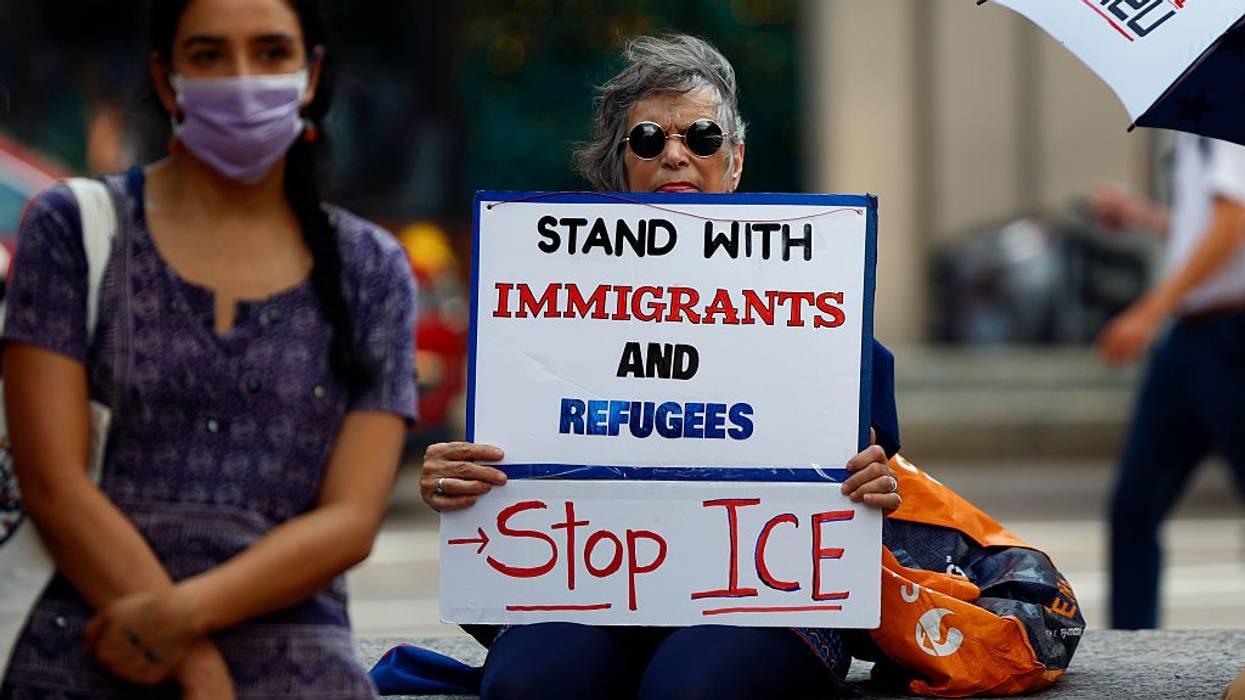
'Sadism': Trump DHS Boasts of Deportation Flight to Haiti in 'Propaganda' Video
"These are our neighbors and coworkers who were legally living and working here," said one advocate. "Stripping away their protections and then threatening them with deportation is cruel beyond words."
Aug 28, 2026
By releasing a video of Black men wearing handcuffs and prison uniforms being hauled onto a deportation flight, the US Department of Homeland Security appeared to be fulfilling a key objective of President Donald Trump's decision to terminate Temporary Protected Status for Haitian migrants, said one immigration policy expert on Thursday.
President Donald Trump "hates Haitians," said American Immigration Council senior fellow Aaron Reichlin-Melnick, "and the White House wanted videos of Black people in chains, so they stripped them all of status."
Reichlin-Melnick said the video, which also features a Haitian song and the text "Temporary Meant Temporary. Leave Now" on screen, was "propaganda for an audience of people that thrills to the sight of Black men being led in chains" and whom Trump's mass deportation agenda and racist attacks on Haitians, Somalis, and other refugee populations are aimed at satisfying.
The video was released a week after US Immigration and Customs Enforcement (ICE) sent a charter flight with 161 Haitians on board to Haiti, where gang violence, kidnappings, and humanitarian crises that have continued more than a decade after the 2010 earthquake have pushed the US State Department to maintain its highest "Do Not Travel" warning for Americans.
The administration said that flight would be the first of many, following the US Supreme Court ruling in June that allowed DHS to revoke Temporary Protected Status (TPS) for 350,000 Haitians and 6,000 Syrians.
The National Office of Migration in Haiti said last week that the Haitians aboard the ICE flight had not benefited from TPS, but were people who were facing removal proceedings due to criminal convictions or who had entered the US without authorization.
In the video—as in the Trump administration's persistent rhetoric about its mass deportation operation, which it claims is targeting "the worst of the worst" violent criminals—DHS suggested the Haitians who have been granted TPS for years pose a danger to the US public, despite the fact that criminal convictions make people ineligible for the protected status.
"TPS holders had been living and working legally and paying taxes," said Drop Site News—taxes, Reichlin-Melnick stressed, that do not permit them to benefit from federal assistance programs including the Supplemental Nutrition Assistance Program, Temporary Assistance for Needy Families, and Medicaid.
David Bier, the director of immigration studies at the libertarian Cato Institute, said the "sadism" depicted in the DHS video was "unrelenting."
The video was released as Archbishop Thomas Wenski of Miami called on the Trump administration to "rethink" its decision to end TPS for Haitians following an August 23 gang attack outside the country's capital of Port-au-Prince, in which at least 47 people were killed and at least 50 were kidnapped.
"The country is not safe, that Haiti is still a house on fire," Wenski told OSV News. "This should cause our administration to rethink its decision to send back into Haiti over 300,000 Haitians."
A bill introduced in the Senate by Sen. Ed Markey (D-Mass.) would extend TPS for Haitians through early 2029, and "would pass very easily" if Trump "would voice his support," said Wenski.
Cory Archibald of the anti-Zionist group Track AIPAC called for prosecutions of top White House officials including Trump, Homeland Security Adviser Stephen Miller, and Homeland Security Secretary Markwayne Mullin, "all the way on down to the masked chuds joyriding in this video and loading these men onto planes."
"All of them are guilty," she said, "and all of them should be prosecuted."
Keep ReadingShow Less
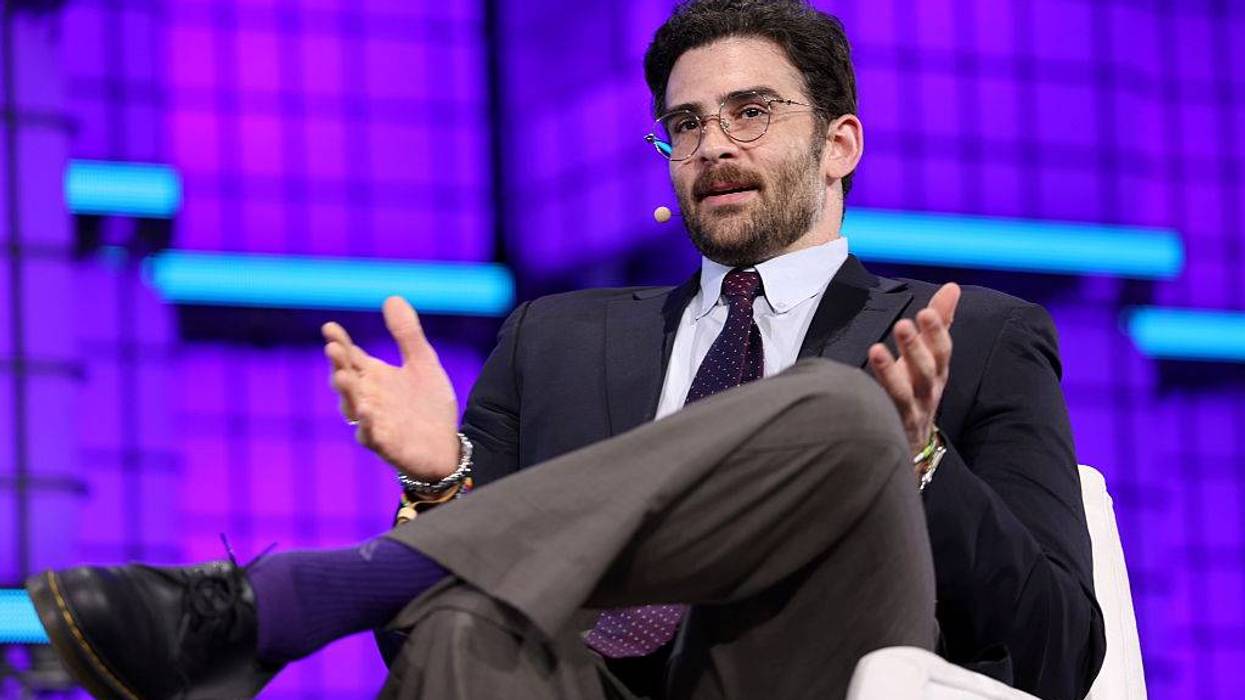
Progressives Warn Democrats Endlessly Invoking Hasan Piker to 'Get Their Shit Together'
"Every Democrat talking about Piker is handing the midterms to Trump."
Aug 28, 2026
Progressives this week have grown increasingly frustrated with the oxygen that Democratic lawmakers are wasting invoking the name of left-wing commentator Hasan Piker, warning that too many in the party are falling for a trap that so obviously favors President Donald Trump and Republicans with midterm elections just slightly more than two months away.
"Democrats need to get their shit together. I'm tired of hearing about Hasan," said Maurice Mitchell, national director of the Working Families Party, said in a social media post on Thursday.
"Whatever 3D chess you think you're playing is only pushing away real people," Mitchell added. "Stop obsessing over a streamer. We’re fighting authoritarianism here."
Chuck Idelson, a progressive Democratic voter and retired union official based in California, agreed.
"Exactly," Idelson said in response to Mitchell's declaration. "The obsession with Piker is the rabbit hole the GOP is counting on to focus the Democrats on anything other than the horror show of what Trump is doing to this nation. Every Democrat talking about Piker is handing the midterms to Trump."
As The Independent reports: "All of this is occurring under the spectacle of a national media frenzy surrounding Piker and the Democratic Socialists of America, whom journalists have made the focus of their questions to Democrats of all stripes. And some Democrats are beginning to air publicly their resentment over party leaders like Jeffries falling into what they call a Republican trap."
While much of the discourse around Piker is taking place on the airwaves and social media, Newsweek reported this week on an Echelon Insights poll conducted in April that "found that Piker remains largely unknown among Democratic voters," results that underscore "the gap between his enormous online following and his reach with the broader electorate."
Common Dreams reported earlier this week how critics have viewed the obsession with Piker on the part of establishment Democrats and certain members of the corporate media as a "mass psychosis event."
"I am begging everybody to spend less time arguing about Hasan Piker and more time attacking Republicans," said Mike Nellis, a City Councilman in Chicago representing the city's 32nd Ward, on Friday.
"The election is in about two month," added Nellis. "Lock the fuck in."
Keep ReadingShow Less
Watchdog Denounces 'Staggering and Disgusting' Hypocrisy of AI Industry Giants
"Put plainly, Silicon Valley is the problem threatening our ways of life."
Aug 28, 2026
Government watchdog Public Citizen on Thursday hit back at the artificial intelligence industry for warning about the dire threats posed by its own technology after it spent years trying to block any government regulations that could have curtailed dangerous AI behavior that experts and progressive lawmakers have warned about for years.
In an open letter sent on Thursday, dozens of tech companies—including OpenAI, Anthropic, Amazon Web Services, and Microsoft—claimed that there is a "limited window" to defend against AI-executed cyberattacks, which they said "will become far more widespread and sophisticated as models around the world become increasingly capable."
If nothing is done, the companies said, then crucial facilities "from hospitals to water treatment plants to the infrastructure that powers the internet" will be at risk.
The companies said that thwarting such AI cyberattacks would require a "global response" where governments will need to "fund cyber defense" and "give hospitals, water utilities, and local governments access to capable defensive AI, authorized testing, and hands-on support through trusted security providers and partners."
JB Branch, director of federal AI governance and technology policy at Public Citizen, urged lawmakers to be deeply skeptical of Big Tech’s messaging on the issue and the industry's proposed plan of action, which he said would further enrich Silicon Valley without providing any safeguards for the public when it comes to AI development.
"Big Tech does not get to unleash powerful AI systems, fight tooth and nail against meaningful regulation," said Branch, "and then cry for help when the dangers they helped create come knocking."
Branch noted that the tech industry has insisted for years that there should be no government intervention into developing technology, supposedly because it would put the US at risk of "losing" the AI race to China.
Now, Branch said, they are running to the government and demanding fast action to help solve a problem they created.
"That hypocrisy is equal parts staggering and disgusting," Branch said. "If the threat is serious enough to demand urgent action from the government, then it is serious enough to demand binding rules, independent oversight, and accountability from the companies creating it."
The AI firms' open letter comes as the tech industry appears acutely concerned about public backlash to its products. The Wall Street Journal reported on Friday that Big Tech firms who gave heavily to President Donald Trump have been scrambling to donate to Democratic candidates ahead of the 2026 midterm elections.
In particular, according to the reporting, many tech companies who donated to Trump's ballroom and other vanity projects fear that a Democratic majority will start subpoenaing them for records that could lead to criminal investigations.
Cooper Teboe, a Silicon Valley donor adviser and Democratic strategist, has told Trump-funding tech companies that they will pay a big price unless they repair their relationships with Democrats whom they've alienated by going all-in on MAGA.
"You’re going to be totally fucked next year or you’re going to figure it out this year and you’re going to make amends," Teboe said, "and amends are going to be much more costly than they were previously."
As Branch put it, "Big Tech knows it has lost public support on AI, and the PR machine is now working overtime."
Despite industry efforts to control narratives and members of Congress, he said, the American people "aren’t going to forget the harms these companies unleashed, the regulations they fought, or their promises that AI could replace their jobs."
"Silicon Valley is the problem threatening our ways of life," Branch concluded. "It’s hard to take them seriously when they invented the problem in the first place.”
Keep ReadingShow Less
'Trump Must Keep His Hands Off Our Elections': Judge Again Blocks Attack on Mail-In Voting
US District Judge Indira Talwani said states will "face irreparable harm where they are required to comply with a likely unconstitutional regulation for which compliance is practically impossible as to the 2026 midterm elections," now just two months away.
Aug 28, 2026
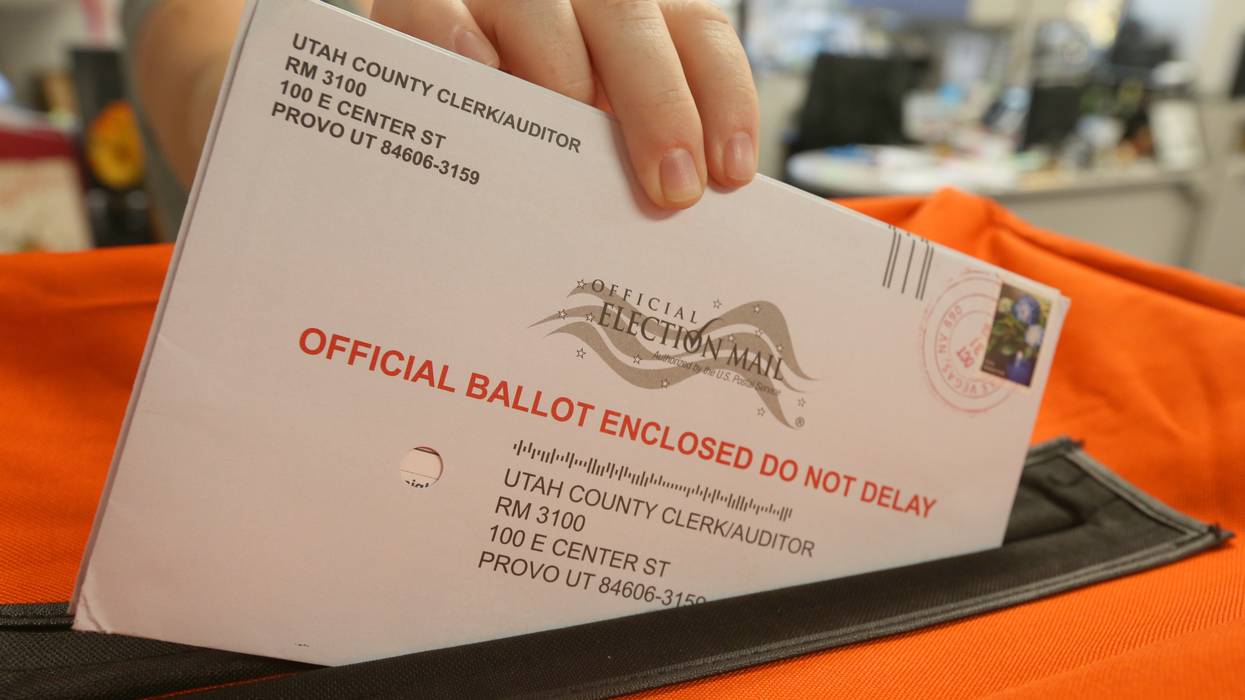
A federal judge in Boston on Thursday evening issued a new and complete block on rules recently set forth by the US Postal Service designed to severely restrict mail-in voting nationwide—a ruling that comes just days after the US Supreme Court put a hold on a previous, similar injunction against the rules that stemmed from an executive order issued last year by President Donald Trump.
US District Judge Indira Talwani said the group of Democratic-led states and voting rights group that filed separate legal challenges over the changes to how the USPS would handle mail-in ballots adequately proved that they would "face irreparable harm where they are required to comply with a likely unconstitutional regulation for which compliance is practically impossible as to the 2026 midterm elections, now little more than two months away."
When the Supreme Court ruled Monday on the lawsuit, it lifted a previous injunction ordered by Judge Talwani, ruling not on the legality of the rules themselves but arguing that the states and other plaintiffs did not have proper legal standing at the time because the Postal Service had yet to release the finalized rules stemming from Trump's order at the time the lawsuit was filed.
However, because the USPS did finalize its rules at the end of last week, Talwani's new temporary injunction ordered on Thursday would not fall prey to that dynamic. As the New York Times reports:
[Talwani] wrote that while the Supreme Court had “admonished” her on Monday that the Postal Service had not finalized any changes when the groups sued initially, making court action premature, the stakes had changed since then because of the step the agency took Friday to formalize its plan.
Her ruling marked the third court decision on the issue in less than a week, a whipsaw of action that threatened to confuse voters. But each delay has reduced the administration’s chances of clearing the legal hurdles to execute its logistically complicated mail-in ballot plan before the November election. She blocked the rule from taking effect for 14 days, and she had previously scheduled a hearing to discuss the legality of the rule on Sept. 3.
In her order, Judge Talwani explained that the prospect of the new rule suddenly taking effect carried “significant risk of their members’ disenfranchisement” for voting rights organizations, which had also sued, along with the states.
Counsel and plaintiffs in the lawsuit by voting rights groups—led by the League of Women Voters of Massachusetts—issued a statement welcoming Thursday's decision.
“The Administration previously dismissed plaintiffs’ ongoing harms from the executive order as speculative, but the newly finalized rule confirmed what plaintiffs have been saying all along," the statement read. "The Rule implements the Executive Order’s unprecedented attempt to usurp electoral authority from the states and Congress at the expense of voters. We welcome the court’s order, which recognized the immediate need to protect the entire electorate from the damaging impacts of this unlawful final rule in the lead-up to November’s general elections. This is an important step towards affirming the public’s confidence in the system of mail ballots, which thousands of eligible voters nationwide rely on as a core method of democratic participation.”
After Monday's ruling by the Supreme Court, the group's behind the challenge vowed to keep fighting and introduced a new round of legal challenges.
"USPS’s decision to rush this blatantly unconstitutional rule into effect just weeks before an election is the latest step in a rollout that has sown confusion at every turn and now threatens to disenfranchise voters who did everything right. This is chaos by design, and voters are the ones who will pay for it,” warned Sophia Lin Lakin, director of the ACLU's Voting Rights Project, on Wednesday.
Attorneys General from the coalition of 24 states that had challenged the rule also welcomed Talwani's latest intervention.
“From the beginning, it’s been clear that President Trump doesn’t understand how elections work. He’s repeatedly broken the law, so we’ve repeatedly taken him to court,” said California Attorney General Bonta in a statement. “On Monday, the US Supreme Court issued an order on the emergency docket stating we brought our lawsuit too early but did not address the merits of our challenge to the President’s executive order seeking to impose additional, unlawful restrictions on the ability to vote by mail. Just two days later, consistent with that order, we sued to stop the illegal USPS rule in its tracks. Today, the district court blocked the rule, making it clear that President Trump must keep his hands off our elections. The right to vote is a foundational principle of our democracy, and we’re making sure it remains protected for everyone.”
With the Trump administration almost certain to appeal, the case is likely headed back to the US Supreme Court, likely on a fast track, to decide the legal merits presented by the challengers.
Keep ReadingShow Less
See More
Most Popular