

SUBSCRIBE TO OUR FREE NEWSLETTER
Daily news & progressive opinion—funded by the people, not the corporations—delivered straight to your inbox.
5
#000000
#FFFFFF
To donate by check, phone, or other method, see our More Ways to Give page.
Daily news & progressive opinion—funded by the people, not the corporations—delivered straight to your inbox.
The UK government should not rely on unreliable "diplomatic assurances" against torture to deport national security suspects to Ethiopia, Human Rights Watch said today in a letter to the UK government.
In December 2008, the United Kingdom and Ethiopia signed a memorandum of understanding (MoU), similar to those the UK has signed with Jordan, Lebanon and Egypt. Under these MoUs, the receiving governments provide "diplomatic assurances" that they will not mistreat persons whom the other country transfers to their territory. Under the agreement, Ethiopia will obtain custody of its citizens now in detention in the UK, while the UK will be able to deport to their home country Ethiopians it considers security threats.
"The UK-Ethiopia agreement is intended to get around the absolute ban on returning people to countries where they are at risk of torture," said Tom Porteous, London director at Human Rights Watch. "Ethiopia has a grim record of torture, particularly where suspects are perceived as security threats, and empty promises from Addis will not remove that risk."
Human Rights Watch and other organizations have documented the use of torture by Ethiopian police and military officials in both official and secret detention facilities across Ethiopia. Concerns about torture, ill-treatment, and lack of due process are often gravest when individuals are detained on suspicion of affiliation with armed opposition, insurgent, or terrorist activity. In some cases suspects are tortured during interrogations, while in other cases they are tortured as punishment.
Methods of torture include: repeated and severe kicking and beating of a naked suspect with sticks, electric cables, rifle butts, iron bars or other instruments, sometimes at gunpoint; tying an individual's hands and feet, then suspending the person upside down and administering a beating; tying bottles of water to a man's testicles; and forcing a detainee to run or crawl barefoot over sharp gravel for several hours at a time. Human Rights Watch has also documented cases of rape of women and girls detained in military barracks in the country's eastern Somali region.
"Ethiopia's record of torture of security suspects is all too clear," said Porteous. "The agreement is itself a tacit admission that torture continues to be a major problem in Ethiopia."
The agreements Britain has reached with Ethiopia and other states represent an effort to circumvent the strict non-refoulement (no return) obligations under the UN Convention against Torture and the European Convention on Human Rights.
Both treaties absolutely prohibit returning people to places where they face a substantial risk of torture. The bodies that enforce compliance with the two treaties, the Committee Against Torture and the European Court of Human Rights, have both repeatedly made clear that no exceptions are permitted to the ban on returns to torture, even where the suspect is alleged to pose a threat to national security.
The MoUs contain a measure that purports to act as a safeguard against abuse: establishment of a body, nominated jointly by the two signatory governments, which can periodically visit and privately interview anyone the receiving state takes into custody, and then report on those visits to the sending state.
In reality, such post-return monitoring will not protect returnees from torture. Its key deficiency is the lack of confidentiality. Where monitors have universal access to all detainees in a facility and are able to speak with detainees in private, a single detainee can report torture without fear of being identified by the authorities. The International Committee of the Red Cross makes universal access a condition of its monitoring for precisely that reason.
But under the British MoUs, with only one detainee or a small group being monitored, such confidentiality cannot be provided. If abuse is reported, the prison or detention facility authorities will know directly where the allegations of ill-treatment came from. Experience has shown that detainees are reluctant to report abuse in those circumstances for fear of reprisals against them or their families.
Moreover, the "independent" monitoring body identified to monitor returns under the UK's agreement with Ethiopia is the Ethiopian Human Rights Commission, a government-sponsored organization whose members are appointed by the ruling party-dominated Ethiopian parliament.
"Expecting an Ethiopian government-sponsored commission to monitor torture cases is farcical, especially when Ethiopia is fast becoming one of the most inhospitable places in the world for independent human rights investigation," said Porteous.
The European Court of Human Rights has ruled against efforts by the UK and other European governments to rely on assurances as grounds for returning national security suspects to countries with poor torture records, concluding that the use of assurances did not remove the risk faced by the suspects.
The court is currently considering a case brought by a Jordanian terrorism suspect against the UK, challenging its efforts to deport him to Jordan under the MoU with that country, following a February ruling by Britain's Law Lords that the suspect could be returned.
In April 2008, Britain's Court of Appeal rejected the return of two national security suspects to Libya under the 2005 MoU between London and Tripoli, concluding that they remained at risk of torture. The UK government did not appeal that ruling.
Human Rights Watch is one of the world's leading independent organizations dedicated to defending and protecting human rights. By focusing international attention where human rights are violated, we give voice to the oppressed and hold oppressors accountable for their crimes. Our rigorous, objective investigations and strategic, targeted advocacy build intense pressure for action and raise the cost of human rights abuse. For 30 years, Human Rights Watch has worked tenaciously to lay the legal and moral groundwork for deep-rooted change and has fought to bring greater justice and security to people around the world.
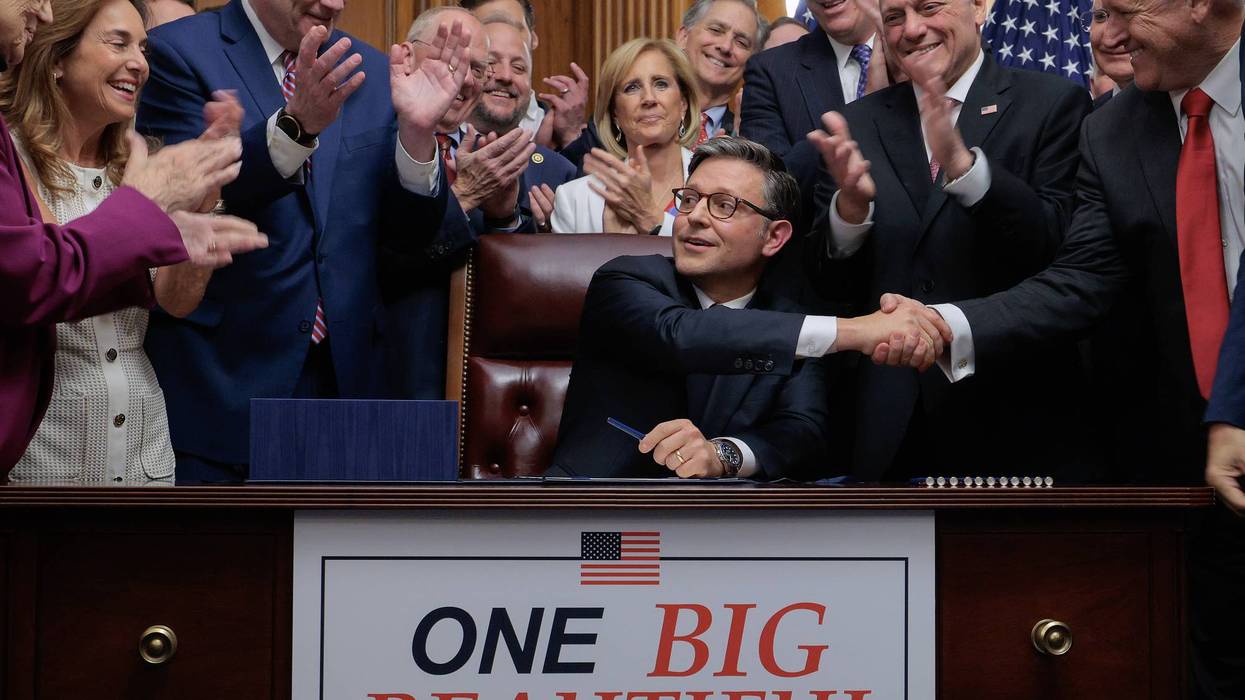
The companies avoided more than $26.7 billion in income taxes last year, enough to give free school lunches to every child in America.
Dozens of America's most profitable corporations avoided paying any federal income taxes in 2025, according to an analysis out on Tuesday from the Institute on Taxation and Economic Policy.
The 88 companies—which include Tesla, Southwest Airlines, Live Nation, Palantir, Citigroup, and many others listed in the S&P 500—brought in a collective $105 billion in pretax income last year.
ITEP found that 2025 saw a spike in corporate tax avoidance, enabled in part by new loopholes created by the One Big Beautiful Bill Act signed by President Donald Trump and by his 2017 Tax Cuts and Jobs Act, which reduced the corporate tax rate to 21% from its previous 35%.
The One Big Beautiful Bill Act is expected to hand the wealthiest 1% of Americans $117 billion in tax cuts this year, while those in the bottom 95% are set to pay more in taxes while facing across-the-board cuts to social safety net programs like Medicaid and the Supplemental Nutrition Assistance Program.
It also allowed multimillion- and billion-dollar corporations to find new ways to avoid paying taxes. More than half of the tax-avoiders listed in the report used a provision in the new tax law allowing companies to immediately write off capital investments, reducing their collective taxes by $11.4 billion.
Pharmaceutical and tech companies, meanwhile, were able to take advantage of tax write-offs for research and development, exempting them from approximately another $4.4 billion.
In total, the corporate tax avoidance documented in 2025 by the researchers helped to rob the public coffers of yet another $26.7 billion, enough to give every public school student a free lunch for a year, according to a University of Missouri analysis of the National School Lunch Program.
The researchers said that the full scale of corporate tax avoidance remains unclear, since corporate tax returns are not publicly available. Some companies were also excluded because they are not part of the S&P 500 or have not yet reported their 2025 taxes.
“These findings are not isolated cases—they reflect systemic deficiencies in the corporate tax code,” said Amy Hanauer, the executive director for ITEP. “Without meaningful reform, profitable corporations will continue to pay less than their fair share.”
"We have a solemn duty to play our defined role under the 25th Amendment by setting up this body to act alongside the vice president and the Cabinet."
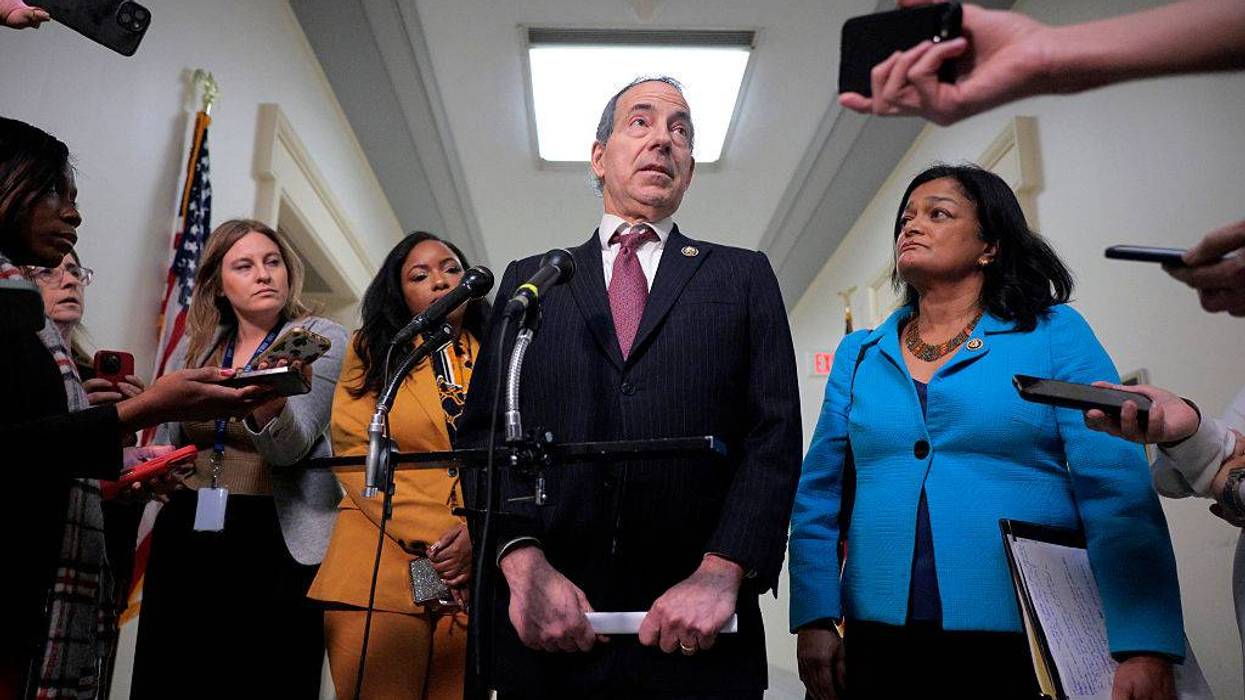
Rep. Jamie Raskin (D-Md.) on Tuesday unveiled legislation that would establish a congressional commission tasked with determining whether the president is able to continue executing the duties of the office.
The bill, titled the Commission on Presidential Capacity Act, would also set up "expedited" emergency procedures under which Congress could activate the newly created commission and fast-track its consideration of presidential fitness.
As envisioned by Raskin, this commission would act as a legislative counterpart to the US vice president and the president's Cabinet, which the text of the 25th Amendment grants the power to declare the president incapacitated. The 25th Amendment also gives that power to a majority "of such other body as Congress may by law provide."
"The Constitution explicitly vests Congress with the authority to create a body that will guarantee the successful continuity of government by responding to presidential incapacity to discharge the powers and duties of office," said Raskin. "We have a solemn duty to play our defined role under the 25th Amendment by setting up this body to act alongside the vice president and the Cabinet."
Raskin pointed to Trump's recent erratic behavior to argue that Congress needed to take a more assertive role in determining whether he has the mental capacity to serve in the most powerful office in the federal government.
"Public trust in Donald Trump’s ability to meet the duties of his office has dropped to unprecedented lows," the Maryland Democrat said, "as he threatens to destroy entire civilizations, unleashes chaos in the Middle East while violating Congressional war powers, aggressively insults the pope of the Catholic Church, and sends out artistic renderings online likening himself to Jesus Christ."
Raskin went on to warn that "we are at a dangerous precipice, and it is now a matter of national security for Congress to fulfill its responsibilities under the 25th Amendment to protect the American people from an increasingly volatile and unstable situation."
Fifty House Democrats signed on as original co-sponsors of Raskin's bill, which is unlikely to pass the Republican-controlled US House of Representatives.
Calls for invoking the 25th Amendment to remove Trump from office grew louder last week after Trump declared that "a whole civilization will die tonight, never to be brought back again," unless Iran agreed to meet his demands.
In a letter sent to congressional leaders on Monday, four psychiatrists warned that Trump's "behavior and rhetoric... have crossed a threshold that demands the immediate and bipartisan attention of Congress."
The psychiatrists added that Trump "exhibits what forensic mental health experts have, across dozens of independent assessments, identified as the 'Dark Triad' of personality traits: narcissism, Machiavellianism, and psychopathy."
One expert called the new IMF forecast "extremely concerning for the global economy," noting that "the most dire impacts of our economic situation will be felt by the poor and the vulnerable."
The International Monetary Fund warned Tuesday that the US-Israeli war on Iran could slow global economic growth, stoke inflation, and increase the possibility of a worldwide recession and energy crisis.
The illegal war of choice on Iran being waged by US President Donald Trump and the government of fugitive Israeli Prime Minister Benjamin Netanyahu has already had wide-ranging negative impacts on the global economy, from soaring fuel prices caused by the closure of the Strait of Hormuz to supply chain disruptions and financial market volatility.
However, a major global economic crisis has thus far been averted. That could soon change.
"Despite major trade disruptions and policy uncertainty, last year ended on an upbeat note," International Monetary Fund director of research Pierre-Olivier Gourinchas wrote in an analysis of the IMF's latest World Economic Outlook report. "The private sector adapted to a changing business environment, while powerful offsets came from lower US tariffs than originally announced, some fiscal support, and favorable financial conditions coupled with strong productivity gains and a tech boom."
"Despite some downside risks, the momentum was expected to carry over into 2026, lifting the pre-conflict global growth forecast to 3.4%," Gourinchas continued. "War in the Middle East has halted this momentum. The closing of the Strait of Hormuz and serious damage to critical facilities in a region central to global hydrocarbon supply raise the prospect of a major energy crisis should hostilities continue."
The IMF said that even if the war ends quickly, lasting damage to the world's economy will still happen.
According to the IMF report:
Under the assumption of a limited conflict, global growth is projected at 3.1% in 2026 and 3.2% in 2027, below recent outcomes and well under pre-pandemic averages. Global inflation is expected to tick up in 2026 and resume its decline in 2027. Pressures are concentrated in emerging market and developing economies, especially commodity importers with preexisting vulnerabilities. Risks are decisively on the downside. A prolonged conflict, deeper geopolitical fragmentation, disappointment over [artificial intelligence]-driven productivity, or renewed trade tensions could weaken growth and unsettle markets. High public debt and eroded policy buffers add vulnerability. Policies should foster adaptability, enhance credibility, and reinforce international cooperation.
The IMF said that "the shock’s ultimate magnitude will depend on the conflict’s duration and scale—and how quickly energy production and shipment normalize once hostilities end," and that effects will vary by location.
"Countries will feel the impact differently," Gourinchas wrote. "As in past commodity-price surges, importers are highly exposed. Low-income and developing economies—especially those with vulnerabilities and limited buffers—are likely to be hit hardest. Gulf energy exporters will face economic fallout from damaged infrastructure, production disruptions, export constraints, and weaker tourism and business activity. Remittances will fall in countries that supply migrant workers to the region."
Eric LeCompte, executive director of the religious development group Jubilee USA Network and a United Nations finance expert, called the new IMF forecast "extremely concerning for the global economy," lamenting that "the most dire impacts of our economic situation will be felt by the poor and the vulnerable."
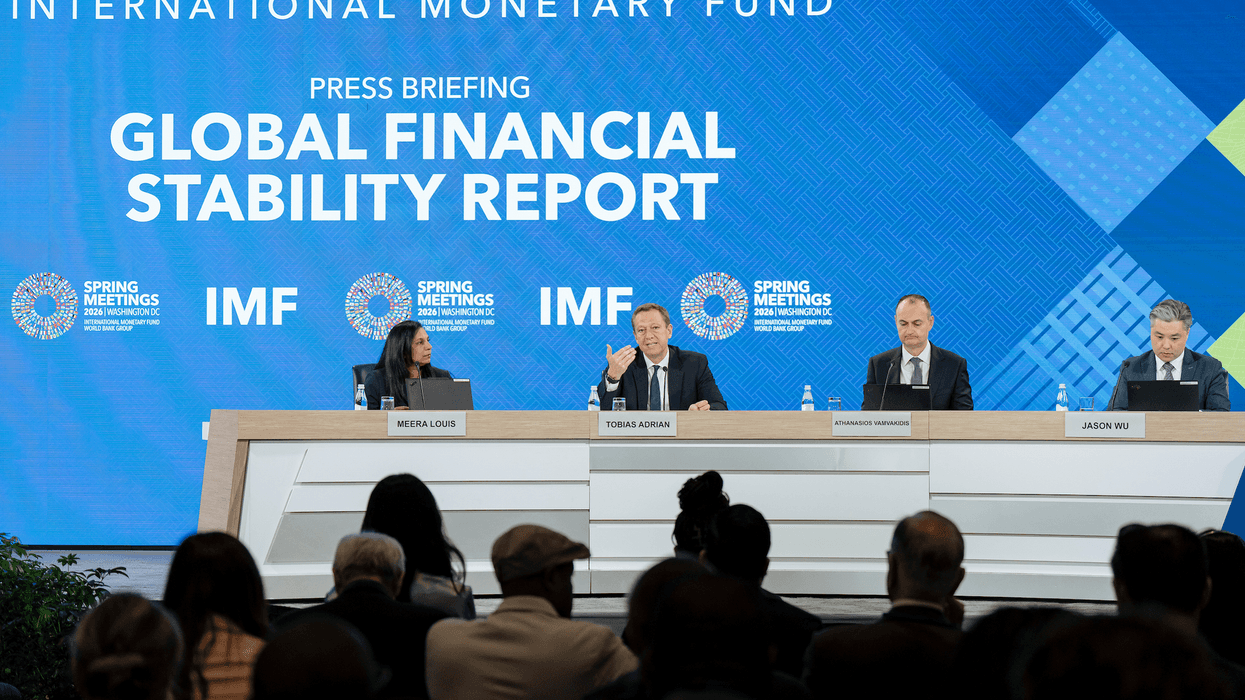
The new report comes as the IMF's annual Spring Meetings are underway in Washington, DC.
“World leaders coming to Washington are receiving a very dark picture of the global economy,” said LeCompte. “The war is causing greater poverty and increases in our fuel and food costs."
Other groups have also warned of the adverse economic effects of the US-Israeli war on Iran.
Ben May, Bridget Payne, and Paul Moroz of Oxford Economics recently published a report warning that a longer war in Iran "could tip the global economy into recession."
In such a situation, "the Gulf states suffer most acutely—GDP down over 8% in 2026—before rebounding sharply as production recovers," they wrote. "Advanced Asian economies, which are especially reliant on Gulf oil, take a heavy blow from energy import cost surges and supply chain disruption."
"Europe faces a painful squeeze on gas and electricity," the trio added. "The US fares somewhat better given its domestic energy production, but an equity market decline of nearly 20% weighs heavily on consumer spending."
Some US-based organizations have focused on the war's domestic economic impacts.
Dean Baker, a senior fellow at the Center for Economic Policy Research, published an analysis earlier this month asserting that "making enemies makes us poorer."
"Secretary of Defense (or War) Pete Hegseth seems to be having a really great time killing people in Iran, but his live action video games come at a big cost—not just in lives, but in budget dollars," Baker wrote. "To be clear, the main reason to oppose this pointless war is its impact on the people of Iran and elsewhere in the region. But it also has a huge economic cost that is seriously underappreciated."
"In addition to reducing our security and jeopardizing the well-being of people around the world, Donald Trump’s belligerence will cost us a huge amount of money," he said. Focusing on US military spending, Baker noted that "Trump wants the country to spend 5% of GDP, or $1.5 trillion a year, on the military. This comes to $12,000 per household."
Trump and his Republican Party are seeking to offset some of their record military spending with devastating cuts to social programs upon which tens of millions of Americans rely. Already reeling from the biggest cuts to Medicaid and Supplemental Nutrition Assistance Program spending in those programs' histories, Trump’s budget request for fiscal year 2027 contains $73 billion in total reductions in nondefense spending.
"It is striking to see that Congress might be willing to quickly cough up this money," said Baker, referring to military funding, "when it has refused far smaller sums that could have made a huge difference in the lives of tens of millions of people."