SUBSCRIBE TO OUR FREE NEWSLETTER
Daily news & progressive opinion—funded by the people, not the corporations—delivered straight to your inbox.
5
#000000
#FFFFFF
To donate by check, phone, or other method, see our More Ways to Give page.
Daily news & progressive opinion—funded by the people, not the corporations—delivered straight to your inbox.
"Ultimately, if this rule is finalized, human health will suffer, and taxpayers will be left with the cost of cleaning up their rivers and drinking water."
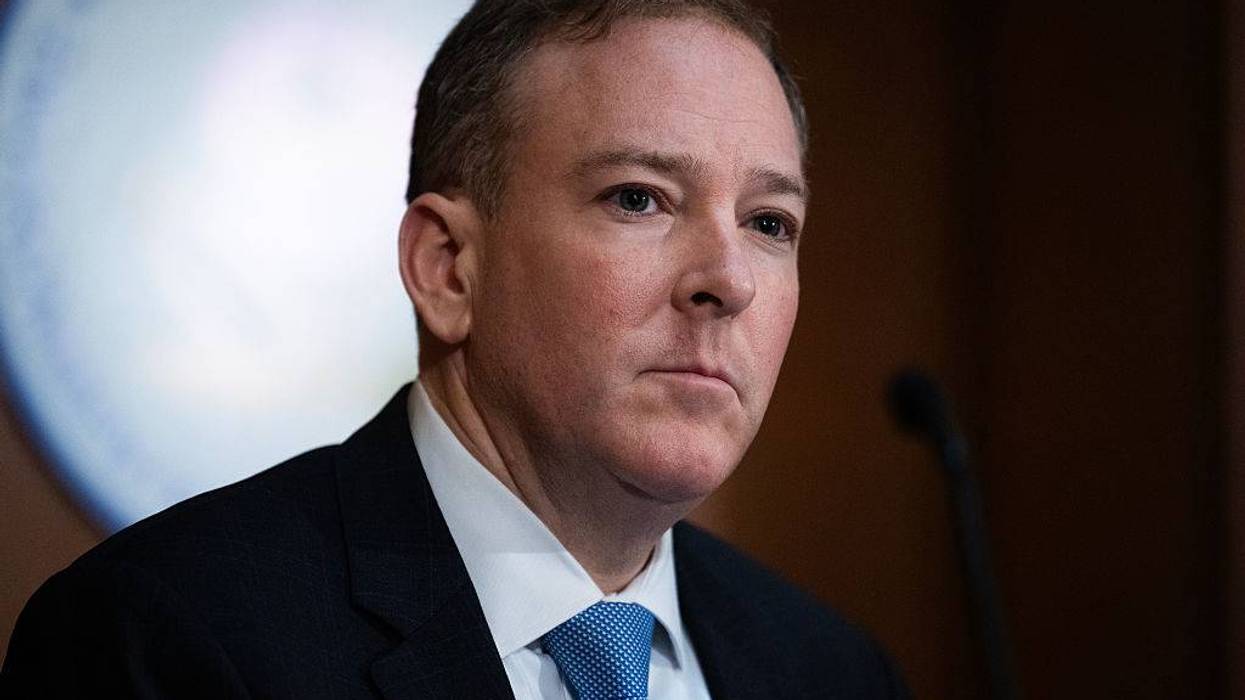
Amid mounting calls for the removal of US Environmental Protection Agency Administrator Lee Zeldin, the EPA chief on Thursday announced proposed changes to coal ash rules, which critics blasted as another gift to polluters at the expense of public health.
Officially called coal combustion residuals (CCR), "coal ash—the toxic byproduct of burning coal—contains hazardous pollutants, including arsenic, boron, cadmium, chromium, lead, radium, and selenium, which are linked to serious health harms such as cancer, heart disease, and brain damage, among other lasting impacts," noted the Natural Resources Defense Council (NRDC).
Specifically, as The Associated Press reported, the EPA "proposed easing standards for monitoring and protecting groundwater near some coal ash sites, rolling back rules forcing the cleanup of entire coal properties instead of just places where ash was dumped. The revisions would also make it easier to reuse coal ash for other purposes."
While Zeldin claimed the "commonsense changes to the CCR regulations reflect EPA's commitment to restoring American energy dominance, strengthening cooperative federalism, and accommodating unique circumstances at certain CCR facilities," Environmental Protection Network's Marc Boom responded that "letting companies avoid cleaning up waste sites that may be leaching toxic metals into groundwater and nearby waterways, while weakening protections and accountability, is not common sense."
"EPA's top priority should be protecting people's health, not sacrificing it for corporate expediency," argued Boom, senior director of public affairs at the group, which is made up of former agency staff. "EPA may call these safeguards 'impractical,' but anyone living downstream of coal ash sites holding thousands of tons of waste knows that requiring cleanup and monitoring is a necessary and basic standard."
NRDC senior attorney Becky Hammer called the pending rollback just "the latest in a long, long, line of Trump administration giveaways to fossil fuels industries," which have also included repealing EPA rules that targeted chemical pollution from coal-fired power plants, declaring a national energy emergency, and scrapping the 2009 "endangerment finding" that underpins all federal climate regulations.
Other advocacy organizations were similarly critical of Thursday's announcement. Daniel Estrin, Waterkeeper Alliance's general counsel and legal director, pointed out that "coal ash is contaminating water at nearly every active and retired coal plant in the US."
"By gutting these safeguards, EPA is abandoning its duty to protect impacted communities by allowing preventable contamination of our rivers, lakes, streams, and groundwater," he said. "The longer the coal industry is allowed to delay closing and cleaning up its toxic waste sites, the more difficult and costly it becomes to fix the damage. By failing to enforce the law, EPA is letting polluters continue harming people and wildlife without accountability."
Like Estrin and Hammer, Earthjustice senior counsel Lisa Evans framed that proposal as "yet another handout to the coal power industry at the expense of our health, water, and wallets," and warned of the dangers of delaying closure and cleanup. She said that "ultimately, if this rule is finalized, human health will suffer, and taxpayers will be left with the cost of cleaning up their rivers and drinking water."
Although "the Trump administration just took a sledgehammer to the health protections in place for toxic coal pollution," Evans added, "Earthjustice has successfully defended these safeguards in court and will do so again."
Nick Torrey, senior attorney at the Southern Environmental Law Center, which has secured commitments to clean up over 270 million tons of coal ash in US communities, similarly said that "doing the bidding of industrial polluters instead of protecting ordinary families and clean water is shameful, but we are ready to keep fighting against coal ash pollution."
"Letting coal-burning utilities set the agenda has been a disaster for communities across the South, resulting in coal ash spills and hundreds of families forced to live on bottled water for years under the threat of coal ash pollution," Torrey highlighted. "The Trump administration and coal ash polluters want to take us back to the bad old days of arsenic, lead, and mercury from coal ash contaminating our water."
In addition to facing a flurry of lawsuits over policies prioritizing the climate-wrecking fossil fuel industry—whose campaign cash helped President Donald Trump return to the White House last year—the administration has recently been hit with demands to remove Zeldin from more than 160 advocacy groups and nearly 300 health experts.
"This EPA's actions to put polluters first, at the expense of our health, are dangerous and will be deadly," states the health experts' open letter, organized and released Thursday by the Climate Action Campaign. "Administrator Zeldin has abandoned his sworn duty and must be held accountable for his agenda."
"We cannot tolerate an EPA administrator who treats our families as expendable."
Hundreds of health experts are demanding the removal of Environmental Protection Agency Administrator Lee Zeldin over his gutting of key regulations that they say will endanger Americans' livelihoods.
A letter released Thursday by Climate Action Campaign outlines Zeldin's threats to public health and explains why he should not be serving as the top US environmental regulator.
"Administrator Zeldin is pursuing a deregulatory agenda that will result in a massive increase in health-damaging air pollution, toxic chemicals, and climate-heating greenhouse gases," says the letter, which is signed by nearly 300 medical experts, including physicians, nurses, and public health researchers.
"And just last month, the administration laid bare its decision to no longer count the economic value of health benefits when setting Clean Air Act rules," the letter adds, "refusing to acknowledge the value of lives saved, hospital visits avoided, and lost work and school days prevented."
The letter also points to the EPA's February decision to revoke the so-called "endangerment finding," which gave the agency authority to regulate greenhouse gases as threats to public health.
Repealing this finding, the letter contends, "will increase the frequency and severity of climate disasters."
According to a Wednesday report from The Associated Press, Zeldin celebrated the EPA's revocation of the finding while delivering a keynote address at the Heartland Institute, a right-wing think tank that has long pushed climate denialism.
"Today is a moment to celebrate," Zeldin said at the event. "It is a day to celebrate vindication."
Margie Alt, director of the Climate Action Campaign, said her group decided to organize the letter among medical experts because "Lee Zeldin is too dangerous to ignore."
"When health experts—the people who see the effects of pollution on their patients every single day—say enough is enough, the rest of us need to pay attention," said Alt. "Zeldin is not just failing Americans. He is actively endangering us. We cannot tolerate an EPA administrator who treats our families as expendable."
This is the second "Game Over Zeldin" letter, following another from over 160 advocacy groups, including Climate Action Campaign and Moms Clean Air Force, last month.
"Dangerous climate breakdown is already here, and killing people—now, today."
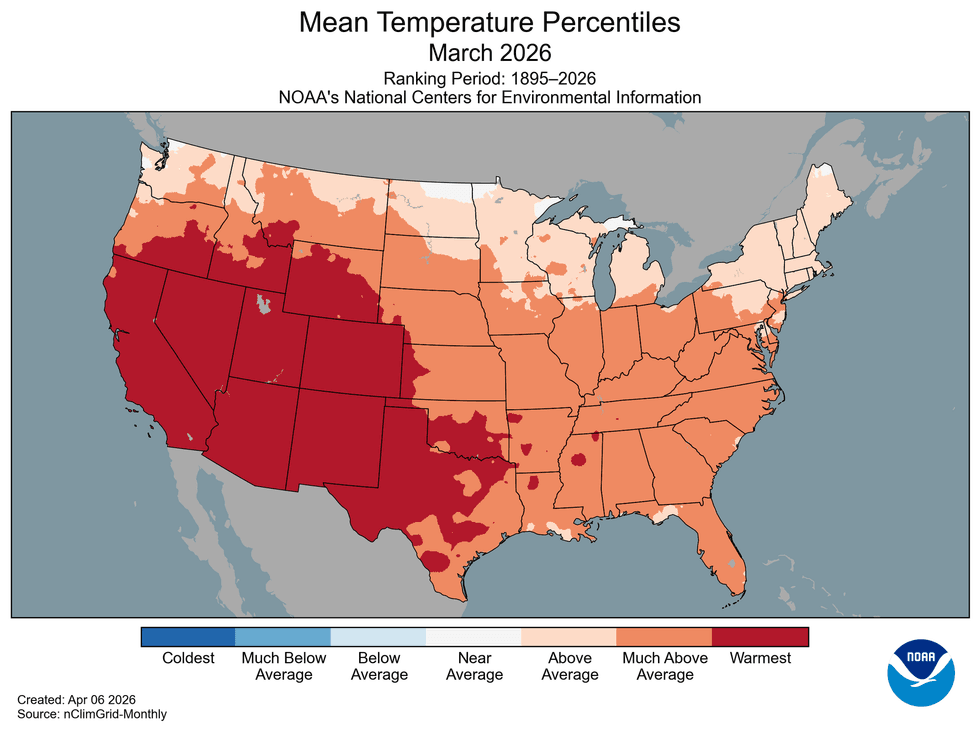
The National Oceanic and Atmospheric Administration confirmed Thursday that last month—which featured a heatwave that cooked the US West and caused a snow drought—was the hottest March in the 132-year record for the contiguous United States.
The average temperature "was 50.85°F, 9.35°F above the 20th-century average, marking the first time any month's average has exceeded 9°F above that baseline," according to NOAA's National Centers for Environmental Information. NCEI also said April 2025-March 2026 was the warmest 12-month span observed for the Lower 48 since recordkeeping began in 1895, and over half of the area had its hottest single March day on record, dating back to 1950.
"Maximum daytime temperatures were especially high, averaging 11.4°F above the March average and 0.9°F above the April long-term average," NCEI noted. "Ten states recorded their warmest March on record: Arizona, California, Colorado, Idaho, Nevada, New Mexico, Oklahoma, Texas, Utah, and Wyoming. Across all of these states, average temperatures exceeded their respective April averages, with California also eclipsing its average May temperature by 0.7°F."
In a social media thread about the findings, Shel Winkley, the senior engagement specialist and meteorologist at Climate Central, stressed that "our overheating planet played a major role."
"Out of 192 cities analyzed by Climate Central, 111 experienced at least one week of heat made [more than two times] more likely by human-caused warming," he noted. "The Southwest averaged 25 out of 31 days with heat made at least two times more likely."
The "most staggering" statistic, he said, is that "on March 20, 29% of the Lower 48 saw heat made [more than five times] more likely by our warming atmosphere. Put simply: Heat that would be virtually impossible without that fingerprint."
⚠️ Most staggering stat:
On March 20, 29% of the lower 48 saw heat made 5x+ more likely by our warming atmosphere.
Put simply: heat that would be virtually impossible without that fingerprint.
Largest climate-influenced area on record since at least 1970 pic.twitter.com/1Nsjvpj5jX
— Shel Winkley (@shelwinkleywx) April 9, 2026
Winkley told The Associated Press that "what we experienced in March across the United States was unprecedented," while Yale Climate Connections meteorologist Jeff Masters said that the new batch of broken records "tells us that climate change is kicking our butts."
The "January through March period was the driest on record for the contiguous US. So not only was it hot, it was record dry as well," Masters said. "And that's a bad combination for water availability, for agriculture, for river levels, for navigation."
Looking ahead, NOAA warned that "drought is expected to persist and expand across much of the interior West, Southwest, Rockies, and High Plains, as well as parts of the South, Southeast, and Mid-Atlantic... Significant wildland fire potential is above normal across portions of the Southwest, southern Plains, and central High Plains, and much of the Deep South and Southeast."
The AP also pointed out that both the US agency and Europe's Copernicus are "forecasting a 'super' strong El Niño to form in a few months and intensify into the winter. Meteorologists expect that to increase already warm temperatures across the globe, likely pushing past the hottest year mark set by 2024."
Already, as governments across the globe, including the Big Oil-backed Trump administration, refuse to take the actions that the scientific community argues are necessary to address the climate emergency—most notably, swiftly shift away from planet-warming fossil fuels—humanity is contending with deadly conditions during heatwaves.
For a study published last month in the journal Nature Communications, researchers examined heatwaves in Mecca, Saudi Arabia (2024); Bangkok, Thailand (2024); Phoenix, Arizona, the United States (2023); Mount Isa, Australia (2019); Larkana, Pakistan (2015); and Seville, Spain (2003). During each, they found spans of "nonsurvivable" conditions for people ages 65 and older in direct sun.
"My first thought was, 'Oh shit'—I really didn't expect to see that, especially when you zoom in to individual cities," Sarah Perkins-Kirkpatrick, the study's lead author and a professor at the Australian National University, told The Guardian in reporting published Wednesday. "If it's already happening now, then what does a future that is two or three degrees warmer hold?"
Sharing the report on social media, Bill McGuire, a volcanologist and emeritus professor at University College London, said, "As some of us have been saying for quite a while, dangerous climate breakdown is already here, and killing people—now, today."
“This is really setting a precedent,” said one activist. "This is something that other communities can look to."
The nationwide backlash against the artificial intelligence industry entered a new stage on Tuesday after a small Wisconsin city overwhelmingly passed a first-of-its-kind referendum limiting AI data center construction.
According to a Wednesday report in Politico, voters in the Milwaukee suburb of Port Washington, home to roughly 12,000 residents, supported the data center restrictions by a margin of around 2-to-1.
The referendus requires town officials to seek voter permission before approving or providing tax incentives for any future data centers in the community, giving residents veto power over new projects.
Port Washington is already home to a $15 billion, 1.3-gigawatt data center funded by tech giants Oracle and OpenAI, and local residents wanted to ensure that no additional facilities are green lit without their express approval.
The referendum was pushed by a grassroots community organization called Great Lakes Neighbors United, which advocates "advancing transparency, environmental stewardship, and responsible development in Wisconsin."
Christine Le Jeune, founder of Great Lakes Neighbors United, told Politico that she hopes the work done limiting AI facilities' construction can be replicated nationwide.
“This is really setting a precedent,” Le Jeune, said. "This is something that other communities can look to."
Politico noted that similar anti-data center measures are coming up for votes later this year in communities across the US, including in Monterey Park, California; Augusta Township, Michigan; and Janesville, Wisconsin.
Opposition to AI data centers has become a major political issue in recent months, as local residents have objected to the large facilities consuming massive amounts of electricity and water, while also generating significant noise pollution.
Data centers also put a major strain on the US electrical grid, causing a spike in utility bills across the country. PJM Interconnection, the largest US grid operator that serves over 65 million people across 13 states, projected earlier this year that it will be a full six gigawatts short of its reliability requirements in 2027 thanks to the demands of data centers.
Sen. Bernie Sanders (I-Vt.) and Rep. Alexandria Ocasio-Cortez (D-NY) introduced a bill in March that would impose a nationwide moratorium on AI data center construction “until strong national safeguards are in place to protect workers, consumers, and communities, defend privacy and civil rights, and ensure these technologies do not harm our environment.”
At the same time, the AI industry is planning on spending big money in 2026 to influence elections, with the goal of passing legislation setting a single set of AI regulations that will take effect throughout the US, overriding any restrictions placed on the technology by state governments.
CNN reported in February that Leading the Future—a super political action committee (PAC) backed by venture capital firm Andreessen Horowitz and Palantir co-founder Joe Lonsdale, is pledging to spend at least $100 million to ensure AI-friendly candidates get elected to Congress this year.