

SUBSCRIBE TO OUR FREE NEWSLETTER
Daily news & progressive opinion—funded by the people, not the corporations—delivered straight to your inbox.
5
#000000
#FFFFFF
To donate by check, phone, or other method, see our More Ways to Give page.
Daily news & progressive opinion—funded by the people, not the corporations—delivered straight to your inbox.
"This is full-throated climate denial while the climate crisis happens in real time and a shocking betrayal of the American public."
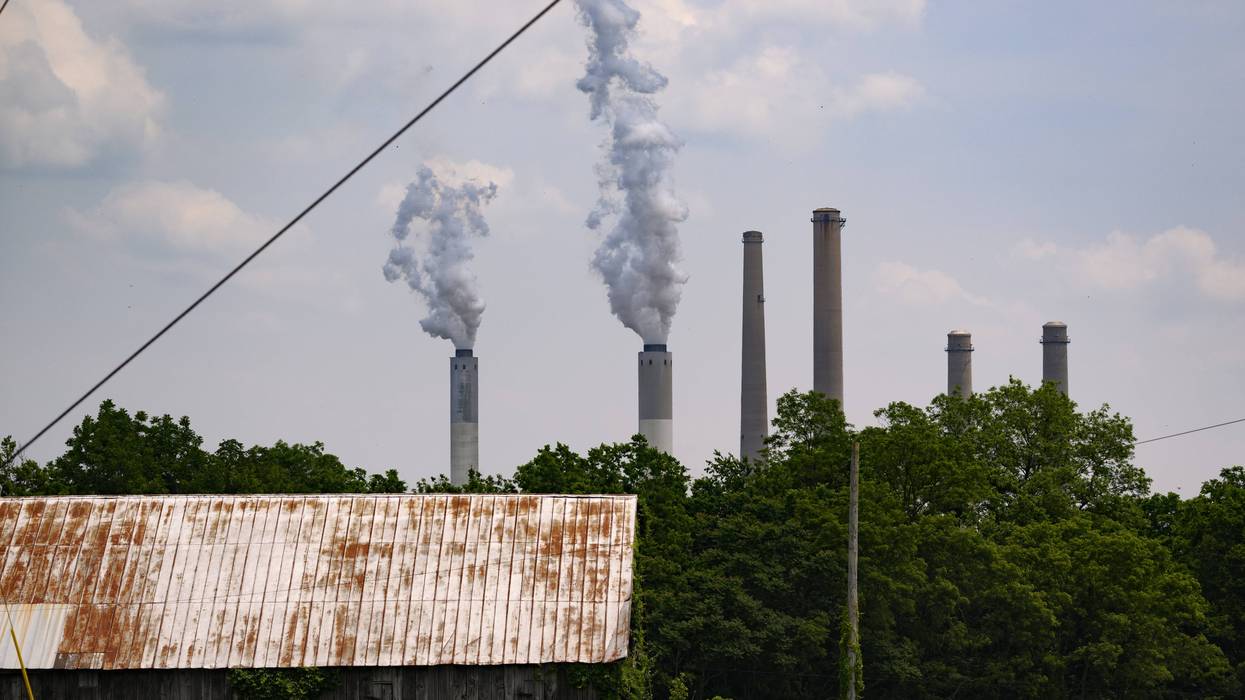
In what environmental advocates describe as "another gift to the fossil fuel industry," the Trump administration plans to end rules limiting the release of planet-heating emissions from power plants that burn coal and gas.
Power plants are considered the largest industrial source of greenhouse gas emissions in the US and account for about a quarter of the nation's climate pollution, according to the Environmental Protection Agency (EPA).
In 2024, the EPA under the Biden administration used the Clean Air Act to require that many new gas plants and existing coal plants reduce their carbon emissions by 90%, including by installing carbon capture technology, by 2032.
The EPA estimated that the rule would reduce the amount of CO2 emissions by about 1.38 billion metric tons over the next two decades, the equivalent of about a year of emissions from the entire US electric power sector.
On Monday, Lee Zeldin, the EPA administrator under President Donald Trump, announced an end to this policy at a meeting of energy ministers at the Group of 20 conference in Houston.
Not only will this prevent the enactment of a policy that the EPA has estimated would prevent around 1,200 premature deaths and 360,000 asthma cases by 2035. But the administration is also rolling out a proposal seeking to prevent future administrations from regulating carbon emissions as a health risk.
It is an effort that runs parallel to the administration's rescission of the 2009 "endangerment finding," which allowed the EPA to regulate vehicle emissions under Section 202 of the Clean Air Act on the grounds that they are harmful to human health. That move is also being challenged in court.
Power plants are regulated under a different section of the Clean Air Act, Section 111, which allows the EPA to regulate facilities that "cause, or contribute significantly to" dangerous air pollution.
But whereas the courts have previously interpreted this statute to regulate the outputs of entire facilities, the Trump administration is asking courts to adopt a novel reading of the statute which says each individual chemical under scrutiny must “contribute significantly” to climate change.
As Meredith Hankins, legal director for climate and energy at the Natural Resources Defense Council, explained in a policy memo last week, it likely won't be easy for the administration to prove that the CO2 emissions from US power plants aren't a significant driver of climate change.
"Power sector emissions account for a quarter of total US emissions, so if they cannot be counted as significant, it’s hard to conceive of any emissions that would," Hankins wrote. "In fact, if the US power sector were a nation, it would be the world’s fifth-largest emitter after China, the United States, India, and Russia. That’s a pretty 'significant contribution' to the problem."
The effort to gut power plant regulations comes after the hottest meteorological summer recorded in US history and amid a year with one of the largest numbers of climate disasters on record, including widespread drought, destructive wildfires, and repeated flooding and tornado outbreaks.
As the planet has warmed over the last half-century, the US has seen a sharp, near-sevenfold increase in weather disasters costing over $1 billion, according to data from the National Oceanic and Atmospheric Administration.
“While wildfires rage, floods devastate communities, and families struggle to afford skyrocketing electricity bills and insurance premiums, the Trump administration is handing the fossil fuel industry a license to keep polluting," said Holly Bender, chief program officer for the Sierra Club, following news of the EPA's rollback of power plant rules. "This is full-throated climate denial while the climate crisis happens in real time and a shocking betrayal of the American public."
She added that "the Sierra Club will fight back against this reckless and dangerous proposal with everything we have in the courts, in Congress, and in communities across the country.”
If successful, the reversal of the power plant rules would be one of the most significant steps in Zeldin's push to eviscerate the EPA's authority to combat climate change on behalf of the fossil fuel industry. Earlier this summer, during a meeting of the National Coal Council, he bragged that "many of the items" on the industry's "wish list are now done."
He has put the wheels in motion to roll back virtually every Biden-era regulation on the coal industry, including rules limiting pollution from mercury and toxic metals, controls on toxic wastewater from coal plants, and limits on coal ash.
And while seeking to undermine the legal basis to regulate greenhouse gases, Zeldin's EPA has also taken a sledgehammer to its practical ability to do so, dismantling offices that collect climate data, erasing information about human-caused climate change from the agency's websites, and filling research panels with scientists employed by the fossil fuel industry.
Former State Department energy official Alan Eyre noted that on the world stage, the US "has always been obstructionist" when it comes to climate policy. Under Trump, he said, "we're actively malevolent."
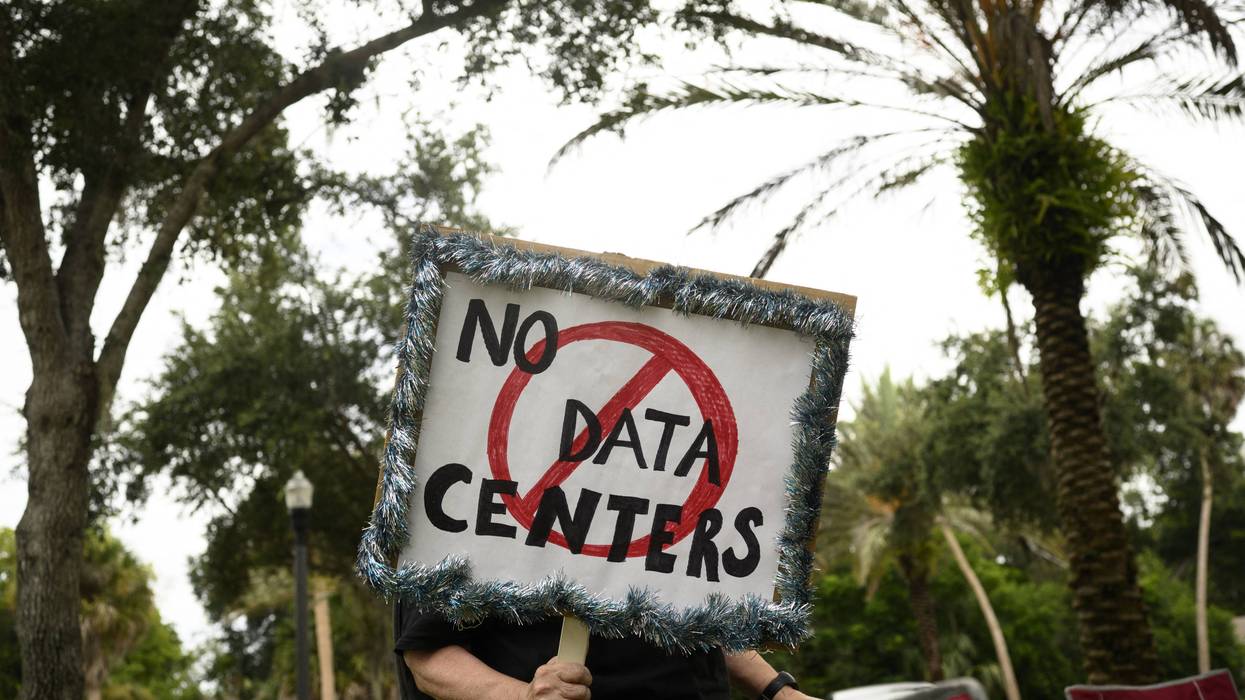
EPA Administrator Lee Zeldin can do all the streamlining he wants to create a glide path for data centers; across the nation, the people know what’s in this Trojan horse.
The Trump administration wants to hear nothing about the public’s opposition to data center protests. Indeed, it has proposed to gut a critical portion of the Clean Air Act requiring states to notify the public about applications for air pollution permits from alleged “minor” industrial sources. Instead of those notifications and opportunities for public comments on applications remaining mandatory, they would be completely up to an individual state.
The proposal making public comments optional is one in a suite of actions proposed in recent months by Environmental Protection Agency Administrator Lee Zeldin to allow unfettered construction of data centers fueled by the artificial intelligence boom.
Zeldin proposes to exempt data centers that purport to generate their own electricity from accountability for sulfur dioxide and nitrogen oxide emissions under the Acid Rain Program. He also proposes to let data centers start construction even before receiving pollution permits to meet the Trump administration’s goal of making the United States the “AI capital of the world.”
None of this is surprising. Zeldin continues his feckless plunge from the EPA nominee who at his Senate confirmation hearing said climate change is real to a Trump puppet who repealed the landmark finding that carbon dioxide, methane, and other global warming gases endanger public health. After that repeal, he spoke before the climate-denying Heartland Institute to “celebrate vindication” of the Trump administration’s rollbacks of federal environmental policies related to global warming.
Such accountability is precisely what Zeldin is trying to eliminate, a year and a half after pledging in his Senate confirmation hearing that the EPA would be “transparent and accountable to Congress and the public.”
Zeldin’s level of tone-deafness is rivaling that of his boss. Just as Trump’s Iraq quagmire is sabotaging his “Day One” promise to fix inflation, Zeldin’s actions are likely only to inflame the passions that have made data centers the one environmental issue uniting communities across party lines: from the bluest parts of New England and the West Coast to the reddest parts of the deep South and Midwest.
Zeldin calls data centers a “minor source” of pollution, reportedly in the same league as a gas station or a laundromat. Put that in the Trojan horse department. The World Resources Institute says that a single average data center in 2024 took up the space of 450 football fields. A current AI data center uses the power needed to light up 100,000 homes. The noise involved in the construction and the roar of operations can harm human health by raising blood pressure, stress levels, and causing sleep deprivation.
Then there’s water and air. The Environmental and Energy Study Institute says the daily water consumption of a large data center can be up to 5 million gallons, equivalent to towns of 10,000 to 50,000 people. There is growing scientific evidence that emissions of fine particulate matter and nitrogen oxides from gas-fired turbines and backup diesel generators will contribute to higher rates of asthma and untold overall health costs.
A Harvard School of Public Health study said that just one data center in Virginia, which currently has the most data centers in the nation at nearly 700, is responsible for between $53 million and $99 million in annual health damages from associated air pollution and between 3.4 to 6.5 premature deaths a year in the affected area.
Author Michael Cork said his study demonstrated that “when large data centers use fossil fuel turbines for power in populated areas, even modest increases in air pollution can have real health consequences.” Cork said the findings were also important because, outside of academic efforts such as his, data center air pollution permitting is occurring “without any clear accounting of their public health costs—and that gap means health damages are systematically left out of these important decisions.”
Such accountability is precisely what Zeldin is trying to eliminate, a year and a half after pledging in his Senate confirmation hearing that the EPA would be “transparent and accountable to Congress and the public.” Actually, it is overkill. Data center developers need little help from Zeldin as they are quite successful on their own in negotiating secretly with local politicians and sealing their lips with nondisclosure agreements.
Developers promise economic development before the public can consider the environmental and energy effects and the relatively miniscule level of permanent employment for “factories” 450 football fields in size. Large data centers can employ roughly 25 to 150 permanent workers, according to Business Insider, while Brookings puts the figure at 100 to 200. Workers in data center communities see overall “little gain,” Brookings said, as area wages are unaffected while home prices rise.
The playbook is so easy to understand, the public gets it and is taking matters into its own hands. A nationwide day of action this summer against data centers claimed 142 protests in 42 states. The US Data Center Moratorium Tracker is currently showing more than 650 active or proposed local moratoriums across 44 states, especially on hyperscale projects.
The website Data Center Watch claims that the first quarter of 2026 saw a record grassroots victory of 75 data center project delays or cancellations worth $130 billion. Even in Texas, another data center behemoth, Gov. Greg Abbott has paused data center buildouts until the state can better audit grid connectivity.
Such is the rise in opposition to data centers in one’s backyard that several polls, including a new Economist/YouGov survey, are finding majority opposition by Republicans. A July Politico poll found that support for data centers among Trump voters has dropped from 45% to 34% over the past six months.
A Brookings analysis last month predicts that data centers could be an important issue in the fall midterm elections, saying, “With income inequality at record levels, billionaires maintaining close relationships with political leaders, and tech firms paying relatively low tax rates, a ‘techlash’ is building that poses substantial risks both for AI and data centers.” As an example of the critical eye that even some conservatives are casting on data centers, a Virginia Republican activist told The American Prospect Magazine: “I don’t care if President Trump is pushing it. I don’t want it. I don’t care if Biden is pushing it. It’s bad for our communities. They take our water, they take our power. They give us no jobs.”
Zeldin can do all the streamlining he wants to create a glide path for data centers. Across the nation, the people know what’s in this Trojan horse. They trust no part of it. As much as Zeldin wants to silence the public, the protests are rising to the decibels of data centers themselves.
This article was first published by MS-Now.
"EPA owes it to Americans to put people’s health first—not give hidebound corporations more time to keep using outdated chemicals," said one critic.
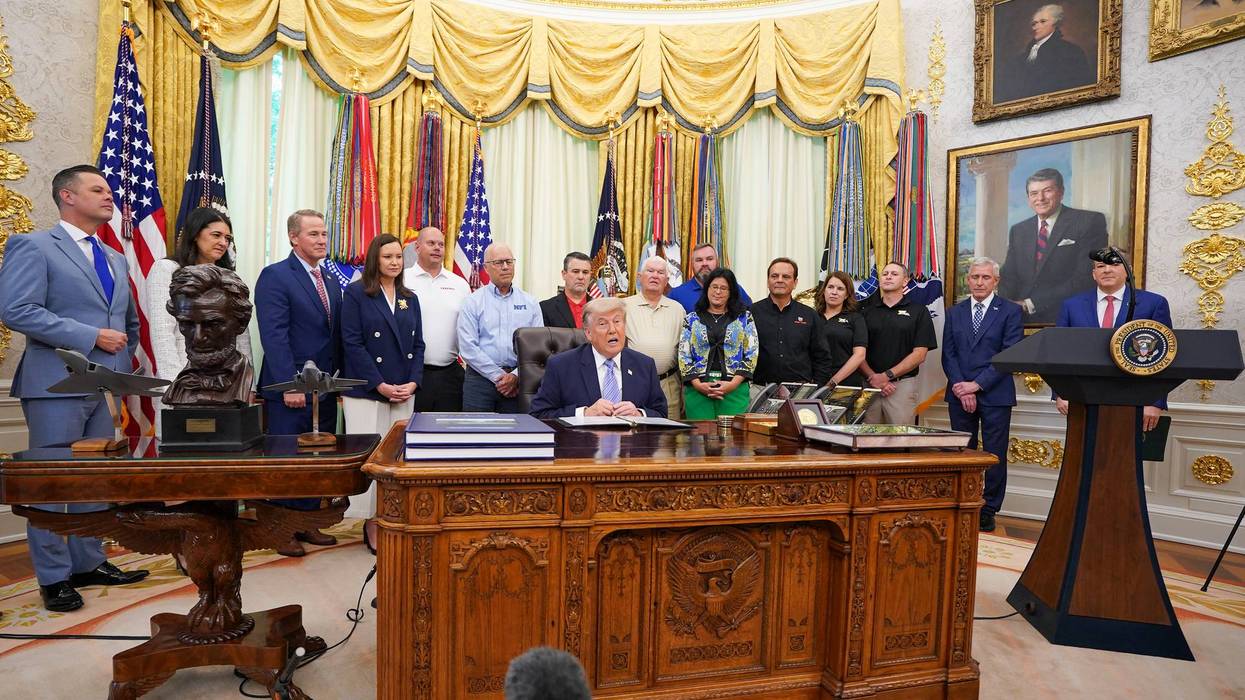
In a reversal of his past position and what critics are calling yet another betrayal of his "Make America Healthy Again" campaign pledge, US President Donald Trump announced Thursday that his administration is loosening limits on so-called "super pollutant" hydrofluorocarbons used in air conditioners and refrigerators at the expense of the environment and climate.
Trump and Environmental Protection Agency Administrator Lee Zeldin spun the move as a measure that will "save American families and businesses more than $2.4 billion" by revising "costly overreaching restrictions" imposed during the Biden administration "limiting the type of refrigerants American businesses and families can use."
"Today, the Trump EPA is fulfilling President Trump’s promise to lower costs and is fixing every problem we can under the authority Congress gave us," Zeldin said. "Our actions allow businesses to choose the refrigeration systems that work best for them, saving them billions of dollars. This will be felt directly by American families in lower grocery prices.”
Grocery prices have continued to rise during Trump’s second term, driven by the administration's erratic trade wars and actual war on Iran. Critics of Thursday's move argue that it will do little to reduce consumer costs, while increasing pollution and health risks for American families.
“It’s nice that they are paying attention to affordability, but if they want to make a difference, it’s tariffs and the Iran War," Ryan Young, a senior economist at the Competitive Enterprise Institute, a libertarian think tank, told NOTUS, estimating that the move would save consumers about $2 per year.
Hydrofluorocarbons (HFCs) are called “super pollutants” because they trap far more heat in the atmosphere than carbon dioxide, even though they are emitted in much smaller quantities. They were originally introduced to replace ozone-depleting chemicals like chlorofluorocarbons (CFCs) that ravaged the ozone layer.
However, scientists soon realized that HFCs are extremely powerful greenhouse gases in their own right. As air conditioning use and demand grows worldwide, so has HFC use.
As the EPA's own website acknowledges on its "Operation: Disrupt HFCs" webpage:
HFCs are potent greenhouse gases... with high global warming potential. HFCs are commonly utilized as refrigerants, aerosol propellants, foam blowing agents, solvents, and fire retardants across residential, commercial, and industrial applications. The major source of HFC emissions is their use as refrigerants—for example, in air conditioning systems in both vehicles and buildings. Emissions occur during manufacturing, as well as through leaks, servicing, and disposal of equipment containing HFCs.
Former EPA Assistant Administrator Joseph Goffman said in a statement Thursday that "families are already stretched thin by high grocery bills and everyday expenses, and weakening safeguards on these super-polluting refrigerant chemicals isn’t going to change that."
"Even manufacturers are saying this delay likely won’t lower prices for consumers because supplies of these chemicals are already being phased down in favor of cleaner, innovative replacements," he added.
Stephen Yurek, president and CEO of the Air-Conditioning, Heating, and Refrigeration Institute (AHRI)—an industry lobby—warned that the "reckless" new policy could actually cause refrigerant prices to increase.
“This rule works against basic supply and demand,” Yurek said. “By extending the compliance deadline, the EPA is maintaining and even increasing demand in the market for existing refrigerants while supply continues to fall under the AIM Act."
The American Innovation and Manufacturing (AIM) Act of 2020, bipartisan legislation signed by Trump during his first term, directed the EPA to "phase down the production and consumption of listed HFCs in the United States by 85% by 2036" and "facilitate the transition to next-generation technologies that do not rely on HFCs."
As of this year, more than 170 countries—including the United States—plus the European Union have ratified the Kigali Amendment to the Montreal Protocol, the main global agreement to phase down HFCs.
Yurek explained that "instead of falling, refrigerant prices are likely to rise, resulting in higher service costs, and higher costs for consumers."
Addressing the EPA's reversal on HFCs, Goffman said, "All this action does is slow the shift to cleaner technologies while risking continued releases of climate super pollutants and leaving families to face the much greater costs and health threats of dangerous climate change."
"EPA owes it to Americans to put people’s health first—not give hidebound corporations more time to keep using outdated chemicals," he added. "Americans deserve affordable groceries that don’t come at the expense of the strong safeguards they count on to keep our families safer, not sicker.”
The EPA move comes amid mounting calls by over 160 civil rights, environmental, faith, health, and labor groups to fire Zeldin over his agency's deregulation spree.
“The EPA has one job, to protect the health and welfare of the American people," said one critic. "But, yet again, the Trump EPA is choosing polluters over people.”
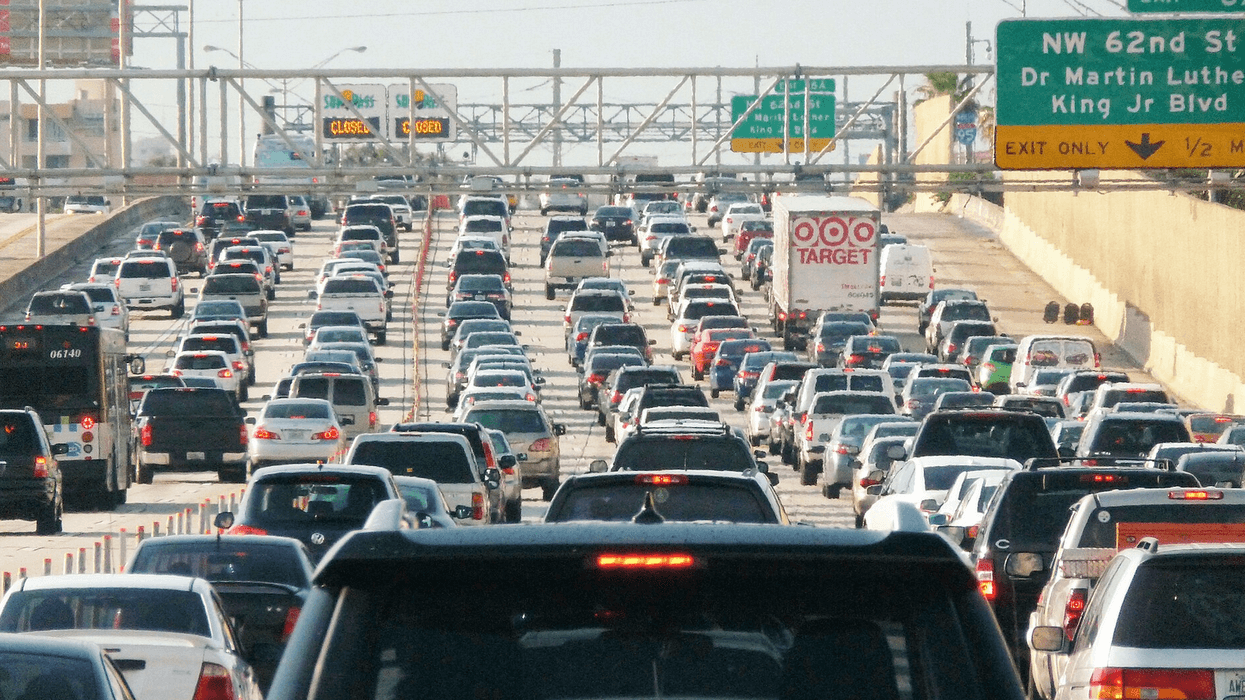
The US Environmental Protection Agency on Thursday proposed postponing enforcement of vehicle emissions standards enacted during the Biden administration, a move that critics warned will worsen air pollution, one of the leading risk factors for premature death in the United States and around the world.
EPA Administrator Lee Zeldin proposed delaying Biden-era emission standards for light- and medium-duty vehicles for two years until model year 2029, claiming that implementation of the policy meant to ensure that a majority of new light vehicles sold in 2032 were electric is "unattainable," and that Americans "overwhelmingly rejected" electric vehicles.
“Freedom is the foundation of this nation, and this includes the freedom to choose the car you drive. The American people have been very clear; they do not want EVs forced upon them,” said Zeldin, who took more than $400,000 in Big Oil campaign donations during his tenure in the New York state Legislature and US Congress, and who questions the scientific consensus on climate change.
Zeldin claimed the proposal "is projected to save over $1.7 billion" for US automakers, "providing hundreds of dollars saved per vehicle for American families," and "aims to return EPA regulations to reality, restoring consumer choice, protecting good paying American jobs, and strengthening the nation’s global competitiveness."
It will also kill people. More than 100,000 people die prematurely in the United States each year due to breathing polluted air. According to a 2024 Environmental Protection Network analysis, President Donald Trump’s rollbacks of pollution rules could cause the deaths of nearly 200,000 people in the United States by 2050.
“In its latest unconscionable act, Trump’s EPA looked at a rule intended to protect public health from toxic tailpipe pollutants while saving tens of thousands of lives, and decided it could wait," Public Citizen Climate Program deputy director Deanna Noël said Friday.
"The decision will not just cost lives; it will cost working-class people more money in medical bills, more missed days of work, and more years chained to volatile gas prices," Noël continued.
"Working families are already stretched thin. Everything from groceries to home insurance to gas is getting more expensive, with no end in sight," she added. "Delaying commonsense emissions standards will only make communities sicker and send costs higher. The EPA’s entire reason for existing is to protect public health and the environment. Yet under this administration, it has been weaponized to serve corporate interests over the American public, no matter the cost.”
According to the advocacy group Climate Power, fossil fuel industry interests spent more than $445 million during the 2024 election cycle on campaign donations, lobbying, and other efforts to bolster Trump and other Republican candidates and causes.
Responding to Zeldin's announcement, Natural Resources Defense Council clean vehicles director Kathy Harris said in a statement that “the EPA has one job, to protect the health and welfare of the American people. But, yet again, the Trump EPA is choosing polluters over people."
“Delaying these standards is going to mean more toxic pollutants spewing from tailpipes, and more soot and smog in our cities," she continued. "That means more asthma, more heart attacks, and more lung disease."
“EPA Administrator Lee Zeldin claims to want to provide clean air and clean water, but time after time he is acting to increase pollution," Harris added. "The Trump administration’s war on our health continues unabated.”
EPA’s vehicle rollback would leave children breathing more traffic pollution for years.Delaying Tier 4 standards means more smog, fine particles, and toxic emissions from vehicles that will stay on the road for decades.EPN’s response: www.environmentalprotectionnetwork.org/20260514_tie...
[image or embed]
— Environmental Protection Network (@enviroprotnet.bsky.social) May 14, 2026 at 4:45 PM
Zeldin's proposal is part of a wider Trump administration push to roll back Biden’s efforts to promote electric vehicles, and serves Trump's "drill, baby, drill" energy policy. Last year, Transportation Secretary Sean Duffy ordered the cancellation of Biden-era fuel efficiency and emissions standards for cars and light trucks
During Trump’s second term, the EPA has moved to repeal or replace stronger carbon emission limits on fossil-fueled power plants, revoked California’s ability to enact stricter vehicle emissions rules, and signaled plans to overturn the agency’s finding that greenhouse gases are a public health hazard.
The EPA has also revoked the long-standing “endangerment finding” that allowed it to pass climate regulation, stopped counting the monetary value of reducing pollution, weakened water and wetland protections, rolled back regulations limiting so-called “forever chemicals” in drinking water, dramatically cut or eliminated environmental justice programs, reduced enforcement of environmental violations, dismantled advisory and scientific panels, removed all mentions of human-caused climate change from its website, and more.
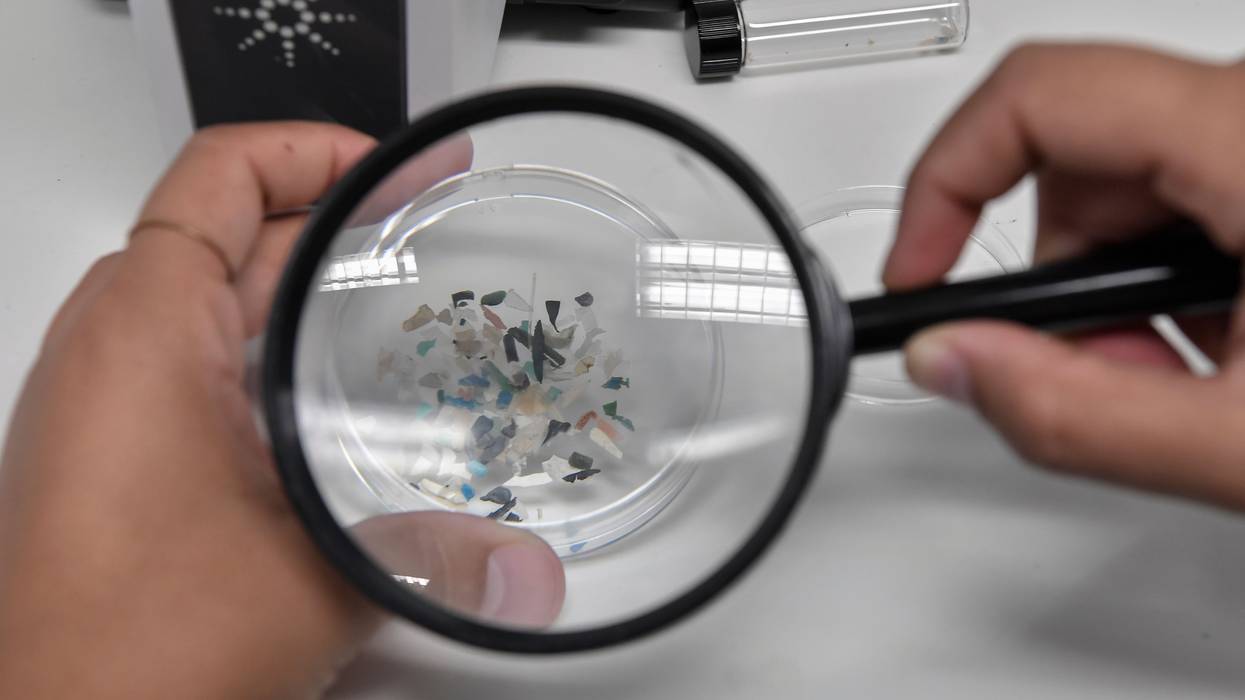
Committing $144 million to study microplastics while subsidizing fossil fuels by nearly $31 billion a year is like trying to clean up an oil spill with a spoon while the tanker is still spewing.
At a time when the science is clear, and action is overdue, the Trump administration’s STOMP initiative—aimed at measuring and removing microplastics from the human body—is a convenient distraction that delays real action. We do not need more studies to understand microplastics in our bodies. We need policies that prevent them from getting there in the first place.
For years, scientists have warned that we are breathing, eating, and drinking plastic. Microplastics—which contain more than 4,200 chemicals known to be hazardous to human health—are in our blood, lungs, and unborn babies.
And while there’s something validating about the Trump administration finally acknowledging this problem, putting microplastics on a watch list is not protection. Instead, this declared "war on microplastics" is a gift in disguise to the industries driving the crisis.
“Make America Healthy Again” was a rallying cry: Take on the corporate polluters, clean up our food supply, eliminate toxic chemicals, and hold the chemical industry accountable. The MAHA Report acknowledged that microplastics are found in "the blood and urine of American children and pregnant women,” and promised action from the Department of Health and Human Services (DHHS), the Environmental Protection Agency (EPA), and the National Institutes of Health (NIH).
The problem is that the only real way to fix it is to stop it at the source. That means taking on the fossil fuel industry driving plastic production—an industry to which this administration has shown deep loyalty.
That was the promise. But instead, the Trump administration gave us plastic straws and put single-use plastics back in our National Parks. They slashed the EPA's budget nearly in half—the very agency responsible for the new microplastics plan—and fired more than 1,000 of its scientists. They dismantled the agencies that protect us from chemical disasters and exposure to harmful hazards, like lead. They ramped up glyphosate production and appointed chemical-industry lobbyists to leadership roles within the EPA. They’re also weakening the Toxic Substances Control Act and rolling back protections on PFAS in drinking water.
While EPA Administrator Lee Zeldin claims the administration is holding itself “to the highest standards to protect the health of every American,” it continues to gut science, weaken laws, and hollow out the very institutions responsible for protecting public health—giving polluting industries a free pass to keep producing more.
Even MAHA advocates are beginning to see through the rhetoric. In a recent letter to the EPA, they urged:“The EPA must choose whether it will uphold a chemical status quo or honor the promise to make this country healthy again. The public is watching. Families are organizing. Scientists are sounding the alarm.”
Microplastics don’t just randomly end up in our bodies. They come from a system designed to produce endless plastic at any cost. That system is fueled by oil, gas, and coal. Nearly 99% of plastics are made from fossil fuels. Committing $144 million to study microplastics while subsidizing fossil fuels by nearly $31 billion a year is like trying to clean up an oil spill with a spoon while the tanker is still spewing.
The Trump administration has put a spotlight on a serious health crisis. The problem is that the only real way to fix it is to stop it at the source. That means taking on the fossil fuel industry driving plastic production—an industry to which this administration has shown deep loyalty. As Secretary of the US DHHS, Robert F. Kennedy, Jr., put it on Fox News: “A lesson we were all supposed to learn in kindergarten is that you clean up after yourself. You don't force the public to do it.”
The coming months will show whether this administration is serious about action or simply delivering lip service to a disillusioned MAHA ahead of the midterms. If the administration is really committed to making Americans healthy again, it must act where it matters: Set enforceable limits on microplastics in drinking water, restore strong chemical safety laws, halt new plastic production, rebuild the EPA and Centers for Disease Control and Prevention, and revoke the red-carpet access it has granted industry within regulatory agencies.
Above all, it could truly end the war on microplastics by backing a global plastics treaty that limits production in the first place.
Because you cannot detox a body you are still poisoning.

"Ultimately, if this rule is finalized, human health will suffer, and taxpayers will be left with the cost of cleaning up their rivers and drinking water."
Amid mounting calls for the removal of US Environmental Protection Agency Administrator Lee Zeldin, the EPA chief on Thursday announced proposed changes to coal ash rules, which critics blasted as another gift to polluters at the expense of public health.
Officially called coal combustion residuals (CCR), "coal ash—the toxic byproduct of burning coal—contains hazardous pollutants, including arsenic, boron, cadmium, chromium, lead, radium, and selenium, which are linked to serious health harms such as cancer, heart disease, and brain damage, among other lasting impacts," noted the Natural Resources Defense Council (NRDC).
Specifically, as The Associated Press reported, the EPA "proposed easing standards for monitoring and protecting groundwater near some coal ash sites, rolling back rules forcing the cleanup of entire coal properties instead of just places where ash was dumped. The revisions would also make it easier to reuse coal ash for other purposes."
While Zeldin claimed the "commonsense changes to the CCR regulations reflect EPA's commitment to restoring American energy dominance, strengthening cooperative federalism, and accommodating unique circumstances at certain CCR facilities," Environmental Protection Network's Marc Boom responded that "letting companies avoid cleaning up waste sites that may be leaching toxic metals into groundwater and nearby waterways, while weakening protections and accountability, is not common sense."
"EPA's top priority should be protecting people's health, not sacrificing it for corporate expediency," argued Boom, senior director of public affairs at the group, which is made up of former agency staff. "EPA may call these safeguards 'impractical,' but anyone living downstream of coal ash sites holding thousands of tons of waste knows that requiring cleanup and monitoring is a necessary and basic standard."
NRDC senior attorney Becky Hammer called the pending rollback just "the latest in a long, long, line of Trump administration giveaways to fossil fuels industries," which have also included repealing EPA rules that targeted chemical pollution from coal-fired power plants, declaring a national energy emergency, and scrapping the 2009 "endangerment finding" that underpins all federal climate regulations.
Other advocacy organizations were similarly critical of Thursday's announcement. Daniel Estrin, Waterkeeper Alliance's general counsel and legal director, pointed out that "coal ash is contaminating water at nearly every active and retired coal plant in the US."
"By gutting these safeguards, EPA is abandoning its duty to protect impacted communities by allowing preventable contamination of our rivers, lakes, streams, and groundwater," he said. "The longer the coal industry is allowed to delay closing and cleaning up its toxic waste sites, the more difficult and costly it becomes to fix the damage. By failing to enforce the law, EPA is letting polluters continue harming people and wildlife without accountability."
Like Estrin and Hammer, Earthjustice senior counsel Lisa Evans framed that proposal as "yet another handout to the coal power industry at the expense of our health, water, and wallets," and warned of the dangers of delaying closure and cleanup. She said that "ultimately, if this rule is finalized, human health will suffer, and taxpayers will be left with the cost of cleaning up their rivers and drinking water."
Although "the Trump administration just took a sledgehammer to the health protections in place for toxic coal pollution," Evans added, "Earthjustice has successfully defended these safeguards in court and will do so again."
Nick Torrey, senior attorney at the Southern Environmental Law Center, which has secured commitments to clean up over 270 million tons of coal ash in US communities, similarly said that "doing the bidding of industrial polluters instead of protecting ordinary families and clean water is shameful, but we are ready to keep fighting against coal ash pollution."
"Letting coal-burning utilities set the agenda has been a disaster for communities across the South, resulting in coal ash spills and hundreds of families forced to live on bottled water for years under the threat of coal ash pollution," Torrey highlighted. "The Trump administration and coal ash polluters want to take us back to the bad old days of arsenic, lead, and mercury from coal ash contaminating our water."
In addition to facing a flurry of lawsuits over policies prioritizing the climate-wrecking fossil fuel industry—whose campaign cash helped President Donald Trump return to the White House last year—the administration has recently been hit with demands to remove Zeldin from more than 160 advocacy groups and nearly 300 health experts.
"This EPA's actions to put polluters first, at the expense of our health, are dangerous and will be deadly," states the health experts' open letter, organized and released Thursday by the Climate Action Campaign. "Administrator Zeldin has abandoned his sworn duty and must be held accountable for his agenda."
"We cannot tolerate an EPA administrator who treats our families as expendable."
Hundreds of health experts are demanding the removal of Environmental Protection Agency Administrator Lee Zeldin over his gutting of key regulations that they say will endanger Americans' livelihoods.
A letter released Thursday by Climate Action Campaign outlines Zeldin's threats to public health and explains why he should not be serving as the top US environmental regulator.
"Administrator Zeldin is pursuing a deregulatory agenda that will result in a massive increase in health-damaging air pollution, toxic chemicals, and climate-heating greenhouse gases," says the letter, which is signed by nearly 300 medical experts, including physicians, nurses, and public health researchers.
"And just last month, the administration laid bare its decision to no longer count the economic value of health benefits when setting Clean Air Act rules," the letter adds, "refusing to acknowledge the value of lives saved, hospital visits avoided, and lost work and school days prevented."
The letter also points to the EPA's February decision to revoke the so-called "endangerment finding," which gave the agency authority to regulate greenhouse gases as threats to public health.
Repealing this finding, the letter contends, "will increase the frequency and severity of climate disasters."
According to a Wednesday report from The Associated Press, Zeldin celebrated the EPA's revocation of the finding while delivering a keynote address at the Heartland Institute, a right-wing think tank that has long pushed climate denialism.
"Today is a moment to celebrate," Zeldin said at the event. "It is a day to celebrate vindication."
Margie Alt, director of the Climate Action Campaign, said her group decided to organize the letter among medical experts because "Lee Zeldin is too dangerous to ignore."
"When health experts—the people who see the effects of pollution on their patients every single day—say enough is enough, the rest of us need to pay attention," said Alt. "Zeldin is not just failing Americans. He is actively endangering us. We cannot tolerate an EPA administrator who treats our families as expendable."
This is the second "Game Over Zeldin" letter, following another from over 160 advocacy groups, including Climate Action Campaign and Moms Clean Air Force, last month.
"The wreckage of Lee Zeldin's EPA will be measured in lives lost, jobs destroyed, the costs of illnesses that could have been prevented, and communities devastated."
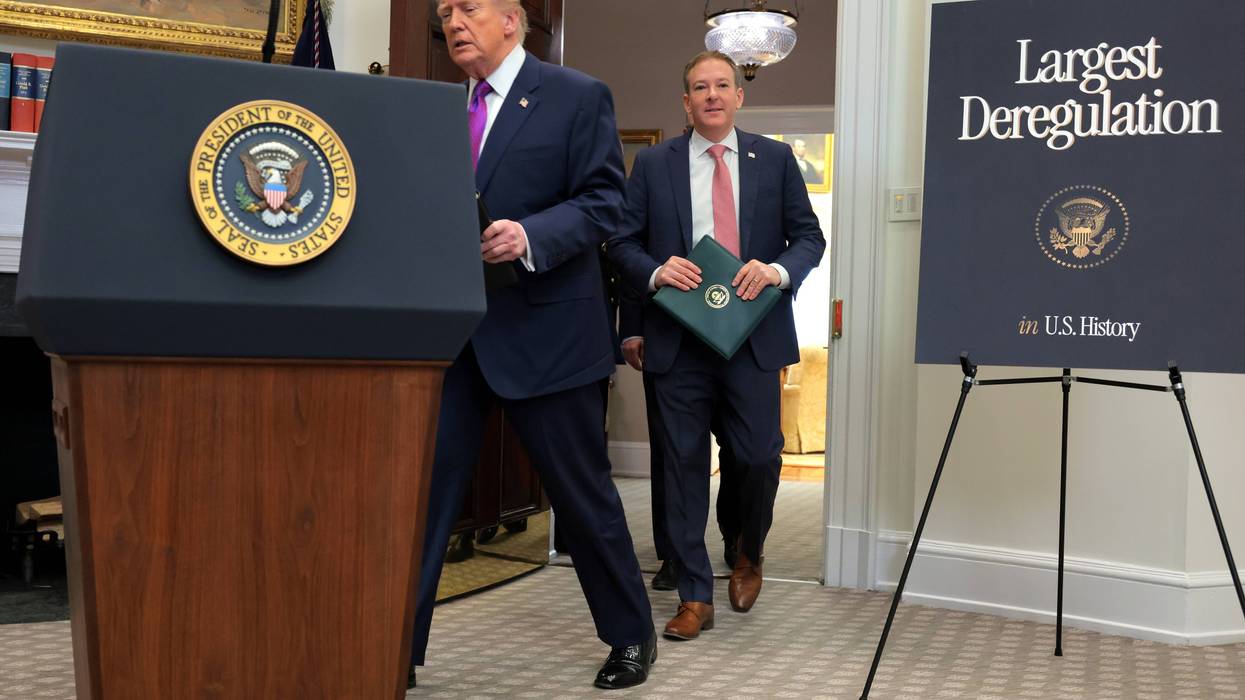
A month after President Donald Trump and Environmental Protection Agency Administrator Lee Zeldin announced what they celebrated as the "single largest deregulatory action in US history," a coalition of over 160 civil rights, environmental, faith, health, and labor groups came together Tuesday to call for the EPA chief's ouster.
Zeldin was confirmed by Senate Republicans and a trio of Democrats just over a week after Trump returned to power in January 2025. The "Game Over Zeldin" coalition, led by the Climate Action Campaign (CAC) and Moms Clean Air Force, argued in an open letter that no other EPA administrator "in history—Democratic or Republican—has so brazenly betrayed the agency's core mission" to "protect human health and the environment."
"Zeldin has dismantled protections that keep our kids, families, and climate safe, and our air and water clean," the letter notes. "He slashed vital funding, gutted agency staff, and has rigged the system to put corporate polluters first, at the expense of our health. Zeldin's EPA has rejected science and health data—and is refusing to count the value of human lives and health—in order to erode commonsense public health safeguards. He has decimated environmental justice programs and hard-fought progress—entirely eliminating the Office of Environmental Justice and External Civil Rights."
Dominique Browning, director and co-founder of Moms Clean Air Force, pointed out in a Tuesday statement that "in just the past few months, he has supported the Trump administration in using taxpayer money to prop up the coal industry; he has made it easier for polluters to spew mercury—a potent neurotoxin that damages the developing brains of babies—into our air and waterways; and he has rolled back the endangerment finding in an attempt to sabotage EPA's ability to cut climate pollution."
The 2009 endangerment finding underpins all federal climate policy. David Arkush of the watchdog Public Citizen—which is also part of the diverse coalition behind the new letter—warned at the time that if allowed to stand, the repeal "will hamstring the government's ability to combat the most terrible environmental threat in human history, harming Americans and the world for decades to come."
Young Americans and a coalition of environmental and public health organizations swiftly filed a pair of lawsuits over the rollback. Another group of 24 states, joined by various US cities and counties, sued last week. The most recent filing is expected to be consolidated with the first coalition's case, according to The New York Times, "making for one of the largest legal challenges to date against the Trump administration's unraveling of federal climate policy."
The new letter stresses the consequences of that unraveling, stating that "because of Zeldin's directives, we will suffer more health-damaging air pollution and be exposed to more toxic chemicals in our homes, in our food, in our products, and in our water. Zeldin's rollbacks will lead to more carbon dioxide and methane pollution that will contribute to worsening climate disasters."
"Families across the country, whether rural or urban, are already struggling with the consequences of Zeldin's actions," the letter adds. "The damage he is doing will span generations. Zeldin is deepening environmental injustices and will leave a terrible legacy for our children and grandchildren."
We refuse to stay silent while Lee Zeldin treats our lives like a line item to be deleted. The EPA is for the people, not polluters. His time is up; Lee Zeldin must go. #GameOverZeldin www.gameoverzeldin.com
[image or embed]
— Physicians for Social Responsibility - National (@psr.org) March 24, 2026 at 12:12 PM
CAC director Margie Alt declared Tuesday that "the wreckage of Lee Zeldin's EPA will be measured in lives lost, jobs destroyed, the costs of illnesses that could have been prevented, and communities devastated. We will be paying the price for decades to come."
"Zeldin ignored science as well as the legal and moral precedent," she said. "Instead, he looked at the numbers and made a choice: He decided that corporate bottom lines matter more than our lives. He decided you and your family are expendable. After a year on the job, it is clear that Zeldin is either unable or unwilling to uphold his oath of office or the EPA's fundamental mission. So let us be clear: Our lives are not expendable. Our health is not expendable. Our climate is not expendable. Lee Zeldin must go."
Other organizations that signed on to the letter include Beyond Plastics, Cherokee Concerned Citizens, Clean Air Council, Clean Water Action, Climate Hawks Vote, Earthjustice, Environmental Working Group, Environmental Protection Network, GreenLatinos, Indivisible Action Coalition, Physicians for Social Responsibility, Service Employees International Union, Sierra Club, Union of Concerned Scientists (UCS), and more.
"Administrator Zeldin's established pattern of placing polluter profits above the health and safety of people across the country cannot stand," said UCS president and CEO Gretchen Goldman. "The science establishing harm to human health and the environment from global warming emissions is undeniable. The unprecedented, climate-fueled heatwave a large swath of the United States has been experiencing is only the latest example."
"The public deserves an EPA administrator who will face the challenge of the climate crisis and fossil fuel and toxics pollution head on with proven policy solutions," she argued, "not actively serve as an agent of destruction beholden to the whims of oil, gas, and chemical industry executives and an authoritarian, anti-science US president."

Who's responsible for rolling back the endangerment finding? We believe it is time to name names so future generations—and future climate justice tribunals—will know who is responsible for incinerating our futures.
The February rollback of the "endangerment finding"—which provides the legal basis for regulating climate change—was many years in the works. It's the ultimate payback for a politically engaged fossil fuel industry and the climate criminals who use their wealth, power, and position to block efforts to help us transition to a post-oil, gas, and coal era.
Who's responsible for rolling back the endangerment finding? We believe it is time to name names so future generations—and future climate justice tribunals—will know who is responsible for incinerating our futures. Researchers at the Climate Accountability Research Project have tracked several of the key individuals working to undermine climate protection for the last two years
On February 12, 2026, Lee Zeldin, the head of the Environmental Protection Agency (EPA), announced the rescission of the 2009 Greenhouse Gas Endangerment Finding, repealing regulations for GHG emissions of motor vehicles. According to The New York Times, a small group of fossil fuel-funded right-wing operatives have pushed to roll back government regulation of greenhouse gases for the past 16 years and have finally succeeded. Myron Ebell, a leading climate denier and fellow at the libertarian think tank Competitive Enterprise Institute, stated that “no amount of public support would have done anything if there hadn’t been those four people: Russ and Jeff and John and Mandy.”
So who the heck are “Russ and Jeff, and John and Mandy?” Russell Vought, Jeffrey Clark, Mandy Gunasekara, and Jonathan Brightbill are well-known operatives within right-wing circles. For example, Russell Vought, President Donald Trump’s director of the US Office of Management and Budget, and Jeffrey B. Clark, former acting administrator of the Office of Information and Regulatory Affairs, are veterans from the first Trump administration.
Rolling back the endangerment finding will have devastating and irreversible consequences to the planet.
Clark has been fighting the government’s ability to regulate greenhouse gases since 2005. In 2022, Vought was vice president of the Heritage Foundation and managed Project 2025, the blueprint for many Trump initiatives. Vought hired Clark to draft executive orders for a future Republican president to easily reverse President Joe Biden’s climate initiatives. In 2023, Clark described climate change regulation as part of a plot to “‘meta control’ Americans.” Following the 2024 election, Vought and Clark were both asked to serve in Trump’s second administration where they were able to push for the repeal of the endangerment finding.
The “Mandy and Jonathan” are lesser known right-wing operatives. Mandy Gunasekara is an environmental attorney, former chief of staff for the EPA during the first Trump administration, and author of the Project 2025 report chapter on reforming the EPA. Gunasekara fought against policies from the Biden administration regarding emission reduction and self-identified as the “chief architect” behind Trump’s withdrawal from the Paris Agreement. The Climate Accountability Research Project identified Gunasekara as a Climate Criminal in 2024 because of her historical role in rolling back greenhouse gas regulations.
In 2015, Gunasekara infamously handed the late Sen. James Inhofe (R-Okla.) a snowball to use as a prop on the Senate floor as “proof” that climate change wasn’t a real threat. Gunasekara was serving as an aide to Sen. Inhofe, who was considered to be one of Congress’ most outspoken climate skeptics at the time. Gunasekara was also a former visiting fellow with the Heritage Foundation’s Center for Energy, Climate, and Environment, where she helped draft a policy agenda that “unleashes American energy production, and reduces barriers to economic freedom.”
Following Gunasekara’s resignation from the EPA in 2019, she founded the Energy45 Fund, a 501(c)(4) nonprofit organization “to promote the Trump energy agenda” and inform the public on the "environmental and economic gains made under the Trump administration.” The sources of funding for this organization have remained anonymous, and the organization has even been dubbed as a “dark money group” by Open Secrets.
In 2023, the Heritage Foundation published Project 2025, which featured Gunasekara’s 32-page chapter “Mandate for Leadership,” outlining a conservative agenda to move the EPA away from its focus on climate change. Key policy proposals outlined in her chapter include resetting scientific advisory boards, scaling back greenhouse gas regulation programs, and updating the 2009 endangerment finding. Gunasekara’s chapter also included the “Day One Executive Order,” which included a list of immediate actions to be taken on the first day of President Trump’s second term, with orders like “stop all grants to advocacy groups and review which potential federal investments will lead to tangible environmental improvements” and “revise guidance documents that control regulations such as the social cost of carbon.”
Jonathan Brightbill is currently the general counsel of the US Department of Energy. Brightbill argued against Obama-era climate policies while serving in the Justice Department in the first Trump administration.
In 2022, Gunasekara and Brightbill began their secret campaign to end the endangerment finding, in which they secured $2 million in funding from right-wing groups like the Heritage Foundation. The funding allowed Gunasekara and Brightbill to draft regulatory documents that would simplify the abandonment of the endangerment finding. Over the years, the two collected an “arsenal of information” to dispute the scientific evidence of climate change. The evidence collected along with their detailed plans of attack helped the Trump administration end the endangerment finding.
Rolling back the endangerment finding will have devastating and irreversible consequences to the planet. There will come a day, maybe sooner than we think, when climate criminals like “Russ and Jeff and John and Mandy” will be held to account.
Sierra Club said the rollback "puts the public at greater risk of heart and lung disease, cancer, and even premature death, as well as causing severe neurological damage to fetuses and children.”
The Trump administration on Friday finalized its rollback of clean air regulations limiting mercury and other toxic pollutants from power plants, sparking condemnation from public health and environmental advocates who warned that the move will increase the risk of death or serious illness for millions of people in the United States.
The US Environmental Protection Agency (EPA) said it is repealing the Mercury and Air Toxics Standards (MATS), which were implemented during the Biden administration in order to protect people from mercury and other toxic air pollutants—including arsenic, lead, and chromium—from fossil fuel power plants.
The Trump administration contends that rescinding MATS will lower financial costs for utilities running older coal-fired plants during a period of rapidly rising demand from consumer and data centers powering artificial intelligence systems.
“The Biden-Harris administration’s anti-coal regulations sought to regulate out of existence this vital sector of our energy economy," EPA Administrator Lee Zeldin said Friday at the Mills Creek Power Plant, a coal-fired facility in Louisville, Kentucky. "The Trump EPA knows that we can grow the economy, enhance baseload power, and protect human health and the environment all at the same time."
However, the Sierra Club said Friday that "rolling back the new and more protective [MATS] will allow coal- and oil-fired power plants to emit more damaging pollution that puts the public at greater risk of heart and lung disease, cancer, and even premature death, as well as causing severe neurological damage to fetuses and children."
"According to the Sierra Club’s Trump Coal Pollution Dashboard, reversing the 2024 improvements and reverting to the 2012 standards will allow the dirtiest coal-fired power plants to emit 50% more mercury pollution," the group added. "In May 2025, the Trump administration exempted 68 power plants—including some of the biggest polluters in the nation—from MATS after soliciting exemption requests from big polluters over email."
Sierra Club Beyond Coal campaign director Laurie Williams called the MATS rollback "a direct attack on the health of Americans."
Last June, Sierra Club was a key part of a coalition of environmental and community groups that sued the Trump administration over the exemptions.
“These protections from mercury and other toxic pollution existed to protect communities from reckless polluters," Sierra Club campaign organizing strategist Bonnie Swinford said Friday. "By repealing these protections, the Trump administration is giving handouts to the coal industry elites—and waging war on the public’s ability to hold polluters accountable."
The Environmental Protect Network also decried the MATS repeal, saying it "will allow hundreds of facilities across 45 states to avoid meeting critical safety standards—jeopardizing public health, degrading ecosystems, and disproportionately harming children, pregnant people, and communities already overburdened by pollution."
"This is no way to make America healthy again."
Moms Clean Air Force co-founder and director Dominique Browning focused on the harms to children the rollback will inflict.
"The science is clear, and profoundly alarming. No amount of mercury is safe for babies’ developing brains," she said. "Mercury is a dangerous neurotoxin that damages the architecture of babies’ and children’s developing brains."
“The mercury rules were working," Browning argued. "Toxic emissions from US coal plants were dropping, and water bodies were getting cleaner. But now EPA Administrator Zeldin’s rollback... will allow coal plants to emit more toxic heavy metals like mercury, chromium, and lead—pollutants that contaminate our air, fall into our lakes and waterways, and poison our food supply."
"This is no way to make America healthy again," she added, referring to one of President Donald Trump's campaign slogans.
Julie McNamara, associate policy director at the Union of Concerned Scientists' Climate and Energy Program, said in a statement Friday: “Once again, the Trump administration is abandoning science and abandoning statute to give polluters a free pass. And once again, the Trump administration is doing so at the expense of people’s health."
National Resources Defense Council senior attorney John Walke asserted that "the coal industry is in decline, and dismantling clean air protections won’t bring it back."
“It will only lead to more asthma attacks, more heart problems, and more premature deaths, especially in communities living in the shadow of coal plants," Walke added. "We have a right to breathe clean air, and we will fight for that right even if Trump’s EPA refuses to.”
The EPA’s newest decision will allow power plants to emit more brain-damaging mercury and dangerous soot pollution, putting frontline communities at especially greater risk of heart and lung disease, cancer, and premature death.
[image or embed]
— NRDC (@nrdc.org) February 20, 2026 at 9:09 AM
Friday's EPA announcement followed the agency's repeal earlier this month of the endangerment finding, the Obama-era rule empowering climate regulation over the past 15 years that treated six greenhouse gases caused by burning fossil fuels as a single air pollutant for regulatory purposes.
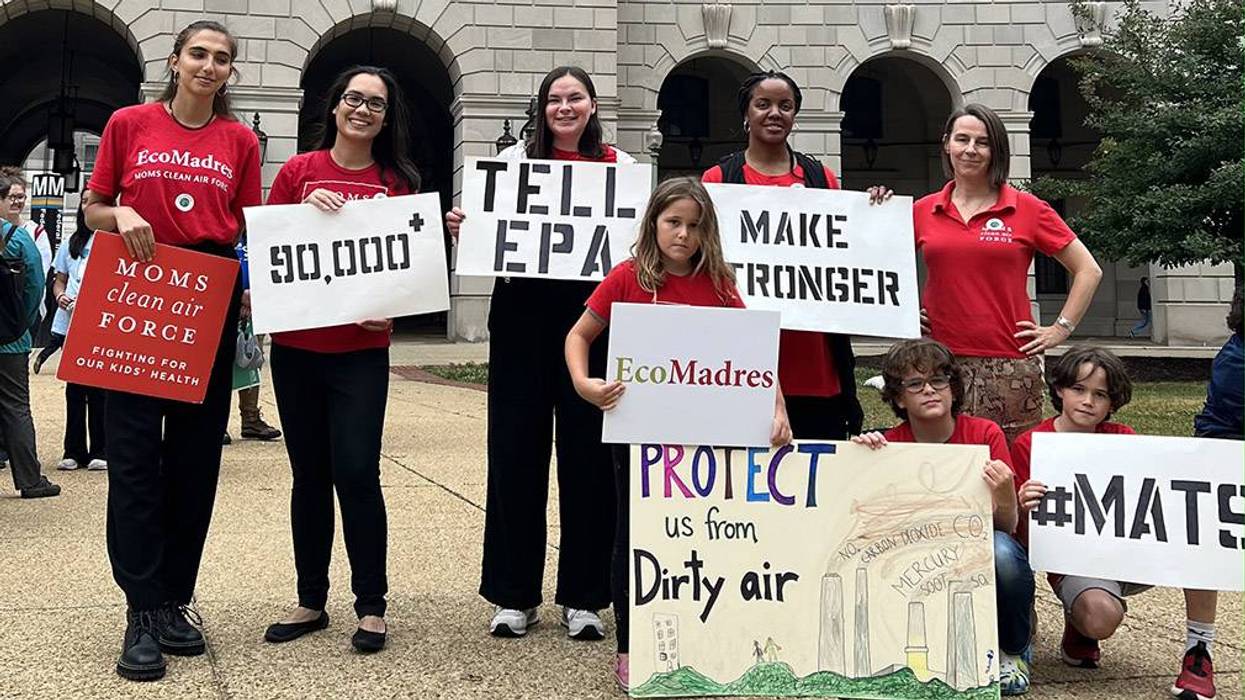
Speaking at a Friday press conference in Washington, DC organized by Moms Clean Air Force, Talia, a local fourth grade student, said that “climate disasters are becoming more common, and they’re hurting our planet, our health, and the future of kids like me."
“Adults in the government are supposed to protect kids from climate change and not ignore it," she said, adding in a message to Trump officials that "we are taught to listen to scientists and doctors and moms—why don’t you listen to them?”